Firm Crib Mattress Guide for Safe Baby Sleep
Firm crib mattress guide basics start with one simple rule: the mattress should feel hard, flat, and supportive every time you press on it. A firm crib mattress should not sink under your baby’s weight, and it should quickly return to shape when you remove your hand. That kind of support helps keep your baby’s airway clear and stable during sleep, which is why firmness is one of the most important safety features to check right away.
Want to know how firm a crib mattress should really be? Start here:
Why are crib mattresses so hard?
Does being firm make a crib mattress safe?
How do you know if the mattress fits correctly?
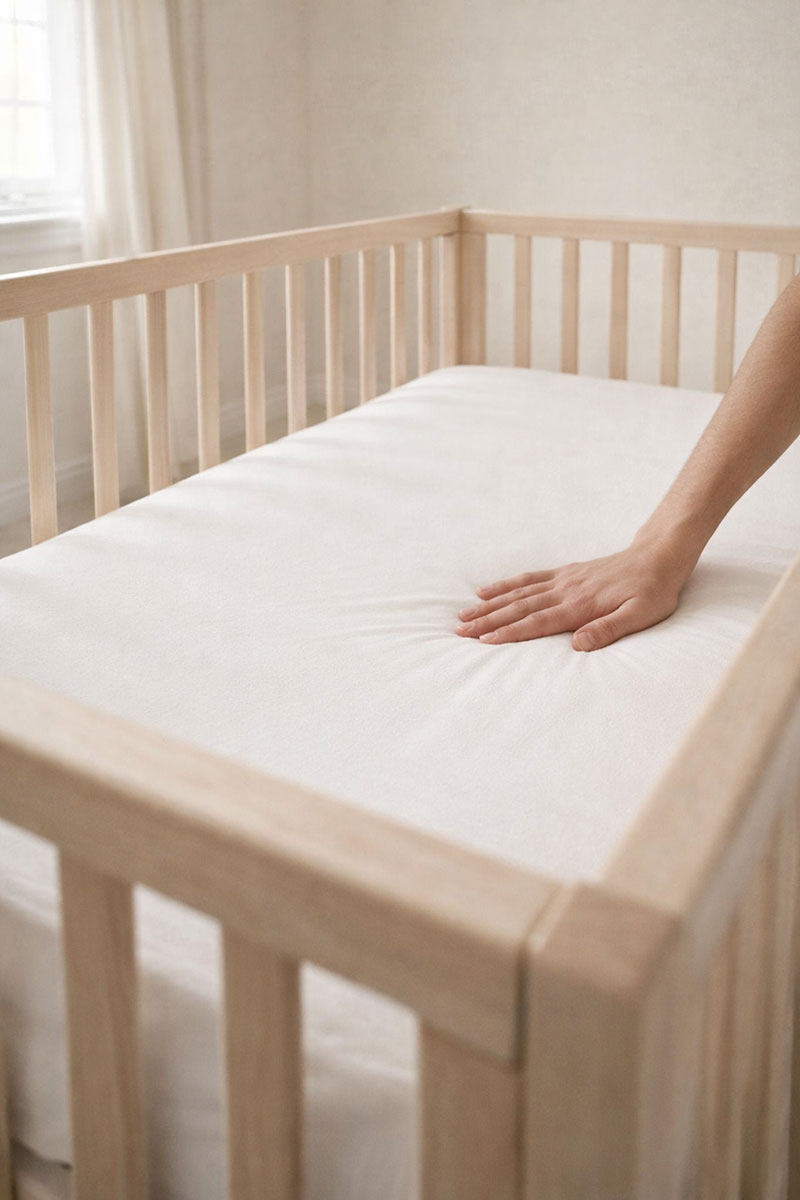
Firm crib mattress option parents often compare first
Quick answer: A firm crib mattress stays flat under your baby, springs back quickly when pressed, fits tightly inside the crib, and does not allow your baby to sink into the surface. If it feels cushioned or leaves a handprint, it is too soft.
If a crib mattress sinks under your hand, it is not safe for an infant.
That firm feel is also why many parents end up asking why crib mattresses are made so hard compared to adult beds, since infant sleep surfaces are intentionally designed to stay flatter and more supportive.
Jump to this section:
Many parents first question firmness during a sheet change. You press the mattress and it dips more than expected. That moment matters because firmness is not about comfort. It is about safety and support.
Firm Crib Mattress Guide: How to Tell If a Mattress Is Safe
A firm crib mattress should feel flat and stable. When you press down, it should push back immediately. It should not cradle your hand or leave an imprint. When your baby lies on it, the surface should stay level instead of dipping around their body.
Firm does not mean hard like wood. It means the mattress holds its shape under weight. That support helps keep your baby’s airway clear and their position stable during sleep.
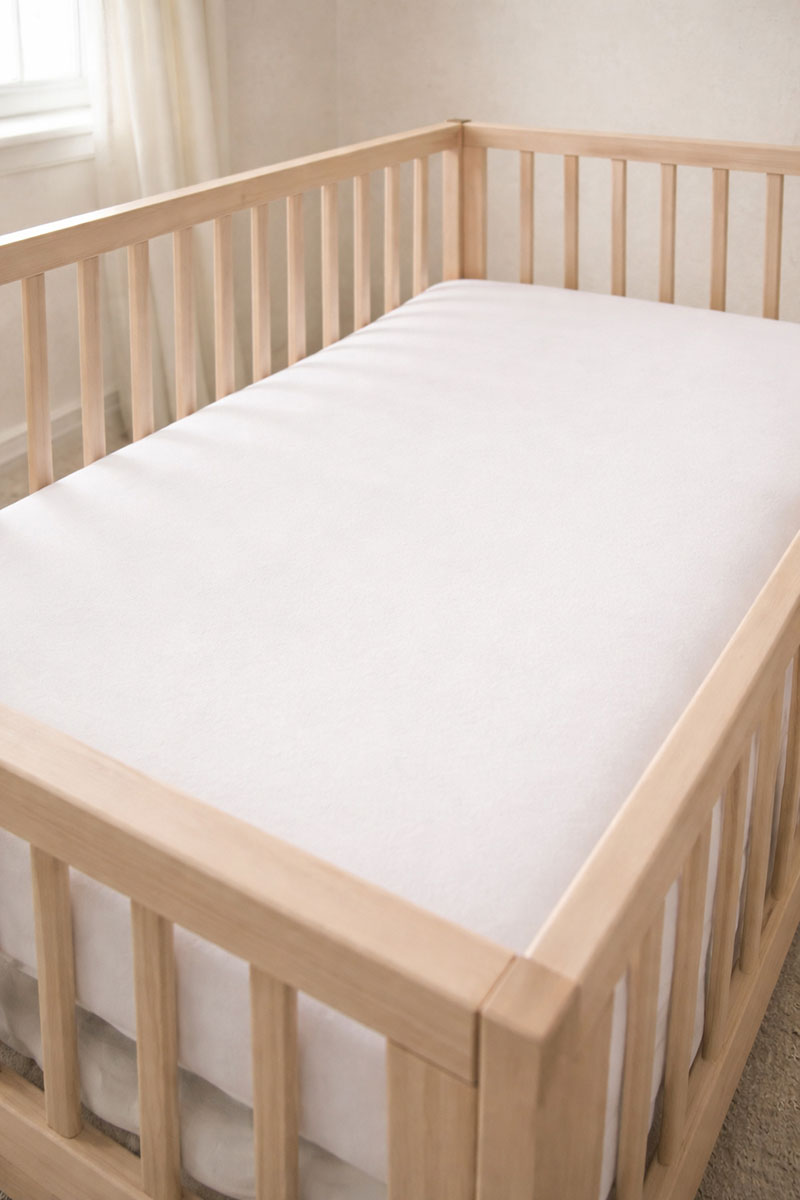
Press the center and the edges. Both should feel the same. If one area sinks more than another, the mattress is not providing even support.
Firm vs soft visual difference: A firm crib mattress stays level when you press it and quickly returns to shape when you lift your hand. A soft crib mattress shows deeper push-in, slower recovery, and more visible dipping around the spot where pressure was applied. If the surface looks sunken instead of flat, that is a warning sign.
Start with the full overview here: crib mattress guide. Then see crib mattress support and crib mattress safety for deeper explanation.
How to Check Firmness Before You Buy
In a store, press down in several areas and watch how fast the mattress returns to shape. It should bounce back quickly and stay flat.
Online, ignore words like plush or cushioned. Look for clear statements about infant firmness and flat sleep surfaces.
Fit is just as important as firmness. A mattress can feel firm but still be unsafe if it leaves gaps.
Choosing the right one comes down to both support and fit. If you are still deciding overall, this how to choose a crib mattress guide walks through how fit, firmness, and safety all work together step by step.
Use these pages to check sizing and fit: crib mattress fit, do all crib mattresses fit all cribs, and standard crib mattress size.
This firm crib mattress guide focuses on how to recognize safe support, not just how a mattress feels at first touch.
For parents narrowing things down specifically for the newborn stage, this best crib mattress for newborns guide breaks out what matters most in those first few months.
If you are comparing crib sizes, also review standard crib mattress size history and crib mattress size vs twin.
For smaller cribs, use: mini crib mattress, mini crib mattress size guide, and mini portable crib mattress.
Firmness vs Thickness and Materials
Thickness does not equal firmness. A thick mattress can still be soft. A thinner mattress can be very firm.
Foam, innerspring, and organic mattresses can all be safe if they stay flat and supportive. What matters is how the mattress performs under pressure.
Mattress materials can also affect heat buildup, so my crib mattress overheating guide explains how firmness, airflow, room temperature, and bedding choices work together during sleep.
For parents comparing surface design as part of firmness, this dual-sided vs single-sided crib mattress guide explains how infant-side firmness, toddler-side comfort, and one-surface designs compare.
If you are considering a mattress with separate infant and toddler sleep surfaces, my dual sided crib mattress guide explains how two-stage designs work and whether they are worth the extra cost.
Edge support matters too. Babies are often placed near the side of the crib, so the edges should feel just as stable as the center.
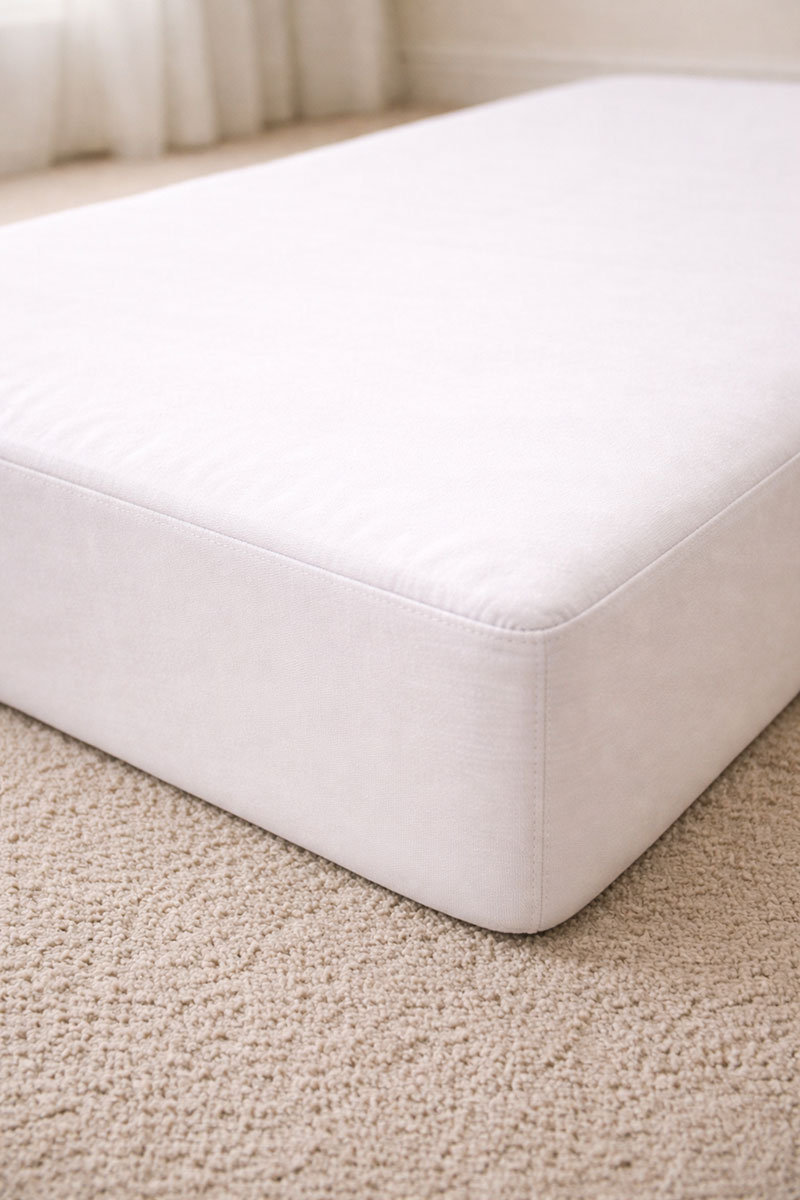
Learn more about crib mattress thickness and firmness, crib mattress certifications, and material comparisons like organic crib mattresses, non-toxic crib mattress, breathable vs foam crib mattress, and are breathable crib mattresses safe. My best breathable crib mattress guide compares which airflow-focused designs still stay firm, fit correctly, and maintain a flat sleep surface once they are used in a real crib.
Firm Crib Mattress Safety Rules That Matter
In the United States, safe sleep guidance consistently recommends a firm, flat crib mattress with no added padding or soft layers.
Safe sleep starts with a firm, flat surface and no added padding. This is consistent across safety guidelines.
See official guidance: CPSC safe sleep guidance.
Do not add toppers, extra padding, or thick covers. These soften the surface and reduce safety.
Parents who are unsure whether added cushioning changes the safety of a firm sleep surface can also review why crib mattress toppers are discouraged for infants, especially when firmness and flat support are the main concern.
For protectors, keep them thin: crib mattress protector and protective cover guide.
If you are still deciding between moisture protection products, this crib mattress pad vs protector comparison explains which options stay thin for cleanup and which ones begin adding extra surface padding.
How Firmness Changes With Age and Use
A mattress can soften over time. Check it regularly for sagging or uneven spots.
If it no longer feels flat and supportive, it should be replaced.
Helpful pages: when to replace a crib mattress, used crib mattress safety, and how to clean a crib mattress.
As your baby grows, mattress height changes but firmness rules do not. See when to lower a crib mattress and height adjustment guide.
Best Way to Choose the Right Firm Crib Mattress
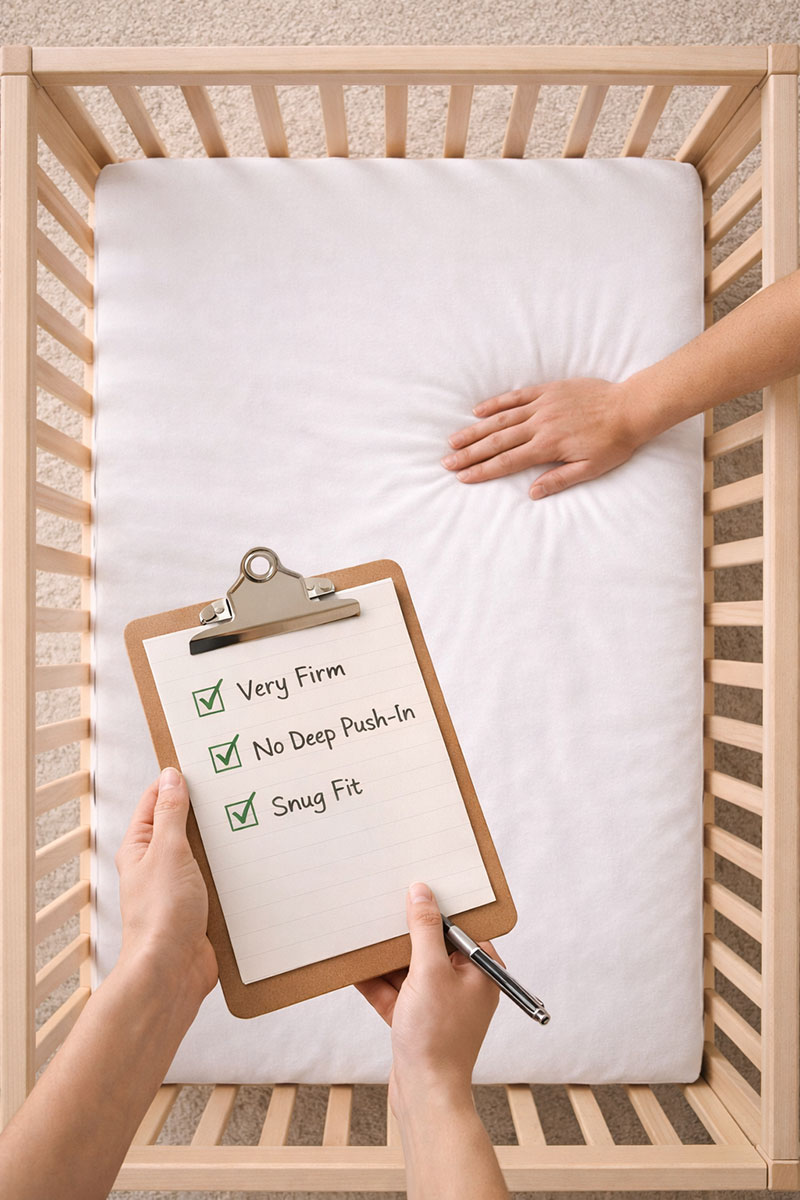
Choose a mattress that passes three tests:
- Feels firm when pressed
- Fits the crib without gaps
- Holds its shape over time
Then compare options: best crib mattress, what baby crib mattress is best, Newton crib mattress review, and Newton vs Naturepedic crib mattress.
Firm Crib Mattress FAQs Parents Ask Most
Can a crib mattress feel too hard?
No. Crib mattresses should feel much firmer than adult beds.
How do I know if it is too soft?
If it sinks or leaves an imprint, it is too soft.
Does firmness change over time?
Yes. Check it regularly and replace if needed.
Do I need a special cover?
Only a thin fitted protector. Avoid anything padded.
When you click on links to various merchants on this site and make a purchase, this may result in this site earning a commission. This does not affect the price you pay.

UBGI Gold Standard 2026
Reviewed under the site's
editorial checklist.
Photos, decorating ideas, party setups and reader submissions are shared for inspiration unless a page is specifically presented as a pattern, tutorial, reference guide or step-by-step project. Follow the instructions, measurements, safety guidance and manufacturer directions provided for the particular project or product.
About Jan | Contact | Baby Nursery Ideas (Blog) | Site Map | Privacy Policy | Disclosure Policy | Disclaimer | Affiliate Disclosure | Earnings Disclosure | Facebook | Pinterest
I am a participant in the Amazon Services LLC Associates Program, an affiliate advertising program designed to provide a means for us to earn fees by linking to Amazon. As an Amazon Associate I earn from qualifying purchases.
Copyright © 2006-2026. All Rights Reserved.