Are Crib Mattress Toppers Safe for Babies?
Parents ask, are crib mattress toppers safe for babies, usually after touching a crib mattress and realizing how firm it feels. Most crib mattress toppers are not considered safe for young babies because they can make the sleep surface less stable. Even when a crib mattress feels uncomfortable to an adult, babies are safest on a flat, firm crib mattress with a tightly fitted sheet and no extra padding added on top.
Thinking about making a crib mattress feel cushier? Check these first:
Why does the mattress have to be so hard?
How firm is too firm for a baby?
Is a crib mattress pad safer than a topper?
What can go under the fitted crib sheet?
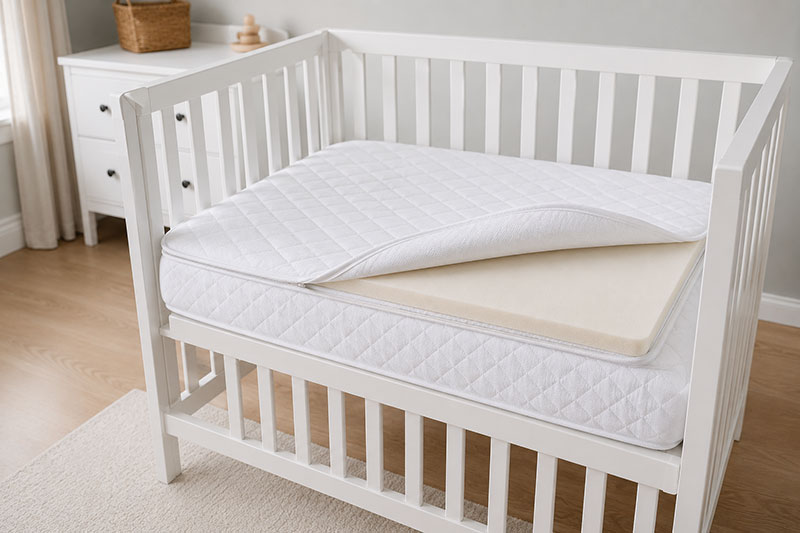
Why parents start looking at crib mattress toppers
Are crib mattress toppers safe when babies sleep?
Are breathable crib mattress toppers safer?
Why parents start looking at crib mattress toppers
A standard crib mattress can feel unusually firm when you press on it with your hand. Parents sometimes stand beside the crib after setup and wonder how a baby could possibly sleep comfortably on something that feels closer to gym padding than a bed.
That concern usually starts after a few rough nights. A baby wakes often. Sleep stretches feel short. Someone searches online for ways to make the crib “more comfortable,” and crib mattress toppers immediately appear in search results beside mattress pads and protectors.
Here is the important difference.
A waterproof protector is designed to stay thin and tightly fitted. A topper changes the feel and depth of the sleeping surface itself.
Parents comparing moisture protection products often get confused by the terminology, which is why this crib mattress pad vs protector guide explains which layers stay thin for cleanup and which ones begin adding extra cushioning.
That distinction matters because infant sleep safety in the United States is based around firmness and stability. The CPSC safe sleep guidance and pediatric recommendations continue to focus on flat sleep surfaces without extra cushioning.
One thing I believe catches parents off guard is how quickly extra padding changes the way a fitted crib sheet sits across the mattress corners. Even a small layer underneath can create slight bunching around the edges.
When parents ask are crib mattress toppers safe, the real issue is not adult comfort. The real issue is whether the baby’s sleep surface stays flat, firm, and stable all night.
For parents comparing mattress types, my breathable vs foam crib mattress guide explains how different sleep surfaces feel and perform over time.
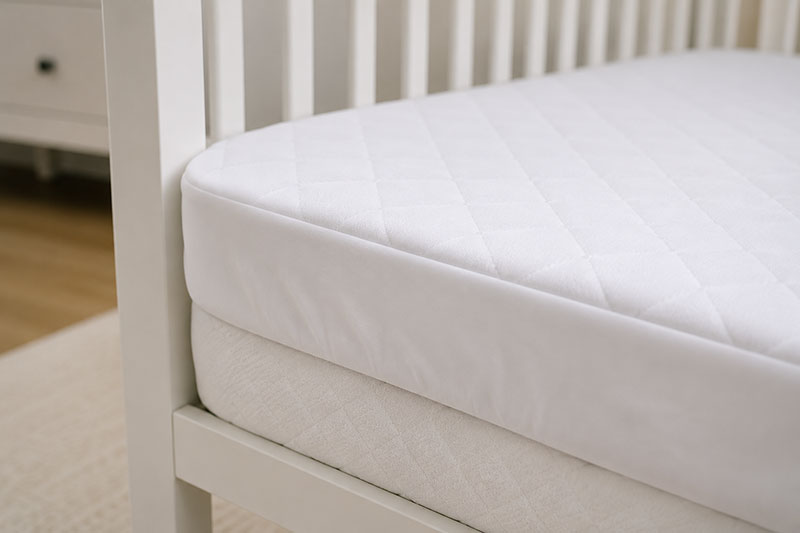
Are crib mattress toppers safe when babies sleep?
The short answer to are crib mattress toppers safe is usually no for young babies, especially when the topper adds cushioning, height, or movement under the fitted sheet.
The biggest concern with crib mattress toppers is that they can reduce firmness.
That matters more for babies than adults because infants do not reposition themselves the same way older children do during sleep.
Some toppers also shift slightly beneath fitted sheets. Many nurseries run into this issue because crib sheets are sized for standard mattress dimensions, not for extra layers added on top.
Even when the movement seems minor during the day, the surface can behave differently after hours of pressure, body heat, and overnight settling.
This is also where mattress gaps become important. Adding thickness can change how tightly the mattress fits inside the crib frame.
My crib mattress gap problems page explains what safe spacing should actually look like around the edges.
A surprising number of older crib mattresses feel uncomfortable simply because they are worn out or partially compressed in the center. Parents often discover this while changing sheets because the middle area looks slightly lower than the corners once daylight hits across the surface.
So, are crib mattress toppers safe enough to fix an old or uncomfortable mattress? In most cases, replacing the mattress is the safer answer.
My when to replace a crib mattress guide helps identify signs of wear that are easy to miss at first glance.
Extra cushioning may feel comforting to adults.
That does not automatically make it safer for babies.
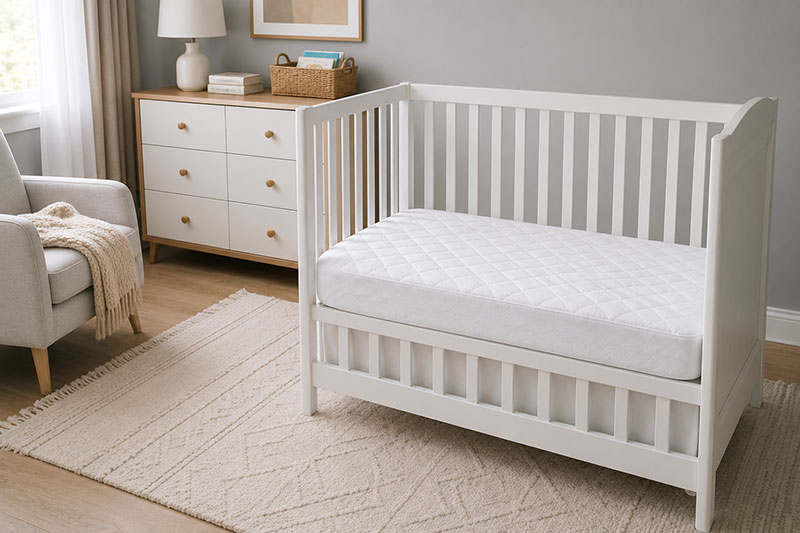
Are breathable crib mattress toppers safer?
“Breathable” can be confusing because the term gets used for many different nursery products.
Some breathable crib mattresses are specifically designed and tested as complete sleep surfaces. A topper added over another mattress is different because it changes the original structure underneath the baby.
This usually happens when someone buys a mattress they later decide feels too rigid, then tries to solve the issue with an additional layer instead of replacing the mattress itself.
The American Academy of Pediatrics safe sleep recommendations also continue to emphasize firm, flat sleep surfaces for infants.
A breathable crib mattress designed as a full product is generally considered safer than stacking a separate topper over an existing mattress.
If you are still wondering are crib mattress toppers safe after reading product descriptions, check whether the product changes the mattress height, edge fit, or sheet tension.
My are breathable crib mattresses safe page breaks down how those products differ from overlays and padded inserts.
Another point many competitors skip is edge firmness. Some toppers compress heavily near the perimeter even when the center feels supportive. You notice this during sheet changes because the corners dip when you lean across the crib rail.
That edge compression can affect sheet tension and overall stability.
For a closer look at firmness standards, visit my firm crib mattress guide.

Safer alternatives parents usually overlook
Sometimes the safest solution is not adding anything at all.
If a crib mattress is old, uneven, sagging, or no longer fits tightly inside the crib frame, replacing it often solves the original concern more effectively than layering a topper over the surface.
One of the easiest nursery upgrades is simply using a tightly fitted waterproof cover that stays flat and does not bunch underneath the sheet.
My do crib mattresses need a protective cover guide explains which styles help protect the mattress without significantly altering firmness.
Parents also sometimes discover that the issue is actually mattress fit rather than comfort. A mattress that slides slightly inside the crib frame can create a loose feeling even when the mattress itself is acceptable.
The finished setup should look stable and level with crisp sheet corners that stay anchored after movement during the night.
My crib mattress fit page explains how to check for spacing and movement correctly.
For a newborn, are crib mattress toppers safe is the wrong question to solve with comfort alone. A better question is whether the crib mattress already meets safe firmness and fit expectations.
For parents shopping for replacements instead of toppers, the best crib mattress for newborn guide compares the features people usually search for after becoming worried about firmness.
Signs a crib mattress may not be firm enough
A crib mattress should return to shape quickly after pressure is removed.
If your hand leaves an indentation that lingers, the surface may already be too compressible for infant sleep.
Another warning sign is deep contouring around the baby’s body. Parents often notice this while adjusting sleep sacks during overnight feedings because the mattress appears lower around the shoulders and hips.
A fitted sheet that wrinkles repeatedly after being tightened can also signal surface instability.
For more guidance about mattress sizing and thickness, see:
crib mattress thickness and firmness
do all crib mattresses fit all cribs
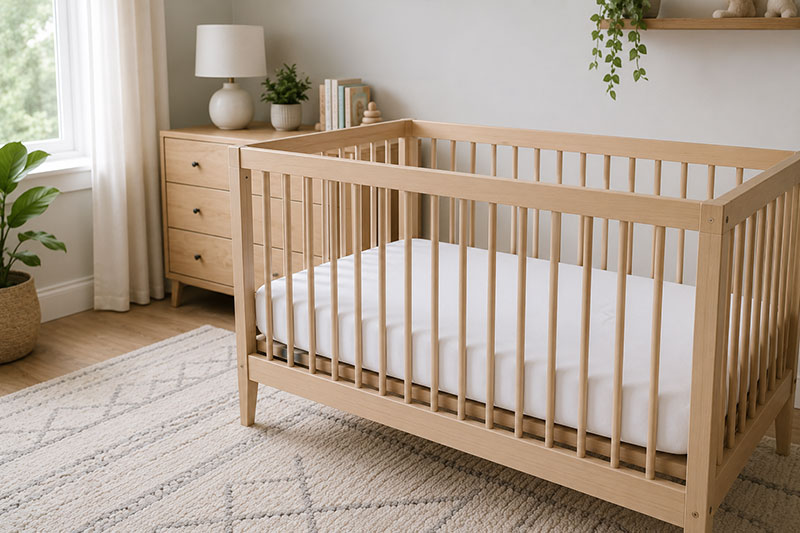
Quick answer: are crib mattress toppers safe?
Most crib mattress toppers are not recommended for babies because they can reduce firmness, shift under fitted sheets, and affect mattress fit inside the crib. A flat, stable crib mattress with a tightly fitted sheet is generally considered the safer option for infant sleep.
Frequently asked questions about crib mattress toppers
Are memory foam crib mattress toppers safe?
Memory foam toppers can create a more compressible sleep surface, which is why many infant sleep safety recommendations discourage adding them to cribs.
Is a crib mattress protector the same thing as a topper?
No. Protectors are usually thin barriers designed to help with moisture and cleanup. Toppers add cushioning and change the feel of the mattress.
Why do crib mattresses feel so firm?
Firmness is intentional because infants need stable sleep surfaces that do not contour deeply around the body.
That same concern about firmness is why many parents eventually start asking why crib mattresses feel much harder than adult mattresses, since infant sleep surfaces are intentionally designed to resist deep compression.
Can a topper affect mattress fit?
Yes. Extra layers can slightly change sheet tension and spacing around the mattress edges inside the crib.
What is usually safer than adding a topper?
Replacing a worn mattress, checking crib fit, and using a tightly fitted waterproof protector are generally safer approaches.
Are crib mattress toppers safe for newborns?
For newborns, crib mattress toppers are usually not recommended because the safest sleep surface is flat, firm, stable, and covered only with a tightly fitted sheet.
For more nursery sleep safety guidance, start with my crib mattress page, which connects the most important mattress safety and fit topics in one place.
When you click on links to various merchants on this site and make a purchase, this may result in this site earning a commission. This does not affect the price you pay.

UBGI Gold Standard 2026
Reviewed under the site's
editorial checklist.
Photos, decorating ideas, party setups and reader submissions are shared for inspiration unless a page is specifically presented as a pattern, tutorial, reference guide or step-by-step project. Follow the instructions, measurements, safety guidance and manufacturer directions provided for the particular project or product.
About Jan | Contact | Baby Nursery Ideas (Blog) | Site Map | Privacy Policy | Disclosure Policy | Disclaimer | Affiliate Disclosure | Earnings Disclosure | Facebook | Pinterest
I am a participant in the Amazon Services LLC Associates Program, an affiliate advertising program designed to provide a means for us to earn fees by linking to Amazon. As an Amazon Associate I earn from qualifying purchases.
Copyright © 2006-2026. All Rights Reserved.