Are Breathable Crib Mattresses Safe?
Are breathable crib mattresses safe for babies? The answer depends on structure, not marketing. A breathable crib mattress can be safe if it is firm, flat, fits tightly inside the crib, and meets U.S. safety standards. Breathability alone does not make a mattress safer. Safe sleep depends on firmness, proper fit, and established infant sleep guidance.
Trying to decide if a breathable crib mattress is actually safer? Start here:
Which breathable crib mattress is worth the cost?
What makes any crib mattress safe?
Does my mattress fit correctly?
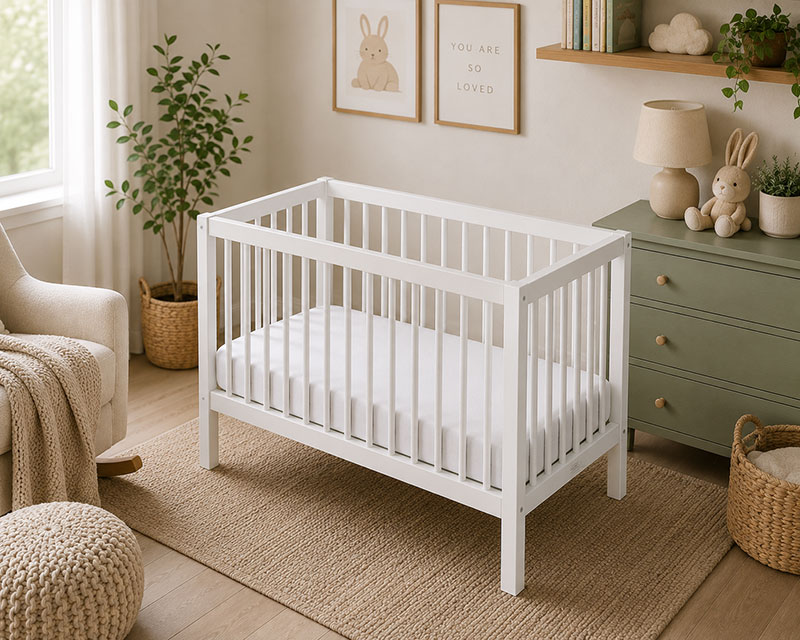
A breathable crib mattress should sit flush against the crib frame with no visible edge gaps.
Jump to:
Are Breathable Crib Mattresses Safe for Infants?
The safety question centers on structure, not marketing language. A breathable crib mattress is safe when it meets U.S. crib mattress standards and functions as a firm infant sleep surface inside a properly sized crib. If the surface compresses deeply, slopes, or leaves edge gaps, it is not a safe sleep surface, regardless of airflow design.
Breathability does not cancel unsafe sleep practices. It does not replace a tight fit. It does not override firmness requirements.
To get a better understanding of how airflow design fits into the bigger safety picture, this breathable crib mattress guide explains how breathability, firmness, and fit work together in real-world use.
Potential consumers who want to compare safer-material options without losing sight of firmness and fit can use my best organic crib mattress guide.
Airflow does not equal safety.
Some of the most concerning crib dangers parents miss begin with misplaced confidence in a single feature, instead of evaluating the full structure of the sleep environment.
What “breathable” means
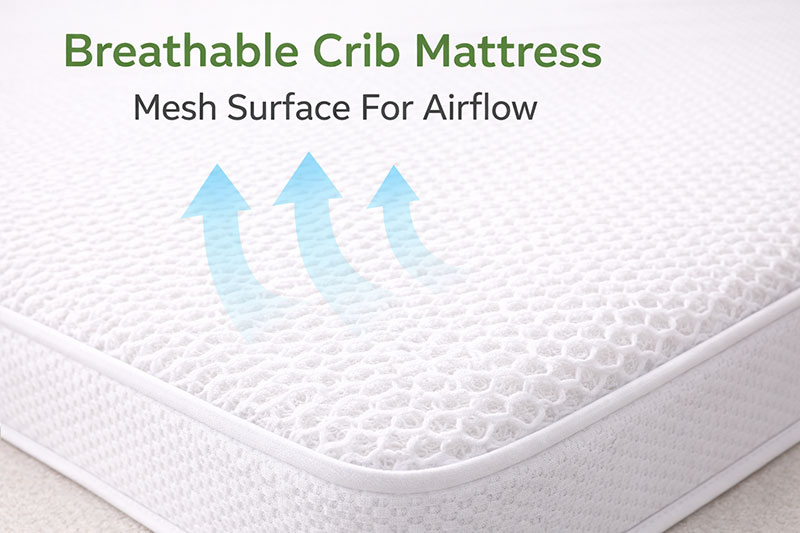
A breathable crib mattress is designed to allow more air movement through the mattress core and cover. Many breathable models use an open grid interior, ventilated polymer structure, or mesh-like construction. Some are built to be washable, including removable covers and, in a few designs, a core that can be rinsed and dried.
Breathable is not the same as soft. The best versions still feel firm to the hand and resist deep compression. That distinction becomes important when parents start considering added comfort layers, which is why this explanation of crib mattress topper safety concerns breaks down how extra padding can change firmness and alter the intended sleep surface.
That intentionally firm feel is also why many parents begin asking why crib mattresses are supposed to feel hard for infants, since safe infant sleep surfaces are designed to resist deep sinking instead of feeling cushioned.
Parents also tend to confuse breathable covers, protectors, and padded layers, which is why this crib mattress pad vs protector comparison explains which products are designed to stay thin and which ones start changing the feel of the sleep surface.
Some marketing pages blur this difference by focusing on comfort language. For infant sleep safety, firmness and fit stay at the center of the decision.
There is also no single universal test that makes a mattress “breathable enough” to be safer. Airflow can vary by design, cover type, and how the mattress is used.
This page focuses on safety fundamentals as they apply to breathable crib mattresses. It does not evaluate brand marketing claims.
What Makes a Crib Mattress Safe

To decide if a breathable crib mattress is safe, use the same criteria you would use for any crib mattress. The complete evaluation is laid out clearly in my crib mattress guide, where firmness, fit, and construction are all considered as a whole.
The mattress should be firm, flat, and sized to fit the crib interior without gaps. The sleep surface should not slope, bunch, or form deep impressions. The fitted sheet should lie smooth and tight.
These standards matter because infants can shift during sleep. A surface that allows deep sinking, or a mattress that leaves a gap along the edge, creates an unsafe situation. Breathability does not fix those structural problems. A breathable design can be a practical choice, but it must still act like a firm infant sleep surface.
If you want a full structural overview of what matters most, your downstream hub page is here: best crib mattress. That page helps readers compare firmness, fit, and construction types without drifting into brand-only recommendations.
For a broader explanation of how crib mattress construction, sizing standards, and terminology fit together, see the crib mattress reference guide.U.S. rules and safety context
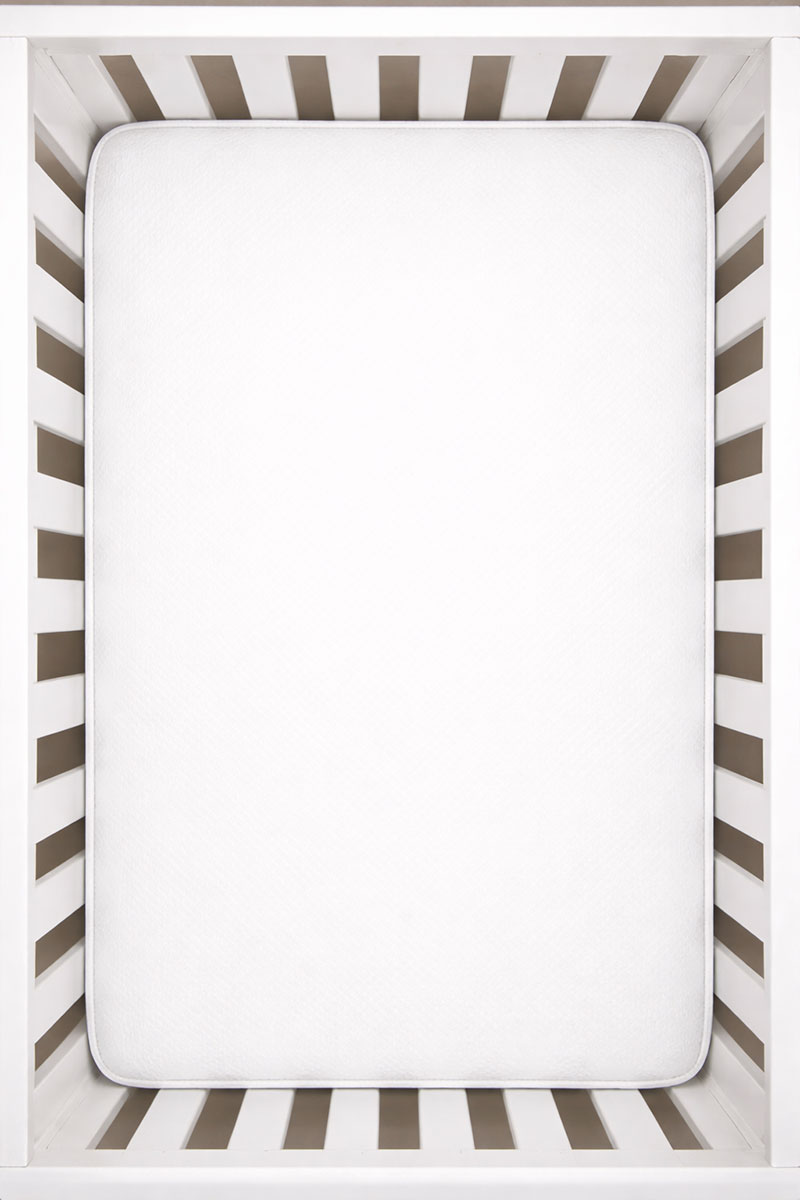
Because this is a safety topic, U.S. regulatory context matters. In the United States, infant sleep surfaces sold for use in cribs must comply with federal safety requirements under 16 CFR Part 1241. This framework establishes baseline expectations for performance, dimensional fit, and structural integrity.
Breathable crib mattresses are not exempt from these rules. A breathable core is just a design choice. The mattress still must meet the federal crib mattress standard to be legally sold for infant cribs.
Parents who are also comparing low-emissions sleep setups can continue to GREENGUARD Gold certified cribs for a crib-focused look at certification, materials, and cleaner-air nursery choices.
For non-commercial, authoritative safe sleep guidance, the American Academy of Pediatrics maintains widely cited recommendations for infant sleep, including the need for a firm, flat sleep surface and a fitted sheet only. You can read their public safe sleep guidance at American Academy of Pediatrics.
This is the right takeaway. If you want a dedicated breakdown of firmness, edge gaps, and what safe crib mattress fit should look like in everyday use, review these crib mattress safety guidelines.
If a breathable mattress is firm and fits correctly, it can be a safe sleep surface. If it does not, airflow claims are irrelevant.
Fit and firmness check
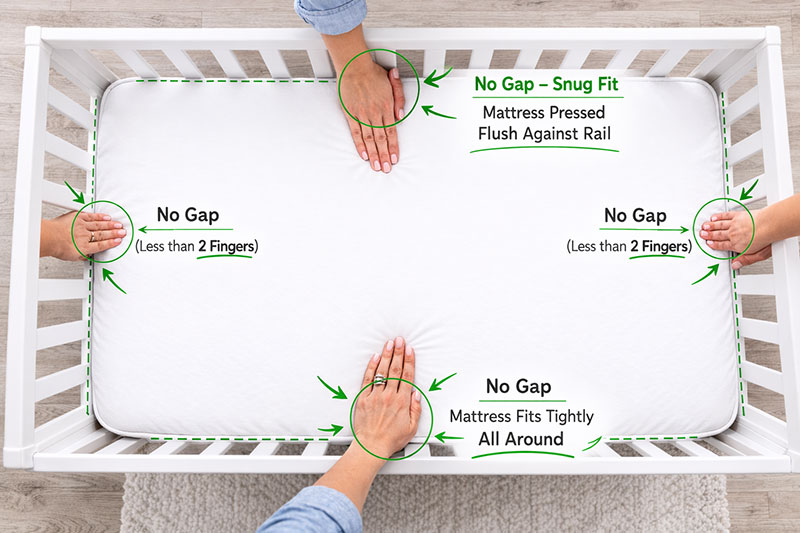
Use this practical fit and firmness check when you evaluate a breathable crib mattress. This keeps the decision grounded and avoids getting pulled into marketing language.
- Flat surface: The sleep surface stays level. It does not slope toward the center or the edges.
- Firm feel: When you press down with your hand, the mattress resists and springs back. It should not feel plush or pillow-like.
- Tight fit: The mattress sits snugly in the crib frame. There should not be a visible gap around the perimeter.
- Tight sheet: A fitted crib sheet lies smooth and does not bunch or wrinkle into folds.
- No add-ons: No toppers, pads, cushions, or “comfort layers” are added on top of the mattress.
If you want a comparison-style walkthrough that stays focused on construction and safety, the next best downstream beneficiary is your comparison page: breathable vs foam crib mattress. That is where readers can decide which construction type fits their needs without confusing “breathable” with “safe by default.”
Breathable vs foam
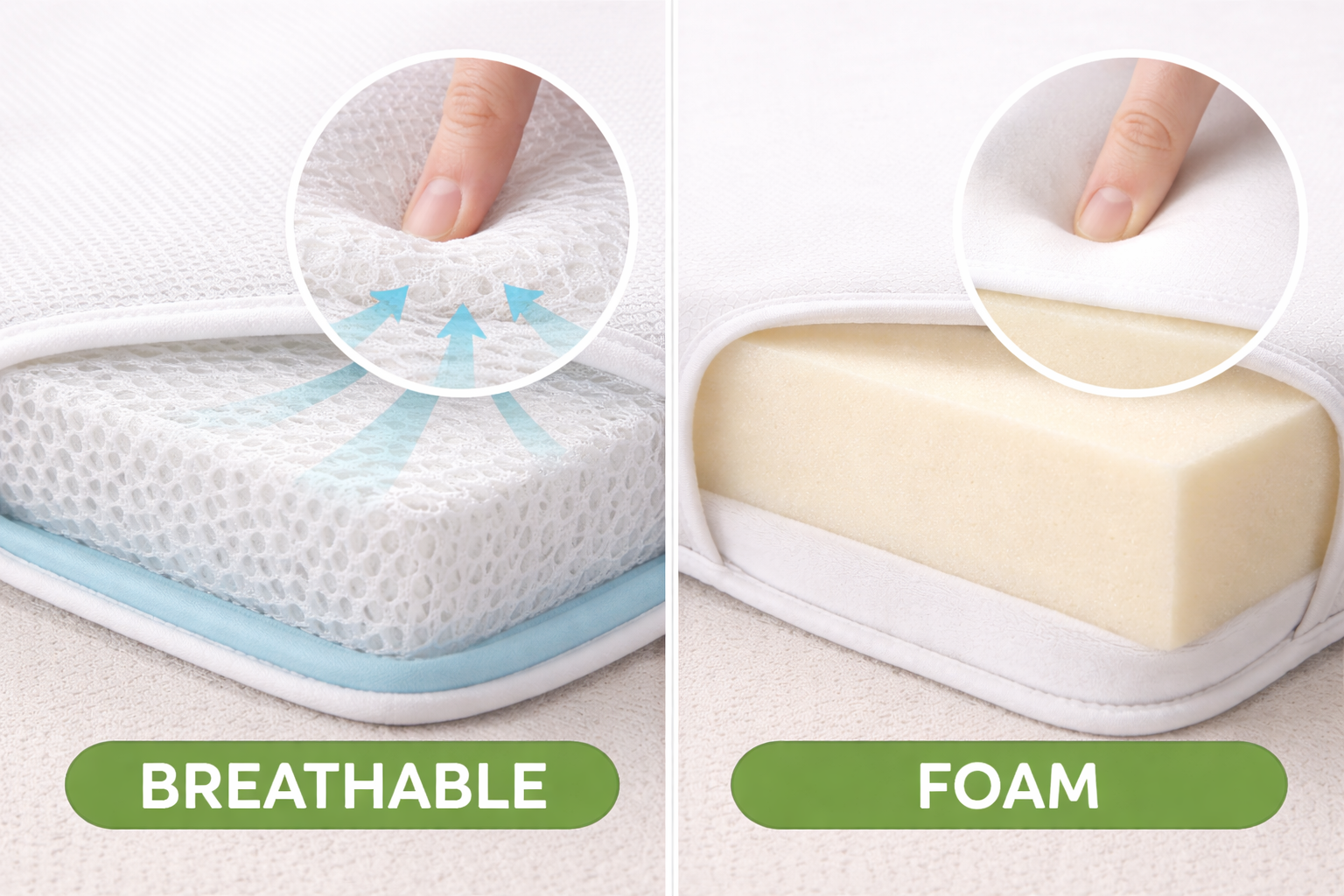
Many parents compare a breathable crib mattress to a traditional foam crib mattress. This is usually where confusion starts. Breathable designs often emphasize airflow and washability. Foam designs often emphasize density and long-term durability. Either can be safe when the mattress is firm, flat, and sized correctly for the crib. For smaller crib setups, this breaks down how breathable mini crib mattresses compare on fit, airflow, and daily use
A breathable mattress can feel different because the surface cover may be a mesh style fabric. Temperature is another area where parents often have questions, so my crib mattress overheating guide explains how mattress materials, room conditions, and airflow can influence heat buildup during sleep. That can be helpful for airflow and cleaning. It should not feel squishy. If a breathable mattress has a soft comfort layer, or if it compresses deeply, it is not the right choice for infant sleep.
A foam crib mattress can also be safe and often costs less. Construction type alone does not determine safety. Comparing how organic materials relate to low-emissions claims can help complete that picture, and this organic vs non-toxic crib mattress comparison explains how those differences apply across mattress types. The key question remains whether the sleep surface is firm, flat, and properly fitted to the crib.
When breathable can be a good choice
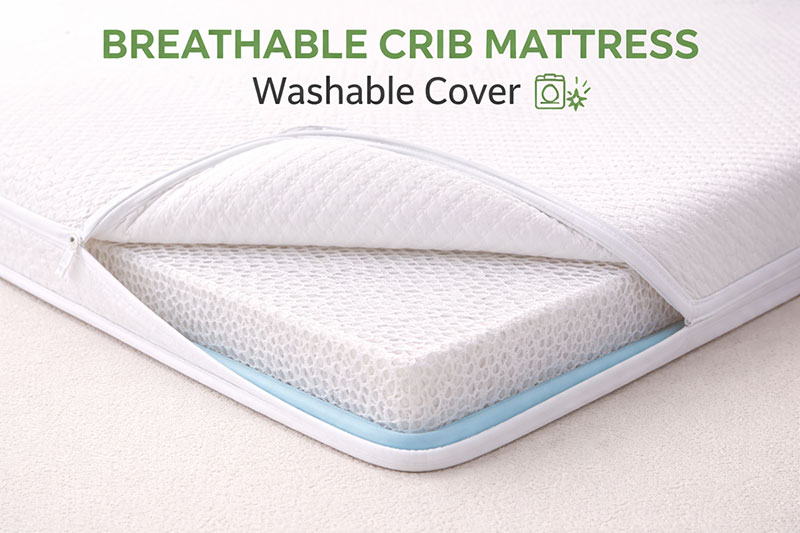
Breathable crib mattresses tend to appeal to parents who value easy cleaning and a lighter mattress. If you are choosing one, these are the practical reasons that can make sense, without turning breathability into a safety promise.
- You want a removable, washable cover for frequent cleanup.
- You want a mattress that is easier to lift during sheet changes.
- You prefer an airflow-focused design, as long as it stays firm.
- You want a simple construction that does not rely on thick comfort layers.
If you want to see a representative breathable crib mattress design as a reference point, here is a neutral product example. View current breathable mini crib mattress specs
This link is included for readers who want a visual example of the style of construction being discussed. It is not a safety guarantee. The safety decision still depends on firmness, proper crib fit, and correct use.
Safety summary
Breathable crib mattresses can be safe when they meet U.S. federal requirements, maintain a firm and flat sleep surface, fit tightly inside the crib with no edge gaps, and are used with a fitted sheet only. Breathability is an airflow feature, not a safety upgrade. Parents comparing mattress types should continue to the breathable vs foam comparison page, and for a complete structural overview, the best crib mattress hub explains the core safety criteria in detail.
Breathable Crib Mattress Safety FAQ
Do breathable crib mattresses prevent suffocation?
No crib mattress can be described as suffocation proof. Breathable designs may allow airflow through the mattress core, but safety depends on a firm, flat surface and proper fit inside the crib. Safe sleep practices remain essential.
Are breathable crib mattresses safer than foam mattresses?
Breathable crib mattresses are not automatically safer than traditional foam mattresses. Both can be safe when they meet U.S. federal standards and maintain firmness and correct crib fit.
Do breathable crib mattresses meet U.S. safety standards?
Yes. Breathable crib mattresses sold in the United States must comply with federal crib mattress requirements under 16 CFR Part 1241. Breathability does not replace or bypass these regulations.
Federal compliance establishes the minimum safety baseline for infant sleep surfaces in cribs.
When you click on links to various merchants on this site and make a purchase, this may result in this site earning a commission. This does not affect the price you pay.

UBGI Gold Standard 2026
Reviewed under the site's
editorial checklist.
Photos, decorating ideas, party setups and reader submissions are shared for inspiration unless a page is specifically presented as a pattern, tutorial, reference guide or step-by-step project. Follow the instructions, measurements, safety guidance and manufacturer directions provided for the particular project or product.
About Jan | Contact | Baby Nursery Ideas (Blog) | Site Map | Privacy Policy | Disclosure Policy | Disclaimer | Affiliate Disclosure | Earnings Disclosure | Facebook | Pinterest
I am a participant in the Amazon Services LLC Associates Program, an affiliate advertising program designed to provide a means for us to earn fees by linking to Amazon. As an Amazon Associate I earn from qualifying purchases.
Copyright © 2006-2026. All Rights Reserved.