Best Breathable Crib Mattress for Safe Sleep
The best breathable crib mattress keeps airflow through the surface, stays firm under pressure, and fits tightly in the crib with no gaps.
Trying to choose a breathable crib mattress without falling for marketing hype? Start here:
Are breathable crib mattresses really safer?
How do you know if a crib mattress is safe?
How do you know if it fits correctly?
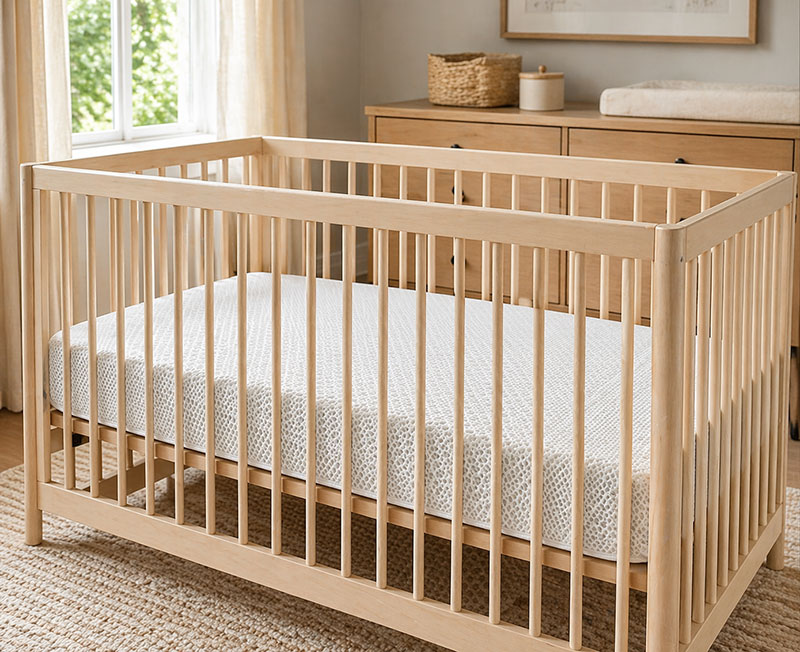
A breathable crib mattress should feel firm, fit tightly, and allow airflow through the surface—not just around it.
Start here:
Jump to what matters:
If the surface traps air or compresses too easily, airflow fails in real use. Firmness and crib fit matter just as much as airflow.
See how breathable mattresses compare inside the full crib mattress guide
Quick answer: A breathable crib mattress must stay firm, fit tightly, and allow airflow through the surface even with a fitted sheet.
Best breathable crib mattress quick answer
A breathable crib mattress is best when it combines a fully air-permeable surface, firm support, and a tight crib fit with no gaps. The safest options maintain airflow through the top layer even with a fitted sheet and meet U.S. firmness and fit standards.
Why breathable crib mattresses matter for real safety
A breathable crib mattress must meet three conditions: airflow through the surface, firm support that does not compress, and a tight fit with no gaps inside the crib.
Airflow only matters if it still works under normal conditions. Temperature worries often get mixed into breathable mattress claims, so my crib mattress overheating guide explains what can affect heat buildup and which product promises need a closer look. A tight fitted sheet can reduce airflow more than expected on certain designs, especially if the surface layer collapses slightly under pressure.
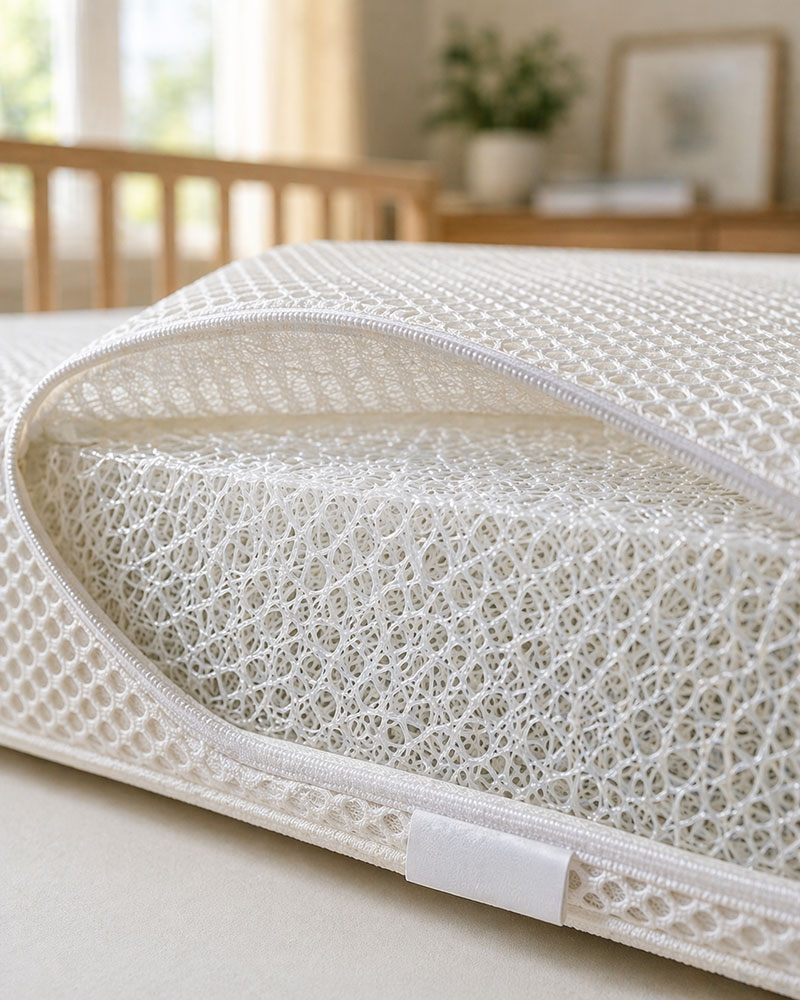
This is why true breathable construction uses an open core that does not flatten easily.
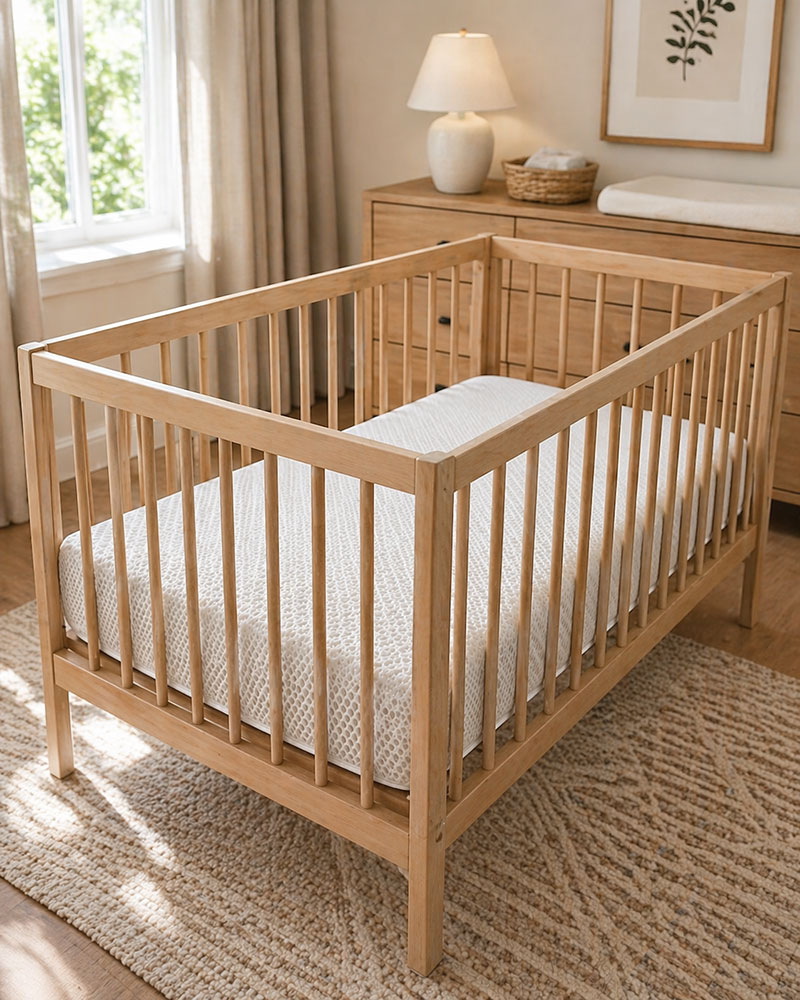
What to look for before buying a breathable crib mattress
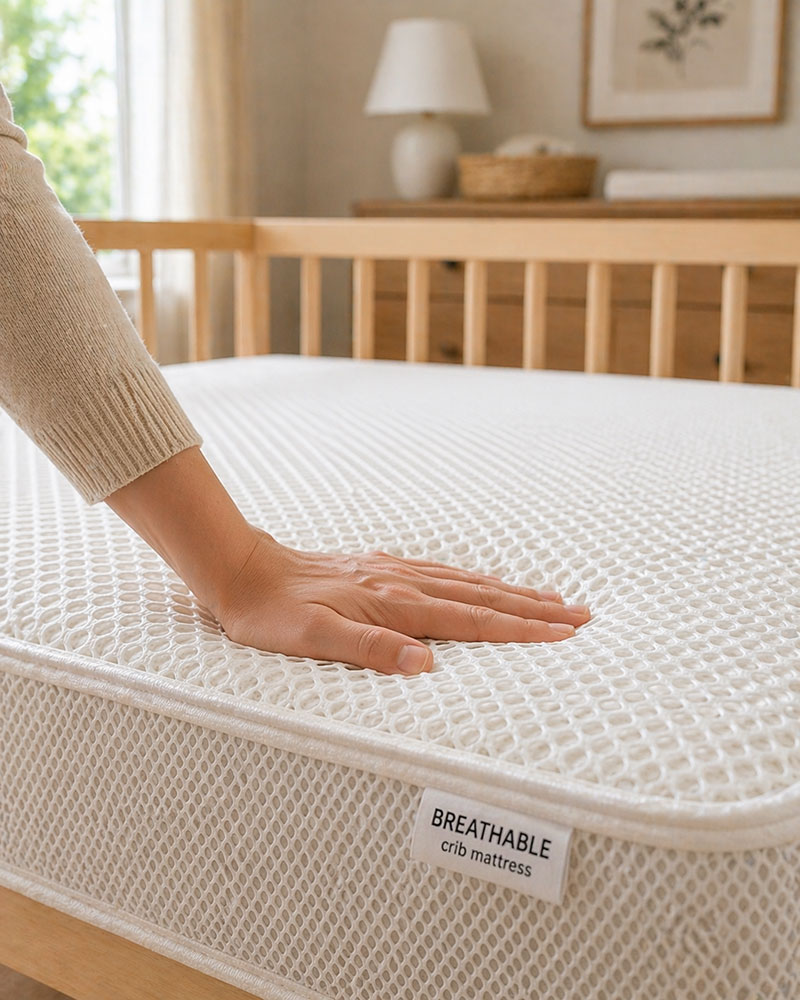
Press your hand into the mattress. It should push back immediately. If it sinks or feels padded, it is not correct for a crib.
Now check the edges. A proper mattress sits flush with the crib frame without shifting. Even small gaps become noticeable once the sheet is on.
Use this crib mattress fit guide to check your setup
The right mattress feels firm, sits tight, and does not change shape when pressure is added.
Breathable vs foam crib mattress differences that matter
Foam holds structure, while breathable mattresses combine structure with airflow through an open core.
That difference becomes obvious when you remove the sheet and see the core. Foam looks solid. A breathable mattress has an open interior that allows air movement.
Compare breathable vs foam crib mattress differences
This difference is what determines whether airflow actually works or is just a marketing claim.
This is what separates a true breathable crib mattress from one that only sounds breathable.
Crib mattress fit check that prevents real problems
Slide two fingers between the mattress and crib frame. If they fit easily, the mattress is too small.
That quick test reveals more than measurements on a product page.
Review full crib mattress safety guidelines
The Consumer Product Safety Commission requires a tight fit with no dangerous gaps. This is a baseline rule, not a suggestion.
A breathable mattress that does not fit correctly is not a safe mattress.
Firmness and support still come first
Even with airflow, the mattress must stay firm.
That is also why many parents begin asking why crib mattresses are designed to feel firmer than regular mattresses, since airflow features never replace the need for a flat, supportive sleep surface.
Some parents consider adding extra cushioning on top of a breathable mattress, but my are crib mattress toppers safe guide explains why added toppers can interfere with firmness, airflow, and the stable sleep surface infants need.
When you press down, it should return to shape immediately without leaving an impression.
Understand correct firmness levels here
The right mattress feels solid every time, not just when it is new.
If you are comparing mattresses that claim to last beyond the infant stage, this dual sided crib mattress guide explains when a two-stage design is useful and when the label matters less than firmness, fit, and structure.
For a clearer side-by-side decision, this dual-sided crib mattress vs single-sided mattress guide explains when a flippable mattress is worth it and when a simpler one-sided mattress may be enough.
Materials and non-toxic considerations that affect real use
After structure and fit, materials come into focus.
Some breathable mattresses use a mesh core with a removable cover. Others combine airflow with low-emission materials.
Once removable layers and waterproof surfaces enter the discussion, many parents also start comparing crib mattress pads versus protectors to understand which products preserve airflow without adding extra surface padding.
Explore non-toxic crib mattress options
Compare organic crib mattress choices
This usually shows up during cleanup. Some materials dry quickly. Others hold moisture longer than expected.
Top breathable crib mattress option to consider
Set up correctly, this type of mattress keeps airflow consistent across the surface and holds its shape after repeated use.
See how this compares to other crib mattress types
U.S. safety standards for crib mattresses
All crib mattresses sold in the United States must meet federal safety standards set by the Consumer Product Safety Commission.
View official safe sleep guidance from the CPSC
These standards cover firmness, fit, and construction to reduce risk.
Breathable crib mattress FAQ
Are breathable crib mattresses actually safer?
They can improve airflow, but safety still depends on firmness and fit. A breathable mattress only works when it meets all crib safety standards.
Can a baby breathe through a crib mattress?
Some allow airflow through the surface, but no mattress replaces safe sleep positioning.
Do breathable crib mattresses prevent suffocation?
No mattress can fully prevent suffocation. Breathable design may reduce risk in certain situations but does not replace safe sleep practices.
Do breathable crib mattresses get mold?
They are less likely to trap moisture, but mold can still develop in humid conditions if not cleaned and dried properly.
Are breathable mattresses worth it?
They are worth considering if airflow is important, but only after confirming proper firmness and fit.
When you click on links to various merchants on this site and make a purchase, this may result in this site earning a commission. This does not affect the price you pay.

UBGI Gold Standard 2026
Reviewed under the site's
editorial checklist.
Photos, decorating ideas, party setups and reader submissions are shared for inspiration unless a page is specifically presented as a pattern, tutorial, reference guide or step-by-step project. Follow the instructions, measurements, safety guidance and manufacturer directions provided for the particular project or product.
About Jan | Contact | Baby Nursery Ideas (Blog) | Site Map | Privacy Policy | Disclosure Policy | Disclaimer | Affiliate Disclosure | Earnings Disclosure | Facebook | Pinterest
I am a participant in the Amazon Services LLC Associates Program, an affiliate advertising program designed to provide a means for us to earn fees by linking to Amazon. As an Amazon Associate I earn from qualifying purchases.
Copyright © 2006-2026. All Rights Reserved.