When to Replace a Crib Mattress: Safety, Age, and Wear Signs
When to replace a crib mattress usually comes down to firmness, shape, and fit. Most crib mattresses are used for about 3–5 years, but age alone is not the only factor. A mattress that develops visible dips deeper than about 1 inch, soft areas that do not spring back, or small gaps between the mattress and crib frame may no longer perform as intended. Over time, materials compress, moisture can accumulate, and internal support can weaken. Evaluating age, surface condition, and how securely the mattress fits inside the crib helps determine when replacement is appropriate.
Before You Decide to Keep Using the Mattress...
Small gaps around the crib mattress?
Why crib mattresses feel so firm in the first place
Has the mattress become too soft?
Can a crib mattress be cleaned safely?
Quick Signs a Crib Mattress May Need Replacing
Strong odors or moisture damage
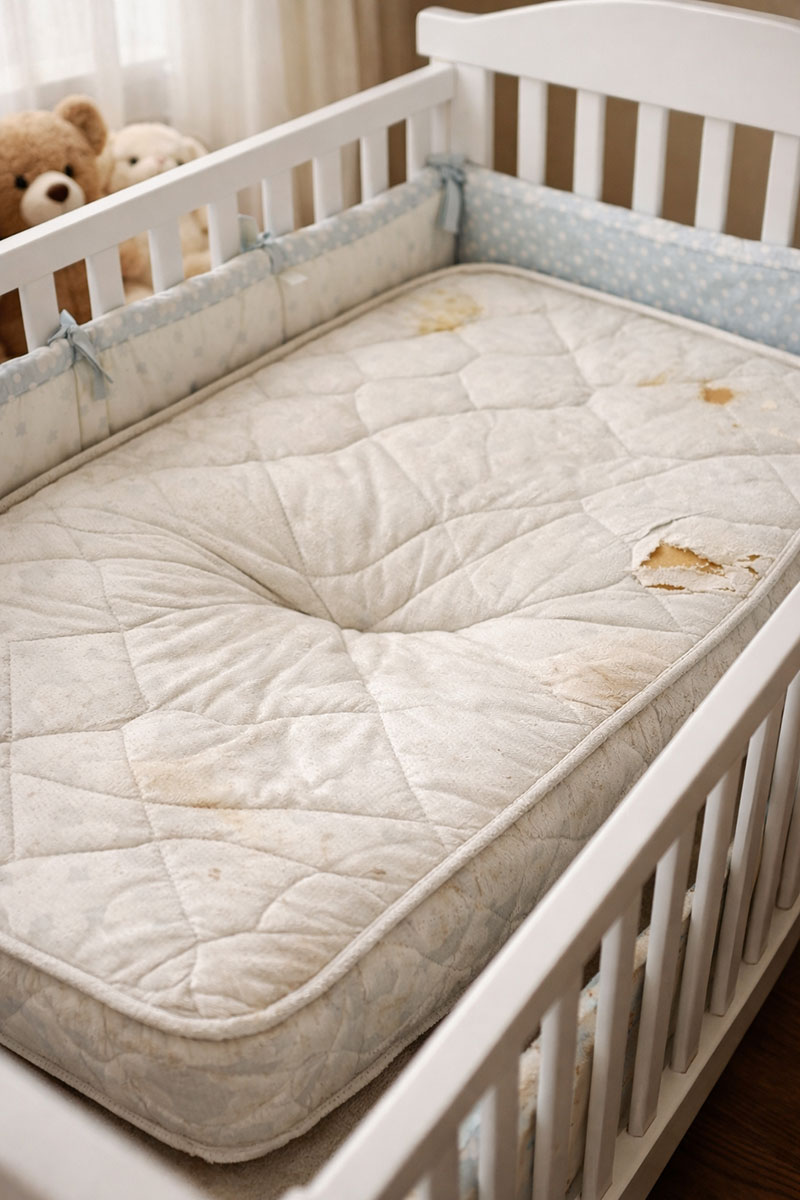
In the United States, full-size crib mattresses are manufactured to meet federal safety standards that establish baseline expectations for firmness, dimensional fit, and labeling at the time of production. Those standards have evolved as testing methods and performance requirements have been updated. A mattress that no longer maintains a firm, flat surface or a secure fit inside the crib may not perform as originally intended. This page provides evaluation guidance only and does not offer repair, modification, or brand-specific instructions.
This page is part of the broader crib mattress overview, which brings sizing, firmness, fit, protection, and replacement topics together in one place, and for an even more complete, side-by-side look at materials, fit, firmness, and overall value across standard options, see my best crib mattress guide.
Why Crib Mattresses Wear Out Over Time
Crib mattresses are made to support a baby for a short stage of life, not forever. Even when a mattress looks fine on the outside, the inside materials slowly change. Foam can flatten, and springs can lose their strength. This happens little by little with regular use.
As materials age, the mattress may no longer stay firm and flat. These changes are normal, especially after years of use, and they are one reason parents start looking more closely at when to replace a crib mattress instead of judging by age alone.
My best breathable crib mattress guide compares airflow-focused designs based on how well they hold their shape, fit the crib correctly, and maintain a consistent sleep surface over time.
A crib mattress that no longer stays firm and flat should not continue in use.
How Often Should You Replace a Crib Mattress?
Many crib mattresses are used for about three to five years. This can vary based on how often the mattress was used, how it was stored, and what materials it is made from.
A mattress used every day for one child may wear out faster than one used for a shorter time. Mattresses stored in damp or humid areas may also age sooner, which makes when to replace a crib mattress a condition question as much as a calendar question.
When a crib mattress starts showing wear, replacement comparisons often move from age and condition into construction, materials, and long-term durability. My breathable vs foam crib mattress guide explains how airflow-focused designs and traditional foam mattresses differ, while my crib mattress dual sided vs single sided comparison helps sort out whether another two-stage mattress makes sense or whether a single-sided crib mattress may be enough.
If you are replacing an older mattress and considering another two-stage option, my dual sided crib mattress guide explains how infant and toddler sides work and when that design may be worth comparing.
From there, my crib mattress guide explains what to check before replacing one, including fit, firmness, and everyday use. For cleaner-material comparisons, my best organic crib mattress guide pulls those crib mattress considerations together, while the Naturepedic crib mattress review guide gives a brand-specific look at organic materials, waterproof construction, and long-term durability. For low-emissions nursery context, see my GREENGUARD Gold certified cribs guide.
Signs You Should Replace a Crib Mattress
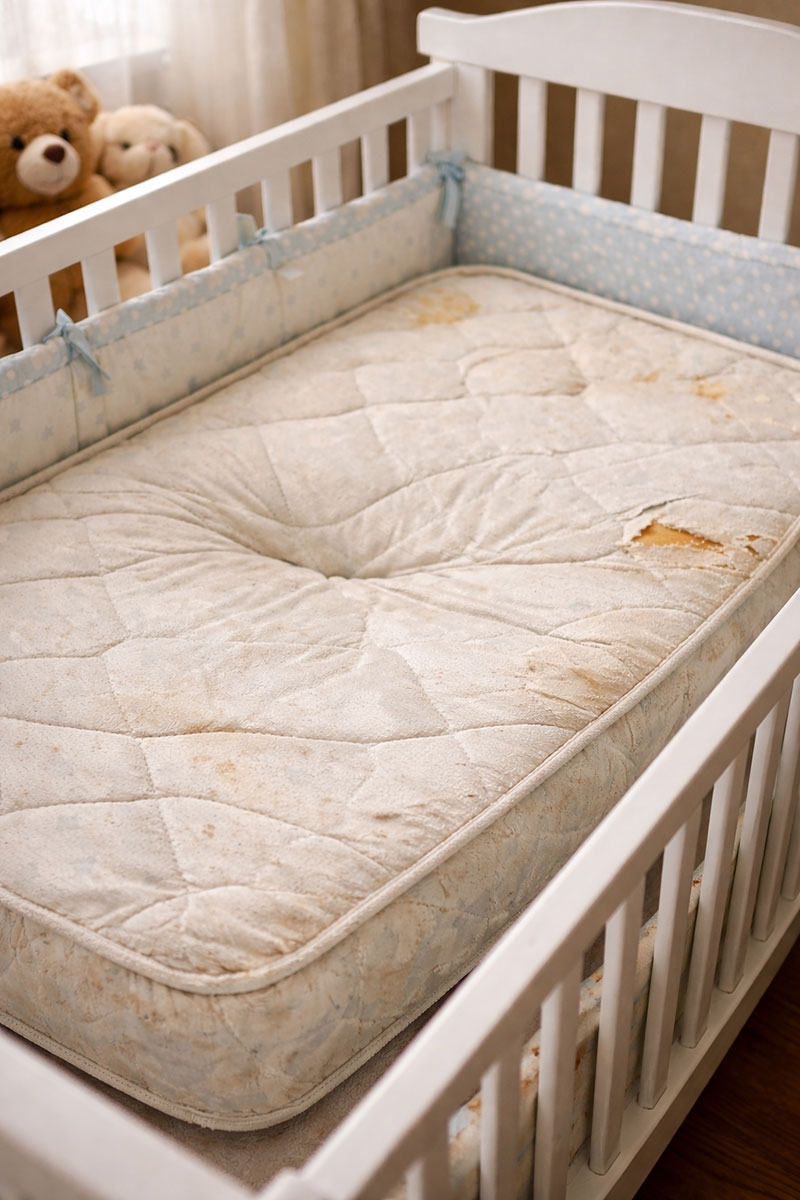
Parents usually start wondering whether a crib mattress needs replacing after noticing sagging, a strange smell, uneven firmness, deep stains, or small gaps around the edges. In many cases, the warning signs appear gradually, which is why older crib mattresses sometimes seem “fine” until compared side by side with a newer one.
Some changes are easy to see or feel as a mattress gets older. Common signs include:
- Dips or soft spots that do not bounce back
- An uneven or sloping surface
- Cracks, tears, or peeling on the mattress cover
- Strong smells that do not go away
- Stains that reach deep into the mattress
When several of these signs appear together, the mattress is usually near the end of its useful life, and that is often when to replace a crib mattress becomes clearer than trying to guess from the purchase date alone.
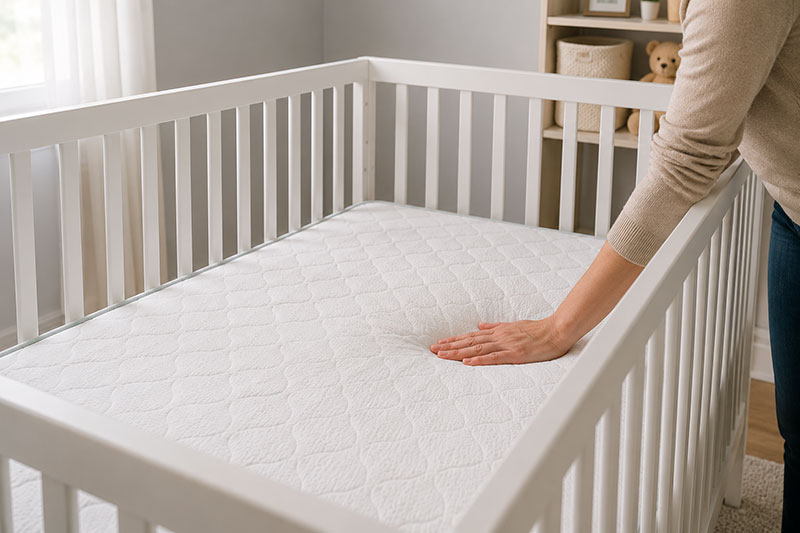
Checking for soft spots, uneven areas, and loss of firmness is one of the easiest ways to evaluate an older crib mattress.
Changes in Firmness and Shape
As materials compress, the surface may begin to show visible depressions. Dips deeper than approximately 1 inch, areas that remain indented after pressure is removed, or sections that feel uneven compared to the rest of the mattress are commonly treated as signs of material fatigue rather than temporary surface changes.
A crib mattress should stay firm and flat. Over time, repeated pressure can leave areas that feel uneven or slower to spring back after weight is removed.
That gradual change is also why many parents begin asking why crib mattresses are intentionally made so firm in the beginning, since infant sleep surfaces are designed to resist compression long before visible wear starts to appear.
As mattresses change with age, some parents start considering added cushioning layers, but this breakdown of crib mattress topper safety concerns explains why extra padding can further change firmness and surface stability.
Because firmness changes slowly, the difference may not be noticed right away unless the mattress is compared to how it felt when new.
Moisture and Cleanliness Over Time
Crib mattresses can absorb moisture over the years. This can come from humidity, spills, or small leaks. Even with a mattress cover, moisture may reach the inside through seams or edges.
A waterproof crib mattress may help limit moisture absorption, but replacement still matters if the mattress develops odors, stains, sagging, or a changed surface over time.
That is also why many parents begin comparing crib mattress pads and waterproof protectors more carefully, since some products are designed mainly for moisture protection while others add extra padding to the sleep surface.
As a mattress ages, it may also collect dust or allergens. These changes are not always visible but become more likely with time.
Using the Same Mattress for Another Baby
Some parents reuse a crib mattress for another baby, while others replace it between children. The biggest things to look at are firmness, shape, cleanliness, and how well the mattress still fits inside the crib. Older mattresses that have soft spots, trapped odors, moisture damage, or an unknown history are often the ones parents decide not to keep using.
Safety Standards Change Over Time
As mattress standards, labels, and documentation evolve, this crib terminology glossary helps clarify the crib mattress terms and material language that appear in older and newer product descriptions.
For families using older or inherited cribs, the discontinued baby crib models archive provides historical context on crib models that are no longer manufactured and explains how older crib designs relate to current mattress expectations.
Crib mattress standards have changed over the years. Older mattresses may have been made before newer rules or testing standards were introduced.
In the United States, crib mattresses sold for use with full-size cribs are designed to meet federal safety standards that address firmness, fit, and performance expectations for infant sleep surfaces, which is why older mattresses may not align with current U.S. requirements even if they appear usable.
For context on how today’s crib mattress dimensions were established and why older mattresses may follow different size conventions, the standard crib mattress size history page outlines how crib mattress measurements evolved alongside manufacturing and regulatory updates.
Those regulatory updates occurred alongside broader crib rule changes, which is why the crib safety regulation timeline helps explain when mattress expectations, testing standards, and replacement considerations began to shift across different eras.
Replacing an older mattress can align the sleep setup with current expectations for firmness and materials.
For a clearer breakdown of how those broader requirements are structured, see the current U.S. crib safety standards guide.
Mattress Fit Inside the Crib
A crib mattress should fit snugly inside the crib frame.
Over time, some mattresses lose shape or shrink slightly, creating small gaps along the sides. As those gaps start to appear, this crib mattress gap problems guide helps explain what those spaces can mean and how to evaluate whether they are within normal range.
For families using a smaller crib, this mini crib mattress size guide explains the common dimensions and gap checks to review when fit starts to look different over time.
If the mattress no longer fits securely or lies flat, replacement is often considered.
As mattress condition and fit are evaluated over time, many families also start thinking ahead to the next sleep stage, which is why questions about when to switch from crib to toddler bed often come up alongside replacement decisions.
For a clearer look at what changes after crib use ends, this crib mattress and toddler mattress comparison explains how the two mattress stages differ.
When Most Parents Decide to Replace a Crib Mattress
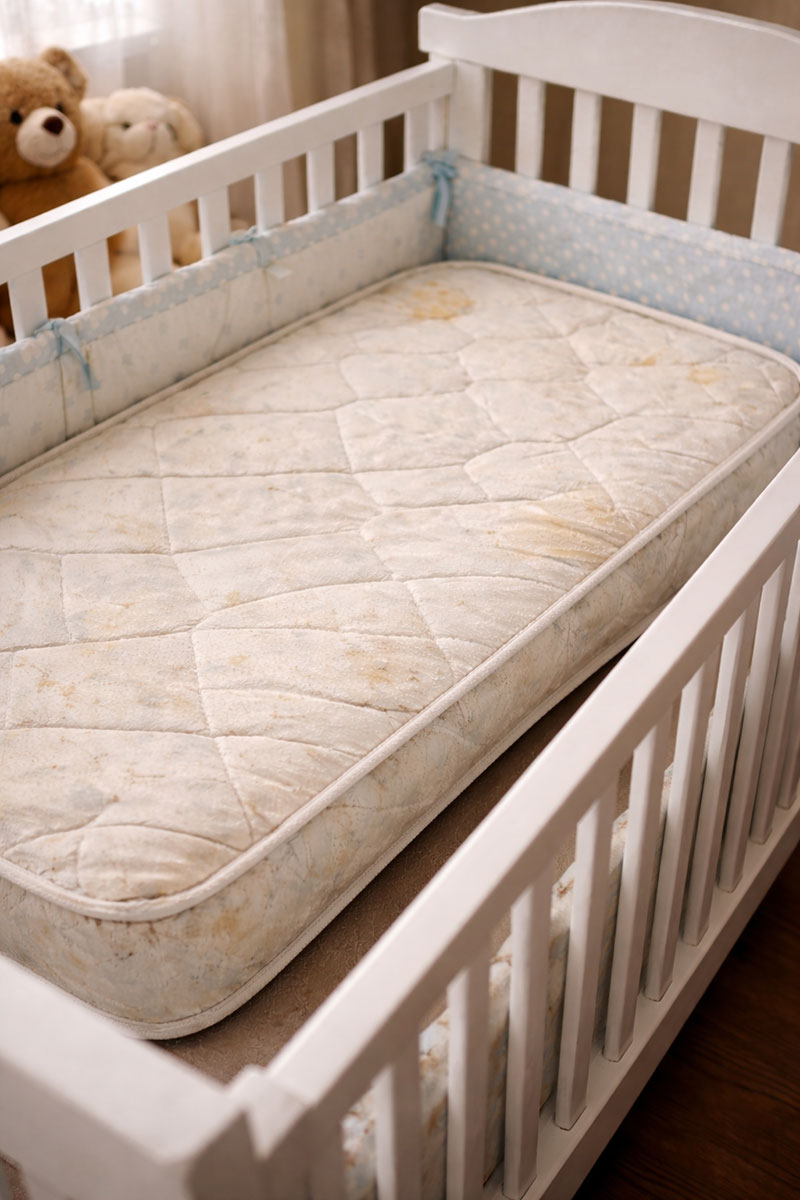
Most parents replace a crib mattress after multiple years of daily use, once firmness changes become noticeable, or when the mattress no longer looks clean, level, or supportive. In many homes, replacement decisions happen after several smaller warning signs begin showing up together instead of one dramatic problem appearing overnight.
- It has been used for multiple years
- The surface is no longer firm or even
- Visible wear or damage is present
- Odors or moisture problems remain
- The fit inside the crib has changed
Related Pages
What Baby Crib Mattress Is Best
Standard Crib Mattress Size
How to Clean a Crib Mattress
When to Replace a Crib Mattress Based on Age and Condition
When to replace a crib mattress often depends on both how old the mattress is and how it looks and feels today. Some mattresses reach the end of their usable life because of time alone, while others show clear changes much sooner.
A crib mattress that has been used daily for several years may lose firmness even if no damage is visible. Materials inside the mattress slowly break down, which can affect support and shape. Mattresses that were stored between uses may also age due to humidity or temperature changes, even when they were not actively used.
Condition matters just as much as age. A newer mattress with sagging, deep indentations, or moisture damage may need replacing sooner than an older mattress that stayed firm, flat, and dry. Because changes happen gradually, they are sometimes noticed only after comparing the mattress to a newer one.
Safety guidance around infant sleep surfaces also continues to evolve. Organizations that focus on infant sleep safety emphasize firm, flat sleep surfaces that maintain their shape over time. Reviewing updated guidance can provide helpful context when deciding whether an older mattress still meets current expectations.
For additional reference, the American Academy of Pediatrics maintains up-to-date information on infant sleep safety and sleep environments:
https://www.aap.org/en/patient-care/safe-sleep/
Taking age, condition, and current safety guidance together can make the decision clearer when a crib mattress has been in use for several years.
How to Tell When a Crib Mattress Should Be Replaced
Knowing when a crib mattress should be replaced usually comes down to firmness, fit, cleanliness, and visible wear. Sagging areas, soft spots, trapped odors, deep stains, damaged covers, and gaps around the mattress edges are some of the most common signs parents notice first. While many crib mattresses are used for around 3 to 5 years, daily use, storage conditions, and moisture exposure can shorten that timeline. A crib mattress should still feel firm, flat, supportive, and fit securely inside the crib without shifting or leaving noticeable gaps. That final combination of age, condition, and fit is usually when to replace a crib mattress becomes the clearest answer.
When you click on links to various merchants on this site and make a purchase, this may result in this site earning a commission. This does not affect the price you pay.

UBGI Gold Standard 2026
Reviewed under the site's
editorial checklist.
Photos, decorating ideas, party setups and reader submissions are shared for inspiration unless a page is specifically presented as a pattern, tutorial, reference guide or step-by-step project. Follow the instructions, measurements, safety guidance and manufacturer directions provided for the particular project or product.
About Jan | Contact | Baby Nursery Ideas (Blog) | Site Map | Privacy Policy | Disclosure Policy | Disclaimer | Affiliate Disclosure | Earnings Disclosure | Facebook | Pinterest
I am a participant in the Amazon Services LLC Associates Program, an affiliate advertising program designed to provide a means for us to earn fees by linking to Amazon. As an Amazon Associate I earn from qualifying purchases.
Copyright © 2006-2026. All Rights Reserved.