Crib Mattress Size vs Twin Mattress Size: Measurement Comparison
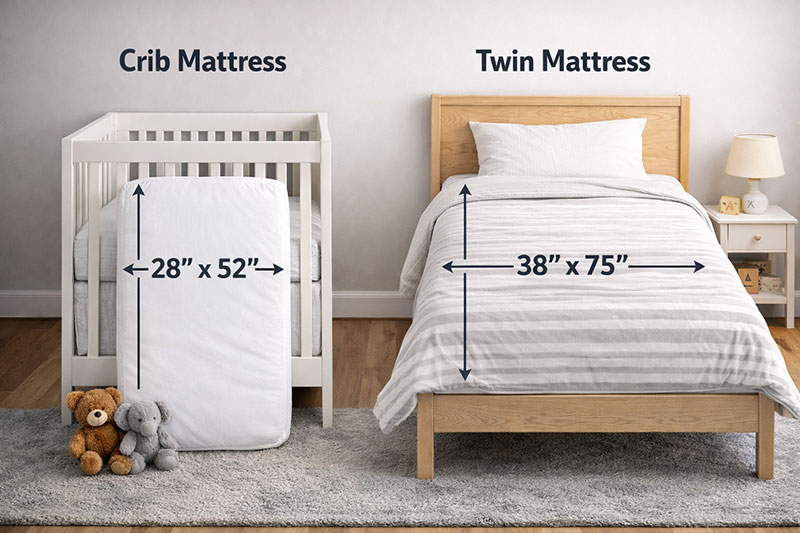
A standard U.S. crib mattress measures about 28 × 52 inches. A standard twin mattress measures about 38 × 75 inches. These are different size categories and are not interchangeable. This page compares crib mattress size vs twin mattress size using measurement differences, fit intent, and category alignment within the United States.
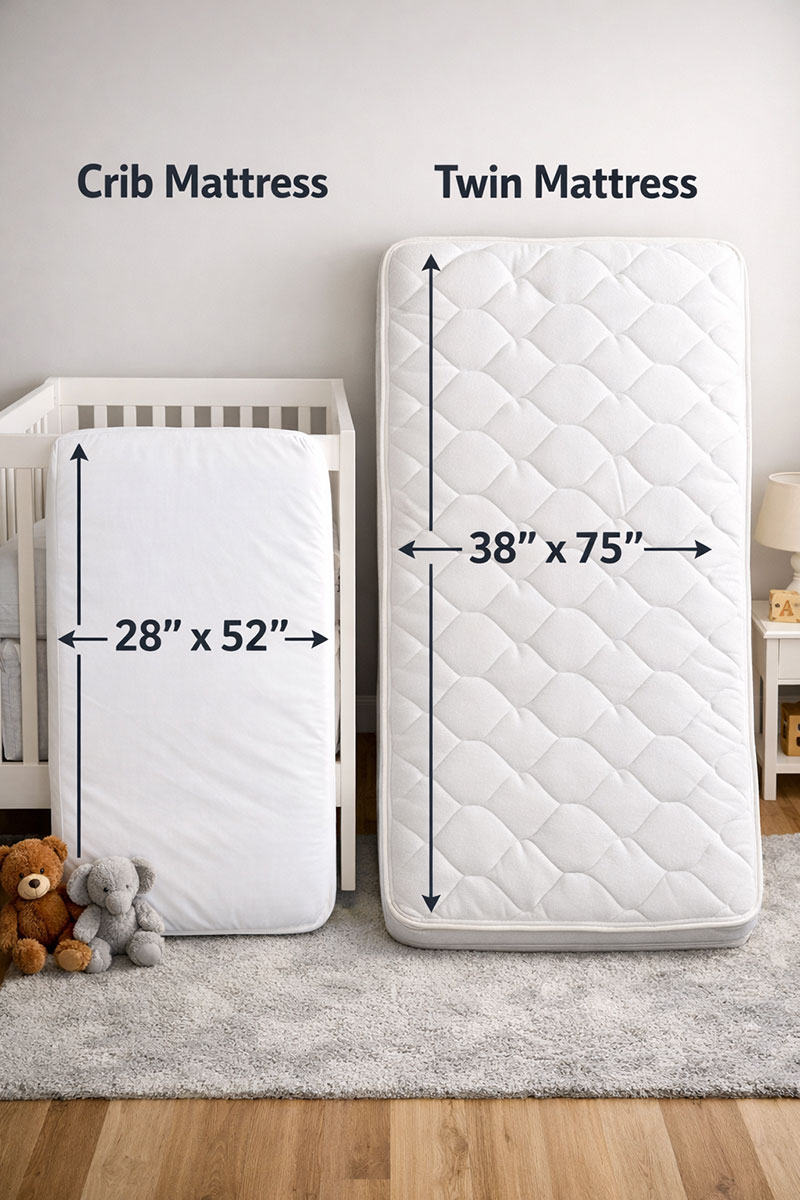
In this comparison, a crib mattress refers specifically to a mattress designed for a full-size baby crib sold in the United States, while a twin mattress refers to a mattress built for a standard twin bed frame intended for children or adults.
In the United States, full-size crib mattresses are manufactured to align with federally regulated crib interior dimensions, creating a tight fit expectation between crib frame and mattress. Twin mattresses are not manufactured under crib interior dimension standards and are designed for a different bed category.
Those regulated interior dimensions work alongside strict federal crib slat spacing limits, which define how far apart crib rails can be positioned within that same frame category.
- Crib mattresses and twin mattresses are built for different bed frame types.
- The two mattress types differ significantly in width, length, and intended fit.
- Crib mattress sizing is designed to match crib frame dimensions with minimal extra space.
- Confusion often arises because the mattresses can look similar in photos despite
structural mismatches.
This page provides general reference information about mattress size categories and fit differences and does not offer substitution, purchasing, or installation guidance.
This comparison explains size categories only and does not suggest substituting one mattress type for another.
If you’re trying to make a “close enough” mattress work, pause and run through the crib safety checklist first—especially the steps that confirm mattress fit and eliminate gaps at the edges and corners.
People usually search crib mattress size vs twin for one of two reasons: there is already a twin mattress in the home and it feels tempting to see whether it can “work for now,” or there is a strong desire to reduce extra purchases. This comparison often stays active because the two mattresses can look similar in photos, while the measurements and intended fit behave very differently once they are placed next to a crib frame.
Crib mattress size vs twin: why this comparison matters in real life
This topic connects to compliance information because crib mattresses and crib frames are designed around a tight size match. Twin mattresses are built for a twin bed frame, with different proportions, sheet sizing, and typical room layout. For a closer look at the testing standards and labeling that support those compliance requirements, review this crib mattress certifications explanation covering how mattresses are evaluated and categorized.
For a broader overview of crib types and size categories across nursery setups, see the baby crib overview page.
When the two are set side by side, the size difference shows up as a category difference rather than a small variation.
“Standard” is sometimes used as a broad label, but crib mattress sizing is tied to a specific sleep surface category. Additional detail appears on the standard crib mattress size information page.
Within the crib category itself, there are smaller-format options that follow different dimensions and use cases, which are explained in this mini crib mattress guide covering how compact crib mattresses differ from full-size models.
For a closer look at mini crib mattress measurements, this guide explains how mini sizes differ from both full-size crib mattresses and twin mattresses.
For readers narrowing the crib-size category by material type, my best organic crib mattress guide brings together organic, waterproof, and certification-focused options designed for standard crib dimensions.
For deeper context on how those size categories were established and why the measurements stayed consistent over time, the standard crib mattress size history page traces how crib mattress dimensions developed alongside crib manufacturing and regulatory changes.
Those regulatory shifts are mapped in detail on the crib safety regulation timeline, which shows how enforcement milestones reinforced strict crib mattress fit requirements that separate crib-size and twin-size categories.
Here’s the core difference: a crib mattress is designed to sit snugly inside crib rails with minimal extra space. A twin mattress is wider and longer, and it is designed for a twin bed frame. Even when a twin mattress is physically near a crib or inside a larger sleep space, that placement is not the same as an intended crib fit.
For crib use, a crib mattress is the correct size classification. A twin mattress is not an interchangeable substitute for a crib mattress, even temporarily.
This is why the crib mattress size vs twin comparison stays relevant in real nurseries—the beds may look similar at a glance, but the dimensions and fit category are different.
See standard crib mattress options that match crib sizing and fit intent
Exact measurements and the “feel” of the difference
Most standard crib mattresses are around 28 inches by 52 inches. A typical twin mattress is about 38 inches by 75 inches. When those numbers appear together, the size difference becomes clear: a twin is not a small step up—it is a different mattress size classification with different proportions.
In a nursery, that difference shows up quickly. A crib mattress is narrow enough to sit properly inside crib rails with edge support designed around the crib frame. A twin mattress is built for a bed frame that supports its larger width and length. In many households, a twin mattress already on hand ends up being used later in a different room stage, while the crib uses a crib-size mattress.
See standard crib mattress options in common crib sizes
Sheets are often purchased alongside the mattress. The crib sheet fit information page covers sizing and fit categories so the sheet size matches the mattress category. Sheet sizing may seem small, but it becomes a daily detail in a nursery setup.
When comparing mattress categories and fit details, unfamiliar wording can add confusion, so this crib terminology glossary explains the crib parts, hardware terms, and sizing language commonly used across manuals, labels, and listings.
That same kind of wording confusion happens with crib parts too, and the page crib rails vs crib bumpers explains what those items are, how they are different, and why the names are often mixed up.
For older nurseries or secondhand setups where the crib model itself may no longer be in production, the discontinued baby crib models archive helps identify legacy crib designs and explains how discontinued models fit into today’s mattress sizing and fit expectations.
Fit notes
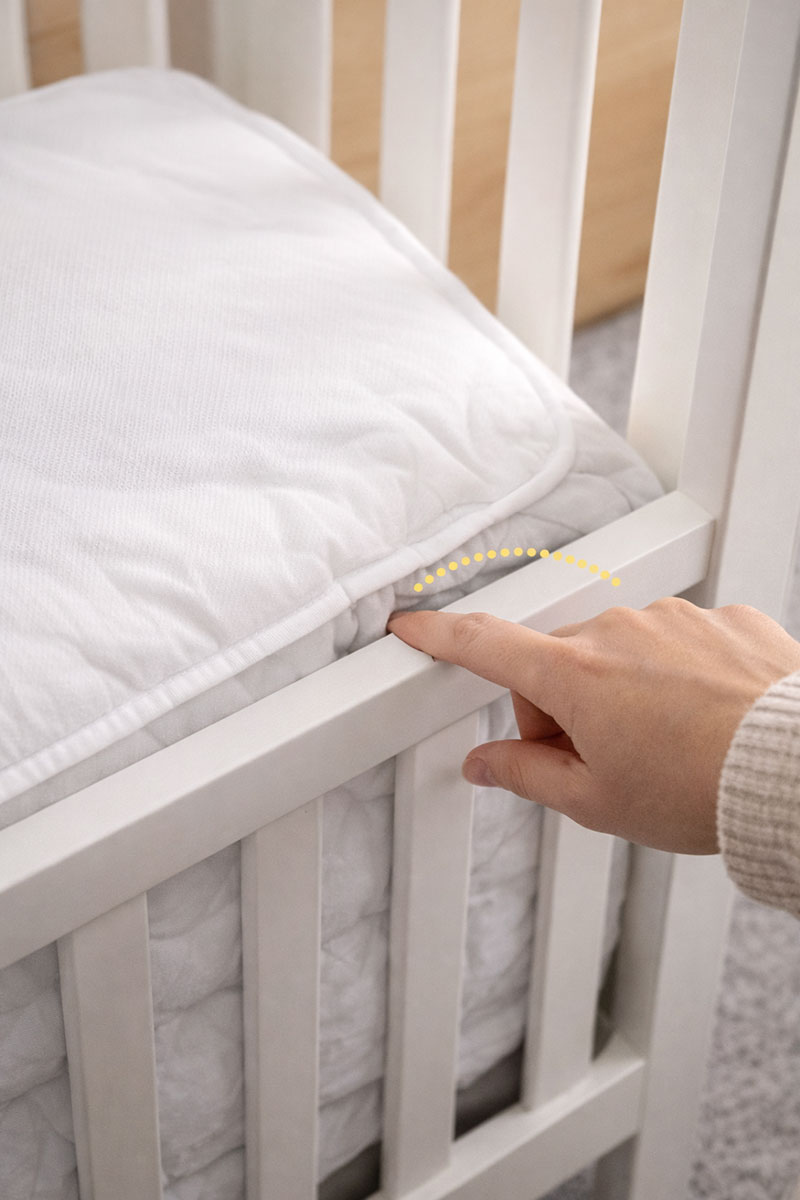
Fit questions usually center on how the mattress sits inside the crib frame. Descriptions commonly include edge spacing, corner spacing, and how easily the mattress shifts inside the frame.
One factor that directly affects how that fit behaves is mattress firmness, and this firm crib mattress guide explains how firmness impacts stability inside the crib.
When extra space appears at the sides or corners, or when the mattress shifts with light pressure, that description points to a misalignment between the mattress dimensions and crib frame interior. These details usually lead back to the measured interior crib dimensions and the measured mattress dimensions as the comparison points.
Did I buy right? Common “almost” situations I see
This is the point where many families feel stuck, because the mattress in the room may be new and visually fine, and returns can feel like a hassle, especially when the underlying mattress category differs from what is outlined in the crib mattress reference overview. Mattress fit, however, is tied to how the crib frame is designed around the mattress size category, so a mismatch tends to stay noticeable once the crib is in use.
A full reference explanation of crib mattress categories, sizing intent, and construction details appears on the crib mattress overview page.
A twin mattress purchased early is not necessarily wasted. In many homes it simply becomes a later-stage mattress for a different room setup. During the crib stage, the crib frame is typically paired with a crib-size mattress so the dimensions stay aligned with the crib’s interior measurements.
For the practical layer that gets added in many nurseries, the crib mattress protector information page covers common materials and categories that appear in product listings.
Most parents choose
For families who already own a twin mattress but keep a separate sleep setup for trips or temporary use, the BabyBjörn travel crib is often considered because it uses its own mattress designed for travel and portable crib frames.
Many households end up using a standard crib mattress for the crib stage and using the twin mattress later, often for a toddler bed that takes a twin, a floor bed setup, or a big-kid room when the timing fits the household plan.
For a side-by-side look at how the sleep setup changes after the crib stage, see crib mattress vs toddler mattress differences.
That later-stage transition often raises timing questions, which is why this overview on when to switch from crib to toddler bed helps clarify common readiness signs and age ranges parents usually research.
Reducing extra purchases is a common goal in nursery planning. In practice, keeping the crib matched with a crib-size mattress and keeping the twin mattress matched with a twin bed frame keeps the categories separated and reduces repeated sizing questions.
Why “making it work” usually backfires
Common attempts such as extra padding or “making it work” usually trace back to a basic mismatch: the mattress and frame were not designed as a pair.
Another issue is that a twin mattress is built for a different sleep space category. Even when materials are high quality, the mattress' design alignment is still shaped and sized for a twin bed frame. That mismatch tends to keep the comparison active, especially when the crib frame is already assembled in the nursery.
An authoritative source for crib information is the U.S. Consumer Product Safety Commission, which publishes crib materials that are commonly cited in product listings and product labeling language.
For a structured breakdown of how modern crib size expectations align with federal safety requirements, see the crib safety standards overview.
Questions about airflow marketing and safety claims come up in almost every mattress comparison, so I also put together a separate guide on are breathable crib mattresses safe and what parents should verify before treating “breathable” as a safety feature.
For parents comparing premium materials and certification-focused options within the crib category, my Naturepedic mattress guide for cribs breaks down what this brand is known for and where it fits in the broader mattress market.
Consumer Product Safety Commission crib information
If a twin mattress is already owned
When a twin mattress is already in the home, the purchase often fits best as a later-stage item rather than a crib-stage substitute. In many households it becomes part of a toddler room plan, a guest room plan, or a big-kid room setup.
Travel sleep setups are usually handled separately, since travel cribs and portable cribs follow their own size categories. The mini and portable crib mattress size information page covers common portable sizes and labeling language that appears in listings.
If you only remember one thing
A crib mattress is built around a crib-size frame category. A twin mattress is built around a twin bed frame pairing. When the mattress category matches the bed category, sheet sizing and everyday setup details tend to stay simpler.
Second-guessing often shows up at the point where a mismatch is visible. Interior crib measurements and mattress measurements are the two concrete numbers that keep the comparison grounded in the category difference.
Because mattress size category interacts with how the mattress sits on the crib’s internal support system, this reference explains how crib mattress height adjustment positions are defined and described across crib models: crib mattress height adjustment guide.
Small details that save you headaches later
Once the correct mattress category is in the crib, the next questions tend to be practical: sheet fit, cleaning, and routine maintenance. These topics are less about the side-by-side comparison and more about the everyday realities of nursery use.
As everyday use adds up, those maintenance questions often turn into lifespan questions, which is why this reference on when to replace a crib mattress outlines common age ranges, wear patterns, and condition changes parents typically notice over time.
That is when crib mattress cleaning comes up in general discussions, which is why I keep crib mattress cleaning information collected on crib mattress cleaning information.
When everything looks fine in the crib setup, attention often shifts to maintenance. A protector and a spare set of sheets are common add-ons in many nurseries. The crib mattress cleaning information page focuses on basic cleanup topics without turning the subject into a large project.
Final “did I buy right?” recap and the clean next step
A crib mattress that fits the crib category keeps the nursery setup aligned with the crib frame dimensions. A twin mattress purchased with the hope of substituting it for a crib mattress usually functions better as a later-stage mattress for a different bed category.
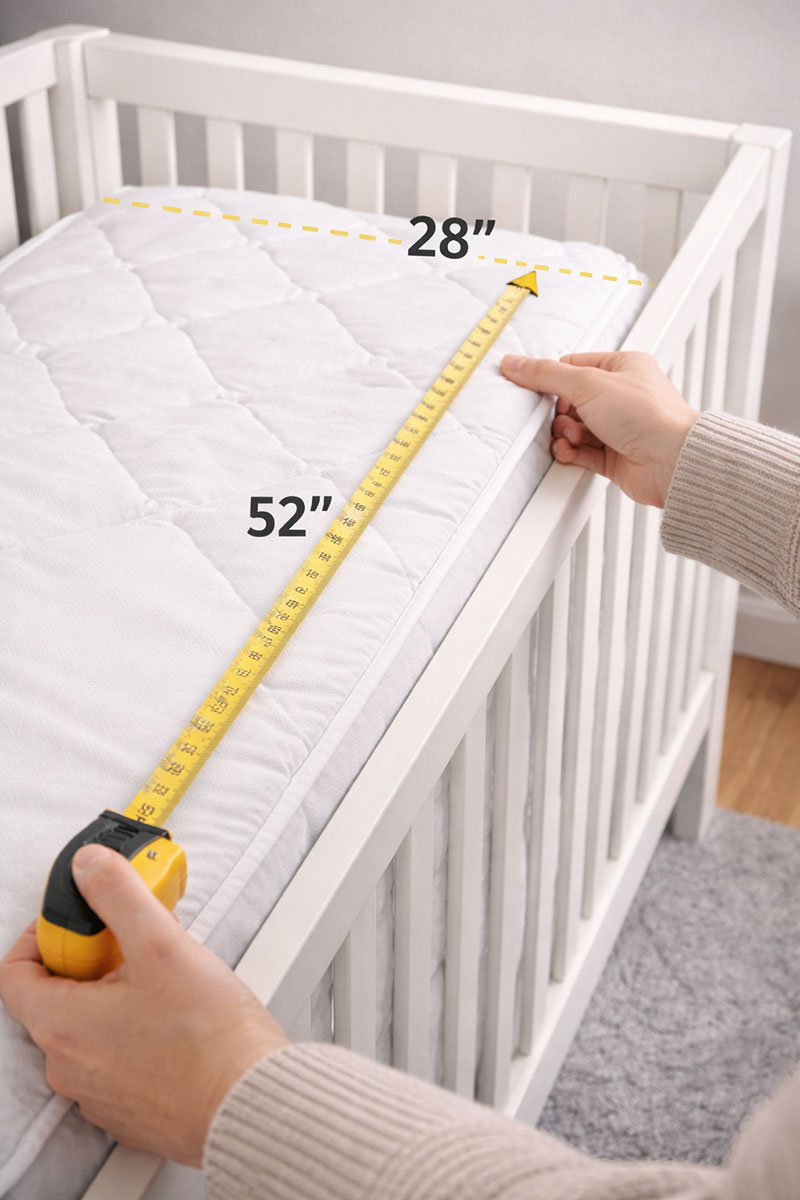
Interior crib dimensions and mattress dimensions are the two measurements that keep this comparison clear. When the crib mattress size vs twin differences are placed side by side, the categories separate cleanly: crib mattress for crib-size frames, twin mattress for twin bed frames.
Once the size differences are clear, matching the mattress to its intended bed frame removes most recurring sizing questions.
When you click on links to various merchants on this site and make a purchase, this may result in this site earning a commission. This does not affect the price you pay.

UBGI Gold Standard 2026
Reviewed under the site's
editorial checklist.
Photos, decorating ideas, party setups and reader submissions are shared for inspiration unless a page is specifically presented as a pattern, tutorial, reference guide or step-by-step project. Follow the instructions, measurements, safety guidance and manufacturer directions provided for the particular project or product.
About Jan | Contact | Baby Nursery Ideas (Blog) | Site Map | Privacy Policy | Disclosure Policy | Disclaimer | Affiliate Disclosure | Earnings Disclosure | Facebook | Pinterest
I am a participant in the Amazon Services LLC Associates Program, an affiliate advertising program designed to provide a means for us to earn fees by linking to Amazon. As an Amazon Associate I earn from qualifying purchases.
Copyright © 2006-2026. All Rights Reserved.