Do Crib Mattresses Need a Protective Cover?
Do crib mattresses need a protective cover? Many parents use the word “cover” when they’re really concerned about protection from leaks, spills, and everyday messes. A protective cover usually means some kind of removable layer, like a mattress protector or encasement, that goes under the fitted sheet. Below, I explain what counts as a protective cover, why families use them, and how to decide if adding one makes sense for your crib mattress.

Do crib mattresses need a protective cover (or is a fitted sheet enough)?
Parents often phrase the question as “do crib mattresses need a protective cover” because they’re trying to decide whether a basic sheet setup is enough or whether adding a dedicated protective layer will actually make day-to-day life easier. That wording matters, because it points directly to protection, not decoration or style.
When someone searches this, they’re usually not wondering about “bedding” in a general way. They’re picturing a real moment: a leak at 2 a.m., a sour smell that won’t wash out, or a mattress that already looks a little too lived-in. That’s why I treat “protective cover” as its own thing. A fitted sheet is the top layer you see. A protective layer is the one that quietly takes the hit underneath.
What to do next (before you buy anything): look at your crib mattress label and your current setup. To understand what those labels and safety markings actually mean, review this crib mattress certifications guide explaining how mattresses are tested and classified. Is the mattress already waterproof on the outside? Is it fabric-covered? Does it have seams that can trap moisture? Those details decide whether you need a simple protector, a full encasement, or just a better routine with sheets.
A waterproof crib mattress may already have moisture protection built into the surface, which can change whether you need a separate protective cover or only a simple fitted sheet routine.
I keep a dedicated guide on the common styles here: crib mattress protector options explained in plain English.
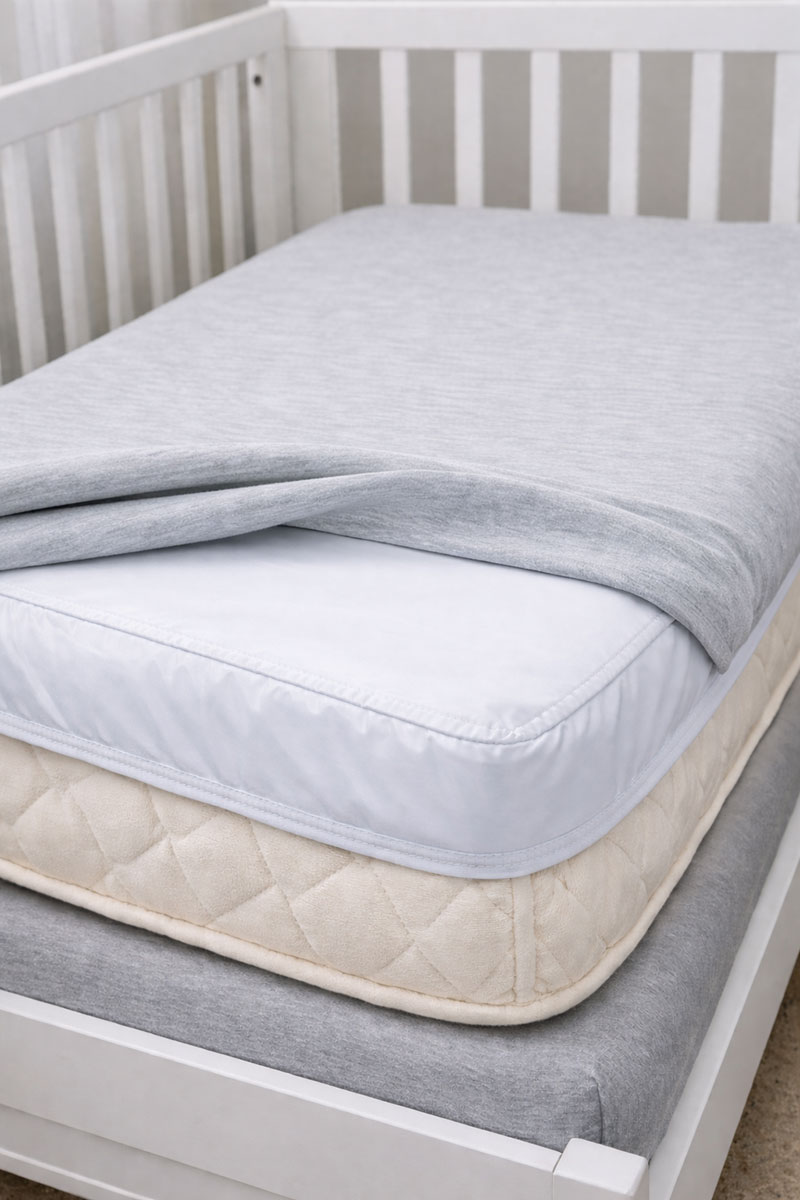
What “protective cover” can mean in real life
I’ve noticed “protective cover” gets used for a few different products, and that’s where the confusion starts. One product that gets mixed into that conversation frequently is a mattress topper, which is why I put together this explanation of crib topper safety and firmness concerns for parents comparing layered crib setups.
Parents will say “cover,” but they might mean a thin waterproof protector, a padded topper, a zip-around encasement, or even a removable outer cover that came with the mattress. These aren’t the same thing, and they don’t feel the same once the sheet goes on.
That overlap in terminology is exactly why this crib mattress pad vs protector explanation helps sort out which products are designed for moisture protection and which ones add extra cushioning or thickness.
This kind of name confusion shows up in other crib items too, and the page crib rails vs crib bumpers breaks down what those parts are, how they are different, and why the terms are often mixed up.
Here’s the simplest way to sort it out: a protector usually lies flat and comes on and off quickly. An encasement wraps the whole mattress like a jacket (top, sides, bottom). A removable mattress cover is something the manufacturer built into the mattress design, and replacements can be model-specific.
- Protector: quick cleanup, easy laundry, most common choice
- Encasement: full wrap, more effort to remove and re-zip
- Manufacturer cover: varies by brand, sometimes washable, sometimes not
Quick fit check
The “right” protective cover is the one that sits flat and stays flat. I look for a snug fit at the corners, no bunching, and no drifting when I run my hand across the surface. A cover that shifts around turns simple cleanup into a daily annoyance.
Before committing, measure your mattress thickness (especially on newer “dual-stage” styles), because some covers fit beautifully on paper and then pull tight at the corners once they’re actually on a crib mattress.
Why so many parents add a protective layer anyway
I’ve found that when people ask do crib mattresses need a protective cover, they’re usually already dealing with minor leaks, lingering odors, or the hassle of cleaning the mattress itself. Framing it that way helps you focus on solutions that reduce maintenance rather than adding extra steps.
Most of the mess isn’t dramatic. It’s the slow stuff: tiny leaks, dribbles, spit-up that creeps under the sheet, and “how did that even get there?” moments. Over time, that’s what changes how a mattress looks and smells. A removable protective layer keeps you washing a cover instead of scrubbing the mattress surface.
I also like the way a good protector makes the next step obvious. When something happens, the plan is simple: strip, wipe, reset. No guessing. No staring at a mattress wondering whether you did enough.
For the times you do need to refresh the mattress itself, this page keeps it straightforward: how to clean a crib mattress without overcomplicating it.
Protector vs. encasement: how to choose without spiraling
Here’s the honest difference: protectors are the easy day-to-day choice, and encasements are the “full wrap” choice. Neither one is “right” for everyone, and the best pick depends on what annoys you more—extra laundry steps, or dealing with a mattress surface directly.
If you want the quickest routine, a thin protector under a fitted sheet tends to feel the least fussy. If you want the whole mattress wrapped, an encasement gives you that “everything is covered” feeling, but it takes longer to remove and put back on.

Most parents choose
Most families I talk to land on the simple setup: one crib mattress, two protectors, and two fitted sheets. It’s not glamorous, but it’s the kind of routine that holds up when you’re tired and moving fast.
It also keeps you from feeling stuck. When one layer comes off for laundry, you’re not forced to stop everything and wait for a wash cycle to finish.
Does adding a cover change how the mattress feels?
This is the part people worry about, and I get it. Nobody wants a bed that feels crinkly, hot, or lumpy. The good news is most crib protectors are designed to be thin and flexible. Still, not every material feels the same. Some waterproof layers are louder. Some trap warmth. Some feel slick under a sheet. You’ll notice it more than your baby does, but it matters because you’re the one making the bed and checking it every day.
For a clearer side-by-side look at how common mattress materials compare, see my breathable vs foam crib mattress comparison, which explains how these two construction styles differ in feel, structure, and everyday use.
When I’m comparing mattresses, I also think about firmness and how the surface “reads” through layers. This page helps you sort that out without getting lost in jargon: crib mattress firmness, explained like a normal person would explain it.
The two-layer reset that saves your sanity
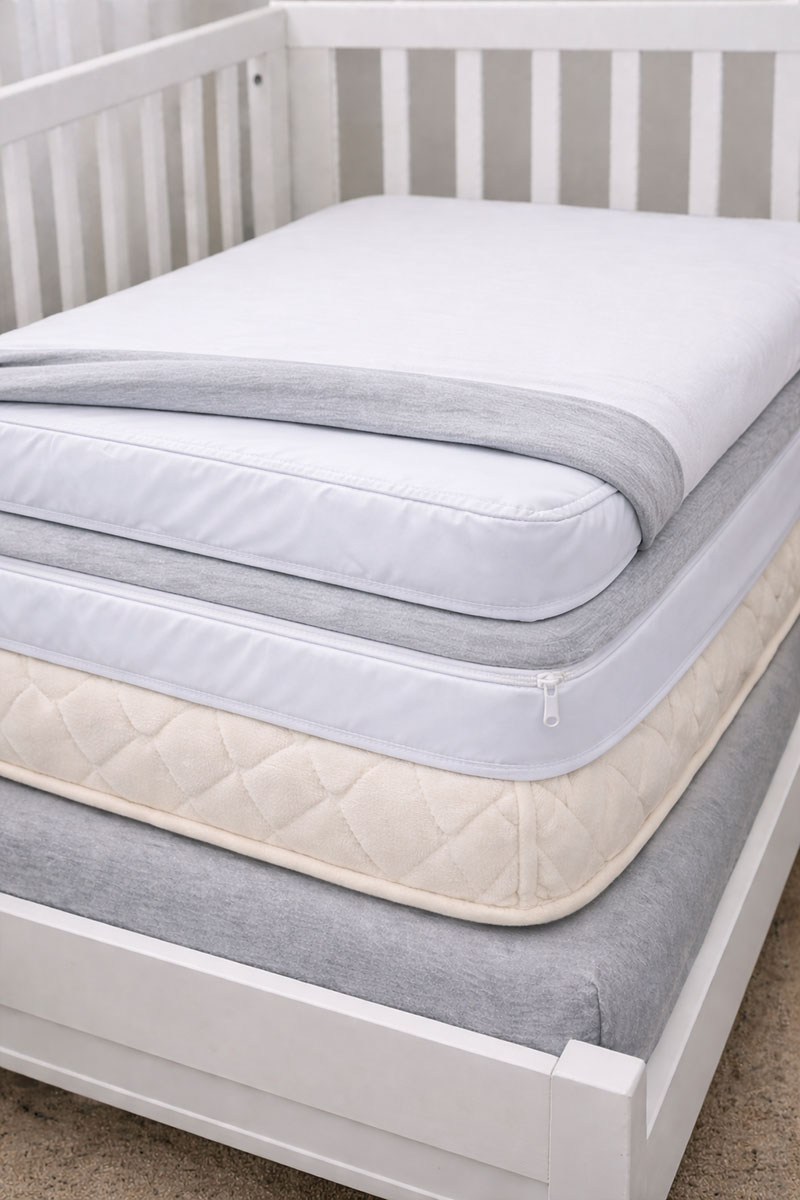
This is the little trick that feels like magic when you need it: make the bed in layers. Protector, sheet, then another protector, then another sheet. When there’s a mess, you remove the top two layers and you’re instantly back to a clean, made bed underneath.
It’s not something you have to do forever. It’s simply a way to buy yourself time on the rough nights, so you can deal with laundry later instead of right now.
If you only remember one thing
Keep the surface flat and simple, and pick a protective layer you can wash without babying it. The “perfect” product matters less than having a routine that works when you’re half-awake.
If you’ve already bought something and it feels annoying, you didn’t “mess up.” Swap it for a quieter material or a better fit and move on. A crib setup should feel easy to maintain, not like another project.
Did I buy the right thing? A calm, practical gut-check
I like a quick review after the first week, because that’s when real life shows you the truth. Does the cover stay in place? Does the sheet go on smoothly over it? Does it make the bed feel noticeably warmer? Are you washing it constantly, or is it doing its job quietly?
By the time most families reach the end of this decision path, the question “do crib mattresses need a protective cover” becomes less about rules and more about routine. The right setup is the one that fits your mattress cleanly and supports how you actually handle laundry, cleanup, and resets in your own home.
What to do next: if your current protective cover is bunching, sliding, or creating a weird ridge at the corners, don’t keep forcing it. Check the mattress thickness, switch to a better-sized protector, or consider a different style that fits your mattress shape more cleanly.
And if sizing questions are part of the stress—especially when people compare crib mattresses to “twin” sizes—this clears it up: crib mattress size vs. twin size (what actually fits and what doesn’t).
One reliable place to check product notices and recalls
For official product notices, recalls, and consumer advisories, I use the U.S. Consumer Product Safety Commission as a reference point: Consumer Product Safety Commission (CPSC).
If you’re comparing crib sleep setup details, these pages explain related topics including crib mattress protectors, how to clean a crib mattress, and crib mattress thickness and firmness.
For a full overview of crib mattress types, sizing basics, and construction differences across brands, see the main crib mattress guide.
If you want a simple end point, here’s mine: a protective cover isn’t “required” in some universal way, but it’s one of the easiest upgrades for day-to-day sanity. The best version is the one that fits your exact mattress, washes easily, and disappears under the sheet like it was always meant to be there.
When you click on links to various merchants on this site and make a purchase, this may result in this site earning a commission. This does not affect the price you pay.

UBGI Gold Standard 2026
Reviewed under the site's
editorial checklist.
Photos, decorating ideas, party setups and reader submissions are shared for inspiration unless a page is specifically presented as a pattern, tutorial, reference guide or step-by-step project. Follow the instructions, measurements, safety guidance and manufacturer directions provided for the particular project or product.
About Jan | Contact | Baby Nursery Ideas (Blog) | Site Map | Privacy Policy | Disclosure Policy | Disclaimer | Affiliate Disclosure | Earnings Disclosure | Facebook | Pinterest
I am a participant in the Amazon Services LLC Associates Program, an affiliate advertising program designed to provide a means for us to earn fees by linking to Amazon. As an Amazon Associate I earn from qualifying purchases.
Copyright © 2006-2026. All Rights Reserved.