Mini Crib Mattress Size Guide: Exact Dimensions and Fit Rules
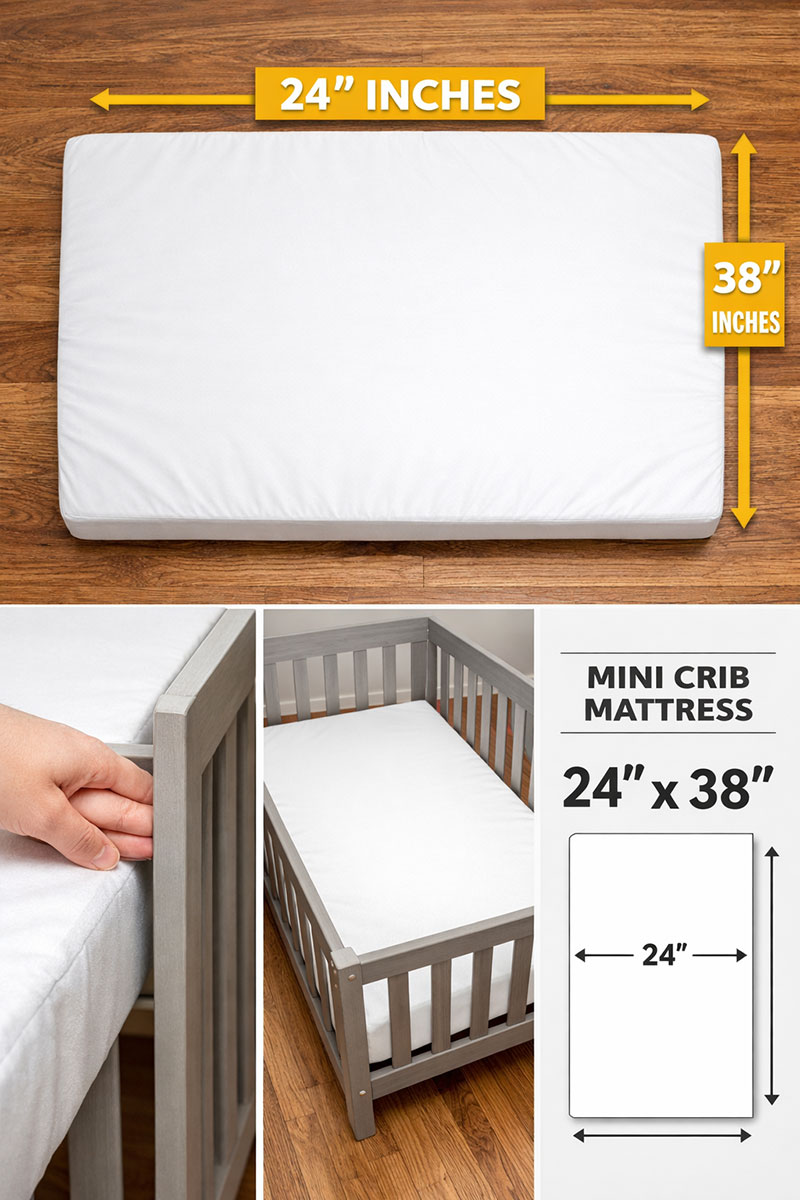
Mini crib mattress size guide information starts with exact measurements, because mini cribs do not use the same dimensions as standard full-size cribs. A properly sized mini crib mattress typically measures about 24 inches wide by 38 inches long, but small variations between manufacturers mean you must confirm both mattress measurements and interior crib dimensions before purchasing. The correct fit leaves no large gaps along the sides and supports a firm, flat sleep surface that meets safe sleep recommendations.
Trying to figure out if you need a mini crib mattress? Start here:
Do I actually need a standard crib mattress size?
How do you know if the mattress fits correctly?
Is that gap around the mattress dangerous?
What types of mini crib mattresses are there?
If you are trying to choose a mattress after confirming the correct size, see my best mini crib mattress guide for help comparing options.
Jump to a section:
Mini Crib Mattress Size Guide: Exact Dimensions Explained
A mini crib mattress size is typically about 24 inches wide and 38 inches long. Unlike a standard full size crib mattress, which measures approximately 28 by 52 inches, mini crib mattresses are made for compact frames and portable cribs. The exact measurements can vary slightly by manufacturer, which is why confirming both the mattress dimensions and the interior crib dimensions matters before purchasing.
Quick definition: A mini crib mattress is a compact infant mattress designed for mini or portable crib frames, commonly measuring close to 24 inches by 38 inches with a firm, flat sleep surface.
Mini cribs are popular for small rooms, shared bedrooms, and apartment living. To compare which compact models actually fit and function best in tight spaces, this guide to best mini cribs for small spaces highlights real-world footprint differences and usability.
For a broader look at crib styles that work well when floor space is limited, see cribs for small spaces.
The reduced footprint makes them easier to position without crowding the space. However, the smaller frame also means there is less tolerance for sizing mistakes.
Fit is not optional. It is a safety requirement.
This mini crib mattress guide explains how these size rules connect to mattress types, construction differences, and real-world crib compatibility.
How Tight Should the Fit Be?
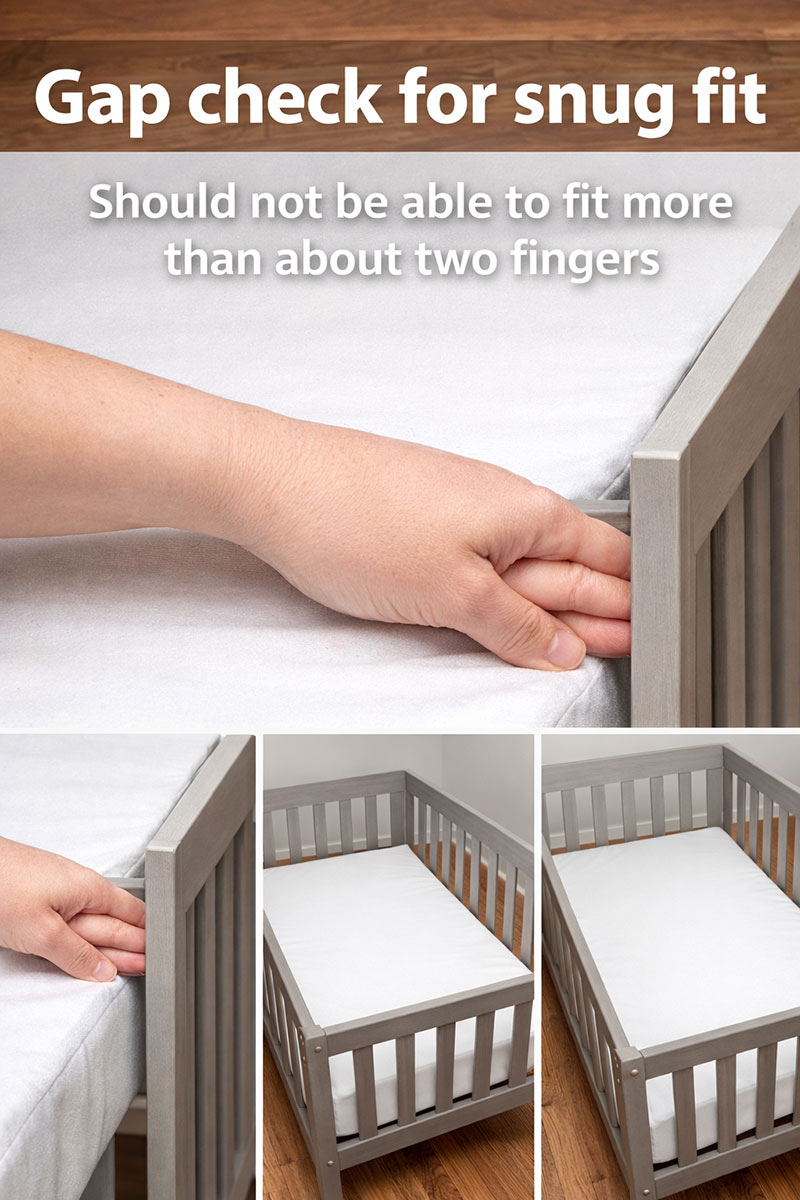
A properly fitted mini crib mattress should sit snugly against the crib frame with no large gaps along the sides or corners. When placed inside the crib, the mattress should lie flat, stay fully supported by the mattress base, and leave no obvious loose space around the edges.
U.S. safe sleep guidance from the Consumer Product Safety Commission emphasizes the importance of a firm, well-fitting mattress because gaps between the mattress and crib sides can create a risk zone where an infant could become wedged. As a practical check, you should not be able to fit more than about two fingers between the mattress edge and the crib frame. The crib mattress certifications guide explains how formal testing and labeling standards connect to those safety concerns, and my GREENGUARD Gold crib guide explains how low-emissions certification fits into a cleaner nursery setup.
The surface should also remain firm and flat. Avoid soft padding, pillow-top surfaces, or thick mattress toppers because mini crib mattresses are designed to provide structural support rather than cushioning. My breathable crib mattress safety guide, breathable vs foam crib mattress comparison, and best breathable crib mattress guide explain how firmness, construction, airflow, and real crib fit work together.
How to Measure Your Mini Crib Correctly
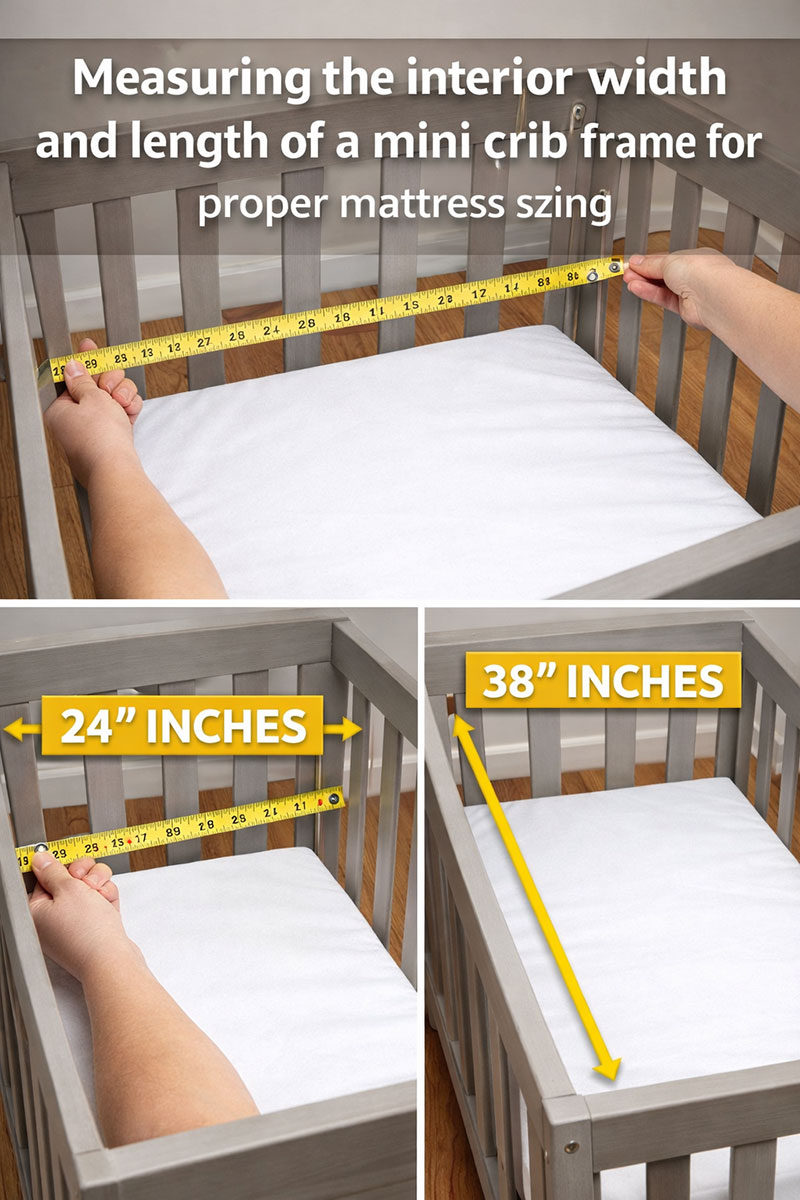
Before purchasing a mini crib mattress, measure the interior width and length of the crib frame. Measure from inside edge to inside edge. Do not measure the exterior frame.
Record the length first, then the width. Even a half inch difference can affect how the mattress sits. Some portable cribs are slightly shorter than the common 38 inch standard. Others are labeled mini but follow a unique brand specific size.
If your crib came with a manufacturer recommendation, follow that sizing guidance. If it did not include a mattress, check the model number and verify the interior dimensions directly.
Never attempt to modify a crib or compress a mattress to make it fit. A mattress should fit naturally inside the frame without forcing it into place.
Mini Crib vs Standard Crib Mattress
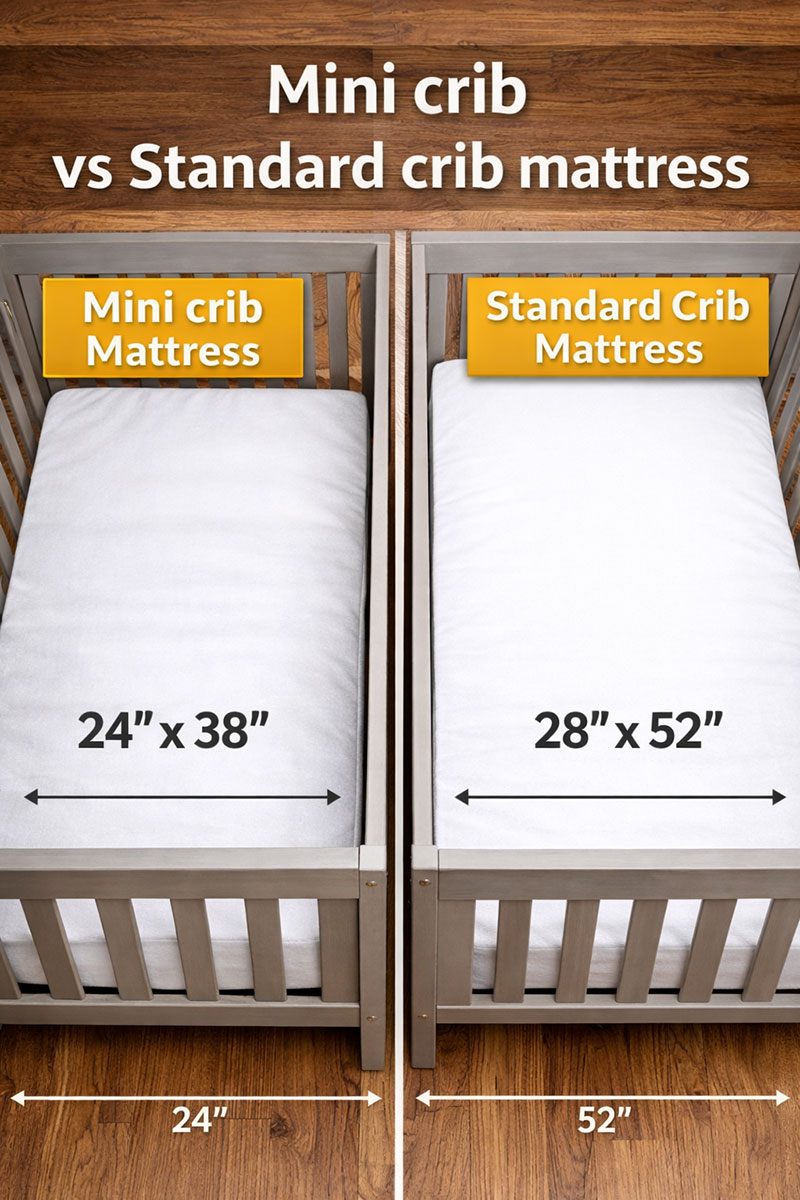
| Mattress Type | Typical Dimensions | Fits In |
|---|---|---|
| Mini crib mattress | About 24 inches x 38 inches | Mini and portable crib frames |
| Standard crib mattress | About 28 inches x 52 inches | Full size standard cribs |
Measurements may vary slightly by manufacturer, so always verify product specifications before purchase.
Mini crib sheets and standard crib sheets are not interchangeable. Always match sheet size to mattress dimensions to maintain proper surface tension and fit.
If you are comparing how long a mattress may be useful, this dual-sided crib mattress vs single-sided guide explains when a two-stage surface matters and when exact crib fit matters more.
If you are deciding between crib sizes, consider room layout first. For smaller spaces, mini cribs reduce floor crowding while still providing a safe, contained sleep area when paired with the correct mattress size.
Mini Crib Mattress Buying Checklist
Use this checklist to confirm you are selecting the correct mini crib mattress size:
- Interior crib measurements confirmed
- Mattress dimensions clearly listed by manufacturer
- Firm, flat surface with no added padding
- No visible side gaps when placed inside crib
- Mini crib sheets labeled for 24 by 38 inch mattresses
Mini crib mattress size usually falls close to 24 inches by 38 inches, but exact fit still depends on your crib’s interior measurements. This page helps you confirm size and fit rules, while my best mini crib mattress guide helps you compare options once you know the correct dimensions.
When you click on links to various merchants on this site and make a purchase, this may result in this site earning a commission. This does not affect the price you pay.

UBGI Gold Standard 2026
Reviewed under the site's
editorial checklist.
Photos, decorating ideas, party setups and reader submissions are shared for inspiration unless a page is specifically presented as a pattern, tutorial, reference guide or step-by-step project. Follow the instructions, measurements, safety guidance and manufacturer directions provided for the particular project or product.
About Jan | Contact | Baby Nursery Ideas (Blog) | Site Map | Privacy Policy | Disclosure Policy | Disclaimer | Affiliate Disclosure | Earnings Disclosure | Facebook | Pinterest
I am a participant in the Amazon Services LLC Associates Program, an affiliate advertising program designed to provide a means for us to earn fees by linking to Amazon. As an Amazon Associate I earn from qualifying purchases.
Copyright © 2006-2026. All Rights Reserved.