Organic Crib Mattresses: Best Picks, Safety Standards & Buying Guide
Organic crib mattresses can be confusing because brands often use words like organic, natural, non-toxic, and low-emissions in ways that sound similar but do not always mean the same thing. This guide explains the labels, materials, safety standards, and best next pages to help you compare options and choose the right crib mattress.Trying to understand organic crib mattresses without getting lost in labels? Start here:
Which organic crib mattress features are worth paying for?
Is organic really different from non-toxic?
Which certifications actually prove anything?
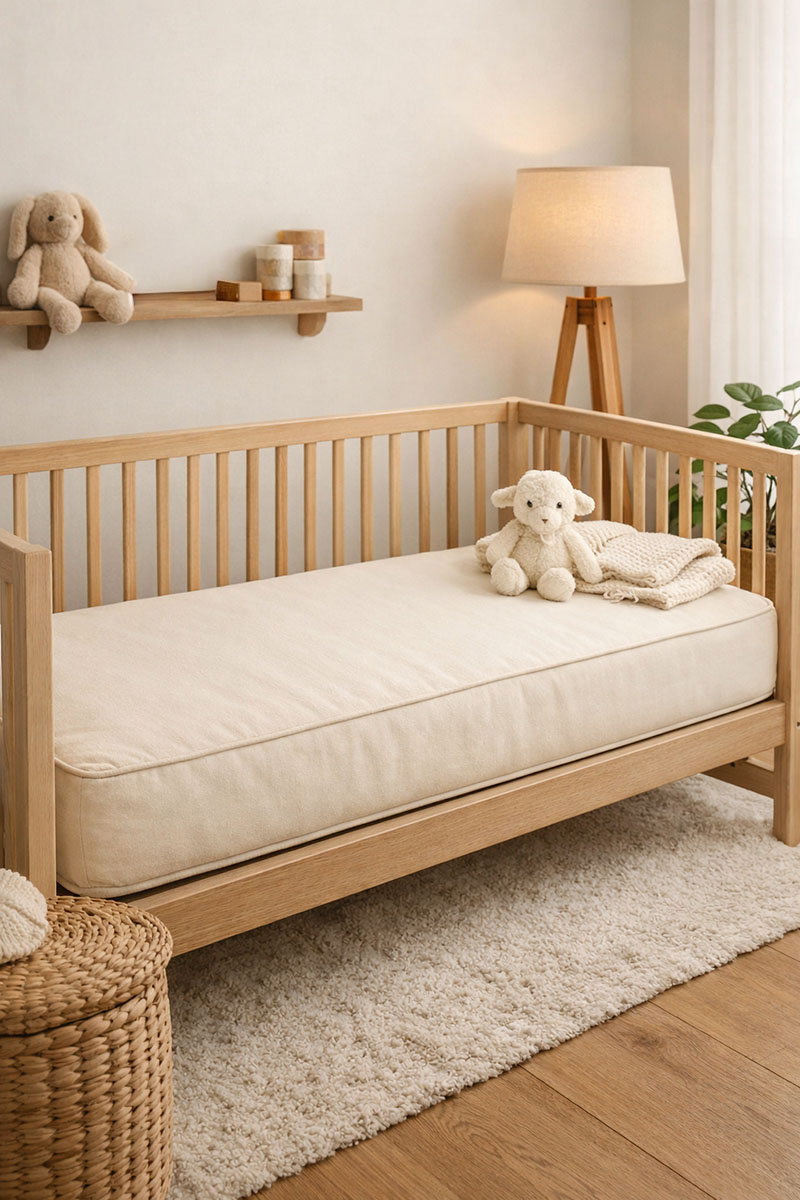
An organic crib mattress shown with a natural cotton cover, as commonly depicted in manufacturer and retailer product listings.
See preferred organic crib mattresses with waterproof surfaces
Organic crib mattresses use certified materials like cotton, wool, or latex. Safety depends on firmness, proper fit, and internal construction rather than the label alone.
If you want to compare all mattress types side by side, start here: crib mattress guide
What Is an Organic Crib Mattress Simple Answer
An organic crib mattress is made with certified organic materials such as cotton, wool, or latex. Safety depends on firmness, fit, and internal support structure, not the organic label alone.
What Organic Crib Mattresses Actually Are
These mattresses use materials sourced from certified organic production, most commonly cotton fabric, wool layers, or latex foam.
The fact is that most are not fully organic throughout. Many combine organic outer layers with internal support materials that are not certified.
Parents often notice this when reading labels and realize certifications apply only to certain layers.
The term organic refers to materials, not the full construction.
What Organic Labels Do Not Automatically Mean
The word organic can sound like a complete safety guarantee, but it does not answer every question about how a crib mattress performs.
Organic does not automatically mean a mattress is firm. Firmness depends on how the mattress is built and how the materials are layered, not just whether the fibers are organic.
To understand what firm actually means in a crib mattress and how to check it correctly, this firm crib mattress guide walks through it step by step.
It also does not automatically mean low emissions. Some certifications focus on how materials are grown, while others focus on what a finished mattress releases into the air. Those are separate standards.
Another common point of confusion is that certifications often apply to specific layers rather than the entire mattress. A mattress may include organic cotton or wool but still use other materials internally for support or waterproofing.
The most reliable way to compare options is to separate three things: material sourcing, emissions testing, and how the mattress performs in terms of firmness and fit. Looking at how material sourcing and emissions standards differ in real terms can make those comparisons clearer, and this organic vs non-toxic crib mattress comparison explains how those labels apply across different mattress builds.
Seeing how that plays out in various products helps connect it all, and my guide to the best non-toxic crib mattress options shows what to look for beyond the label.
A strong crib mattress brings all three together instead of relying on a single label.
Bringing those pieces together is what makes the decision clearer, and my crib mattress guide covers how to weigh each one before choosing.
To take a look at how these factors apply to smaller crib setups, this mini crib mattress guide explains how materials, construction, and fit work together in compact crib formats.
Are Organic Crib Mattresses Safe Based on US Standards
Organic crib mattresses can be safe, but safety depends on firmness, proper crib fit, and meeting federal standards, not the organic label alone.
The American Academy of Pediatrics recommends a firm, flat sleep surface with no gaps.
Crib mattress safety depends on three factors:
- Firmness that does not compress under weight
- Tight fit inside the crib
- No added padding or soft layers
This is where there may be confusion; organic materials do not replace safety rules.
Firmness and fit always come first.
Check both here: crib mattress fit guide and standard crib mattress size
Organic materials do not replace these requirements, which is why firmness and fit always come first when evaluating any crib mattress. Fit matters most at the edges, and this crib mattress gap problems guide shows how to recognize when spacing around the mattress goes beyond normal tolerance.
Materials Used in Organic Crib Mattresses and Why They Matter
Most organic crib mattresses use a small group of materials, each serving a specific role.
- Organic cotton for outer covers
- Wool as a fire barrier layer
- Latex for internal support
Some organic crib mattresses include waterproof layers that are not organic because moisture protection often requires a synthetic backing.
Those waterproof or protective layers can also affect warmth, especially when they limit airflow or trap heat under the fitted sheet. My crib mattress overheating guide explains what can make a baby’s sleep surface feel too warm.
Those added layers can change how the surface feels, how moisture behaves, and how odors linger over time. My crib mattress odor causes guide explains what different smells may signal before you try to clean or replace the mattress, while my breathable crib mattress protector guide shows which protector designs help protect the mattress while keeping the surface stable and consistent.
Good to know: A crib mattress can feel firm in the middle but softer near the edges, so it helps to check the full surface instead of pressing in only one spot.
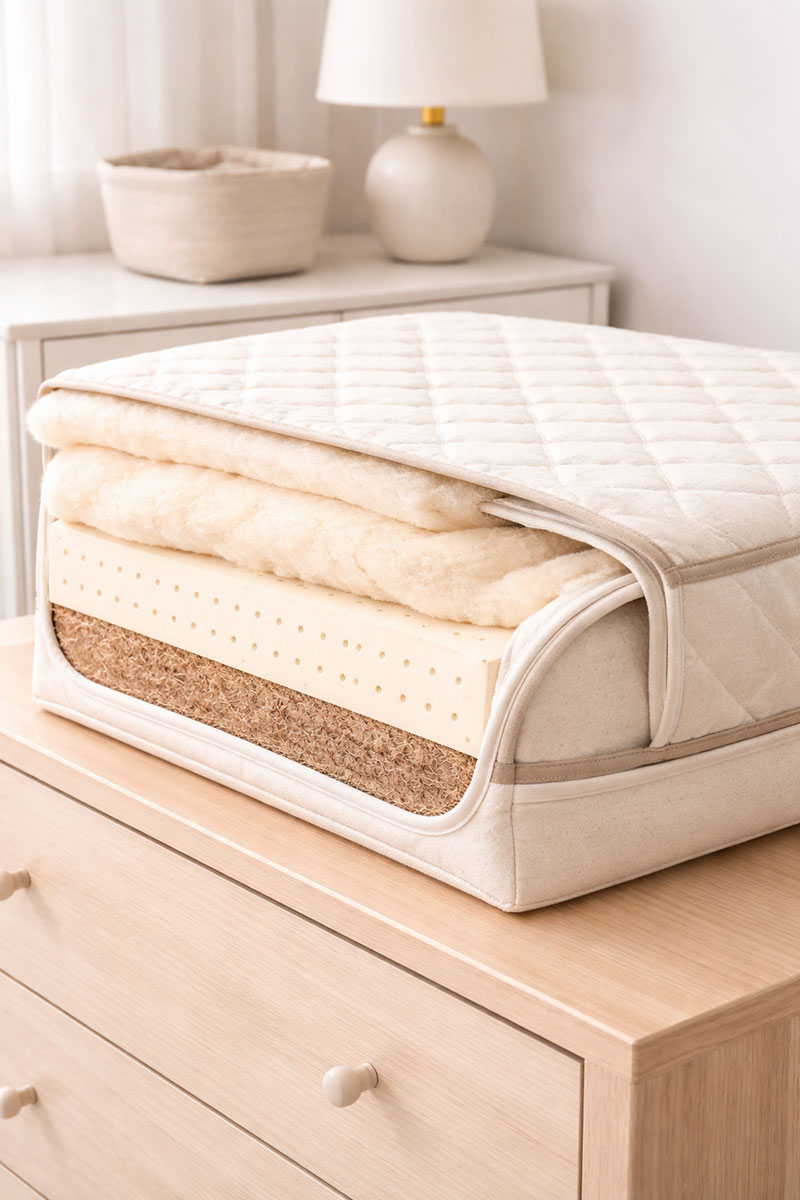
Internal construction and edge support both affect firmness.
This usually becomes clear when pressure is applied near the sides instead of the center.
Certifications That Actually Matter When Comparing Options
Certifications explain which materials meet specific standards.
- GOTS applies to organic cotton textiles
- GOLS applies to organic latex
- GREENGUARD Gold measures emissions
- OEKO-TEX tests for restricted substances
Each certification applies to specific components rather than the entire mattress.
If you want a closer look at how GREENGUARD Gold certification is used across nursery products, see GREENGUARD Gold certified cribs.
For details: crib mattress certifications guide
Best Organic Crib Mattress Picks Parents Compare First
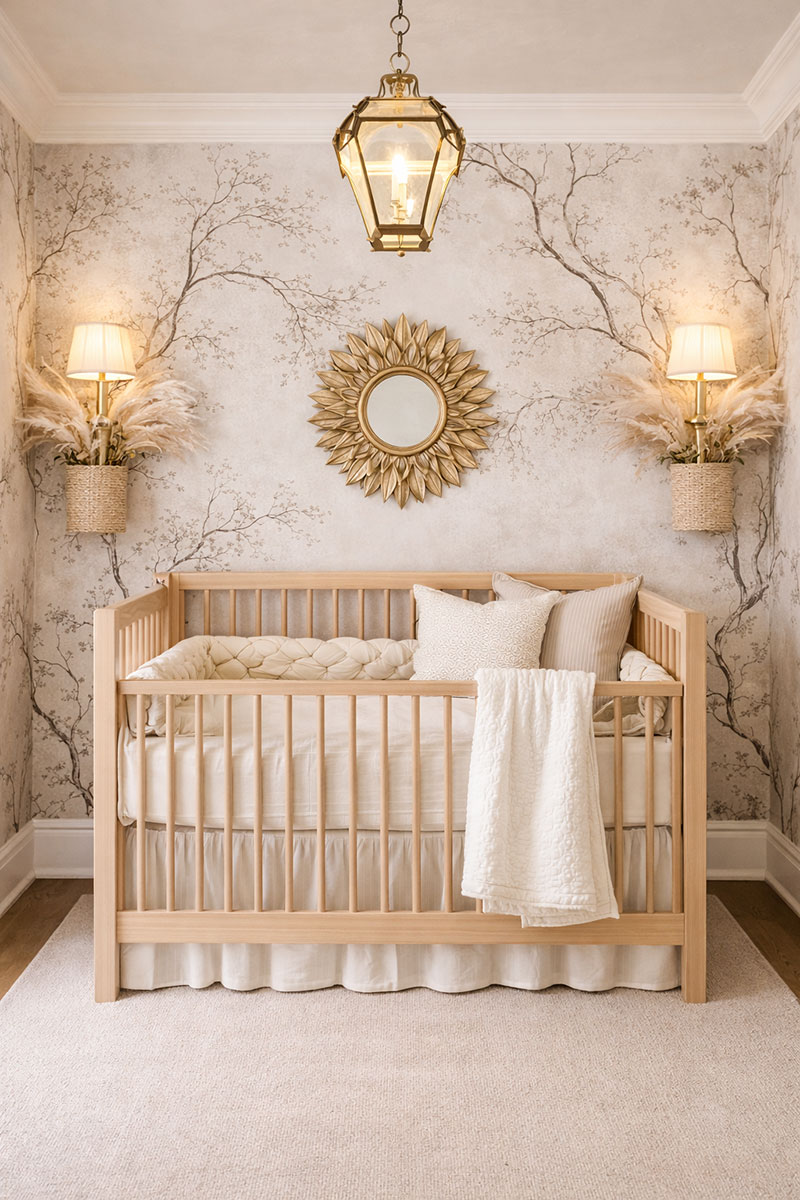
Once materials and certifications are clear, the next step is comparing how mattresses perform in daily use.
Start here: best organic crib mattress
Then review specific brands: Naturepedic crib mattress
For a direct comparison of how breathable construction and organic materials differ in real-world use, this Newton vs Naturepedic crib mattress comparison breaks down the key differences side by side.
Organic vs Non Toxic vs Standard Crib Mattress Differences
These terms describe different things.
Organic refers to material sourcing.
Non-toxic refers to reduced chemical exposure.
Standard mattresses often use foam and synthetic materials.
Many parents run into confusion here when comparing labels instead of structure.
Compare related material and airflow questions in my non toxic crib mattress guide, breathable vs foam crib mattress breakdown, and breathable crib mattress guide. My best breathable crib mattress guide compares which airflow-focused designs still stay firm, fit correctly, and maintain a stable sleep surface once they are used in a real crib setup.
How to Choose the Right Organic Crib Mattress Step by Step
Use this checklist when deciding.
- 1. Confirm firmness first. The mattress should feel stable across the entire surface and should not compress easily.
- 2. Check the fit inside your crib. The mattress should sit snugly with minimal, even spacing on all sides. Gaps matter more than label wording.
- 3. Review materials clearly. Look for specific materials such as organic cotton, wool, or natural latex instead of vague descriptions.
- 4. Match certifications to the claim. Organic and low-emission certifications measure different things and should support the materials listed.
- 5. Choose construction that holds shape. A well-built mattress stays firm over time instead of softening or sagging.
The right choice is a firm, well-fitting mattress with clearly identified materials and certifications that match what the product claims.
The correct result is a firm mattress that fits tightly with no visible gaps and a flat surface.
This works because it reduces movement and keeps the sleep surface stable.
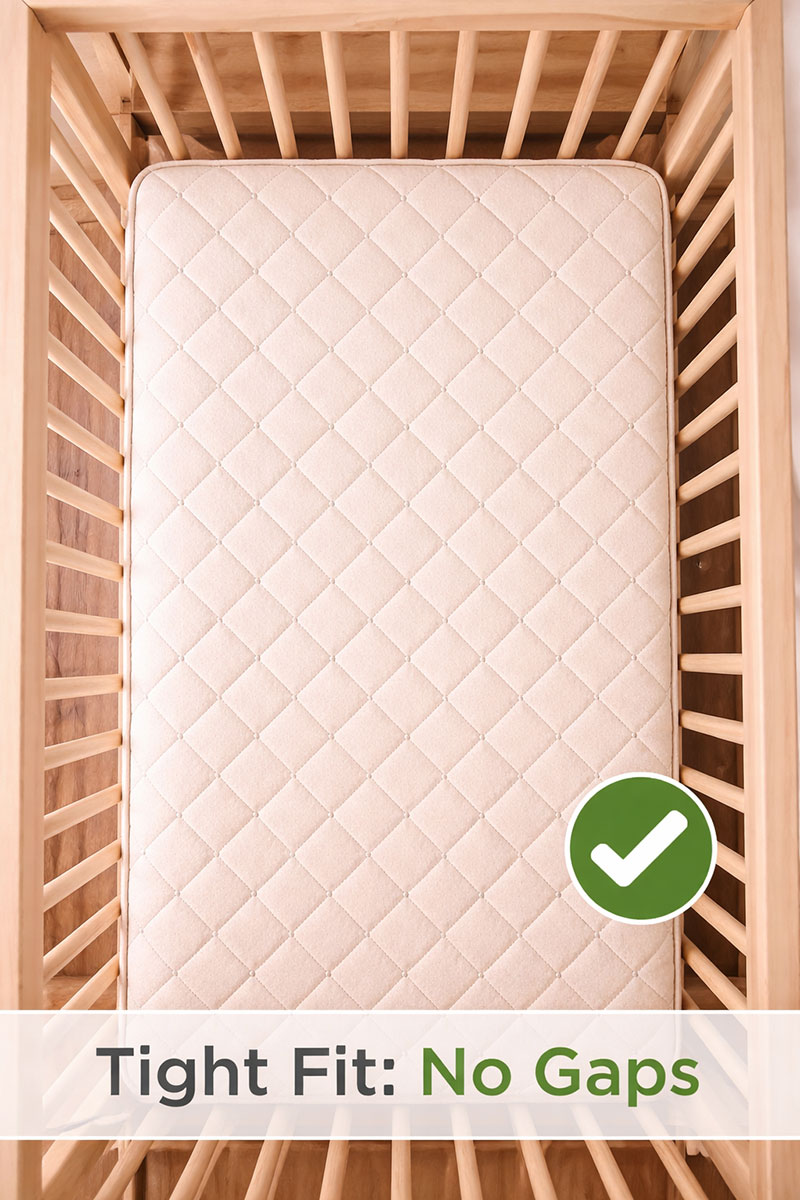
A tight fit prevents shifting and keeps the surface stable.
For smaller cribs: mini crib mattress size guide
For cleaning: how to clean a crib mattress
How Most Parents Decide Between Organic Options
Most decisions follow a simple pattern.
- If material sourcing matters most, choose certified cotton or latex
- If budget matters, choose a dual-sided mattress
- If structure matters most, compare firmness across types
This usually becomes clear after testing both center firmness and edge support.
That is also where this dual-sided crib mattress vs single-sided crib mattress comparison helps, because it explains when a two-stage mattress is useful and when a single-sided design may be enough.
When to Replace a Crib Mattress and Why It Matters
Replace a crib mattress if firmness decreases, the surface shows wear, or the fit becomes loose.
This becomes more important with secondhand use.
Guidance: when to replace a crib mattress
Used mattress safety: used crib mattress safety
Organic Crib Mattress FAQ Quick Answers
Are organic crib mattresses safer?
They can reduce exposure to certain materials, but safety depends on firmness and fit.
Do you need an organic crib mattress?
No. A firm, properly fitting mattress meets safety standards regardless of material type.
Are organic mattresses worth the cost?
They are often chosen for material transparency and certification clarity.
Do all crib mattresses fit the same?
No. Always check sizing:
crib mattress fit differences
Final Take on Organic Crib Mattresses for Smart Decisions
Organic crib mattresses use certified materials, but safety depends on firmness, fit, and construction.
The correct choice is a firm mattress that fits tightly, supports evenly across the entire surface, and meets safety standards.
Use this guide to understand the basics, compare options, and choose the mattress that fits your crib and your priorities.
Continue here: crib mattress guide


About Jan | Contact | Baby Nursery Ideas (Blog) | Site Map | Privacy Policy | Disclosure Policy | Disclaimer | Affiliate Disclosure | Earnings Disclosure | Facebook | Pinterest
I am a participant in the Amazon Services LLC Associates Program, an affiliate advertising program designed to provide a means for us to earn fees by linking to Amazon. As an Amazon Associate I earn from qualifying purchases.
Copyright © 2006-2026. All Rights Reserved.