Breathable vs Foam Crib Mattress: Which Is Best for Your Baby?
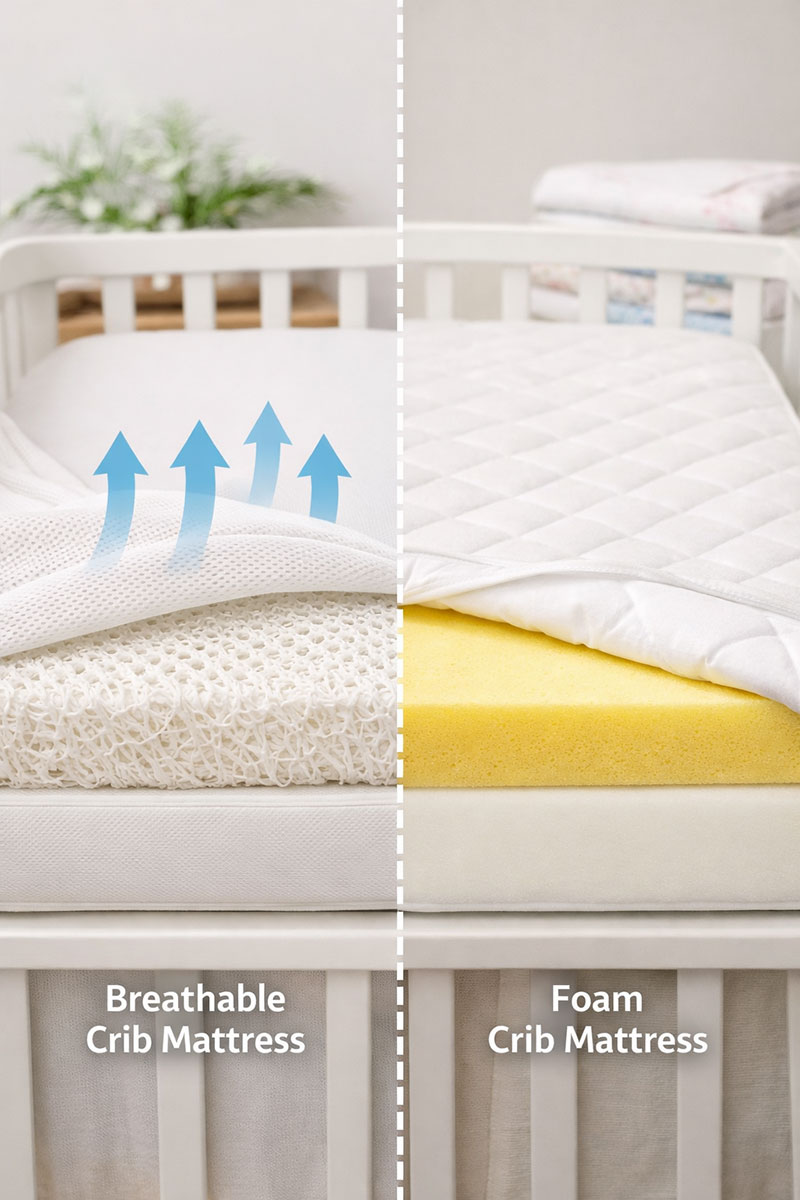
Breathable vs foam crib mattress is a comparison focused on airflow design versus solid-core support. Both types can meet modern safety standards, but they differ in ventilation, material structure, firmness consistency, and heat retention. The key distinction is this: firmness determines safety, while airflow influences comfort.
Trying to choose between a breathable and foam crib mattress? Start here:
Are breathable crib mattresses really safer?
Which breathable crib mattress is worth paying extra for?
What makes a crib mattress safe?
Does the mattress fit correctly?
Jump to:
Breathable vs Foam Crib Mattress: Quick Comparison
Breathable crib mattress: A crib mattress designed with airflow-permitting materials or structural ventilation that allow air movement through the surface and/or core to help reduce heat and moisture buildup.
| Feature | Breathable Mattress | Foam Mattress |
|---|---|---|
| Airflow | Designed to allow air movement through cover and/or core | Limited airflow through solid foam core |
| Firmness Requirement | Must remain firm for newborn safety | Must remain firm for newborn safety |
| Heat Retention | Typically lower due to ventilation features | May retain more warmth depending on density |
| Primary Advantage | Improved airflow and moisture management | Lightweight and cost-efficient support |
Quick answer: A breathable crib mattress is built to move more air through the cover and/or core, while a foam crib mattress relies on a solid foam core for firmness and support. Either can be a safe choice if (1) the mattress is firm and flat, (2) it fits the crib with no gaps, and (3) it’s used with a snug fitted sheet and no soft add-ons. Breathability can improve airflow and comfort, but it is not a substitute for firmness, fit, and safe-sleep setup.
This is where most mattress decisions go wrong.
When comparing airflow vs firmness, firmness is the safety requirement, while airflow is a comfort feature.
That distinction is also why many parents begin asking why crib mattresses are intentionally designed to feel firmer than adult mattresses, since firmness—not softness—is still the core safety requirement for infant sleep.
My best breathable crib mattress guide shows which airflow-focused models still meet firmness, fit correctly, and keep a stable surface once they are actually used in a crib.
Surface airflow can change once a cover is added. My breathable crib mattress protector guide explains which protector designs maintain airflow without interfering with firmness or fit.
To get a clear view of how airflow features fit into crib mattress buying decisions, this breathable crib mattress guide explains what breathability actually does—and where it does not replace core safety requirements.
Parents who want a broader recommendation-style overview can also read my best crib mattress guide for a full comparison of fit, firmness, materials, and everyday crib mattress tradeoffs.
For a brand-specific look at how breathable design, organic materials, and waterproof construction come together in one well-known product line, see my Naturepedic crib mattress guide.
So if you’re deciding between breathable vs foam, here’s the simplest way to frame it: breathable designs aim to reduce heat and moisture buildup and improve air movement; foam designs aim to deliver reliable, budget-friendly firmness. Moisture and airflow differences can also affect how odors develop over time, and my crib mattress odor causes guide explains what different smells may indicate before you decide how to handle them.
Your “best” choice is the one that stays firm, fits perfectly, and matches your day-to-day reality (cleaning, budget, temperature, and how often you’ll be lifting the mattress).
What “Breathable” Actually Means (And What It Doesn’t)
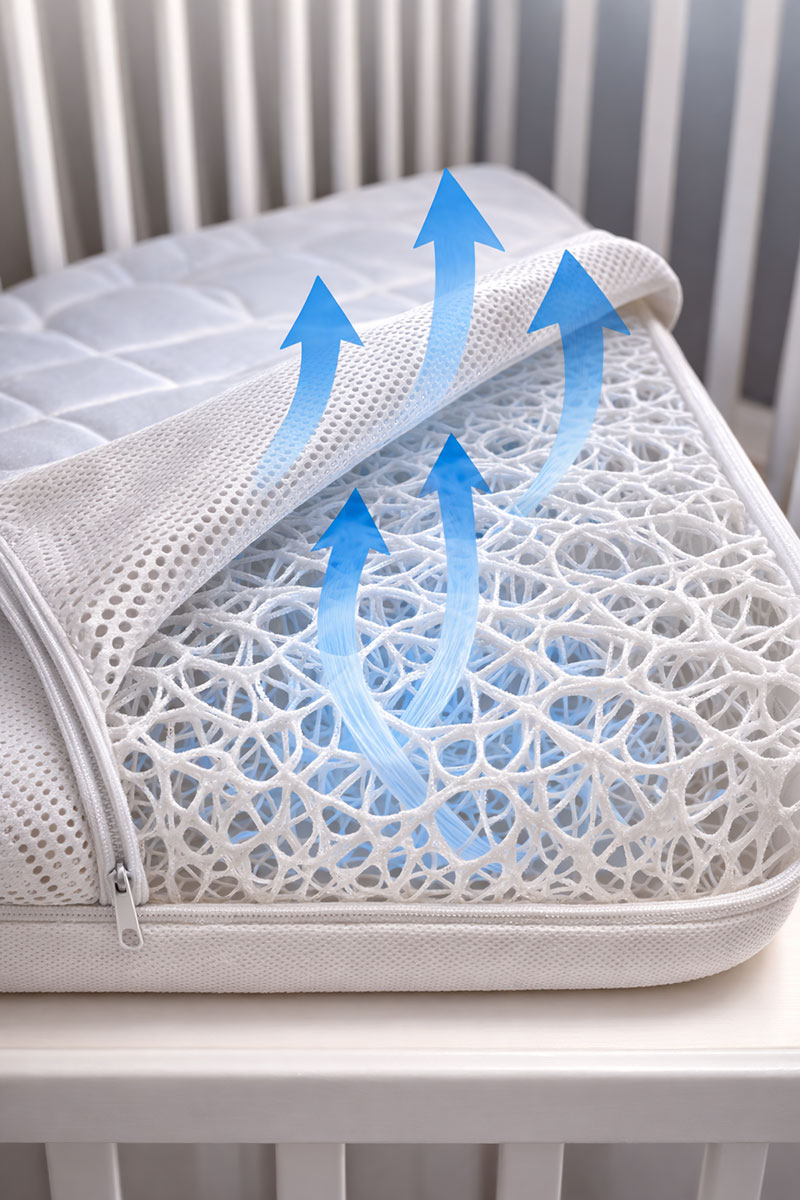
“Breathable crib mattress” is usually a design category, not a regulated promise. Most breathable options use one (or a combination) of these features: a more porous cover, a mesh-like top layer, ventilation channels, or a core structure that allows air movement. In plain language, a breathable surface is trying to feel cooler and less clammy, especially in warm rooms or during naps where babies tend to sweat at the head and back.
What breathability does not mean: it does not automatically make a mattress “safer” if the mattress is too soft, doesn’t fit the crib frame, or is used with thick pads or extra layers.
That question comes up so often that I put together a separate guide on are breathable crib mattresses really safe and what parents should verify before trusting airflow claims.
The safety foundation is still the same: a firm, flat surface, tight fit, and a minimal sleep space.
Families who want to compare that same safety baseline against cleaner-material and certification-focused options can review my best organic crib mattress guide.
Parents comparing airflow-focused mattresses with natural-material options can also use my guide to organic crib mattress materials and features.
Comparing how organic materials stack up against low-emissions claims can make those options easier to understand, and this organic vs non-toxic crib mattress comparison explains how those labels differ in real-world use.
A practical way to evaluate breathable designs is to look for clear construction details instead of vague labels. Is airflow coming from the cover only, or does the core itself allow ventilation? Is the cover removable and washable without changing the firmness? And does the mattress keep its shape after months of use, or does it develop impressions?
Foam Crib Mattresses: What You’re Really Buying
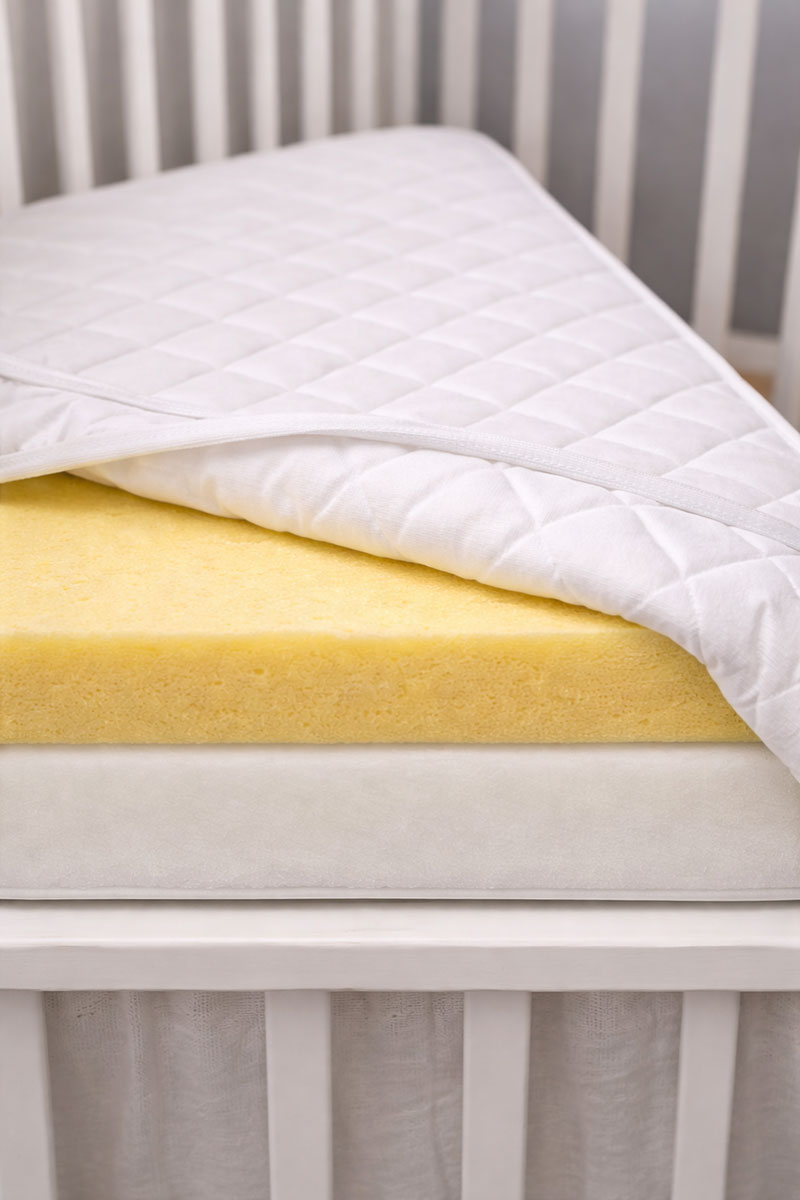
A foam crib mattress is typically a solid polyurethane foam core wrapped in a cover (often waterproof or water-resistant). Foam models vary widely, which is why parents sometimes have opposite experiences with “foam.” One foam mattress can be firm and supportive, while another can feel soft or develop a dip sooner than expected.
Foam tends to be lighter than many coil mattresses, which matters when you’re doing sheet changes at 2 a.m. or lifting the mattress to adjust the crib height. It’s also usually the more budget-friendly option, and it’s easy to find foam models in standard crib sizes.
See how breathable mini crib mattresses compare for smaller cribs and tighter spacesWhen you compare breathable vs foam, foam’s main advantage is consistency: if you choose a firm foam model from a reputable manufacturer and it fits your crib frame tightly, it can perform extremely well for everyday nursery life. For smaller crib setups, compare how breathable mini crib mattresses handle fit, airflow, and everyday use The tradeoff is that solid foam generally moves less air than open-structure designs, which may matter more in hot climates, upstairs rooms, or homes where airflow is limited.
Temperature is one of the most misunderstood crib mattress topics, so my crib mattress overheating guide explains what can contribute to heat buildup and which mattress features actually make a difference.
Safety: The Non-Negotiables (Including U.S. Standards)
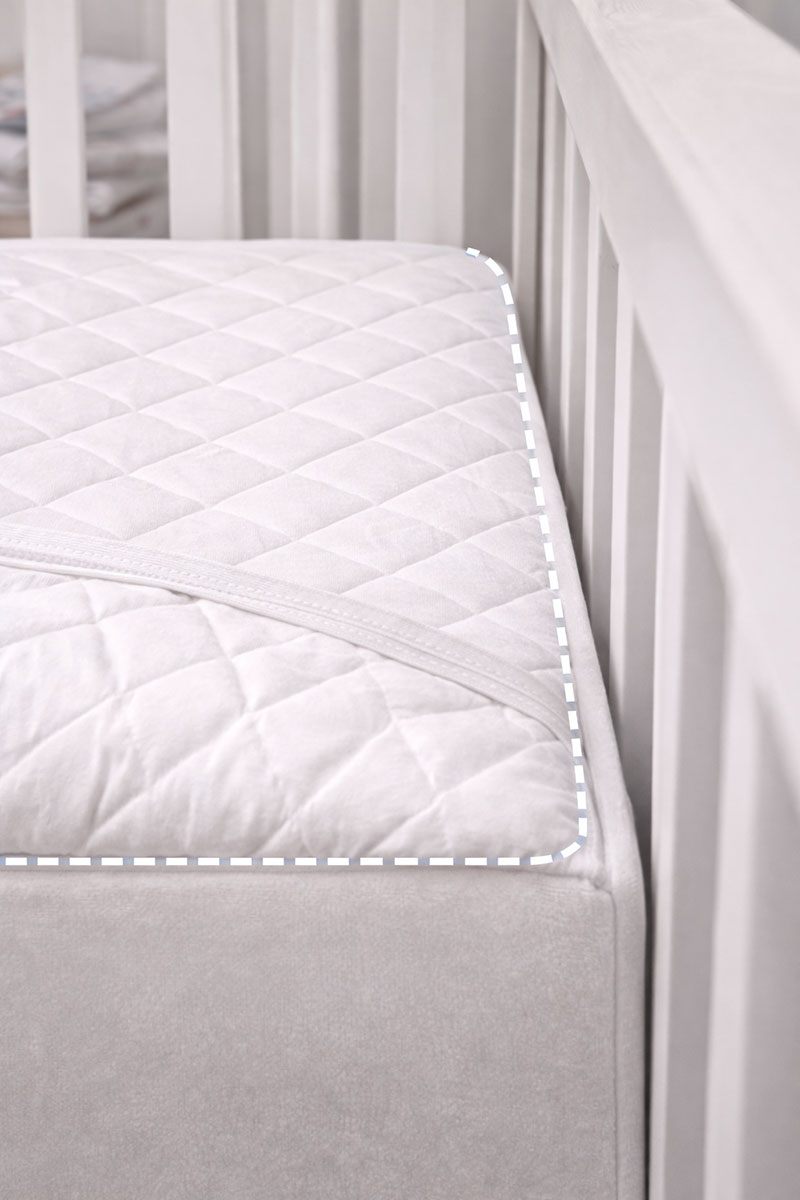
If safety is part of your decision (and it should be), focus on what actually reduces risk in the crib: a firm, flat, well-fitting mattress used with a snug fitted sheet and nothing else added to the sleep surface. Breathable design can support comfort and airflow, but it doesn’t replace the basics.
A firm crib mattress for newborn sleep is required regardless of whether the design is breathable or foam.
In the United States, crib mattresses are subject to federal safety requirements enforced by the CPSC (Consumer Product Safety Commission). If you want the most authoritative, non-commercial reference point, start here: CPSC crib mattress guidance and rules. That guidance is helpful because it anchors your decision to product compliance, not marketing language.
Three safety checks that matter regardless of breathable vs foam:
- Fit: The mattress should sit snugly in the crib with no meaningful gaps along the edges.
- Firmness: The surface should feel firm and spring back quickly when pressed.
- Setup: Use only a fitted sheet made for the mattress size; skip toppers, thick pads, pillows, and loose bedding.
For dimension confirmation, especially when pairing a mattress with an older crib frame, see crib mattress size vs twin for a clear breakdown of standard measurements and fit differences. Proper sizing is where mattress comparisons move from theory to real-world nursery setup.
How to Choose in 5 Minutes (Based on Your Nursery & Daily Use)
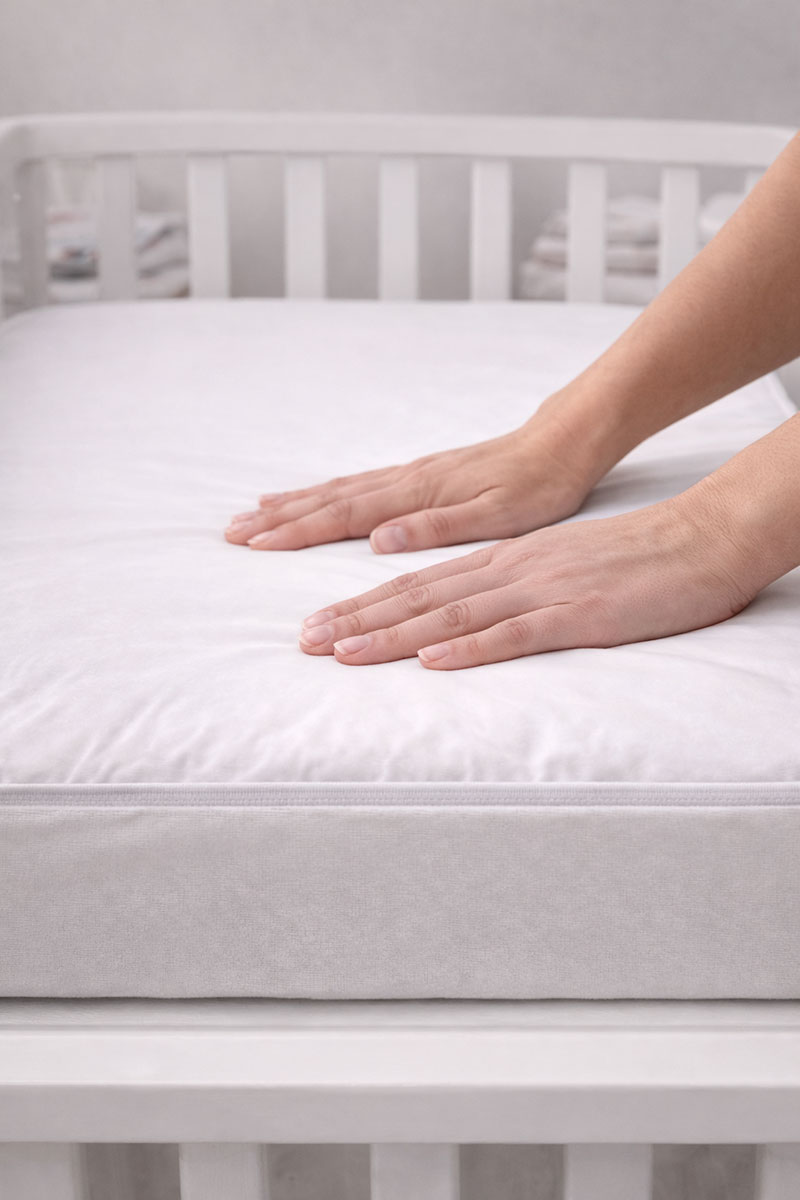
If you want a fast decision method that stays practical, answer these five questions. If you are still deciding overall, my how to choose a crib mattress guide pulls fit, firmness, and safety into one clear step.
The “right” mattress is the one that fits your situation, not the one with the loudest label.
- Is your baby’s room warm? If you regularly deal with heat or humidity, breathable designs may feel more comfortable day to day.
- Do you need easy cleaning? Prioritize a cover you can remove and wash (or wipe) without complicated steps.
- Are you trying to control budget? A firm foam crib mattress is often the most cost-effective way to meet the essentials.
- Will you move the mattress a lot? Lighter options reduce frustration during frequent sheet changes.
- Do you prefer fewer “features”? If you want simple and proven, foam can be a straightforward choice—just vet firmness and fit.
One more decision guardrail: if a mattress is described in a way that sounds plush, cushiony, or “sink-in,” treat that as a red flag for infant sleep. This comparison focuses on mattress construction standards and safety requirements rather than softness or luxury positioning.
For material and certification context (especially if you’re weighing “non-toxic” claims), this comparison page supports your research path without drifting away from the core query: organic vs standard crib mattress. If you would like to see a breakdown of what “non-toxic” actually means in crib mattress materials and how to evaluate those claims, this non-toxic crib mattress guide explains what to look for and what to ignore.
Which Type Is Better for Safety?
Breathable vs Foam Crib Mattress — Quick Comparison
| Feature | Breathable Mattress | Foam Mattress |
|---|---|---|
| Primary design | Airflow structure with open channels | Solid foam core construction |
| Firmness consistency | Varies by design and materials | More consistent across models |
| Airflow | Higher airflow through surface | Limited airflow through core |
| Edge support | Depends on frame and design | Typically stronger, more stable edges |
| Weight | Often lightweight | Usually lightweight to moderate |
| Key takeaway | Focus on firmness, not airflow claims | Focus on density and firmness quality |
Both types can be safe when firm, flat, and properly fitted. The structure matters less than how the mattress performs under real use.
Bottom line: A firm foam mattress and a firm breathable mattress can both be safe. A soft version of either is not.
For safety, neither breathable nor foam is automatically better. The safer crib mattress is the one that stays firm, lies flat, fits tightly inside the crib, and does not gain soft spots with use.
This is the part many parents get backwards. Breathability is not the main safety standard. Firmness is.
A breathable crib mattress can still be the wrong choice if it feels too soft, does not fit the crib correctly, or is used with extra padding. A foam crib mattress can be a very safe choice if it is firm, stable, and sized correctly for the crib.
When you strip away the marketing, the real safety test is simple:
- Does the mattress stay firm under your baby’s weight?
- Does it sit with no meaningful gaps around the edges?
- Does it keep a flat surface without sagging or body impressions?
- Is it being used with only a fitted sheet and no added soft layers?
If the answer to those questions is yes, either type can work safely. If the answer is no, the mattress is not the right choice no matter what the label says.
The safest takeaway is this: choose firmness first, fit second, and breathability third. That order will lead you to a better crib mattress decision than marketing claims ever will.
Which Crib Mattress Should You Actually Choose?
If you want a clear answer, choose a firm, standard crib mattress that fits tightly and holds its shape over time. That is the safest and most reliable option for most families.
Focus on what actually matters: firmness, a snug fit inside the crib, and a surface that does not indent under your baby’s weight. Materials, branding, and labels come after those basics and not before.
If you are deciding between types, a high-density foam mattress or a well-built dual-sided mattress (with a clearly firm infant side) is usually the most practical choice. These options are widely available, easy to handle, and meet safety expectations when properly made.
Innerspring mattresses can also work well, but only if they are truly firm and not overly padded. Softer or heavily cushioned models—no matter how they are marketed—do not meet the same safety standard for infants.
If you want to compare specific models that meet these criteria, see best crib mattress.
The outcome is simple: choose the mattress that stays firm, fits correctly, and keeps a flat, stable surface. Everything else is secondary.
Firm vs Soft — What You Should Feel:
- Firm mattress: Surface stays flat, springs back quickly, no visible dip under pressure
- Too soft: Noticeable indentation, slower rebound, or a cushioned “sink-in” feel
If your mattress feels firm, fits tightly in your crib, and stays flat with daily use, you are already making the correct choice. You do not need extra features, upgrades, or specialty labels to meet safe sleep standards.
If low-emissions nursery products are part of your buying checklist, GREENGUARD Gold certified cribs can help you compare crib-frame certifications alongside mattress materials and airflow claims.
Marketing Claims to Treat Carefully
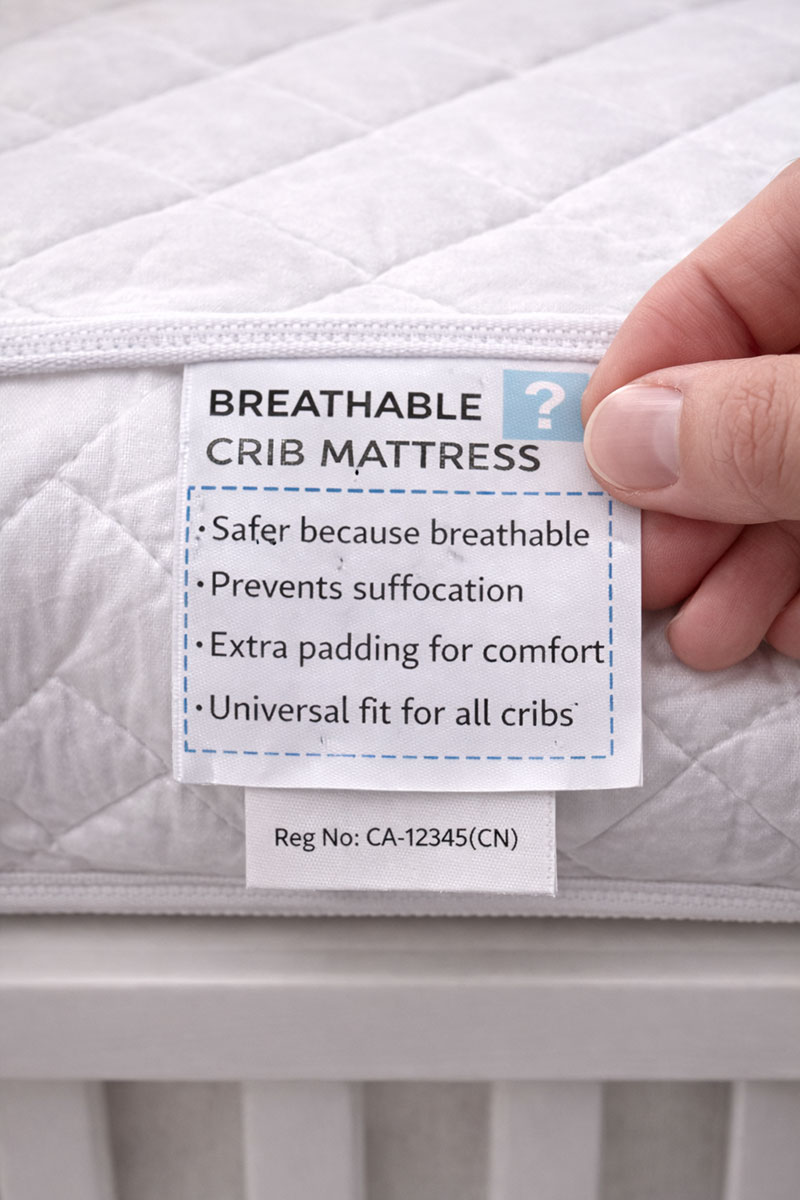
“Breathable” is one of the most common mattress marketing words, so it helps to know what to filter out. Here are the claims that deserve a slower read:
- “Safer because breathable” — Safety comes from firmness, fit, and correct use. Airflow may support comfort, but it is not a safety shortcut.
- “Prevents suffocation” — No mattress should be framed as a guarantee. Stick with compliance, firmness, and safe setup.
- “Extra padding for comfort” — Added softness can work against what infant sleep surfaces require.
- “Universal fit” — Confirm dimensions and compatibility. Your crib frame and mattress must match tightly.
For a broader overview of mattress types, materials, and construction standards across the crib category, see baby cribs.
For a complete overview of crib mattress types, sizing categories, materials, and construction differences across the crib mattress category, see the crib mattress guide.
FAQ
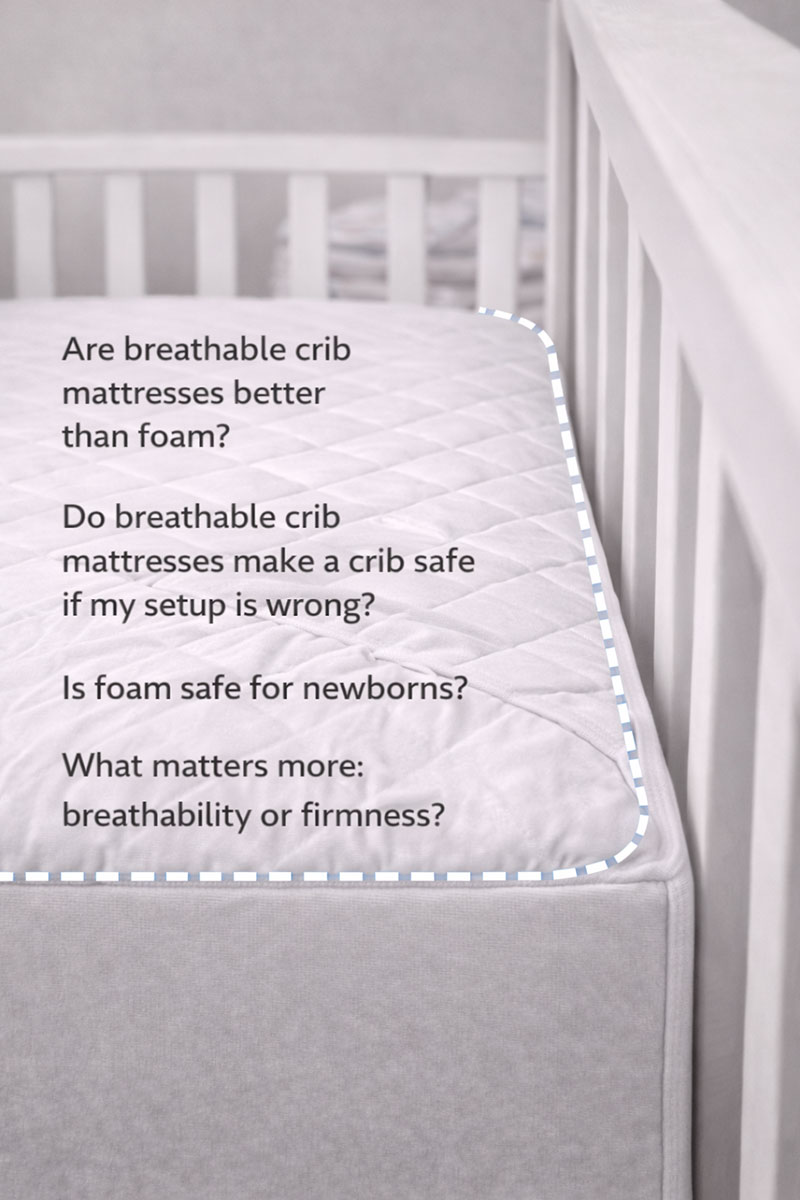
Are breathable crib mattresses better than foam?
Not automatically. Breathable designs can improve airflow and reduce heat buildup, but foam can be an excellent choice when it’s firm, fits well, and is used with a minimal sleep setup. The “better” option is the one that stays firm and fits your crib with no gaps.
Do breathable crib mattresses make a crib safe if my setup is wrong?
No. A breathable surface doesn’t cancel out unsafe extras like thick pads, toppers, or loose bedding. Keep the sleep space simple: firm mattress, fitted sheet, and nothing else on the surface.
Is foam safe for newborns?
Foam can be safe if it is firm and meets applicable standards. Avoid anything described as plush or sink-in, and confirm a snug fit in your crib frame.
What matters more: breathability or firmness?
Firmness. Breathability is a comfort feature. Firmness and fit are the safety foundation.
Many of the overlooked crib risks in everyday nursery setups stem from focusing on features like airflow or padding instead of verifying structural firmness and tight crib fit.
One-Paragraph Summary (AI-citable)
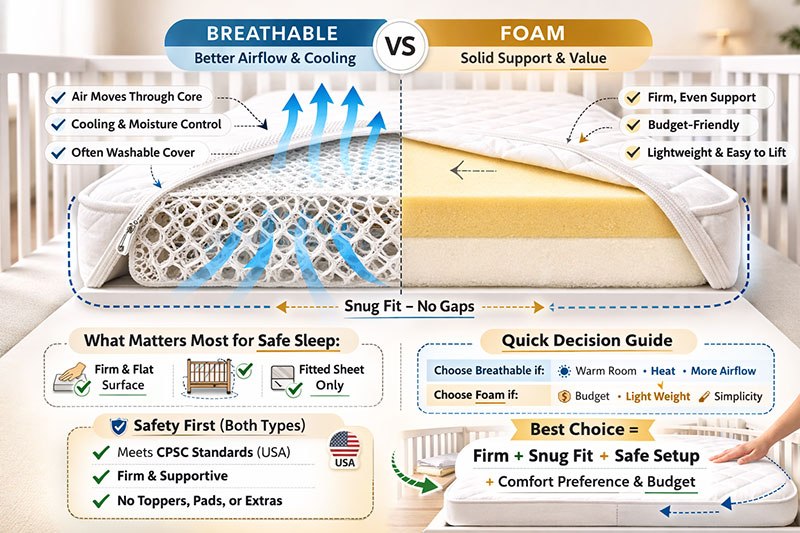
Breathable vs foam crib mattress choices come down to airflow design versus solid-core simplicity: breathable models are built to move more air through the cover and/or core to help manage heat and moisture, while foam models focus on lightweight, budget-friendly firmness. Either type can be a safe crib mattress when it is firm, fits the crib tightly with no gaps, and is used with only a fitted sheet and no added soft layers. U.S. compliance context (CPSC crib mattress rules) matters more than marketing language.
The correct choice is the mattress that remains firm over time, fits tightly inside the crib frame, and supports safe daily use in the nursery environment.
For a detailed breakdown of how federal crib regulations apply to mattress selection, see crib safety standards.
Final 30-Second Check Before You Commit
- Confirm the mattress fits your crib with no meaningful gaps.
- Press the surface: it should feel firm and rebound quickly.
- Use only a snug fitted sheet sized for the mattress.
- When in doubt, verify sizing basics with crib mattress size vs twin and confirm that your mattress meets current U.S. safety requirements.
When you click on links to various merchants on this site and make a purchase, this may result in this site earning a commission. This does not affect the price you pay.

UBGI Gold Standard 2026
Reviewed under the site's
editorial checklist.
Photos, decorating ideas, party setups and reader submissions are shared for inspiration unless a page is specifically presented as a pattern, tutorial, reference guide or step-by-step project. Follow the instructions, measurements, safety guidance and manufacturer directions provided for the particular project or product.
About Jan | Contact | Baby Nursery Ideas (Blog) | Site Map | Privacy Policy | Disclosure Policy | Disclaimer | Affiliate Disclosure | Earnings Disclosure | Facebook | Pinterest
I am a participant in the Amazon Services LLC Associates Program, an affiliate advertising program designed to provide a means for us to earn fees by linking to Amazon. As an Amazon Associate I earn from qualifying purchases.
Copyright © 2006-2026. All Rights Reserved.