Baby Gear Guide: What You Really Need and What Can Wait
By Jan Bay
Baby gear can get expensive fast, and it is easy to buy more than you will actually use. This baby gear hub helps you sort the true essentials from the items that can wait, then compare cribs, car seats, strollers, carriers, monitors, nursery furniture, changing setups and other everyday baby gear. Safety guidance on this page is written for families in the United States.
My rule for baby gear is simple: if something does not solve a real problem in your room or daily routine, it can usually wait. I would rather leave room to move around the crib and dresser than fill every corner because a registry checklist says I should. Diaper bags are the one category where I have to remind myself of my own rule.
Baby Gear: Start Here
What to Buy Before Baby Arrives Newborn Nursery Essentials Baby Items That Can Wait Until After Birth Baby Cribs and Mattresses Do You Really Need a Changing Table? Do You Actually Need a Nursery?Browse Baby Gear by Category
Choose the type of baby gear you are comparing to go directly to the main guide for that category.
Sleep-space choices and crib guidance. Baby Car Seats
Car seat choices and safety basics. Baby Strollers
Compare stroller types for everyday use. Baby Carriers
Carrier styles for hands-free baby care. Baby Monitors
Compare monitor features and room needs. Nursery Furniture
Cribs, dressers, chairs, storage and room planning.
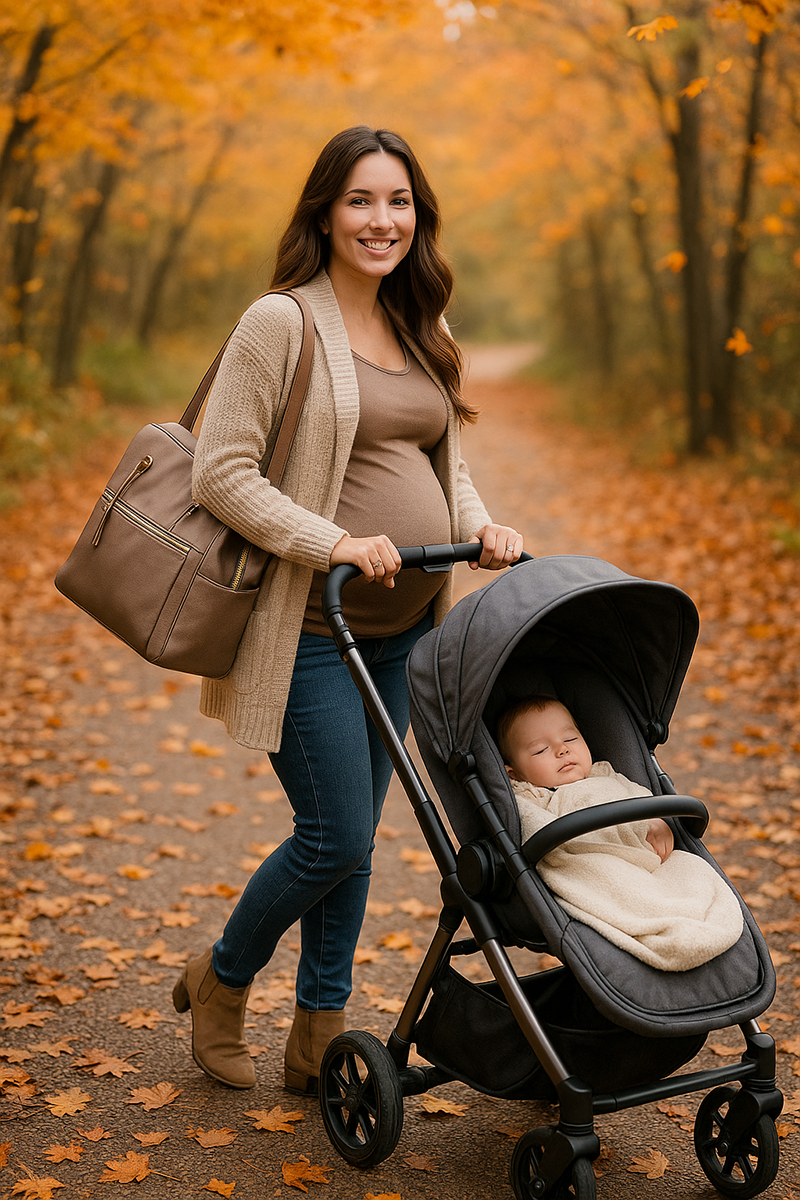
A stroller and diaper bag are everyday gear worth choosing around how you actually leave the house, not around the longest feature list.
Start with the gear that covers safe sleep, travel, feeding and daily care. Many convenience products can wait until you know how your baby, your home and your daily routine actually work.
If you are trying to avoid buying too much, use my what to buy before baby arrives checklist along with my guide to what baby items can wait until after birth. For the nursery itself, the newborn nursery essentials checklist helps keep the room focused on things you are likely to use.
Some of the biggest baby gear decisions are also nursery decisions. Before spending on larger pieces, see how much a nursery can cost, whether you can use a used crib mattress, how to choose crib sheets that fit securely, and my guide on how to choose a safe crib for a baby nursery.
What Baby Gear Do You Really Need?
Most families need fewer things at first than baby store checklists make it seem. Start with a safe place for your baby to sleep, a properly fitted car seat, diapers and changing supplies, basic clothing, feeding supplies and the everyday gear that fits the way your family lives.
For sleep: Start with an appropriate sleep space, a properly fitted mattress and fitted sheets. My baby cribs guide covers crib choices, while my crib sheets guide helps with fit and everyday use.
For travel: A correctly fitted car seat is essential. A stroller may also be one of your most-used pieces, depending on where you live and how often you are out with the baby. See my baby car seat guide and baby strollers guide before comparing models.
For the nursery: A changing table, baby monitor, glider, recliner and extra storage can all be useful, but they are not equally necessary for every family. Room size, budget and your daily routine should decide what earns a place in the nursery.
For convenience: Items such as baby carriers, swings and upgraded monitors are often easier to choose after you know what would actually make daily life easier. My baby carrier guide and baby monitor guide can help when you are ready to compare those extras.
The goal is not to own every piece of baby gear. It is to have the pieces that solve a real need in your home.
Nursery Furniture and Baby Gear That Need to Fit the Room
Large baby gear has to work with the room around it. Before buying a crib, dresser, changing table or nursery chair, think about walking space, doors, closets, windows and how you will move through the room while carrying your baby.
If you are deciding whether a dedicated changing station is worth the floor space, my guide on do you really need a changing table explains when a changing table is useful and when a dresser can do the job instead.
The nursery chair is another piece worth measuring before you buy. My nursery rocking chair guide compares common chair styles, while nursery recliner vs glider looks at the differences between the two. If you are considering a reclining chair, check how much space a nursery recliner needs before ordering one.
Lighting and storage matter too. My nursery lighting guide covers practical lighting for nighttime care, while these under-the-crib storage ideas can help make better use of a small room.
For the full room rather than one product, use my nursery layout planner to decide where the larger pieces should go before you start buying them.
Baby Gear Safety and Maintenance Tips
Baby gear does not help if it is unsafe, worn out, recalled, or missing parts.
Before using an older, stored, or secondhand crib, check my crib recall guide so you can verify the model number and look for official recall notices first.
Before using anything new or secondhand, check for recalls. For durable infant and toddler products, use the product registration card or manufacturer's registration option so you can be contacted about recalls or safety notices. My crib parts and replacement guide helps with older crib hardware, and my car seat safety section explains harness checks, base installation and year-round protection.
For official recall and baby product safety information, use the U.S. Consumer Product Safety Commission Kids and Babies resources.
See How Baby Gear Fits in a Real Nursery
Before buying the largest pieces, it helps to see how cribs, dressers, chairs, storage and lighting work together in an actual room. My real nursery ideas show rooms shared by families, while my nursery layout ideas focus on arranging the major furniture pieces.
If space is tight, see my small nursery layout ideas. You can also see where to put the dresser in a nursery before deciding whether it will also serve as the changing station.
The best baby gear setup is not the one with the most products. It is the one that leaves enough room to safely and comfortably use the pieces your family actually needs.
Baby Gear Questions New Parents Ask
What baby gear do new parents really need first?
Start with the items needed for safe sleep, travel, feeding, clothing and diaper changes. A crib or other appropriate sleep space, a properly fitted car seat, diapers, basic clothing and feeding supplies come before convenience products such as swings, upgraded monitors and extra nursery gadgets.
What baby gear can wait until after birth?
Many convenience items can wait until you know your baby's routine. Swings, extra carriers, specialty feeding tools, upgraded monitors and some nursery accessories are easier to choose once you know what would actually make daily life easier. See my full guide to baby items that can wait until after birth.
Do you really need a changing table?
No. A dedicated changing table can be convenient, but many families use a sturdy dresser with an appropriate changing setup instead. My guide on whether you need a changing table explains the space and storage tradeoffs.
Do you need a baby monitor?
Not every family needs the same type of monitor. The size and layout of your home, where your baby sleeps and how you plan to use the monitor matter more than having the longest feature list. My baby monitor guide explains the main choices.
How can you avoid buying too much baby gear?
Buy the true essentials first and leave room for your baby's actual habits to guide the rest. A product that is indispensable for one family may barely be used by another, so waiting on convenience purchases can save money and nursery space.
Baby Gear Reviews and Buying Guides
For a closer look at the MamaRoo, my MamaRoo review covers its main features, motion settings and safety considerations. My Best Baby Swings for Small Spaces guide focuses on compact options for smaller nurseries.
Use individual reviews and buying guides when you are ready to compare a specific type of gear. For the first shopping pass, keep the list simple and spend first on the pieces that solve a real safety, sleep, travel, feeding or nursery need.


When you click on links to various merchants on this site and make a purchase, this may result in this site earning a commission. This does not affect the price you pay.
UBGI Gold Standard 2026
Reviewed under the site's
editorial checklist.
About Jan | Contact | Baby Nursery Ideas (Blog) | Site Map | Privacy Policy | Disclosure Policy | Disclaimer | Affiliate Disclosure | Earnings Disclosure | Facebook | Pinterest
I am a participant in the Amazon Services LLC Associates Program, an affiliate advertising program designed to provide a means for us to earn fees by linking to Amazon. As an Amazon Associate I earn from qualifying purchases.
Copyright © 2006-2026. All Rights Reserved.