How to Clean a Crib Mattress: Stains, Odors and Drying
How to clean a crib mattress starts with checking the care label. Remove the sheet and protector, blot up the mess, clean the surface with as little moisture as possible, and let every part dry completely. Do not soak a foam or fiber mattress core unless the manufacturer clearly says that the core is washable.
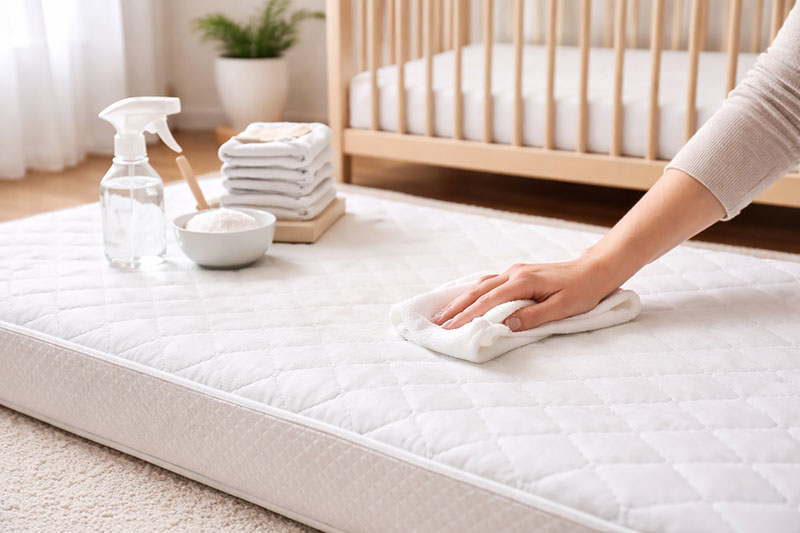
Quick crib mattress cleaning steps
1. Read the mattress care label.
Find out whether the surface is waterproof, fabric, removable, spot-clean only, or fully washable.
2. Remove the bedding.
Take off the fitted sheet, mattress protector, and any removable mattress cover.
3. Blot the mess.
Use a clean towel to lift liquid. Do not scrub it deeper into fabric, foam, seams, or binding.
4. Use the least moisture needed.
Start with a damp cloth and a small amount of mild soap unless the care label gives different directions.
5. Remove soap residue.
Wipe the area again with a separate clean, damp cloth.
6. Dry the mattress completely.
Do not put the cover, protector, or fitted sheet back on while any part feels damp.
Check the mattress care label first
Crib mattress cleaning instructions are not all the same. A waterproof mattress may only need to be wiped. A mattress with a removable fabric cover may allow machine washing. A foam or fiber mattress may be spot-clean only. A few specialty mattresses have a washable core, but that does not mean every crib mattress core can be washed.
Look for the brand, model number, material list, and care symbols on the mattress tag. Check the manufacturer website when the printed directions are missing or hard to read.
Do not assume that a mattress described as breathable, waterproof, water-resistant, organic, foam, or washable should be cleaned the same way as another mattress with a similar description.
How to Clean a Crib Mattress by Material Type
| Mattress surface | Basic cleaning method | Main caution |
|---|---|---|
| Waterproof or wipe-clean surface | Blot the spill. Wipe with a damp cloth and a small amount of mild soap. Wipe again with a clean damp cloth. | Keep liquid away from torn areas, seams, bindings, and zipper openings. |
| Removable fabric cover | Remove and wash the cover using the exact water temperature, cycle, and drying method on its label. | Do not use bleach, heat, or a dryer unless the label permits it. |
| Non-removable fabric or quilted surface | Blot and spot clean with a barely damp cloth and mild soap. | Do not saturate the fabric or allow water to reach the inner filling. |
| Foam or fiber-filled core | Clean the outer surface or removable cover only unless the manufacturer says more can be washed. | Soaking can trap moisture inside the mattress. |
| Manufacturer-approved washable core | Follow the model-specific washing, rinsing, and drying directions. | Never wash a core merely because another brand allows it. |
Cleaning a waterproof or vinyl crib mattress surface
Remove the bedding and blot up as much liquid as possible. Put a few drops of mild soap in a small bowl of water. Dip a soft cloth into the water and wring it out well. The cloth should be damp, not dripping.
Wipe the dirty area gently. Start at the outside edge of the mark and work toward the center so the mess does not spread. Use a second clean damp cloth to remove soap residue. Finish by blotting the area with a dry towel.
Inspect the surface as you clean. Stop if you find cracks, peeling material, open seams, bubbles, or a tear that could allow liquid into the mattress.
Cleaning a removable crib mattress cover
Check the cover label before putting it in a washing machine. Some covers can be machine washed in cold water. Others must be hand washed or spot cleaned. Drying directions also differ. One cover may allow low heat, while another must be hung or laid flat to dry.
Check whether the zipper should be closed before washing. Make sure the cover is completely dry before putting it back on the mattress. A damp cover can hold moisture against the core.
Cleaning foam or fiber-filled crib mattresses
Foam and fiber can hold water deep inside the mattress. Unless the manufacturer clearly says otherwise, do not put the core in a bathtub, shower, washing machine, or outside under a hose.
Blot the surface first. Spot clean with a cloth that has been wrung out well. Use another barely damp cloth to remove soap. Press dry towels against the area to pull out as much surface moisture as possible.
If liquid has soaked through the cover and entered an inner layer, contact the manufacturer before trying to add more water or cleaner.
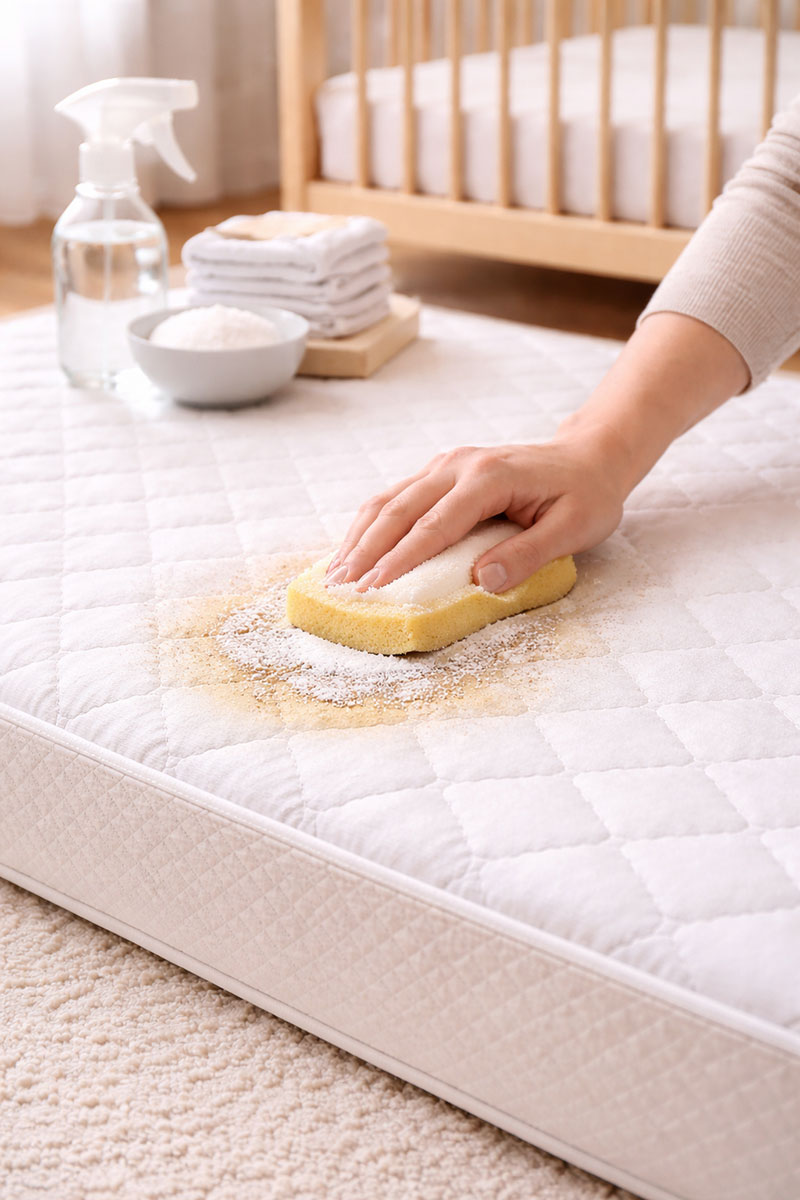
How to Clean a Crib Mattress After Common Messes
| Mess or stain | What to do | When to stop cleaning |
|---|---|---|
| Urine | Blot immediately. Clean a waterproof surface with mild soap and a damp cloth. Wash a removable cover according to its label. | Stop repeated wet cleaning if the smell returns after the mattress is fully dry. |
| Milk or formula | Blot the liquid. Use cool or lukewarm water with mild soap to remove the sticky residue. Wipe away the soap with a clean damp cloth. | Stop if the liquid has entered a non-washable core or damaged seam. |
| Vomit | Lift away solid material without pressing it into the mattress. Blot, then clean the surface with mild soap and limited water. | Stop if odor remains inside the mattress after complete drying. |
| General odor | Wash a removable cover if permitted. Air the uncovered mattress in a clean, dry room with good airflow. | Do not keep covering an odor with perfume or repeated layers of cleaner. |
| Mildew or visible mold | Remove the mattress from use and inspect the cover, seams, underside, and inner layers. | Replace the mattress when mold has entered foam, fiber, fabric, seams, or another porous inner material. |
| Unknown stain | Begin with the care-label method, usually blotting followed by a damp cloth and mild soap. | Do not combine several cleaning products while trying to identify the stain. |
For a urine accident that left a continuing smell, see the separate guide to cleaning urine from a mattress.
When the mattress is dry but still smells, first identify whether the odor is coming from the cover, core, protector, crib, or room. The crib mattress odor guide explains the most common sources. The page on how to deodorize a mattress covers odor removal without simply covering the smell with fragrance.
Cleaning products that should not be mixed or applied
Never mix bleach, disinfectants, or household cleaners together.
Mixing cleaning products can release dangerous vapors. Use one label-approved cleaning method at a time.
Do not use bleach on a crib mattress unless the mattress manufacturer clearly permits it. Many removable crib mattress covers specifically say not to use bleach.
Do not pour vinegar, hydrogen peroxide, rubbing alcohol, enzyme cleaner, disinfectant, or another stain product onto the mattress unless the manufacturer says that product is suitable for that exact surface.
Do not use a steam cleaner, carpet-cleaning machine, soaking spray, abrasive powder, or high heat unless the mattress instructions specifically allow that method.
A product may be suitable for one waterproof mattress and unsuitable for a fabric-covered or foam mattress. Manufacturer directions should come before general stain-removal advice.
How to dry a crib mattress completely
Drying is part of the cleaning process. A mattress that feels dry on top may still hold moisture along the seams, under a cover, or inside an absorbent layer.
- Blot the cleaned area with dry towels.
- Remove any washable cover and dry it separately.
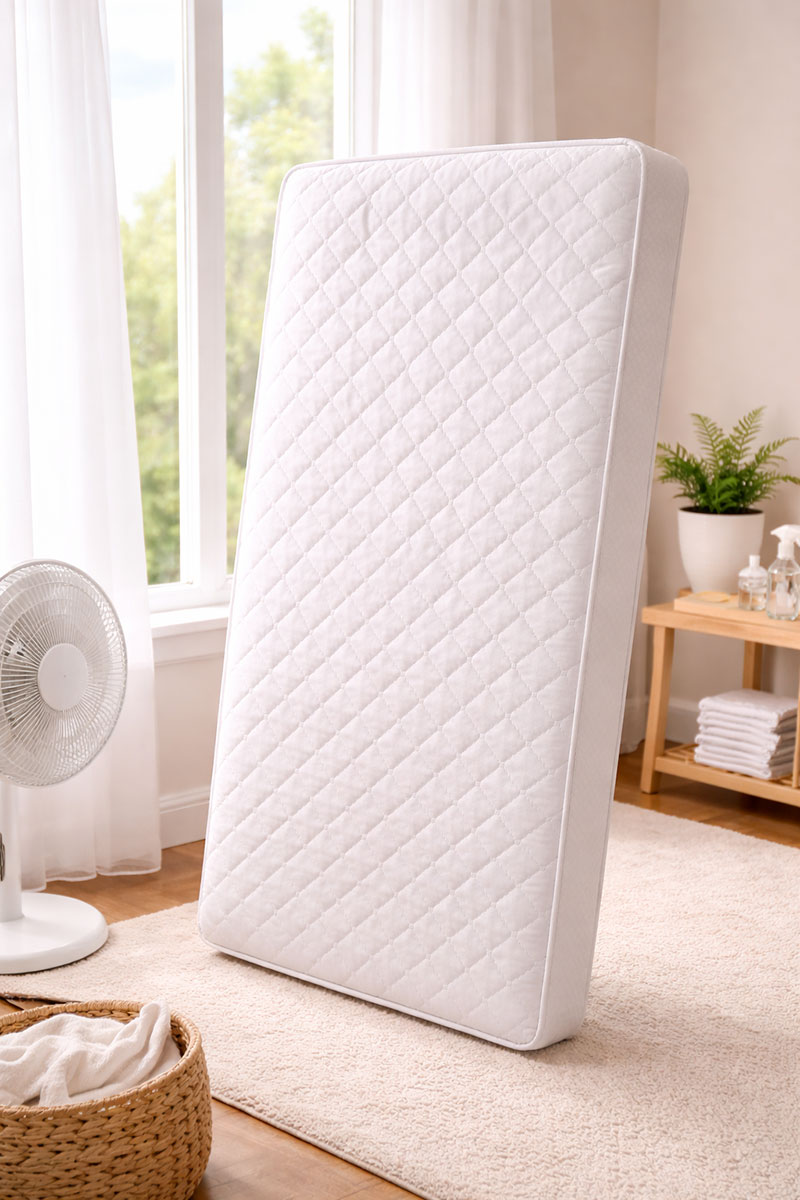
- Stand the mattress on its side on a clean, dry surface.
- Leave space around both sides so air can move freely.
- Use normal room airflow or a nearby fan.
- Avoid a hair dryer, space heater, heating vent, or other strong direct heat unless the care label permits it.
- Check the top, bottom, sides, corners, seams, binding, and zipper area before reuse.
There is no single drying time that works for every crib mattress. Room humidity, material type, the amount of water used, and the mattress construction all affect drying.
When a crib mattress should not be cleaned and reused
Cleaning can remove many surface messes, but it cannot fix every type of damage or contamination. Stop using the mattress and check with the manufacturer when you find any of these problems:
- The waterproof surface is cracked, split, peeling, bubbling, or sticky.
- A seam, binding, zipper, or removable cover is torn or will not close correctly.
- Foam, fiber, or another inner layer remains damp.
- A stain or odor returns after the mattress has dried completely.
- Mold or mildew is visible inside fabric, foam, fiber, seams, or the mattress core.
- The mattress was exposed to floodwater, sewage, or an unknown chemical.
- The mattress has become warped, lumpy, soft, sagging, or uneven.
- The surface no longer lies flat or the mattress no longer fits the crib correctly.
- The manufacturer says that a damaged cover or core must be replaced.
Mold can enter the spaces inside porous materials, which may make full removal difficult or impossible. General mold cleanup information is available from the United States Environmental Protection Agency.
Drying checklist before the mattress goes back in the crib
Before reuse, check that:
- The top and bottom surfaces feel completely dry.
- The seams, corners, binding, and zipper area are dry.
- There is no cool or damp feeling when you press the cleaned area.
- No stain or odor has returned.
- The mattress cover is fully dry and fitted correctly.
- The surface is intact, firm, flat, and even.
- The mattress still fits the crib snugly.
After the mattress is dry and back in place, use only bedding intended for that mattress and crib. The crib safety checklist covers mattress fit, sheets, hardware, and the rest of the sleep space.
How to make future crib mattress cleanup easier
A properly fitted waterproof protector can help keep urine, milk, and other liquids from reaching an absorbent mattress surface. Follow the mattress and crib manufacturer directions when choosing one.
The crib mattress pad vs protector guide explains how these products differ. Parents who want a wipe-clean sleep surface can also review the waterproof crib mattress guide.
Keep a clean fitted sheet and protector ready so a wet one can be removed without putting damp bedding back over the mattress.
Crib mattress cleaning safety references
The Centers for Disease Control and Prevention warns against mixing bleach or disinfectants with other cleaners because the mixture can release dangerous vapors. See the CDC cleaning and disinfecting guidance.
For crib sleep spaces, the Consumer Product Safety Commission safe sleep guide recommends a firm mattress and a fitted sheet without added soft items in the crib.
Final crib mattress cleaning check
The safest general approach is simple: follow the mattress label, clean the correct layer, use limited moisture, remove the soap, and wait until the mattress is completely dry. Do not copy another brand's washing directions unless your own mattress manufacturer gives the same instructions.
For help comparing mattress materials, firmness, sizes, waterproof surfaces, and construction, visit the main crib mattress guide.
When you click on links to various merchants on this site and make a purchase, this may result in this site earning a commission. This does not affect the price you pay.

UBGI Gold Standard 2026
Reviewed under the site's
editorial checklist.
Photos, decorating ideas, party setups and reader submissions are shared for inspiration unless a page is specifically presented as a pattern, tutorial, reference guide or step-by-step project. Follow the instructions, measurements, safety guidance and manufacturer directions provided for the particular project or product.
About Jan | Contact | Baby Nursery Ideas (Blog) | Site Map | Privacy Policy | Disclosure Policy | Disclaimer | Affiliate Disclosure | Earnings Disclosure | Facebook | Pinterest
I am a participant in the Amazon Services LLC Associates Program, an affiliate advertising program designed to provide a means for us to earn fees by linking to Amazon. As an Amazon Associate I earn from qualifying purchases.
Copyright © 2006-2026. All Rights Reserved.