Dual Sided Crib Mattress
A dual sided crib mattress has a firmer infant side and a slightly less firm toddler side, while a single sided crib mattress uses the same surface the entire time. The biggest surprise is that many parents buy a dual sided crib mattress expecting a dramatic difference between the two sides, but on many models the change is much smaller than people expect. The real question is not whether one sounds better, but whether the added lifespan, convenience, and toddler transition are worth the extra cost for your nursery setup.
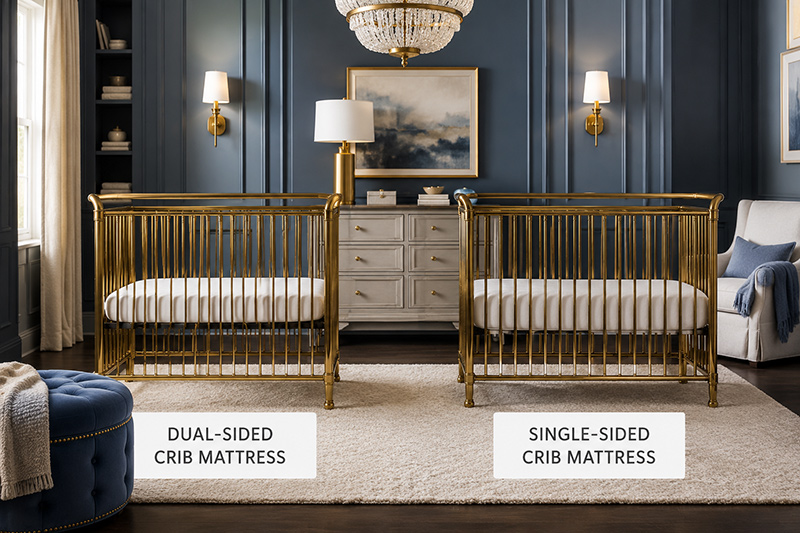
Popular Dual-Sided Crib Mattress Parents Compare Most Often:
See Some Actual Dual-Sided Crib Mattress OptionsQuick Answer:
A dual sided crib mattress has a firmer infant side and a different toddler side designed for later crib years, while a single sided crib mattress uses the same surface the entire time. The larger difference is usually durability and long term structure, not dramatic comfort changes.
Dual Sided vs Single Sided Crib Mattress: What is the Real Difference
People often realize this during a late night sheet change. The mattress finally gets flipped over and somebody pauses because both sides look nearly identical under the nursery light. That moment creates a lot of confusion.
The marketing makes it sound like one side belongs in a hospital nursery and the other belongs in a toddler bed showroom. Real life is not that dramatic.
A dual sided crib mattress has a designated infant side and toddler side. A single sided crib mattress keeps the same sleep surface from beginning to end.
For the newer comparison page with the updated filename, see this crib mattress dual-sided vs single-sided guide, which explains how one-surface and two-stage crib mattresses compare for infant use, toddler use, and long-term value.
The real difference is normally hidden deeper inside the mattress construction.
Some dual sided mattresses contain denser support layers on the infant side with slightly different pressure response on the toddler side. Others barely change at all except for stitching patterns and labels.
Toddler side does not mean squishy.
That misunderstanding causes a surprising amount of buyer confusion.
Why Dual Sided Crib Mattresses Sometimes Last Longer
The longer lifespan claim can be legitimate, but not always for the reason people expect.
In active nurseries, toddlers eventually begin standing in exactly the same spots every morning. Near the rail. Near the corner. Near the side facing the door. Over time, those repeated pressure points become visible on cheaper crib mattresses.
That wear pattern tells a bigger story than advertisements do.
Some dual sided crib mattresses resist edge compression better because the toddler side uses slightly denser materials intended for heavier movement. This becomes noticeable after a couple of years when crib sheets start fitting differently across the corners.
I believe this is one reason certain mattresses still look flat years later while others develop shallow dips surprisingly fast.
Another overlooked factor is humidity.
Nurseries with poor airflow or seasonal moisture swings sometimes reveal mattress weaknesses early. Slight rippling near seams or subtle waviness across the surface becomes easier to spot once sunlight hits the crib at an angle during morning hours.
That detail almost never appears on competing comparison pages.
Construction quality matters more than labels.
Single Sided Crib Mattress Benefits People Rarely Mention
Single sided crib mattresses remove one small frustration that nobody thinks about during shopping.
You never have to wonder whether the correct side is facing upward during a midnight bedding change.
That sounds minor until somebody wrestles a tight crib sheet onto a mattress while half awake.
Many nursery setups run into this because crib mattresses are intentionally snug for safety. Once the mattress is fully inside the crib frame, tags and labels become difficult to see.
A well built single sided crib mattress can still perform extremely well for the full crib stage.
In some homes, children move into toddler beds early enough that the second side never becomes useful anyway.
That changes the value calculation considerably.
Infant Side vs Toddler Side Crib Mattress Truth
Some parents expect the toddler side to resemble a cushioned adult mattress.
That is not how safe crib mattresses work.
Even toddler sides should still maintain strong support and stable structure. Current U.S. safe sleep guidance continues emphasizing firm sleep surfaces for infants and young children.
U.S. Consumer Product Safety Commission safe sleep guidance
American Academy of Pediatrics
The noticeable changes are often subtle instead. Slightly different foam density. Modified quilting. Additional reinforcement beneath the cover. Better edge stability.
Those details matter more during everyday nursery use than dramatic comfort differences.
I’ve learned that nursery lighting reveals mattress quality quickly. Rooms with nearby windows expose uneven surfaces far earlier because shadows travel across the mattress differently throughout the day.
That becomes obvious during sheet washing days when the mattress surface is fully uncovered.
Best Dual Sided Crib Mattress Buying Decision
The strongest crib mattress is not automatically the one with the biggest marketing claim.
Long term structure matters more.
A sturdy single sided crib mattress can easily outperform a poorly constructed dual sided model. Meanwhile, a high quality dual stage mattress may stay level and supportive through the full crib period without noticeable sagging.
This becomes easier to judge once the crib sheets come off and the mattress surface is fully visible under direct light.
Some still appear nearly new after years of use. Others begin showing edge fatigue much earlier.
That difference becomes very noticeable in nurseries where toddlers repeatedly bounce near the rail while waiting to be picked up in the morning.
The label alone does not predict that outcome.
Build quality matters more than flipping ability.
Dual Sided Crib Mattress FAQ
Is a dual sided crib mattress worth buying?
A dual sided crib mattress may be worth buying for families planning to use the crib for several years because the toddler side can help extend the mattress lifespan.
Are single sided crib mattresses safe?
Yes. A properly certified single sided crib mattress can be completely safe when it meets current firmness and fit standards.
When should you flip a dual sided crib mattress?
Manufacturers commonly recommend switching to the toddler side after infancy according to the mattress maker’s age and weight guidance.
Do dual sided crib mattresses last longer?
Some do. Better edge support and denser materials can help certain dual sided mattresses resist long term wear more effectively.
What matters more than dual sided vs single sided?
Firmness, mattress fit, edge stability, waterproof protection, and overall structural durability matter far more than labels alone.
Crib Mattress Summary Parents Can Actually Use
A dual sided crib mattress gives infants and toddlers different sleep surfaces, while a single sided crib mattress uses one consistent surface throughout the crib years. The biggest differences are usually durability, edge support, and long term structural performance rather than dramatic comfort changes. A high quality mattress of either type can work well when it maintains proper firmness, fits the crib correctly, and stays level over time.
When you click on links to various merchants on this site and make a purchase, this may result in this site earning a commission. This does not affect the price you pay.

UBGI Gold Standard 2026
Reviewed under the site's
editorial checklist.
Photos, decorating ideas, party setups and reader submissions are shared for inspiration unless a page is specifically presented as a pattern, tutorial, reference guide or step-by-step project. Follow the instructions, measurements, safety guidance and manufacturer directions provided for the particular project or product.
About Jan | Contact | Baby Nursery Ideas (Blog) | Site Map | Privacy Policy | Disclosure Policy | Disclaimer | Affiliate Disclosure | Earnings Disclosure | Facebook | Pinterest
I am a participant in the Amazon Services LLC Associates Program, an affiliate advertising program designed to provide a means for us to earn fees by linking to Amazon. As an Amazon Associate I earn from qualifying purchases.
Copyright © 2006-2026. All Rights Reserved.