Why Are Crib Mattresses So Hard?
Why are crib mattresses so hard? They are hard because babies need a firm, flat sleep surface that does not sink under their face or body. A crib mattress that feels uncomfortably hard to an adult is usually considered normal and safer for infant sleep in the United States. Many parents are surprised the first time they press on a crib mattress because it feels nothing like an adult bed, but that firmness helps reduce the risk of suffocation, unsafe sleep positions, and deep indentations around a baby’s head.
Do crib mattresses have to be so hard? Start here:
How firm should a crib mattress really be?
What actually makes a crib mattress safe?
Can adding a topper make a crib unsafe?
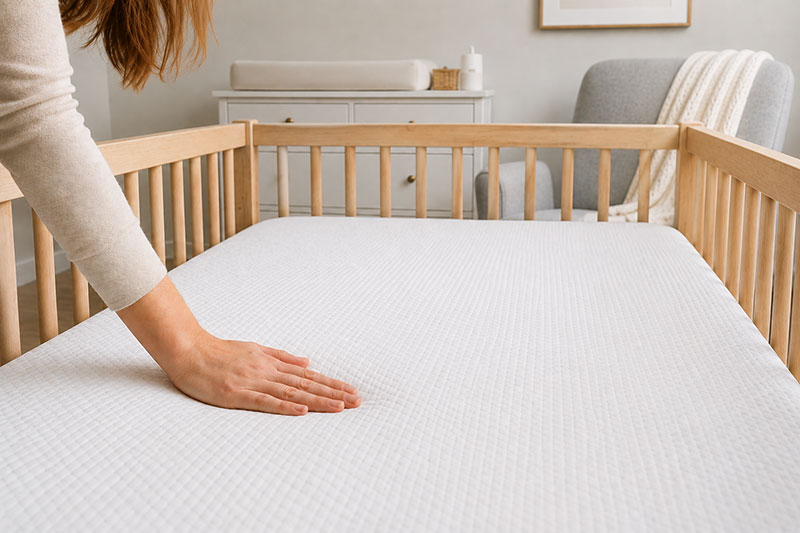
Worried the mattress feels too hard?
Check my firm crib mattress guide
See my crib mattress safety guide
Why Are Crib Mattresses So Hard Compared to Adult Beds?
A lot of parents have the same reaction the first time they push down on a crib mattress. It barely gives at all. After sleeping on a pillow-top bed for years, it can almost feel wrong standing beside a nursery crib thinking, “There’s no way this can be comfortable.”
That firmness is intentional.
Babies need a flat sleep surface that stays level under their body instead of sinking around their face or shoulders. In the United States, crib mattresses are designed this way to help reduce unsafe sleep risks. A mattress that feels cozy to an adult can create dangerous pockets around a small infant who cannot reposition well yet.
I believe this catches parents off guard because baby bedding in stores often looks plush in photos even though the safest crib setup is actually pretty plain once you remove all the styling props.
A crib mattress is supposed to feel much firmer than an adult mattress.
When parents ask why are crib mattresses so hard, the answer usually comes back to stability and safe infant sleep support.
That does not mean babies are uncomfortable. Infants are lighter, their bones are still developing, and they do not experience sleep surfaces the same way adults do. What feels stiff to a grown person usually feels stable to a baby.
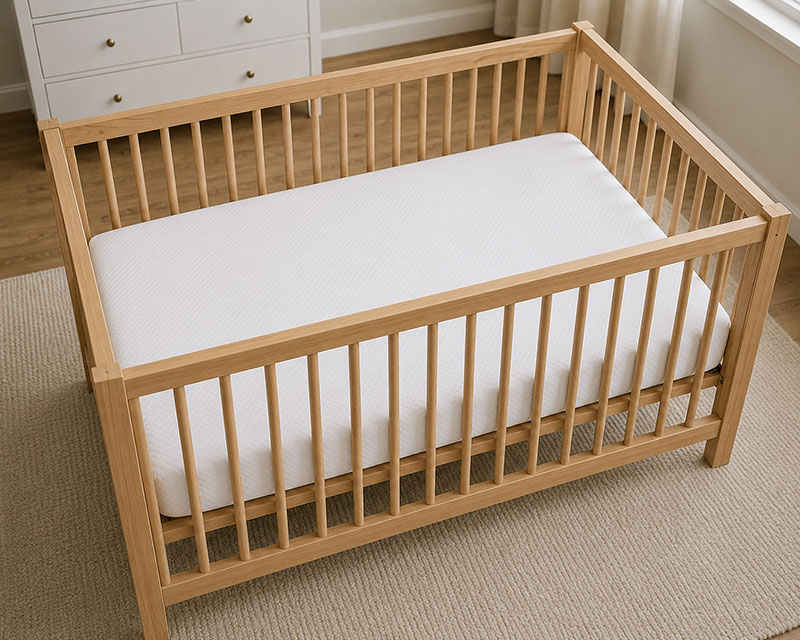
Parents often notice that firm, board-like feel during late-night sheet changes, especially when one side of the mattress lifts instead of bending like an adult mattress. If you are comparing different builds, my guide to crib mattress types explains why foam, innerspring, breathable, and dual-sided options can all feel different, while my crib mattress dual sided vs single sided comparison looks more closely at how two-stage and single-sided designs differ in firmness, support, and everyday use. Some parents also compare firmness levels while shopping for a best crib mattress or deciding between a standard crib mattress and a mini crib mattress.
Can a Crib Mattress Actually Be Too Hard?
Here’s the thing. Parents usually worry about mattresses being too hard when the bigger problem is often the opposite.
A crib mattress should stay flat when your baby lies down. If the middle dips deeply or your hand sinks far into the surface, that can become a concern. Extremely rigid surfaces are uncommon in modern crib mattresses sold in the United States, especially models that meet current federal standards.
This usually happens when someone tries to reuse an older mattress from storage or accepts one that spent years in an attic or garage.
Over time, moisture, heat, and compression can damage the support core inside the mattress even if the outside still looks clean.
The safer question is not “Does this feel hard?”
The safer question is “Does this stay level and supportive?”
Many parents searching why are crib mattresses so hard are actually trying to figure out whether firmness means the mattress is unsafe or defective.
The Consumer Product Safety Commission recommends a firm sleep surface with a fitted sheet and no extra padding inside the crib.
Safe sleep guidance from the CPSC
If your mattress feels uneven, warped, or collapses under pressure near the edges, it may be time to replace it. My crib mattress replacement guide covers the warning signs parents usually miss.
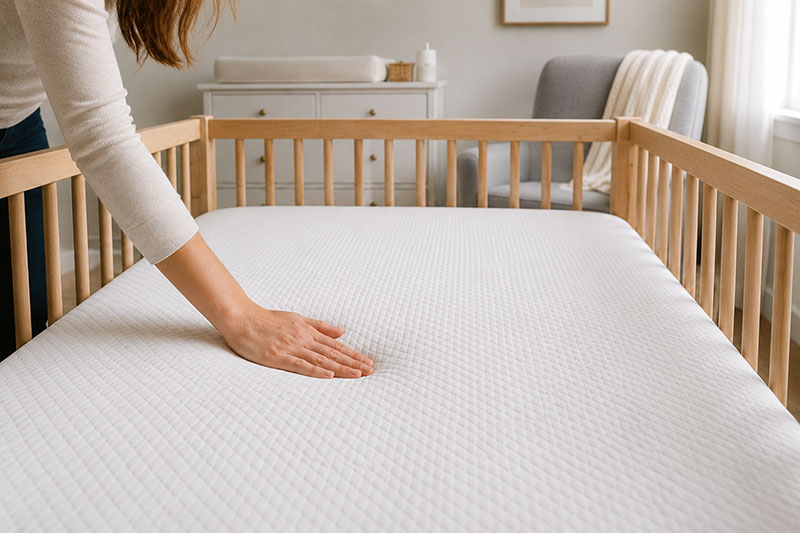
Why Adding Padding Can Change Crib Mattress Safety
Many nurseries run into this issue because adults naturally try to “fix” firmness by adding padding.
That usually means memory foam toppers, folded blankets, comfort layers, or quilted inserts.
Parents trying to make a crib mattress feel softer often start researching the risks of adding crib mattress toppers because even thin cushioning layers can change how the mattress supports a baby during sleep.
Those additions can interfere with the original sleep surface the mattress was tested with.
A topper may seem harmless because it feels minor when you press on it with your hand. Once a baby’s head rests against it for hours, though, the surface can behave very differently.
That is why pediatricians and safe sleep organizations generally recommend using only a fitted sheet over the mattress.
My full page on whether crib mattress toppers are safe explains the difference between comfort products marketed to adults and products intended for infant sleep.
If you are trying to protect the mattress instead, a waterproof crib mattress protector is usually the safer direction than adding cushioning layers.
Parents comparing waterproof layers often realize the terms are used interchangeably online, which is why this crib mattress pad vs protector guide explains which products are designed for moisture protection and which ones begin adding extra padding.
I’ve learned that many parents confuse mattress pads, protectors, and toppers because the packaging often uses similar wording even though the products do completely different jobs.
That confusion becomes even bigger online where photos are heavily styled with thick blankets and decorative bedding that should never be used for sleep.
One reason why are crib mattresses so hard remains such a common question is because adult comfort products are marketed everywhere parents shop.
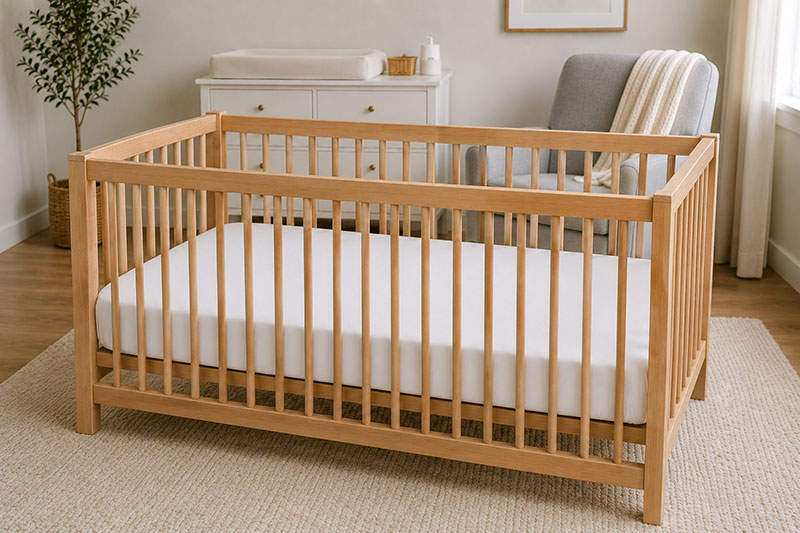
breathable waterproof crib mattress protector
What to Check Before Using a Firm Crib Mattress
Sometimes the mattress itself is fine, but the fit inside the crib creates the real issue.
A mattress should fit tightly inside the crib frame with minimal space around the edges. Large gaps can create entrapment concerns, especially once babies begin rolling and moving around more during sleep.
One thing I notice in real nurseries is how many parents blame firmness when the fitted sheet is actually causing bunching across the corners. A poorly fitted sheet can make the surface feel uneven even when the mattress underneath is completely normal.
Before using the mattress, check these things:
- The mattress lies flat without sagging
- The fitted sheet stays tight
- No extra padding has been added
- The mattress fits snugly inside the crib frame
- The cover has no cracks, peeling, or exposed foam
- The mattress stays level when pressure is applied near the center and edges
If the mattress slides around inside the crib, my crib mattress gap guide explains what measurements to check.
Parents comparing dimensions also end up on my crib mattress fit page because not every crib and mattress combination fits the same way.
Why Babies Usually Sleep Fine on a Firm Crib Mattress
Adults tend to judge comfort by softness because that is what our own bodies prefer after years of sleeping on thicker mattresses.
Babies do not approach sleep that way.
Infants often fall asleep perfectly well on surfaces that would feel too rigid for an adult nap. Their bodies are lighter, they shift differently during sleep, and they are not looking for pressure relief the same way adults are.
This starts to come together once parents stop comparing crib mattresses to hotel beds and start thinking of them as part of a safety product instead.
Once parents understand that firmness is part of infant sleep safety, the mattress usually stops feeling “wrong” and starts making more sense.
When someone asks why are crib mattresses so hard, the answer is usually connected to reducing sinkage and keeping the sleep surface stable through the night.
If you are still building your sleep setup, my crib mattress buying guide walks through firmness, fit, certifications, support, and breathable options in one place.
Quick answer:
Crib mattresses are intentionally firm because babies need a flat, stable sleep surface that does not sink around their face or body. In the United States, firmness is considered part of safer infant sleep guidance. A mattress that feels hard to an adult is usually functioning exactly the way it should for a baby.
Frequently Asked Questions About Hard Crib Mattresses
Why does my crib mattress feel harder than the store display?
Store models are sometimes broken in from repeated handling. Your mattress may also become slightly less stiff after regular use while still remaining supportive.
Do babies sleep better on softer mattresses?
Babies may settle on many different surfaces, but safer sleep guidance recommends a firm mattress instead of a plush one.
Can I put a blanket under the crib sheet?
No. Blankets, pads, and folded towels under the fitted sheet can change the sleep surface and create uneven areas.
Are breathable crib mattresses supposed to feel hard too?
Yes. Breathable crib mattresses are still designed to remain supportive and level for infant sleep.
Will my baby get used to a firm crib mattress?
Most babies adapt quickly because they are not comparing the surface to an adult mattress the way parents do.
When you click on links to various merchants on this site and make a purchase, this may result in this site earning a commission. This does not affect the price you pay.

UBGI Gold Standard 2026
Reviewed under the site's
editorial checklist.
Photos, decorating ideas, party setups and reader submissions are shared for inspiration unless a page is specifically presented as a pattern, tutorial, reference guide or step-by-step project. Follow the instructions, measurements, safety guidance and manufacturer directions provided for the particular project or product.
About Jan | Contact | Baby Nursery Ideas (Blog) | Site Map | Privacy Policy | Disclosure Policy | Disclaimer | Affiliate Disclosure | Earnings Disclosure | Facebook | Pinterest
I am a participant in the Amazon Services LLC Associates Program, an affiliate advertising program designed to provide a means for us to earn fees by linking to Amazon. As an Amazon Associate I earn from qualifying purchases.
Copyright © 2006-2026. All Rights Reserved.