Crib Mattress Pad vs Protector: What Parents Need to Know
Crib mattress pad vs protector questions usually come up when parents realize these products are not always the same thing. Some add absorbency, some mainly block leaks, and some can accidentally change the firmness or fit of a crib mattress if they are too thick. This guide explains the difference in simple terms so it is easier to choose what actually belongs in a safe baby sleep setup.
How do I protect the crib mattress without creating a safety problem? Start here:
Can extra padding make a crib unsafe?
Do I need a waterproof crib mattress protector?
Should I only use a breathable mattress protector?
Do crib mattresses even need a protective cover?
How firm should a crib mattress be?
On this page:
Crib Mattress Pad vs Protector Difference Explained Clearly
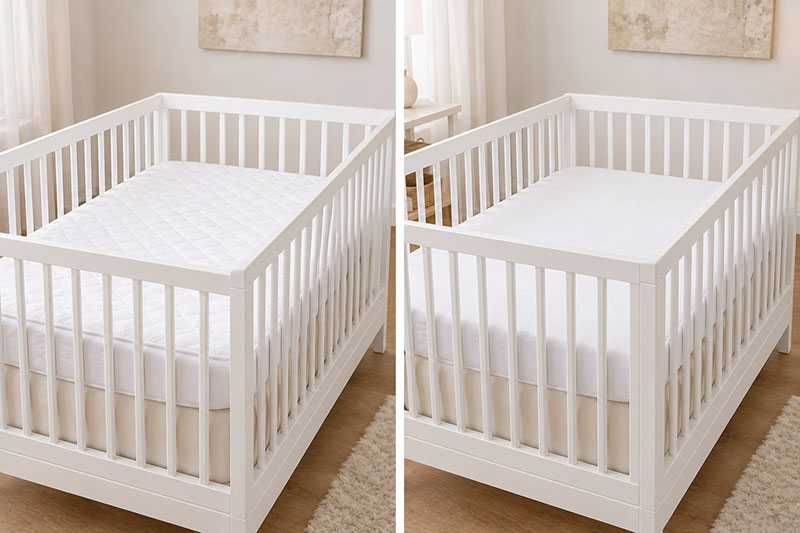
One of the easiest ways to spot the difference is by looking at what happens after a middle of the night diaper leak. A protector usually keeps moisture from reaching the mattress itself. A pad often adds another layer that absorbs liquid or changes the feel of the sleep surface.
A waterproof crib mattress builds that moisture barrier into the mattress design itself, which is different from adding a separate pad or protector under the fitted sheet.
That sounds minor until you pull the fitted sheet back at 2 a.m. and realize one product kept the mattress dry while the other let moisture soak through around the edges.
A crib mattress protector is mainly about shielding the mattress. A crib mattress pad usually adds cushioning or absorbency.
That distinction matters because crib sleep surfaces in the United States are supposed to remain firm and flat for infant safety.
Quick answer:
- A crib mattress protector creates a barrier against urine, spit up, and leaks.
- A crib mattress pad may add absorbency or extra thickness.
- Very thick padded layers can interfere with crib mattress firmness.
- Many families only need a fitted waterproof protector under the crib sheet.
waterproof crib mattress protector
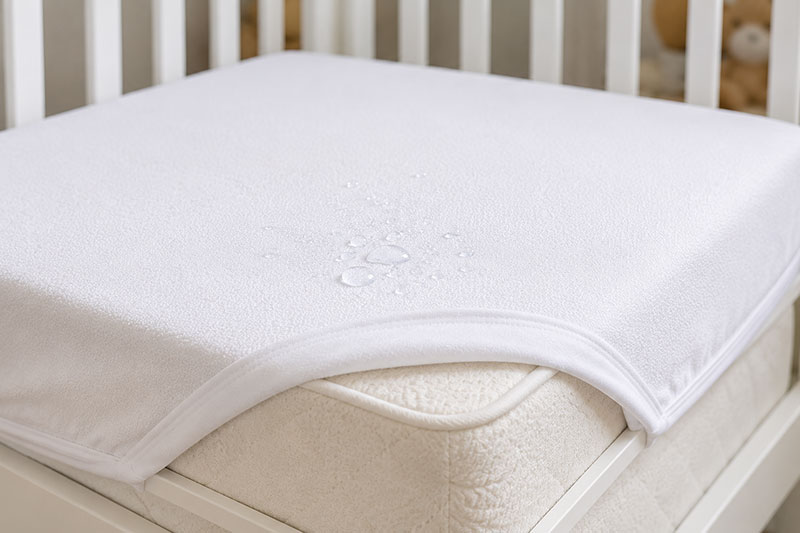
One thing I notice in real nurseries is that people sometimes stack several layers trying to make cleanup easier. The crib starts looking puffier than intended. Corners stop fitting tightly. Sheets shift more than they should.
That is usually the point where a simple protector makes more sense than adding extra padding.
What a Crib Mattress Pad Actually Changes
A crib mattress pad can change the feel of the sleep surface. Some are lightly quilted. Others are almost like mini toppers. A few add noticeable loft once the fitted sheet is pulled over them.
People often buy one because the mattress feels firmer than expected when the nursery is first set up. The mattress may look plain, thin, or too sturdy compared with adult bedding, so adding a pad feels like the loving thing to do.
Infant crib mattresses are intentionally firm. That firmness is part of the safety design, not a flaw.
That is also why many parents begin asking why crib mattresses are intentionally made so firm, since infant sleep surfaces are designed to stay flat and supportive instead of soft like adult beds.
That is also why many parents start questioning whether extra cushioning layers are a good idea, and my are crib mattress toppers safe guide explains how thicker topper-style layers can affect firmness, sheet fit, and overall crib mattress safety.
That is why some padded products create confusion. The packaging may look similar even though the products serve completely different purposes.
Nursery setups run into this issue because online listings sometimes use the words pad, cover, topper, and protector interchangeably. A parent may search for one thing and end up looking at a product that does something else entirely.
For thicker products, compare them with are crib mattress toppers safe before adding anything underneath a fitted sheet.
A heavily cushioned layer can also affect sheet fit. Corners may pull upward after a few washes, especially on mini crib mattresses where dimensions already vary slightly between brands.
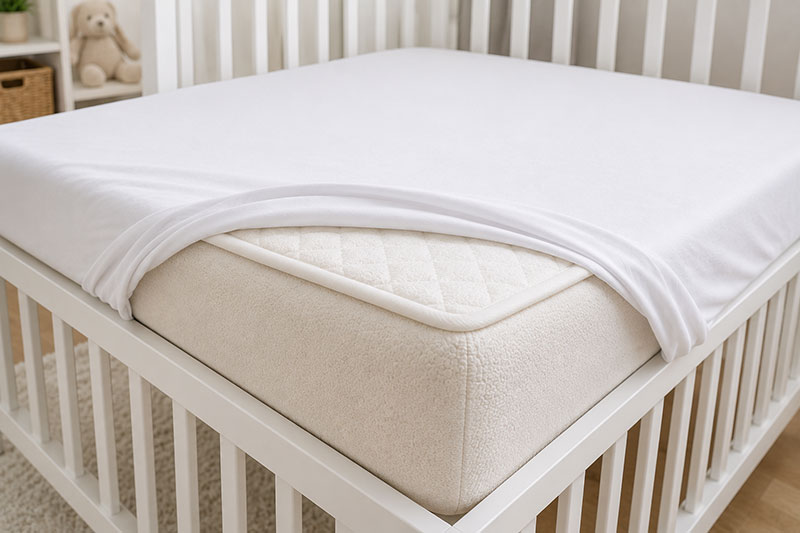
Bunching near the center often shows up after repeated washing cycles. That is one reason thin protectors usually age better than thick quilted inserts.
For fit questions, the crib mattress fit guide explains how tight the overall setup should look once the sheet is installed.
Why Parents Prefer a Crib Mattress Protector
A protector solves one specific problem. Keeping the mattress itself cleaner for longer.
That single job is usually enough.
Leaks in a crib are not always dramatic floods. They happen around the edges of diapers during naps, or after a baby rolls into one corner repeatedly during sleep. A fitted waterproof layer catches much of that before odors settle into the mattress core.
I believe this is one reason waterproof protectors became more common than padded crib layers. Cleanup becomes faster without changing how the mattress performs.
The finished setup also tends to look neater. Sheets sit flatter. Corners stay tucked. The crib keeps that clean editorial appearance instead of looking bulky in the middle.
For airflow questions, the breathable crib mattress protector page explains how breathable materials differ between products.
Some protectors also reduce the chance of lingering smells after repeated accidents. That becomes important in humid rooms where moisture tends to stay trapped longer than expected.
If odors are already becoming noticeable, the why does my crib mattress smell guide explains what usually causes it.
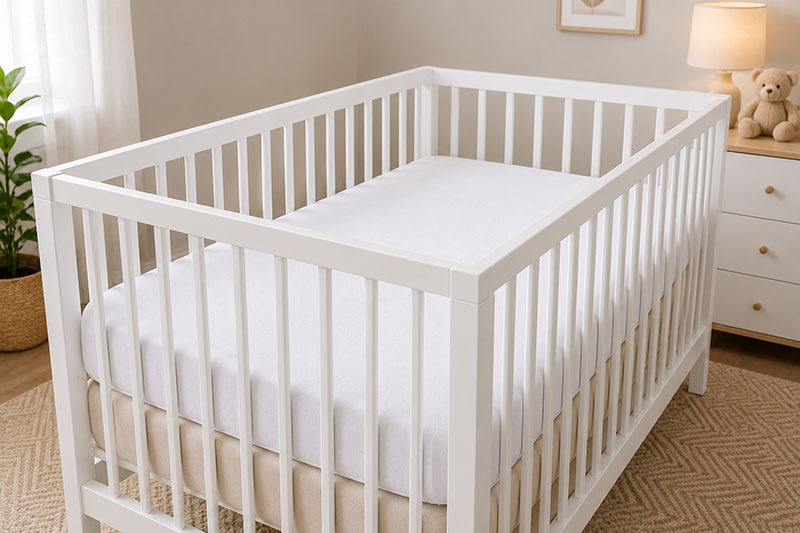
One detail many competing pages skip is edge tension. A good protector should stay flat near the corners once the sheet is installed. If the material wrinkles upward or slides after tightening the sheet, it usually means the fit is slightly off for that mattress size.
That tiny detail becomes obvious once the nursery has been used for a few weeks. A protector that looked fine in the package can feel annoying later if it twists every time the sheet comes off.
Which One Babies Usually Need Most
For a standard crib setup, a thin waterproof protector under a fitted crib sheet is usually enough.
You do not need to make a crib mattress feel cushier for a newborn.
That is one of the biggest misunderstandings behind padded crib layers.
The goal is a stable, properly fitted sleep surface that stays dry and easy to clean. Once that is clear, the decision becomes much simpler.
A crib looks smoother, the bedding fits better, and the mattress surface stays consistent from corner to corner when the layers underneath the sheet are kept thin and practical.
For a full overview of firmness and safe sleep basics, visit crib mattress safety.
The crib mattress hub also compares firmness, fit, breathable materials, waterproof layers, certifications, and sizing questions that tend to overlap once parents begin shopping.
Before buying a crib mattress pad or protector:
- Check whether the product changes mattress firmness.
- Make sure fitted sheets still fit tightly.
- Avoid bulky padding layers for infant sleep spaces.
- Choose waterproof protection before extra cushioning.
- Replace anything that bunches, wrinkles, or shifts.
For current infant sleep guidance in the United States, the U.S. Consumer Product Safety Commission safe sleep recommendations explain why firm, flat crib sleep surfaces remain important.
FAQ About Crib Mattress Pads and Protectors
Is a crib mattress pad the same as a protector?
No. A protector mainly blocks moisture from reaching the mattress. A pad may add absorbency or extra thickness.
Do babies need a padded crib mattress cover?
Usually not. Crib mattresses are designed to stay firm without extra cushioning layers.
Can a thick crib mattress pad affect safety?
Yes. Thick layers can change firmness, affect sheet fit, or create bunching under the fitted sheet.
What is the best option for preventing leaks?
A thin waterproof protector that fits tightly under the crib sheet is usually the simplest solution.
How many protectors should parents keep?
Two is practical because one can be washed while the other stays on the crib.
When you click on links to various merchants on this site and make a purchase, this may result in this site earning a commission. This does not affect the price you pay.

UBGI Gold Standard 2026
Reviewed under the site's
editorial checklist.
Photos, decorating ideas, party setups and reader submissions are shared for inspiration unless a page is specifically presented as a pattern, tutorial, reference guide or step-by-step project. Follow the instructions, measurements, safety guidance and manufacturer directions provided for the particular project or product.
About Jan | Contact | Baby Nursery Ideas (Blog) | Site Map | Privacy Policy | Disclosure Policy | Disclaimer | Affiliate Disclosure | Earnings Disclosure | Facebook | Pinterest
I am a participant in the Amazon Services LLC Associates Program, an affiliate advertising program designed to provide a means for us to earn fees by linking to Amazon. As an Amazon Associate I earn from qualifying purchases.
Copyright © 2006-2026. All Rights Reserved.