Mini Portable Crib Mattress Sizes, Fit, and Firmness
Mini portable crib mattresses are sold under a mix of size labels and product descriptions, which reflects how much variation exists within this category. Words like mini, portable, and travel are used across different crib formats, even though the mattress dimensions themselves are not consistent from one product to another. This page presents descriptive information showing how mini portable crib mattress sizing is described in manufacturer materials, how fit and firmness are referenced, and how dimensional differences appear across products within this category, using standards information as the framing basis.
Many parents discover mini crib mattresses are not nearly as interchangeable as they expected:
The sizing mistake that causes the most confusion
Why mattress gaps worry parents once they finally notice them
Portable crib differences most product photos never explain clearly
What makes mini crib mattresses different from standard crib mattresses?
Which baby sleep setup actually fits your space and routine?
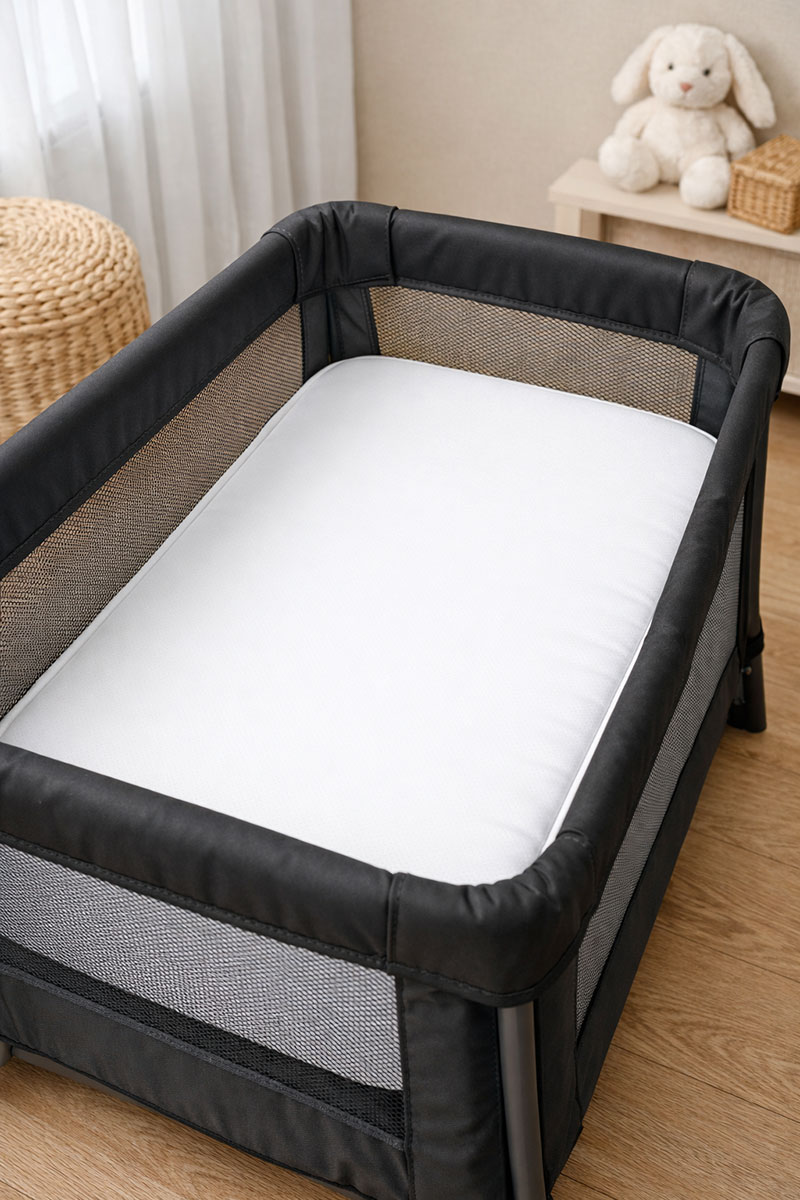
Mini Portable Crib Mattress Category Description
Mini portable crib mattresses are sold under several overlapping labels that reflect intended use rather than fixed dimensional standards. These labels are applied across different crib frame formats and do not correspond to a single interior measurement profile.
Product listings and packaging commonly reference portability, compact design, or travel-related placement. In each case, the usable interior space is defined by the crib frame itself. As a result, the same mattress label may appear across multiple crib constructions depending on manufacturer design and production methods.
Common fit-related terminology
Terms such as snug, compact, and travel-ready appear frequently in product descriptions. These terms are descriptive labels rather than dimensional indicators. Crib interior measurements and frame construction vary by model and manufacturing run, which contributes to visible differences in mattress placement.
Dimensional reference information across standard crib formats is available here: crib dimensions and standard mattress size basics.
Use of “Mini” and “Portable” Across Product Listings
Mini cribs include both fixed-frame models intended for small nursery spaces and folding or mobile designs. Additional crib products described as travel cribs may share similar exterior dimensions while relying on different mattress support structures.
Labeling practices emphasize general use context rather than construction detail. As a result, mattresses described as mini or portable may correspond to different base configurations. These differences are reflected in how the mattress rests on the frame and how the support surface is constructed.
Portable crib formats produced for movement or temporary placement commonly use lighter materials. Travel crib designs often rely on fabric tension systems or segmented platforms rather than rigid boards. An overview of these crib formats appears here: portable baby crib options for travel and small spaces.
For parents comparing room-friendly crib options beyond travel-focused formats, this guide to cribs for small spaces explains how compact crib styles can help a nursery function better when floor space is limited.
Observed placement characteristics
Mattress placement varies depending on intended crib use. Some products are associated with consistent overnight placement, while others appear in short-duration or temporary setups. These characteristics are reflected in thickness range, weight, and internal construction rather than naming conventions.
Across product listings, mattress thickness alone does not define placement behavior. Surface stability and alignment vary independently of mattress depth.
Size Variation and Interior Alignment
Interior crib dimensions determine mattress alignment within the frame.
For an explanation of how mini crib mattresses are categorized across different crib types and setups, this mini crib mattress guide outlines the key differences beyond portable and travel formats.
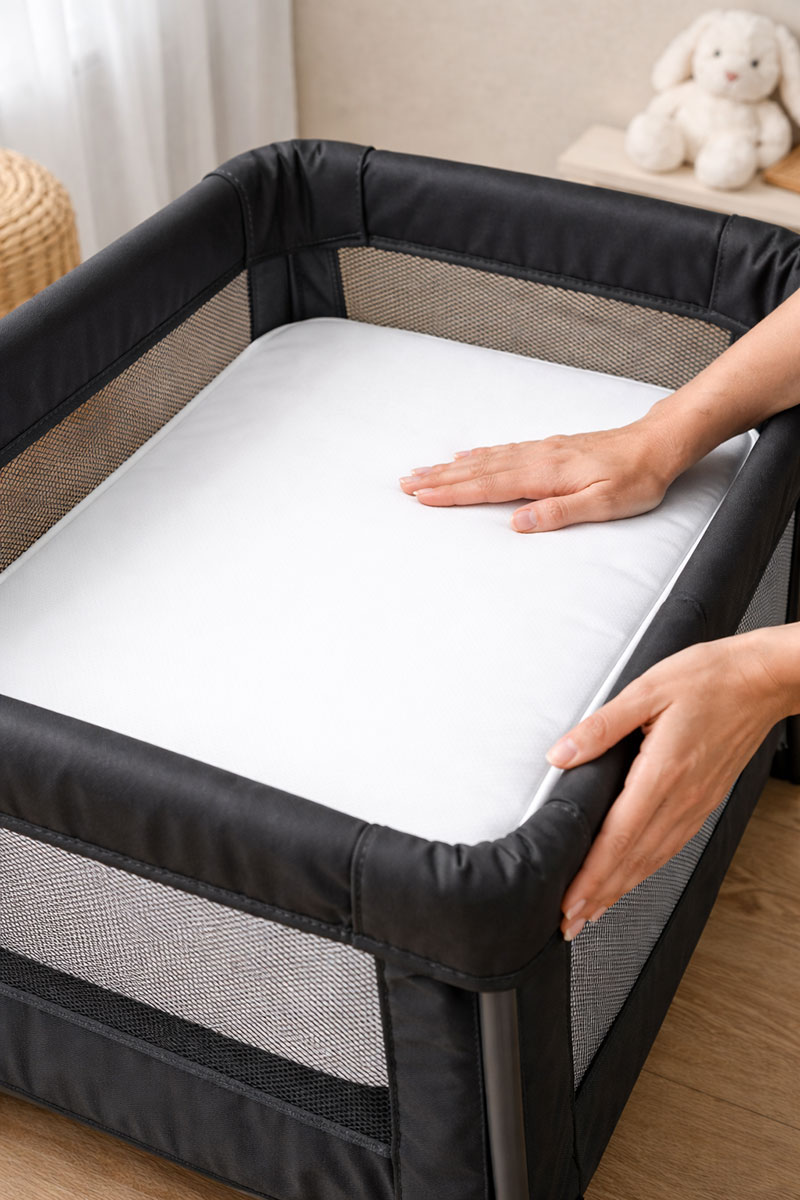
Small differences in width or length may be visible along edges or corners when the mattress is placed inside the crib.Mini portable crib mattresses are manufactured within dimensional ranges rather than a single fixed size. Production tolerances and frame construction differences contribute to this variation.
For a more exact breakdown of mini crib mattress measurements, this guide explains the common size ranges and how those dimensions differ across compact crib formats.
Additional descriptive information on mattress sizing across crib types appears here: do all crib mattresses fit all cribs?
Interior length and width vary by crib model.
Corner shape may be square or rounded depending on frame design.
Support bases include solid panels, slatted platforms, or folding mechanisms.
Mattress surfaces respond differently to segmented or flexible supports.
Listings that include measured dimensions provide clearer alignment information than product titles alone.
Firmness and Thickness Descriptions
Firmness terminology appears frequently in mattress listings, but it is not defined by one uniform measurement scale. Thickness values are easier to compare, although thickness alone does not determine how the surface behaves once the mattress is placed on a crib base.
Some mattresses compress more readily at the edges, while others retain their shape across the full width. Those differences usually come from internal materials, foam density, and construction methods rather than exterior height alone. My best breathable crib mattress guide compares which airflow-focused designs still stay firm, fit correctly, and maintain a stable sleep surface.
Mattresses that maintain consistent surface contact with the base tend to show fewer visible placement irregularities over time. Related surface-layer details are covered in this crib mattress protector fit information.
Supporting Image: Mattress Alignment Within a Mini Portable Crib
Common Fit Irregularities and Associated Factors
Conditions such as lateral movement, visible gaps, or surface lift are associated with dimensional mismatch or interaction with the crib support base. Folding frames and segmented platforms may accentuate small dimensional differences.
Side gap: commonly associated with width differences between mattress and frame interior.
Corner lift: observed when mattress corner geometry differs from frame construction.
Center bowing: associated with flexible or jointed support surfaces.
Surface sag between slats: related to support spacing and mattress core structure.
Descriptive material related to mattress surface conditions appears here: crib mattress surface care information.
Mini Crib Frames and Travel Crib Frames
Some compact crib products are marketed under similar labels despite differences in construction. Travel crib frames may resemble mini cribs visually while relying on suspended or tension-based mattress platforms.
When frame construction differs, mattress compatibility reflects platform design rather than exterior dimensions alone. An example of this format appears here: BabyBjorn travel crib.
Labeling and Listing Detail
Listings that include explicit measurements and base compatibility notes provide clearer descriptive alignment than generalized titles.
For a broader overview of how crib mattress types, materials, and sizing categories are organized across crib systems, see the crib mattress overview guide.
Broader labeling typically reflects marketing categories rather than precise dimensional standards.
Federal consumer product oversight information is maintained by the Consumer Product Safety Commission (CPSC).
For a crib-specific look at low-emissions certification language, see my guide to GREENGUARD Gold certified cribs, which explains how this label appears in nursery product listings and safety-focused comparisons.
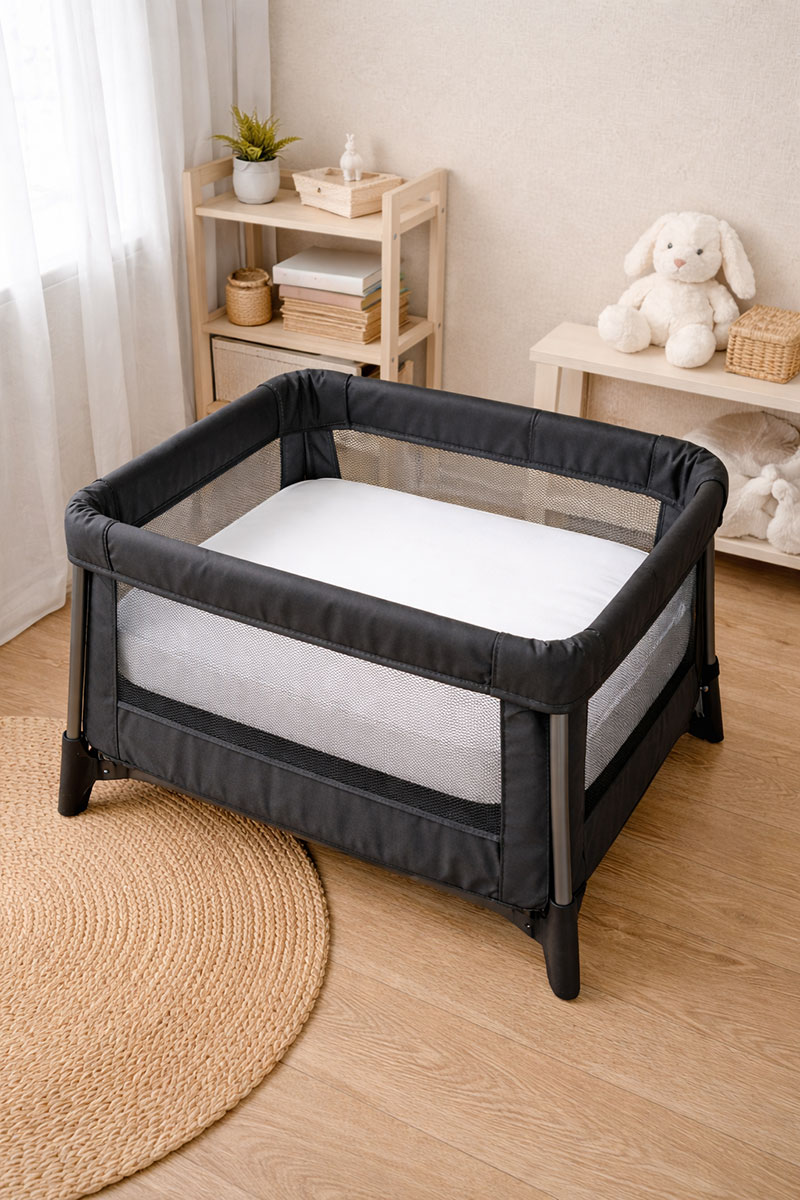
Supporting Image: Mini Portable Crib Mattress in a Small-Space Layout
Observed Product Alignment Characteristics
Across product listings and manufacturer materials, mattress alignment is most closely associated with interior dimension matching rather than feature variation. Mattresses that align precisely with the crib base maintain consistent placement characteristics over time.
Surface maintenance and accessory interaction remain secondary to dimensional alignment and base construction within this category.
Category summary
Mini portable crib mattresses are defined by alignment with specific crib interiors rather than naming conventions alone. Standards information provides a descriptive reference framework, while product variation reflects manufacturer design and construction methods.
When you click on links to various merchants on this site and make a purchase, this may result in this site earning a commission. This does not affect the price you pay.

UBGI Gold Standard 2026
Reviewed under the site's
editorial checklist.
Photos, decorating ideas, party setups and reader submissions are shared for inspiration unless a page is specifically presented as a pattern, tutorial, reference guide or step-by-step project. Follow the instructions, measurements, safety guidance and manufacturer directions provided for the particular project or product.
About Jan | Contact | Baby Nursery Ideas (Blog) | Site Map | Privacy Policy | Disclosure Policy | Disclaimer | Affiliate Disclosure | Earnings Disclosure | Facebook | Pinterest
I am a participant in the Amazon Services LLC Associates Program, an affiliate advertising program designed to provide a means for us to earn fees by linking to Amazon. As an Amazon Associate I earn from qualifying purchases.
Copyright © 2006-2026. All Rights Reserved.