Crib Mattress Thickness and Firmness: Construction and Measurements
Crib mattress thickness and firmness are two commonly discussed characteristics in infant sleep surface descriptions, yet they are often interpreted differently across product listings and manufacturer materials. This information reflects crib mattress manufacturing standards and product descriptions used for mattresses sold in the United States and presents descriptive information about crib mattresses as they are outlined through construction characteristics, typical measurement ranges, and manufacturing standards used within the crib mattress category.Trying to figure out if a crib mattress is thick enough, firm enough, or too bulky? Start here:
How firm should a crib mattress really be?
Why does the mattress feel so hard?
Could thickness change the fit?
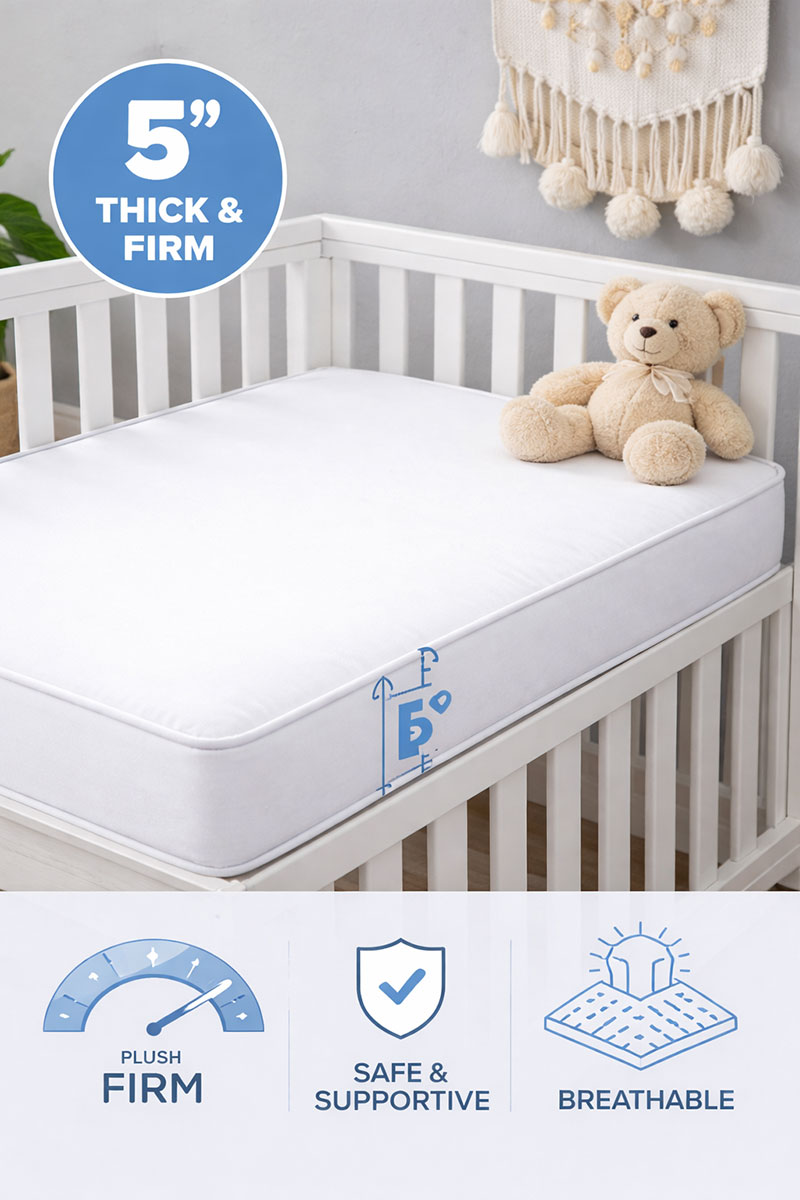
Jump to what you need:
All crib mattresses discussed on this site are interpreted within the context of current United States crib and sleep product safety standards, manufacturer documentation, and regulatory guidance. Crib mattresses are regulated infant sleep surfaces designed to function within a defined crib structure and support system. Thickness and firmness classifications reflect manufacturing descriptions and structural characteristics rather than interchangeable performance claims. This page provides descriptive reference context only and does not provide medical guidance, product endorsement, or individualized usage recommendations.
Common discussion points related to crib mattress thickness and firmness
Thickness and firmness describe construction characteristics — not interchangeable safety categories.
Questions about crib mattress thickness and firmness often arise during routine product handling rather than during early planning stages. In many cases, a mattress is delivered and handled for the first time, and its feel or profile differs from prior expectations. Differences in thickness, surface resistance, or overall structure commonly prompt closer attention to these characteristics.
This page presents descriptive information about how thickness and firmness are typically described, measured, and categorized within crib mattress manufacturing standards, building on the broader construction overview documented on the crib mattress reference page. These characteristics are commonly referenced in product descriptions, packaging materials, and comparison charts used across the baby mattress category.
For a broader side-by-side look at materials, firmness, and fit across standard options, see my best crib mattress guide.
Parents who are also weighing low-emissions nursery materials can review GREENGUARD Gold certified cribs for a crib-focused look at certification and indoor air-quality considerations.
Manufacturing literature often groups crib mattresses by internal construction method, which influences both thickness and firmness classifications. Foam cores, layered composites, and hybrid constructions are commonly referenced as structural categories rather than performance claims. These descriptions outline how materials are arranged within the mattress body and how surface response is distributed across layers.
Material density and layering order are frequently cited in product specifications to explain why two mattresses of similar thickness may feel different when handled. Differences in foam composition, bonding methods, and cover tension contribute to how resistance is perceived at the surface without changing the overall mattress height. These characteristics are typically presented as descriptive attributes within manufacturing standards.
Why a Thicker Crib Mattress Does Not Always Feel Firmer
Many parents assume a thicker crib mattress will automatically feel firmer, but that is not always true. Thickness and firmness describe two different things.
That difference between surface feel and actual support is also why many parents begin asking why crib mattresses are supposed to feel so firm, since infant mattresses are intentionally designed to resist deep compression rather than feel cushioned.
Thickness refers to how tall the mattress is from bottom to top. Firmness refers to how much the surface resists pressure when weight is placed on it.
Surface design matters too, and this dual-sided vs single-sided crib mattress comparison explains how one-sided and two-stage mattresses differ in firmness, toddler use, and overall construction.
My crib mattress buying guide puts thickness and firmness into context so you can choose based on how the mattress will actually perform in your crib. A mattress can be thicker because it has more quilting, extra padding layers, or a taller build, yet still feel softer at the surface. Another mattress can be thinner but feel firmer because its materials resist compression more quickly. That same confusion is why parents often ask if crib mattress toppers change firmness too much, since added padding layers can make a mattress feel very different from its original surface design.
This is why two crib mattresses can look different in height but still perform very differently when pressed by hand. The materials inside the mattress matter more than thickness alone.
The simplest way to think about it is this: thickness tells you how tall the mattress is, but firmness tells you how the surface reacts when pressure is applied.
Temperature regulation is another factor parents sometimes evaluate alongside firmness, which is why my crib mattress overheating guide explains how mattress materials, airflow, and bedding layers may influence heat retention.
That same difference in materials and layer construction is easier to compare across cleaner-material models in my best organic crib mattress comparison.
Some parents also compare these construction details with natural-fiber models, which I cover in my organic crib mattresses guide.
Retail listings and manufacturer catalogs also reference firmness using comparative language rather than fixed measurements. Terms such as “firm,” “extra firm,” or “supportive” are often used as categorical labels that align with internal testing frameworks. These labels are intended to group products within a range rather than define a single uniform feel across brands. To see how those terms connect to actual testing standards and labeling requirements, review this crib mattress certifications guide explaining what those classifications are based on.
Thickness specifications are commonly expressed as approximate measurements due to variations introduced by quilting, cover materials, and compression during packaging. As a result, listed dimensions may differ slightly from in-hand measurements while remaining within the same manufacturing category. These tolerances are acknowledged within standards information provided by mattress manufacturers.
A waterproof crib mattress should still be judged by thickness, firmness, fit, and surface response, not by moisture protection alone.
Across the crib mattress market, thickness and firmness are presented together as part of a broader structural overview. Product descriptions typically combine size compatibility, internal construction, and surface response into a single profile that allows comparison across models. This approach reflects how manufacturers document mattress characteristics for retail and regulatory reference.
For a clearer of how these construction characteristics vary across different crib types, this mini crib mattress guide explains how materials, structure, and intended use differ in compact crib setups.
For a practical size-category comparison that often raises these questions, see the crib mattress size vs twin comparison.
For a more specific look at mini crib mattress size ranges, this guide explains how mini crib dimensions differ from full-size crib mattresses and why that distinction matters for fit.
For historical context on how crib mattress dimensions became standardized before thickness and firmness variations were layered onto the category, see the standard crib mattress size history overview.
Crib mattress thickness and firmness explained in practical terms
Thickness and firmness describe separate physical attributes of a crib mattress. Thickness refers to the vertical measurement from the bottom surface to the top surface of the mattress. Firmness refers to surface resistance when pressure is applied. These characteristics are measured and discussed independently in manufacturing documentation and product listings.
Crib mattress thickness refers to vertical height, while firmness refers to surface resistance, and both are described by manufacturers as construction characteristics rather than interchangeable safety claims.
Because crib parts and accessories are often confused by name, the page crib rails vs crib bumpers explains how these items are different, what each term means, and why they are often mixed up in product listings and manuals.
Crib rail covers and alternative crib rail protection options are often reviewed alongside mattress characteristics when parents notice chewing, drool exposure, or surface contact where a baby’s mouth reaches the crib rail.
Because product listings and manufacturer materials often use specialized wording when describing these attributes, this crib terminology glossary explains the crib-related terms and labels that commonly appear in mattress descriptions, manuals, and packaging.
When evaluating crib mattresses for older or inherited cribs, the discontinued baby crib models archive helps identify crib models that are no longer manufactured and explains how legacy crib designs relate to current mattress construction, thickness, and firmness categories.
Crib mattresses are commonly produced within a narrow thickness range to align with crib frame dimensions. Firmness varies more widely between models and materials.
Because crib mattresses function within a defined crib structure, overall construction differences are explained in the baby cribs reference guide, where core crib components and structural categories are grouped by design.
As mattress characteristics are evaluated over time, many parents also start thinking ahead to the next sleep stage, which is why questions about when to switch from crib to toddler bed often come up during this phase of crib use.
That next-step decision is easier to picture with this crib mattress vs toddler mattress guide, which explains how the mattress category changes after the crib stage.
Because material performance changes gradually with regular use, this overview on when to replace a crib mattress explains how age, wear patterns, and surface changes are commonly evaluated over time.
Parents comparing how different mattress constructions affect surface feel, airflow, and support can also review breathable vs foam crib mattress for a more direct side-by-side look at those differences.
Some mattresses maintain a rigid surface profile, while others compress slightly before resistance increases. These differences reflect material composition rather than size alone.
For a more direct look at how these two construction types differ in real-world use, see this breathable vs foam crib mattress comparison, which explains how airflow-focused designs and traditional foam models differ in surface feel, structure, and handling.
Fit characteristics referenced in manufacturer materials
Product fit is typically described in relation to how a mattress aligns with crib interior dimensions. When that alignment creates visible spacing, this crib mattress gap problems guide breaks down what those gaps can mean and how to evaluate them more closely.
Manufacturing specifications generally reference edge alignment and perimeter spacing as part of compatibility descriptions. Visual alignment between mattress edges and crib sides is commonly noted in manufacturer materials.
Firmness is often discussed separately from fit. Surface resistance is typically evaluated across the mattress surface rather than at a single point, and descriptions frequently note consistency from center to edge.
Information related to surface materials, coverings, and maintenance considerations is discussed separately on how to clean a crib mattress, which presents manufacturing and material-based handling information.
Surface response characteristics
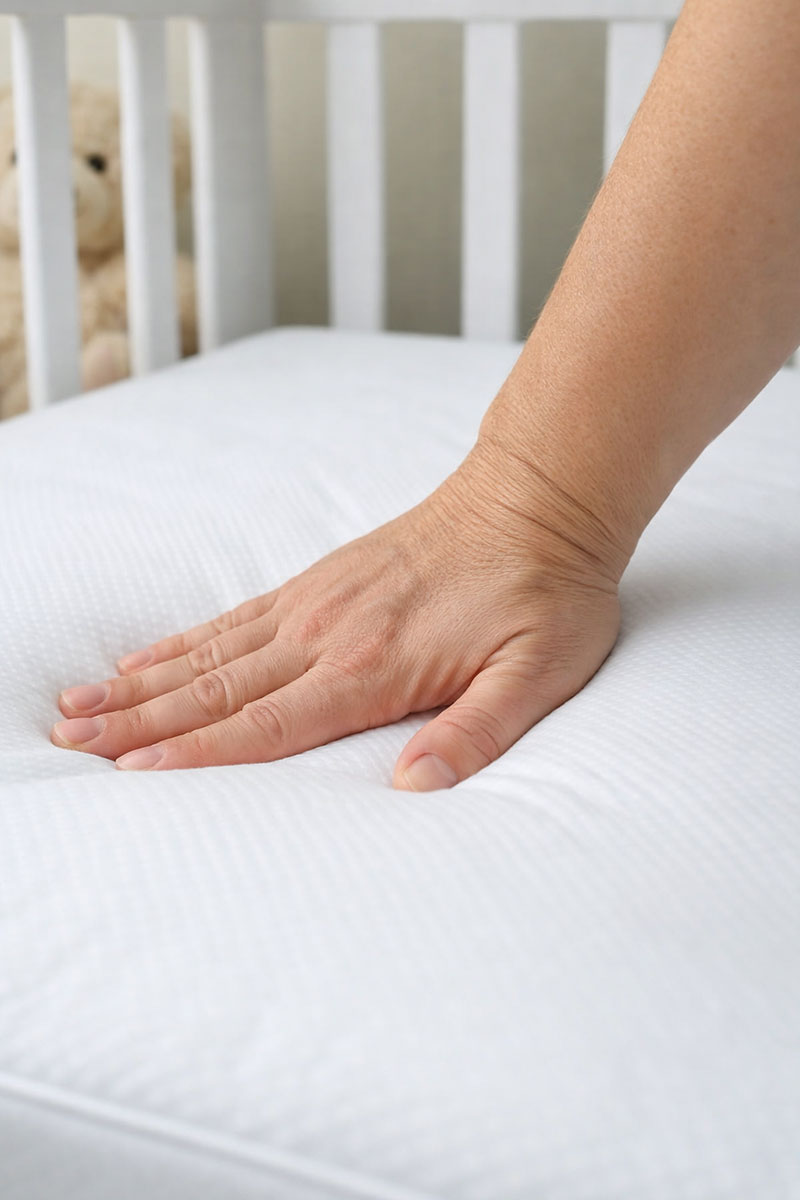
Firmness is commonly described using comparative surface response language rather than numeric values. Product descriptions often reference how a surface responds to applied pressure and how quickly the material returns to its original shape. These characteristics are influenced by internal construction layers and material density.
Mattresses that compress slowly, retain impressions, or feel cushioned at the surface are categorized differently than those with immediate resistance. These differences are frequently noted in comparison charts and product summaries that reference manufacturing standards.
Primary firmness characteristics noted across product listings
Firmness descriptions focus on surface resistance and uniformity rather than comfort comparisons. Product materials are typically evaluated for consistency across the entire surface area, including center zones and perimeter regions.
How thickness plays a role without becoming the main event
Why consistency matters more than exact numbers
Thickness measurements are often compared across brands, though product documentation places greater emphasis on material consistency and structural behavior over time. Uniform surface resistance is frequently described as a consistency characteristic within product documentation.
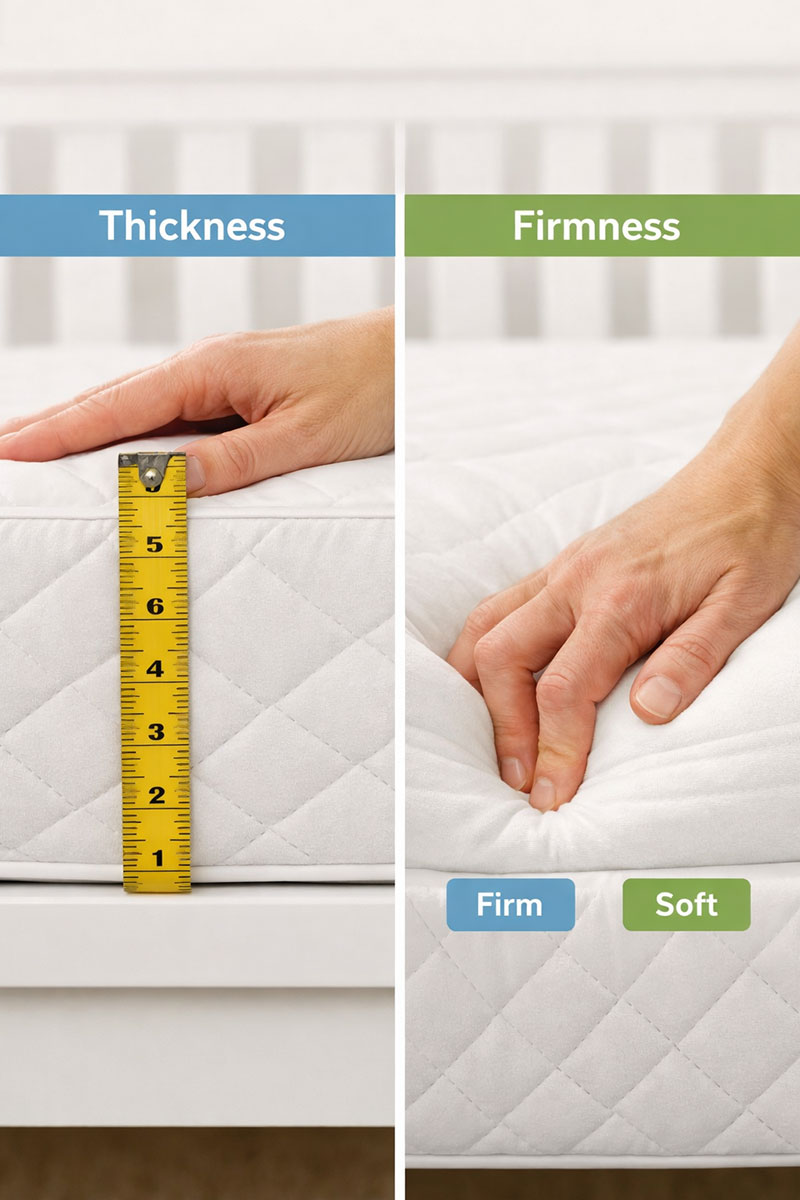
Thickness differences are most noticeable along edges and corners, where structural support varies by internal construction. Product listings may note how thickness interacts with mattress support height and crib frame configuration, though these observations are typically descriptive rather than prescriptive.
Because mattress thickness interacts with how the mattress sits within the crib frame, this reference explains how crib mattress support height positions are defined and described across crib models: crib mattress height adjustment guide.
In many cases, thickness is presented as a secondary characteristic once fit and firmness classifications are established. Manufacturing standards commonly group mattresses by size compatibility first, followed by material composition and surface response.
Common usage patterns noted in retail and catalog data
Market data shows that many households use a primary crib mattress for everyday use and a separate product designed for portable or travel-specific sleep environments. Products such as the BabyBjörn travel crib are referenced in product comparisons that distinguish between stationary and portable sleep surfaces.
For authoritative oversight on crib mattress standards, materials, and product-related notices, see the U.S. Consumer Product Safety Commission’s crib information, which documents federal crib requirements and related safety references.
These usage patterns are reflected in manufacturer catalogs and retail listings, where crib mattresses and travel sleep products are categorized separately based on intended use environment and construction design.
When you click on links to various merchants on this site and make a purchase, this may result in this site earning a commission. This does not affect the price you pay.

UBGI Gold Standard 2026
Reviewed under the site's
editorial checklist.
Photos, decorating ideas, party setups and reader submissions are shared for inspiration unless a page is specifically presented as a pattern, tutorial, reference guide or step-by-step project. Follow the instructions, measurements, safety guidance and manufacturer directions provided for the particular project or product.
About Jan | Contact | Baby Nursery Ideas (Blog) | Site Map | Privacy Policy | Disclosure Policy | Disclaimer | Affiliate Disclosure | Earnings Disclosure | Facebook | Pinterest
I am a participant in the Amazon Services LLC Associates Program, an affiliate advertising program designed to provide a means for us to earn fees by linking to Amazon. As an Amazon Associate I earn from qualifying purchases.
Copyright © 2006-2026. All Rights Reserved.