Mini Crib Mattress Types, Thickness, and Standards
A mini crib mattress is a compact sleep surface designed for smaller crib frames. Unlike standard full size models, these mattresses vary in construction, thickness, and labeling depending on the manufacturer. This overview explains those structural differences and how products in this category are grouped across brands.
Trying to choose a mini crib mattress that actually fits? Start here:
What size mini crib mattress do you need?
How do you know if the mattress fits correctly?
Is that gap around the mattress dangerous?
Which mini crib mattress is worth the price?
If you are trying to choose the right option rather than just understand the differences, see my best mini crib mattress guide for a breakdown of what actually works and what to avoid.
Mini crib mattress products fall within the broader baby gear category, where crib systems, mattress formats, and compatibility standards are grouped by function and structural design.
Jump to a section:
Mini Crib Mattress Types
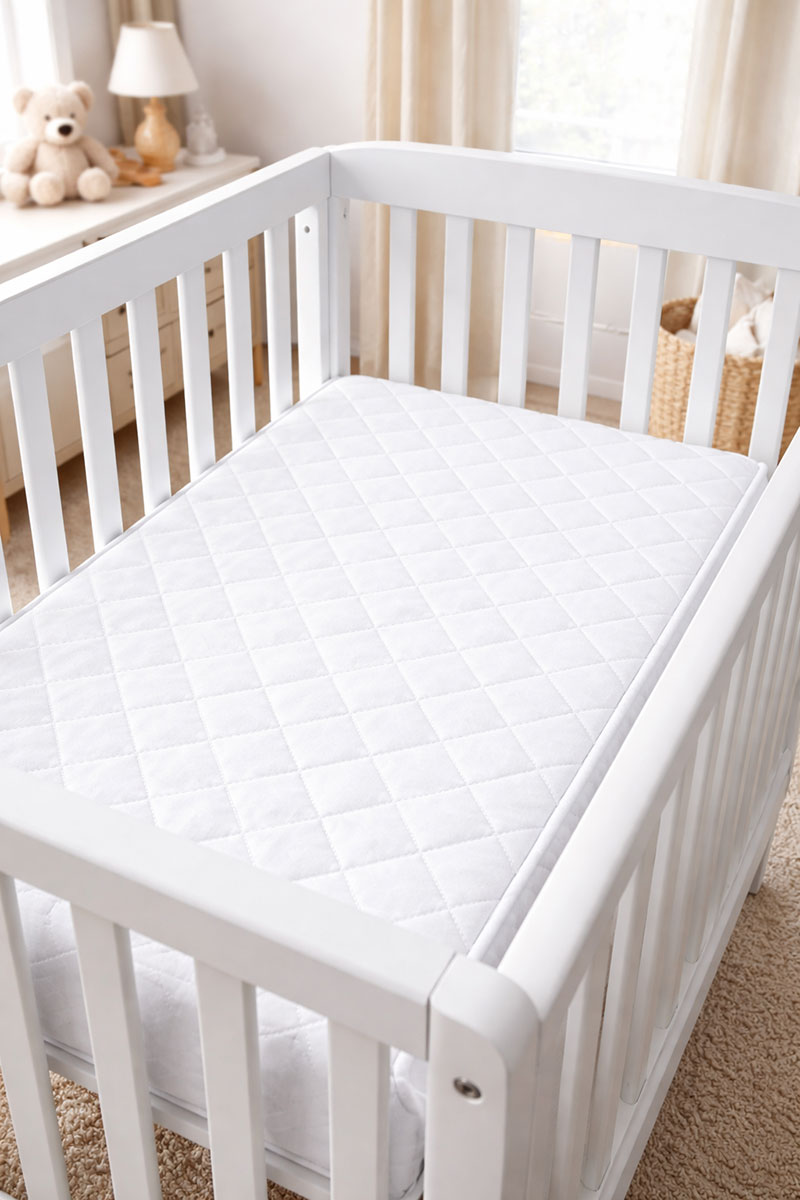
A mini crib mattress is a compact infant mattress designed for smaller crib frames, portable nursery setups, and compact crib systems. It differs from a standard full size crib mattress in overall footprint, construction profile, thickness, internal materials, and manufacturer labeling conventions, so there is not always one exact standard across every brand.
Mini crib mattresses are generally grouped by material type, including high density foam models, dual layer constructions, and hybrid formats that combine a supportive core with a reinforced surface layer. Construction type matters because it can influence weight, firmness consistency, thickness profile, and long-term durability.
If you are comparing one-surface and two-stage mattress designs, my dual-sided crib mattress vs single-sided mattress guide explains when the extra toddler side is useful and when it may not be worth paying for.
My breathable vs foam crib mattress guide explains how airflow-focused designs and traditional foam models differ in structure, thickness profile, and surface feel. My best breathable crib mattress guide compares which airflow-focused designs still stay firm, fit correctly, and maintain a stable sleep surface once they are used in a real crib setup.
The crib mattress types and materials guide explains crib mattress materials, sizing categories, and how different mattress types compare across standard and compact formats.
Thickness and Construction
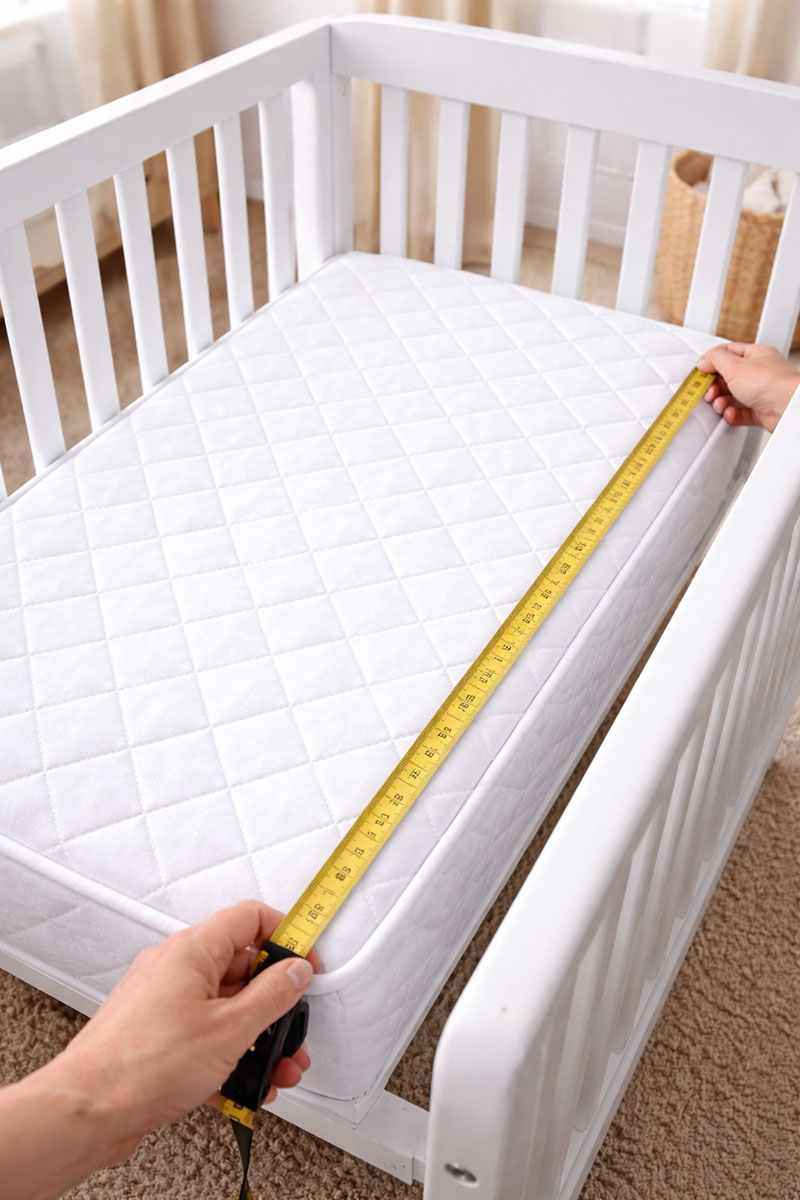
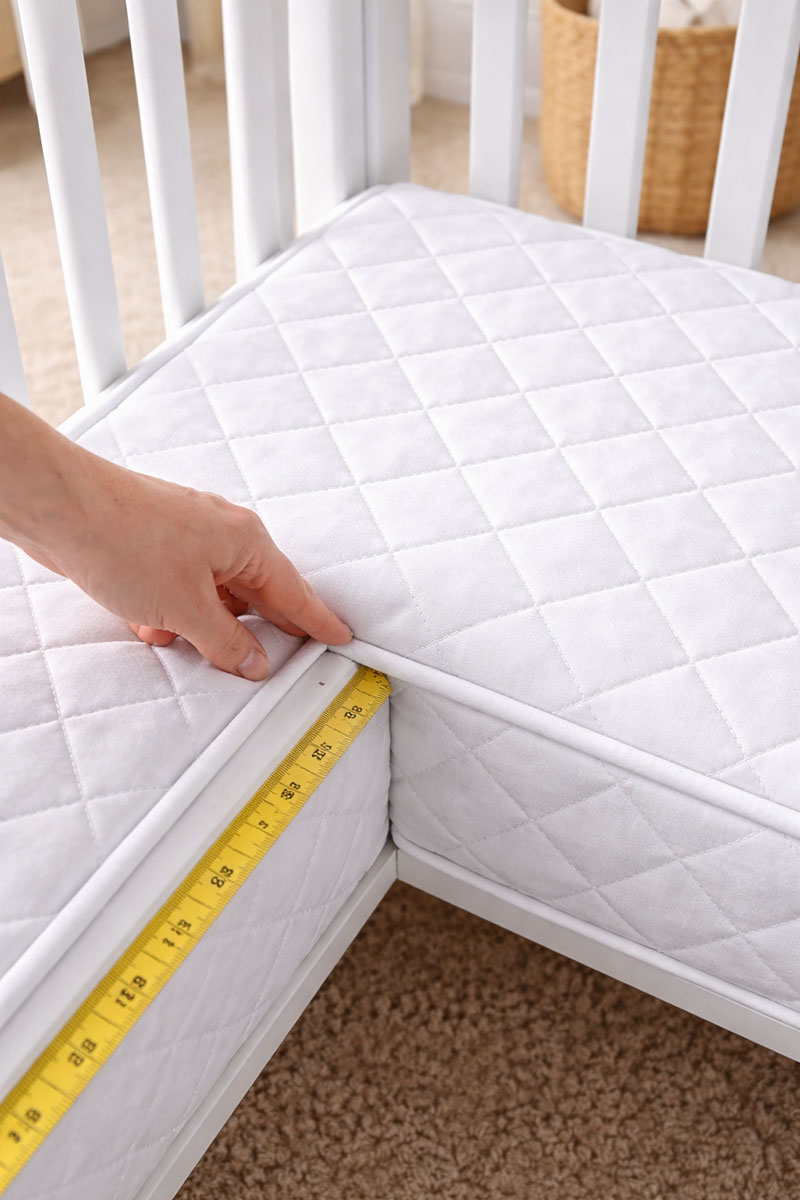
Thickness in a mini crib mattress is typically influenced by internal layering and material density. Some models emphasize a slimmer profile designed to maintain adequate crib rail height visibility. Others include slightly deeper cores while remaining within compact crib specifications.
Thickness alone does not define quality. Density and compression resistance determine how the mattress responds under pressure. A well constructed compact mattress maintains a flat sleep surface without excessive surface indentation.
Material layers may include high density foam, reinforced edges, waterproof backing, or removable outer covers. These components are described in product listings as structural features rather than decorative enhancements.
For exact measurements, gap checks, and how to confirm a safe fit inside your crib, see my mini crib mattress size guide.
Safety Standards and Labeling
In the United States, crib products fall under safety standards overseen by the Consumer Product Safety Commission. Manufacturers describe compatibility and labeling information in alignment with crib product requirements.
Product listings typically reference firmness, dimensional compatibility ranges, and intended crib type. The wording may vary across brands. Some listings provide specific measurements. Others describe compatibility using general mini crib terminology.
For a crib-focused look at low-emissions screening rather than mattress specifications, see my GREENGUARD Gold certified cribs guide, which explains how this certification is used in crib product labeling and nursery safety comparisons.
Labeling differences reflect manufacturing variation rather than a universal sizing framework. This is why understanding how specifications are presented is useful when comparing compact mattress formats.
For additional context on why crib mattresses are not universally interchangeable across crib types, see why crib mattresses do not follow a single universal size.
How Mini Crib Sheets Fit a Mini Crib Mattress
Mini crib sheet compatibility depends on mattress surface dimensions and corner construction. Pocket depth and elastic tension vary between brands, even when labeled for mini crib use. Packaging often lists approximate compatibility ranges rather than a single fixed measurement.
Sheet alignment influences surface appearance and tension consistency. A properly fitted sheet should lie flat across the mattress surface without visible bunching at the corners.
For broader information about crib sheet sizing and material differences, the crib sheet size and fit guide outlines how sheet dimensions interact with mattress formats.
Mini crib sheet labeling may state compatibility with portable cribs or compact crib systems, but terminology is not always standardized across brands. Reviewing the mattress product listing alongside the sheet packaging description helps clarify alignment expectations and prevents assumptions based solely on the phrase mini crib. Compatibility language reflects manufacturer labeling conventions rather than a single universal standard.
Use Cases and Comparisons
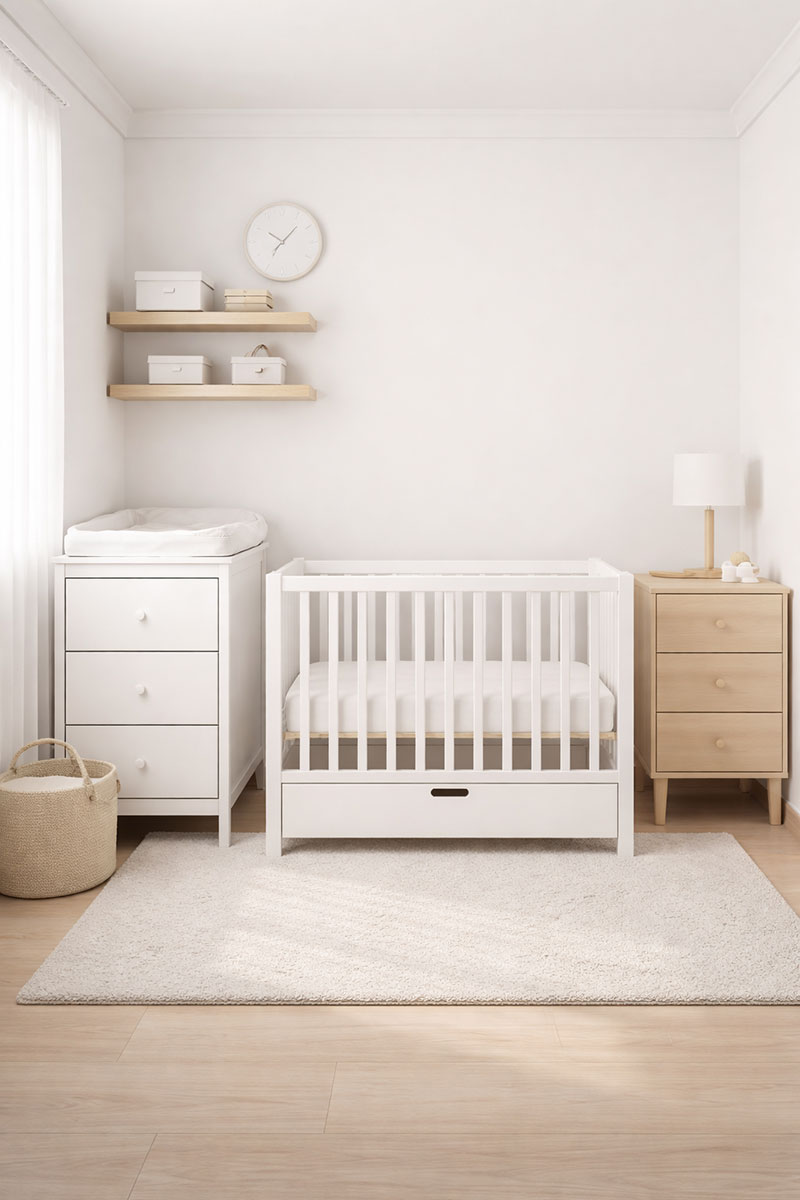
Mini cribs are frequently chosen for compact nursery layouts, shared rooms, and portable sleep setups where space efficiency matters. Their reduced footprint allows more flexible placement within smaller rooms.
For a broader look at crib styles that help make compact rooms work better, see cribs for small spaces.
Comparative layout examples appear in corner crib placement guides and portable crib format discussions, which explain how compact crib systems differ structurally from full size configurations.
Mini crib mattress products emphasize construction clarity and compatibility labeling rather than decorative upgrades. Buyers evaluating this category should focus on material integrity, clearly listed specifications, and compatibility alignment with their specific crib model.
Mini crib mattresses vary by construction type, thickness profile, and labeling standards across manufacturers. This page gives you the structural overview, while my mini crib mattress size guide covers measurements and fit checks, and my best mini crib mattress guide helps you compare options.
When you click on links to various merchants on this site and make a purchase, this may result in this site earning a commission. This does not affect the price you pay.

UBGI Gold Standard 2026
Reviewed under the site's
editorial checklist.
Photos, decorating ideas, party setups and reader submissions are shared for inspiration unless a page is specifically presented as a pattern, tutorial, reference guide or step-by-step project. Follow the instructions, measurements, safety guidance and manufacturer directions provided for the particular project or product.
About Jan | Contact | Baby Nursery Ideas (Blog) | Site Map | Privacy Policy | Disclosure Policy | Disclaimer | Affiliate Disclosure | Earnings Disclosure | Facebook | Pinterest
I am a participant in the Amazon Services LLC Associates Program, an affiliate advertising program designed to provide a means for us to earn fees by linking to Amazon. As an Amazon Associate I earn from qualifying purchases.
Copyright © 2006-2026. All Rights Reserved.