Crib Mattress Safety: What Parents Need to Check First
Crib mattress safety matters because even a well-made crib can become unsafe if the mattress is too soft, too small, worn out, uneven, or used with the wrong bedding. The safest crib mattress is firm, fits tightly inside the crib, lies flat without sagging, and stays free of pillows, loose blankets, and thick toppers.
Trying to figure out if a crib mattress is really safe? Start here:
How do you know if the mattress fits correctly?
Is that gap around the mattress dangerous?
Is the mattress actually the correct size?
Are breathable crib mattresses really safer?
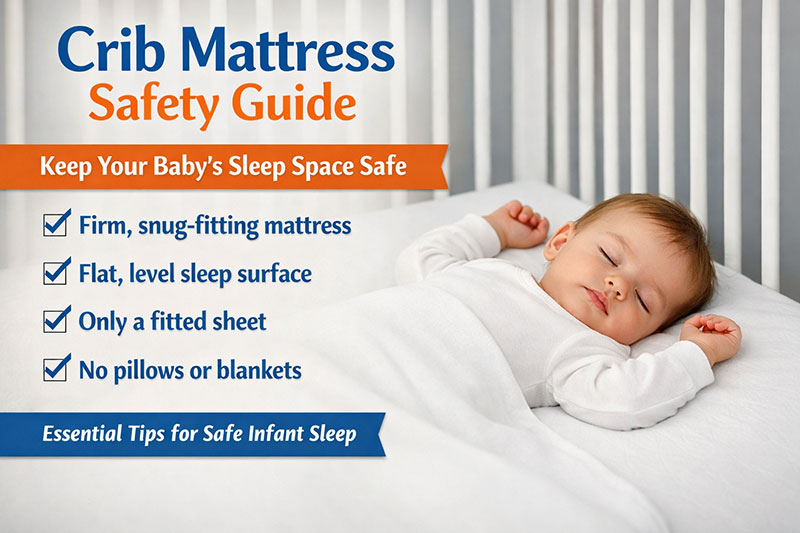
Quick answer:
A safe crib mattress is firm, fits tightly inside the crib, lies flat without sagging, and is used with only a fitted sheet. There should be no gaps, no soft padding, and no loose items in the crib. If the mattress feels soft, shifts easily, or shows signs of wear, it should not be used for infant sleep.
Start here:
How firm a crib mattress should be
Are breathable crib mattresses actually safer?
Crib mattress safety means using a firm mattress that fits tightly inside the crib and creates a flat sleep surface with no extra padding or loose bedding. A safe crib mattress should remain firm, fit securely inside the crib frame, and be used with only a fitted sheet. Soft surfaces, gaps around the mattress, or added padding can increase sleep risks for infants.
Key crib mattress safety rules:
- Use a firm mattress that does not sink or form deep indentations
- Make sure the mattress fits tightly inside the crib
- Keep the sleep surface flat and level
- Use only a fitted crib sheet
- Keep pillows, blankets, and padding out of the crib
A soft crib mattress is unsafe for infant sleep.
Crib mattress safety starts with firmness
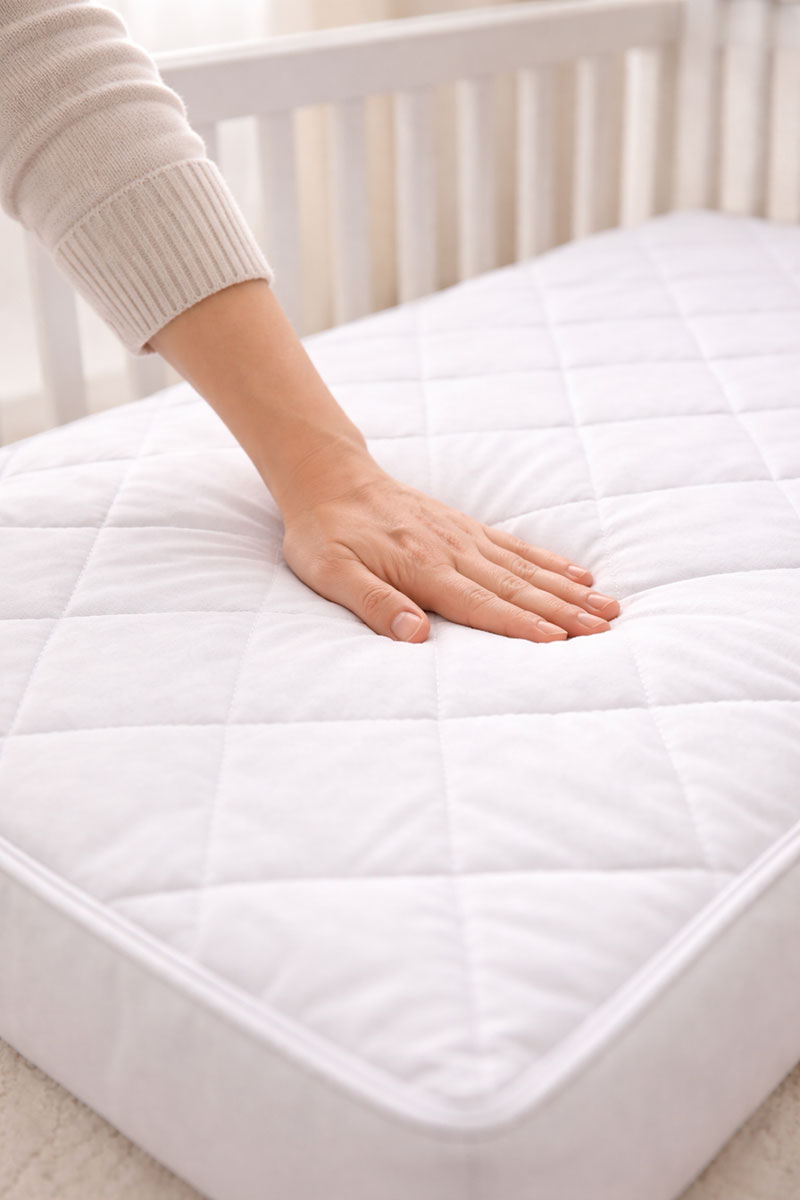
A safe crib mattress should feel firm and supportive rather than soft or cushiony. Babies need a flat sleep surface that does not sink or form an indentation around their body. If a mattress compresses deeply when you press on it with your hand, it may be too soft for infant sleep.
That is also why many parents start asking why crib mattresses are intentionally so hard, since infant mattresses are designed to stay firmer and flatter than adult beds for safe sleep support.
Firmness matters because young babies cannot easily reposition themselves if their face presses into a soft surface. A firm mattress helps keep the sleep surface level, reduces the chance of deep body impressions, and supports the baby's body more evenly during sleep.
Parents sometimes get mixed messages because mattress marketing often uses words like plush, cozy, cloud-like, or extra comfortable. To understand what safety labels and testing terms actually mean behind those marketing claims, review this crib mattress certifications breakdown explaining common standards and how they apply to real-world safety.
If you are still deciding overall, my how to choose a crib mattress guide breaks down how fit, firmness, and safety work together so it’s easier to tell what actually matters.
For infant sleep, those are not the qualities you want to prioritize. Safety comes first. A crib mattress should feel stable and flat, not cushioned like an adult bed. For parents who are also concerned about material exposure and chemical content, this non-toxic crib mattress guide explains what to look for beyond basic safety rules.
For more detail about how firmness and thickness affect mattress safety, see crib mattress thickness and firmness. That page explains how mattress materials and construction can change the feel and performance of the sleep surface.
A firm mattress with a fitted sheet is all that is needed for a safe crib sleep surface.
If you are deciding between mattress styles, my crib mattress dual sided vs single sided guide explains when a two-stage mattress may be useful and when a single-sided mattress is enough.
A waterproof crib mattress can help with moisture protection, but the surface still has to stay firm, flat, tightly fitted, and free of extra padding.
If you're choosing specifically for a newborn, this best crib mattress for newborns guide focuses on how firmness and fit apply during those earliest months when safe sleep matters most.
A crib mattress should fit tightly inside the crib
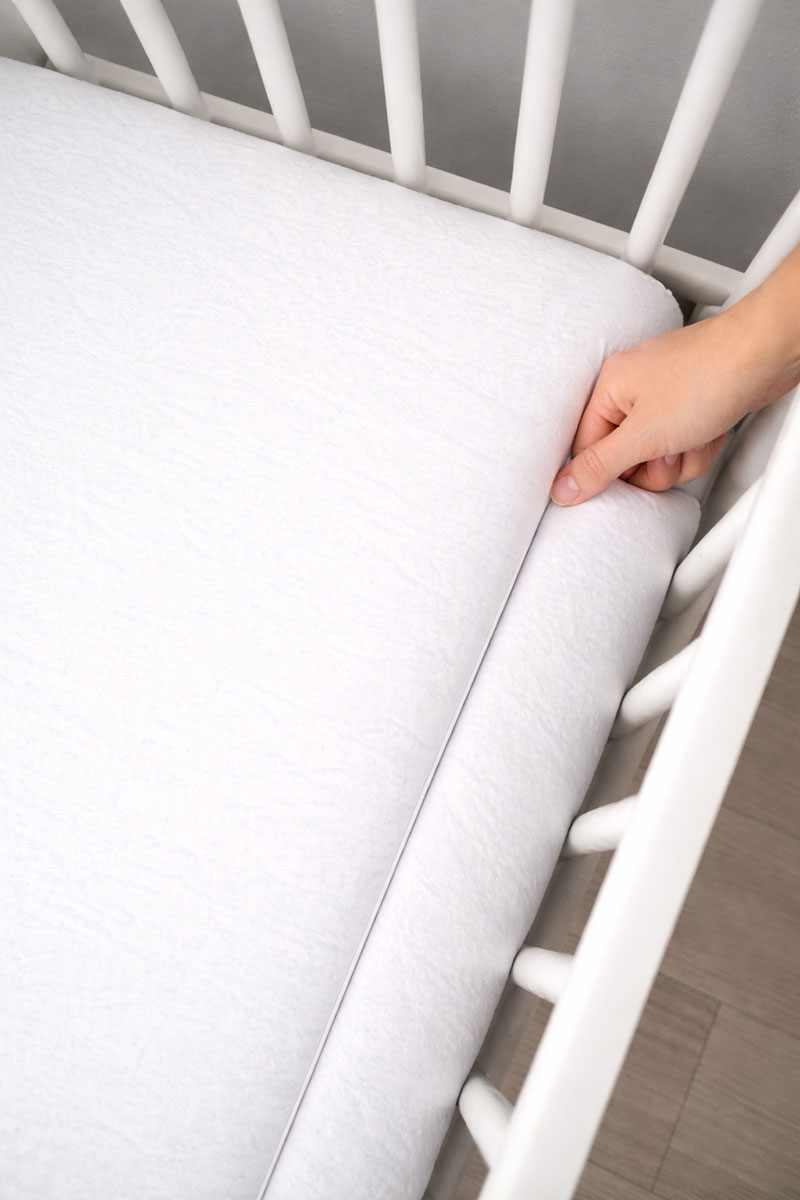
Crib mattress safety also depends on proper fit. The mattress should sit snugly inside the crib frame with minimal space between the mattress edges and the crib sides. Large gaps can create areas where a baby could become trapped.
In the United States, full-size cribs follow federal sizing standards, which is one reason a mismatched mattress should never be forced into a crib just because it looks close. If the mattress slides easily from side to side or leaves visible gaps along the rails, it may not be the correct size for that crib.
If you are unsure about sizing, review standard crib mattress size and how a crib mattress should fit. For smaller cribs, see mini crib mattress size guide.
Parents also comparing infant sleep setup with the next bed stage can use this crib mattress vs toddler mattress comparison to see what changes when a child moves out of the crib.
Fit is not just about the outer edge of the mattress. The mattress should also rest evenly on the support platform underneath it. If the support board, wire frame, or hardware is bent, installed incorrectly, or sitting unevenly, the mattress surface can tilt or sag even when the mattress itself is still usable. That is one reason mattress safety and crib safety overlap.
For that reason, this page should also point readers to crib mattress support, crib mattress height adjustment guide, and baby cribs.
A properly fitted mattress helps prevent gaps and keeps the sleep surface stable.
Are breathable crib mattresses safer?
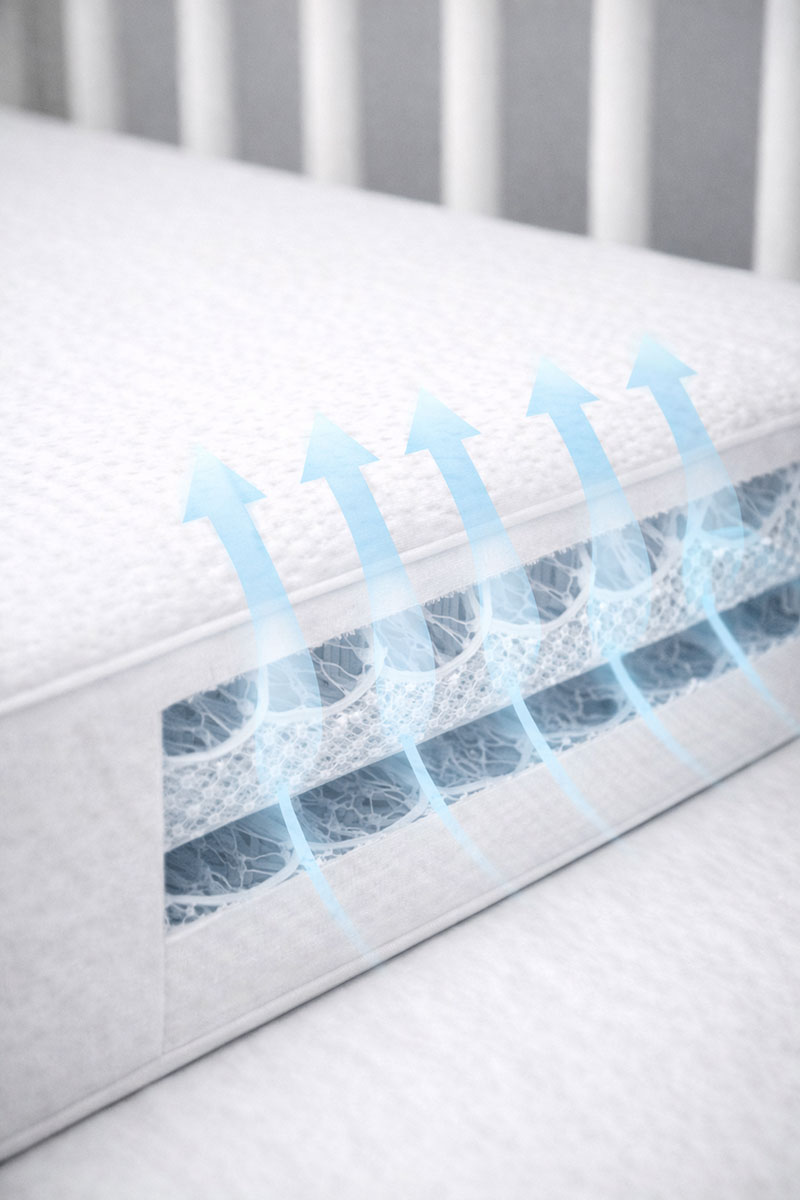
The phrase breathable crib mattress appears frequently in advertising, but the core safety rules remain the same regardless of mattress design. A safe crib mattress should be firm, flat, properly fitted, and used without soft bedding.
Some breathable mattresses use materials designed to allow more airflow through the surface. My best breathable crib mattress guide compares which airflow-focused designs still stay firm, fit correctly, and maintain a safe sleep surface once they are actually in use.
That may appeal to parents, but it should never be treated like a safety shortcut. A breathable design does not cancel out the need for a firm mattress, a fitted sheet, an empty crib, and a properly sized sleep surface.
To see how that airflow design translates in smaller crib sizes, compare breathable mini crib mattresses across different builds.
Parents weighing safer-material options alongside the usual firmness and fit rules can compare those features in my best organic crib mattress guide.
For a more complete overview of materials, certifications, and the different types of natural options parents compare, see my organic crib mattresses guide.
This is one place where a lot of online content becomes misleading. Parents may come away thinking the word breathable automatically means safer in every situation. It does not. The safer approach is still the basic one. Flat. Firm. Fitted. Empty.
Temperature can confuse the decision even more, so my crib mattress overheating guide explains how airflow, mattress materials, room temperature, and bedding layers can affect sleep comfort.
For more information about mattress types, see breathable vs foam crib mattress and are breathable crib mattresses safe.
Signs a crib mattress may be unsafe
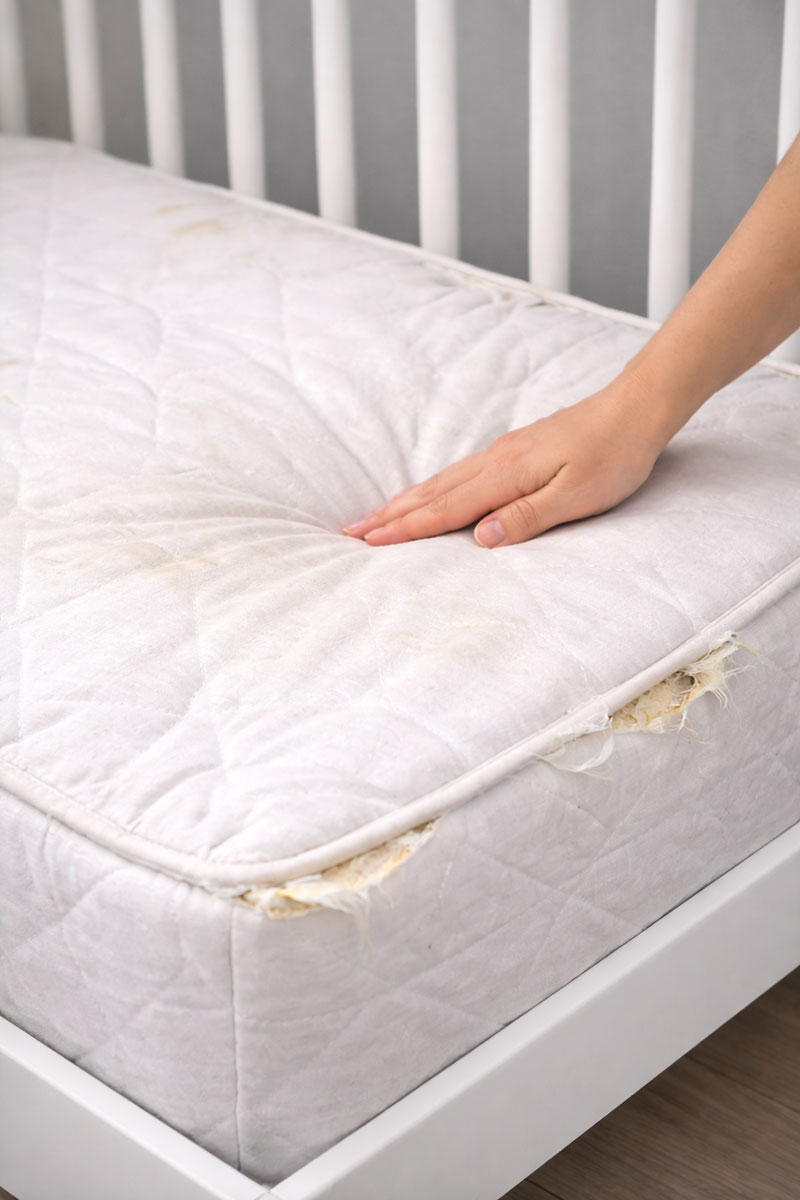
Crib mattresses should be replaced if they become damaged or worn. Warning signs include sagging areas, deep indentations, torn seams, exposed foam, mold, or a mattress that no longer lies flat in the crib.
Water damage, heavy staining, repeated soaking, or long periods of poor storage can weaken mattress materials. Even when the outside still looks acceptable at a glance, the inside may no longer offer the same support. A mattress that smells musty, feels uneven, or has broken-down corners should not stay in use for infant sleep.
To understand what different crib mattress odors may signal before deciding whether to clean or replace it, see my crib mattress smell causes guide.
Used crib mattresses require extra caution. If you are considering a secondhand mattress, review can you use a used crib mattress and when to replace a crib mattress.
For broader safe sleep guidance, the American Academy of Pediatrics provides recommendations on infant sleep safety.
A crib mattress that is damaged, sagging, or the wrong size is no longer safe enough to trust.
What should never be added to a crib mattress
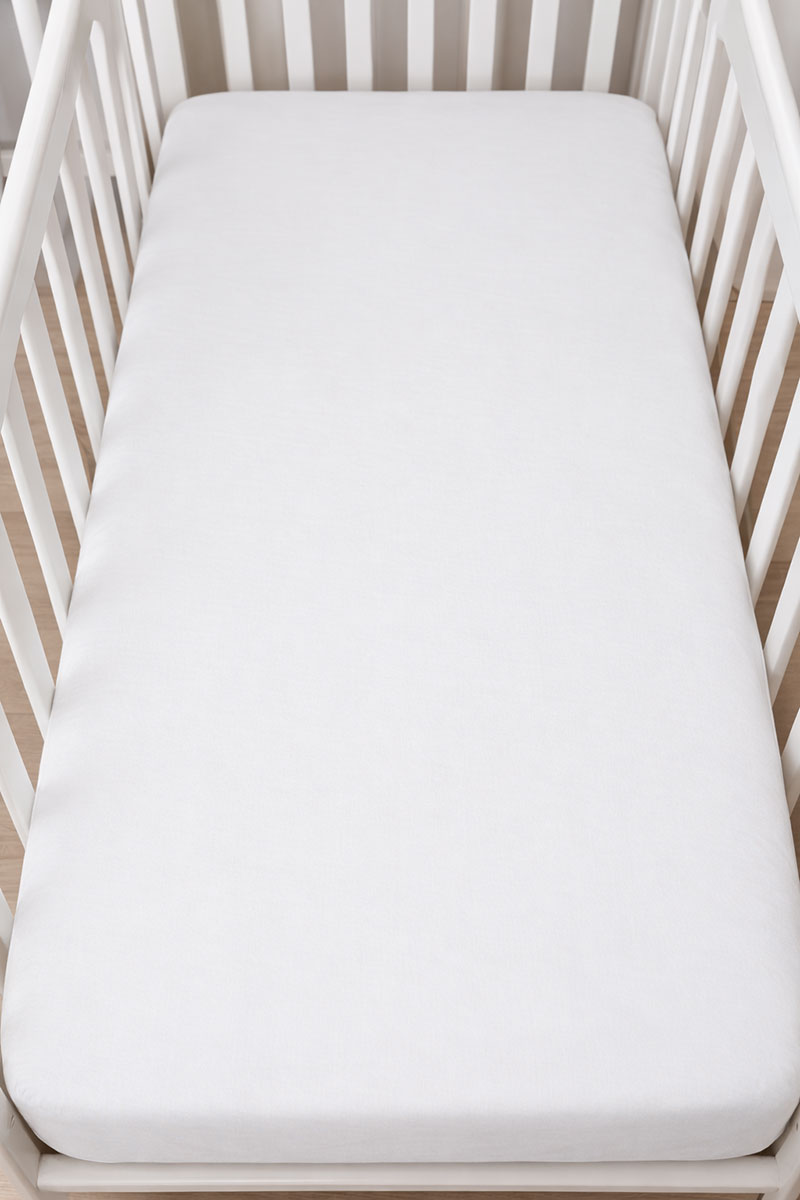
The safest crib sleep surface is a bare mattress with a fitted sheet. Babies should not sleep with pillows, mattress toppers, memory foam pads, sleep positioners, wedges, rolled towels, or thick blankets placed under or around them.
Adding extra padding can soften the sleep surface and increase the risk of suffocation or entrapment. Parents comparing different layering products often end up researching whether crib mattress toppers make a crib less safe because even thin-looking cushion layers can change firmness and surface stability.
A setup may look cozier to an adult, but that does not make it safer for a baby. In this area, simpler is better.
This section also matters because parents often try to solve the wrong problem. If a mattress feels too hard, the answer is not to add softness on top. If a mattress seems loose or uneven, the answer is not to wedge something around it. The better answer is to use the correct mattress, check the crib support system, and remove anything that changes the flat sleep surface.
If you use a mattress protector, choose one designed for crib mattresses that fits tightly and does not bunch up. Parents comparing thin waterproof layers with more padded options often find this crib mattress pad vs protector breakdown helpful for understanding which products protect the mattress without adding unnecessary cushioning.
For more information, read my article answering the question do crib mattresses need a protective cover. A poor fitting cover can change how the surface feels. My breathable crib mattress protector guide explains which options stay smooth, protect the mattress, and do not interfere with firmness or fit.
A firm mattress with a fitted sheet is the safest sleep surface for a baby.
Crib Mattress Safety Checklist
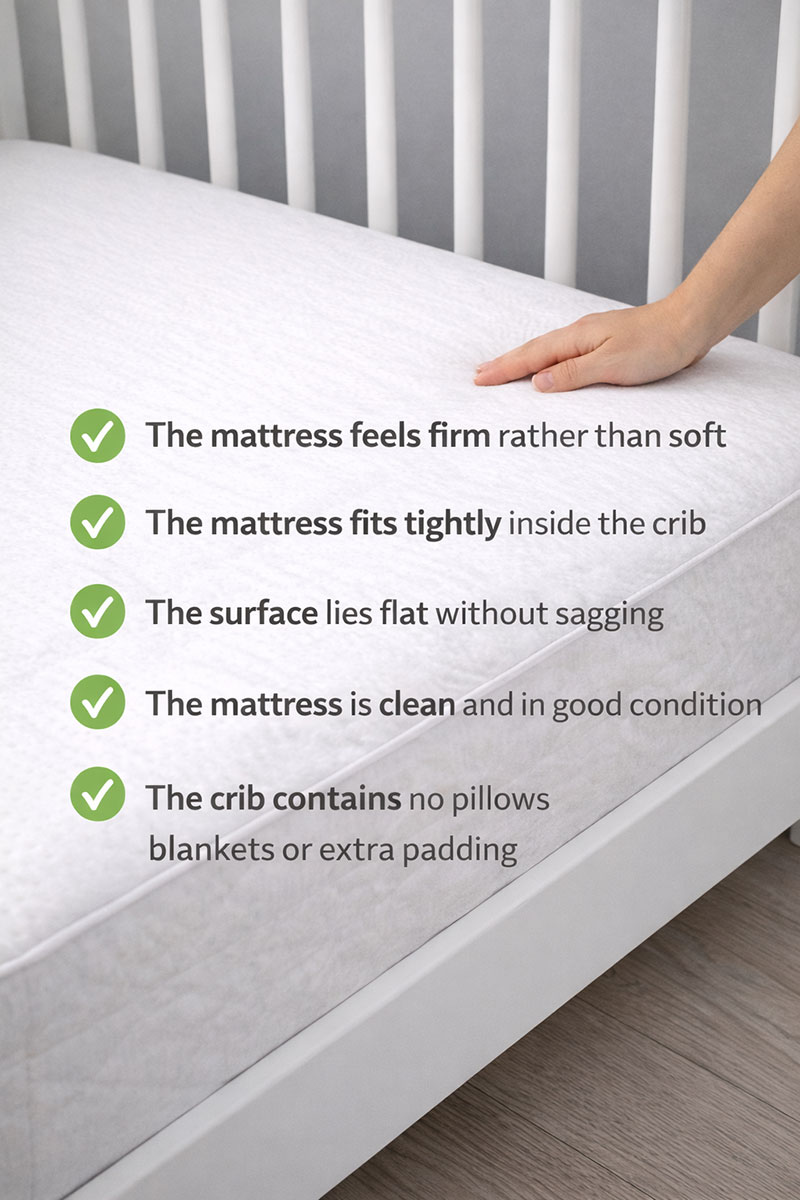
Use this crib mattress safety checklist before your baby sleeps in the crib. A safe crib mattress should feel firm, fit tightly, lie flat, stay in good condition, and be used with a bare sleep surface.
Crib mattress safety checklist:
- Firmness: Press down on the mattress with your hand. It should feel firm and spring back without leaving a deep body-shaped indentation.
- Fit: Check that the mattress sits tightly inside the crib with no large gaps along the sides or corners.
- Flat surface: Make sure the mattress lies level and does not sag, tilt, bunch up, or dip in the middle.
- Condition: Look for torn seams, broken-down corners, exposed foam, mold, water damage, or areas that feel uneven.
- Support underneath: Confirm that the mattress support platform is installed correctly and is not bent, bowed, or loose.
- Sheet fit: Use only a fitted crib sheet that stays smooth and tight across the mattress surface.
- No extras: Remove pillows, blankets, wedges, positioners, mattress toppers, and any added padding.
- Right size for the crib: Do not force a mattress into a crib just because it seems close. It should be the correct size for that crib model.
- Used mattress caution: If the mattress is secondhand and its history is unknown, inspect it very carefully before trusting it for infant sleep.
If every item on this checklist is true, the crib mattress is likely set up safely. If even one item is not true, fix that problem before using the crib for sleep.
Frequently Asked Questions About Crib Mattress Safety
How firm should a crib mattress be?
A crib mattress should feel firm and flat, not soft or pillow-like. When you press down on it with your hand, it should spring back instead of leaving a deep indentation.
How tight should a crib mattress fit?
A crib mattress should fit snugly inside the crib with no large gaps along the sides or corners. If it slides around easily or leaves visible space near the rails, it may not be the right size for that crib.
Are breathable crib mattresses safer?
Breathable crib mattresses are often heavily marketed, but the most important safety rules stay the same. The mattress still needs to be firm, flat, properly fitted, and used in an otherwise empty crib.
Is it safe to use a used crib mattress?
A used crib mattress may be unsafe if it is worn, sagging, stained, moldy, or has an unknown history. It needs to be checked very carefully before being used for infant sleep.
Can I add a topper or extra padding to a crib mattress?
No. A crib mattress should be used with only a fitted sheet. Toppers, extra padding, wedges, pillows, and other soft add-ons can make the sleep surface less safe for a baby.
If you need help checking size and gaps, read how a crib mattress should fit. If the surface feels uneven or unstable underneath, also check crib mattress support.
Crib mattress safety comes down to the same basics every time: firm, flat, tight-fitting, and clear.
When you click on links to various merchants on this site and make a purchase, this may result in this site earning a commission. This does not affect the price you pay.

UBGI Gold Standard 2026
Reviewed under the site's
editorial checklist.
Photos, decorating ideas, party setups and reader submissions are shared for inspiration unless a page is specifically presented as a pattern, tutorial, reference guide or step-by-step project. Follow the instructions, measurements, safety guidance and manufacturer directions provided for the particular project or product.
About Jan | Contact | Baby Nursery Ideas (Blog) | Site Map | Privacy Policy | Disclosure Policy | Disclaimer | Affiliate Disclosure | Earnings Disclosure | Facebook | Pinterest
I am a participant in the Amazon Services LLC Associates Program, an affiliate advertising program designed to provide a means for us to earn fees by linking to Amazon. As an Amazon Associate I earn from qualifying purchases.
Copyright © 2006-2026. All Rights Reserved.