Non Toxic Crib Mattress: What’s Safe for Your Baby?
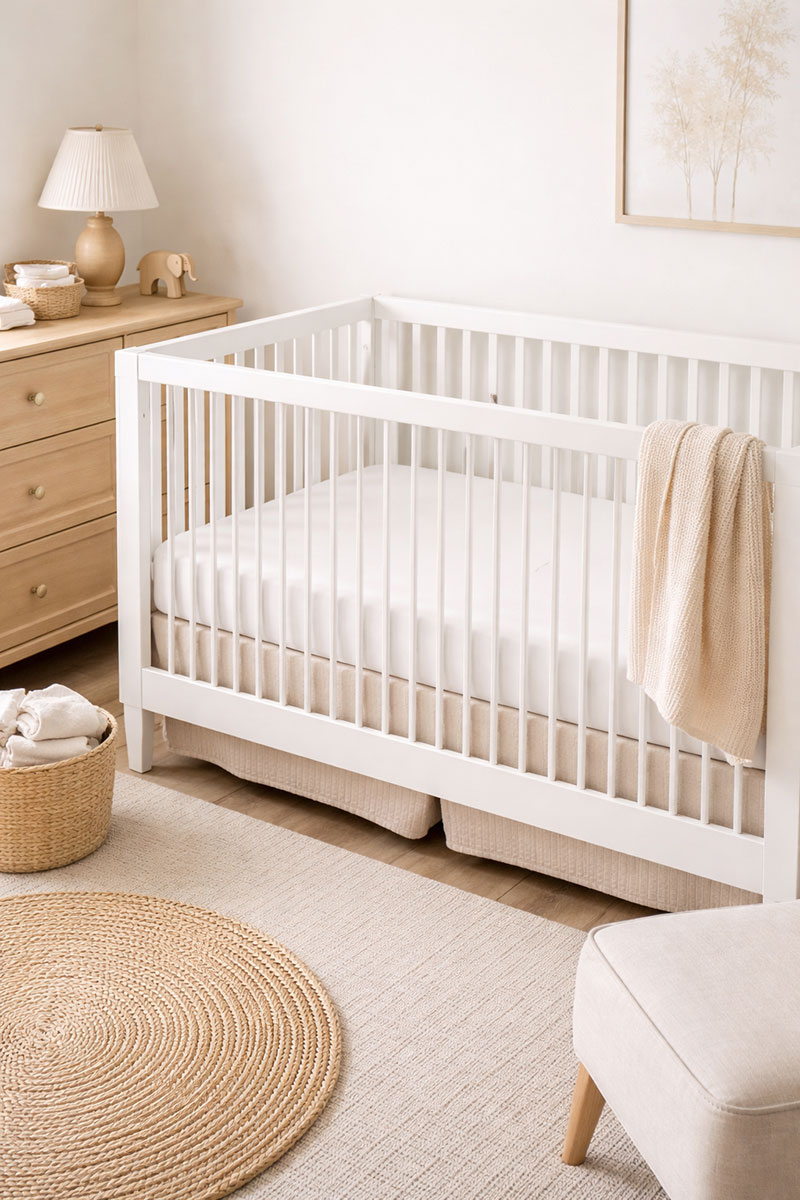
Non toxic crib mattress choices matter to many parents because babies spend so many hours sleeping in close contact with the mattress surface. When you start comparing options, it quickly becomes clear that some crib mattresses use polyurethane foam, vinyl covers, chemical flame retardants, or adhesives that can add unwanted materials to your baby’s sleep space. This type of mattress uses safer materials, low-emission construction, and features trusted certifications to help you choose a cleaner sleep surface. In this guide, I’ll explain what that term really means, which materials are considered safer, and how to pick an option that supports both firm sleep safety and a healthier nursery environment.
Trying to figure out what “non-toxic” really means before you buy? Start here:
Is non-toxic the same as organic?
Which labels are actually worth trusting?
Which non-toxic crib mattress claims matter most?
Jump to what you need:
What Makes a Non Toxic Crib Mattress Safer
Quick answer: A safer option is firm, fits the crib correctly, uses lower-emission materials, and avoids common chemical-heavy components such as vinyl-heavy covers, added flame retardants, and strong-odor adhesives when possible.
Many parents first notice this issue when they unbox a mattress and the air of the room fills with a sharp factory smell. That moment raises a simple question. What will be next to your baby’s face for hours at a time? What kind of air quality will be inside the nursery?
That initial smell can come from different materials or construction methods, and my crib mattress smell causes guide explains what those odors may mean before deciding whether they will fade or need attention.
A non toxic crib mattress should always be evaluated first for firmness and fit before any material claims are considered. That keeps the focus on real sleep safety instead of marketing language.
To see exactly how firm a crib mattress should be in real use (not just in product descriptions), this firm crib mattress guide explains what to look for and what to avoid.
The term “non toxic” is not a regulated product category in the United States. It can be used loosely, which means two mattresses labeled the same way may be built very differently. What matters is the actual construction, the materials used, the certifications behind those materials, and whether the mattress still meets basic infant sleep safety rules.
The first job of any crib mattress is simple. It must provide a flat, firm sleep surface that fits tightly inside the crib. That matters more than any “clean” or “natural” claim. If a mattress is soft, padded, or leaves gaps along the sides, it is not a safer choice for an infant.
A helpful way to think about this is to separate two questions. First, is the mattress safe for infant sleep? Second, is it made with fewer concerning materials and lower emissions? The best option answers yes to both.
If you are comparing options for smaller crib setups as well, this mini crib mattress guide explains how material choices, sizing, and fit considerations apply to compact crib formats.
One practical detail many pages skip is odor. A strong lingering smell after unboxing can point to adhesives, foams, or coatings that deserve a closer look. It is not proof of a problem on its own, but it is a useful signal.
For a broader overview, see my crib mattress guide. For the safety foundation behind firmness and fit, review crib safety standards. For medical guidance, the American Academy of Pediatrics remains the best non-selling reference at AAP safe sleep recommendations.
Firmness and fit always come first.
Non Toxic Crib Mattress Materials To Look For
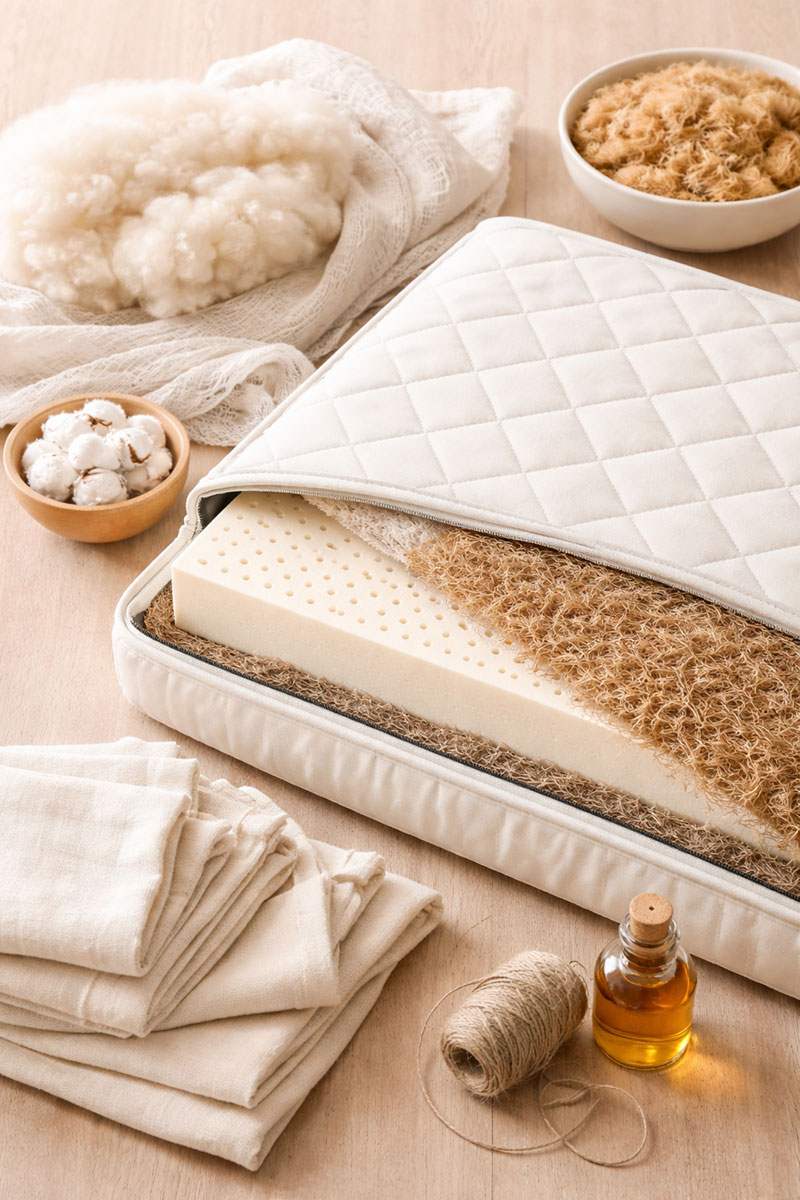
This is where things get confusing because brands mix comfort language, eco claims, and safety messaging together. The easiest way to cut through that is to focus on the build, not the branding. Materials that are often considered better choices include natural latex from a documented source, organic cotton fabrics, and lower-emission support cores that do not release strong odors after airing out. Some mattresses also use food-grade style polymer structures in washable designs, which appeal to parents who want fewer layered materials.
Some families prefer wool used as part of a fire barrier system instead of chemical-based flame retardants, but the full construction still matters more than any one component. Look closely at the cover as well. A good cover should be easy to wipe clean without relying on thick vinyl layers, and the layer added on top can influence how the surface behaves over time. My breathable crib mattress protector guide explains which protector designs stay smooth, protect the mattress, and do not affect firmness or fit, including how newer waterproof designs often perform better than older vinyl-style covers.
A waterproof crib mattress may still fit a non-toxic crib mattress search when the waterproof layer is clearly identified, non-vinyl, and does not change the firm sleep surface or crib fit.
Transparency is one of the strongest trust signals. When a brand clearly explains the core, cover, waterproof layer, and fire barrier, it becomes much easier to evaluate what you are actually buying. Another detail many guides skip is edge support. Babies shift and roll, and later pull up along the rails, so a mattress should stay firm across the entire surface, including the edges, not just the center.
To compare different construction approaches, see my breathable vs foam crib mattress guide, best organic crib mattress page, and best crib mattress guide. My best breathable crib mattress guide compares which airflow-focused designs still stay firm, fit correctly, and maintain a stable sleep surface once they are used in a real crib setup.
Crib Mattress Materials To Avoid Or Question
No single material works for every family, but some construction choices are consistently questioned when parents compare safer options.
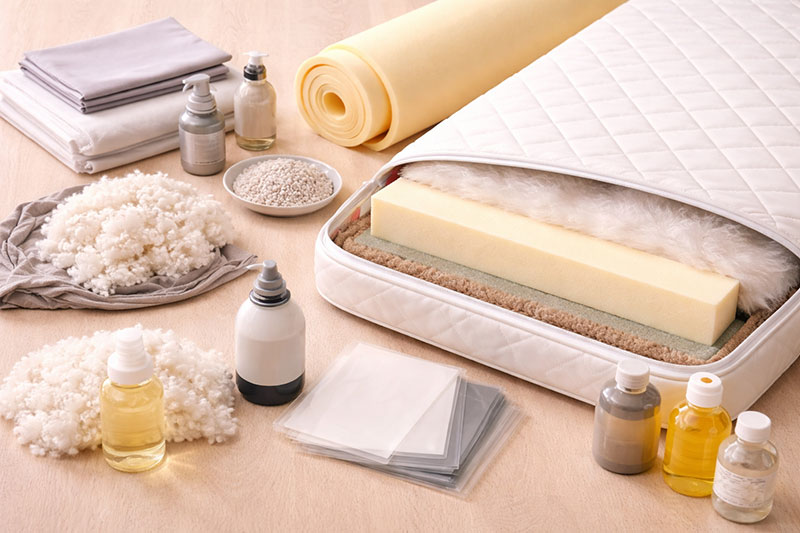
Be cautious with strong chemical odors that linger after airing out. Also question vague descriptions that never clearly identify the fire barrier, waterproof layer, or core materials. If a product relies heavily on words like “pure” or “natural” without real detail, that is a warning sign.
Some families also choose to avoid:
vinyl-heavy covers
added chemical flame retardants where alternatives exist
fiberglass in sleep products
very soft pillow-top surfaces
extra padding or aftermarket toppers
Babies do not need plush comfort layers. They need a stable, flat, predictable surface.
For fit and safety issues, see crib mattress fit, crib mattress safety, and crib mattress size vs twin.
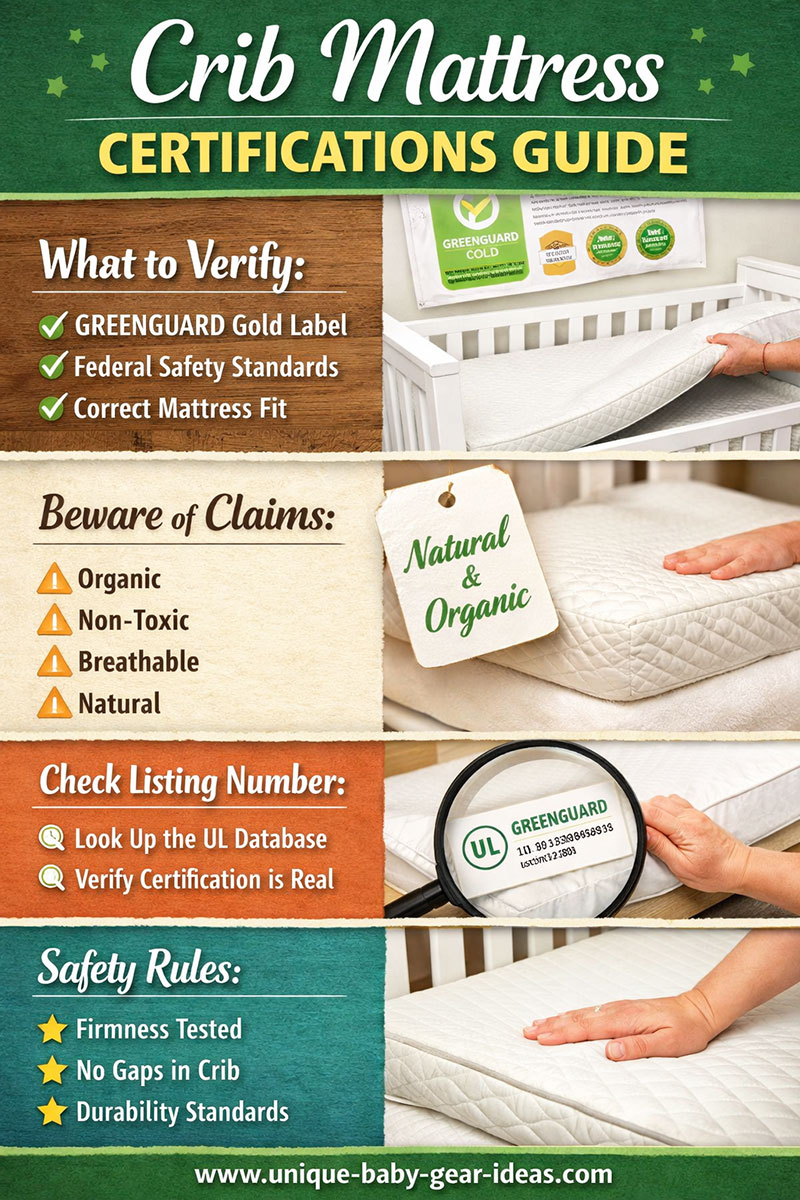
Which Crib Mattress Certifications Actually Matter
Certifications are useful when they clearly explain what was tested and what standard was used.
GREENGUARD Gold focuses on emissions. GOTS and GOLS apply to specific organic materials. These help verify claims, but they do not replace firmness or proper fit.
Always match the certification to the actual part of the mattress being described.
For a deeper breakdown, see my crib mattress certifications guide.
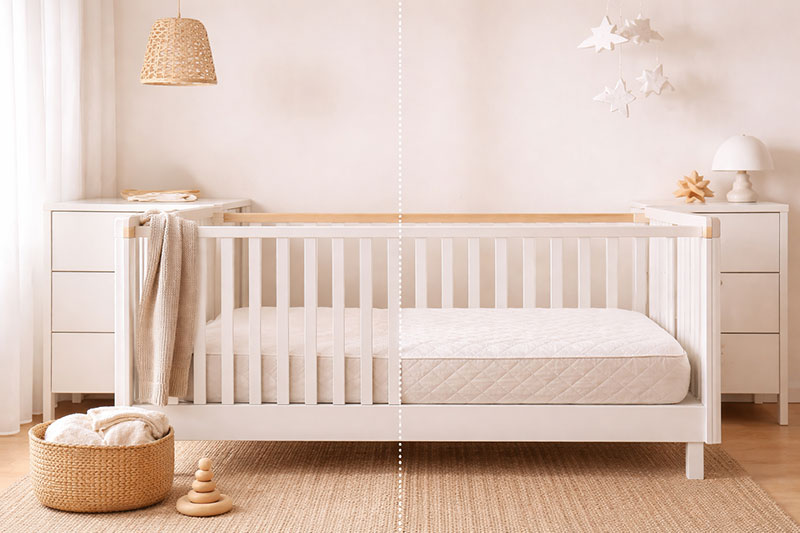
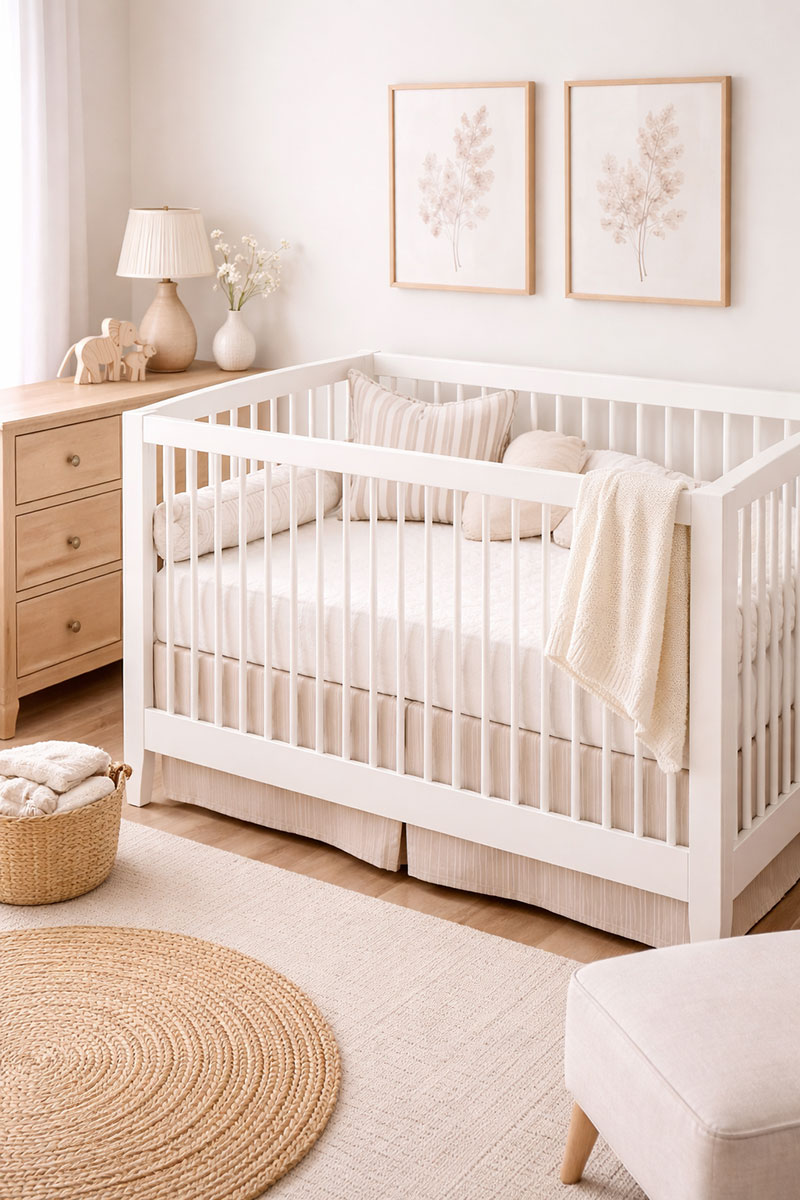
Side-by-side crib setup showing two clean sleep spaces with firm mattresses, highlighting that safe setup matters just as much as material choice.
Organic Vs Non Toxic Crib Mattress, What Is The Difference
These terms overlap, but they are not the same.
Organic refers to certified materials. Non toxic refers to reducing exposure and using cleaner construction methods.
An organic mattress may still include non-organic components. A non toxic mattress may not be certified organic at all.
To get a more in-depth look at materials, labeling, and how this category fits into the bigger crib mattress market, see my organic crib mattress guide.
For a side-by-side look at how breathable design compares to organic material construction, this Newton vs Naturepedic crib mattress comparison shows how the two approaches differ in structure, airflow, and everyday use.
Choose organic when certified materials are your priority. Choose non toxic when you want fewer emissions and fewer questionable inputs. Choose both when the mattress still meets firmness and fit standards.
How To Choose The Best Non Toxic Crib Mattress
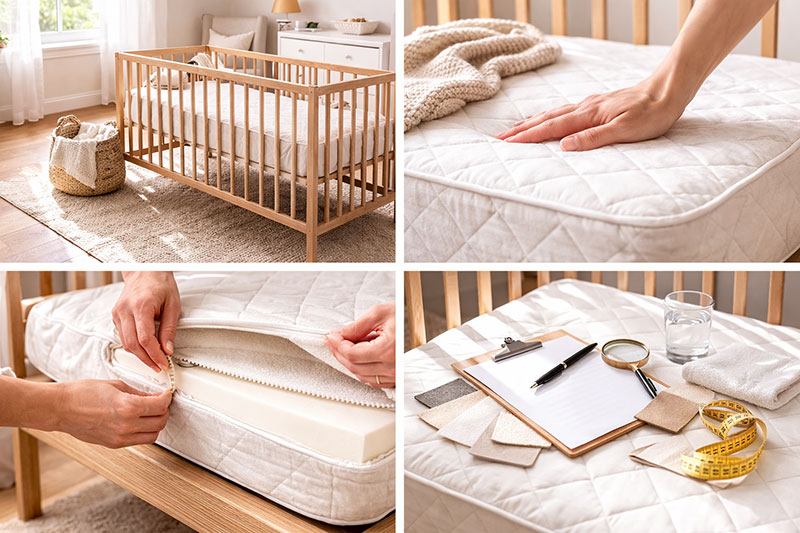
Use a simple checklist:
Firmness — should not sink under pressure
Fit — no gaps around the edges
Construction — clearly explained materials
Certifications — used as proof, not shortcuts
Cleanability — easy to maintain without extra layers
Setup — fitted sheet only, nothing extra
If you are deciding whether a two-stage mattress is worth paying for, this dual-sided crib mattress vs single-sided mattress guide explains when the infant/toddler design makes sense and when a simple one-sided mattress may be enough.
Bottom line: A non toxic crib mattress should be firm, properly fitted, clearly constructed, and low in emissions. Materials matter, but they never replace safe sleep basics.
FAQ About Non Toxic Crib Mattresses Parents Ask
Is a non toxic crib mattress the same as organic?
No. Organic refers to certified materials. Non toxic refers to lower-emission construction.
Do I need organic for safe sleep?
No. Firmness and fit matter more.
Are waterproof mattresses safe?
Yes, if firm and properly fitted.
What matters most?
Firmness first, then materials.
When you click on links to various merchants on this site and make a purchase, this may result in this site earning a commission. This does not affect the price you pay.
UBGI Gold Standard 2026
Reviewed under the site's
editorial checklist.
Photos, decorating ideas, party setups and reader submissions are shared for inspiration unless a page is specifically presented as a pattern, tutorial, reference guide or step-by-step project. Follow the instructions, measurements, safety guidance and manufacturer directions provided for the particular project or product.
About Jan | Contact | Baby Nursery Ideas (Blog) | Site Map | Privacy Policy | Disclosure Policy | Disclaimer | Affiliate Disclosure | Earnings Disclosure | Facebook | Pinterest
I am a participant in the Amazon Services LLC Associates Program, an affiliate advertising program designed to provide a means for us to earn fees by linking to Amazon. As an Amazon Associate I earn from qualifying purchases.
Copyright © 2006-2026. All Rights Reserved.