Jenny Lind Crib Replacement Parts and Instruction Manuals
A Jenny Lind crib is a spindle-style baby crib design produced by multiple manufacturers over several decades, rather than a single brand or model. The Jenny Lind crib has been part of nursery design for decades, and this page pulls together commonly referenced material tied to that familiar spindle-style crib. Over time, questions tend to come up about missing hardware, locating original manuals, or identifying which version of a Jenny Lind crib someone has on hand, especially when paperwork or labels are no longer available. This page reflects Jenny Lind cribs and related documentation as they were sold and regulated in the United States. This page provides descriptive reference information only and does not offer assembly instructions, repair guidance, safety determinations, or part compatibility confirmation.

If you are missing Jenny Lind crib screws, bolts, brackets, barrel nuts, mattress support hardware, or a hardware kit, you can check current inventory here:
Inventory listings are provided as general reference only. Crib parts are brand-specific and model-specific, and no listing should be treated as compatibility confirmation for any crib. Before purchasing or using any replacement crib hardware, verify the crib brand, exact model number, production date, part location, measurements, and original manufacturer documentation whenever possible. Do not use a crib with missing, damaged, substituted, or unverified parts.
This page does not provide instructions, endorse repairs, confirm part compatibility, or determine whether any Jenny Lind crib should be assembled or used.
Page reference summary:
- This page explains what the Jenny Lind crib is and why it appears under many brand names.
- It summarizes how replacement parts and manuals are commonly identified for this crib style.
- It clarifies that Jenny Lind refers to a design style, not a single manufacturer or model.
- It provides historical and visual reference material only, not instructions or compatibility guidance.
Because the Jenny Lind crib is a style rather than a single product line, it has been produced by many manufacturers over the years. That shared design explains why similar-looking cribs appear under different brand names, with variations in parts, finishes, and documentation depending on production period and manufacturer. Surface details such as spindle spacing, top-rail shape, and finish tone often vary from one maker to another. Hardware layouts can also differ even when the overall silhouette looks the same.
For broader context on crib styles, standards, and general crib categories, see the baby cribs reference hub.
Jenny Lind Cribs Within U.S. Crib Safety Standards
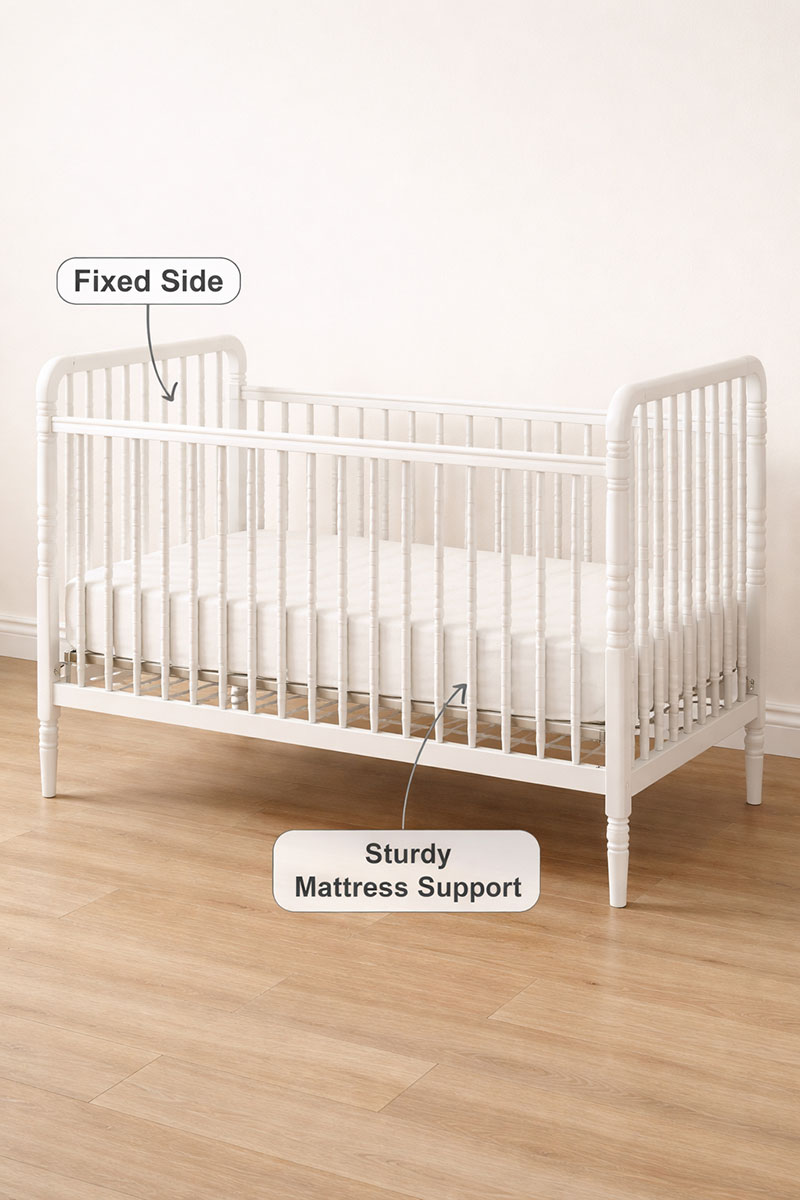
Although the Jenny Lind crib refers to a recognizable spindle-style design, every crib sold in the United States has been subject to federal crib safety standards in effect at the time of manufacture. These standards address structural integrity, slat spacing, mattress support systems, and side construction requirements. For a full overview of how crib safety standards are defined and updated in the United States, see the crib safety standards reference page.
A central part of those standards includes current crib slat spacing requirements, which define the maximum allowable gap between vertical rails to reduce entrapment risk.
Because Jenny Lind cribs have been produced across multiple decades and manufacturers, regulatory context may differ depending on production year. Older movable-side versions, fixed-side revisions, and later reissues reflect different eras of compliance. This page does not determine whether a specific crib meets current standards and does not evaluate suitability for use.
Parents researching documentation related to a Jenny Lind crib often also look for original paperwork. Manufacturer-issued assembly sheets and owner documentation are collected separately within the crib instructions reference hub. That section organizes manuals by brand and model rather than by style name.
If a Jenny Lind crib is missing bolts, brackets, or mattress support components, additional identification material is organized within the broader crib replacement parts reference system. Cribs are engineered as complete systems, and manufacturer documentation remains the authoritative source for part identification and compatibility.
This Jenny Lind crib page functions as a style-level reference within the larger crib knowledge structure on Unique Baby Gear Ideas. It is intended for identification and historical comparison only.
Jenny Lind Crib Replacement Parts and Hardware References
One of the most frequently referenced topics connected to the Jenny Lind crib involves replacement parts. Older cribs often change hands multiple times, and small components such as bolts, brackets, or mattress support pieces are sometimes separated during moves or storage. Parts may also be mixed with other nursery hardware, which makes visual matching unreliable. Listings associated with a specific model name or label tend to be more precise than general style-based listings.
Jenny Lind crib parts are typically identified by manufacturer, production period, and frame design rather than appearance alone. Even cribs that look nearly identical may use different hardware depending on brand or year of manufacture. For this reason, part listings are commonly organized by model name, measurements, or original paperwork when available. Some listings include diagram-style images, while others rely on parts codes printed in older manuals. Brand name and model number details are often the clearest identifiers when labels remain intact.
For brand-specific listings and part identification material, related content is collected on the Jenny Lind crib parts page. That section centers on identification details and archived listings rather than installation or modification. It is organized around names, labels, and visible design elements that appear in listings, manuals, or owner paperwork.
Instruction Manuals Associated With the Jenny Lind Crib
Instruction manuals associated with the Jenny Lind crib vary widely. Some manufacturers originally included printed manuals with packaging, while others provided brief assembly sheets or later shifted documentation online. Over time, many manuals were misplaced or separated from the crib itself. As a result, the same style name may correspond to multiple documents, each tied to a specific manufacturer. Some manuals contain full parts lists, while others include only diagrams with limited hardware labeling.
Manuals that still circulate are commonly shared as scanned documents, archived PDFs, or photocopies collected from long-time owners. These materials often include model identifiers, diagrams, and original manufacturer notes. Some documents list finish names, packaging descriptions, or alternate product names used in catalog listings. Older sets vary in format, ranging from single-page sheets to multi-page booklets.
Because multiple companies produced Jenny Lind cribs, manuals are not interchangeable across brands. A document associated with one manufacturer may not align with another crib that uses a similar spindle design. Manuals are treated here as descriptive material rather than universal documentation. A manual may also reflect a specific production run, with differences from later runs that used revised fittings or updated rail profiles.
Nursery Examples Featuring the Jenny Lind Crib
The Jenny Lind crib has appeared in a wide range of nursery styles over the years, from traditional spaces to more contemporary rooms. Rounded spindles and an open frame contribute to its frequent appearance in nurseries with vintage, farmhouse, or eclectic styling. The same crib shape also appears in higher-contrast rooms with darker finishes and bold wall colors.
Images of painted Jenny Lind cribs often appear in nursery examples shared online or passed down through families. These images reflect personal design choices and period trends rather than a single standard finish. Paint color is often the most visible difference between two cribs that otherwise share the same silhouette. Some examples also show variations in spindle thickness and top-rail shaping that distinguish one manufacturer from another.
Nursery examples are included as visual material only. They illustrate how the same Jenny Lind crib frame may appear different depending on color, surrounding furniture, lighting, and room layout, even when the underlying structure remains unchanged. Lighting conditions and camera angle can also affect how finishes appear in photographs, which is why labels and model identifiers remain more reliable than color alone.
Manufacturing Variations Across Jenny Lind Crib Brands
Although the Jenny Lind crib style is easily recognizable, manufacturing details vary across brands.

Differences may include slat thickness, rail height, mattress support systems, and hardware connection methods. Some brands use distinct fastener head styles or bracket shapes, and the same style name has appeared in both fixed-side and older movable-side versions depending on era. Finish options also vary, including stain tone, paint sheen, and edge shaping.
Older movable-side (drop-side) crib designs are no longer permitted under current U.S. crib safety regulations and should not be repaired, modified, or placed back into use.
If you have one of these older designs, see what to use instead of a drop-side crib for current fixed-side options.
Production methods have changed over time as manufacturing standards evolved. Earlier cribs often reflect older production practices, while later versions incorporate updated materials or revised construction techniques. These variations explain why surface appearance alone is not always sufficient for identification. Materials may range from solid wood components to mixed-material frames, and hardware packages may differ even when the exterior design remains similar. Packaging names and catalog labels also vary across retailers.
Brand markings, stamps, or labels—when present—are the most direct indicators of manufacturer origin. When markings are absent, older listings, archived manuals, and comparison images are commonly used for reference. Labels may include model numbers, manufacture dates, or finish names, and these details often distinguish one crib from another when spindle profiles appear similar.
Why Jenny Lind Cribs Are Still Widely Referenced
Continued reference to the Jenny Lind crib reflects its long production history and distinctive design. Large numbers were produced over many years, and the style continues to appear in secondhand listings, storage spaces, and family hand-me-downs. The style name is also used broadly in listings, even when original brand identification is missing. As a result, the same name may correspond to multiple manufacturers and time periods.
As these cribs reappear, parts listings, manuals, and manufacturer details are frequently revisited. This page gathers commonly cited material in one location, allowing comparison of model names, documentation that remains available, and examples of how the crib has appeared across different years and brands.
This page is intended for identification and historical reference only and does not determine crib safety, approve repairs, or confirm part compatibility.
Additional Reference Sources
Public recall records and manufacturer notices related to crib products are maintained by public agencies. For general crib-related listings and archived notices, the Consumer Product Safety Commission provides publicly accessible product information organized by brand and model. These listings often include model identifiers, date ranges, and product naming details used in official records.
This page presents descriptive information related to the Jenny Lind crib, including parts material, manuals, and nursery examples, using product standards information, presented for reference.
When you click on links to various merchants on this site and make a purchase, this may result in this site earning a commission. This does not affect the price you pay.

UBGI Gold Standard 2026
Reviewed under the site's
editorial checklist.
Photos, decorating ideas, party setups and reader submissions are shared for inspiration unless a page is specifically presented as a pattern, tutorial, reference guide or step-by-step project. Follow the instructions, measurements, safety guidance and manufacturer directions provided for the particular project or product.
About Jan | Contact | Baby Nursery Ideas (Blog) | Site Map | Privacy Policy | Disclosure Policy | Disclaimer | Affiliate Disclosure | Earnings Disclosure | Facebook | Pinterest
I am a participant in the Amazon Services LLC Associates Program, an affiliate advertising program designed to provide a means for us to earn fees by linking to Amazon. As an Amazon Associate I earn from qualifying purchases.
Copyright © 2006-2026. All Rights Reserved.