Is It Safe to Buy a Used Baby Crib
Is it safe to buy a used baby crib is a common question evaluated through crib manufacturing history, model identification, recall records, and compliance with current United States safety standards.
A used baby crib is generally considered safe only when its model number, manufacturing date, and recall history can be clearly verified and when it was produced under current U.S. federal crib standards, including the 2011 safety update that eliminated drop-side designs.
Thinking about using a secondhand crib? Check these first:
Are missing crib parts a warning sign?
Can you find the original crib instructions?
Which cribs should parents avoid?
Does the mattress fit correctly?
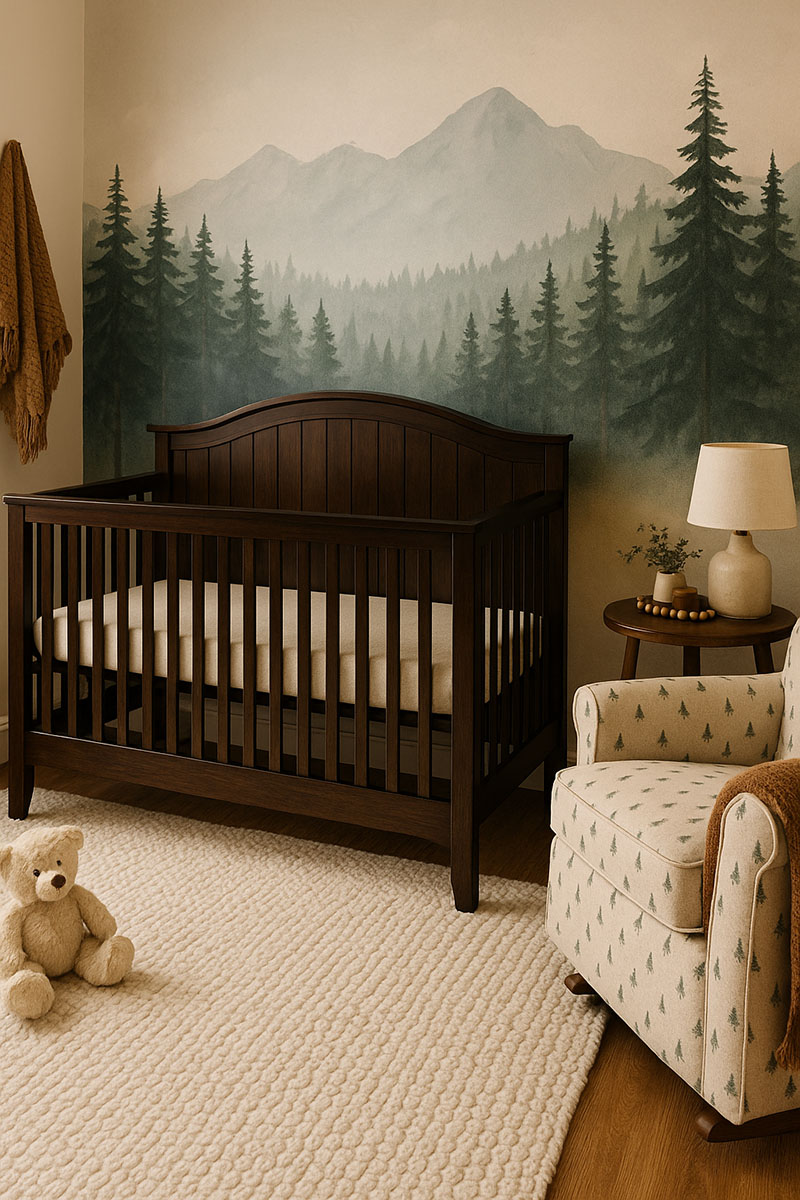
Used baby crib shown within a woodland nursery setting to represent safety review and standards evaluation context.
On This Page
- Questions about used baby cribs are often framed around manufacturing era, model history, and applicable standards.
- Crib designs and construction requirements have changed over time, affecting how older models are evaluated.
- Used crib listings may reflect different production periods with distinct design and hardware characteristics.
- Recall records and model identification are commonly referenced when discussing used baby cribs.
In the United States, cribs are regulated infant sleep products designed and sold as complete systems, with fixed side rails, defined mattress support structures, and manufacturer-specific hardware. Model identification, manufacturing period, and recall history are central to understanding how a crib was originally built and how it fits within evolving standards requirements.
This page provides general reference information about used baby cribs and standards history and does not offer purchasing decisions, inspections, or modification guidance.
In general, purchasing a used baby crib is discouraged unless the crib’s model, manufacturing period, and regulatory history can be clearly identified, since many older cribs were produced under standards that differ from current U.S. requirements.
Cribs manufactured before June 2011 generally do not meet current U.S. federal crib safety standards.
Even with a post-2011 model, parents should also confirm the manufacturer’s stated crib weight limits, since stop-use thresholds vary by design and are part of overall compliance.
Is it safe to buy a used baby crib is frequently raised when older nursery furniture is discussed alongside crib age, model history, recalls, and standards information. Perspectives on used cribs have shifted over time as manufacturing methods evolved, requirements were updated, and earlier crib designs began to be compared with newer models.
Background material related to nursery timing appears in the when to start decorating the nursery overview, which outlines common sequencing patterns observed in nursery preparation discussions.
For a clearer look at how crib sourcing decisions fit into the overall setup timeline, see when to set up a nursery, which explains how preparation sequencing and product identification intersect before a crib is put into daily use.
Is It Safe to Buy a Used Baby Crib Based on Standards Information
Is it safe to buy a used baby crib is commonly framed around standards information rather than appearance or price. This framing reflects how crib requirements have evolved, how older models were produced under earlier rules, and how those differences remain visible in used crib listings.
Standards information related to crib construction has changed gradually, reflecting updates in permitted design features, dimensional tolerances, and manufacturing controls. A used baby crib may reflect any stage of this progression, depending on its production date and manufacturer.
Because of these changes, is it safe to buy a used baby crib is often discussed by placing the crib within its original manufacturing period.
To review production era, recall status, hardware integrity, and current-use expectations in one organized pass, use the complete crib safety checklist before placing any used crib into service.
Earlier cribs were built to meet the standards in place at the time, which may differ from current production expectations.
For a structured explanation of how those requirements are defined today, review the federal crib safety standards reference.
For a practical outline of the structural red flags, missing hardware issues, and condition changes that indicate a crib may no longer meet safe-use expectations, review how to tell if a crib is unsafe.
Some safety concerns are subtle and develop gradually, which is why this guide to hidden crib dangers parents miss explains the overlooked risk patterns that are easy to underestimate in secondhand crib setups.
How Manufacturing History Shapes Used Baby Crib Discussions
Manufacturing history plays a central role in conversations about is it safe to buy a used baby crib. Crib models are typically identified by brand, model number, and production year, which together indicate when a crib entered the market and which standards information applied during that period.
Over time, some crib designs were revised while others were discontinued entirely. These shifts explain why visually similar cribs may differ internally in hardware systems, mattress supports, or rail construction.
Drop-side crib designs are frequently mentioned in discussions. These cribs were produced during an earlier manufacturing era and later removed from the market following regulatory changes. Identification of these models is commonly tied to design characteristics and model history rather than surface appearance alone.
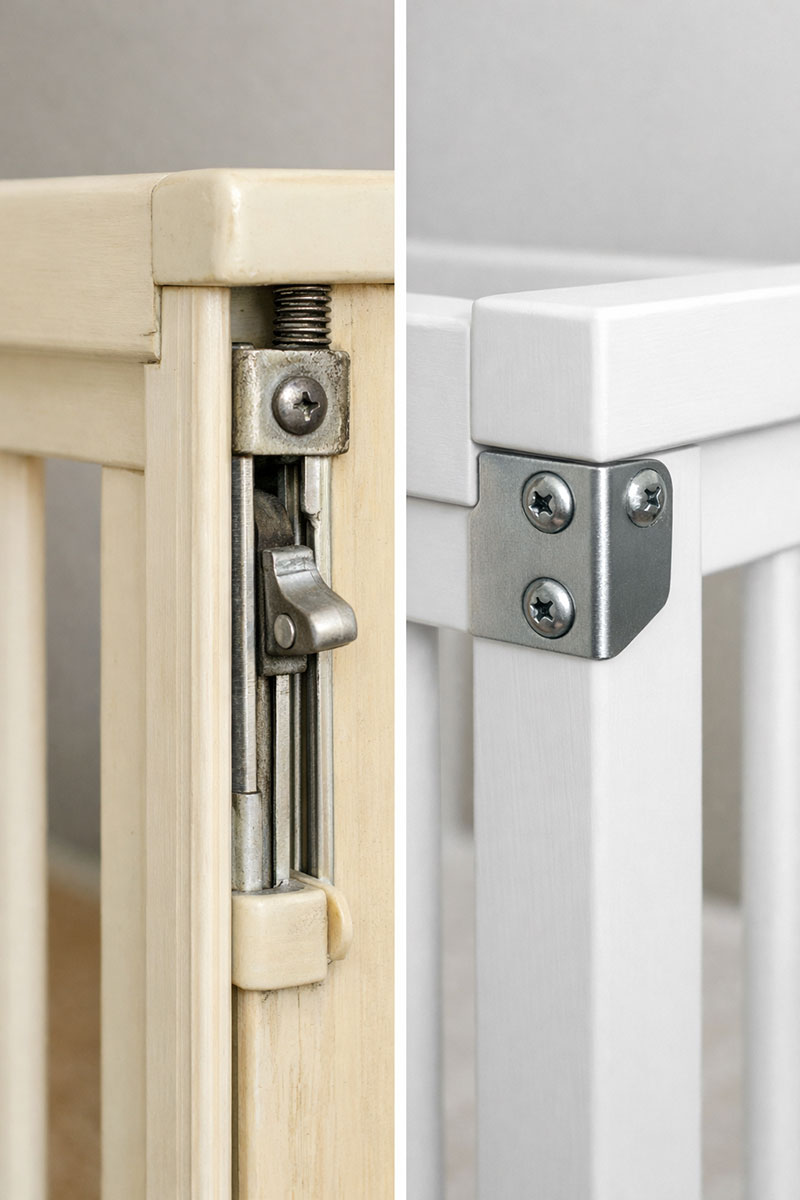
In discussions about older crib designs and changing standards, parents sometimes ask whether add-on barriers designed for beds can be used to modify a crib, which is why this reference explains why those products are not interchangeable: can you use bed rails on a crib.
Structural Characteristics Referenced in Used Baby Crib Reviews
Structural characteristics are another recurring element in discussions about whether it is safe to buy a used baby crib.
One structural detail that frequently comes up with older models is whether the crib slats meet current spacing requirements, since outdated rail gaps are one of the clearest indicators of a pre-2011 design.
Fixed rail construction, slat alignment, and mattress support design vary across production eras and manufacturers.
Used cribs often show differences in joinery methods, fastener placement, and support frame design. These variations reflect manufacturing standards in effect at the time of production rather than later updates.
Because mattress support design includes how the mattress platform is positioned within the crib frame, this reference explains how crib mattress height adjustment systems are structured and described across crib models: crib mattress height adjustment guide.
As babies grow and begin pulling up inside the crib, mattress height becomes a containment issue rather than just a comfort detail, which is explained here: when to lower a crib mattress.
Hardware consistency is also frequently referenced.
Because mattress fit, firmness, and gap control are just as important as original hardware, this guide explains the essentials clearly: crib mattress safety basics.
Original crib hardware was designed to match specific frames with exact measurements and threading patterns. Over time, hardware components may become separated from the crib or replaced with non-original pieces.
Recall Records and Model Identification
Recall history is commonly referenced when evaluating whether it is safe to buy a used baby crib. Public recall records are organized by brand and model number, linking specific cribs to actions taken after release.
The Consumer Product Safety Commission maintains recall listings that include crib-related products. These records present standards information tied to specific models rather than general crib categories.
Model identification remains central to locating recall listings or archived manufacturer materials. Used cribs without visible labels or documentation are more difficult to place within recall databases.
Materials, Finishes, and Visible Wear
When evaluating visible wear on older cribs, this reference explains why chew marks and rail damage are commonly seen and how they typically develop: why babies chew crib rails.
For related terminology clarity when older cribs are involved, this comparison explains how products meant for the top rail differ from items designed to line the crib interior: crib rail vs crib bumper.
For a broader reference on which items are commonly placed in a crib—and which items are typically avoided when evaluating crib setups—see what can go in a crib.
Material composition and surface finishes are frequently referenced when is it safe to buy a used baby crib is considered. Wood species, coatings, and paint applications vary across production eras and manufacturers.
Visible wear such as scuffing, finish thinning, or surface marks reflects prior use and storage conditions. These characteristics are commonly noted in used crib descriptions and are separate from structural design attributes.
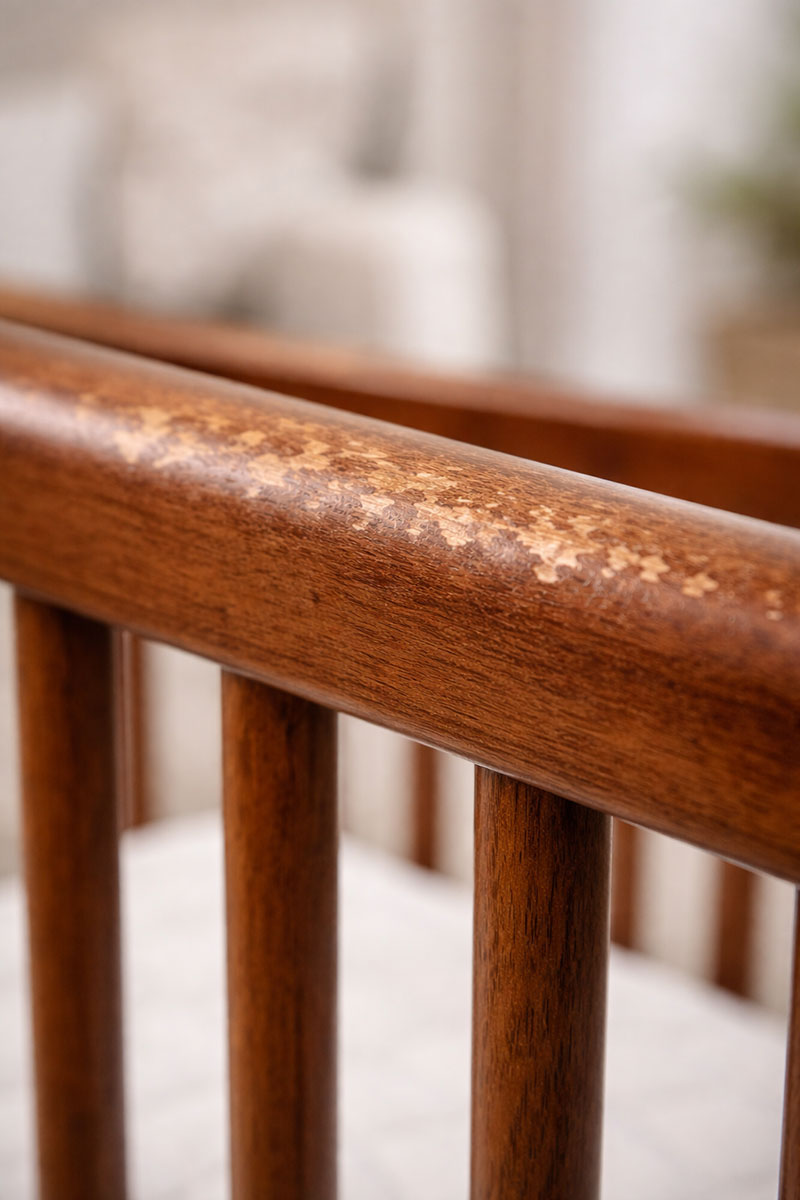
Storage environment also influences how used cribs age. Indoor storage, climate exposure, and repeated disassembly can affect materials differently depending on construction type.
Used Baby Cribs in Nursery Planning Context
Is it safe to buy a used baby crib is often part of broader nursery planning discussions that include furniture availability, production timelines, and coordination with other nursery items. Used cribs remain widely circulated due to long production runs and durable materials.
Cost comparisons are also commonly mentioned. Original retail pricing, material quality, and brand recognition influence how used cribs are listed and described across resale platforms.
For broader comparisons across crib styles and production eras, the baby cribs overview presents descriptive information on common crib formats and materials.
Reference Resources for Older Crib Models
Brand-specific reference material is frequently consulted when is it safe to buy a used baby crib is evaluated. Manufacturer archives and discontinued product listings may contain production details no longer included in current catalogs.
Brand archives for manufacturers such as Million Dollar Baby crib models illustrate how production eras, design revisions, and hardware specifications evolved over time. Reviewing manufacturer-specific history helps place a used crib within its original standards context rather than evaluating it by appearance alone.
Reference material related to older models and original hardware specifications is collected on the crib parts page. This material focuses on identification and compatibility information presented for reference.
Additional background on furniture purchasing phases appears in the baby furniture timing overview.
This page presents descriptive information related to is it safe to buy a used baby crib, manufacturing history, and standards information for reference. It does not provide assembly, modification, or repair instructions.
Used Baby Crib Questions Parents Commonly Ask
What year did U.S. crib safety standards change?
U.S. federal crib safety standards were updated in 2011. The revised rules eliminated drop-side crib designs and introduced stricter structural requirements for hardware strength, mattress supports, and rail construction.
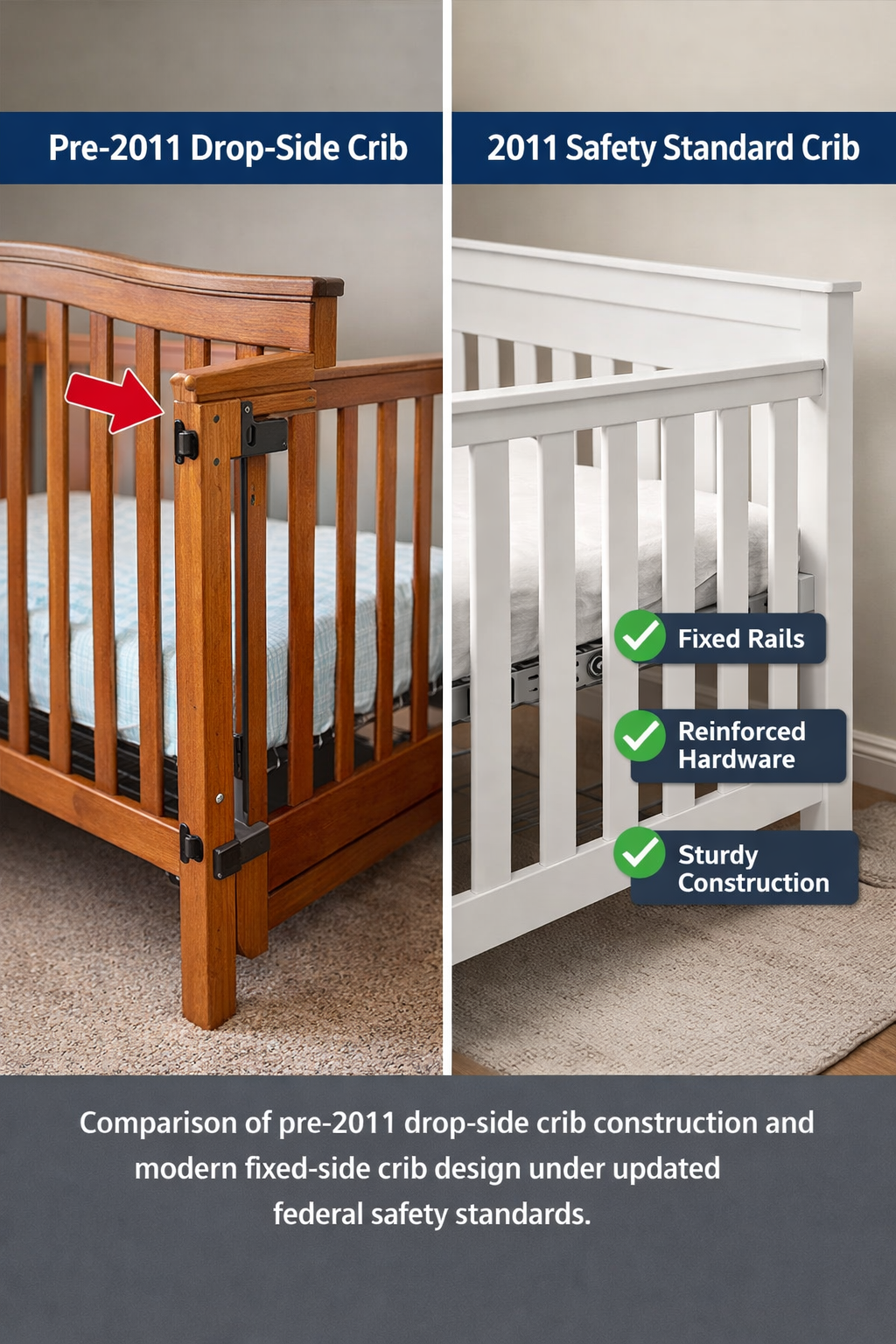
Comparison of pre-2011 drop-side crib construction and modern fixed-side crib design under updated federal safety standards.
Are drop-side cribs banned?
Yes. Drop-side cribs were removed from the U.S. market after the 2011 federal safety update. They are no longer legally manufactured or sold by retailers, and their design is associated with an earlier regulatory era.
Is it legal to sell a used baby crib?
U.S. law prohibits the resale of recalled cribs and any crib that does not meet current federal safety standards. When evaluating a used crib, confirming model identification and recall history is essential to determine whether it complies with present-day requirements.
When you click on links to various merchants on this site and make a purchase, this may result in this site earning a commission. This does not affect the price you pay.

UBGI Gold Standard 2026
Reviewed under the site's
editorial checklist.
Photos, decorating ideas, party setups and reader submissions are shared for inspiration unless a page is specifically presented as a pattern, tutorial, reference guide or step-by-step project. Follow the instructions, measurements, safety guidance and manufacturer directions provided for the particular project or product.
About Jan | Contact | Baby Nursery Ideas (Blog) | Site Map | Privacy Policy | Disclosure Policy | Disclaimer | Affiliate Disclosure | Earnings Disclosure | Facebook | Pinterest
I am a participant in the Amazon Services LLC Associates Program, an affiliate advertising program designed to provide a means for us to earn fees by linking to Amazon. As an Amazon Associate I earn from qualifying purchases.
Copyright © 2006-2026. All Rights Reserved.