Free Crochet Bear Patterns for Teddy Bears, Loveys, Blankets and More
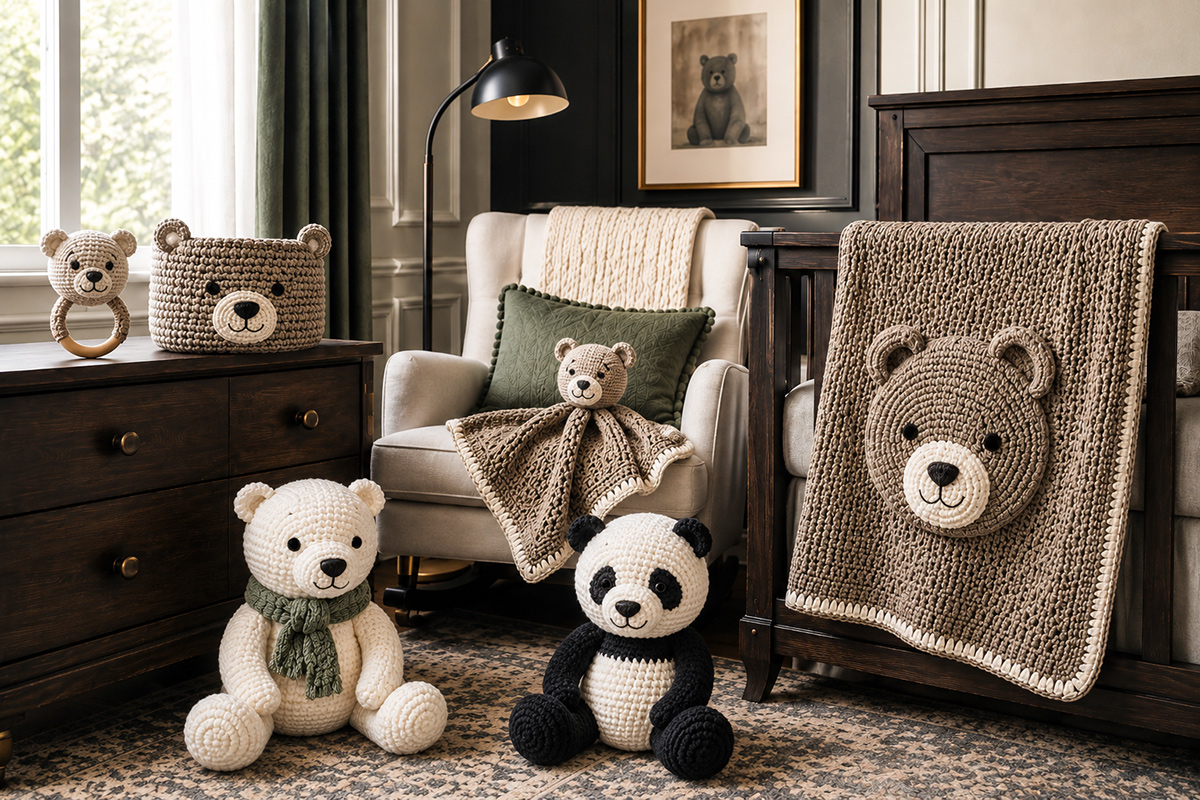
These free crochet bear patterns include teddy bears, loveys, blankets, rattles, appliqués, baskets and other bear projects you can make for babies, nursery decor and handmade gifts. Use this collection to compare the different bear designs and choose the pattern that fits the project you want to make.
This is a collection page, not one master bear pattern. Choose the finished project you want, then open that pattern for the complete materials and instructions.
By Jan Bay
Explore More Free Crochet Baby Patterns
See Yarn and Crochet Supplies for Bear Patterns
Free Crochet Teddy Bear and Stuffed Bear Patterns
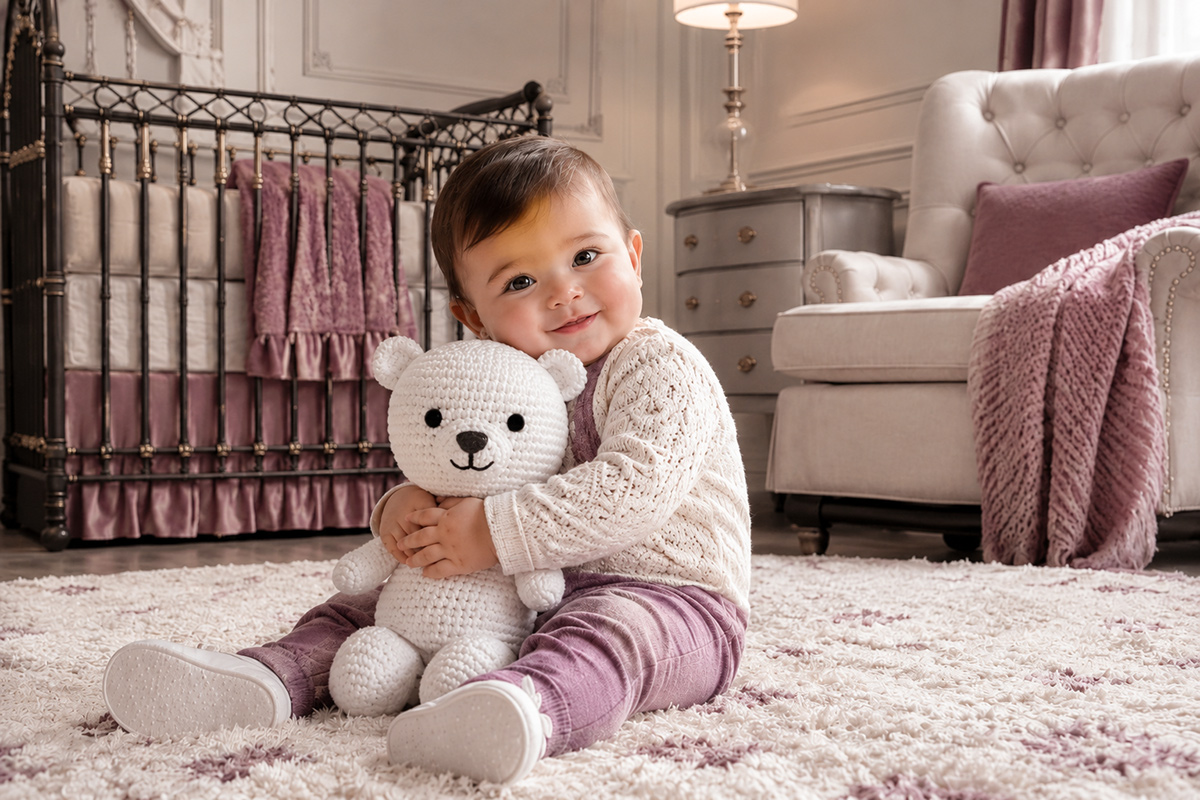
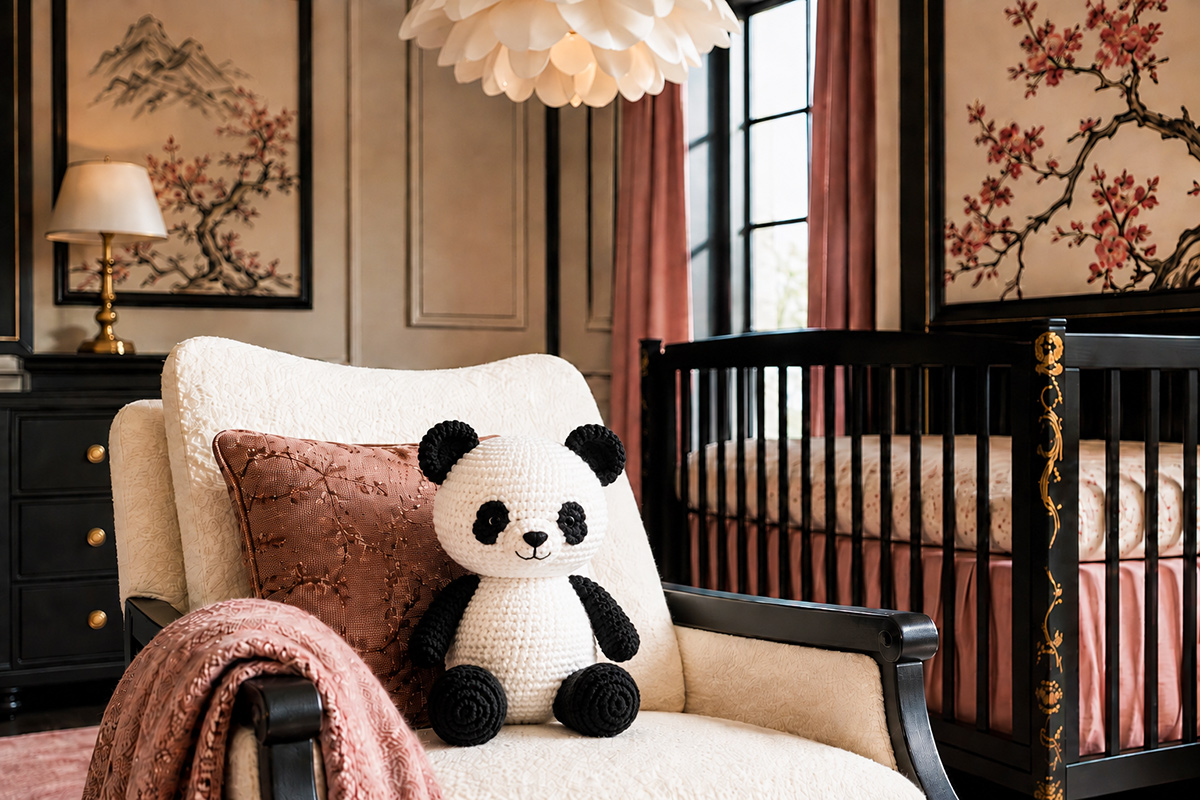
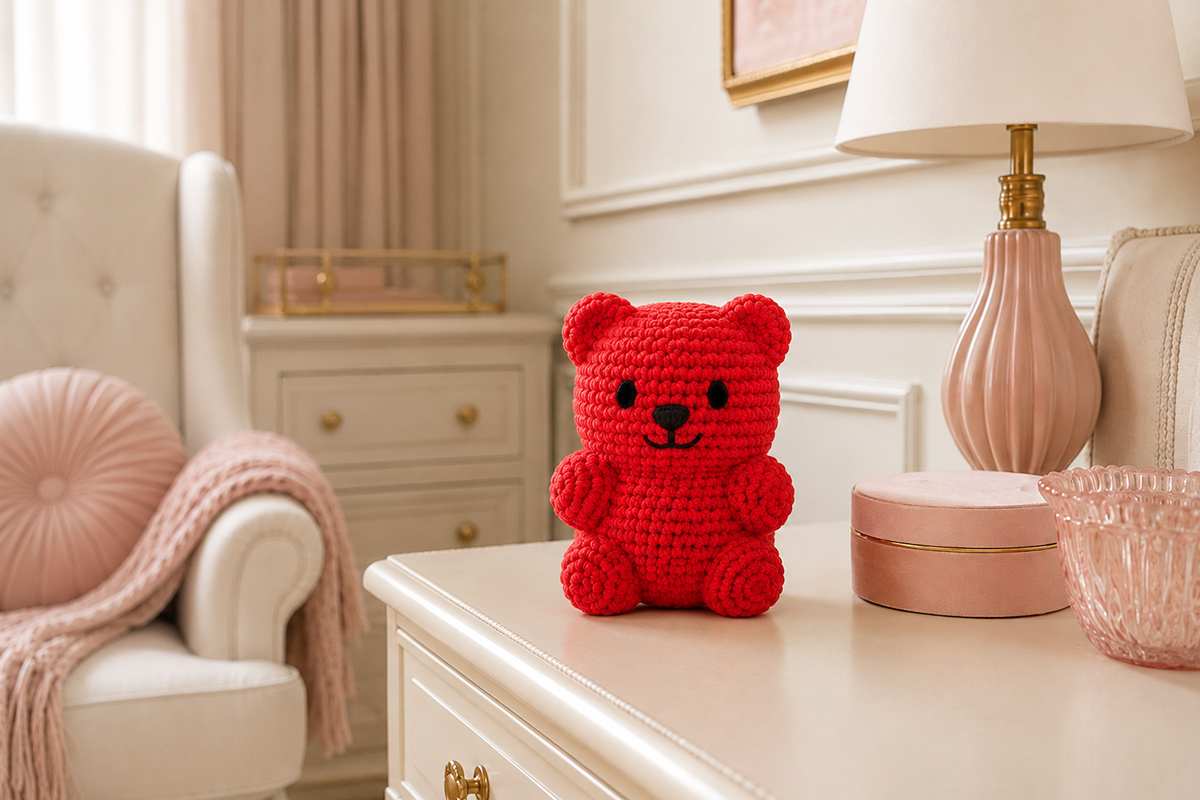
If you want to crochet a bear that stands on its own as the finished project, start with this group. These patterns all make recognizable bears, but they get there in very different ways. The classic teddy relies on familiar rounded proportions, the panda depends on carefully placed black-and-white markings, the polar bear keeps the silhouette simple and snowy white, and the gummy bear turns the basic bear shape into something playful and compact.
I would choose the pattern by looking at the finished shape first rather than choosing by color alone. Ear position, muzzle shape, body proportion and limb construction can change the personality of a crochet bear more than switching from brown yarn to ivory or gray.
Classic Crochet Teddy Bear
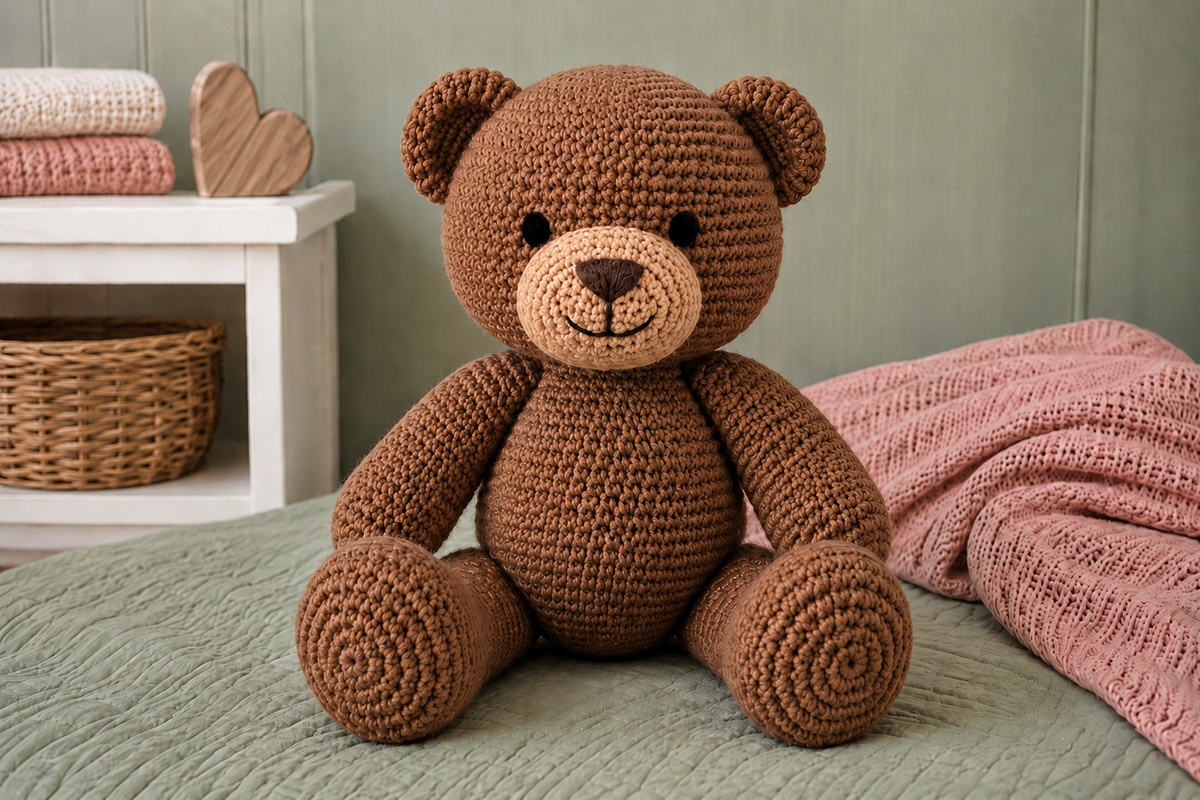
The free crochet teddy bear pattern is the place to begin if you want the traditional stuffed-bear look. It has the familiar rounded head, separate ears, defined muzzle, stuffed body and attached arms and legs that make the finished project read immediately as a teddy bear.
This is also a useful pattern when you want to change the character without redesigning the basic construction. Warm brown gives it a woodland look, caramel or oatmeal keeps it soft and neutral, and ivory can move it toward a lighter nursery palette. Keep enough contrast between the muzzle and the main bear color for the face to remain easy to read.
Pay particular attention to the face before you permanently attach the remaining pieces. A nose that sits too high can shorten the muzzle visually, while ears placed too close together can make the head look narrow. Pinning the pieces first gives you time to correct those proportions before sewing.
Black and White Crochet Panda Bear
The free panda crochet pattern uses a different visual recipe. The white head and body provide the base, while black ears, eye patches, arms and legs create the panda markings. The crochet itself matters, but placement does a great deal of the work.
The eye patches should remain separate with visible white crochet between them. The round black ears sit high enough to extend beyond the head outline, and the dark limbs stay compact so the white belly remains visible. Those relationships keep the finished animal from looking like a regular teddy bear made with black and white yarn.
This pattern uses embroidered facial features instead of plastic eyes. If the bear will be made for a baby, keep all facial details stitched and check every sewn component before the project is used or given as a gift.
White Crochet Polar Bear
For a cleaner winter or Arctic look, use the free crochet polar bear pattern. The mostly white construction means the shape has to do more of the visual work. A broad head, small rounded ears, shallow muzzle and substantial paws help distinguish the finished animal from a white teddy bear.
White yarn also makes stitch texture easy to see, especially in close light, so even stuffing and tidy decreases matter. Add fiberfill in small portions and turn the piece as you work. This helps prevent one side from becoming firmer or fuller than the other.
The polar bear is an especially useful choice when the finished project will be part of an Arctic or winter room. If you are planning the larger setting as well as the crochet project, the Arctic nursery theme ideas page brings polar bears together with the other colors, animals and decorative elements that suit that kind of nursery.
Crochet Gummy Bear
The free gummy bear crochet pattern moves in a completely different direction. Instead of trying to reproduce a realistic bear or traditional teddy, it uses the rounded ears, small limbs and compact body associated with the familiar candy shape.
This is the pattern to choose when color is part of the fun. A single gummy bear can be worked in one bright shade, or you can make several in different colors while keeping the construction consistent. The simple silhouette is what holds the group together.
Do not add extra facial pieces simply because the body is simple. Small features suit this design better than a large muzzle or oversized eyes. Keeping the details restrained allows the rounded gummy-bear outline to remain the first thing you see.
These four patterns also show why a bear collection does not have to be a row of nearly identical brown amigurumi. Start with the same familiar animal, change the proportions and defining features, and the finished projects can range from classic teddy to panda, polar bear and candy-inspired bear without losing the connection between them.
Free Crochet Bear Patterns for Loveys and Baby Projects
Not every bear project needs to become a traditional stuffed animal. A lovey gives you a soft fabric section to hold, a snuggler combines a shaped bear with a flexible body, a rattle adds a useful handheld format, and a bear hat turns the familiar ears into something a baby can wear. These free crochet bear patterns are useful when you want the bear theme without making another full-size teddy.
The main question is what you want the finished project to do. Choose a lovey when the soft fabric body is the focus. Choose the snuggler when you want more of a bear silhouette with floppy limbs. The rattle is a smaller project with a defined handle, while the hat is the simplest way to carry the bear look into a wearable piece.
Teddy Bear Lovey Crochet Pattern
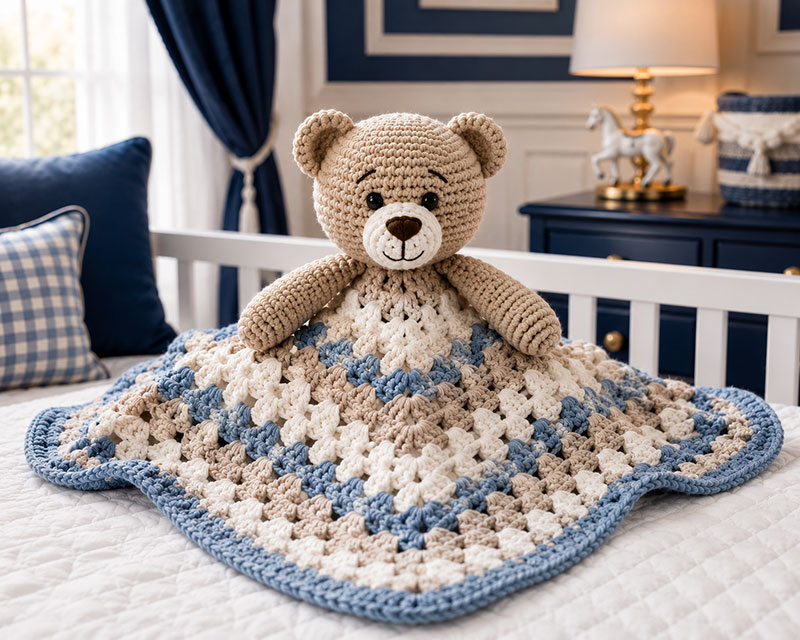
The teddy bear lovey crochet pattern combines a recognizable crocheted bear with a soft lovey section. It gives you the round ears, muzzle and embroidered face associated with a teddy bear while keeping the lower portion flexible rather than turning the entire project into a firmly stuffed animal.
That balance matters visually. If the head becomes too large, the lovey can look top-heavy. If the head is too small, the bear details get lost against the fabric below it. Keep the finished head proportional to the lovey body and check the placement before the final attachment is complete.
The face should also remain simple. Embroidered eyes, nose and mouth keep the surface soft and avoid adding hard facial pieces. Make the stitches secure, bury the embroidery ends inside the work and inspect the face after assembly to make sure no loose loops remain.
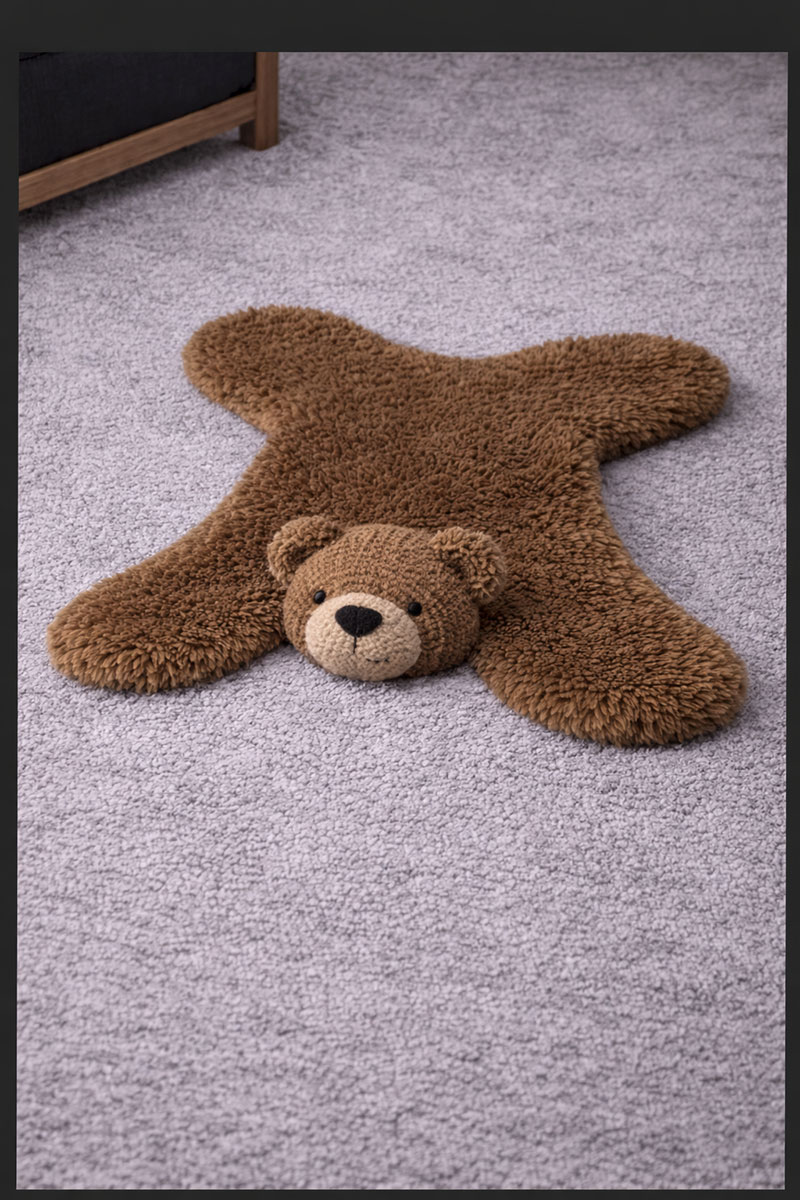
Brown Bear Lovey with a Flat Faux Fur Body
The brown bear lovey pattern has a different silhouette from the traditional blanket-style lovey. Its flat faux fur body spreads outward beneath the crocheted bear head, which gives the finished piece more of a little bearskin shape.
That makes the outline especially important. The body should read as intentionally flat and soft rather than as an unfinished stuffed bear. Keep the head centered over the upper portion of the body and check the shape from several angles before you finish the attachment.
The contrast between the textured body and the crocheted head also gives this project its character. I would keep the colors related rather than trying to make every section different. Brown, tan, caramel and soft neutral shades let the texture provide most of the variation.
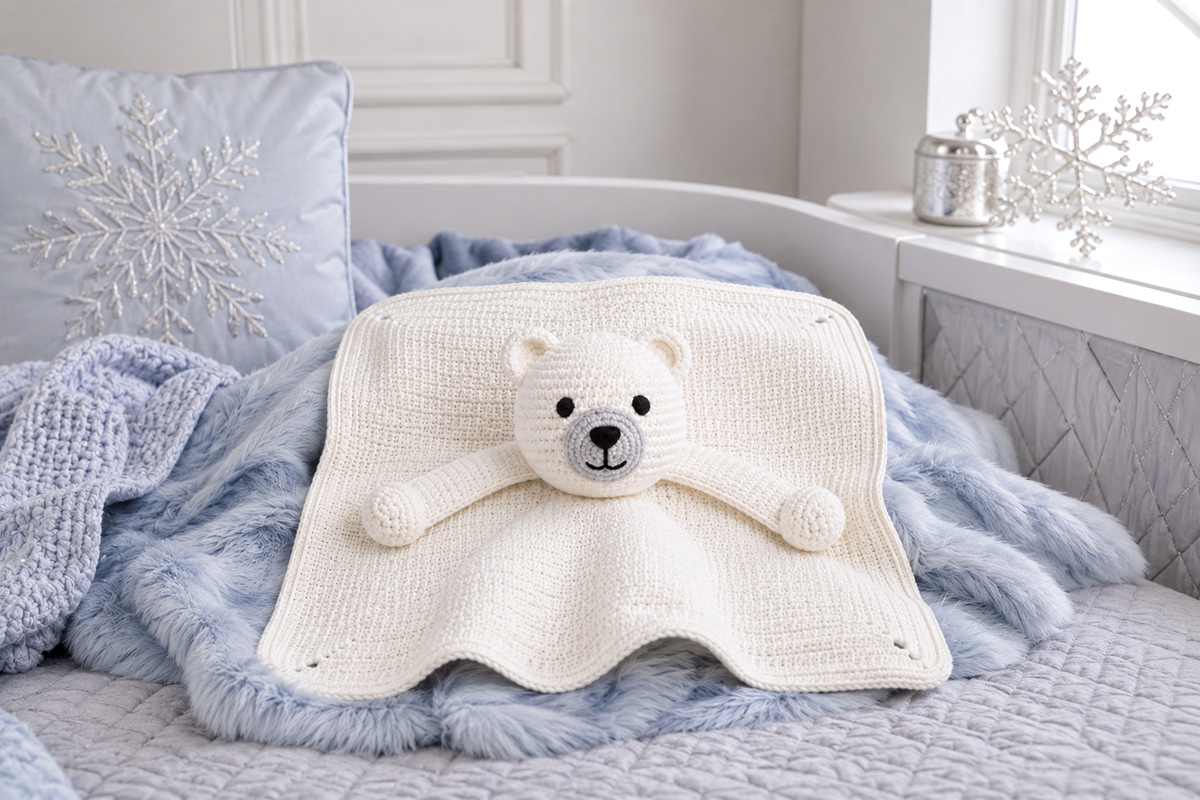
Polar Bear Lovey Crochet Pattern
For a winter version of the bear lovey, the polar bear lovey crochet pattern combines a white bear head and arms with a square crochet blanket and embroidered facial features.
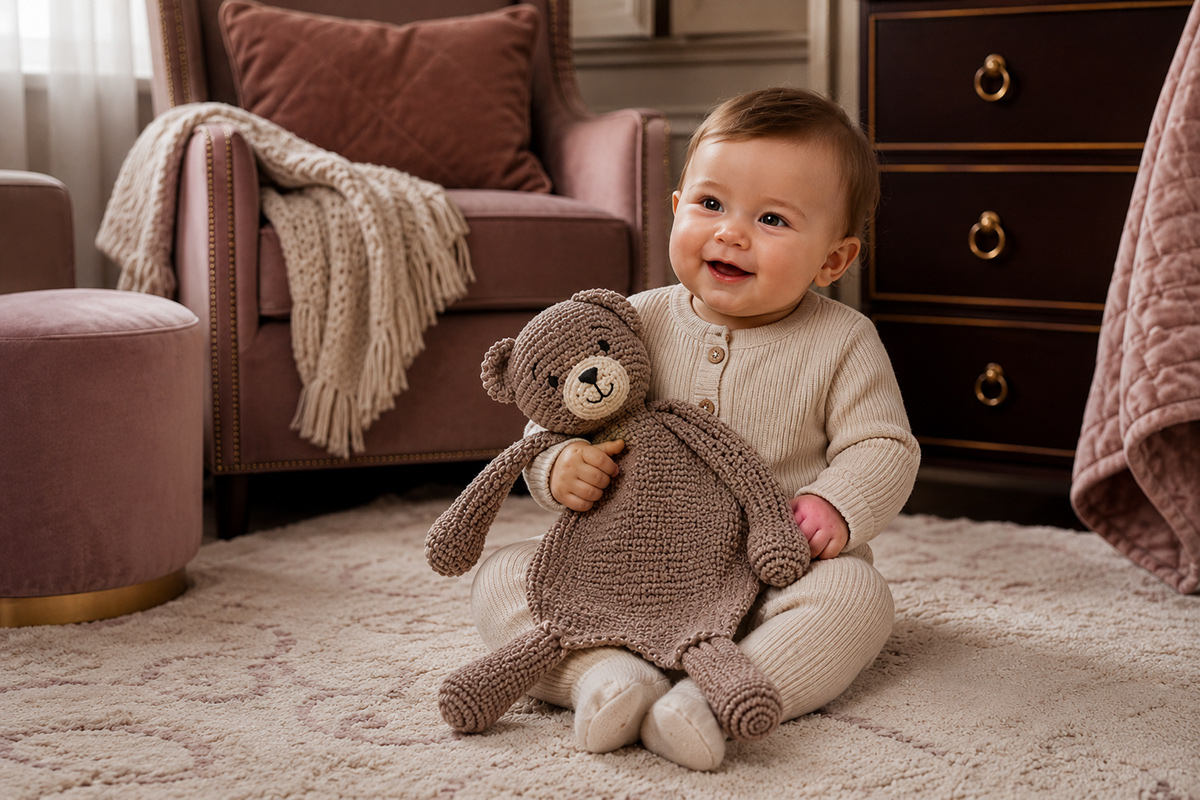
Crochet Bear Snuggler
The bear snuggler crochet pattern sits between a lovey and a stuffed bear. It has a stuffed head and recognizable limbs, but the body stays softer and more flexible than a firmly filled amigurumi bear.
If you are comparing the snuggler with the teddy bear lovey, look at the lower half of the finished project. The lovey is built around a fabric or blanket-like holding area. The snuggler keeps more of the animal shape, with floppy arms and legs extending from the body.
Stuffing control is especially important with this kind of project. The head needs enough filling to hold its shape, while the body and limbs need to remain flexible enough to drape naturally. Do not keep adding stuffing simply because there is room for more. The intended softness is part of the construction.
Crochet Bear Rattle
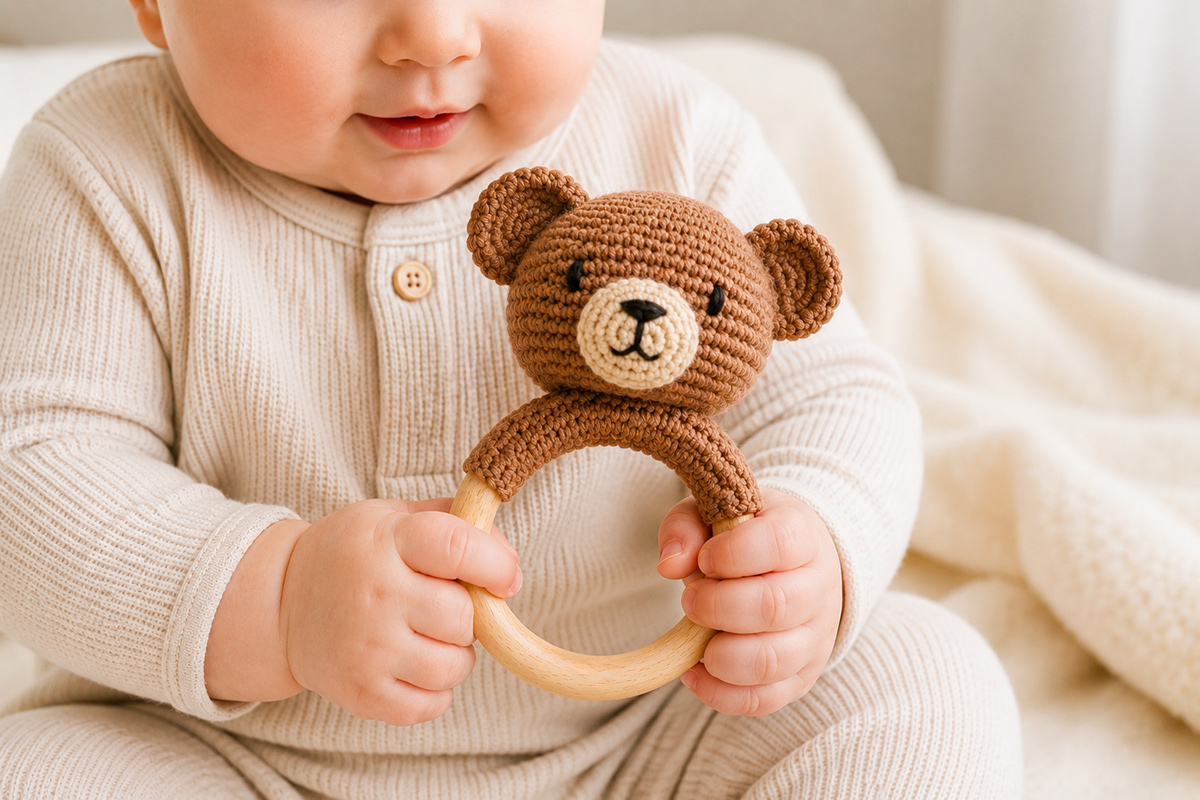
The free crochet bear rattle pattern takes the bear theme into a much smaller project. The crocheted bear head is attached to a hardwood ring, with the sound insert enclosed inside the stuffed head rather than left exposed.
The pattern uses embroidered facial features, which keeps buttons and plastic eyes out of the design. The head also needs to be attached securely to the ring because the join carries more responsibility than a decorative seam on a display project.
Before the rattle is used, inspect the complete piece. Check the ring, all sewn seams, the embroidered face and the head-to-ring attachment. The internal sound insert should remain fully enclosed, with no hard edge or component visible through the crochet fabric.
This is also a good project when you want a bear-themed handmade gift but do not want to commit to a blanket or full stuffed animal. The smaller scale still leaves enough room for the ears, muzzle and face to read clearly as a bear.
Crochet Bear Hat
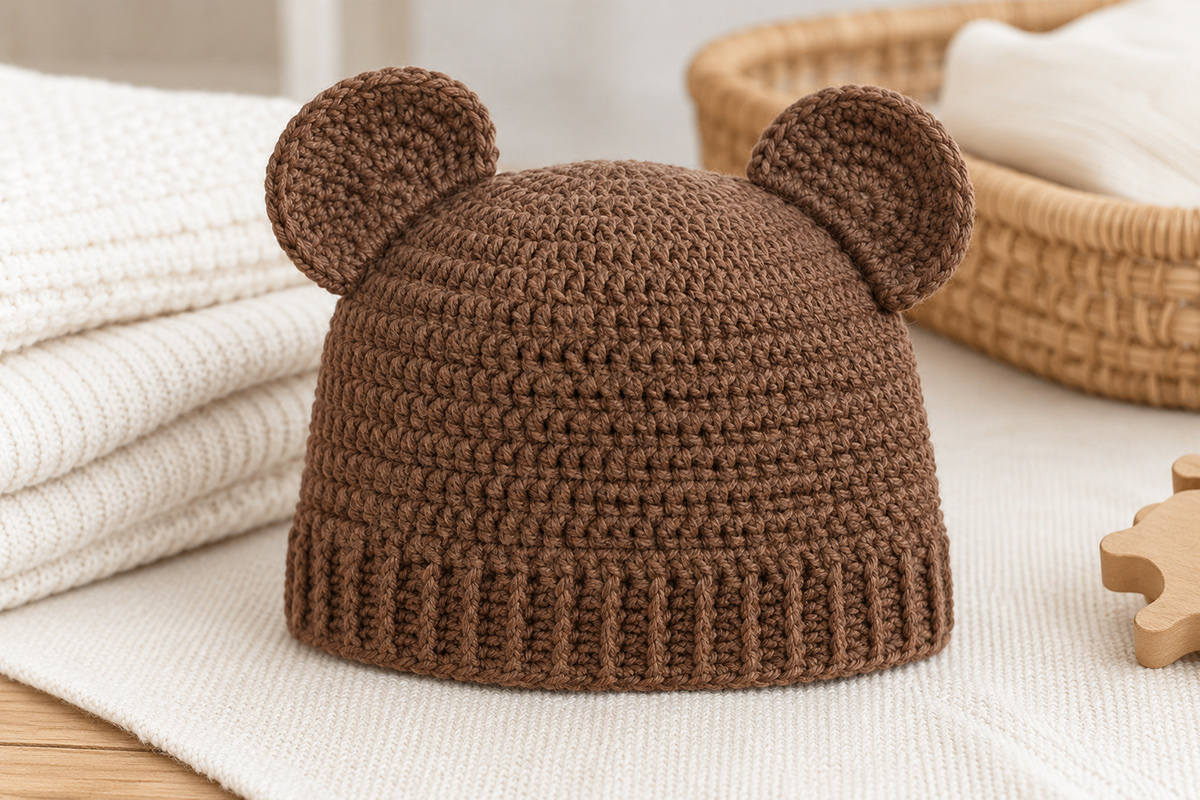
The crochet bear hat pattern reduces the design to its most recognizable feature: a simple hat with two rounded bear ears. It works well on a bear-themed page because it shows how little detail is actually required before the animal becomes recognizable.
Ear placement makes the biggest visual difference. Set the ears evenly on the upper sides of the hat and compare them before sewing. If one ear sits farther forward or higher than the other, the difference becomes much easier to see once the hat is worn.
Keep the ears soft rather than heavily stuffed. A rounded crocheted ear already has enough structure to hold its shape when it is attached correctly, and extra bulk can make the ear look too heavy for the hat.
If you are choosing among these baby bear projects, think about scale and construction before color. The hat and rattle are compact projects. The loveys provide a larger soft area. The snuggler gives you more of the complete bear shape without the firmness of a traditional stuffed teddy. That makes it easier to choose a pattern based on how you want the finished piece to look and function rather than simply choosing whichever bear is shown in your favorite yarn color.
Bear Blankets and Nursery Crochet Projects
Bear crochet does not have to stop with stuffed animals and loveys. A blanket, appliqué or storage basket can carry the same theme into the nursery while serving a completely different purpose. These projects are useful when you want the bear to become part of the room rather than remain a single toy-sized piece.
They also give you three very different amounts of crochet work. The appliqué is the smallest commitment and can be added to another handmade item. The basket is a substantial three-dimensional project with a practical storage function. The blanket takes the bear theme across a larger surface and becomes a major part of the finished nursery setting.
Crochet Bear Baby Blanket
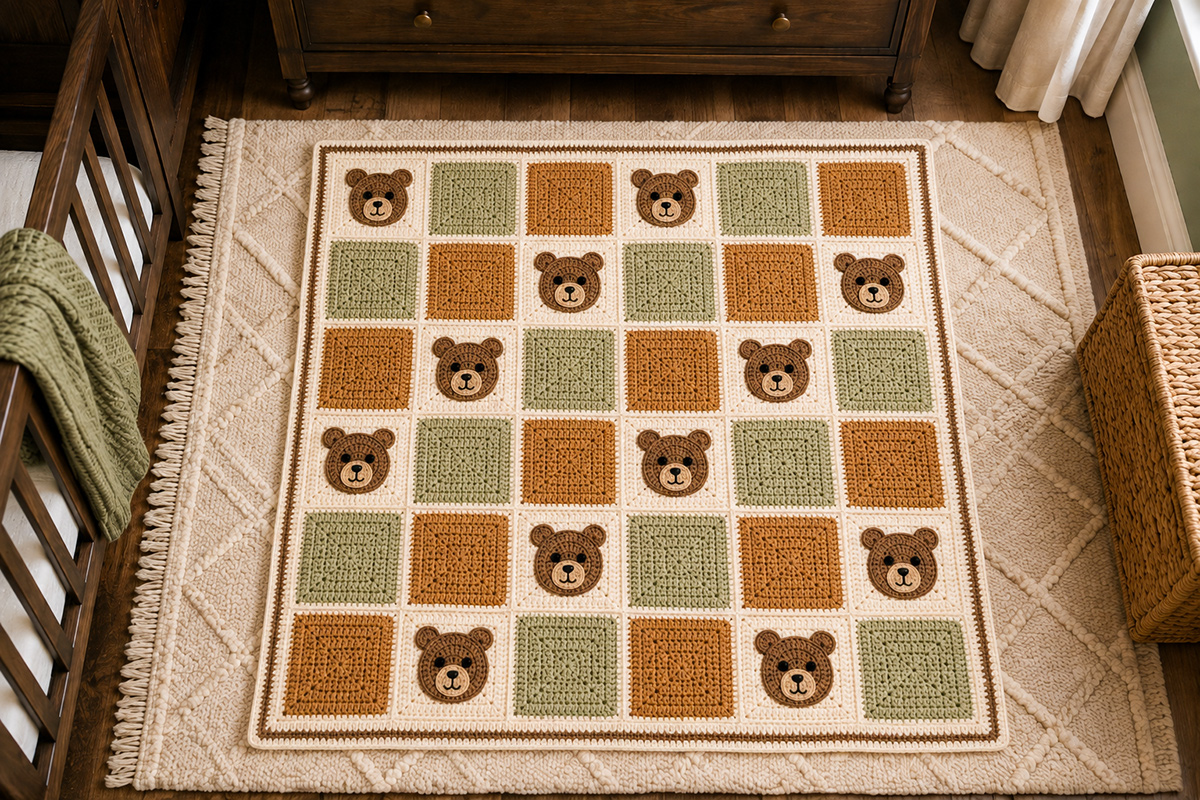
The crochet bear blanket pattern is the largest bear project in this collection. Instead of placing one bear at the center of the design, the pattern uses repeated bear elements to create a coordinated blanket that reads as a complete textile rather than an oversized stuffed-animal motif.
Before you begin, decide whether you want the blanket to be the visual focus of the nursery or a quieter part of the room. That choice can guide the yarn palette. Several related browns and neutrals create a traditional teddy-bear look. A more limited palette can make the bear shapes feel cleaner and more graphic.
Repeat projects benefit from consistency. Make the first bear element carefully, check its size and shape, then use it as the reference for the remaining pieces. Small differences in tension are less noticeable on one motif than they are when several motifs sit beside each other.
Lay the completed pieces out before you begin the final joining or attachment work. Look at the blanket from several feet away rather than judging each bear only at close range. This makes uneven spacing, a turned motif or an unexpectedly dark patch of color easier to catch before everything is permanently joined.
The border should finish the blanket rather than compete with the bears. Keep the edge treatment proportional to the body of the blanket and check the corners as you work so the finished edge lies flat instead of pulling inward or waving outward.
If you are making the blanket as part of a larger teddy-bear room, the teddy bear nursery ideas page can help with the surrounding colors, wall details and other bear-themed pieces without requiring every item in the room to repeat the same motif.
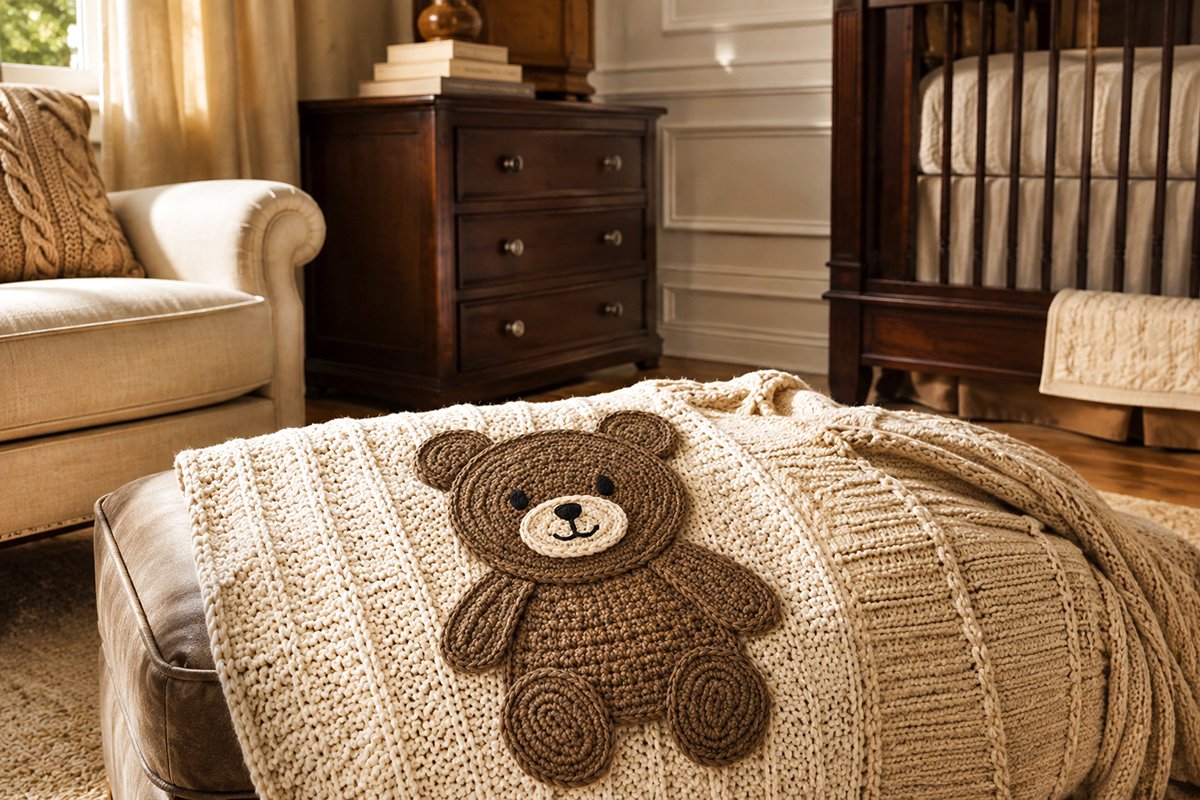
Crochet Bear Appliqué
The crochet bear appliqué pattern is the most flexible project in the group because the finished bear is flat. It can be sewn onto a compatible handmade surface without adding the bulk of a stuffed bear head or three-dimensional decoration.
A flat appliqué still needs a readable silhouette. Keep the ears even, the muzzle centered and the facial embroidery restrained. When the individual pieces are small, a shift of only a few stitches can make the face look noticeably tilted.
Arrange the complete bear before sewing anything permanently. Pin the larger pieces first, then add the smaller facial components. Step away and look at the entire shape before you begin stitching it down. It is much easier to move an ear or muzzle at that stage than after several edges have already been secured.
When attaching the appliqué, work around the edges with even tension. Pulling the sewing yarn too tightly can pucker the background fabric or distort the bear. The goal is a secure attachment that still lets the underlying crochet lie flat.
An appliqué is also useful when you want several bear projects to relate without making them identical. The same motif can connect a blanket, nursery accessory or handmade gift while the main construction of each item remains different.
XXL Crochet Bear Basket
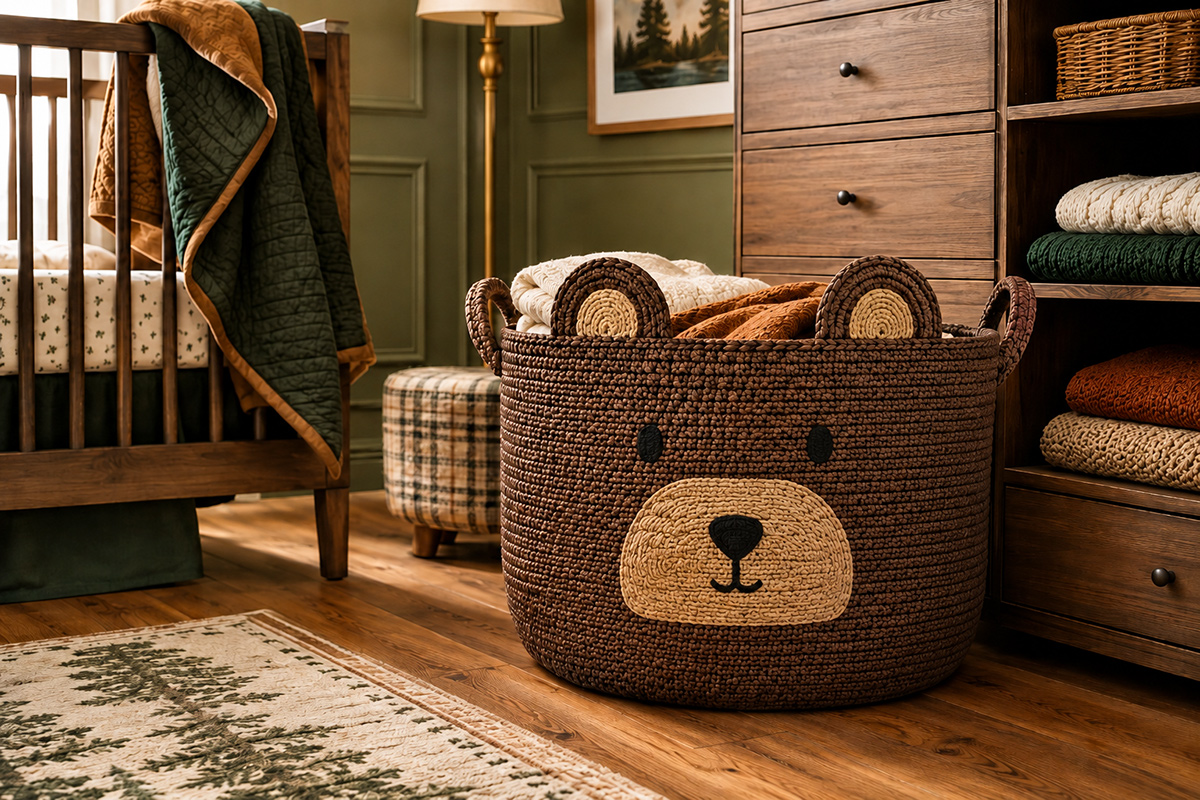
The crochet bear basket pattern turns the bear theme into nursery storage. The large basket provides the structure, while the crocheted ears, muzzle and embroidered facial features transform the front into a woodland bear without interfering with the open storage area.
The basket shape comes first. Keep the base flat and check the side walls as they grow. If the foundation is uneven, adding the bear face later will not correct the overall shape. A storage basket needs to stand properly before it needs to look like an animal.
Once the basket body is complete, establish the front before placing the facial pieces. Center the muzzle first, then use it as the reference point for the nose, mouth, eyes and ears. This is more reliable than attaching the ears first and trying to fit the face between them afterward.
Pin both ears before sewing either one completely. Compare their height, angle and distance from the center. Because the basket is large, a small difference at the attachment edge can look much larger when you view the finished piece from across the room.
Keep the embroidered face simple enough to remain visible against the crochet texture. Large decorative additions are not necessary. The rounded ears, muzzle and basic facial features already do enough to establish the bear.
The basket works particularly well when the nursery already has woodland details and you want storage that participates in the room without turning every surface into themed decor. For a darker, more rustic bear direction, see the black bear baby nursery ideas. For a lighter winter setting built around white bears and northern animals, the Arctic nursery theme gives the same animal family a very different setting.
How to Choose Between a Bear Blanket, Appliqué and Basket
Choose the blanket when you want the crochet itself to become a major textile in the room. Choose the basket when you want a substantial project that also provides storage. Choose the appliqué when you want to add a bear to another handmade piece without starting another large project.
Scale matters here. A small appliqué can disappear on a very large surface if it is placed without enough visual space around it. A large bear basket can dominate a small grouping if several other animal pieces sit beside it. The blanket carries the theme across the widest area, so it usually needs the least help from additional bear decor.
You do not need all three projects in the same nursery. In fact, repeating the bear in different scales is often enough. A bear blanket paired with one simple storage basket can establish the idea clearly, while a small appliqué can connect another handmade piece without making the room feel repetitive.
How to Choose the Right Crochet Bear Pattern
With several bear projects on one page, the easiest way to choose is to start with the finished form rather than the yarn color. A stuffed teddy, lovey, rattle, blanket and basket may all use bear features, but they require different amounts of time, assembly and finishing.
If you want a traditional keepsake, start with the crochet teddy bear pattern. If you prefer something flatter and softer, compare the teddy bear lovey, brown bear lovey and bear snuggler. They share the same animal theme but do not have the same construction or finished feel.
| If you want to make... | Start with... | What makes it different |
|---|---|---|
| A classic stuffed bear | Crochet Teddy Bear | Traditional stuffed body, separate limbs, rounded ears and muzzle |
| A soft baby lovey | Teddy Bear Lovey | Crocheted bear details combined with a flexible lovey section |
| A winter bear lovey | Polar Bear Lovey | White bear head and arms combined with a square crochet blanket and embroidered face |
| A flatter bear shaped lovey | Brown Bear Lovey | Flat faux fur body with a crocheted bear head |
| A floppy bear | Bear Snuggler | Stuffed head with a softer body and flexible limbs |
| A large nursery project | Crochet Bear Blanket | Repeated bear details across a full baby blanket |
| A small decorative motif | Crochet Bear Appliqué | Flat construction that can be attached to another handmade project |
| A compact baby gift | Crochet Bear Rattle | Small stuffed bear head attached securely to a wooden ring |
| A wearable bear project | Crochet Bear Hat | Simple hat construction with rounded bear ears |
| A hanging nursery project | Crochet Bear Mobile | Small teddy bears with clouds and stars arranged on a hanging nursery mobile |
| Bear themed storage | Crochet Bear Basket | Large structured basket with crocheted facial details |
| A winter or Arctic bear | Crochet Polar Bear | White yarn, broad head, compact ears and substantial paws |
| A panda | Crochet Panda Bear | Black and white color placement creates the recognizable markings |
| A playful novelty bear | Crochet Gummy Bear | Compact candy inspired proportions and simple rounded features |
Compare the Bear Patterns by Construction
If you are comfortable crocheting in continuous rounds, stuffing pieces and sewing parts together, the teddy bear, panda and polar bear are natural choices. They rely on three dimensional shaping, so stitch count and stuffing placement affect the finished silhouette.
The appliqué removes most of that bulk because its pieces stay flat. That makes it useful when you want to practice shaping and assembly without filling several separate parts with fiberfill.
The blanket changes the challenge again. Repetition and consistent sizing matter more because several bear elements appear together. A small difference that would be difficult to see on one appliqué becomes easier to spot when matching motifs are placed side by side.
The basket requires attention to structure. Its base and walls must hold their shape before the bear features are added. The rattle has fewer large pieces, but its assembly deserves extra care because the sound insert must stay completely enclosed and the crocheted head must remain securely attached to the ring.
Materials Commonly Used for These Bear Crochet Projects
The exact yarn weight, hook size and quantities differ from pattern to pattern, so use the materials list on the individual pattern before buying supplies. Across this collection, however, you will see many of the same basic tools and materials.
- Crochet yarn in the colors and weight specified by the individual pattern
- A crochet hook sized to make the required fabric
- Locking stitch markers for continuous rounds when the pattern calls for them
- Yarn needles for assembly and weaving in ends
- Sharp scissors
- Polyester fiberfill for stuffed pieces
- Black embroidery floss or yarn for embroidered facial details
- Straight pins or removable markers for checking placement before sewing
- A measuring tape for finished size and placement checks
- Any project specific component listed in the pattern, such as the hardwood ring and enclosed sound insert used for the bear rattle
I would not buy one large supply bundle and assume every bear on this page uses it. A basket needs a different kind of fabric structure than a small amigurumi bear, and a blanket can require much more yarn than a rattle or appliqué. Open the pattern you want to make first, then use its materials list as the final guide.
Choosing Yarn Colors for a Crochet Bear
Brown is the obvious teddy bear color, but it is only one option. Tan, caramel, oatmeal, ivory and gray can all work well when the shape already reads clearly as a bear. Color becomes more important when it defines the animal itself, as it does with the panda and polar bear.
For a classic teddy, you can use one main color and a lighter muzzle. For the panda, preserve the black and white placement because the markings are part of the identity of the animal. For the polar bear, keeping the body white or very pale lets the ears, muzzle and paws establish the shape without introducing unnecessary color changes.
If you plan to use several bear projects in one room, they do not need to match exactly. Repeating one or two related yarn colors is enough to connect them. A caramel teddy, oatmeal bear blanket and brown storage basket can belong together without looking like copies of the same project.
Why Face Placement Matters So Much on Crochet Bears
Bear faces use only a few elements, which means every placement decision is easy to see. The ears establish the width of the head. The muzzle establishes the center front. The eyes determine much of the expression.
Before sewing a muzzle or ear permanently, pin the pieces in place and look at the bear straight on. Check that the muzzle sits on the center line, both ears are at similar heights and the eyes have equal spacing from the center. Then turn the project slightly and check it again from the side.
For projects intended for babies, the patterns in this collection use embroidered facial details where specified rather than relying on removable decorative pieces. Secure embroidery ends inside the crochet work and inspect all sewn parts when the project is complete.
A Simple Finishing Check Before You Call the Bear Finished
When the last stitch is complete, spend a few minutes checking the whole project instead of looking only at the area you just finished.
- Check that all required pieces are present and attached in the correct orientation.
- Compare paired ears, arms, legs or other repeated pieces for symmetry.
- Look at the face from the front and confirm that the features are centered as intended.
- Check every sewn seam for gaps or loose attachment stitches.
- Make sure all yarn and embroidery ends are secured and hidden.
- Redistribute stuffing if a filled section looks lumpy or uneven.
- Confirm that no temporary stitch markers, pins or assembly aids remain in the finished project.
- Follow any additional inspection instructions given on the individual pattern page.
That final check is especially useful with bears because small placement changes can alter the finished expression. A few minutes spent adjusting the ears, redistributing stuffing or correcting one loose seam can make the project look much more finished.
Matching Bear Crochet Patterns to a Nursery Theme
A finished crochet bear can be part of a nursery without requiring every other item in the room to have a bear on it. I prefer to repeat the idea selectively. One handmade bear, a coordinated blanket and a few related colors can carry the theme more gracefully than filling every surface with matching animal motifs.
The type of bear you choose can also point the room in a particular direction. A traditional brown teddy feels different from a white polar bear, and both feel different from a woodland-style brown bear. Start with the crochet project you want to make, then let its colors and character guide a few supporting choices.
Classic Teddy Bear Nursery
The classic crochet teddy bear, teddy bear lovey, bear blanket and bear basket all fit naturally with a traditional teddy bear room.
You do not have to make them in exactly the same shade. Related tones often look more interesting together. A medium brown teddy can sit beside an oatmeal blanket and a caramel basket without making the nursery look mismatched.
If you are planning the room around that familiar teddy-bear look, see the teddy bear nursery ideas for ways to coordinate the handmade pieces with the rest of the room.
A useful approach is to choose one crochet piece as the main handmade feature. If you make the blanket, you may only need a small teddy or appliqué elsewhere. If you make the XXL bear basket, let its size do some of the decorating work and keep the surrounding bear details smaller.
Woodland and Black Bear Nursery
A brown bear project can move easily into a woodland nursery when you change the surrounding colors and materials. The brown bear lovey already has a flatter, more natural bear silhouette, while the crochet bear basket can work as a larger woodland accent.
For this direction, I would keep the crochet colors earthy rather than introducing several unrelated brights. Brown, tan, oatmeal, muted green and warm ivory can work together while still leaving enough contrast for the bear features to show clearly.
The black bear baby nursery page takes the idea farther into a rustic woodland direction. You can use it for the room itself while keeping this page focused on choosing and making the crochet project.
A black bear nursery does not require a crochet bear to be solid black. Very dark yarn can hide stitch definition, especially on a small muzzle or ear. Deep brown or charcoal can still support the look while making the shaping easier to see.
Polar Bear and Arctic Nursery
The crochet polar bear pattern gives you the clearest bridge between this crochet collection and an Arctic nursery. Its white body, compact ears and broad bear shape fit the theme without needing extra decorative details.
Because the bear itself is pale, give it enough contrast in the surrounding setting to keep the silhouette visible. Soft gray, muted blue, natural wood and darker neutral accents can frame a white crochet bear without changing the character of the project.
The Arctic nursery theme expands beyond polar bears to the larger northern setting. That makes it useful if you want the crochet bear to be part of the room rather than the only idea in it.
I would avoid adding several white animal pieces side by side with no variation in texture or background. The polar bear is easier to appreciate when its outline is distinct from what sits behind it.
Combining Crochet Bears with Quilts, Rugs and Mobiles
If you want more bear details in the room, vary the type of object instead of repeating the same crochet bear over and over. A handmade crochet project can sit comfortably beside a quilt, rug or mobile because each piece contributes a different scale and texture.
For textile ideas beyond crochet, the bear baby quilt patterns page covers another way to bring the animal into the nursery. There is also a teddy bear patchwork crib quilt pattern if you want the bear motif worked into a sewn project rather than crocheted.
A bear crib mobile moves the motif upward instead of adding another object at furniture level, while bear rugs bring the shape to the floor. You do not need all of these pieces together. Choose the few that give the room enough repetition to feel connected without making every object compete for attention.
If you have already made a detailed bear blanket, I would keep the rug or mobile simpler. If the crochet project is a small rattle or appliqué, a larger bear textile can carry more of the visual theme.
Coordinate the Bear Projects Without Making Everything Match
Matching every shade exactly can make handmade pieces look more like a purchased set than a collection built over time. A more flexible approach is to repeat a small color family and let the individual bear patterns keep their own shapes.
For example, you might use caramel for the teddy bear, warm ivory for the muzzle, oatmeal for a blanket and medium brown for the basket. The colors relate, but each project still has enough contrast to stand on its own.
You can also repeat one small detail instead of the entire palette. The same ivory used on a teddy bear muzzle might appear in a blanket border or appliqué. That tiny connection can be enough.
The bear itself should still be easy to recognize. If a color combination makes the muzzle disappear into the head or the panda markings lose their contrast, change the yarn relationship before worrying about whether it matches the room perfectly.
Start with the crochet pattern you are excited to make. Once that piece is finished, it becomes much easier to decide whether the nursery needs another bear, a coordinating textile or simply a little more breathing room around the handmade project.
Using Handmade Bear Projects Around Babies
Several patterns in this collection are made with babies and nurseries in mind, but the finished project still needs to be used according to what it is. A blanket, lovey, rattle, hat, basket and stuffed bear do not have the same purpose or the same safety considerations.
For anything a baby can hold, check the project carefully after assembly. Tug gently on sewn ears, limbs, muzzles and other attached pieces. Check embroidered features for loose loops or unsecured ends. Look over the crochet fabric for gaps that could allow stuffing or an enclosed component to work its way through.
Do not substitute buttons, beads or other removable decorations for embroidered facial features on a project intended for a baby. If an individual pattern gives specific assembly, inspection or use instructions, follow those directions for that project.
Keep Crochet Bears and Blankets Out of an Infant Sleep Space
A handmade blanket or bear can be part of the nursery without being placed in the crib with a sleeping infant. The U.S. Consumer Product Safety Commission recommends a bare infant sleep space with only a fitted sheet and no blankets, pillows or stuffed toys. You can read the current guidance on the CPSC Safe Sleep page.
That distinction is worth making when you crochet something specifically for a nursery. A bear blanket can be used for supervised awake-time activities or kept ready for an age and situation where a blanket is appropriate. A stuffed bear, lovey or rattle can also be stored outside the sleep space when it is not being actively used.
Check the Finished Project Before Use
Give the entire project one final inspection before gifting or using it. Do not limit the check to the last piece you attached.
- Make sure all sewing tails and embroidery ends are secured and hidden.
- Check every attached ear, arm, leg, muzzle, tail or other component.
- Confirm that stuffing stays fully enclosed.
- Remove all pins, stitch markers and temporary placement threads.
- Check embroidery for loose loops that could catch on fingers.
- Inspect any project-specific component according to the directions in its pattern.
- Repair loose stitching before the item is used again.
A handmade bear is much easier to inspect when you know how it was assembled. Keep the individual pattern bookmarked so you can return to its construction details if a seam or component ever needs attention.
Free Crochet Bear Patterns FAQ
How many free crochet bear patterns are in this collection?
This collection currently includes fourteen different bear crochet projects: a classic teddy bear, bear blanket, teddy bear lovey, brown bear lovey, polar bear lovey, bear snuggler, bear appliqué, bear rattle, bear hat, bear mobile, bear basket, polar bear, panda bear and gummy bear.
They are separate patterns rather than fourteen variations of the same stuffed teddy.
Which crochet bear pattern should a beginner make first?
The best starting point depends on which crochet skills you already know. A flat crochet bear appliqué avoids the amount of stuffing and three-dimensional assembly required by a full teddy. If you are already comfortable working in rounds, increasing, decreasing and sewing pieces together, you may prefer to begin with the crochet teddy bear.
Read the complete pattern before starting. A project that looks small is not automatically easier. The bear rattle, for example, is compact but includes an enclosed insert and a head-to-ring attachment that need careful assembly.
What is the difference between a bear lovey and a bear snuggler?
A bear lovey has a larger flat or flexible holding area beneath the bear head. A snuggler keeps more of the animal's body shape, with recognizable arms and legs, while remaining softer and more flexible than a firmly stuffed teddy bear.
If you want a blanket-like shape, look at the teddy bear lovey. If you want the outline of a complete floppy bear, compare it with the bear snuggler.
Can I change the yarn color in a crochet bear pattern?
For many of the brown teddy-style projects, yes. Tan, caramel, oatmeal, ivory, gray and other suitable colors can change the look without changing the basic bear construction.
Be more deliberate when color is part of the animal's identity. The panda bear pattern depends on black and white placement, while the polar bear pattern relies on a white or very pale body. You can still make creative color choices, but the result may no longer read as the same type of bear.
Can I use a different yarn weight for a crochet bear?
Changing yarn weight can change the finished dimensions, fabric density and amount of yarn required. It can also affect how firmly a stuffed piece holds its shape. Use the yarn weight and hook information on the individual pattern when you want a result close to the stated proportions.
If you substitute yarn, make a small test section and check the fabric before completing the entire project. Amigurumi fabric should be dense enough that stuffing does not show through the stitches.
Can I embroider the eyes instead of using plastic eyes?
Yes, and the baby-oriented bear projects on this site use embroidered facial details where specified. Follow the individual pattern for the eye shape and placement. Secure the embroidery ends inside the work rather than leaving knots or loose strands exposed.
Changing the size or position of the eyes can noticeably change the bear's expression, so mark both eye positions before stitching the final features.
How do I keep a crochet bear symmetrical during assembly?
Establish the center front first. Then pin matching pieces before permanently sewing either one. Compare the ears together, then the arms and legs if the project has them. Measure from the center line or from corresponding rounds when the pattern provides placement references.
Look at the bear from the front after pinning. Then turn it to each side. A piece can appear even from the front but sit farther forward or backward than its mate when viewed from another angle.
Why does my finished crochet bear look different from the example?
Yarn thickness, hook size, tension, stuffing and assembly can all affect the finished shape. Even when the stitch count is correct, firm stuffing can make a head rounder or a body wider, while loose stuffing can make the same piece look longer and softer.
Check the pattern's stitch counts and construction checkpoints first. If those are correct, look at stuffing distribution and component placement before changing the crochet instructions.
How much stuffing should I put in a crochet bear?
Use enough fiberfill to hold the shape required by the pattern without stretching the stitches open. Add small amounts at a time and distribute them with your fingers before adding more.
Not every bear project should have the same firmness. A traditional stuffed teddy needs more structure than a snuggler, while an appliqué is not stuffed at all. Follow the individual pattern instead of applying one stuffing rule to every bear on this page.
Can I sew the crochet bear appliqué onto a blanket?
A flat bear appliqué can be attached to a compatible handmade crochet surface when the size, fabric and intended use are suitable. Pin the appliqué first and make sure the background remains flat before sewing around the edges.
If you are making a complete bear blanket rather than adding one motif to another project, use the crochet bear blanket pattern. It was designed as a full blanket project rather than as a single appliqué added afterward.
Which bear crochet pattern works best for nursery decor?
The crochet bear basket and bear blanket have the largest visual presence in a room. The appliqué gives you a much smaller bear detail, while a teddy or polar bear can work as a handmade decorative piece when it is stored appropriately.
Match the project to the room rather than adding several large bear pieces automatically. The teddy bear nursery, black bear nursery and Arctic nursery pages show three different directions you can take once the crochet project is chosen.
Where can I find more free crochet animal patterns?
If you are ready to move beyond bears, browse the free baby crochet patterns collection for more handmade projects. You can also explore the crochet animal lovey patterns and crochet animal appliqué patterns when you want to compare other animals in the same type of project.
You may come to this page looking for one brown teddy and leave with a completely different bear in mind. That is exactly why I wanted the patterns together. The shape, scale and purpose of the finished project can make a bigger difference than the animal name printed at the top of the pattern.
Start with the Bear Pattern That Fits Your Project
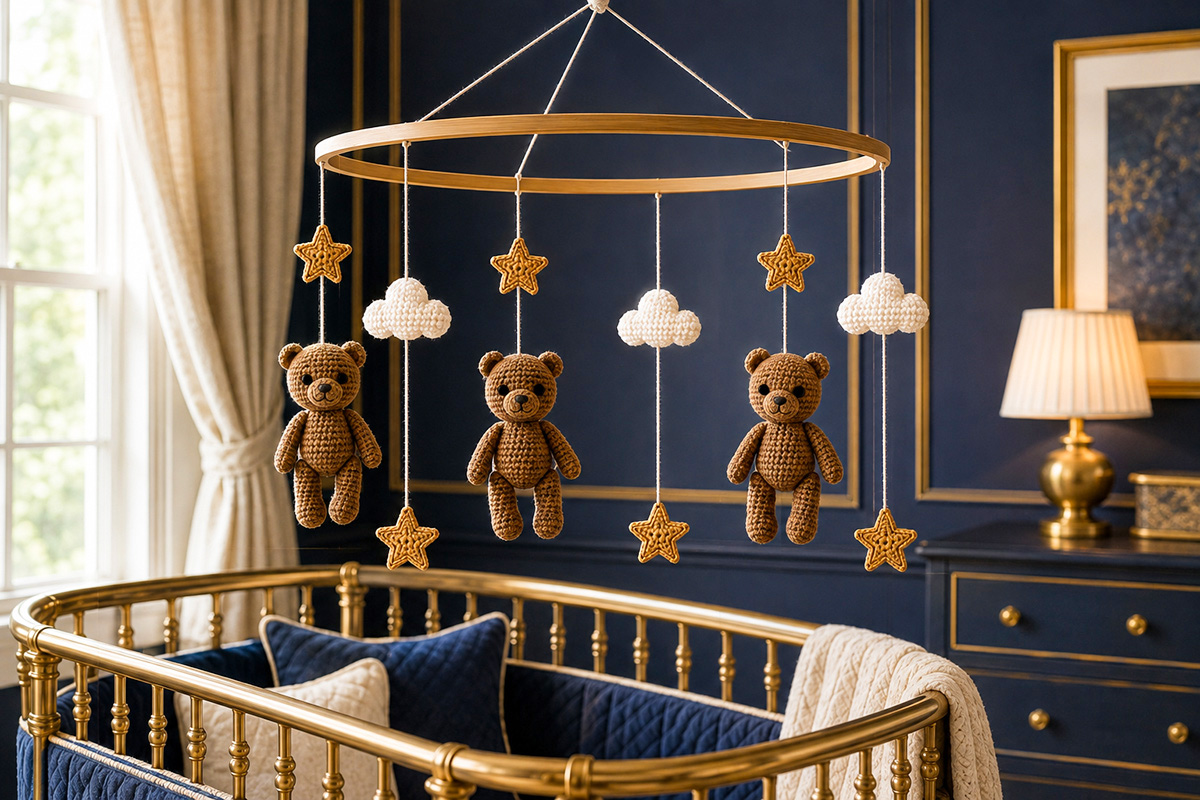
If you want the bear theme to become part of the nursery itself, the free crochet bear mobile pattern uses small teddy bears with clouds and stars to create a coordinated hanging nursery project.
You do not need to choose the most complicated bear on the page to make something memorable. A small appliqué, rattle or hat can be just as satisfying as a full teddy bear or blanket when the project fits the time, materials and crochet skills you want to use.
If you are deciding between several patterns, open the individual instructions and compare the construction before choosing yarn. Look at how many pieces are crocheted separately, whether the project is worked flat or in rounds, how much sewing is required and whether the finished piece is stuffed, flexible or structured.
For a traditional stuffed animal, begin with the free crochet teddy bear pattern. For something soft and floppy, compare the teddy bear lovey with the bear snuggler. If you want a project that becomes part of the nursery itself, the crochet bear blanket and bear basket give you two very different choices.
The specialty bears are worth a second look too. The polar bear crochet pattern has a simple white Arctic look, the panda crochet pattern depends on its black-and-white markings, and the gummy bear crochet pattern takes the familiar bear shape in a completely different direction.
I like having these patterns together because it makes the differences easier to see. A bear can be a stuffed keepsake, a soft lovey, part of a baby blanket, a small appliqué, a nursery basket or even a tiny rattle. You can stay with the same animal and still make projects that do not feel repetitive.
When you are ready to look beyond bears, continue with the free baby crochet patterns collection. If you want to stay with animal projects, the crochet animal lovey patterns and crochet animal appliqué patterns give you more designs to compare.
When you click on links to various merchants on this site and make a purchase, this may result in this site earning a commission. This does not affect the price you pay.

UBGI Gold Standard 2026
Reviewed under the site's
editorial checklist.
Photos, decorating ideas, party setups and reader submissions are shared for inspiration unless a page is specifically presented as a pattern, tutorial, reference guide or step-by-step project. Follow the instructions, measurements, safety guidance and manufacturer directions provided for the particular project or product.
About Jan | Contact | Baby Nursery Ideas (Blog) | Site Map | Privacy Policy | Disclosure Policy | Disclaimer | Affiliate Disclosure | Earnings Disclosure | Facebook | Pinterest
I am a participant in the Amazon Services LLC Associates Program, an affiliate advertising program designed to provide a means for us to earn fees by linking to Amazon. As an Amazon Associate I earn from qualifying purchases.
Copyright © 2006-2026. All Rights Reserved.