Arctic Nursery Theme Ideas for a Polar Animal Baby Room
By Jan Bay
An Arctic nursery theme can feel crisp, peaceful and surprisingly warm when the room is built around snowy colors, natural textures and just a few recognizable animals. Polar bears are the obvious stars, but Arctic foxes, seals, whales and snowy owls keep the room interesting and diverse. If you also love penguins, I would widen the idea into a polar animal or winter nursery theme rather than pretending penguins live in the Arctic.
Explore More Polar Bear, Penguin & Nursery Ideas
Jump to:
Arctic Nursery Colors That Keep the Room Warm and Livable
An Arctic nursery does not have to be an all-white room filled with snowflakes. I would start with a light background, then add enough contrast and natural texture to keep the room from feeling flat. White, soft gray, charcoal, muted sage and natural wood all fit the theme without making the nursery look seasonal.
A useful way to choose the palette is to think in three layers. Pick one light background color, one darker grounding color and one quieter accent color. For example, white walls can be paired with charcoal artwork and muted sage textiles. A pale gray wall can work with white furniture, dark animal silhouettes and warm wood.
If you are still comparing colors, my baby nursery color schemes page can help you narrow the palette before you start buying decor.
A simple Arctic color formula
- Background: white, soft gray or another very light cool neutral
- Grounding color: charcoal, deep gray or black used in small amounts
- Accent: muted sage, dusty green or another subdued natural shade
- Warmth: natural wood, woven texture and layered fabric
The warmer element matters. A room made entirely from white painted furniture, gray walls and silver-toned accessories can begin to feel more like a winter display than a baby's room. A wood dresser, woven hamper, textured rug or tailored upholstered chair breaks up all those cool surfaces.
I would also keep the snow references selective. A little snowy scenery makes sense. Covering the walls, bedding, curtains and rug with snowflakes can push the room toward holiday decorating before the polar bear even arrives.
Think habitat first and novelty second.
Polar Bear Nursery Ideas for an Arctic Nursery Theme
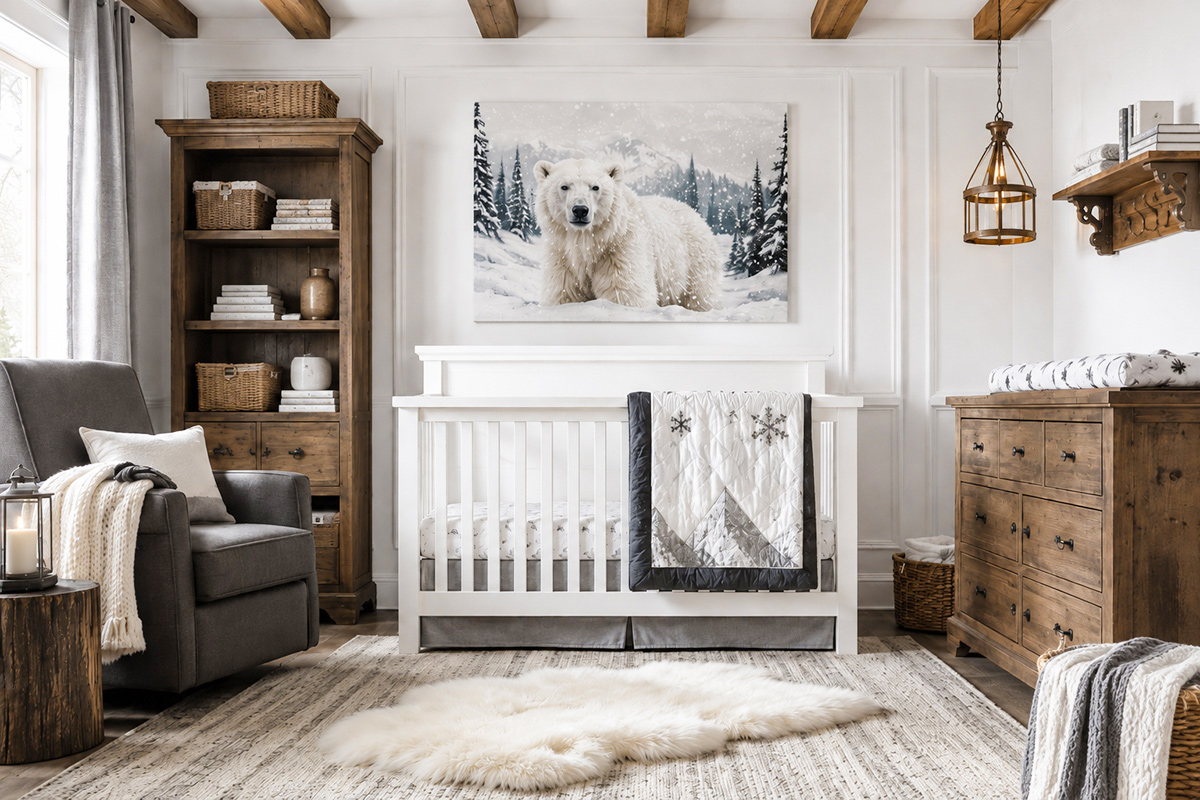
A polar bear is an easy focal animal for an Arctic nursery because its shape is recognizable even when the artwork is simple. You do not need polar bears on every surface. In fact, the room often looks more polished when the bear appears in only a few carefully chosen places.
I would give the largest polar bear to the wall. A single oversized print, a pair of coordinated illustrations or one mural scene can establish the theme from across the room. Then repeat the animal once or twice in smaller details such as a handmade crochet piece, a storage basket accent or a framed sketch.
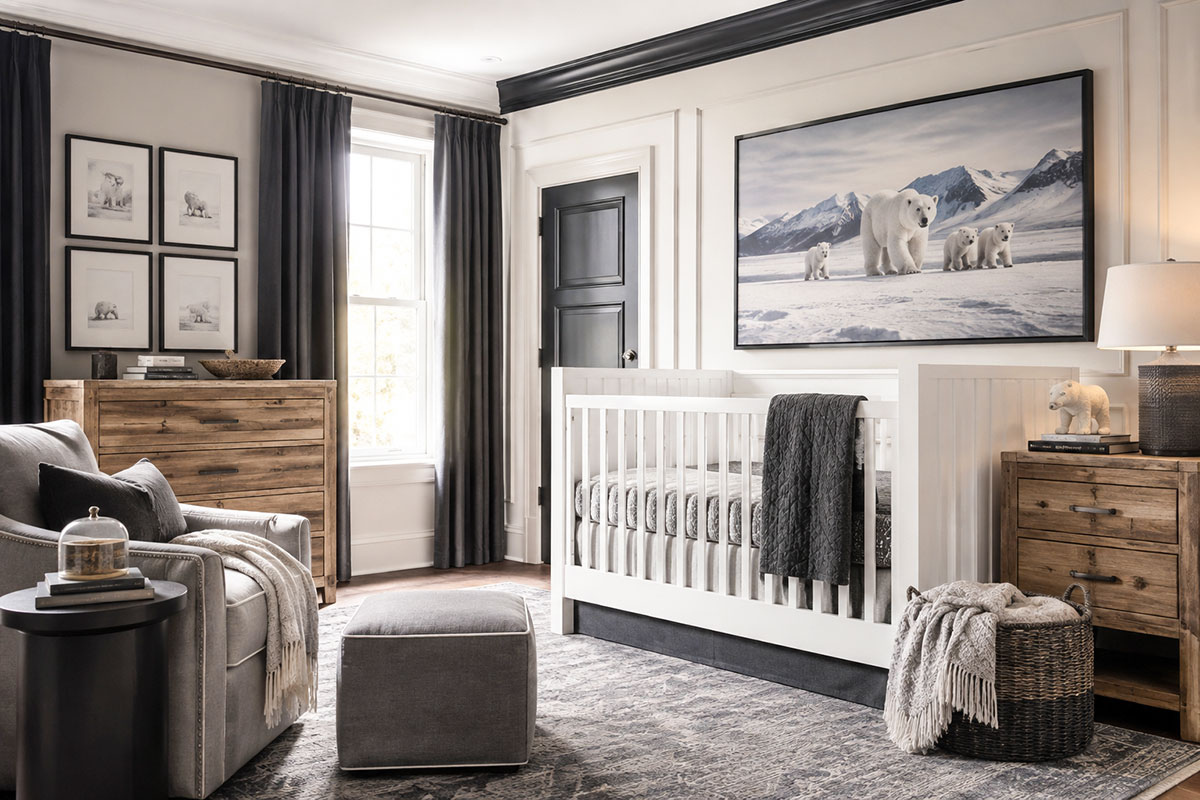
Let one polar bear carry the theme
If the wall art already features a large polar bear, I would not automatically add a polar bear rug, lamp, crib sheet, curtain print and changing pad cover. That turns one good idea into a matching set.
Instead, let the other pieces describe the setting. A textured white rug can suggest snow without showing a snowflake. Dark gray curtains can echo Arctic rock. Natural wood can keep the room grounded. A simple landscape print can suggest ice and open sky without adding another cartoon animal.
This approach also makes the nursery easier to change later. Remove the large bear print and a room built around good color and texture can move into another theme without replacing everything.
Mix polar bears with the animals that share the northern setting
Polar bears do not need to stand alone. Arctic foxes, seals, walruses, snowy owls, caribou, belugas and narwhals can give the room more variety while keeping the theme coherent.
A good proportion is one lead animal and two or three supporting animals. If the polar bear is the lead, I might use a seal and Arctic fox in the smaller art rather than buying five different versions of a polar bear.
For a handmade accent, my free polar bear crochet pattern can carry the animal theme into a shelf display, handmade gift or supervised decorative arrangement without turning the entire room into commercial character decor.
If you want the polar bear to become the main nursery theme instead of one animal within a larger Arctic room, see my polar bear nursery ideas for colors, wall art, textiles and decorating suggestions.
Arctic Animal Nursery Ideas Beyond the Polar Bear
An Arctic animal nursery becomes much more interesting when the room shows a place rather than a row of unrelated animal faces. Think about what belongs together: ice, ocean, tundra, snowy land and the animals adapted to those settings.
That gives you several decorating directions within the same theme.
- Tundra: polar bear, Arctic fox, snowy owl and caribou
- Sea ice: polar bear, seal and walrus
- Arctic ocean: beluga, narwhal and seal
- Mixed Arctic animals: one or two animals from each setting tied together with the same artwork style and palette
An Arctic ocean nursery can be especially pretty when you want something less expected than another bear room. A narwhal or beluga can introduce curved shapes and movement while the overall palette stays crisp and restrained.
I would avoid treating every cold-weather animal as Arctic simply because it looks right beside snow. A theme gains character when the details make sense together.
Use shape as part of the decorating plan
Animal choice can solve design problems, too. A tall narrow fox print works well on a slim wall beside a dresser. A wide whale or seal scene can fill the horizontal space above a low chest. A round mirror can break up a group of rectangular animal prints.
That is more useful than choosing wall decor only because the animals match.
If you are planning the room from scratch and want to compare this theme with other directions first, browse the baby nursery themes collection before you commit to the large pieces.
Penguin Nursery Ideas for a Broader Polar Animal Room
Penguins fit beautifully into snowy nursery decor, but there is a geographic distinction worth keeping straight. Penguins are not Arctic animals. NOAA notes that all penguins live in the Southern Hemisphere. You can read more about them on the NOAA Ocean Service penguin page.
That does not mean you have to choose between penguins and polar bears in a nursery. It simply means I would call a room that combines them a polar animal nursery, winter animal nursery or snowy nursery rather than presenting every animal as Arctic wildlife.
If penguins are the animals you really love, my penguin nursery theme ideas page gives them enough room to become the main feature instead of a small supporting detail.
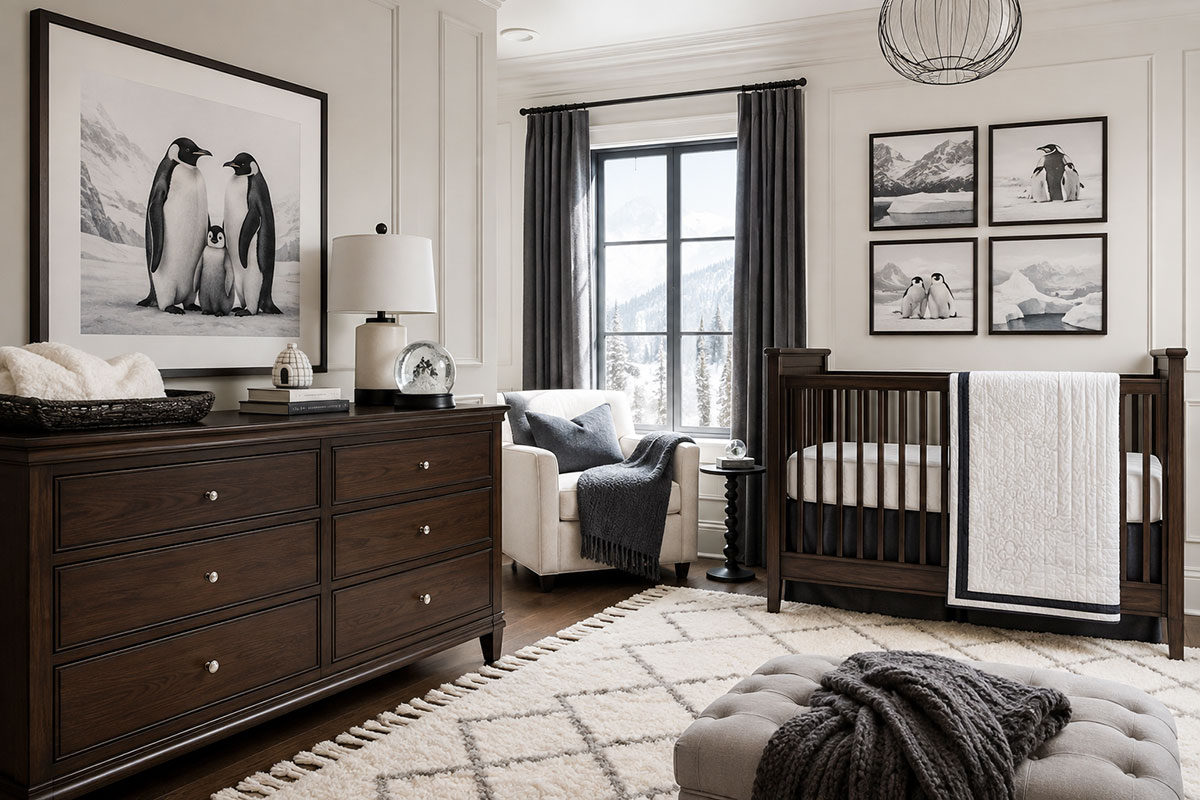
Black and white gives penguins an advantage
A penguin already brings its own graphic contrast. That means you can use a fairly simple room and still make the animal visible from across the space. Black and white penguin artwork against a light wall can be enough to establish the idea without adding patterned penguins everywhere else.
For a softer look, use the penguin in framed artwork and repeat only the colors in the textiles. A charcoal window treatment, white fitted crib sheet and muted green rug can support the picture without copying it.
The crochet penguin lovey pattern is another way to bring the animal into the room as a handmade project. Keep loveys, blankets and other soft decorative items out of an infant's sleep space.
Arctic Nursery Wall Art and Animal Prints
Wall art can do more work than almost any other decoration in an Arctic nursery. It can establish the animal, habitat, color palette and mood without taking floor space or requiring a complete set of themed furniture.
I would decide on the wall arrangement before buying several small prints. Measure the available area and treat the group as one composition. Three little frames scattered over a wide dresser can look lost. A larger central print with two smaller companions often gives the wall a clearer focal point.
Three wall arrangements that fit this theme
- One large focal print: best when the animal illustration has enough detail to carry the wall by itself.
- Three coordinated animals: try a polar bear, Arctic fox and seal in matching frames.
- Animal plus habitat: pair a polar bear illustration with a snowy landscape or Arctic ocean scene instead of adding another bear.
Matching frames can make very different animals feel related. The art itself does not need to come from a packaged set.
My nursery wall art ideas page has additional ways to plan framed pictures if you are working with an awkward wall or want to create your own arrangement.
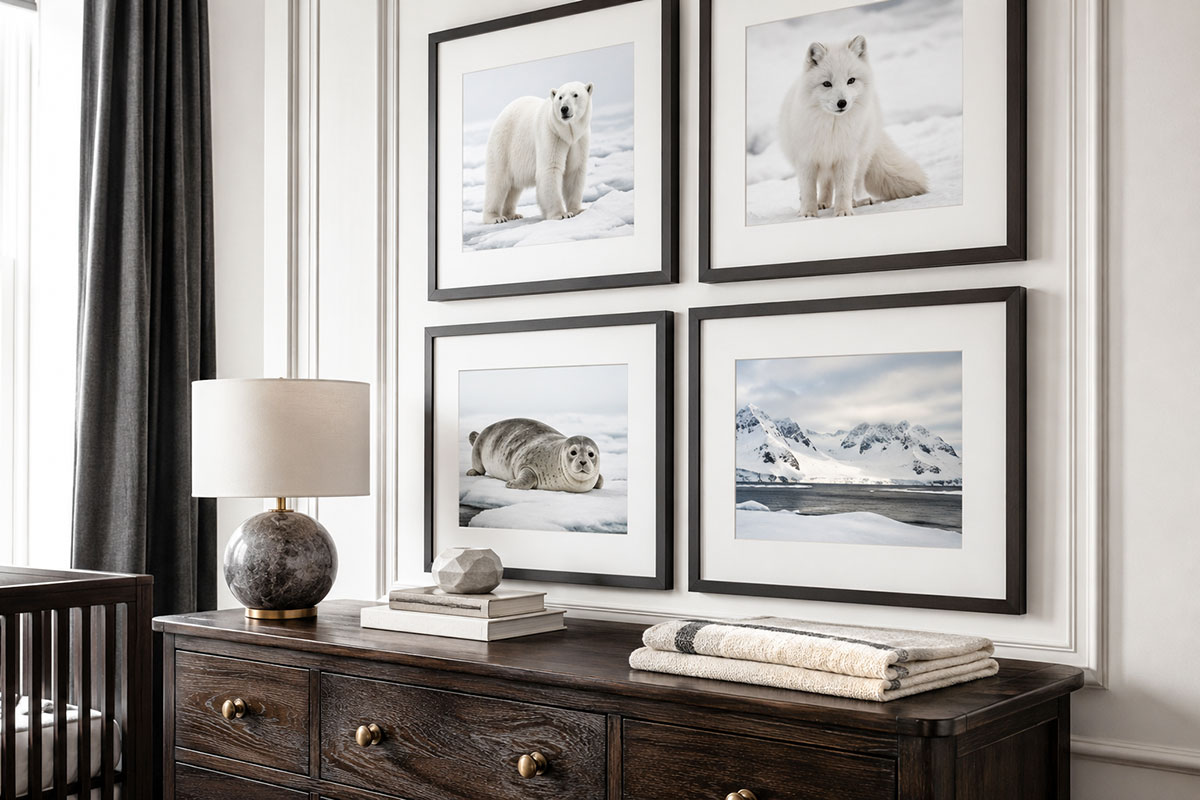
Keep the crib wall visually interesting but physically clear
If artwork is displayed near a crib, position and secure it with the room's real use in mind. Decorative objects should never create a hazard within the baby's sleep area.
The safest crib is also much simpler than a styled photograph may suggest. The U.S. Consumer Product Safety Commission recommends a bare infant sleep space with only a fitted sheet and no pillows, blankets or soft toys. See the CPSC Safe Sleep guidance for current recommendations.
You can put plenty of personality on the wall without putting decorative items inside the crib.
Bedding, Rugs and Textiles for an Arctic Nursery
Textiles are where I would add warmth, but not where I would add every animal in the collection. If the wallpaper or wall art is already detailed, solid or lightly textured fabric gives the eye somewhere to rest.
A practical combination might include a simple fitted crib sheet, lined curtains, a textured area rug and one patterned textile used outside the infant sleep space. The pattern could include tiny Arctic animals, abstract ice shapes or a restrained geometric design.
There is no rule that says themed bedding has to carry the whole theme. In a room with a dramatic polar bear wall, plain bedding may be the better-looking choice.
If bedding is one of your starting points, you can compare more options on my baby bedding ideas page.
Use texture to make an icy palette feel comfortable
Look for contrast between surfaces rather than adding more colors. Smooth painted furniture beside a woven basket, a thick rug, tailored curtains and a lightly textured chair creates depth even when the palette is limited.
I would keep fake fur and shaggy accents away from the crib itself. They can be used elsewhere as decorative texture when suitable for the room, but an infant sleep area should remain clear.
Handmade Arctic Nursery Decor That Feels Personal
A handmade piece can keep an Arctic nursery from looking as if everything arrived in one delivery box. It also gives you a place to use the animal theme on a smaller scale.
I would choose one project that has a clear purpose. A crocheted polar bear can be displayed on a high shelf when it is not in supervised use. A framed handmade animal appliqué can become wall art. A penguin lovey can be made as a gift and stored outside the crib when it is not being used.
The key is not to fill every open spot with another handmade animal. One well-made piece has more presence when it is allowed a little space around it.
Match handmade pieces to the room rather than copying the room
If the nursery uses charcoal, white and sage, the handmade item does not have to reproduce every color. A white polar bear with a charcoal embroidered face may be enough. A black and white penguin naturally repeats the room's contrast without needing extra decoration.
Small handmade projects also make it easier to change the room later. Wall paint and major furniture can stay in place while a few animal accents move out as the child's interests change.
The polar bear crochet pattern and penguin lovey pattern give you two very different handmade options within the same snowy decorating family.
Gender-Neutral Arctic Nursery Ideas for Baby Boys or Girls
An Arctic nursery is naturally easy to keep gender neutral because the theme comes from habitat, animals and texture rather than a traditional boy or girl color scheme.
I would begin with white, gray, charcoal, natural wood and one muted accent. Then let the polar bear, Arctic fox, seal or whale provide the personality.
If you later want the room to lean more feminine or masculine, small accessories can change the feeling without changing the theme. Curtain trim, a rug, framed art or an accent color can do that job. There is no need to build separate versions of the entire room.
A flexible room can grow without losing its identity
Choose the expensive pieces for longevity. A simple dresser, adaptable lighting and a good rug can remain after the nursery stage. Put the Arctic theme into pieces that are easier to change, such as pictures, removable wall decor and handmade accents.
That approach is especially useful if you want the nursery to become a toddler room later. A polar bear print can easily be replaced with another animal, while the furniture and main palette stay useful.
For more directions that do not depend on a traditional boy or girl palette, the nursery themes collection gives you several other room styles to compare.
How to Keep an Arctic Nursery From Looking Like Christmas
Snow, white animals and winter scenery can drift into holiday decorating very quickly. The easiest way to prevent that is to decorate around the habitat rather than the holiday season.
Use ice, ocean, tundra, animal tracks, snowy landscapes and Arctic wildlife as the visual language. Leave out the details that immediately signal December.
- Skip Santa hats and stocking caps on the animals.
- Avoid red holiday plaid as the main fabric.
- Use snowflakes sparingly rather than as the room's dominant motif.
- Do not rely on Christmas trees, ornaments, wreaths or gift-box imagery.
- Choose realistic or softly illustrated animals that can stay on display in every season.
An Arctic fox beside a snowy ridge feels evergreen. The same fox wearing a red scarf beside wrapped presents does not.
I would also be careful with decorative signs. The room does not need phrases about snow, winter or the North Pole to explain the theme. Good artwork can say all of that without words.
Give the nursery one detail that is not wintry at all
This can be a warm wood dresser, a tailored chair, a woven light fixture or a muted green rug. That interruption keeps the room from feeling like a seasonal display and makes the Arctic elements look more intentional.
Arctic Nursery Theme FAQ
What animals belong in an Arctic nursery?
Polar bears, Arctic foxes, walruses, seals, snowy owls, caribou, belugas and narwhals are all suitable choices. You do not need to use all of them. Pick one lead animal and add only a few supporting animals so the room keeps a clear focus.
Are penguins Arctic animals?
No. Penguins live in the Southern Hemisphere, and many species are associated with Antarctica and surrounding southern waters. If you want to decorate with both penguins and polar bears, call the room a polar animal, snowy animal or winter animal nursery rather than a strictly Arctic animal nursery.
What colors work best for an Arctic nursery theme?
White, soft gray, charcoal, muted sage and natural wood make a flexible starting palette. Use enough texture and warmer materials to prevent the room from becoming visually cold.
Can an Arctic nursery be gender neutral?
Yes. The animal and habitat theme does not depend on traditional gender colors. A restrained palette with natural materials works easily for a baby boy, baby girl or gender-neutral room.
How do I decorate a polar bear nursery without using too many bears?
Choose one large polar bear focal point, then let the rest of the room describe its environment. Snowy landscape art, gray textiles, natural wood and one or two smaller Arctic animals can support the theme without repeating the bear on every surface.
Can I use polar bears and penguins in the same nursery?
Yes, as a decorating choice. They simply should not be described as animals that share the same natural Arctic habitat. A broader polar or winter animal theme gives you room to use both accurately.
How can I make an Arctic nursery feel warmer?
Add tactile and visual warmth through wood furniture, woven texture, an area rug, lined curtains and upholstered seating. Keep the snowy theme in the artwork rather than making every surface white and gray.
How do I keep an Arctic nursery from looking like a Christmas room?
Choose wildlife and habitat details instead of holiday symbols. Avoid Santa accessories, red holiday plaid, ornaments and Christmas wording. Polar animals, ocean scenes and snowy landscapes can remain appropriate throughout the year.
What should I buy first for an Arctic nursery?
Start with the room's largest visual decision, usually the wall color, rug or main artwork. Once that piece is chosen, use it to guide the remaining colors and animal details. Buying several small themed accessories first can leave you with a collection of pieces but no clear room design.
An Arctic nursery is most attractive when you can recognize the idea without needing every object to explain it. Choose the animal, establish the setting, then stop adding themed pieces when the room already tells the story.
When you click on links to various merchants on this site and make a purchase, this may result in this site earning a commission. This does not affect the price you pay.

UBGI Gold Standard 2026
Reviewed under the site's
editorial checklist.
Photos, decorating ideas, party setups and reader submissions are shared for inspiration unless a page is specifically presented as a pattern, tutorial, reference guide or step-by-step project. Follow the instructions, measurements, safety guidance and manufacturer directions provided for the particular project or product.
About Jan | Contact | Baby Nursery Ideas (Blog) | Site Map | Privacy Policy | Disclosure Policy | Disclaimer | Affiliate Disclosure | Earnings Disclosure | Facebook | Pinterest
I am a participant in the Amazon Services LLC Associates Program, an affiliate advertising program designed to provide a means for us to earn fees by linking to Amazon. As an Amazon Associate I earn from qualifying purchases.
Copyright © 2006-2026. All Rights Reserved.