Crib Dangers Parents Miss (That Put Babies at Risk)
Crib dangers parents miss are often the quiet, overlooked setup mistakes that don’t look dangerous at first glance but can quickly turn a safe sleep space into a risk. Many parents assume that once a crib is assembled, the job is done, but small details like spacing, fit, stability, and timing matter more than most people realize.
Some crib problems are easy to miss until you know where to look:
The crib safety checklist most parents never fully do
Why certain crib slats can quietly become dangerous
The small mattress gap problem that surprises many parents
What do missing crib parts mean for safety?
Which crib mattress mistakes happen more often than people realize?
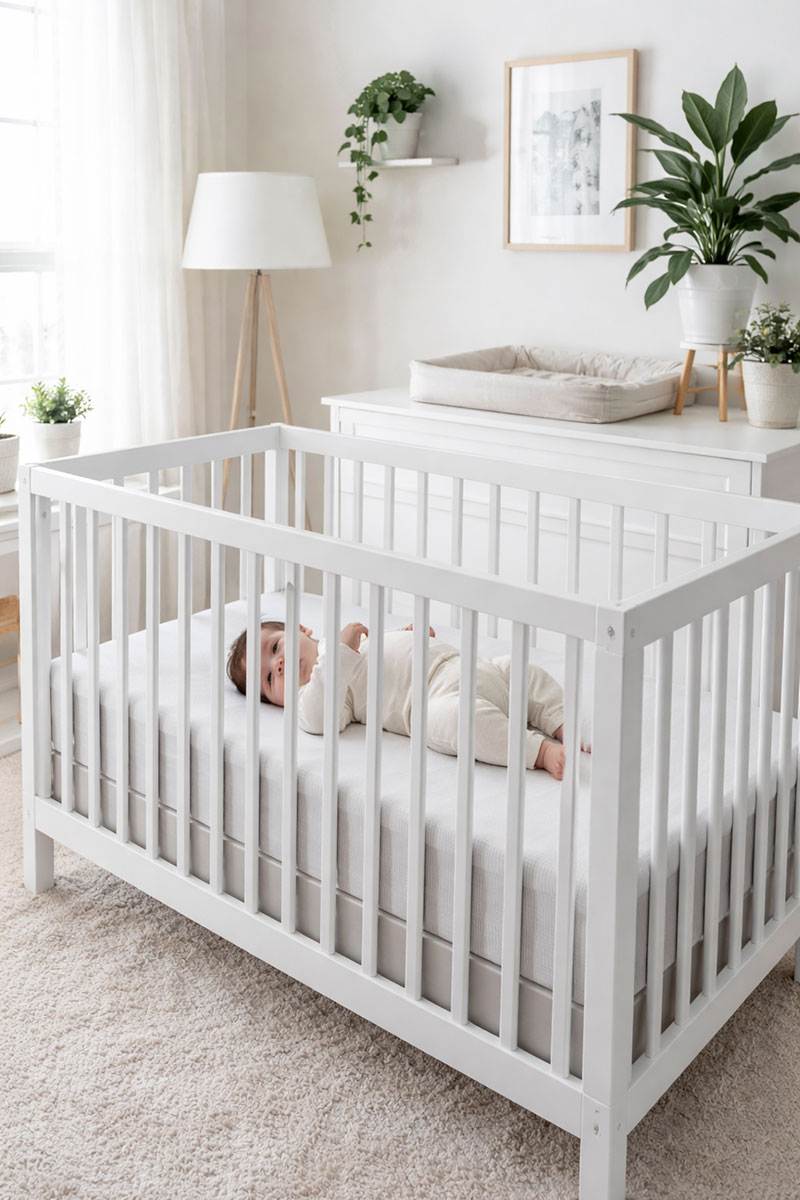
Crib dangers parents miss are overlooked safety risks in a baby crib setup — including mattress gaps, improper slat spacing, missing hardware, unstable assembly, and outdated crib designs that increase the risk of entrapment, falls, or suffocation.
On this page
Crib Dangers Parents Miss (And Why They Matter)
This page addresses common crib-related risks involving mattress fit, rail spacing, missing hardware, and structural stability under current safety standards in the United States.
It provides general safety context only. It does not offer repair steps, part substitutions, or product-specific direction.
Here’s the clear answer: In most cases, a crib that has missing parts, a poor mattress fit, or signs it doesn’t meet current safety standards is not recommended for sleep. No drama. Just a clean line that protects babies.
The one thing to do next (right now)
What to do next is simple: identify what you have, understand what matters, and compare it to basic safety rules before you trust it for sleep.
This is where confusion sets in.
Are crib bumpers safe?
In most cases, crib bumpers are not considered safe. They can increase the risk of suffocation, entrapment, and restricted airflow inside a crib. That is why modern safe sleep guidance discourages padded bumpers in standard cribs.
If you want the full regulatory context behind crib safety updates, see crib safety standards explained.
Risks that matter
Most crib accidents don’t look like “an accident” at first. They look like a gap. A loosened rail. A mattress that shifts. A corner that wiggles. Babies are small, but they move more than people expect. Rolling. Scooting. Pressing their face into the edge. Testing the same spot again and again.
Those behavior patterns matter more than most people realize.
When we talk about crib safety standards, we’re really talking about a few big danger types: entrapment, falls, and suffocation hazards. Some of these risks come from slat spacing. Some come from mattress gaps. Some come from unstable hardware. And some come from using a crib past its safe season of life.
For a plain, authoritative reference, this is a good place to read: Crib safety information from the U.S. Consumer Product Safety Commission.
Quick fit check
A safe crib setup usually looks boring. Tight mattress fit. Even rails. No wobble. No “mystery screws.” No soft extras in the sleep space.
This may sound small. It isn’t.
Things that go wrong
Rail spacing that turns into an entrapment risk
The rails on a crib are supposed to be evenly spaced and consistent. When spacing changes because of damage, warping, or a mixed set of parts, the risk changes, too. This is why “it looks fine” isn’t a comforting phrase for me.
Slat spacing is one of the most overlooked crib dangers parents miss.
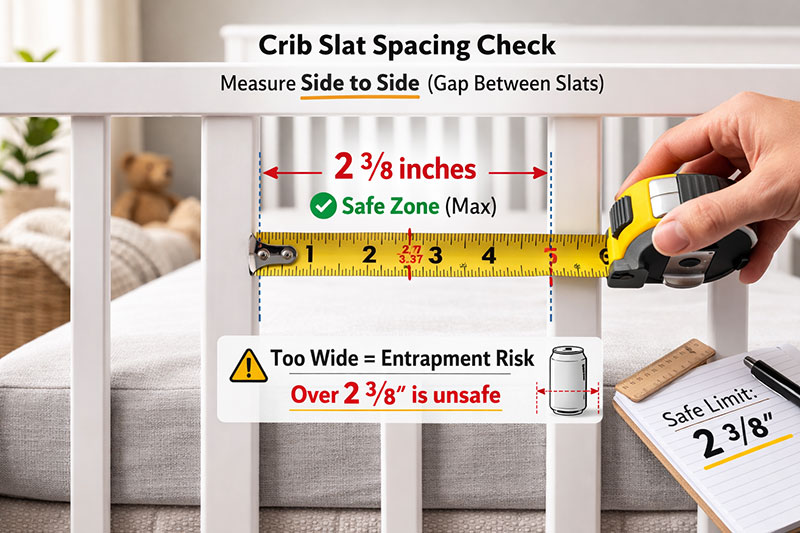
What is the safe crib slat spacing?
Under current safety rules, crib slats should be no more than 2 3/8 inches apart. Wider spacing increases the risk of head entrapment. That limit exists to prevent a baby’s body from passing through while the head cannot.
When this concern is on your mind, I keep it simple and send parents here: Crib slat spacing rules (what matters and why).
Notice what I did not do there. I did not give you a hack, a workaround, or a “close enough” fix. This page is about spotting risk early and choosing the safer path instead of trying to force a questionable setup to work.
Mattress gaps that look small but aren’t small
Mattress fit is one of the easiest crib dangers to underestimate. A mattress can be the right general category and still leave a gap along one side, at a corner, or only after pressure shifts it out of place. My best breathable crib mattress guide compares airflow-focused options that still need to prove themselves where it counts: firm structure, correct fit, and a stable sleep surface inside a real crib.
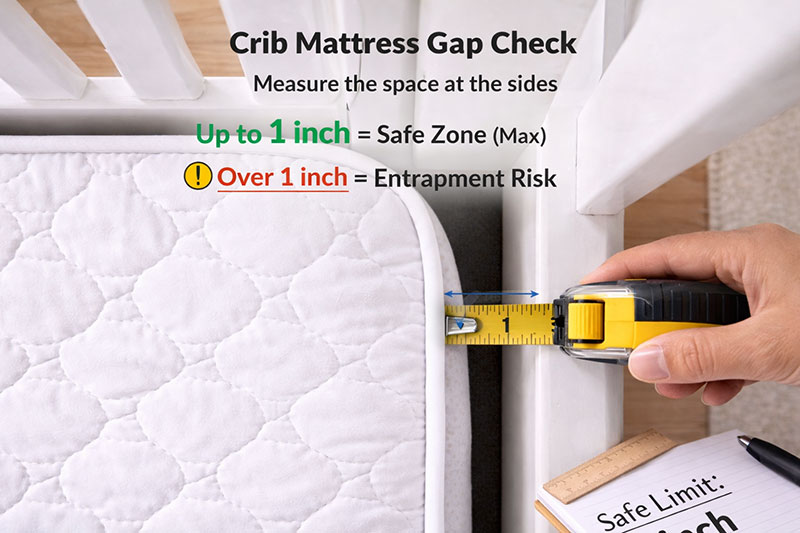
How much mattress gap is too much?
A crib mattress should fit tightly on all sides, with no more than about one inch of space between the mattress and the crib rails. Larger gaps increase the risk of entrapment.
If you want the clean explanation in one place, this page covers it well: Crib mattress fit rules (why gaps matter).
Mattress height that quietly becomes a fall risk
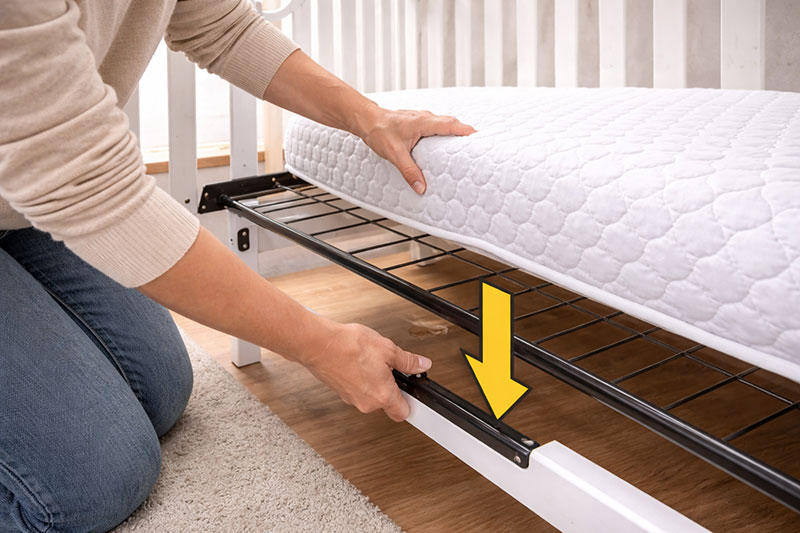
A crib can be perfectly built and still become risky later, just because your baby grows and changes fast. The mattress height that felt safe early on can become a fall risk later, especially when babies pull up, kneel, or lean.
This is the simplest reference point I keep on hand: When to lower the crib mattress (timing and why it matters).
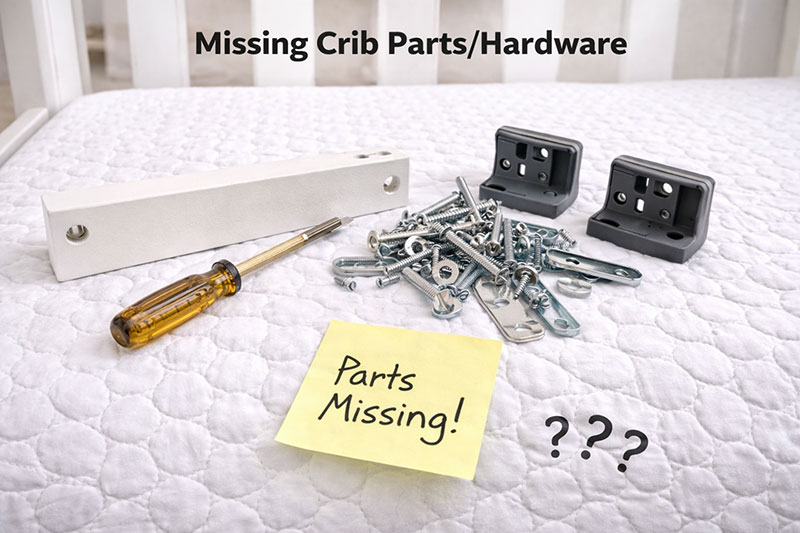
Loose hardware, missing parts, and “close enough” assembly
This is the stress point for so many families: you inherit a crib, or you move, and suddenly a bag of hardware is gone. Or the crib squeaks, and someone tightens the wrong thing. Or a rail feels off, so a part gets swapped “just to get it standing.”
In most cases, a crib with missing crib parts should be treated as a no-go for sleep until the exact parts and documentation are confirmed. Not “probably.” Confirmed.
Is it safe to use a crib with missing parts?
No. A crib with missing bolts, brackets, or structural pieces cannot perform as designed. Even small missing components affect stability and weight distribution.
For brand and hardware identification, use this reference page: Missing crib parts reference (identifying what you have).
Most of these questions sound separate, but they connect. Spacing, fit, hardware and age all point back to one thing: whether the crib can perform the way it was designed to. When one part shifts, the whole risk picture shifts.
Weight limits that get ignored until the crib feels unstable
Cribs are built for a stage. After that stage, the forces change. There is more movement, more pushing, more bouncing. This is why crib weight limits matter, even for families who never put a “big kid” in the crib.
For a straightforward explanation, see: Crib weight limits and why they matter.
Old cribs and “it survived my childhood” logic
Older cribs can look sturdy and still be risky. Standards change. Materials age. Rails warp. Hardware goes missing. A crib can be beautiful and still be a bad sleep choice.
Are old cribs safe to use?
Not always. Safety standards have changed over time, and older crib designs may not meet current requirements. Age, wear, and outdated construction methods can increase risk.
Are drop-side cribs dangerous?
Yes. Drop-side cribs were banned after repeated structural failures led to serious injuries and deaths. They are no longer allowed for sale under current federal safety rules.
For the full regulatory background, see why drop-side cribs were banned.
This is the simple context page for that: Crib lifespan (when “still usable” becomes unclear).
Did I buy a dangerous crib?
This section is for the parent brain spiral. The “did I mess up?” feeling. I get it.
The one thing that matters most
Ask one question: Does this crib meet current safety standards and match the correct parts and mattress for its design? If the answer is unclear, that’s already important information.
It’s not about brand status. It’s about the physical sleep space: the rails, the mattress fit, the stability, and the stage of use.
Quick crib check quiz (no judgment)
Pick the sentence that feels most true right now.
- “My crib feels solid, but I’m not sure about mattress fit.”
- “My crib is secondhand, and the manual is missing.”
- “Something wobbles, and I can’t tell why.”
- “I’m worried I missed a rule, and now I can’t unsee it.”
If you landed on any of those, keep reading. You’re in the right place.
Older and secondhand cribs
Older products, secondhand items, and cribs with missing manuals show up a lot. The safest move is to identify the exact model and parts, and consider current safety standards before choosing sleep use. No workarounds. No “close enough” fixes.
What to do right now
What to do next depends on what’s unclear. If the main worry is spacing, use the slat spacing page. If the worry is gaps, use the mattress fit page. If hardware feels questionable, review the missing parts section. Keep it narrow. One concern at a time.
What most families do next
Most families end up doing the same three things: confirm the crib is complete, confirm the mattress fit is correct, and confirm the crib is being used in the right stage.
Recall status belongs in that same safety check, especially with older or secondhand cribs, and my crib recall guide explains how to verify the brand, model number, and official recall history before trusting the crib for sleep.
For a simple step-by-step walkthrough you can follow in real time, use the complete crib safety checklist and check each item off as you go.
That’s not perfection. That’s basic risk control.
And we do it without pretending anything is “guaranteed safe.” Sleep safety is a set of choices, not a magic stamp.
If your worried parent brain wants a checklist, use this sentence
Solid crib, correct mattress fit, correct stage, complete parts. That’s the heart of it.
Near the end of all this, I want to circle back to the real reason you searched: crib dangers parents miss aren’t rare, and they aren’t “only careless parents.” They happen to normal families who are tired, busy, and trusting the label on the box. A calm check now is worth it.
When you click on links to various merchants on this site and make a purchase, this may result in this site earning a commission. This does not affect the price you pay.

UBGI Gold Standard 2026
Reviewed under the site's
editorial checklist.
Photos, decorating ideas, party setups and reader submissions are shared for inspiration unless a page is specifically presented as a pattern, tutorial, reference guide or step-by-step project. Follow the instructions, measurements, safety guidance and manufacturer directions provided for the particular project or product.
About Jan | Contact | Baby Nursery Ideas (Blog) | Site Map | Privacy Policy | Disclosure Policy | Disclaimer | Affiliate Disclosure | Earnings Disclosure | Facebook | Pinterest
I am a participant in the Amazon Services LLC Associates Program, an affiliate advertising program designed to provide a means for us to earn fees by linking to Amazon. As an Amazon Associate I earn from qualifying purchases.
Copyright © 2006-2026. All Rights Reserved.