Breathable Crib Mattress Protector: Do You Really Need One?
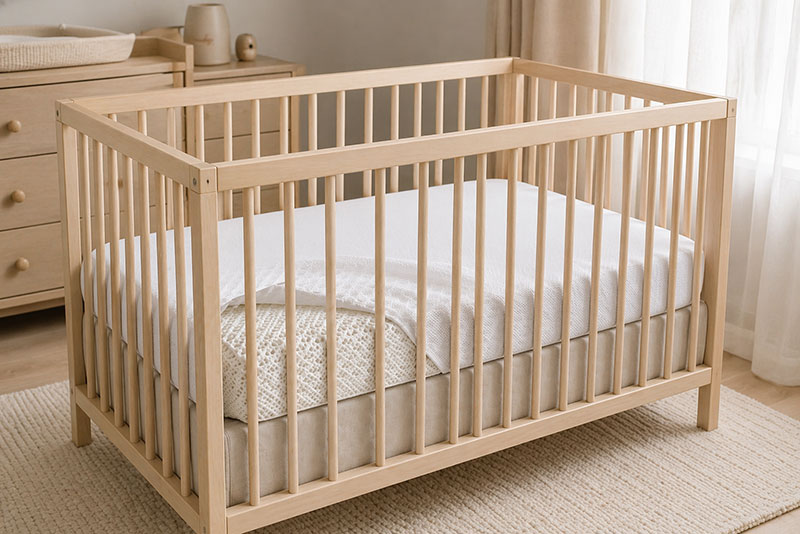
Breathable crib mattress protectors sound like a smart add-on, but do you really need one? Once you add a layer on top, it can change how a breathable crib mattress actually works. Some protectors keep airflow intact, while others quietly block it and turn the surface into something completely different. This page breaks down whether you even need one, and which types protect against messes without canceling out the whole point of a breathable crib mattress.
Start here:
Jump to what matters:
Do you need a breathable crib mattress protector at all?
Sometimes the question does not come up until the first spit up, the first diaper leak, or that moment when the sheet comes off and the mattress suddenly feels too expensive to risk. A lot of parents buy a breathable crib mattress because they want the sleep surface to stay as open and simple as possible, then immediately wonder if adding a protector ruins the whole idea.
The short answer is that some babies do fine with nothing more than the mattress and a fitted sheet. Others need a protector because real nursery life is messy fast. What matters is the type you add. A fully waterproof layer can change the surface more than people expect. On some breathable crib mattresses, it can reduce airflow at the top and create a flatter, more sealed feel than the mattress was meant to have.
Snippet answer
A breathable crib mattress protector can be worth using for cleanup and stain control, but only if it does not block the surface design that makes the mattress breathable in the first place. If the protector adds a sealed waterproof layer across the sleep surface, it may work against the reason many parents chose that mattress.
Not every protector belongs on a breathable crib mattress.
If you are still comparing mattress types, read best breathable crib mattress first. If you are trying to understand the bigger safety question behind all of this, are breathable crib mattresses safe helps connect the dots in plain language.
If you are also trying to sort out the difference between moisture protection layers, this crib mattress pad vs protector guide explains which options are meant to stay thin and which ones start adding extra padding to the sleep surface.
Which breathable crib mattress protector types make the most sense?
There are really three common setups people end up looking at. The first is no protector at all, just the mattress and a fitted sheet. The second is a thin protector designed by the mattress brand or clearly labeled as compatible with breathable crib mattresses. The third is a standard waterproof pad that works fine on a regular crib mattress but may not make sense on a breathable one.
The second option is usually where this starts to come together. If the protector is meant for that mattress style, it is less likely to bunch, slide, or create a slick layer under the sheet. That matters more than people think. In a real nursery, the problem is often not the big leak. It is the slightly shifted corner at 2 a.m. after a sheet change done in low light.
I believe the best protector for this kind of page intent is one that protects from routine messes without acting like a tarp over the mattress. If a product page focuses only on waterproofing and says nothing clear about airflow, breathability, or compatibility with breathable mattress construction, I would be cautious.
What can block airflow without looking like a problem?
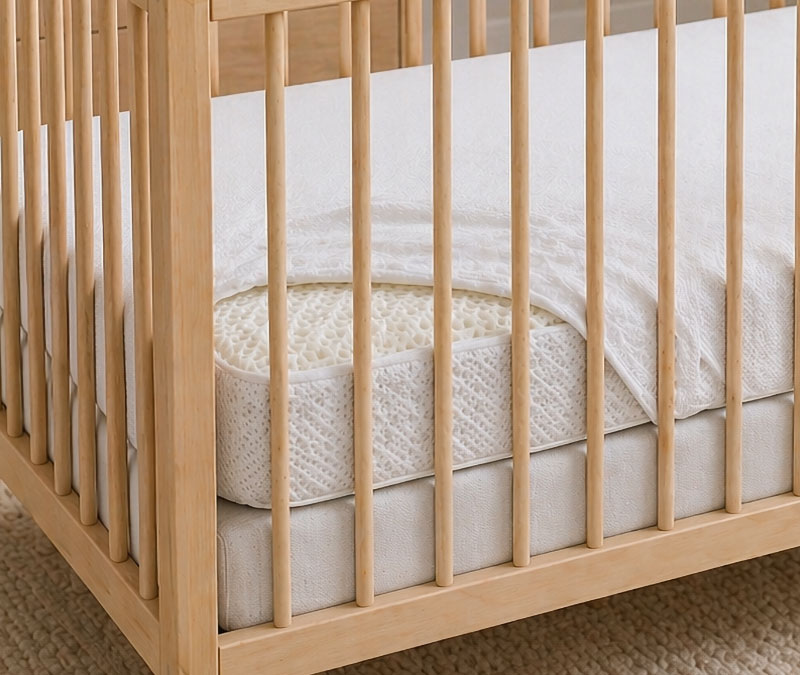
This is the detail many pages skip. A protector does not have to look thick to change how the mattress performs. A tight waterproof membrane, a quilted pad with dense fill, or even a protector that fits too snugly across a three dimensional breathable surface can flatten the top layer more than expected. On some mattresses, that means you are no longer using the sleep surface the manufacturer designed.
That is why “breathable” on a package is not enough by itself. Some brands use the word loosely. What you want to know is whether the protector sits above open channels, works with a mesh style top, or was specifically approved for the mattress you own. If the brand that made your mattress says not to cover the breathable surface with anything except the fitted sheet they recommend, that answer is already pretty clear.
Many nurseries run into this issue because people shop for mattress protectors by stain defense first and compatibility second. That sounds practical until the whole point of the mattress gets buried under a layer that behaves like a standard waterproof pad.
How to choose a breathable crib mattress protector without guesswork
Use this quick check before buying.
Start with the mattress brand. If the mattress maker sells its own compatible protector, or clearly lists approved options, that is the best place to begin.
Read the top surface description carefully. Look for wording that explains how the protector works with airflow, not just how it stops liquid.
Check the fit. A protector that pulls too tight at the corners can distort the surface. A loose one can bunch. Neither is a good trade.
Skip bulky quilted layers. On a breathable crib mattress, extra loft is usually not what you want.
Think about your real cleanup pattern. A lot of parents do not need heavy waterproofing every night. They need something that handles small messes and washes well.
I notice that the best nursery setups are usually the ones with the fewest surprise layers. When the mattress, protector, sheet, and fit all work together, sheet changes feel routine instead of like a puzzle you regret starting.
If cleanup is your main concern, you may also want how to clean a crib mattress because some messes are easier to handle with a simple wash routine than with a heavy cover that stays on all the time.
When a regular crib mattress protector is the better match
Not every nursery needs a breathable mattress setup. That is the honest answer. If what you really want is full waterproof coverage, easy wipe downs, and the simplest possible laundry routine, a standard crib mattress with a standard protector may fit your life better. That does not make it worse. It just makes it different.
This matters because some parents end up trying to force one product to do two jobs. They want the airflow design of a breathable crib mattress and the sealed top of a traditional waterproof protector. Sometimes those goals pull in opposite directions.
That is why this page works best as a decision point, not a sales pitch. If you are still weighing overall crib mattress types, go back to the crib mattress guide hub and compare the setups side by side before you buy more accessories.
Safe sleep rules matter more than marketing language
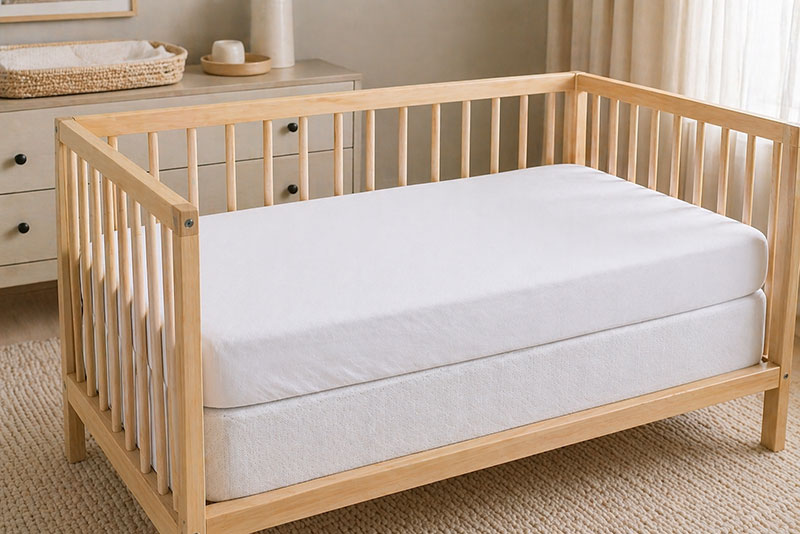
Even on pages like this, the basic sleep setup still matters most. In the United States, current safe sleep guidance points parents back to a firm, flat crib mattress with a fitted sheet, while keeping extra items and padded additions out of the sleep space. That means a protector should never introduce puffiness, loose fabric, or a soft layer that changes the sleep surface into something else.
That is also why I am not a fan of trying to improvise with mattress pads, folded covers, doubled layers, or anything that was not clearly made for infant sleep. A breathable crib mattress protector should fit cleanly, stay flat, and work as part of the mattress system, not fight it.
For general sleep safety guidance from a noncompeting source, see the American Academy of Pediatrics safe sleep guidance.
American Academy of Pediatrics safe sleep guidance
Best breathable crib mattress protector decision in one sentence
If your breathable crib mattress brand supports using a compatible protector, choose the thinnest properly fitted option that protects from routine messes without sealing off the sleep surface. If the brand does not clearly support it, do not assume a standard waterproof protector is a safe substitute.
Quick answers about breathable crib mattress protectors
Can you put a waterproof protector on a breathable crib mattress?
Sometimes, but it depends on the mattress design and whether the brand says the protector is compatible. A waterproof layer can work against the purpose of a breathable top surface.
Do babies need a mattress protector in the crib?
Not always. Some parents prefer the simplest possible sleep surface. Others use a compatible protector because frequent leaks make cleanup harder without one.
What kind of protector works best on a breathable crib mattress?
A thin, properly fitted protector made for breathable crib mattresses, or approved by the mattress maker, usually makes the most sense.
Can a mattress protector make a breathable mattress less breathable?
Yes. A sealed layer, thick quilting, or a cover that compresses the surface can change how the mattress works.
Where should I go next if I am still deciding?
Compare the full mattress options on best breathable crib mattress, then step back to the crib mattress guide hub if you want the wider picture.
When you click on links to various merchants on this site and make a purchase, this may result in this site earning a commission. This does not affect the price you pay.

UBGI Gold Standard 2026
Reviewed under the site's
editorial checklist.
Photos, decorating ideas, party setups and reader submissions are shared for inspiration unless a page is specifically presented as a pattern, tutorial, reference guide or step-by-step project. Follow the instructions, measurements, safety guidance and manufacturer directions provided for the particular project or product.
About Jan | Contact | Baby Nursery Ideas (Blog) | Site Map | Privacy Policy | Disclosure Policy | Disclaimer | Affiliate Disclosure | Earnings Disclosure | Facebook | Pinterest
I am a participant in the Amazon Services LLC Associates Program, an affiliate advertising program designed to provide a means for us to earn fees by linking to Amazon. As an Amazon Associate I earn from qualifying purchases.
Copyright © 2006-2026. All Rights Reserved.