Best Organic Crib Mattress: Safer Picks for Babies
Making the best organic crib mattress choices can feel confusing at first because many mattresses are marketed as natural, non-toxic, or safer without making the differences very clear. If you are trying to find the best organic crib mattress for your baby, the smartest approach is to look past the label and focus on what the mattress is actually made from, which certifications matter, how firm and supportive it feels, and whether it fits your crib properly. This guide walks through the features that matter most so you can compare options with more confidence and avoid paying extra for claims that sound better than they really are.
Trying to choose an organic crib mattress without overpaying for a label? Start here:
Is organic really the same as non-toxic?
Which crib mattress certifications actually matter?
Would a non-toxic mattress be enough?
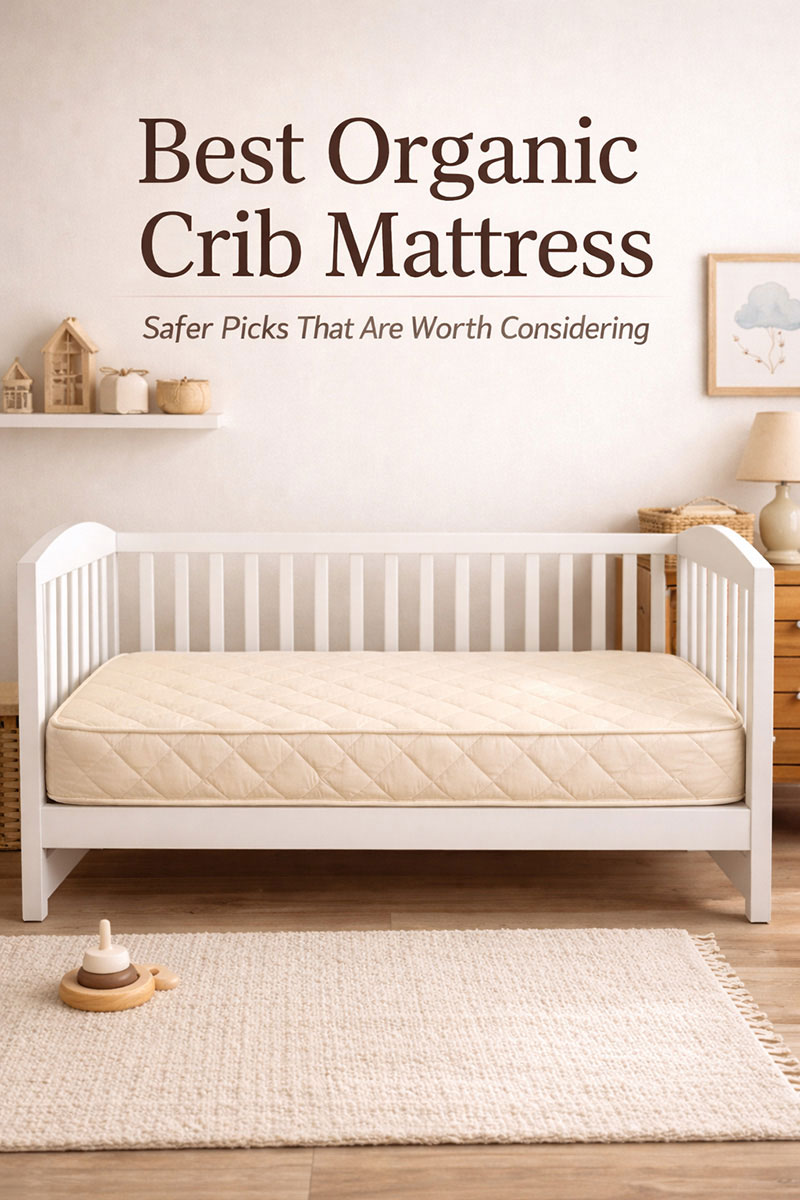
See recommended organic crib mattress options that have certified cotton layers
A best organic crib mattress is a firm infant mattress made with natural materials such as organic cotton, wool, or natural latex instead of relying heavily on synthetic foam and vinyl layers. Parents often choose an organic crib mattress because they want a cleaner sleep surface with clearly identified materials. The best organic crib mattress should still meet the same basic standards as any safe crib mattress. It should feel firm, fit the crib correctly, and hold its shape over time without sagging.
Best Organic Crib Mattress Picks to Consider
Parents looking for the best organic crib mattress are usually trying to sort through a lot of labels that sound similar. Natural. Organic. Non toxic. Greenguard Gold. Breathable. Eco friendly. Seeing how organic materials compare directly to low-emissions claims can make those labels easier to understand, and this organic vs non-toxic crib mattress comparison explains how they differ in language that is easy to understand .
Organic labels tell part of the story, but my guide to the best non-toxic crib mattress options available to buy right now helps show which materials and certifications are actually worth paying attention to.
Those terms can overlap, but they do not all mean the same thing. If you need a clearer breakdown of what “non-toxic” actually means compared to organic labels, this non-toxic crib mattress guide explains the differences in simple terms.
Focus on what actually changes how a mattress performs, not just how it is labeled.
That is exactly what my crib mattress guide points out so clearly so you can see what matters before choosing.
Start with firmness. A crib mattress should feel stable and resist pressure across the center and edges. This matters more than whether the product is described as organic, natural, or eco friendly.
Next, check fit. Even the best organic crib mattress needs to sit snugly inside the crib with minimal gaps. If you are unsure, review crib mattress fit to see how to check spacing correctly.
Then look at materials and certifications together. Organic cotton, wool, and natural latex are easier to evaluate when the brand clearly explains how those materials are used and what certifications apply.
Finally, consider how the mattress is built to hold its shape over time.
For parents comparing whether a two-stage mattress is worth the extra cost, this dual-sided crib mattress vs single-sided crib mattress guide explains how each design works for infant firmness, toddler use, and long-term value.
A mattress that stays firm and consistent will perform better than one that relies on softer padding or surface comfort layers.
If you are comparing organic mattresses that claim to grow with your child, this dual sided crib mattress guide explains when a two-stage design is useful and when firmness, fit, and structure matter more than the label.
A strong organic crib mattress should do three things well. It should provide a firm surface for infant sleep. It should use clearly identified materials. And it should fit the crib snugly with minimal gaps around the edges.
That means the best pick is not always the softest, thickest, or most expensive mattress. In fact, a mattress that feels plush or overly cushioned is not what most parents want for a baby. Crib mattresses need structure. A stable sleep surface matters more than comfort language written on packaging.
Parents who want to compare a wider range of crib mattress types can also visit best crib mattress. That page looks at several styles and helps explain how organic options differ from other common crib mattress designs.
Firmness is more important than marketing claims.
Even parents choosing organic materials sometimes wonder if adding extra cushioning would make the mattress more comfortable, but my are crib mattress toppers safe guide explains why crib mattresses should stay firm and stable without added topper layers.
If a mattress compresses too easily under pressure or feels soft across the center, it is not a strong choice for infant sleep.
What an Organic Crib Mattress Means
An organic crib mattress uses natural materials that meet recognized organic standards. The most common examples are organic cotton, wool, and natural latex. These materials are often chosen by parents who want fewer synthetic components in the nursery.
That said, the word organic should not be the only thing guiding a buying decision. A mattress can include organic fibers and still vary in quality, firmness, edge support, or durability. This is why the best organic crib mattress is not simply the one with the strongest label. It is the one that combines verified materials with safe, practical construction.
What Organic Labels Do Not Automatically Mean
The word organic sounds reassuring, but it does not automatically answer every safety question about a crib mattress.
An organic label does not guarantee that the mattress is firm. Firmness depends on how the mattress is built, not just the materials listed. A mattress made with organic fibers can still feel too soft if the structure underneath is not supportive.
Organic also does not automatically mean low emissions. Some certifications focus on how materials are grown, while others focus on what a finished product releases into the air. Those are separate issues, and they are not always covered by the same label.
Another point that often gets missed is that not every layer inside a mattress is always certified. A mattress may use organic cotton in the cover but rely on other materials for support. That does not make it unsafe, but it does mean the label applies to specific parts rather than the entire mattress.
The most helpful way to look at an organic crib mattress is to separate three things: where the materials come from, how the mattress is built, and how it performs inside the crib. A strong mattress brings all three together instead of relying on a single label to explain everything.
Some mattresses use organic cotton in the outer cover but rely on other internal materials for support. Others use wool as a moisture barrier or fire barrier. Some include natural latex to help the mattress stay firm and resist sagging. Understanding those differences helps parents compare products more accurately. What you add on top of those materials can still influence how the surface behaves as you will learn from my breathable crib mattress protector guide that explains which protector designs help protect the mattress without changing firmness or overall feel.
For a broader look at the topic, see organic crib mattresses. That page explains the general category, while this page stays focused on how to identify the strongest options.
Safest Organic Mattress Materials
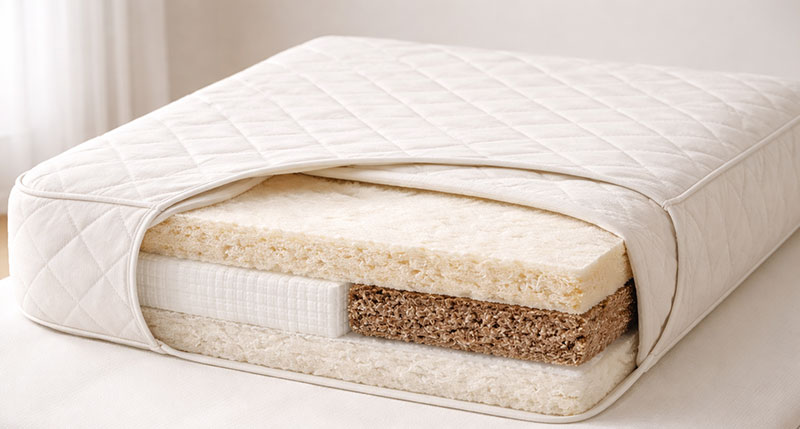
Several materials appear often in high quality organic crib mattresses, and each one plays a different role. Organic cotton is commonly used in mattress covers and comfort layers, wool may serve as a natural moisture or fire barrier, and natural latex can provide resilient support that helps a mattress keep its shape over time.
Even when parents choose natural materials, a waterproof crib mattress can still be worth considering because moisture protection, durability, and ease of cleanup are separate factors from whether a mattress uses organic cotton, wool, or natural latex.
Temperature is another factor some parents consider when comparing mattress materials. My crib mattress overheating guide explains how mattress construction, covers, and bedding choices can affect heat retention during sleep.
Parents sometimes compare these materials with more conventional foam or breathable-core designs. My breathable vs foam crib mattress comparison explains how different mattress constructions affect support and airflow, while my best breathable crib mattress guide compares which airflow-focused designs still stay firm, fit correctly, and maintain a stable sleep surface once they are used in a real crib setup.
No single material makes a mattress safe all by itself. Material quality matters, but so do firmness, fit, and construction.
Certifications That Matter
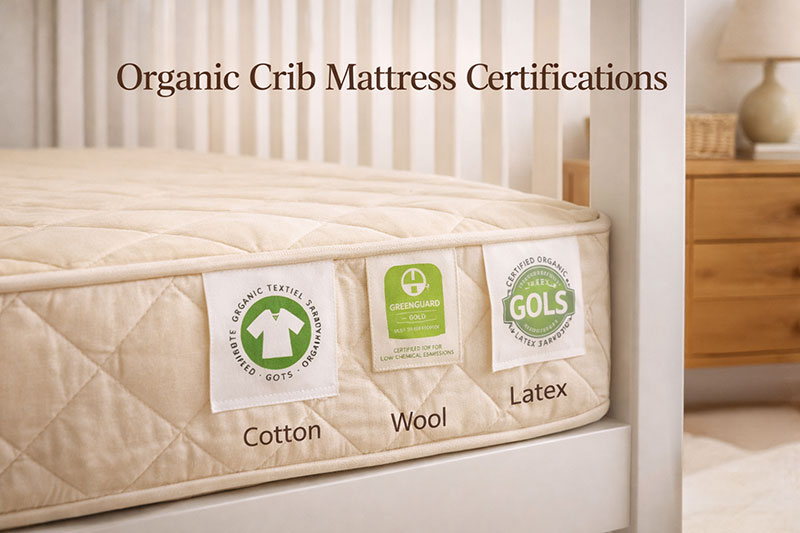
Certifications help parents move past vague product language and focus on standards that are easier to verify. For a clearer breakdown of what these certification labels mean and how they are applied to crib mattresses, review this crib mattress certifications guide explaining the most common standards used across the industry.
GOTS is one of the best known certifications for organic textiles such as cotton and wool. It confirms that fibers meet organic production standards.
GREENGUARD Gold focuses on low chemical emissions and indoor air quality. More information is available through the GREENGUARD certification program.
Parents who want to understand how GREENGUARD certification applies to nursery products can review this guide to GREENGUARD Gold certified cribs.
GOLS may appear on some mattresses that use organic latex.
These certifications do not replace common sense. A mattress still needs to be firm and properly sized for the crib. But they do give parents a clearer way to compare products when brands use similar sounding claims.
One brand that comes up often when parents compare organic options is the Naturepedic crib mattress. I take a closer look at it on that page, including why it gets so much attention in this category.
If you want to see how it compares with a breathable-core design, this Newton vs Naturepedic crib mattress comparison breaks down the differences in materials, airflow design, and overall construction.
In the United States, crib mattresses sold for infant use must also meet federal safety requirements regulated by the Consumer Product Safety Commission. Safe sleep guidance from the American Academy of Pediatrics is also worth reviewing when setting up any crib.
How to Compare Organic Mattresses
When parents compare organic crib mattresses, it helps to ignore most of the sales language and look at a short list of practical details first.
Use this simple checklist when comparing options:
1. Firmness comes first. The mattress should feel stable across the entire surface and should not sink easily under pressure.
2. Fit must be correct. The mattress should sit snugly inside the crib with minimal, even spacing on all sides. Gaps matter more than label wording.
3. Materials should be clearly identified. Look for specific material names such as organic cotton, wool, or natural latex instead of vague descriptions.
4. Certifications should match the claim. Organic and low-emission labels serve different purposes. They should support the materials listed, not replace them.
5. Construction should support long-term use. A well-built mattress keeps its shape and firmness instead of softening over time.
Start with firmness. Press down across the center and near the edges. A crib mattress should feel stable and supportive, not pillowy.
Then check the size. The mattress should fit the crib closely. If you want to verify sizing, see standard crib mattress size and crib mattress fit.
After that, look at the material list. Clear naming is a good sign. Organic cotton, wool, and natural latex are easier to evaluate than generic wording that does not explain what is inside the mattress.
Finally, check whether the mattress seems built to last through the crib stage. Dense support layers, durable seams, and a stable shape matter more than trendy features.
A good organic crib mattress should be easy to explain in one sentence. It is firm, correctly sized, and built with materials the brand identifies clearly.
Organic Crib Mattress FAQ
Are organic crib mattresses safer for babies
Organic crib mattresses use natural materials such as cotton, wool, or latex, but safety still depends on firmness, proper crib fit, and following safe sleep guidelines. Organic materials alone do not make a mattress safer.
Do organic crib mattresses last longer
Some do. High quality organic mattresses made with dense fibers or natural latex can stay firm throughout the crib stage and resist sagging better than lower quality designs.
Are organic crib mattresses required
No. A mattress does not have to be organic to be safe. It does need to meet safety standards, fit the crib properly, and provide a firm infant sleep surface.
What should I compare first when choosing the best organic crib mattress
Start with firmness, then check crib fit, followed by materials and certifications. These factors matter more than general marketing terms like natural or eco friendly.
When you click on links to various merchants on this site and make a purchase, this may result in this site earning a commission. This does not affect the price you pay.
UBGI Gold Standard 2026
Reviewed under the site's
editorial checklist.
Photos, decorating ideas, party setups and reader submissions are shared for inspiration unless a page is specifically presented as a pattern, tutorial, reference guide or step-by-step project. Follow the instructions, measurements, safety guidance and manufacturer directions provided for the particular project or product.
About Jan | Contact | Baby Nursery Ideas (Blog) | Site Map | Privacy Policy | Disclosure Policy | Disclaimer | Affiliate Disclosure | Earnings Disclosure | Facebook | Pinterest
I am a participant in the Amazon Services LLC Associates Program, an affiliate advertising program designed to provide a means for us to earn fees by linking to Amazon. As an Amazon Associate I earn from qualifying purchases.
Copyright © 2006-2026. All Rights Reserved.