Nursery Layout Ideas That Work in Real Homes
Nursery layout ideas should make your baby’s room feel calm, safe, and easy to move around in. The right furniture arrangement keeps the crib on a clear interior wall, places the dresser or changing area within a few steps, and creates a quiet corner for feeding without blocking doorways or windows. A smart layout is not about filling space. It is about creating safe flow, simple access, and a room that works in real life, day and night.
Nursery layout guides:
Room size layouts
- Small nursery layout ideas
- Small 8x10 nursery layout
- 10x10 nursery layout
- Long narrow nursery layout
Planning guides
Special nursery layout situations
Reality check. A nursery that is hard to walk through will feel stressful every day.
Jump to:
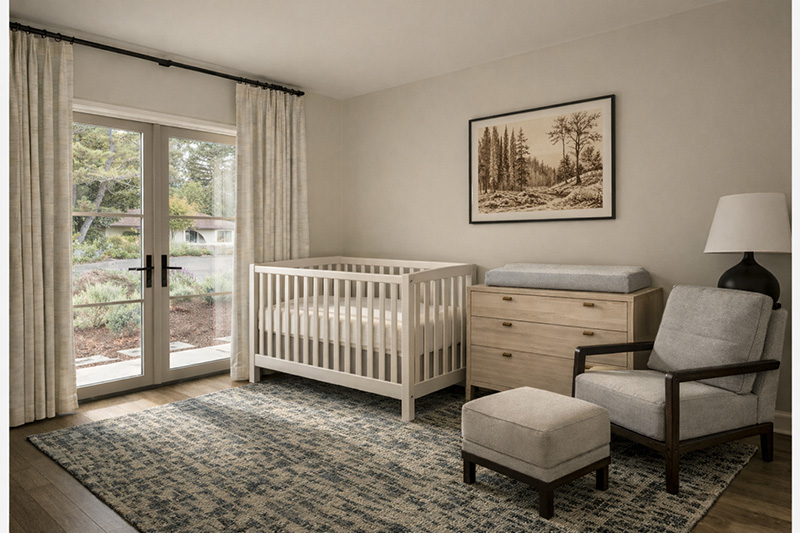
Nursery layout ideas: quick definition and structure
Nursery layout ideas are practical room plans that position the crib, dresser changing station, and chair so there is a clear walking path, safe crib access, and a smooth flow between changing, feeding, and sleep routines.
This is not about decorating. It is about function first. When the layout works, the room feels bigger, nighttime care feels smoother, and you stop moving furniture around every week. If you want the bigger cluster view of how layout connects to storage and furniture choices, use this hub page as your next step: Nursery furniture ideas.
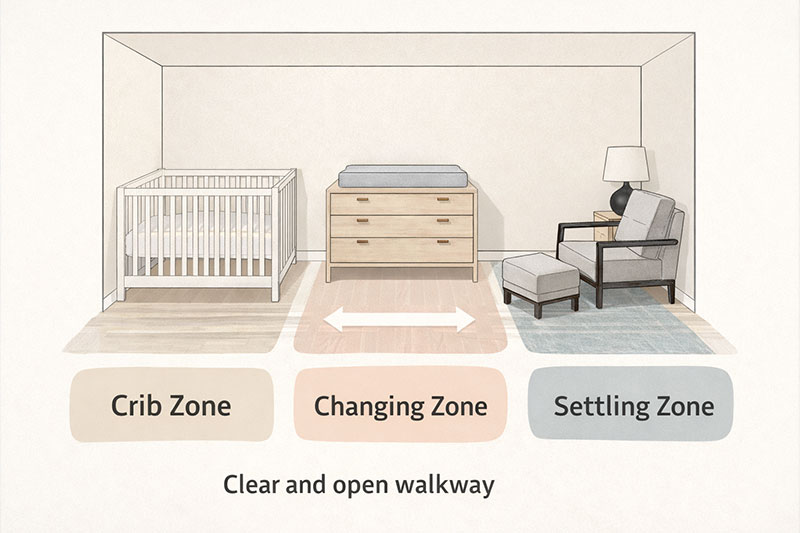
The 3-zone nursery room layout that works in most homes
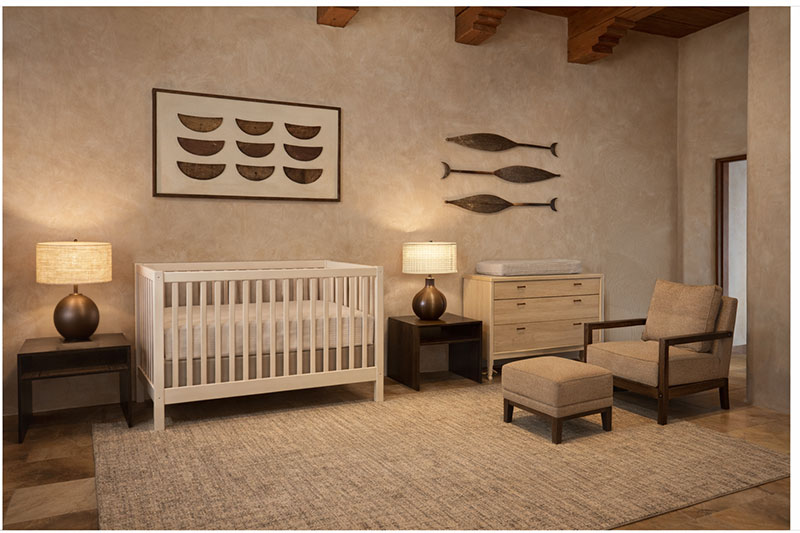
If you only remember one structure, use three zones. A crib zone, a changing zone, and a settling zone. The goal is to keep each zone usable without stepping over baskets, cords, or furniture corners.
Crib zone: The crib and the small “sleep essentials” area. This is where you want clean space, not storage piles.
Changing zone: A dresser or changing table area with diapers and wipes within arm’s reach. This is the “grab and go” zone.
Settling zone: A chair in a corner with a small light source so you can feed, burp, or soothe without turning the room into a bright daytime space.
Notice what is missing. No extra furniture “just because there is a wall.” Empty space is part of a good layout. It is the part that keeps the room functional when you are holding a baby and moving in the dark.
Nursery layout guides by room size
Many nursery layout questions come down to room size or shape.
Families planning one room for two babies usually need extra help with crib spacing and walking paths, so these twin nursery layout ideas show practical ways to make a shared nursery feel organized and easy to use.
A square room, a narrow room, or a compact space each require different furniture placement.
For rooms with four fairly even walls, these square room nursery layout ideas show how to balance the crib, dresser, and chair without making the space feel boxed in.
For a medium-size room that gives you more flexibility with crib spacing and walking paths, this 12x12 nursery layout guide shows practical ways to arrange the crib, dresser, and chair without wasting usable floor space.
These room-specific guides show practical nursery layouts that work in real homes.
Each guide explains where the crib fits best, how to place the dresser and chair, and how to keep a clear walking path so the nursery remains calm and functional.
Crib placement that stays clear and safe
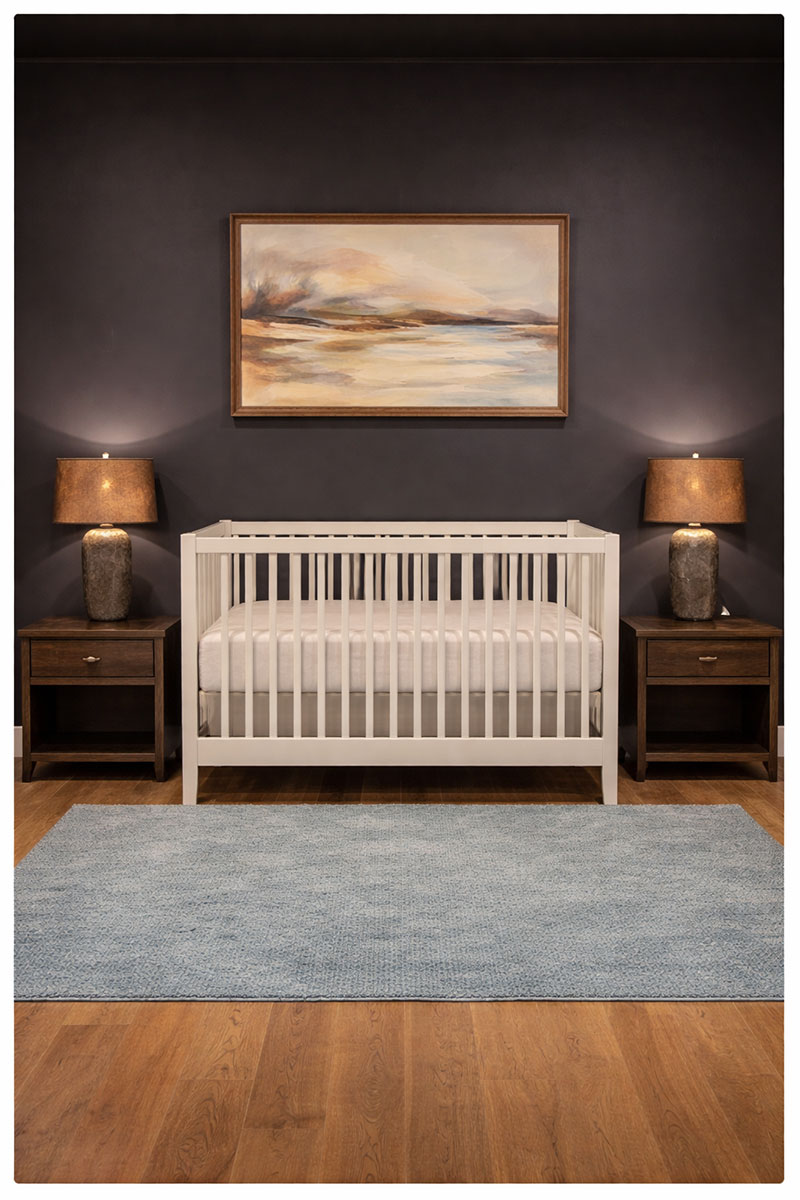
The crib is the anchor. In most rooms, the cleanest placement is on an interior wall where you can avoid window cords and keep the walk path open. If your room forces the crib near a window, treat it as a safety planning moment, not a style choice. Keep cords, drapes, and hanging décor out of reach. Keep the area around the crib simple and uncluttered.
In the United States, the Consumer Product Safety Commission sets federal safety standards for cribs, including requirements aimed at reducing entrapment and other hazards. If you want the official reference point, use this authoritative source from the Consumer Product Safety Commission crib safety guide.
If you are building your layout around an existing crib, keep your safety language clean and non-instructional. Do not modify crib structures. Do not position the crib where you will constantly brush past it, bump it, or squeeze between it and other furniture. Layout is part of risk reduction because it affects how you move, carry, and place a baby.
For layout planning that goes deeper than this general guide, these related pages give you room-specific solutions without forcing this page to drift off-topic:
Dresser and changing station placement
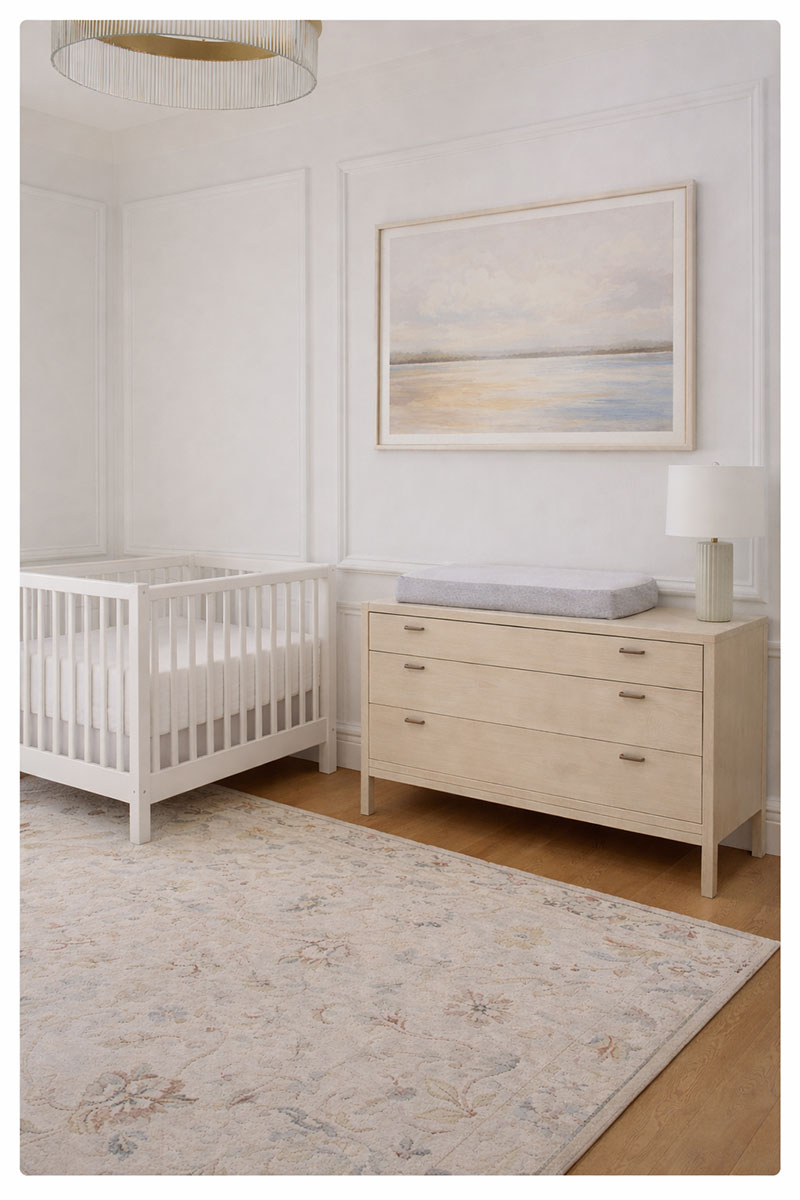
The most practical changing station is close enough to the crib that you can move between them in a few steps. For a closer look at where the changing area belongs, see my changing table placement guide before you lock in the dresser wall.
It should also be placed where drawers open fully and you can stand comfortably without twisting your body or leaning over a corner. If you feel cramped at the changing station now, it will feel worse later when you are tired.
A layout tip that holds up over time is to keep the changing zone on a wall that does not compete with door swing, closet access, or the chair corner. The changing zone is a frequent-use spot. You want it on a straight approach path, not in a tucked-away dead end.
For the dresser placement decision by itself, this guide to where to put a dresser in the nursery helps you choose a wall that keeps drawer access, changing supplies, and walking paths working together.
For a more focused example of how to arrange both pieces together without blocking movement, see this nursery layout with crib and dresser guide.
If you are deciding between different types of changing furniture, that comparison belongs on the furniture-specific guide. This page stays focused on overall room flow and placement logic. For that deeper comparison, see the nursery furniture layout ideas guide.
Chair corner placement and night lighting
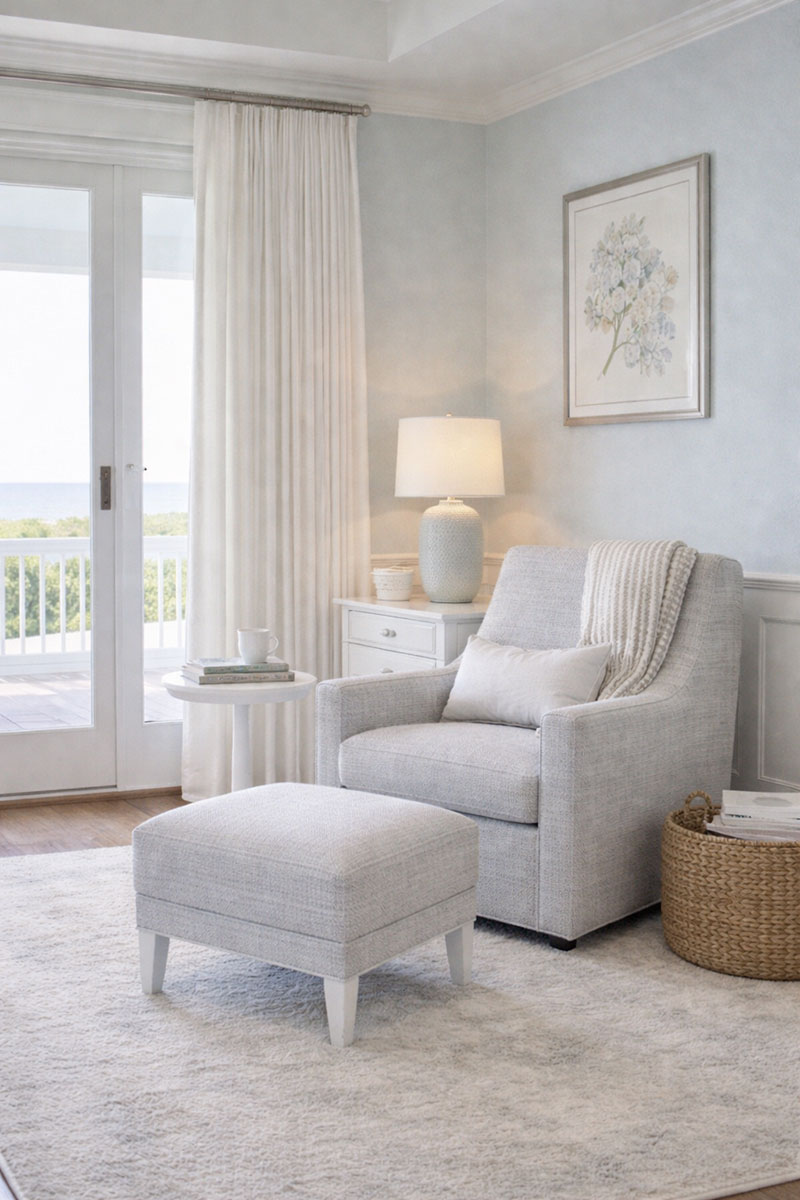
A chair belongs in a corner where you can sit down without stepping around obstacles. The best chair corner has three qualities. It is quiet, it has room for your elbows, and it has a soft light source you can reach without standing up and walking across the room.
If you are deciding exactly where that chair should go in relation to the crib, wall space, and nightstand access, my guide on where to put a recliner in a nursery walks through practical placement ideas that keep the room functional and uncluttered.
Recliners need more clearance than regular nursery chairs, so this guide to how much space you need for a nursery recliner can help you check footrest depth, wall spacing, and walking room before choosing that corner.
If you are still deciding between comfort and floor space, this nursery recliner vs glider guide can help you compare the two chair styles before you commit to the layout.
Keep the chair far enough from the crib that you are not tempted to drape blankets, bags, or pillows onto the crib space. The chair corner is for settling and feeding. The crib zone stays clean and dedicated to sleep. For help choosing a chair that works with this kind of feeding corner, my nursery rocking chair guide compares classic rockers, gliders, cushions, and comfort details.
Clear walking path rules that reduce daily friction
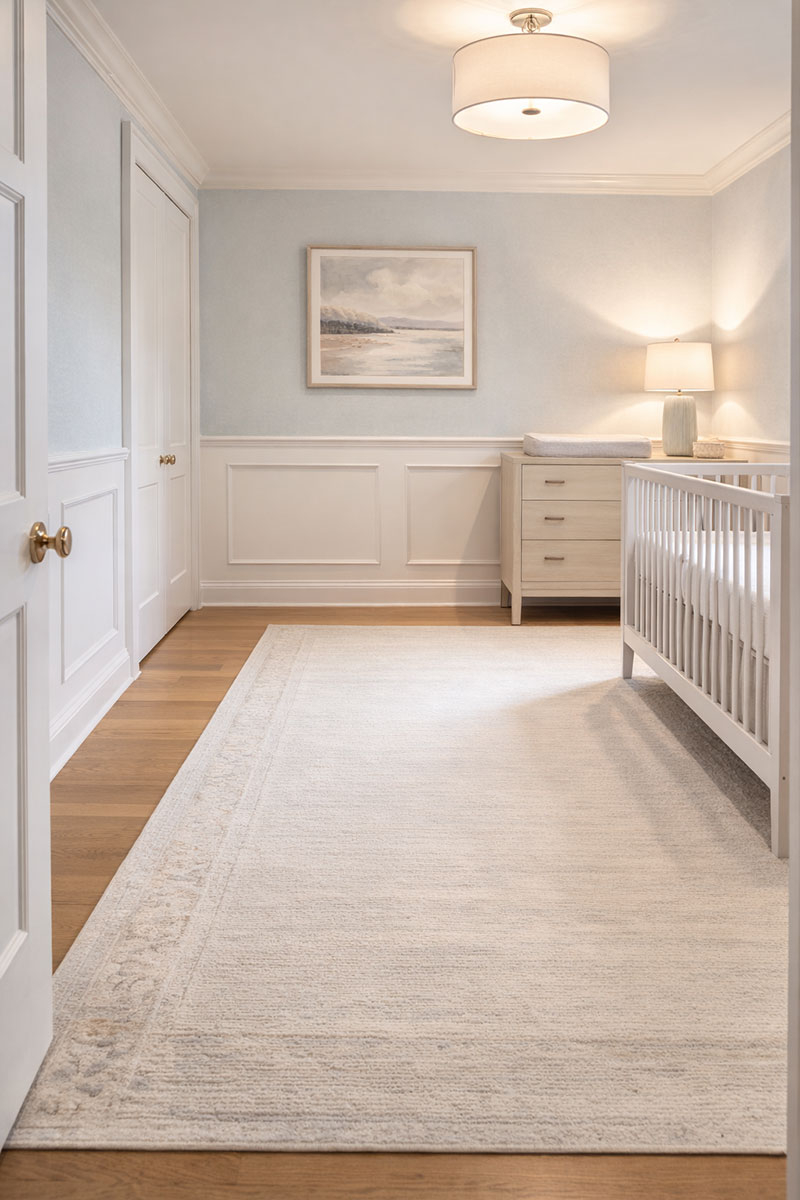
A nursery layout is successful when you can move from the door to the crib, then to the changing station, then to the chair, without turning sideways or stepping around objects. This is the simplest way to reduce bounce in real life because it prevents frustration and keeps the room feeling breathable.
If you want to see simple room diagrams that show furniture spacing and clear walking routes, the nursery floor plan layout explains how to map crib placement, dresser clearance, and movement paths before you move heavy furniture.
For a faster way to test furniture positions before you commit to a full setup, use this nursery room layout planner to sketch crib, dresser, and chair placement with better flow.
Use these layout rules as a quick check:
Door to crib: Keep a straight approach route with no storage piles on the floor.
Crib access: Leave enough open space to reach the crib without bumping your hips on another piece of furniture.
Drawer clearance: Confirm the dresser drawers can open fully without hitting the chair or a hamper.
Corner comfort: The chair zone should have room for your knees and a small surface for essentials.
One-hand reality: Assume you will often have one free hand. Place frequent-use items where you can reach them without bending or turning around.
These rules keep the page focused on the measurable query. They also keep you from accidentally designing around a photo moment instead of daily use.
Common nursery room layout mistakes to avoid
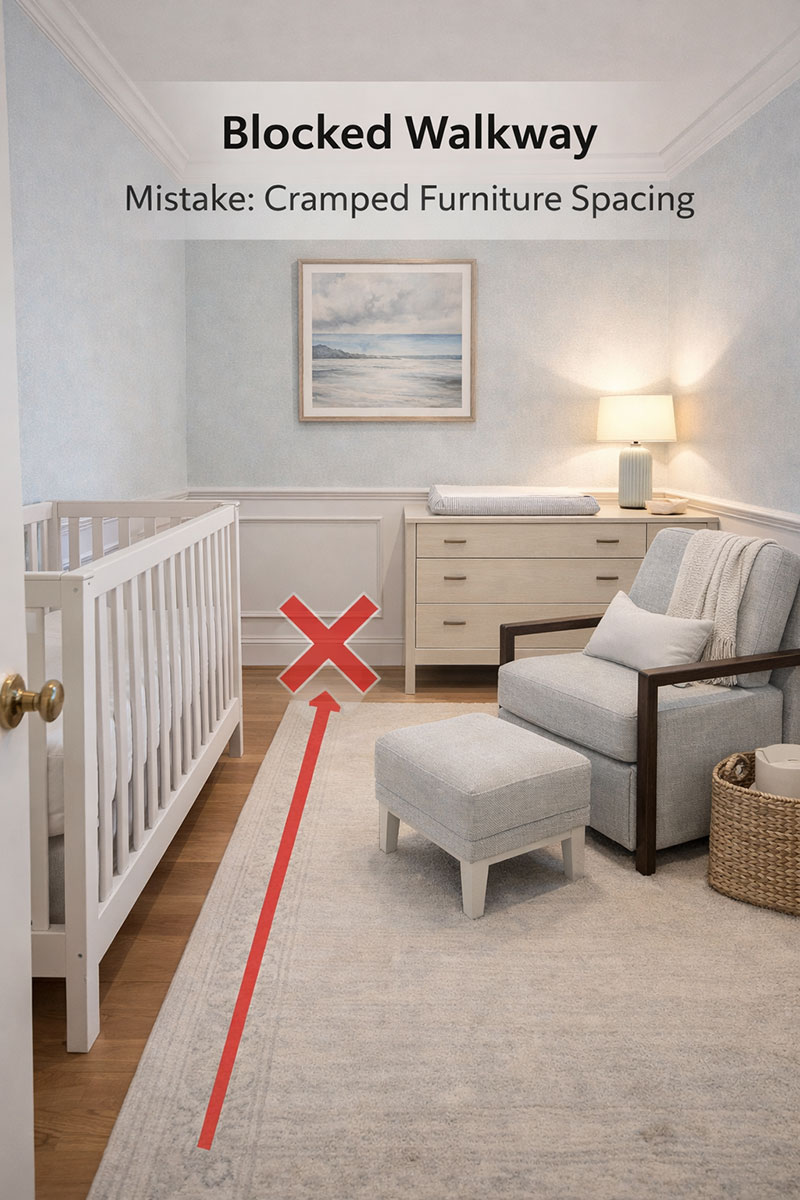
These are the mistakes that tend to create daily frustration, even in a pretty nursery.
Blocking the door path: If you cannot reach the crib easily, you will resent the layout fast.
Crib next to tangled cords: Window coverings and cords must be treated as a placement risk, not a styling detail.
Changing station in a cramped corner: If you cannot stand straight and open drawers, the setup will not last.
Chair squeezed into a pass-through area: You should be able to sit down without someone brushing past you.
Too many small storage items on the floor: Floor clutter eats walking space and makes the room feel smaller.
Small nursery layout ideas without cramming the walls
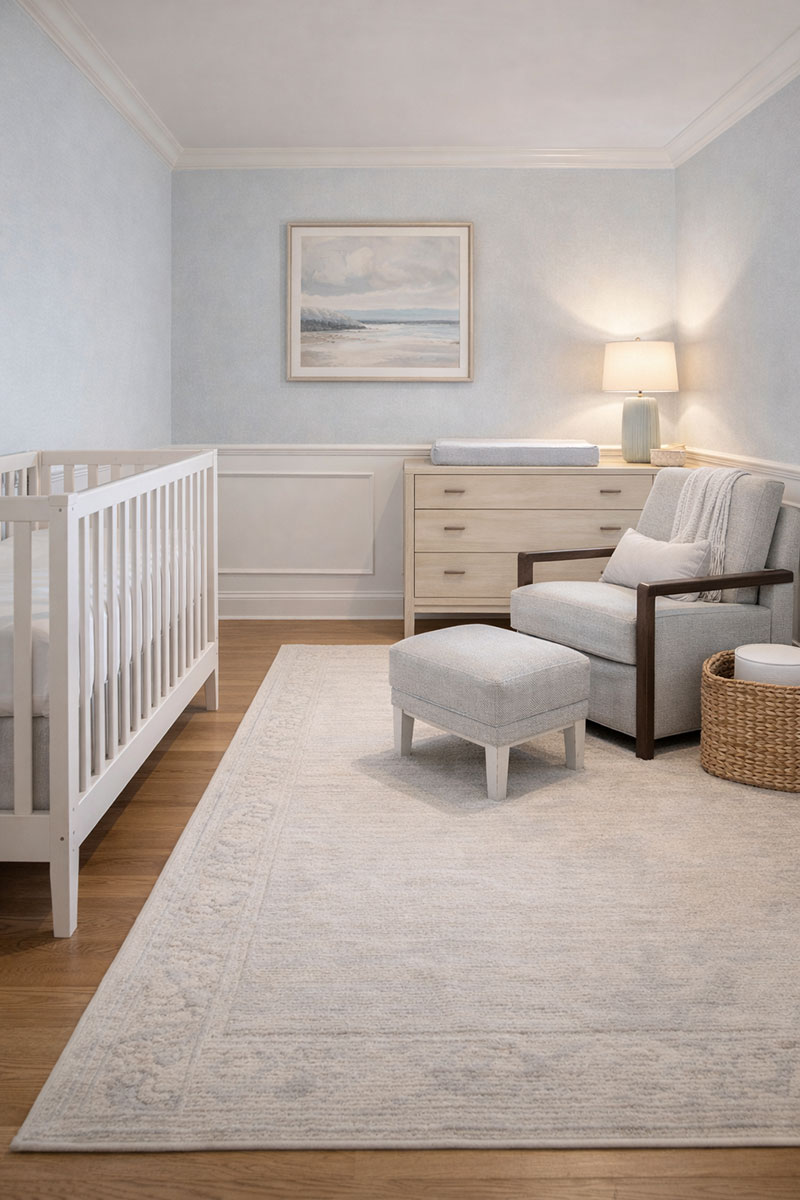
Small rooms do not need more furniture. They need better decisions. If your nursery is small, aim for fewer pieces with better placement. Keep the crib zone clean. Choose a dresser that gives you real storage. Let the chair be modest in size, but still comfortable.
The biggest small-room mistake is pushing furniture into every open inch. That turns a nursery into an obstacle course.
For a precise floor-plan example in a truly compact space, see this small 8x10 nursery layout guide that breaks down crib placement, dresser spacing, and walking path clearance in an 8 by 10 room.
Leave visible floor space on purpose. It makes the room feel calmer and it makes your night routine smoother.
If you want to explore the broader planning side of nursery design, including how furniture choices affect layout and storage, see the main guide: Nursery furniture ideas.
Quick summary of practical nursery layout ideas
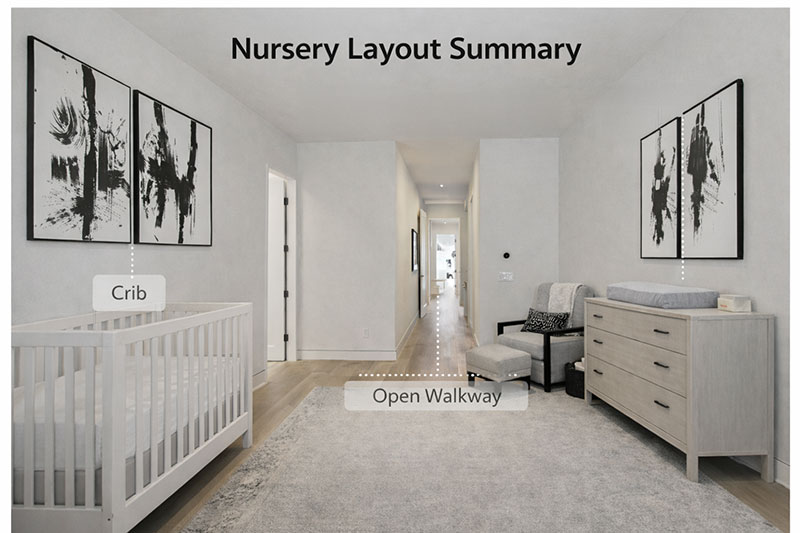
A practical nursery layout places the crib on a clear wall, keeps the dresser changing station within a few steps, and sets a comfortable chair in a corner with a reachable soft light. The layout should preserve a clean walking path from the door to the crib and allow drawers and doors to open fully. Avoid floor clutter and avoid placing the crib where cords or busy traffic paths create daily risk. When these placement rules are followed, the nursery feels calmer, works better at night, and supports safe, consistent routines over time.
Frequently asked questions about nursery layout
Where should a crib be placed in a nursery?
The safest placement is on a clear interior wall away from window cords and heavy décor, with enough open space to reach the crib without squeezing between furniture.
What furniture should be closest to the crib?
A dresser or changing station should usually be within a few steps of the crib so diaper changes can happen quickly without crossing the entire room.
How much walking space should a nursery layout have?
A practical layout leaves a clear walking path from the door to the crib and changing station, with enough space for drawers and doors to open fully.
When you click on links to various merchants on this site and make a purchase, this may result in this site earning a commission. This does not affect the price you pay.

UBGI Gold Standard 2026
Reviewed under the site's
editorial checklist.
Photos, decorating ideas, party setups and reader submissions are shared for inspiration unless a page is specifically presented as a pattern, tutorial, reference guide or step-by-step project. Follow the instructions, measurements, safety guidance and manufacturer directions provided for the particular project or product.
About Jan | Contact | Baby Nursery Ideas (Blog) | Site Map | Privacy Policy | Disclosure Policy | Disclaimer | Affiliate Disclosure | Earnings Disclosure | Facebook | Pinterest
I am a participant in the Amazon Services LLC Associates Program, an affiliate advertising program designed to provide a means for us to earn fees by linking to Amazon. As an Amazon Associate I earn from qualifying purchases.
Copyright © 2006-2026. All Rights Reserved.