10x10 Nursery Layout: Small Space Furniture Placement
A nursery layout for a 10x10 room works when the crib, dresser, and chair are placed so you can move through the room without bumping into anything. This simple layout guide shows exactly where each piece should go so the room feels open, safe, and easy to use every day.
Parents check this before choosing a 10x10 nursery layout:
• Crib vs bassinet vs mini crib for a 10x10 room
• Where to put a crib without blocking your space
In a 10x10 nursery, fewer well-placed pieces will always work better than trying to fit everything in.
Here’s a fact that clears the fog: in a 10x10 nursery, fewer large pieces placed well beats extra furniture every time.
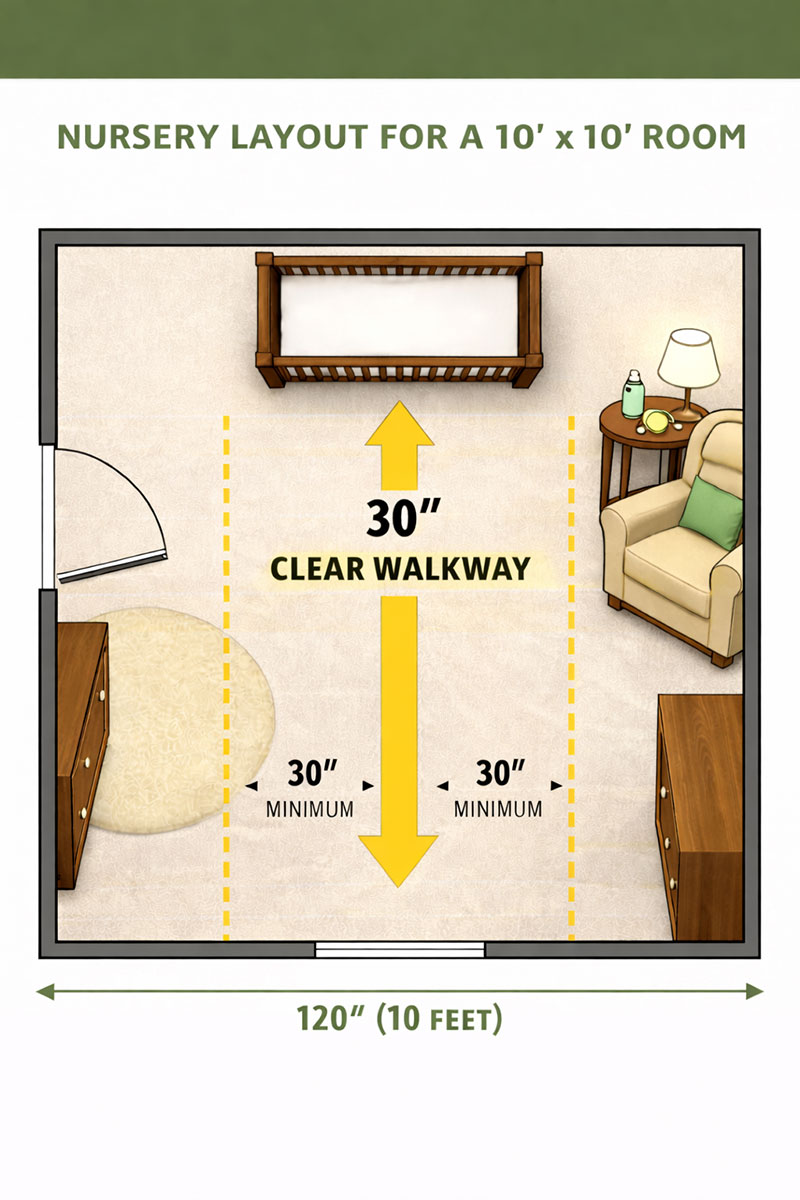
This layout keeps the walkway open.
Plan this layout with real furniture sizes:
• See space-saving cribs that fit a 10x10 nursery
• See shallow dressers that won’t block walkways
• See real small nursery layouts that work
10x10 Nursery Layout Rules at a Glance
- Maintain a minimum 30-inch clear walkway from the door to the crib.
- Anchor the crib on the longest uninterrupted wall whenever possible.
- Choose a shallow-depth dresser to protect drawer clearance.
- Intentionally preserve one open zone to prevent the room from feeling crowded.
If window height, natural light direction, or blind placement is shaping your layout choices, see my nursery layout ideas according to window location to plan around windows before finalizing crib or dresser placement.
Common 10x10 Dimensions Parents Search
- 10 feet equals 120 inches per wall
- Total floor area: 100 square feet
- Standard crib footprint: approximately 52 x 28 inches
What a nursery layout is in a 10x10 room
A nursery layout is the way the crib, dresser, chair, and storage live together so the room works in real life, not just in photos.
In a nursery layout for a 10x10 room, the room is a simple square, but the real shape gets changed by the door swing, window placement, vents, and where outlets land. That’s why two 10x10 nurseries can feel totally different.
This page talks about room planning for a crib, mattress, and basic nursery furniture under US safety standards, not product-specific instructions or DIY workarounds.
For a wider look at how the main pieces should work together, see my nursery furniture layout guide for practical crib, dresser, and chair placement ideas that keep the room usable.
In a nursery layout for a 10x10 room, the crib and dresser should never compete for the same primary walkway.
For a more specific example of how to place those two pieces without crowding the room, see this nursery crib and dresser layout guide.
What to do next
Skim the four zones below, then jump to the one that matches your room problem today. That keeps this practical, not overwhelming.
Quick room-fit check
Most 10x10 rooms feel “too small” because the walking path gets pinched near the door or dresser.
A simple check: can an adult walk from the door to the crib without turning sideways or bumping corners? That answer tells you whether your layout is workable.
In most 10x10 rooms, preserving a minimum 30-inch walking path and allowing full dresser drawer extension without obstruction keeps the layout functional long term.
If your room is even tighter or closer to an 8 by 10 footprint, this 8x10 nursery layout breakdown shows how to position the crib and dresser without sacrificing walkway clearance, and these nursery layout ideas for small spaces offer more real-life examples for different nursery room shapes.
If your 10x10 nursery has four fairly even walls and feels more square than narrow, these square room nursery layout ideas can help you balance the crib, dresser, and chair without choking the center walkway.
This is where most parents get confused.
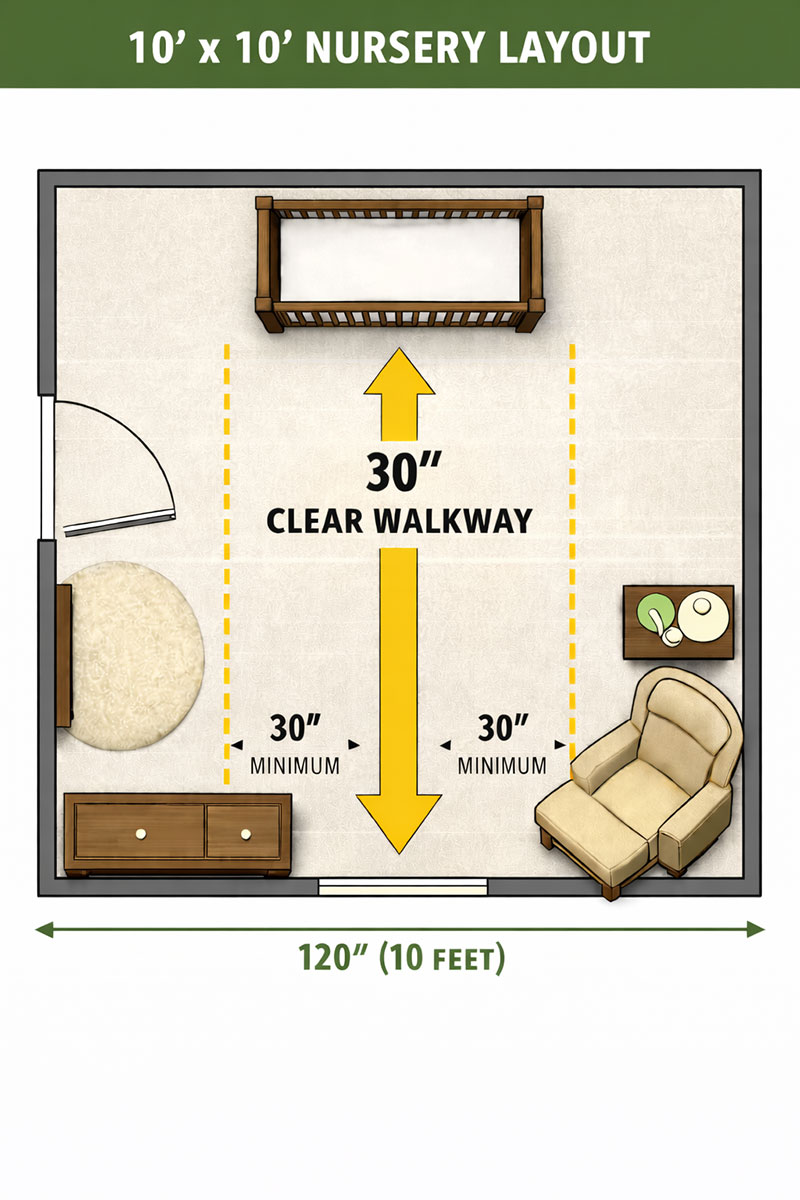
To test your crib, dresser, and chair positions before you start moving heavy pieces, use this 10x10 nursery layout planner to sketch a room that keeps the walkway open.
Take This Quiz to Find Your Best 10x10 Nursery Layout
What feels like your biggest challenge in a 10x10 nursery?
Why a nursery layout for a 10x10 room matters more than decor
A nursery layout for a 10x10 room can look cute and still feel stressful, because daily movement is the real test. Night feeds. Laundry baskets. A carrier in one hand and a baby in the other. That’s when tight corners feel ten times tighter.
For lighting that makes those nighttime movements easier without fully waking your baby, see best nursery night light setups for small rooms and how to keep pathways softly lit.
When the layout is right, the room feels calm. When it’s wrong, you feel it fast: bumped shins, blocked drawers, and a chair that never gets used because it sits in the wrong spot.
I keep the main term as nursery layout. Some people call it a floor plan. Same idea. From here on, I’m sticking with nursery layout.
Most parents choose
In a nursery layout for a 10x10 room, most parents end up happier with: crib + dresser as the two anchors, then a small chair setup that stays out of the traffic path.
That part matters more than people think.
What goes wrong in a 10x10 nursery
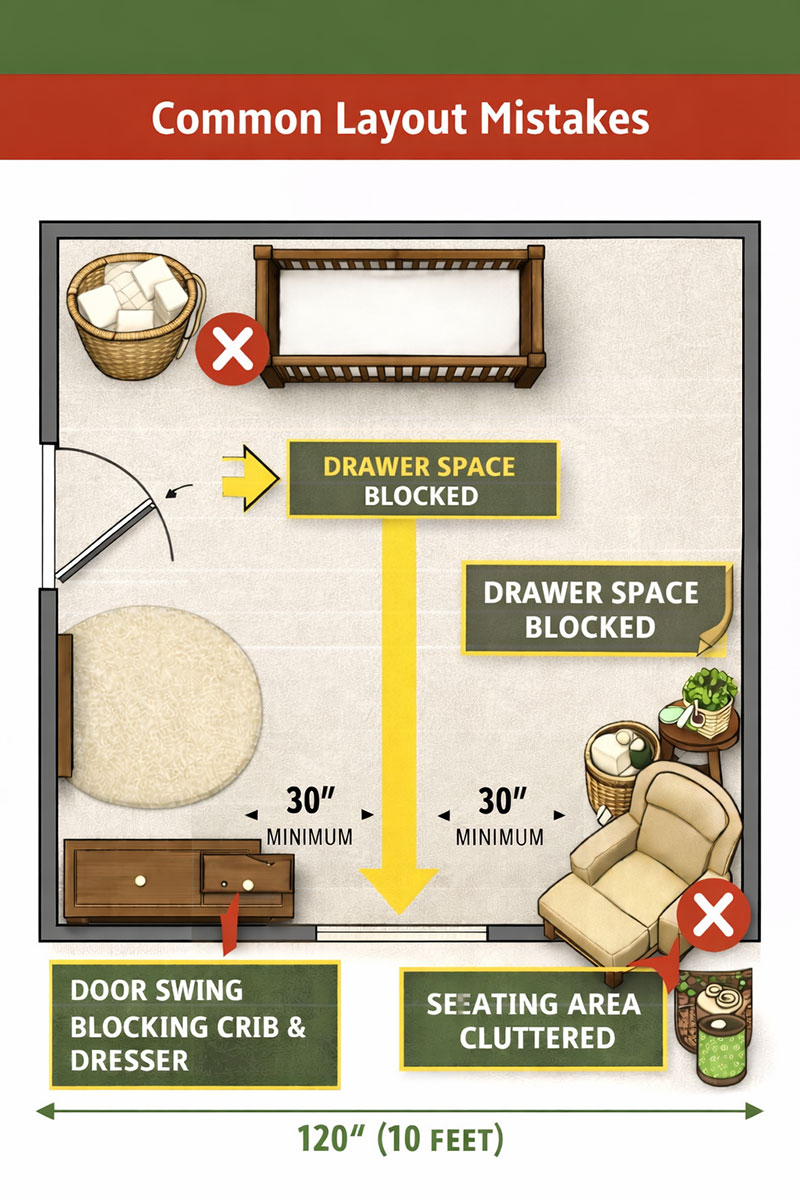
Three issues show up again and again in a nursery layout for a 10x10 room: door conflict, drawer conflict, and corner clutter.
Door conflict
The door swing steals space. People forget that. Then the crib or dresser ends up too close to the doorway, and the room feels jammed the second you walk in.
Drawer conflict
A dresser can “fit” against a wall and still be wrong, because drawers need room to open and you need room to stand there.
That’s why “shallow depth dresser” and “compact nursery dresser” searches are exploding. Storage matters, but it has to function.
Wall-based book storage follows the same logic — smart nursery bookshelf ideas for small rooms keep reading materials accessible without stealing precious floor clearance in a 10x10 layout.
I break down real measurements, drawer depth comparisons, and safe proportions in my guide to the best dressers for a small nursery, so you can protect walkway clearance before you buy.
Corner clutter
Corner clutter is sneaky. A hamper here, a basket there, a little table that drifts. Then the glider corner gets blocked and nobody sits in it.
A recliner needs more than a leftover corner, so my guide to nursery recliner placement shows how to choose a spot that protects footrest clearance, walkway space, and daily room flow.
Did I buy the right furniture for a 10x10 nursery?
Maybe. The pieces themselves are rarely “wrong.” The mix is what causes trouble in a nursery layout for a 10x10 room.
Here are the buying choices that usually decide whether the room feels smooth or cramped: crib footprint, dresser depth, and whether the chair setup stays compact.
If you only remember one thing
In a nursery layout for a 10x10 room, the dresser depth and drawer clearance will matter more than the dresser width.
Width can be forgiven. A drawer that can’t open is a daily problem.
Crib placement reality
Crib placement is the center of gravity in a nursery layout for a 10x10 room. People want the “perfect” wall, but the best wall is the one that keeps traffic open and doesn’t fight the door.
In a nursery layout for a 10x10 room, the room feels calmer when you protect the walkway, protect drawer space, and keep the chair corner clean.
To make sure those layout choices still work two or three years from now, review my nursery ideas that grow with your child so your crib wall, storage zones, and open floor space can adapt smoothly into the toddler stage.
Near the end of the day, the right answer is the one that keeps the room usable. A nursery layout for a 10x10 room should feel simple, not crowded.
Nursery Layout for a 10x10 Room FAQ
What is the best nursery layout for a 10x10 room?
The best nursery layout for a 10x10 room usually places the crib on the longest open wall, the dresser where drawers can open fully, and the chair in a corner that does not block the main walkway.
Can a full-size crib fit in a 10x10 nursery?
Yes, a full-size crib can fit in a 10x10 nursery, but the rest of the furniture needs to be chosen carefully. A shallow dresser, compact chair, and open walking path will make the room work better.
Where should the crib go in a 10x10 nursery?
The crib should go on a safe wall away from windows, cords, curtains, heaters, and anything hanging within reach. It should also leave a clear path from the door to the crib.
How do you make a 10x10 nursery feel bigger?
Use fewer large furniture pieces, keep the center walkway open, choose a shallow dresser, and avoid filling every corner with baskets or extra decor. A simple layout usually makes a 10x10 nursery feel larger.
When you click on links to various merchants on this site and make a purchase, this may result in this site earning a commission. This does not affect the price you pay.

UBGI Gold Standard 2026
Reviewed under the site's
editorial checklist.
Photos, decorating ideas, party setups and reader submissions are shared for inspiration unless a page is specifically presented as a pattern, tutorial, reference guide or step-by-step project. Follow the instructions, measurements, safety guidance and manufacturer directions provided for the particular project or product.
About Jan | Contact | Baby Nursery Ideas (Blog) | Site Map | Privacy Policy | Disclosure Policy | Disclaimer | Affiliate Disclosure | Earnings Disclosure | Facebook | Pinterest
I am a participant in the Amazon Services LLC Associates Program, an affiliate advertising program designed to provide a means for us to earn fees by linking to Amazon. As an Amazon Associate I earn from qualifying purchases.
Copyright © 2006-2026. All Rights Reserved.