Twin Nursery Layout Ideas for a Safe and Functional Room
Twin nursery layout ideas can make a small room feel calm, organized, and easy to use when you are caring for two babies at the same time. The key is arranging cribs, changing space, and storage for the twins so the room stays safe and simple to move around in during busy days and late-night feedings.
Summary: Twin nursery layout ideas work best when both cribs sit in one clear sleep zone, the center of the room stays open for walking, and the changing and storage areas are grouped together so nighttime care stays fast and safe.
In the United States, keep cords and heavy decor away from sleep spaces and follow current crib safety standards for mattress fit and crib setup.
If you're planning the entire room, see the main guide to nursery room ideas.
Jump to the section you need:
A basic twin nursery layout that works in most rooms
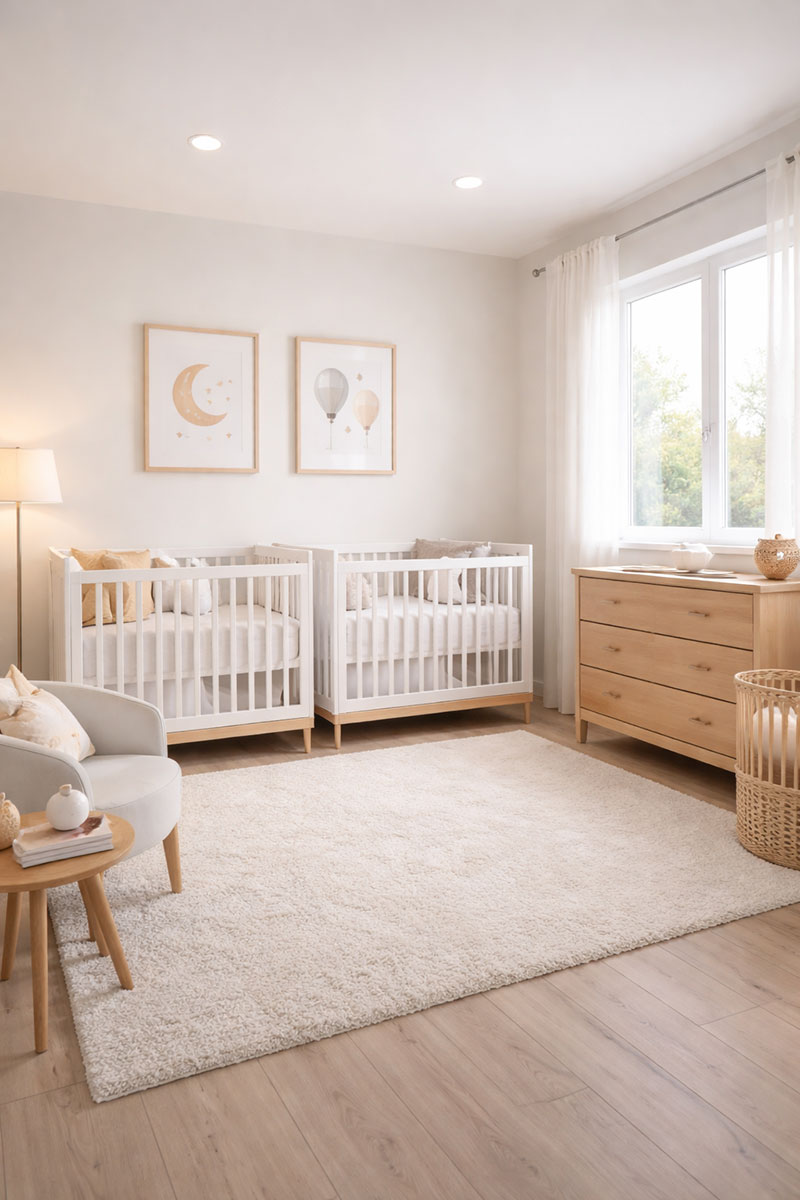
A good twin nursery layout keeps the room simple and easy to move around in. Two babies mean double the feeding, changing, and night wakeups. The layout should support that daily routine.
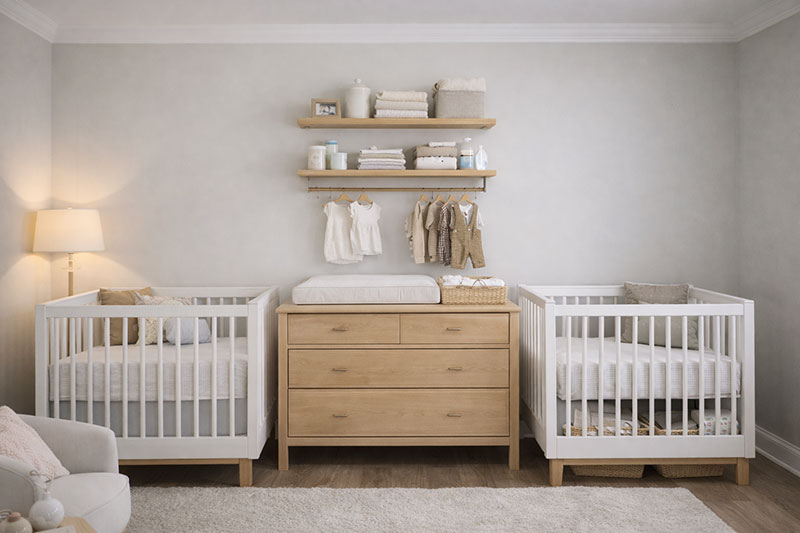
If you want the simplest layout with the least daily friction, line the cribs up on one long wall. It keeps the sleep zone clean and predictable, and it leaves you a straight walking lane down the middle.
The changing area usually works best on the opposite wall.
For a simple side-by-side example of how these two main zones work together, see this nursery layout with crib and dresser guide.
That way the room naturally forms three zones: sleep, changing, and storage.
Clear walking space matters more than extra furniture.
Parents quickly discover that a smooth path from the door to the cribs makes the room easier to use during late-night routines.
Many families also add a small feeding chair nearby. Keeping the chair close to the cribs allows quiet nighttime feedings without walking across the entire room.
For more room planning examples, see these nursery room layout ideas, and for more setup comparisons across different room sizes and shapes, browse these nursery layout ideas for different spaces.
If your twin nursery has a little more square footage to work with, this 12x12 nursery layout guide shows how to arrange cribs, storage, and walking space in a room that feels more flexible without losing flow.
Twin nursery layout ideas for small rooms
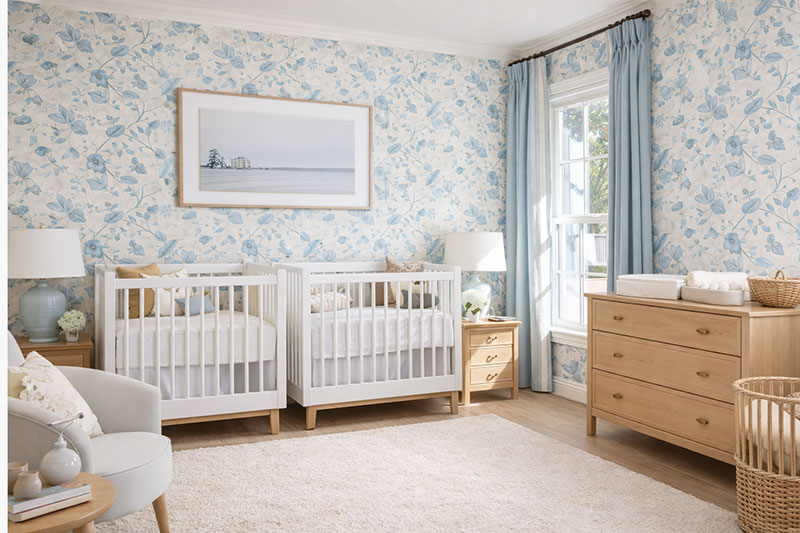
Many twin nurseries are created inside normal bedrooms rather than large dedicated nursery spaces. That means the layout must work efficiently in a limited footprint.
Mini cribs or compact cribs often help solve the spacing problem. They allow both sleep spaces to fit comfortably while leaving walking room.
In a square room, a corner-to-corner setup can feel surprisingly roomy. Each crib gets its own corner, and the open floor space lands where you actually stand for changes and feeds.
For rooms for twins with four fairly even walls, these nursery layout ideas for square rooms can help you place two cribs and storage without crowding the center of the nursery.
In a long, narrow room, think like a hallway. Put the cribs on one side, storage on the other, and protect the middle lane so you can move fast without bumping furniture.
If you want to sketch different crib and storage arrangements before moving furniture, this nursery floor plan layout guide can help you compare walking paths, crib zones, and changing-space placement more clearly.
For a quicker way to test two-crib setups before you start moving furniture, use this twin nursery layout planner to map crib spacing, storage zones, and open walking paths.
Rooms that feel crowded usually improve when unnecessary furniture is removed. Many families discover that a single dresser changing station works better than a separate changing table.
More layout inspiration for smaller spaces appears in the guides on small apartment nursery layout and organizing a small nursery closet.
Safe crib placement for twins
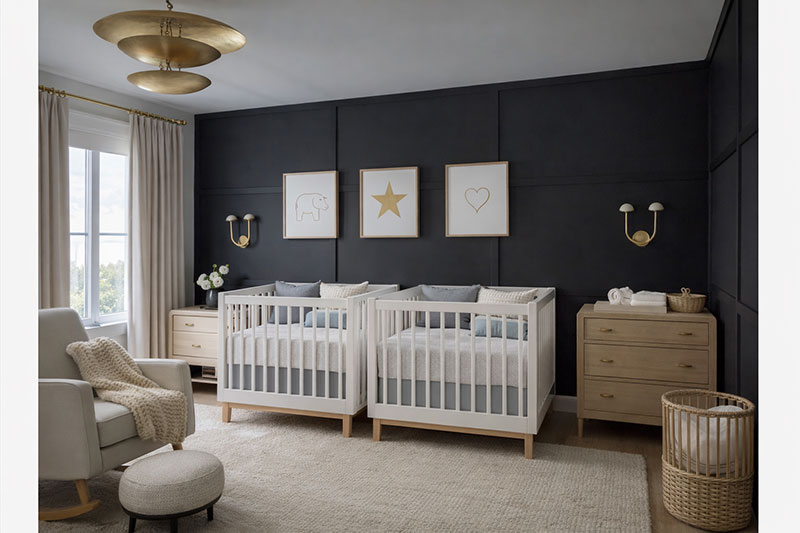
Crib placement should always follow safe sleep recommendations. Each baby should have a separate sleep space that allows free airflow around the crib.
Most experts recommend leaving small gaps between furniture so air can circulate properly. Cribs should not be pushed tightly against heavy furniture or heaters.
Window cords should always remain well out of reach. Wall decor should also stay away from the crib area to prevent anything from falling into the sleep space.
The American Academy of Pediatrics recommends placing babies on their backs on a firm mattress with no loose bedding, pillows, or soft items in the crib.
AAP safe sleep recommendations
These recommendations are widely used by pediatricians and hospital newborn units across the United States.
For a deeper explanation of safety issues that sometimes appear in nurseries, see crib dangers parents miss.
Storage ideas that keep the twin nursery calm
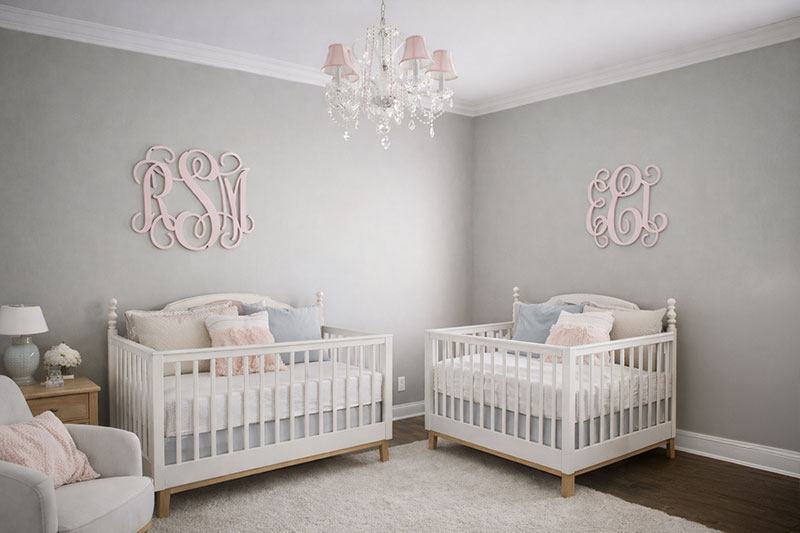
Storage plays a big role in how peaceful a twin nursery feels. When supplies are organized, the room stays easier to maintain.
A dresser with a changing pad on top is one of the most efficient furniture choices. It combines two functions while keeping diapers and clothing within reach.
Wall shelves can also add storage without using floor space. They work well above the changing area where daily supplies are easy to reach.
Simple baskets or drawer organizers help keep twin clothing separated by size or by baby.
More storage solutions can be found in my article written on the topic of nursery storage for a small room and nursery wall shelves.
Safety rules that apply to twin nurseries
Twin nurseries follow the same safety principles as any nursery. The difference is simply managing two sleep spaces instead of one.
Furniture should always be anchored to the wall. This includes dressers, bookcases, and storage units.
Heavy decor should stay away from crib areas. Even small items can become hazards if they fall.
Electrical cords and charging cables should never hang near cribs. Window blind cords should be replaced with cordless options whenever possible.
If you are in the United States, crib safety is not just a suggestion. Federal crib standards cover things like crib construction and mattress fit, which is why “close fit” matters in real life, not just on paper.
More details about these regulations are explained here: crib safety regulations United States.
Design ideas that make a twin nursery feel peaceful
A twin nursery does not need to feel crowded. Thoughtful design choices can help the room feel balanced and calm.
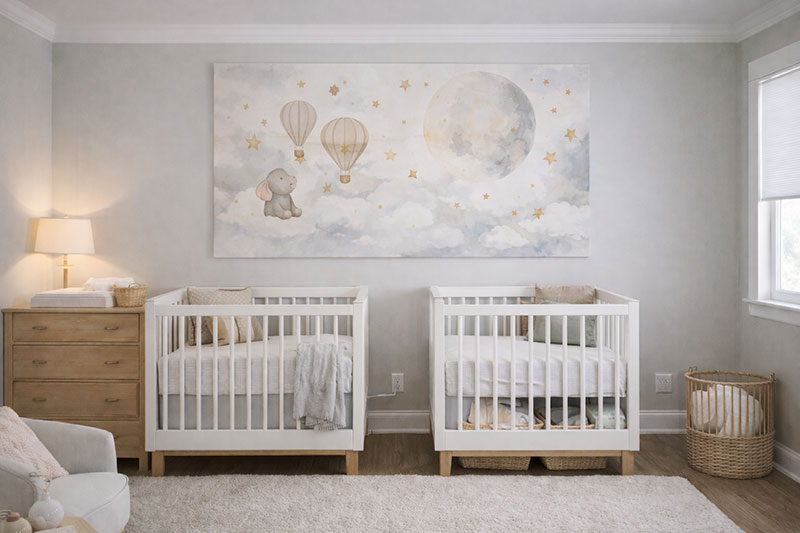
Many families choose a soft neutral palette that works well for both babies. Light colors often make the room feel larger and brighter.
Matching crib bedding or coordinated wall art can help unify the space without making the room feel repetitive.
Another popular idea is creating two subtle crib areas that share the same color theme but include small personal touches for each baby.
When the layout is settled, the room practically decorates itself. Keep the palette quiet, repeat the same finishes on both sides, and let one bold element do the talking so the space feels intentional, not busy.
When the layout is thoughtful and the room stays uncluttered, a twin nursery becomes a peaceful place where both babies can rest and grow.
Twin Nursery Layout FAQ
What is the best layout for a twin nursery?
The best twin nursery layout keeps both cribs in one clear sleep zone, places changing and storage together, and leaves an open walkway through the middle of the room.
Can two cribs fit in a small nursery?
Yes. Two cribs can fit in a small nursery when the furniture is kept simple, the center walkway stays open, and unnecessary extra pieces are removed.
Should twin cribs be placed side by side?
Twin cribs can be placed side by side along one wall if there is enough walking space and safe clearance around both cribs. In smaller rooms, placing cribs on separate walls may work better.
How do you keep a twin nursery from feeling crowded?
Use compact furniture, combine the dresser and changing station, use vertical storage, and avoid filling every wall with extra pieces.
When you click on links to various merchants on this site and make a purchase, this may result in this site earning a commission. This does not affect the price you pay.

UBGI Gold Standard 2026
Reviewed under the site's
editorial checklist.
Photos, decorating ideas, party setups and reader submissions are shared for inspiration unless a page is specifically presented as a pattern, tutorial, reference guide or step-by-step project. Follow the instructions, measurements, safety guidance and manufacturer directions provided for the particular project or product.
About Jan | Contact | Baby Nursery Ideas (Blog) | Site Map | Privacy Policy | Disclosure Policy | Disclaimer | Affiliate Disclosure | Earnings Disclosure | Facebook | Pinterest
I am a participant in the Amazon Services LLC Associates Program, an affiliate advertising program designed to provide a means for us to earn fees by linking to Amazon. As an Amazon Associate I earn from qualifying purchases.
Copyright © 2006-2026. All Rights Reserved.