Small 8x10 Nursery Layout Ideas That Actually Fit
A small 8x10 nursery layout has to function inside a true 80-square-foot room. That means realistic furniture placement, clear walking space, and a layout built around traffic flow instead of decoration. In a space this tight, every inch matters. The crib cannot float randomly. The dresser cannot block pathways. The chair cannot crowd the door swing. This guide shows how to position the crib, storage, and movement zones so the room feels intentional instead of cramped.
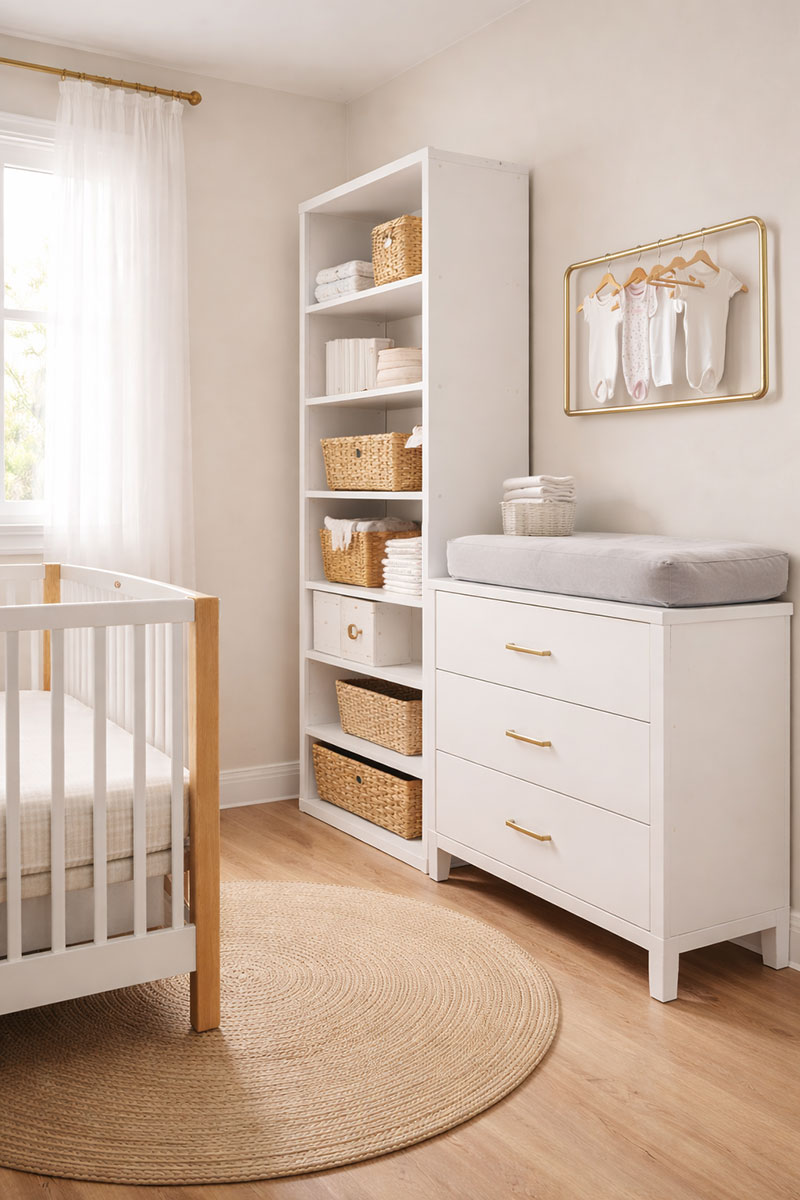
This layout example shows how a real 8x10 nursery can stay attractive without sacrificing clearance or safety.
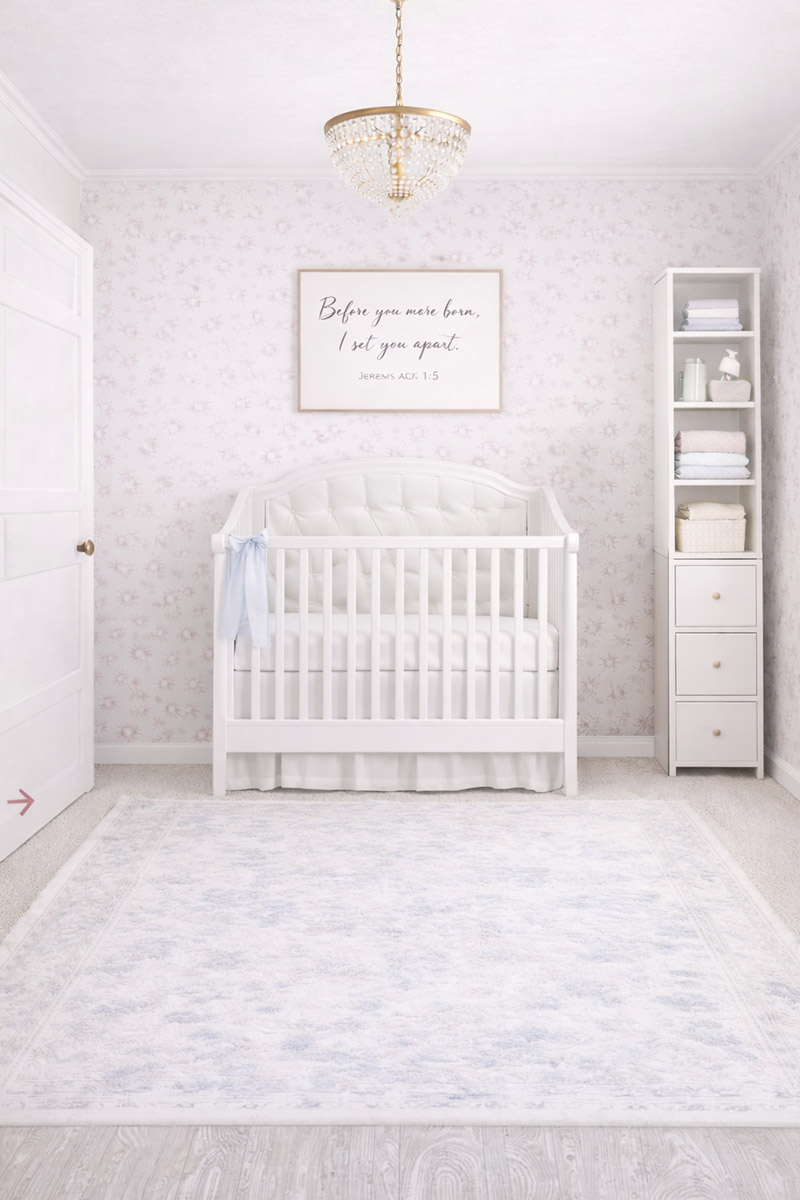
This page is part of the broader nursery layout planning guide, where different room sizes and shapes are compared side by side. You can view the full layout overview here: Nursery layout ideas.
On this page
Primary Goals of an 8x10 Nursery Layout
Why the Room Has to Work Before It Looks Pretty
Primary Goals of an 8x10 Nursery Layout
An 8x10 nursery layout is the practical plan for fitting a full-size crib, storage, and safe walking space inside a room that measures eight feet by ten feet. In an 80-square-foot nursery, furniture scale and door clearance matter more than decor choices.
The small 8x10 nursery layout ideas on this page are not about cramming furniture into a tiny room. They are about making an 80 square foot nursery function safely and calmly around one central piece, the crib. In a room this size, every decision supports three goals. Safe crib placement. Clear walking space. Storage that goes up instead of out.
This guidance assumes a full-size crib that complies with current United States federal safety standards.
Start with the crib wall
The crib is the anchor of the room. It should rest on a solid wall, away from windows, cords, shelves, or anything that hangs above it. You need standing space along at least one long side. No squeezing. No twisting.
In most cases, placing the crib first and building the room around it is the correct approach.
Keep the walking path open
An 8x10 nursery layout fails when the walking path disappears. The door must open fully. You should be able to walk directly to the crib without stepping around obstacles. That clear path is not empty space. It is functional space.
This is where the room either breathes or doesn’t.
How to arrange furniture in an 8x10 nursery
To arrange furniture in an 8x10 nursery, place the crib first against a solid wall and leave standing space along one long side. Position a slim changing surface nearby without blocking the door swing. Use tall vertical storage instead of wide dressers, and keep the center of the room clear for walking. This layout preserves traffic flow inside an 80-square-foot space.
Think Vertical
Floor space is limited. Height is not.
Before choosing tall units or slim cabinets, review nursery storage ideas for small rooms to see which vertical solutions preserve walkway clearance in compact layouts.
Tall, narrow storage units protect the center of the room. Wide dressers often dominate the wall and steal movement space. In a small nursery room, vertical storage keeps the layout balanced.
The same concept applies to crib size, and this guide to mini crib options for small spaces shows which compact designs help preserve that open floor area.
8x10 nursery layout checklist
- The crib sits against a solid wall with standing room on one long side.
- The door opens fully without hitting furniture.
- You can walk directly to the crib without turning sideways.
- Storage is vertical rather than wide.
- The center of the room remains clear for movement.
If any item fails, adjust furniture scale before adding new pieces.
Why the Room Has to Work Before It Looks Pretty
An 8x10 nursery can look beautiful online and still feel frustrating in real life.
The layout is what you feel at two in the morning. It is how far you walk to grab wipes. It is whether drawers open cleanly. It is whether the crib is easy to access.
In an 8x10 nursery layout, vertical storage changes everything.
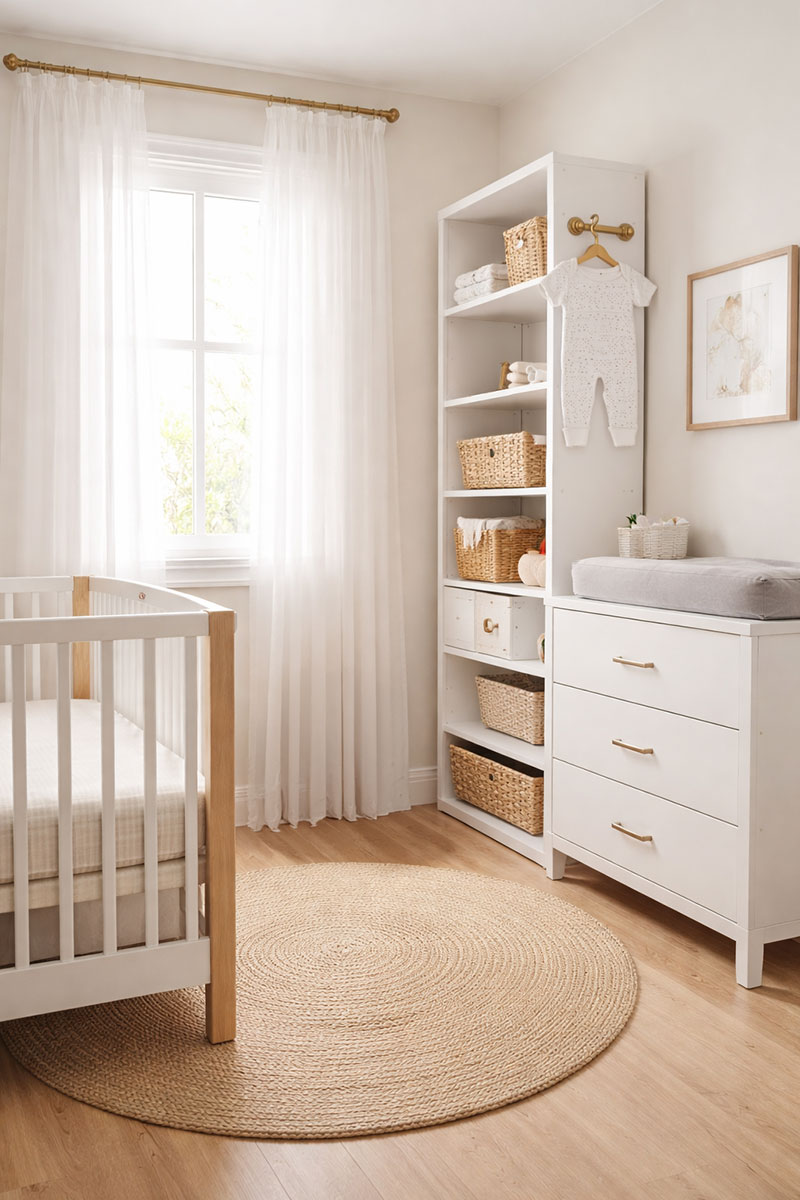
A tall narrow cabinet holds diapers, swaddles, and extra clothes without taking the center of the room. A wide dresser, even a pretty one, can steal the only open space you have.
That’s what makes the room either calm or cramped.
The Choice That Changes the Room
Most parents choose between a full dresser or a slim changing surface with vertical storage. In an 8x10 nursery, the slim option usually keeps the room balanced and open.
Compact storage options for an 8x10 nursery:
The open floor is not wasted space. It is walking room. It is breathing room.
Where Small Nursery Layouts Go Wrong
The biggest mistake is scale. A dresser that feels normal in a store can feel oversized in an 8x10. A glider that seems cozy can block drawer access. Small rooms do not forgive wide furniture.
Another problem is crib placement. Putting the crib under a window may look symmetrical, but windows bring cords, blinds, drafts, and hanging decor temptations. A solid wall behind the crib keeps the sleep area simpler and cleaner.
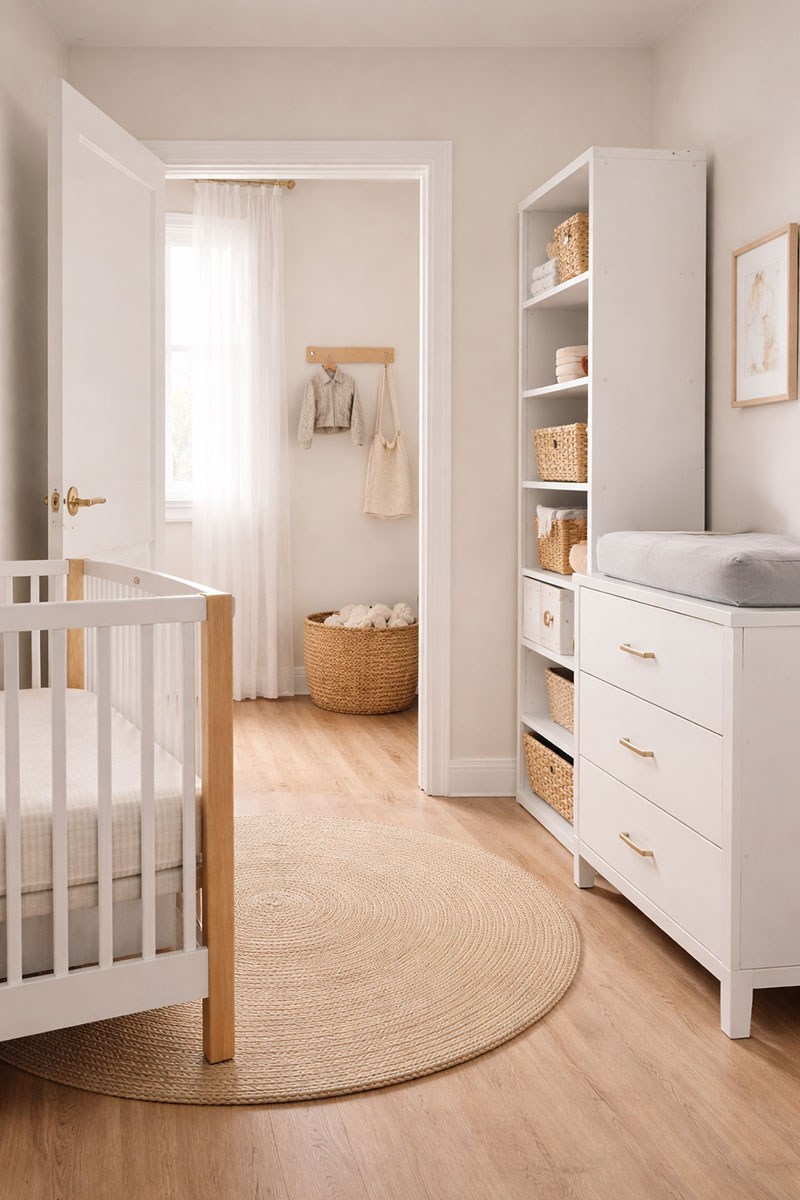
Door swing gets ignored too. When the nursery door hits a cabinet, it changes how you enter the room. It changes what you can carry. In a small nursery layout, door clearance matters.
Clutter creeps in quietly. Extra stools, baskets, little shelves. In an 8x10, every piece should earn its spot.
The non-negotiable layout rule
Protect the walkway. Storage can move. The walking path cannot.
That may seem like a small detail, but it carries weight.
Older Homes and Secondhand Concerns
Some 8x10 rooms have baseboard heaters, tight closets, or uneven wall space that limit usable placement areas. This page focuses strictly on layout positioning, not modifying furniture.
Small 8x10 Nursery Layout Ideas and the Furniture Check
Now the honest part. Did the furniture you chose make sense for an 8x10 nursery layout?
What the Room Tells You
Crib. It should sit flat on the floor against a solid wall. You need comfortable access to at least one long side.
Changing Surface. A narrow drawer unit or compact table often works better than a wide dresser. The key is drawer clearance and standing space.
For a more specific example of how those two key pieces can work together in one compact room, see this small nursery layout with crib and dresser guide.
To see which widths actually work without crowding the walkway, review dresser sizes that fit a small nursery before finalizing your furniture scale.Storage. Tall and narrow beats short and wide in a small nursery room.
Seating. Many families skip a large nursery chair in an 8x10 and move feeding or rocking to another space.
For comparison, this 10x10 nursery layout ideas page shows how a slightly larger room handles scale, and these nursery layout ideas for different room sizes compare what works across other nursery shapes and sizes.
If your room is slightly larger than this compact footprint, this 12x12 nursery layout guide shows how a medium-size room can fit the crib, storage, and walking space more comfortably without losing a calm, practical feel.
For an 8x10 room with four fairly even walls and a more centered footprint than a narrow layout, these small square nursery layout ideas can help you place the crib and storage without crowding the middle of the room.
Related Layout
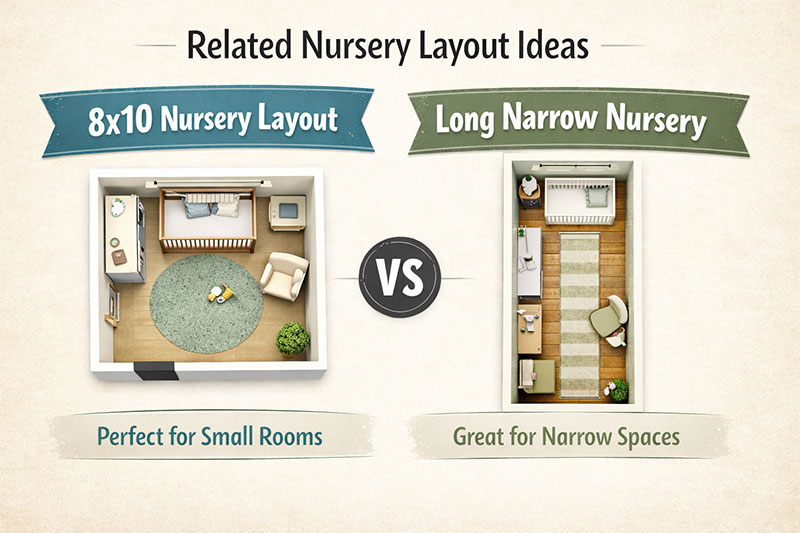
If your room is 8×10 but feels “extra skinny” because of a long wall of windows, a tight entry path, or a closet that steals the best corner, this companion layout shows the same calm, real-life setup—just stretched into a long, narrow footprint.
Long, Narrow Nursery Layout (real placement that still walks well)
Mini Layout Quiz
Which one sounds like your room?
- The crib fits, but storage feels bulky.
- Drawers open, but the walkway feels tight.
- Everything fits, but the room feels crowded.
Simple answer. The fix is usually changing furniture width, not adding more pieces.
Is an 8x10 room big enough for a nursery?
Yes. An 8x10 room is large enough for a nursery when furniture scale matches the space. A full-size crib, a narrow changing surface, and vertical storage can fit comfortably as long as the walkway stays clear and the door swing remains unobstructed. The key is limiting wide furniture that crowds an 80-square-foot layout.
Can an 8x10 nursery fit a crib and dresser?
It can, but wide dressers often crowd the room. In most 8x10 nursery layouts, a narrow drawer unit or tall storage cabinet preserves better traffic flow than a full-width dresser.
What Should I Do Now
Start by locking in the crib location. Protect the walking path next. Adjust storage last.
In a small 8x10 nursery layout, the crib zone should stay clean. No hanging decor. No cords. No heavy shelves nearby. That keeps the sleep space clear and calm.
For unusually shaped rooms, these pages show how traffic flow shifts in different layouts. long narrow nursery layout ideas and nursery layout for bedroom sharing.
For official crib safety information, the Consumer Product Safety Commission outlines federal crib safety standards here: Crib safety guidance from the CPSC.
An 8x10 nursery works when the furniture truly fits the space. Vertical storage, a solid wall behind the crib, and a clear walkway resolve most room stress in an 80-square-foot setup.
When you click on links to various merchants on this site and make a purchase, this may result in this site earning a commission. This does not affect the price you pay.

UBGI Gold Standard 2026
Reviewed under the site's
editorial checklist.
Photos, decorating ideas, party setups and reader submissions are shared for inspiration unless a page is specifically presented as a pattern, tutorial, reference guide or step-by-step project. Follow the instructions, measurements, safety guidance and manufacturer directions provided for the particular project or product.
About Jan | Contact | Baby Nursery Ideas (Blog) | Site Map | Privacy Policy | Disclosure Policy | Disclaimer | Affiliate Disclosure | Earnings Disclosure | Facebook | Pinterest
I am a participant in the Amazon Services LLC Associates Program, an affiliate advertising program designed to provide a means for us to earn fees by linking to Amazon. As an Amazon Associate I earn from qualifying purchases.
Copyright © 2006-2026. All Rights Reserved.