Changing Table Placement Tips for a Safe, Practical Nursery
Correct changing table placement can make diaper changes easier, while the wrong setup can turn the nursery into a room that feels cramped the first week you use it. The best place for a changing table is near the crib, away from windows, cords, and heaters, with diapers, wipes, and baby clothes close enough to reach without stepping across the room.
Planning the whole nursery layout?
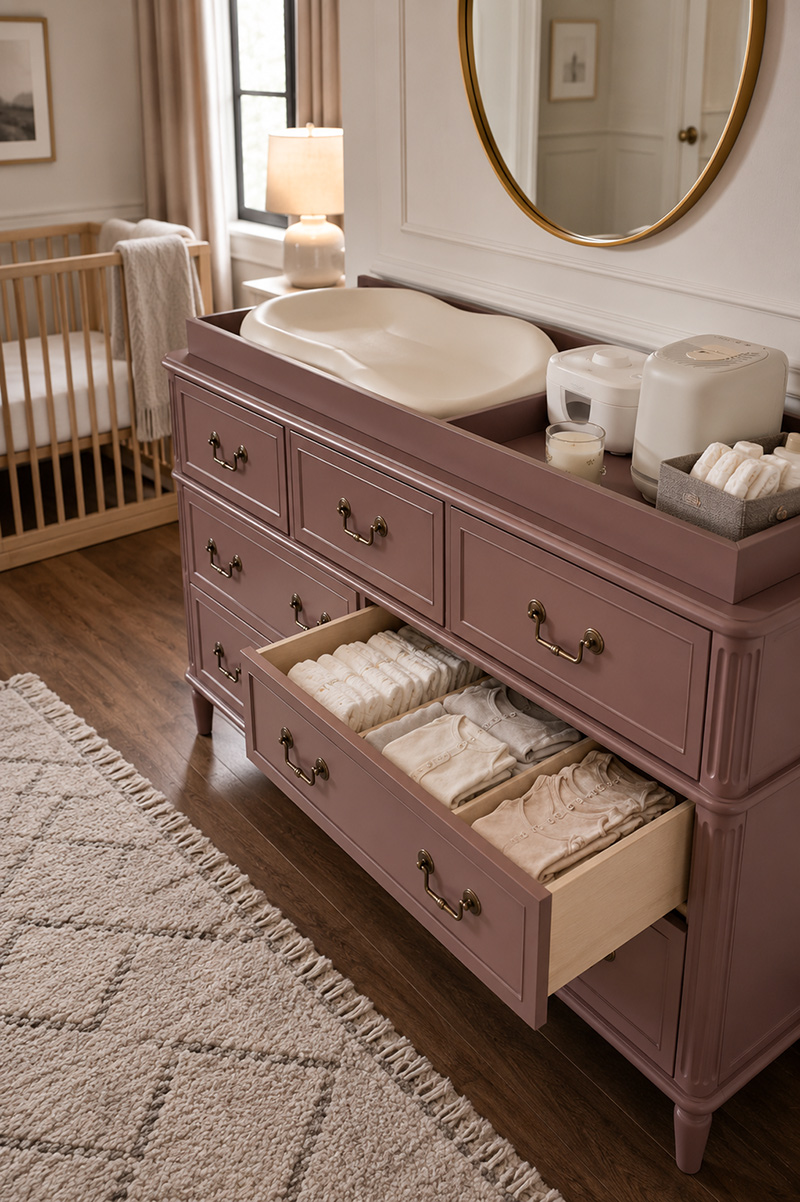
Quick Navigation
Where Should a Changing Table Go in a Nursery?
People usually notice the problem after the nursery is mostly finished. The crib is assembled. The dresser is loaded. Diapers are stacked away somewhere that seemed logical at the time. Then the first late-night diaper change happens and suddenly the room layout starts working against you instead of helping.
The best changing table placement keeps diapers, wipes, sleepers, and extra supplies within easy reach while still leaving enough walking space to move comfortably around the nursery. In most rooms, a dresser changing station placed near the crib creates the cleanest setup for nighttime diaper changes and everyday organization.
A nursery that is easy to move through every day usually works better than one arranged only for appearance.
Many families realize pretty quickly that the easiest nursery to live with is usually the one with the clearest floor space and the least amount of unnecessary furniture.
If you are still arranging the overall room, these nursery layout ideas help connect crib placement, dresser spacing, and traffic flow before the room becomes crowded.
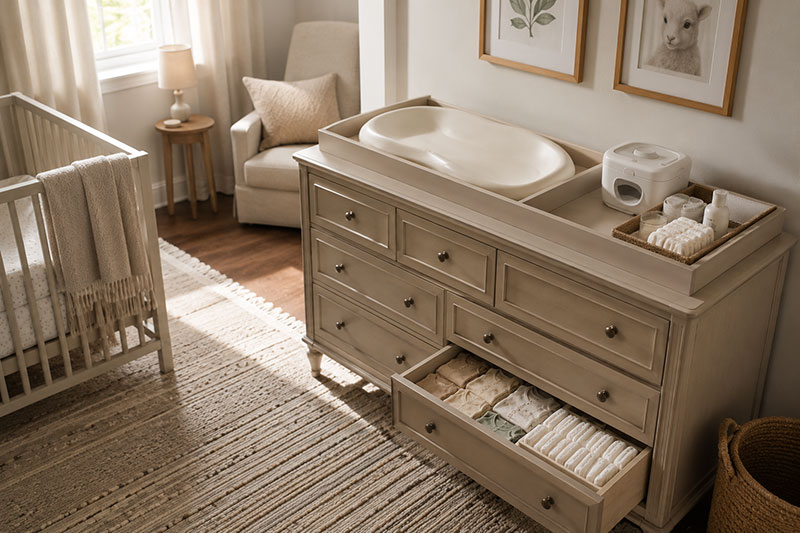
See compact dresser changing stations for smaller nursery layouts
Small Nursery Layout Ideas That Keep the Room Usable
Small nurseries become frustrating fast when every drawer blocks another piece of furniture. One crowded corner can completely change how the room works once diaper baskets, laundry piles, and nighttime feedings become part of everyday life.
One arrangement that consistently works well is placing the crib and dresser changing station along the same wall with enough spacing to move naturally between them. That setup keeps nighttime movement simple and leaves the center of the room open.
I believe one of the biggest nursery mistakes is buying furniture first and trying to force the room around it afterward.
Many nurseries run into this issue because oversized dressers and bulky changing tables look manageable in stores but consume far more floor space once assembled.
These small nursery layout ideas show how fewer furniture pieces often create a better long-term setup than trying to fit every possible nursery item into one room.
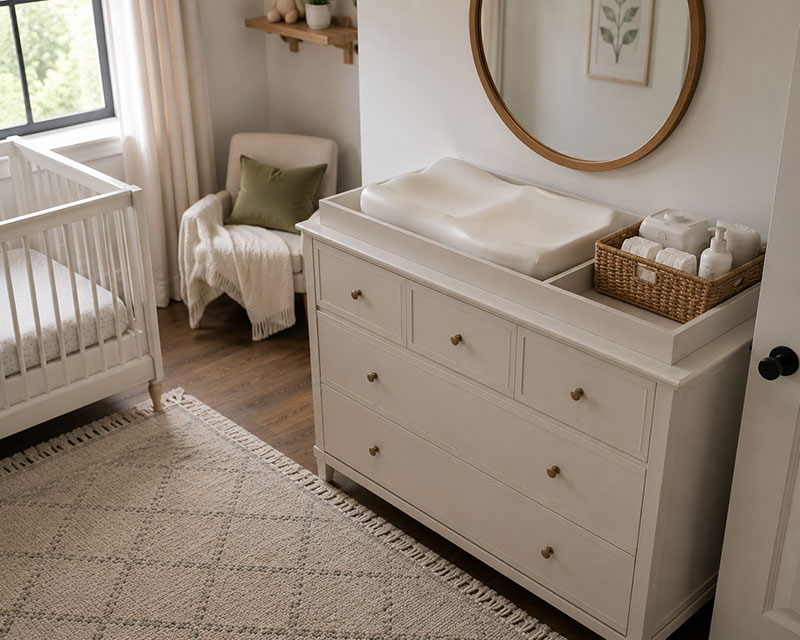
For tighter spaces, this nursery layout for a 10x10 room explains how spacing around dressers and cribs can completely change room function.
Changing Table Organization That Makes Daily Life Easier
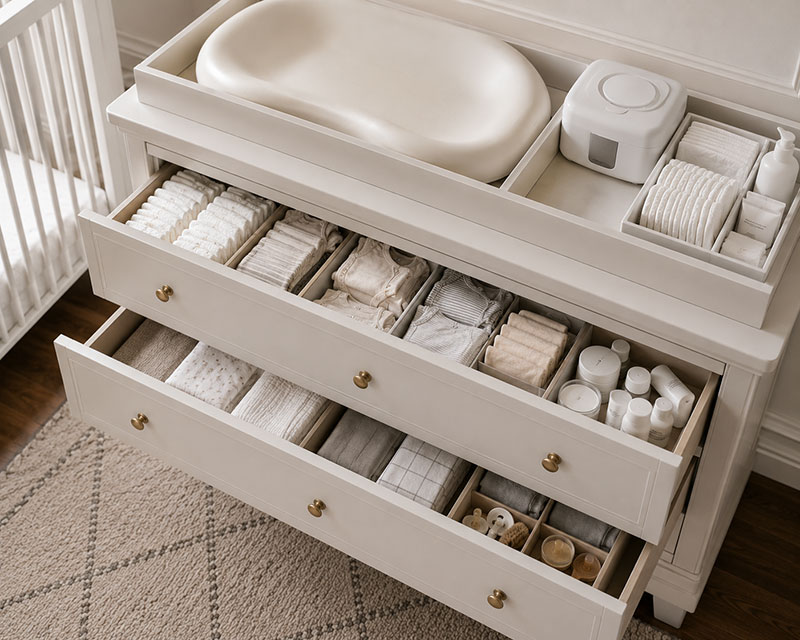
The nurseries that stay organized longest usually keep the changing setup simple. A few diapers in the top drawer. Wipes within reach. Extra sleepers folded nearby. Nothing stacked too high or buried behind decorative storage bins.
One thing people rarely think about until later is how often the top drawer gets opened during the first few months. The smoothest nursery setups keep the most-used items directly below the changing surface instead of across the room.
Parents often notice this after the baby arrives. The nursery starts becoming less about decoration and more about how quickly everything can be reached with one free hand.
Dressers with wider top drawers usually create a more efficient changing station because diapers, creams, burp cloths, and extra sleepers stay separated instead of piled together.
Before setting a changing pad directly on a dresser, check whether the pad can trap moisture or leave marks on the furniture finish. Some parents have reported stains from popular wipe-clean pads, so I would use one that features small non-slip rubber feet or a protective airflow layer underneath the pad to help protect the dresser top.
These nursery storage ideas can help keep changing supplies organized without filling the room with additional furniture.
Should the Changing Table Go Near the Crib?
Keeping the changing table near the crib usually creates the easiest nighttime routine because fewer steps are involved once the room is dark and everyone is tired.
The changing station does not need to sit directly beside the crib. A little separation often creates better walking space and prevents the nursery from feeling crowded.
This usually happens when someone pushes every furniture piece tightly together trying to create more open floor space. The room may look organized at first, but drawers become difficult to open and movement starts feeling awkward.
Safe crib placement still matters first. This guide on where to put a crib in a nursery explains spacing around windows, vents, cords, and heaters.
Changing Table Placement Mistakes That Cause Problems Later
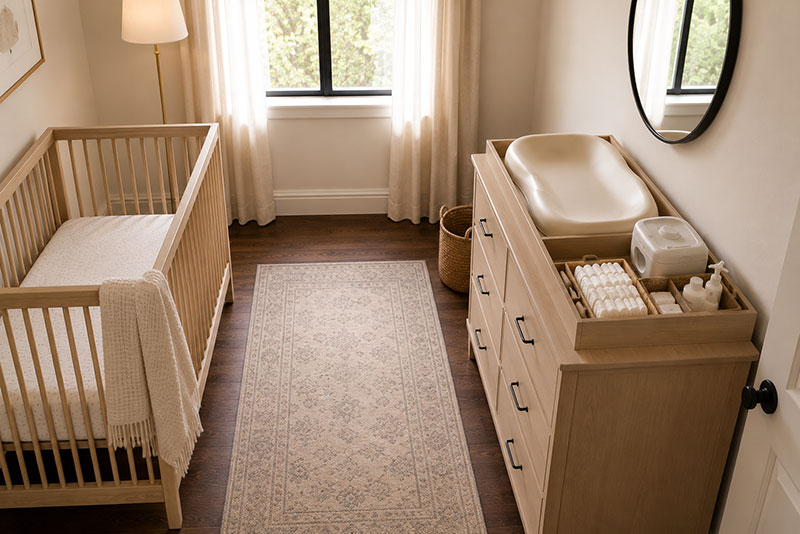
One common mistake is placing the changing table under a window where cords, bright sunlight, or colder air eventually become annoying.
Another issue appears when a rocking chair blocks dresser drawers. The room may still photograph well, but everyday use quickly becomes irritating.
Corner placement can also backfire because standing sideways during diaper changes gets old quickly once it happens several times every night.
A changing table should never sit close enough to blind cords, hanging decor, shelves, or unsecured wall pieces that could fall within reach.
For current nursery safety guidance in the United States, the U.S. Consumer Product Safety Commission safe sleep recommendations remain one of the best long-term references.
These nursery furniture layout ideas also help avoid furniture spacing mistakes that become frustrating once the nursery is fully in use.
Nighttime Nursery Setup Tips That Work Better Long Term
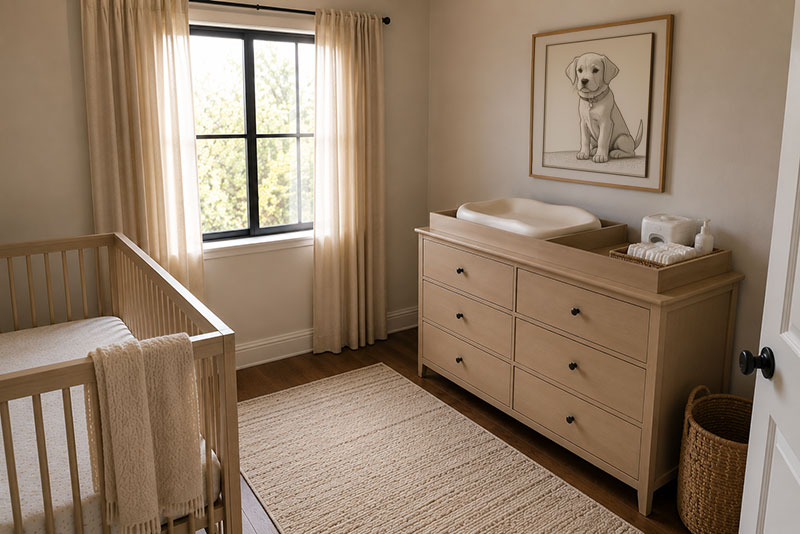
Nighttime diaper changes reveal whether the nursery layout truly works. During the day, almost any setup can seem manageable. Overnight routines tell a different story.
Keeping wipes, sleepers, diapers, and extra swaddles within arm’s reach of the changing station reduces unnecessary movement and helps the room stay quieter.
Nurseries with clear walking space near the changing station usually stay easier to use over time because furniture does not need constant rearranging as storage needs change.
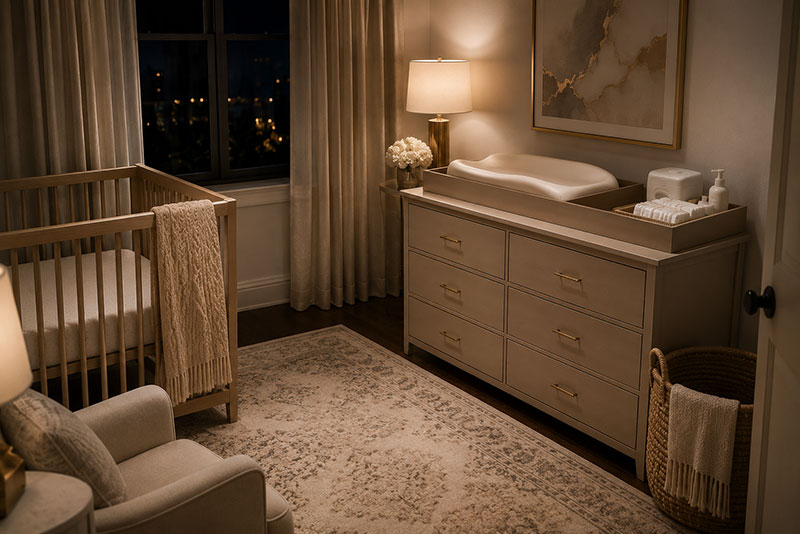
Low lighting near the changing table also matters more than people expect. A nearby lamp or dim wall light usually works better than bright overhead lighting during overnight diaper changes.
These nursery lighting ideas can help create a better nighttime nursery setup without making the room too bright.
Changing Table Placement Checklist for Better Nursery Flow
Before finalizing nursery furniture placement, check for these common issues:
- Enough room to fully open dresser drawers
- Walking space beside the crib
- No nearby blind cords or dangling items
- Easy access to diapers and wipes
- Lighting nearby for nighttime diaper changes
- No blocked closet doors
- Changing supplies reachable with one hand
- Clear floor space for movement
If your room still feels crowded after setup, these best dressers for a small nursery can help reduce wasted space without sacrificing storage.
Quick Answer About Changing Table Placement
The best changing table placement is usually close to the crib, away from windows and cords, with enough open floor space to comfortably move around during nighttime diaper changes. In smaller nurseries, dresser changing stations often create a better long-term layout because they combine storage and diaper changing in one space-saving setup.
Frequently Asked Questions About Changing Table Placement
Can a changing table go beside a crib?
Yes. Leaving a little space between the crib and changing station often creates the easiest nighttime setup while still keeping supplies nearby.
Where should you avoid putting a changing table?
A changing table should not sit directly beneath windows, near cords, beside heaters, or in corners where movement becomes difficult.
Is a dresser better than a separate changing table?
For many nurseries, a dresser changing station works better because it combines storage and diaper changing in one furniture piece.
What should stay inside changing table drawers?
The top drawers usually work best for diapers, wipes, creams, burp cloths, and extra sleepers that need quick access during diaper changes.
How much room should surround a changing table?
There should be enough open space to fully open drawers and comfortably stand in front of the changing area without bumping nearby furniture.
When you click on links to various merchants on this site and make a purchase, this may result in this site earning a commission. This does not affect the price you pay.

UBGI Gold Standard 2026
Reviewed under the site's
editorial checklist.
Photos, decorating ideas, party setups and reader submissions are shared for inspiration unless a page is specifically presented as a pattern, tutorial, reference guide or step-by-step project. Follow the instructions, measurements, safety guidance and manufacturer directions provided for the particular project or product.
About Jan | Contact | Baby Nursery Ideas (Blog) | Site Map | Privacy Policy | Disclosure Policy | Disclaimer | Affiliate Disclosure | Earnings Disclosure | Facebook | Pinterest
I am a participant in the Amazon Services LLC Associates Program, an affiliate advertising program designed to provide a means for us to earn fees by linking to Amazon. As an Amazon Associate I earn from qualifying purchases.
Copyright © 2006-2026. All Rights Reserved.