Nursery Layout With Crib and Dresser Ideas for Small Rooms
A nursery layout with crib and dresser works best when the room feels safe, open, and easy to use during tired middle-of-the-night moments, not just pretty in photos.
Jump to:
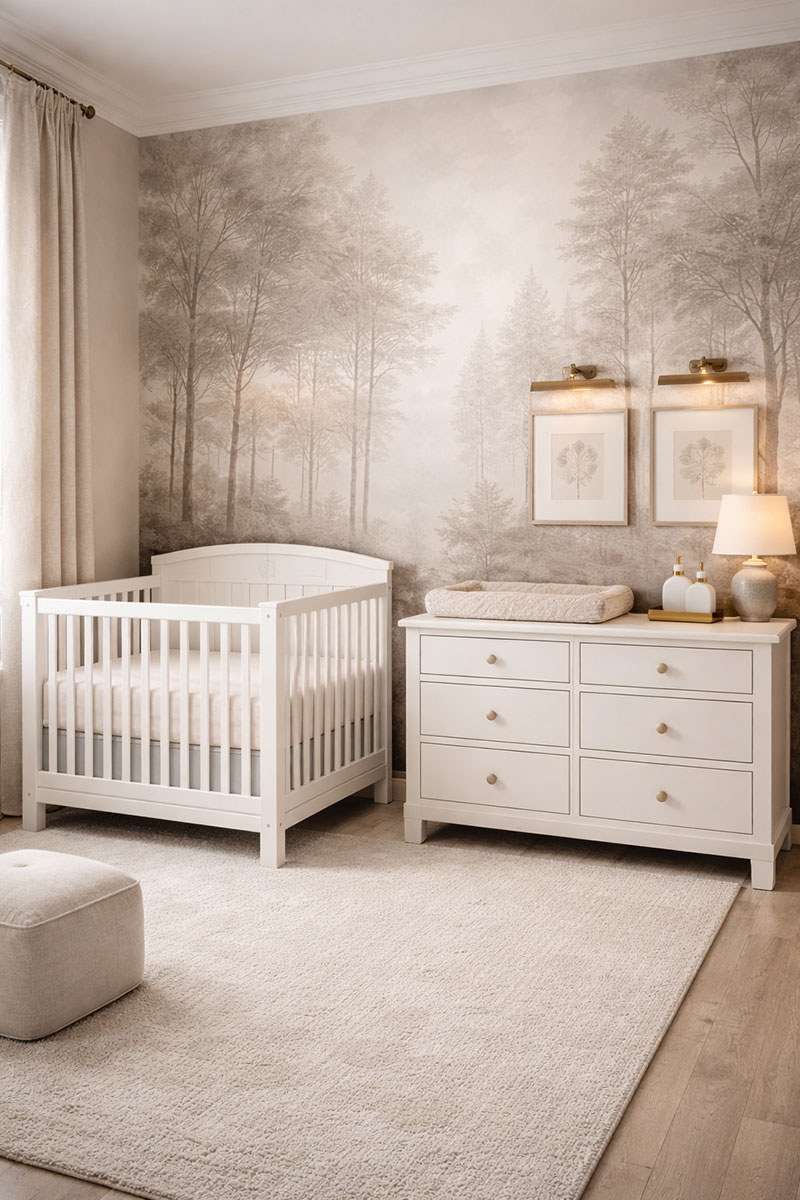
If you are trying to plan a nursery layout with crib and dresser, the goal is not to fill every wall. The real goal is to create a room that feels calm, gives you walking space, and keeps the crib in the safest spot possible. A good layout should make diaper changes easier, feeding easier, and daily cleanup less frustrating too.
In most baby rooms, the crib and dresser are the two biggest furniture pieces. That means your layout decisions matter right away. If you place them well, even a small nursery can feel useful and open. If you place them badly, the room can feel crowded fast.
The safest starting point is simple. Keep the crib away from windows, cords, and anything that could hang into the sleep space. Then place the dresser where it is easy to reach but does not crowd the crib. That one decision solves most nursery layout problems before they start.
Quick answer: The best nursery layout with crib and dresser usually places the crib on the longest clear wall and the dresser on a nearby wall with enough space to walk between them comfortably. The crib should stay away from windows and cords, and the dresser should be anchored securely to the wall.
The best wall for the crib usually comes first
Start with the crib because safe crib placement matters more than perfect symmetry. In most rooms, the best crib wall is the longest uninterrupted wall. That gives the crib visual breathing room and keeps it away from windows, heaters, vents, and door swings.
Avoid pushing the crib directly under a window. Even if it looks balanced, it is usually not the safest choice. Window cords, blinds, drafts, and strong sunlight can all turn that wall into a poor spot for sleep. A side wall is often better.
If your room is tight, look at this related guide for cribs for small spaces. It helps you think through the safest options when every inch matters.
Where to put the dresser in relation to the crib
Once the crib wall is chosen, place the dresser where it supports the room instead of fighting it. In many nurseries, the best spot is on the adjacent wall rather than directly across from the crib. That keeps the room feeling balanced and gives you a natural work zone for diapers, clothes, and storage.
A dresser can also double as a changing station, which makes this layout even more practical. If you use it that way, make sure there is enough open floor space beside it so you can move safely while carrying the baby.
The dresser should not be so close to the crib that the room feels crowded. You want a little visual separation between the sleep area and the storage area. Even a small gap can make the room feel calmer and easier to use.
For families planning more detailed room shapes, see nursery room layout ideas and best dressers for a small nursery for more specific placement ideas.
For a focused look at the storage wall itself, this guide to where to put a dresser in the nursery helps you choose the safest, most practical spot before finalizing the crib-and-dresser layout.
Easy nursery layout patterns that usually work
Most rooms do well with one of these simple arrangements.
If you are trying to fit two cribs into one room instead of one crib and one dresser, these twin nursery layout ideas can help you compare spacing options that still leave the room safe and easy to move through.
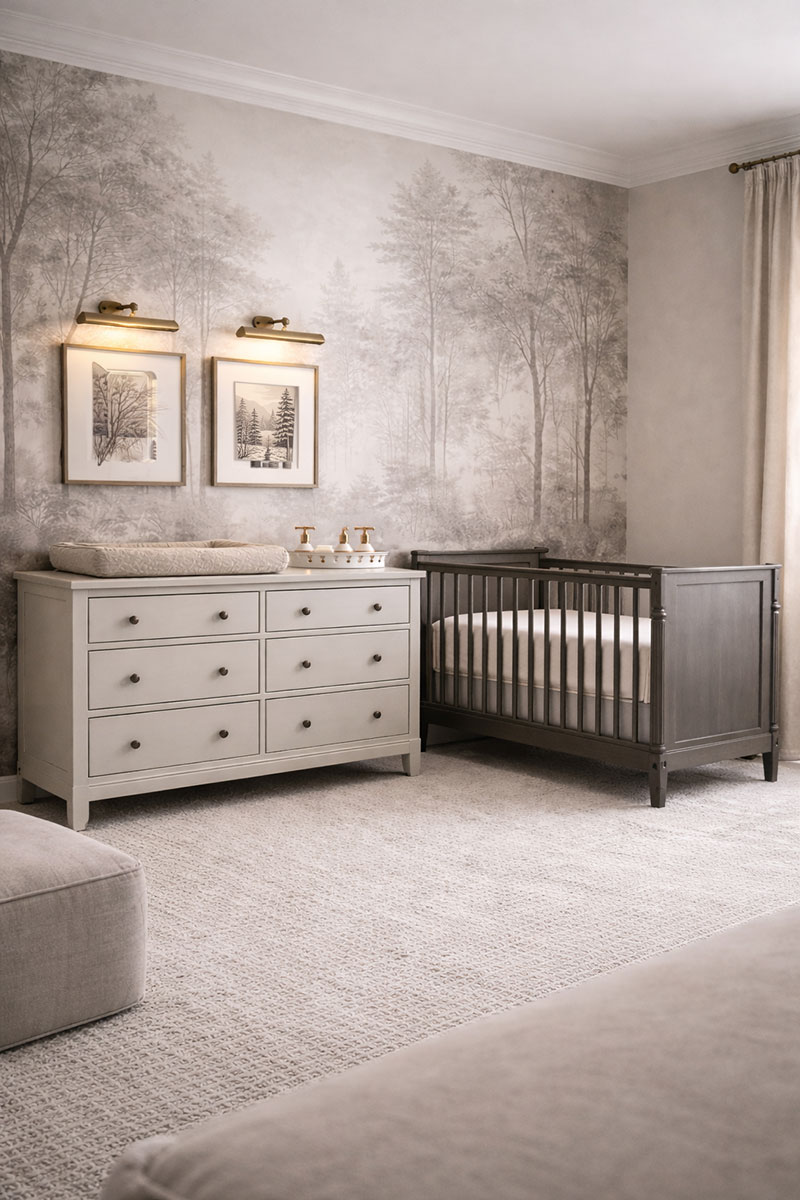
Layout 1: L-shape placement. Put the crib on one wall and the dresser on the next wall over. This is one of the easiest and safest layouts because it keeps both pieces accessible without making the room feel boxed in.
Layout 2: Opposite-wall placement. Put the crib on one wall and the dresser across from it. This works best in medium or larger rooms where there is still clear walking space in the middle.
Layout 3: Same-wall placement with distance. In some long rooms, the crib and dresser can go on the same wall with enough separation. This works only if the wall is long enough that the crib does not feel crowded.
Layout 4: Crib on feature wall, dresser near the entry. This layout works well because it keeps storage close to the door while letting the crib stay in the calmest part of the room.
If your room shape is making layout harder, these guides can help you compare the best options more clearly. For tighter spaces, see this nursery layout for an 8x10 room or this nursery layout for a 10x10 room. For a more rectangular room, this long narrow nursery layout guide can help. If your room is a medium square size with a little more flexibility, this 12x12 nursery layout guide shows how to arrange the crib, dresser, and walking space without making the room feel crowded. If your nursery has four fairly even walls and no strong long-wall advantage, these nursery layout ideas for square rooms can help you place the crib and dresser without crowding the center of the room.
For a broader comparison across more room shapes and sizes, explore these nursery layout ideas for different room sizes.
Related shopping option:
How much space you really need between the crib and dresser
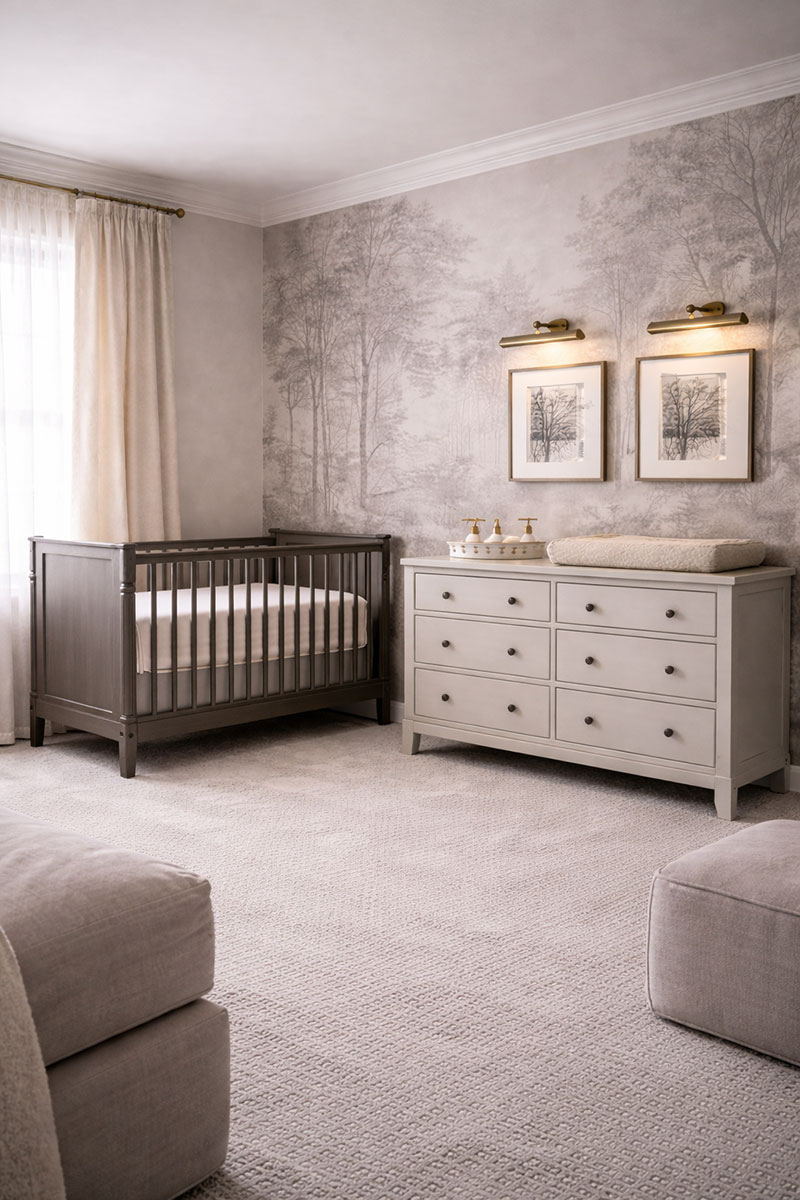
You do not need a huge room to make this work. What you do need is enough space to walk comfortably, open drawers, and reach the crib without bumping into furniture. That is what makes the room feel easy instead of frustrating.
Think about real-life use, not just looks. Can you open the dresser drawers without hitting another piece of furniture? Can you stand at the crib comfortably? Can you carry laundry, diapers, or a sleeping baby through the room without twisting sideways? Those questions matter more than matching furniture placement.
If the dresser is doubling as a changing station, leave yourself enough room to step back and move safely. Tight walkways may look fine in a photo but can feel annoying very quickly in daily life.
Common mistakes to avoid in a nursery layout with crib and dresser
The biggest mistake is treating the crib and dresser like decorative objects instead of daily-use furniture. A nursery should work hard for you.
Another common mistake is centering the crib under the window just because it looks nice. Safety comes first. The crib should stay away from cords, drapes, and anything that can create risk.
A third mistake is overfilling the room. If you already have a crib and dresser, you may not need a bulky chair, large bookcase, and extra storage tower too. Sometimes the best nursery layout is the one that leaves a little empty space.
If you are working with limited space, you may also like nursery storage for small room and organizing a small nursery.
Dresser safety matters just as much as placement
Every nursery dresser should be anchored securely to the wall. This matters whether the dresser is being used only for clothes or as a changing station too. Babies grow fast, and toddlers climb faster than many parents expect.
Choose a sturdy dresser with smooth drawer action and a surface that is easy to clean. If you are adding a changing pad on top, make sure it fits well and does not slide around.
For general furniture safety information, it is smart to review guidance from the U.S. Consumer Product Safety Commission.
Best crib and dresser layout for small nurseries
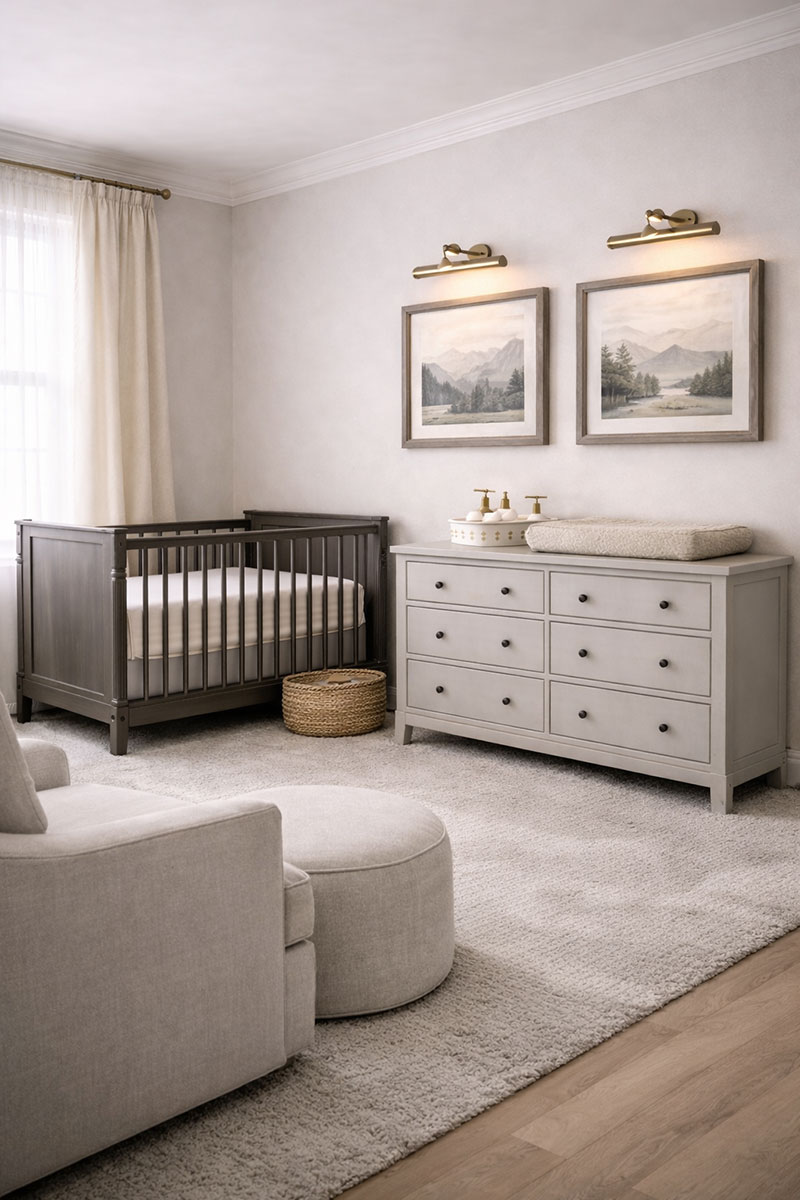
In a small nursery, the best plan is usually a crib on the main wall and a dresser on the shortest practical wall, often close to the door. This keeps the center of the room more open and helps the room feel larger. Choosing the right crib size can make that layout work much better, and this guide to compact mini cribs for small nurseries shows which options fit without crowding the room.
Try to use vertical storage instead of adding more floor furniture. A simple dresser can do a lot of work if it is organized well. That is often better than squeezing in extra pieces that make the room harder to use.
The area beneath the crib can also help reduce the need for extra furniture, and my under crib storage ideas for small nurseries show ways to store linens, diapers, blankets, and backup baby items while keeping the main walking path open.
A well-planned dresser can replace several extra storage pieces, and these nursery dresser organization ideas show how to sort baby clothes, diapers, blankets, and changing supplies inside the drawers you already have.
This is also why planning the room on paper first can be helpful.
To test crib and dresser placement before you start shifting heavy furniture, use this nursery layout planner to sketch the room and protect your walking space.
A simple nursery floor plan layout can help you sketch crib placement, dresser spacing, rug size, and walking paths before you start moving heavy furniture. If the crib and dresser are already placed, my nursery rugs guide can help you choose a rug that fits the layout without blocking drawers or crowding the crib area.
It lets parents think about movement, storage, and safety before they start dragging furniture around.
Frequently asked questions
Where should a crib and dresser go in a nursery?
The crib usually works best on the longest clear wall, away from windows, cords, and direct drafts. The dresser often works best on a nearby wall where it is easy to reach but does not crowd the crib.
Can a crib and dresser go on the same wall?
Yes, if the wall is long enough and the room still feels open and easy to move through. In many nurseries, though, placing the dresser on an adjacent wall creates a better balance and leaves more comfortable walking space.
How much space should be between a crib and dresser?
There is no single perfect number, but there should be enough room to walk comfortably, reach the crib easily, and open dresser drawers without bumping into other furniture. The room should feel safe and usable, not cramped.
Should a crib go under a window?
No. A crib should usually not be placed under a window because of cords, drafts, window coverings, and other possible hazards. A clear wall away from the window is usually the safer choice.
Can a dresser be used as a changing table in a nursery?
Yes. Many parents use a dresser as a changing station because it saves space and adds storage. The dresser should be sturdy, anchored securely to the wall, and topped with a properly fitting changing pad if one is used.
A good nursery layout should feel easy every day
A good nursery layout with crib and dresser is not about creating a perfect showroom. It is about making the room safer, calmer, and easier to use when you are tired and carrying a baby with one arm.
If the crib is in a safe position, the dresser is secure and easy to reach, and the room still has walking space, you are already doing the important part right. That is the kind of layout that keeps working long after the cute first setup photos are over.
Before you finalize the room, it may also help to compare your plan with nursery layout with two cribs for twins if you want more placement examples across different room sizes and family needs.
Also related: nursery room layout ideas, and nursery ideas.
When you click on links to various merchants on this site and make a purchase, this may result in this site earning a commission. This does not affect the price you pay.

UBGI Gold Standard 2026
Reviewed under the site's
editorial checklist.
Photos, decorating ideas, party setups and reader submissions are shared for inspiration unless a page is specifically presented as a pattern, tutorial, reference guide or step-by-step project. Follow the instructions, measurements, safety guidance and manufacturer directions provided for the particular project or product.
About Jan | Contact | Baby Nursery Ideas (Blog) | Site Map | Privacy Policy | Disclosure Policy | Disclaimer | Affiliate Disclosure | Earnings Disclosure | Facebook | Pinterest
I am a participant in the Amazon Services LLC Associates Program, an affiliate advertising program designed to provide a means for us to earn fees by linking to Amazon. As an Amazon Associate I earn from qualifying purchases.
Copyright © 2006-2026. All Rights Reserved.