Nursery Layout Planner: How to Plan a Safe and Practical Baby Room
Nursery layout planner tools help parents decide where to place the crib, dresser, chair, and storage so the baby room stays safe, comfortable, and easy to use every day. Planning the nursery layout before moving furniture makes it easier to keep clear walking space, follow basic crib safety guidelines, and create a simple floor plan that works in both small and larger rooms. A well-planned nursery layout also helps parents avoid common mistakes like placing the crib near windows, crowding the changing area, or blocking storage access. This nursery planning guide explains how to design a practical baby room step-by-step using simple nursery floor plan ideas that work in most homes in the United States.
Trying to make the nursery layout work before you move furniture? Start here:
What crib works best in a tight spot?
What nursery furniture can you skip completely?
Do parents regret getting a changing table?
Does a baby really need a separate nursery?
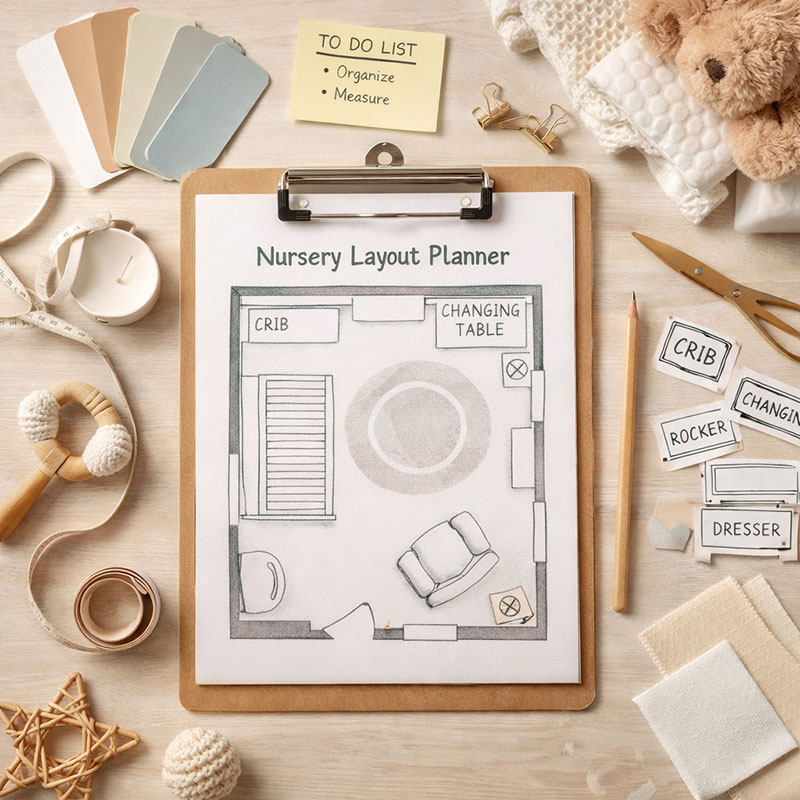
See recommended compact cribs for small spaces
Jump to the section you need
How a Nursery Layout Planner Works
Simple Nursery Floor Plan Example
How a Nursery Layout Planner Works
A nursery layout planner helps parents decide where the crib, dresser, chair, and storage should go so the baby's room stays safe, comfortable, and easy to use every day. Planning the nursery layout before moving furniture makes it easier to keep clear walking space, organize daily routines, and avoid room arrangements that look pretty at first but feel awkward once the baby arrives.
Many nurseries feel crowded because the furniture was added piece by piece without a simple floor plan. A nursery layout planner solves that problem by helping parents think about movement first. The crib needs safe placement. The dresser needs room for drawers to open. The chair needs enough space to sit down, stand up, and feed the baby comfortably.
A practical nursery layout also makes daily life smoother. Parents need to move quickly from the doorway to the crib at night, reach supplies without crossing the room, and keep the space calm instead of cluttered. That is why layout matters so much more than decorative extras.
This guide explains how to arrange nursery furniture safely and comfortably using simple nursery floor plan ideas that work in most homes.
For additional nursery design inspiration and practical room setup ideas, see nursery ideas and baby room planning.
Room Size Layout Index
Room size changes what works in a nursery. Parents working with four equal walls often need a different setup approach, so these nursery layout ideas for square rooms show how to place the crib, dresser, and chair without wasting the center of the room.
A layout that feels open in a larger room may feel cramped in a smaller one. These related guides can help you compare room shapes, dimensions, and furniture arrangements before you settle on a final nursery floor plan.how to arrange a nursery in a 12x12 room
layout ideas for a twin baby nursery
popular nursery layout ideas that work
practical nursery room layout examples
simple nursery floor plan layouts
Safe Crib Placement
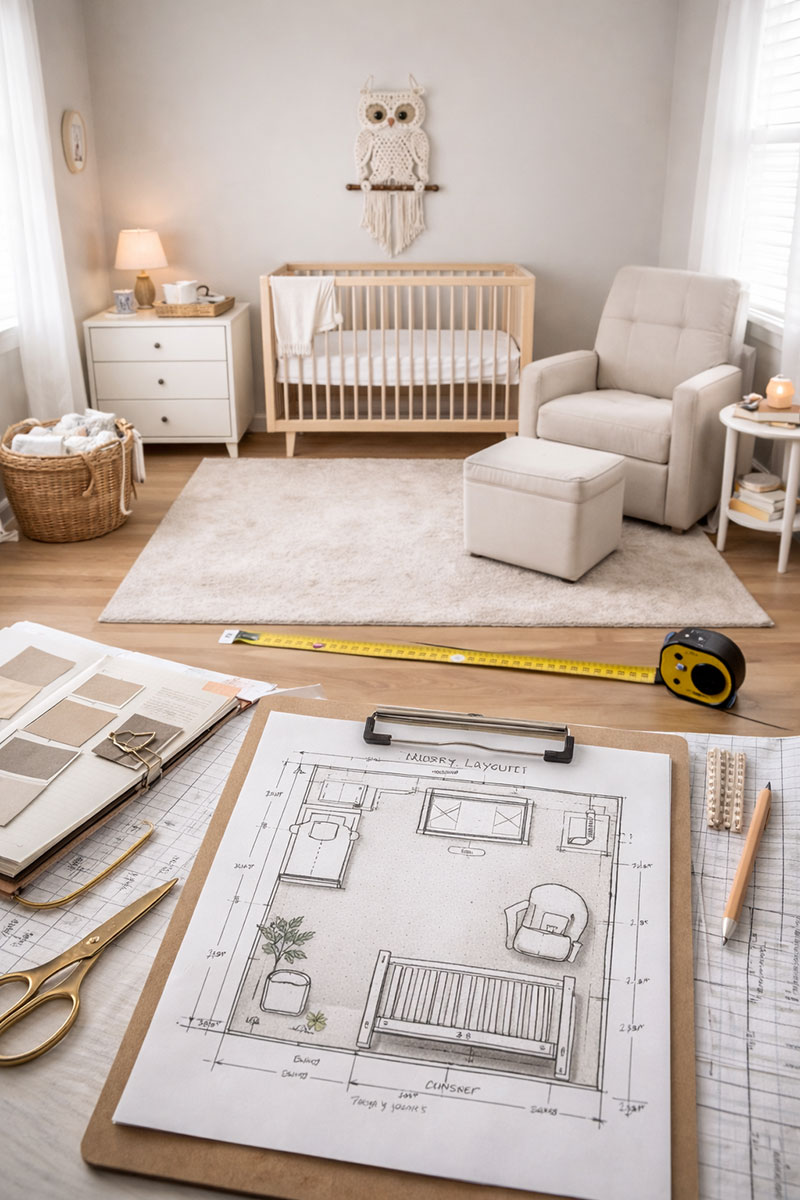
The crib is the most important piece of furniture in a nursery layout as well as the largest. Choosing the right location for the crib helps create a safe sleep space and makes the rest of the room easier to arrange.
The crib should usually sit against a solid wall that is away from windows, cords, and hanging décor. This location helps reduce drafts and keeps curtains or blinds from becoming a problem as the baby grows and becomes more active.
The crib should never be placed directly beside a window.
Parents in the United States should also follow U.S. safe sleep guidance for cribs and infant sleep spaces from the Consumer Product Safety Commission.
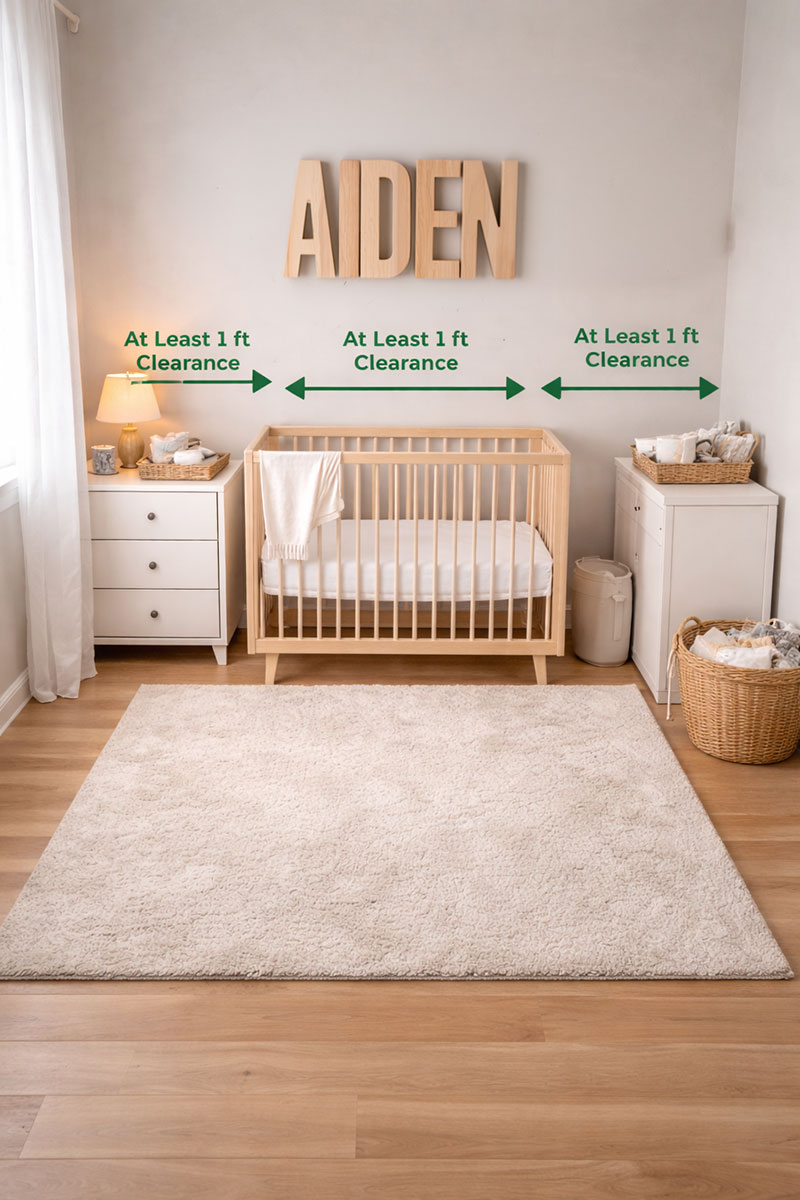
It also helps to leave open space around the crib. Parents should be able to walk up to the crib comfortably, lift the baby in and out without bumping furniture, and move around the room at night without squeezing through narrow gaps.
Furniture Spacing Guide
After the crib location is set, the rest of the nursery can be arranged around it. Most rooms include a dresser or changing table, a chair for feeding, and some form of storage for clothing, blankets, diapers, or small supplies for daily child care.
A good nursery layout planner keeps pathways open so parents can move easily from the doorway to the crib. Clear walking space becomes especially important at night, when the room is dim and parents may be carrying the baby with one arm while reaching for clothing or supplies with the other.
Helpful spacing ideas include:
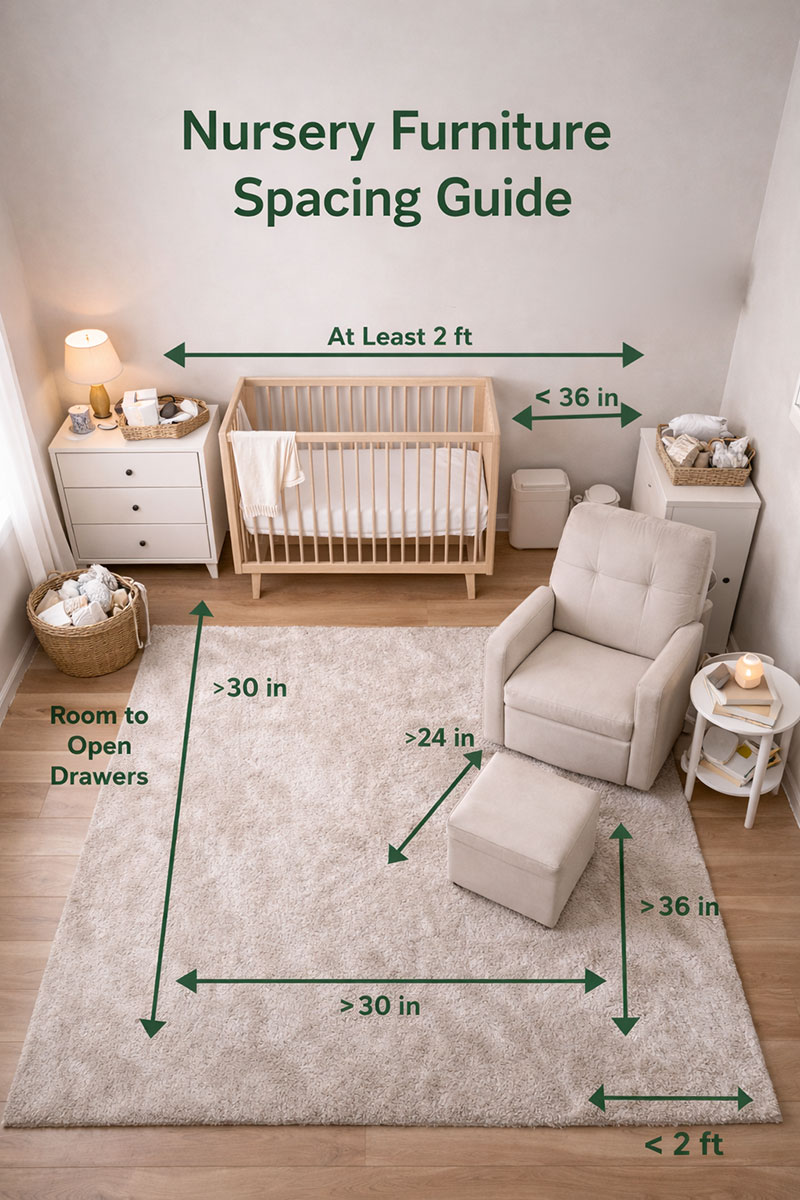
Crib to dresser. Leave enough room for drawers to open fully without hitting the crib or the wall.
Chair area. Allow enough space for a feeding chair to rock, glide, or recline comfortably.
Before choosing the final corner, see my guide that will tell you where to put a recliner in a nursery so the chair does not block the crib, dresser, doorway, or walking path.
Reclining chairs need extra room behind the back and in front of the footrest, so this guide to how much space you need for a nursery recliner can help you measure the chair zone before you finalize the floor plan.
To make a comparison of chairs before you measure that space, see my nursery glider vs rocking chair vs recliner guide.
Changing area. Keep diapers, wipes, and extra clothing close enough to reach without stepping away.
Door clearance. Make sure the door can open properly and does not swing into large furniture.
Storage access. Baskets, bins, and shelves should be easy to reach without blocking the main walking path.
These details may seem small on paper, but they make a big difference in how the nursery works once it is used every day.
Simple Nursery Floor Plan Example
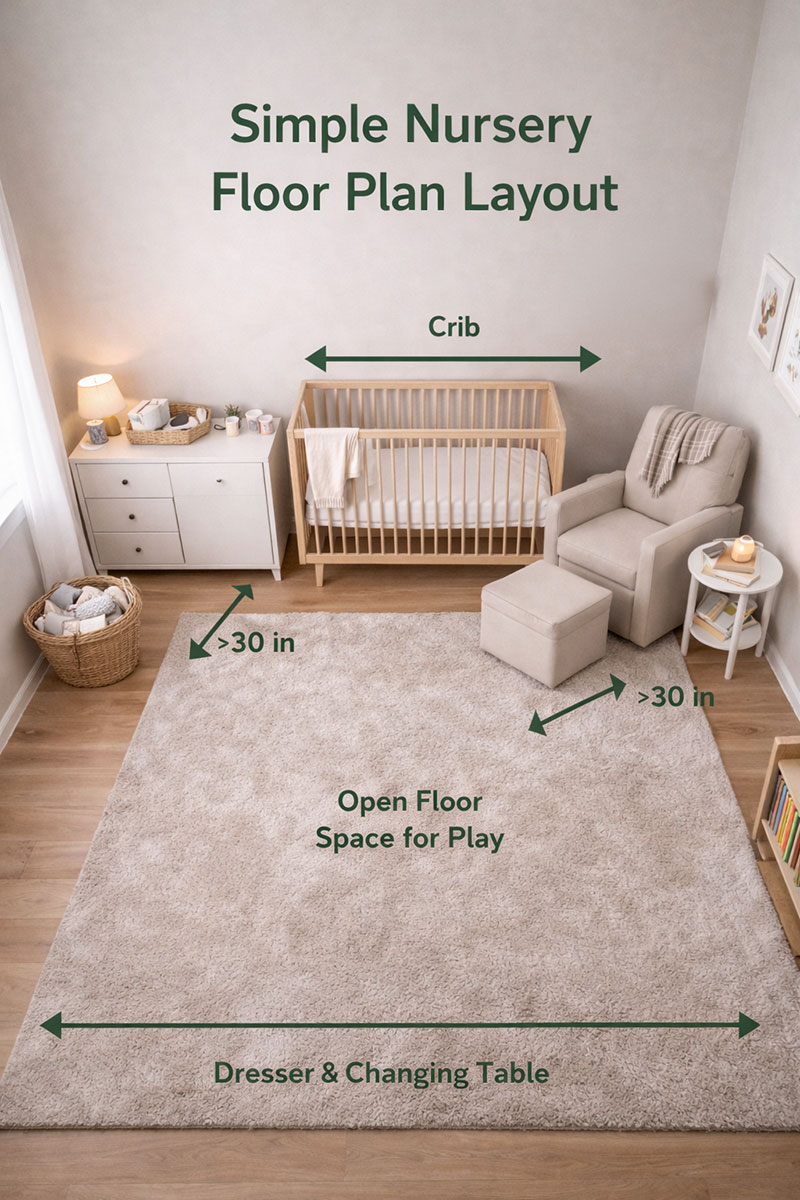
A simple nursery floor plan often places the crib along the longest uninterrupted wall of the room.
For a more specific example of how to place those two key pieces together, see this crib and dresser layout for a nursery.
The dresser or changing table usually works best nearby so diapers, sleepwear, supplies and swaddles are easy to grab during quick changes.
A comfortable chair can fit well in a corner with soft task lighting and enough space to sit down without feeling boxed in. That creates a calm feeding area while keeping the center of the room more open.
Open floor space matters. It makes nighttime movement easier, helps the room feel less crowded, and later becomes useful play space as the baby grows into a more active toddler.
In a smaller room, placing the larger furniture pieces along two walls usually works better than scattering them around the room. In a larger nursery, parents may have room for a more defined feeding corner, a bookshelf, or extra storage while still keeping the layout simple.
When space is tight, choosing the right crib matters just as much as placement, and this guide to mini cribs that fit small spaces shows which compact options actually work in real layouts.
The purpose of a nursery layout planner is to create a nursery floor plan that feels safe, practical, and easy to use every day.
Common Nursery Layout Mistakes
Many nursery layout problems start before the room is even finished. Furniture is brought in, pieces are pushed into convenient spots, and only later does the room begin to feel hard to use. A nursery layout planner helps prevent that by making parents think through the practical side first.
For the bigger picture beyond layout alone, my nursery mistakes you may regret later guide covers furniture, storage and decorating choices that can cause problems once the room is in daily use.
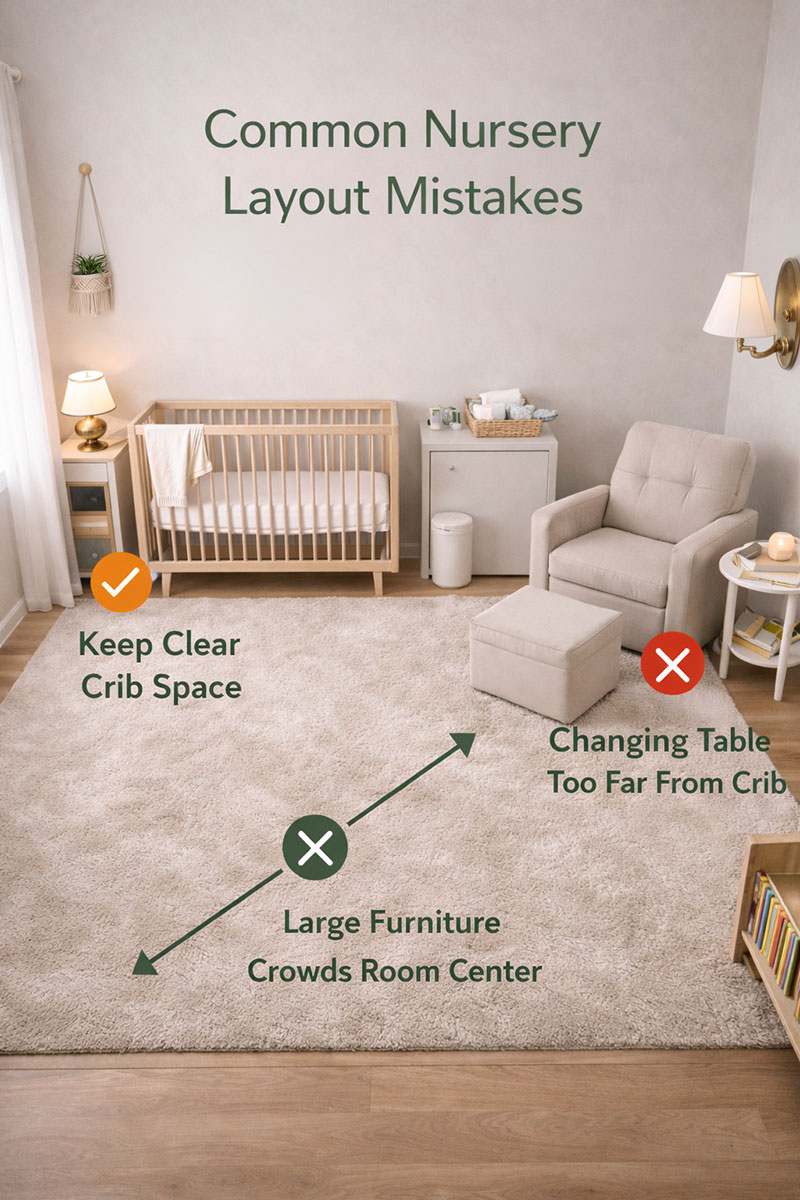
One common mistake is crowding the crib with nearby furniture. Cribs need clear surrounding space so parents can reach the baby safely and move comfortably around the room.
Another mistake is placing the changing table too far from the crib. That may not seem like a big deal during setup or even during the daylight hours, but it often becomes frustrating during nighttime diaper changes.
Large furniture in the center of the room can also shrink the usable walking area and make the nursery feel tighter than it really is. In most cases, a simpler layout feels better and works better.
Some parents also overfill the nursery with decorative furniture that does not help with real daily routines. A room can still feel beautiful without adding pieces that block movement or take up valuable floor space.
Nursery Layout Planner FAQ
How do you plan a nursery layout?
Start by placing the crib along a safe wall that is away from windows and cords. Then place the dresser or changing table nearby so daily supplies stay within reach. A feeding chair can go in a quiet corner while the center of the room stays open for walking space.
What furniture should be in a nursery layout?
Most nurseries include a crib, dresser or changing table, and a comfortable chair for feeding. Storage such as shelves, baskets, or drawers can be added depending on the room size and the family’s daily needs.
How much space should be around a crib?
There should be enough space around the crib for parents to reach the baby comfortably and move through the room without bumping furniture. Clear access on more than one side usually makes the nursery easier to use.
If you are still choosing the exact wall for the dresser, my guide on where to put a dresser in a nursery walks through window, crib, door, and drawer-clearance placement choices.
Can a nursery layout work in a small room?
Yes. Small nurseries often work best when furniture is placed along the walls and the center of the room stays open. Compact furniture and a simple floor plan can make a small nursery feel practical and comfortable instead of crowded.
When you click on links to various merchants on this site and make a purchase, this may result in this site earning a commission. This does not affect the price you pay.

UBGI Gold Standard 2026
Reviewed under the site's
editorial checklist.
Photos, decorating ideas, party setups and reader submissions are shared for inspiration unless a page is specifically presented as a pattern, tutorial, reference guide or step-by-step project. Follow the instructions, measurements, safety guidance and manufacturer directions provided for the particular project or product.
About Jan | Contact | Baby Nursery Ideas (Blog) | Site Map | Privacy Policy | Disclosure Policy | Disclaimer | Affiliate Disclosure | Earnings Disclosure | Facebook | Pinterest
I am a participant in the Amazon Services LLC Associates Program, an affiliate advertising program designed to provide a means for us to earn fees by linking to Amazon. As an Amazon Associate I earn from qualifying purchases.
Copyright © 2006-2026. All Rights Reserved.