Where to Put a Recliner in a Nursery
Where to put a recliner in a nursery depends on three things first: safe crib distance, enough walking space, and whether you can reach feeding and changing supplies without blocking the room. The best spot is usually near the crib but not tight against it, beside a small table, and away from windows, cords, heaters, and door swings.
Before you squeeze a recliner into the nursery, read my tips:
The layout mistake that makes a nursery feel too small
What your nursery floor plan may be hiding
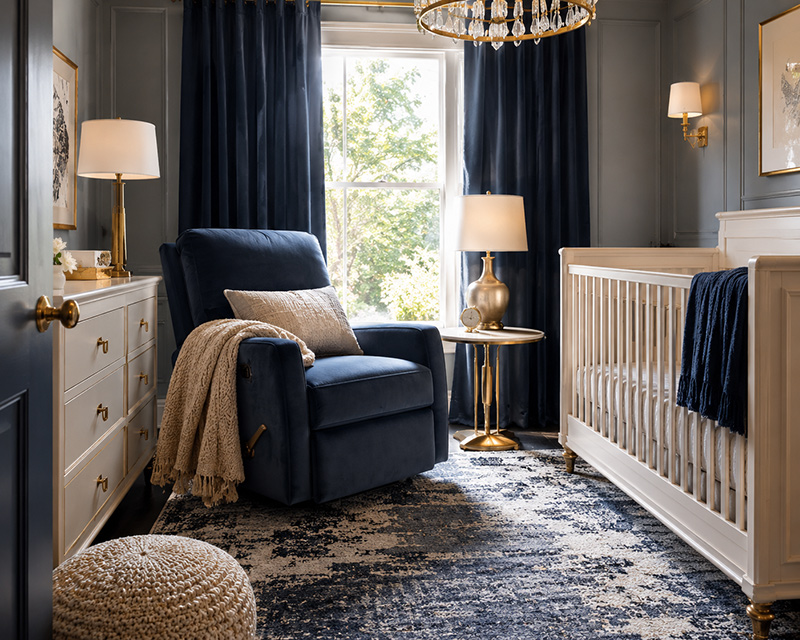
Shopping note: A nursery recliner works best when it fits the room without blocking the crib, door, dresser, or night-feeding path.
The Best Place to Put a Recliner in a Nursery
A nursery can look perfectly arranged in photos and still be awkward at 2 a.m. after the lights are off and the room is quiet. That is usually when parents realize the chair blocks the dresser drawer, hits the closet door, or sits too far from the crib to make nighttime transfers easy.
Knowing where to put a recliner in a nursery becomes much easier once the crib, dresser, and doorway positions are determined and finalized first.
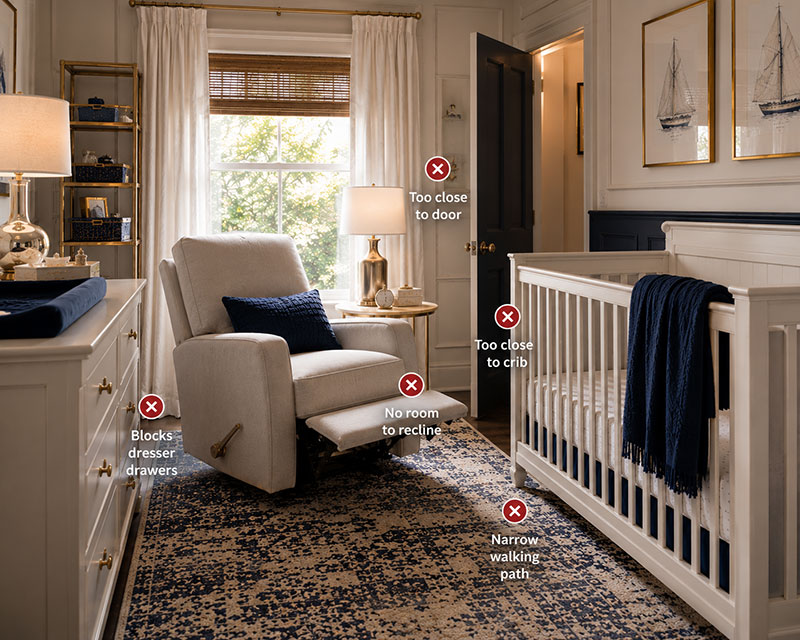
The best place to put a recliner in a nursery is close enough to the crib for feeding and settling, but not so close that the chair crowds the sleep space or blocks walking paths. In many rooms, the chair works best at an angle beside the crib instead of directly facing it.
I believe angled placement changes the entire room. A recliner shoved flat against one wall often makes the nursery look tighter than it really is.
One mistake I see often is parents placing the recliner exactly where the room looks balanced instead of where they naturally walk during diaper changes, feeding, or late-night checks.
Quick answer:
Place the recliner near the crib with enough space to fully recline, stand up easily while holding a baby, and walk through the nursery without turning sideways around furniture.
The room should still work when someone is tired, carrying a baby, and moving in low light.
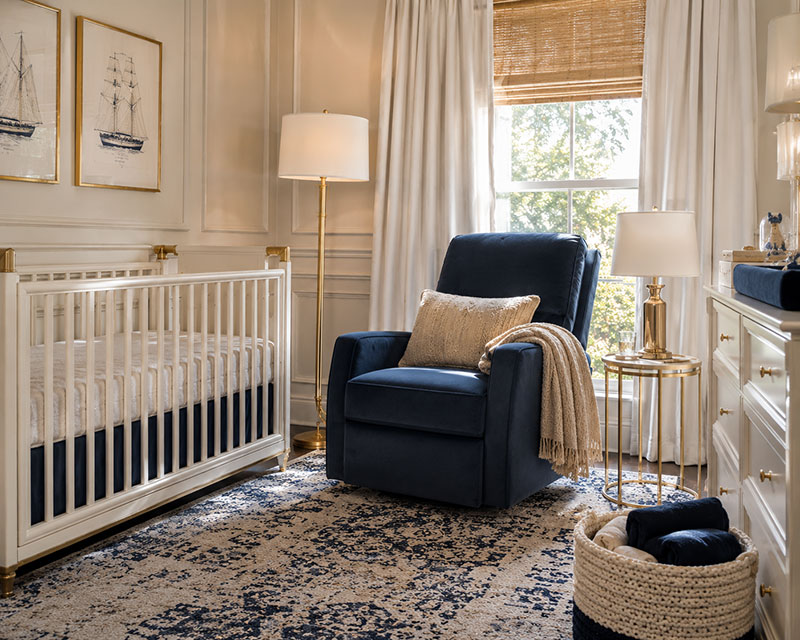
Many nursery layouts improve immediately once the chair moves away from the center of the room. These nursery layout ideas show how furniture spacing changes how the room functions day to day.
Small Nursery Recliner Placement That Still Works
Small nurseries become frustrating fast when oversized seating takes over the floor plan. The recliner may fit technically, but once it opens, the room suddenly becomes hard to move through.
A smaller seating choice may work better before the room starts feeling crowded, and my guide to the best nursery chair for small spaces compares compact options that still support feeding, rocking, and daily nursery use.
Compact placement works better when the recliner sits across from the crib instead of beside the changing table. That arrangement often leaves more usable floor space near storage and keeps drawers accessible.
This usually becomes obvious during laundry days or diaper restocking because the chair ends up blocking the exact area parents need most.
If the room is narrow, placing the recliner diagonally in a corner often creates more usable walking room than placing it straight against the wall.
These small nursery layout ideas and cribs for small spaces can help when the room starts feeling crowded before the baby even arrives.
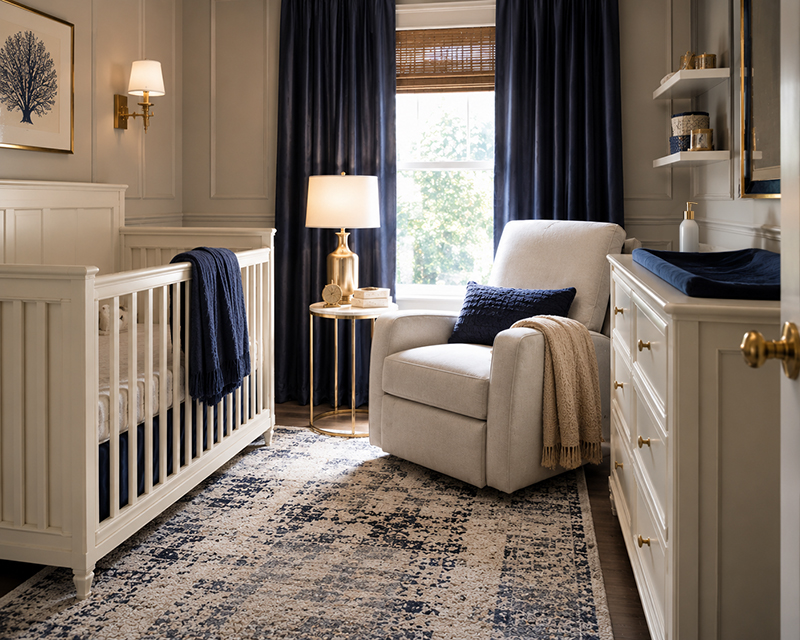
Some parents skip the recliner entirely in a tiny nursery and use a slimmer nursery glider instead. That is where a classic rocker may deserve a second look, especially if you are comparing smaller seating options; my nursery rocking chair vs glider comparison walks through the comfort, noise, and regret points that show up after a short while.
Others move the feeding chair into the primary bedroom for the first few months and leave more open floor space near the crib.
For a broader chair comparison before choosing between a recliner, glider, or rocker, see my nursery glider vs rocking chair vs recliner guide.
A slimmer chair can still need better support after daily use, and my guide to glider rocker cushions shows what to check before replacing the whole nursery seat.
That choice often depends on how many nighttime feedings happen in the nursery itself.
If nursing comfort is the reason you are comparing recliners and gliders, my guide to the best nursery glider for breastfeeding explains which arm support, seat depth, and reach-zone details matter most during longer feeding sessions.
How Far Should a Nursery Recliner Be From the Crib?
A recliner should be close enough to the crib for smooth transfers, but far enough away that blankets, chargers, side tables, and drink cups stay outside the baby’s sleep area. The best answer for where to put a recliner in a nursery depends on walking space, nighttime feeding access, and how much room the chair needs once it leans back and the footrest opens.
The safest arrangement keeps the recliner clear of crib corners, hanging cords, curtain pulls, and wall shelves. This matters even more once babies begin standing and grabbing nearby objects.
The United States Consumer Product Safety Commission recommends keeping cords and similar hazards away from cribs and sleep spaces.
https://www.cpsc.gov/SafeSleep
These related pages can help if you are still arranging the main furniture pieces:
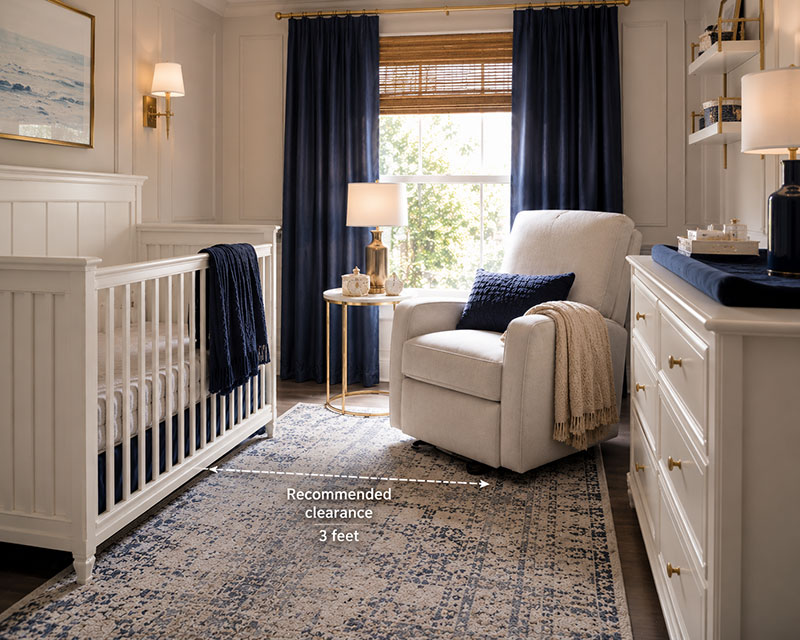
The nursery should never require someone to squeeze between the recliner and crib while carrying a baby.
Window and Door Placement Matters More Than People Think
One of the strangest nursery problems happens after everything is assembled. The room suddenly develops “dead corners” where doors hit furniture or blackout curtains drag across the recliner.
This becomes especially noticeable during nighttime feedings when parents try opening the door quietly without bumping the chair.
A recliner should never block the nursery entrance, closet access, or dresser drawers. It also should not sit directly beneath windows with long curtain cords.
Rooms with centered windows often work best with the crib on one wall and the recliner offset near the opposite corner. That arrangement keeps the room visually balanced while protecting open movement paths.
I’ve learned that nurseries function better when there is one clear walking lane from the doorway to the crib without furniture interruptions.
These nursery layout ideas according to window location show how window placement changes furniture positioning more than people expect.
Nursery Recliner Layout Mistakes That Cause Regret
The biggest mistake is buying the recliner before measuring how far it extends when fully open.
Another common issue is placing the chair where it looks attractive for photos instead of where feeding supplies, burp cloths, chargers, and bottles can actually be reached comfortably.
This tends to happen when nurseries are arranged around wall décor instead of real routines.
Many parents also underestimate how hard it is to stand up from a recliner while holding a sleeping baby if the chair is wedged tightly beside another piece of furniture.
Parent height can make that exit even easier or harder, so my guide to the best nursery chair for tall parents explains why seat depth, back height, and leg room should be checked before choosing the final recliner spot.
The room should support movement naturally instead of forcing awkward turns and side-stepping.
These pages may help before finalizing the nursery setup:
- Nursery furniture layout ideas
- Best dressers for a small nursery
- Baby room organization ideas
- Do you actually need a nursery?
A nursery recliner should make nighttime care easier. If the room becomes harder to move through after the chair arrives, the placement is wrong.
FAQ About Where to Put a Recliner in a Nursery
Should the recliner go beside the crib?
In many nurseries, yes. Placing the recliner near the crib makes nighttime feeding and transfers easier, but there should still be enough room to walk comfortably around both pieces.
Can a nursery recliner go in front of a window?
It can, but avoid blocking curtain movement, heating vents, or natural walking paths. Keep cords and window coverings away from the crib area.
How much room does a nursery recliner need?
Most recliners need additional clearance behind the chair and in front of the footrest once fully extended. Always measure the fully open dimensions before arranging nursery furniture.
Is a recliner or glider better for a small nursery?
A glider often fits better in compact rooms because it usually requires less clearance. Recliners can still work in smaller nurseries if the room layout stays open and balanced.
When you click on links to various merchants on this site and make a purchase, this may result in this site earning a commission. This does not affect the price you pay.

UBGI Gold Standard 2026
Reviewed under the site's
editorial checklist.
Photos, decorating ideas, party setups and reader submissions are shared for inspiration unless a page is specifically presented as a pattern, tutorial, reference guide or step-by-step project. Follow the instructions, measurements, safety guidance and manufacturer directions provided for the particular project or product.
About Jan | Contact | Baby Nursery Ideas (Blog) | Site Map | Privacy Policy | Disclosure Policy | Disclaimer | Affiliate Disclosure | Earnings Disclosure | Facebook | Pinterest
I am a participant in the Amazon Services LLC Associates Program, an affiliate advertising program designed to provide a means for us to earn fees by linking to Amazon. As an Amazon Associate I earn from qualifying purchases.
Copyright © 2006-2026. All Rights Reserved.