Nursery Recliner vs Glider: Which Is Better for a Baby Room?
The comparison of nursery recliner vs glider usually comes to mind during one of those late-night feeding sessions when the chair suddenly matters more than the crib color or wall decor. Choosing the right nursery chair can become confusing fast once the room is fully in use every day.
Quick nursery chair help:
How much space do you need for a nursery recliner?
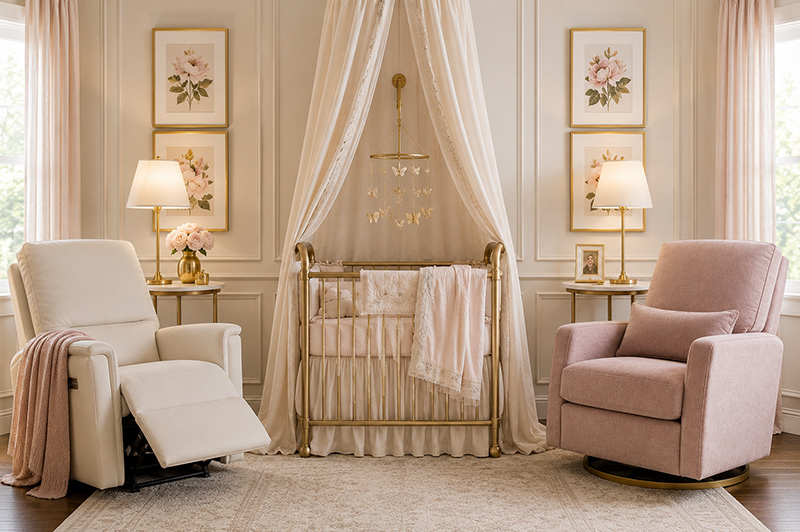
Shopping note: Before choosing a nursery chair, compare width, recline clearance, swivel motion, and seat height.
Jump to what matters most:
Main difference between a recliner and glider
Best choice for small nurseries
Nursery Recliner vs Glider Quick Answer
It usually starts during one of those late-night feeding sessions when the nursery chair suddenly matters more than the crib color or wall decor. A chair that looked fine in the showroom can become uncomfortable fast once the room is fully in use every day.
A nursery recliner gives stronger back and leg support for longer feeding sessions and overnight soothing, while a nursery glider takes up less room and works better in tighter layouts. The better choice depends on nursery size, wall clearance, feeding comfort, and how the chair will realistically be used.
The wrong nursery chair becomes frustrating very quickly.
After seeing many nursery setups over the years, I believe room clearance matters far more than fabric color or trendy design details. Once a crib, dresser, hamper, and side table are added, some nursery chairs suddenly become difficult to move around comfortably.
Browse more baby gear planning guides
One thing people rarely think about beforehand is how nursery chairs sound late at night. Some gliders stay nearly silent for years. Others begin making track noise once the room settles into daily use. Recliners can do the same when positioned unevenly on thick rugs.
The Main Difference Between a Nursery Recliner and Glider
To make a practical nursery recliner vs glider decision, think less about the prettiest chair and more about motion, clearance, back support, and how often someone will sit there during the night.
Many parents now choose swivel glider recliners because they combine smoother motion with the deeper seating comfort of a recliner.
A nursery glider moves in a smooth back-and-forth motion using a fixed track system. A recliner focuses more on leaning back, leg support, and longer sitting comfort.
That difference becomes much more noticeable once the nursery is used several times a day.
Gliders work well for shorter soothing sessions, quick bottle feeds, and compact nursery layouts where floor space matters. A glider that fits the room can still feel tired after daily use, and my guide to glider rocker replacement cushions shows how to refresh the seat before buying a whole new nursery chair.
Recliners usually become the chair parents use during difficult nights when a baby refuses to settle back into the crib.
I notice recliners often stay in use long after the nursery stage ends because the full-body support is easier during extended holding sessions.
Another issue many comparison pages ignore is furniture movement around the chair itself. Some wider recliners block dresser drawers once fully opened. Others rotate too close to crib corners in smaller rooms. Those problems rarely show up in staged furniture photos.
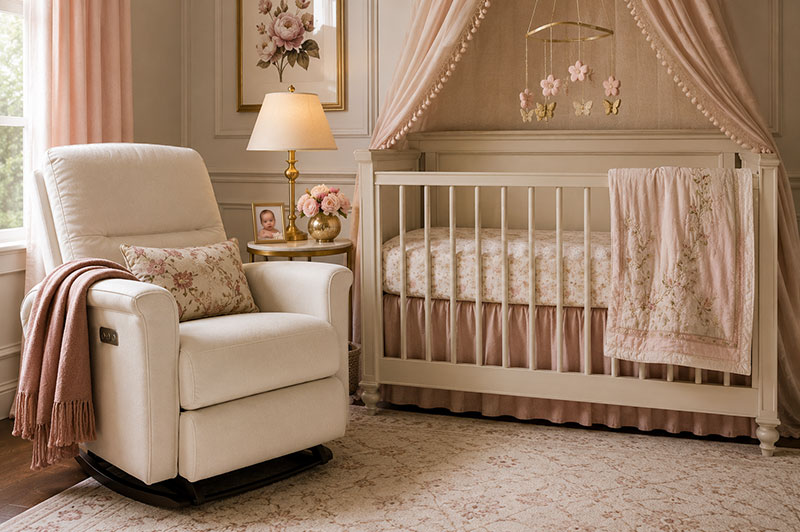
Best Nursery Chair for Small Rooms and Tight Layouts
Small nurseries completely change the decision between a recliner and glider.
In many United States homes, nurseries are created inside former guest rooms, office spaces, or secondary bedrooms where every inch becomes important once the furniture arrives.
A glider usually fits better inside smaller nurseries because the motion stays within the chair footprint. Traditional recliners often require additional wall clearance behind the chair.
This becomes obvious once blackout curtains, side tables, laundry baskets, and storage bins enter the room.
One nursery layout I remember clearly had a recliner that technically fit according to measurements, but every time the footrest opened it blocked the closet door completely. The room looked balanced in photos, yet daily use became irritating within days.
For tighter layouts, compact gliders or wall-hugger recliners usually make more sense than oversized recliners designed for large living rooms.
See more nursery layout and room planning ideas
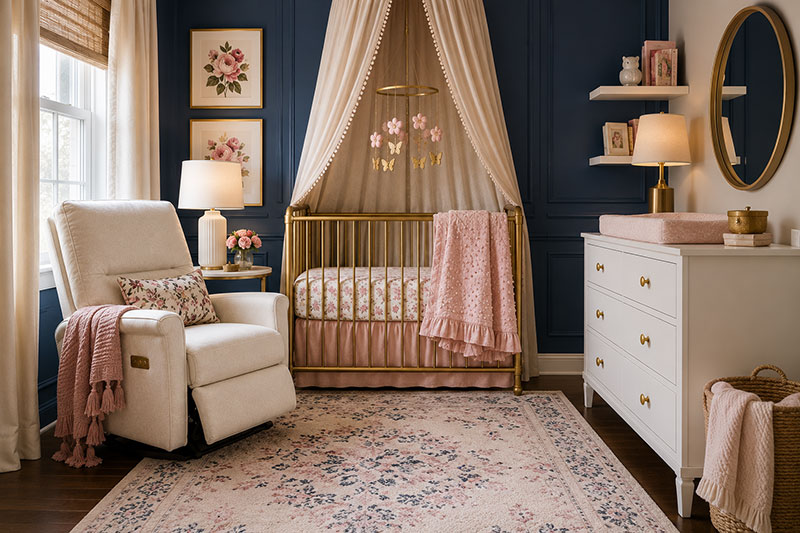
Which Nursery Chair Works Better for Feeding Sessions?
Feeding comfort changes depending on how long someone remains seated in the chair.
Short feeding sessions often work perfectly in gliders because the motion helps settle restless babies without taking up extra room.
For nursing-specific chair details, my guide to the best nursery glider for breastfeeding explains which arm support, seat angle, and one-hand reach features matter most during longer feeding sessions.
If you are still deciding between a rocker and a glider, my nursery rocking chair guide explains the comfort, noise, and small-room issues that often show up after regular nighttime use begins.
To get a good side-by-side chair comparison, see my nursery glider vs rocking chair vs recliner guide before choosing the final nursery chair.
Long overnight sessions are different.
Recliners usually perform better during those situations.
Arm height matters much more than people expect. Some nursery chairs place the armrests too low, which gradually strains shoulders during bottle feeds. Others angle the seat backward too sharply, creating awkward posture once a sleeping baby settles into your arms.
Seat depth also matters. Some deep recliners become uncomfortable for shorter parents because their feet barely reach the floor while holding a newborn.
Height can create the opposite problem, and my guide to the best nursery chair for tall parents shows why back height, seat depth, and leg room should be checked before choosing between a recliner and a glider.
The best nursery chair is not automatically the largest one in the furniture store.
It is the chair that still supports your back comfortably after forty minutes in dim lighting while reaching for a bottle or burp cloth nearby.

Nursery Recliner Wall Clearance Mistakes to Avoid
Wall clearance creates more nursery chair regret than most people expect.
Many recliners need 12 to 18 inches behind the chair to lean back properly. That space disappears quickly once baseboards, curtains, cribs, and side tables are added.
Parents often notice the problem after the crib arrives because the room suddenly shrinks visually once everything is assembled.
Wall-hugger recliners reduce some of this issue, although several models still extend farther forward once the footrest opens.
Maintain enough walking space between the nursery chair and crib so adults are not squeezing sideways while carrying a sleeping baby through the room.
Review current U.S. nursery and safe sleep guidance from the CPSC
What to Check Before Buying a Nursery Recliner or Glider
The nursery recliner vs glider decision usually comes down to which chair fits the room without blocking drawers, walkways, closet doors, or easy access to the crib.
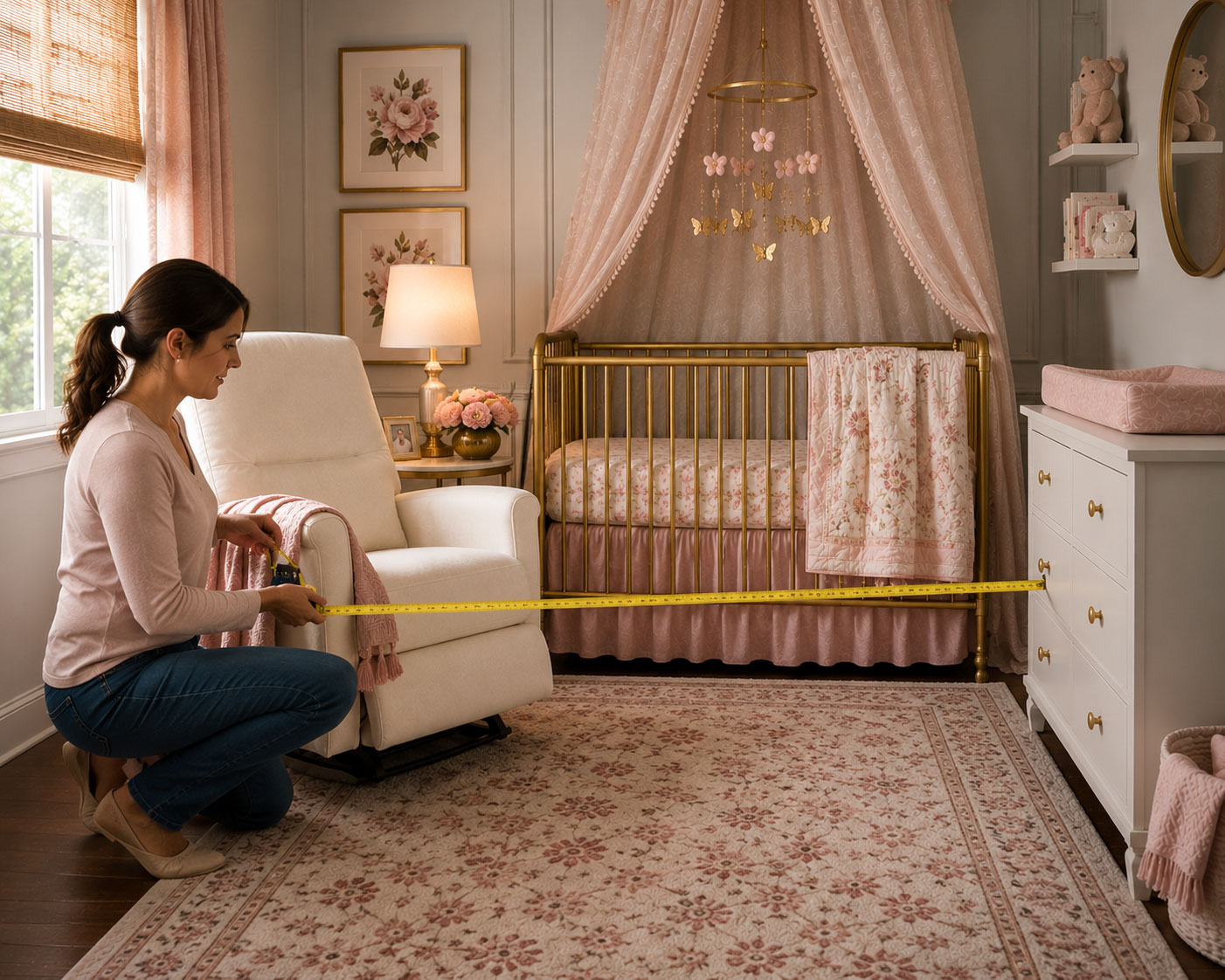
Before buying any nursery chair, measure the actual room instead of estimating from memory.
- Measure wall clearance fully reclined
- Check armrest height while seated
- Test whether feet rest comfortably on the floor
- Measure walking space between the crib and chair
- Check whether nearby drawers still open fully
- Listen for noisy motion tracks or hardware clicking
- Verify swivel clearance beside curtains and walls
One practical thing I’ve learned is that nursery chairs nearly always look smaller inside large furniture showrooms than they do once placed inside an actual nursery.
Painter’s tape helps more than people realize. Mark the chair dimensions directly onto the floor before ordering anything. That quick step prevents many expensive returns.
Nursery Recliner vs Glider FAQ
Is a recliner or glider better for a nursery?
A recliner usually works better for long overnight feeding sessions and extended holding time, while a glider fits better inside smaller nurseries where space matters more.
Do nursery recliners need wall clearance?
Yes. Most recliners require extra space behind the chair unless they are specifically designed as wall-hugger recliners.
Are gliders safer than recliners in nurseries?
Both can be safe when positioned with clear walking space and away from crib corners, cords, and heavy curtains.
What size nursery chair should I buy?
The best nursery chair size depends on nursery dimensions, walking clearance, and how the chair will realistically be used during feeding and soothing sessions.
Do nursery gliders wear out faster?
Lower-quality gliders sometimes develop track noise over time, especially on uneven flooring. Higher-quality models generally last for years with regular nursery use.
When you click on links to various merchants on this site and make a purchase, this may result in this site earning a commission. This does not affect the price you pay.

UBGI Gold Standard 2026
Reviewed under the site's
editorial checklist.
Photos, decorating ideas, party setups and reader submissions are shared for inspiration unless a page is specifically presented as a pattern, tutorial, reference guide or step-by-step project. Follow the instructions, measurements, safety guidance and manufacturer directions provided for the particular project or product.
About Jan | Contact | Baby Nursery Ideas (Blog) | Site Map | Privacy Policy | Disclosure Policy | Disclaimer | Affiliate Disclosure | Earnings Disclosure | Facebook | Pinterest
I am a participant in the Amazon Services LLC Associates Program, an affiliate advertising program designed to provide a means for us to earn fees by linking to Amazon. As an Amazon Associate I earn from qualifying purchases.
Copyright © 2006-2026. All Rights Reserved.