Nursery Layout Ideas for Square Rooms
These nursery layout ideas for square rooms can help parents make the most of a balanced space where furniture placement is easier to plan. Because the walls are similar lengths, a square nursery allows the crib, dresser, and storage pieces to be arranged in ways that keep the room comfortable, safe, and easy to move through during daily baby care routines. With the right layout, even a simple square room can feel organized, calm, and practical for feeding, changing, and putting a baby down to sleep.
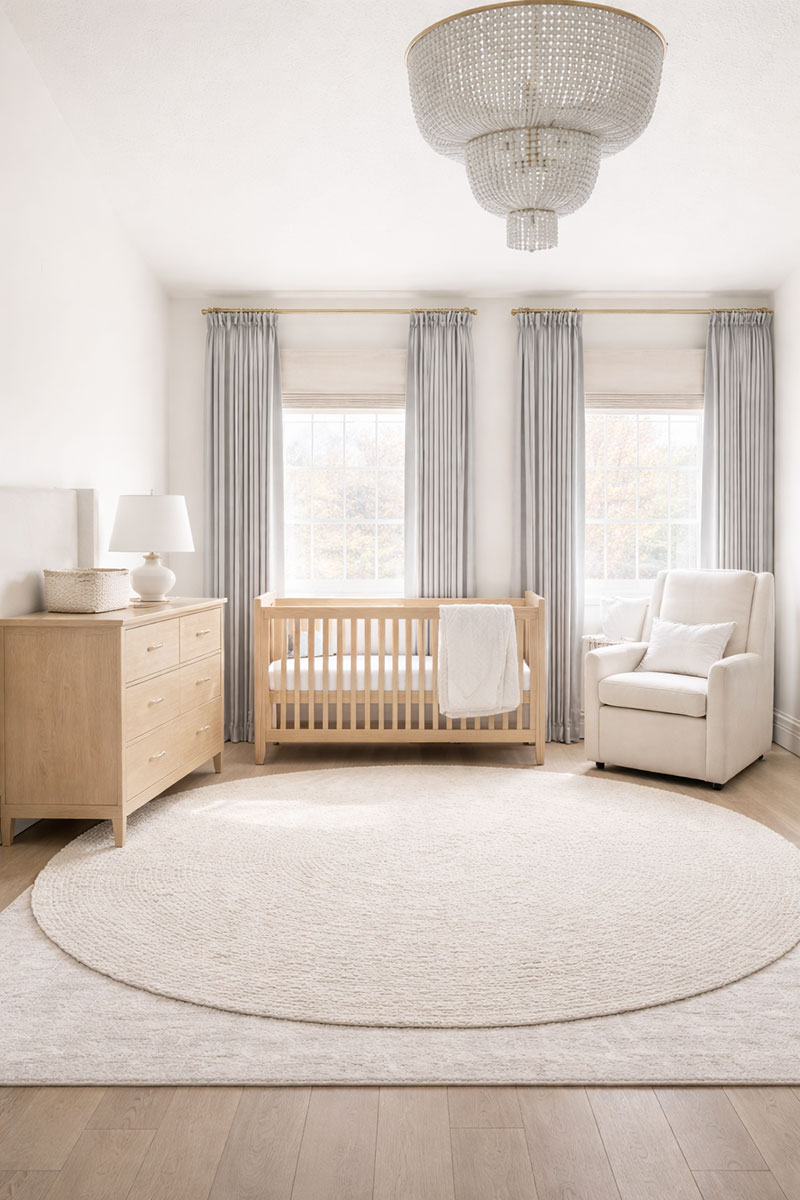
See the collection of compact cribs recommended for small nursery rooms
Best Nursery Layout Ideas for Square Rooms
The best nursery layout for a square room places the crib on a solid wall, positions the dresser on a nearby wall, and leaves the center open for safe movement. This balanced setup makes daily baby care easier and helps the nursery feel calm and organized.
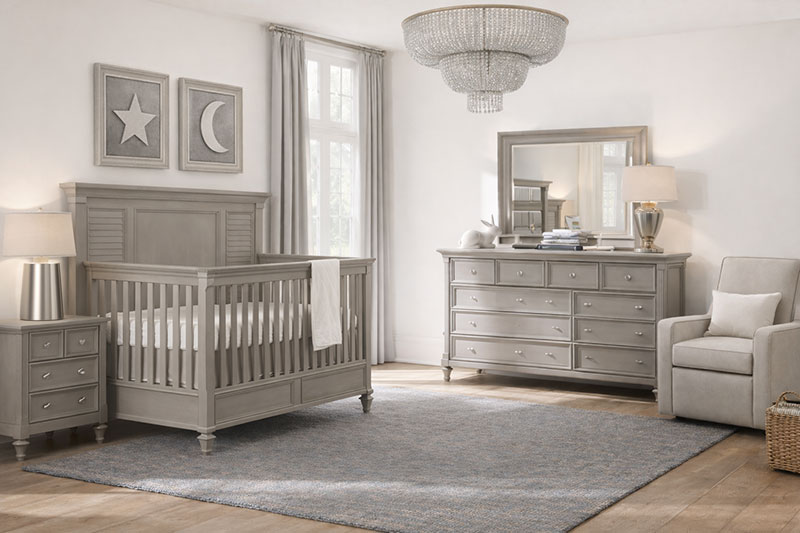
Many parents have the same experience while setting up a nursery. The crib is assembled, the dresser is moved in, and suddenly the room feels smaller than expected. Square rooms may seem tricky at first, but they are usually one of the easiest nursery shapes to arrange once furniture is placed with balance in mind.
These nursery layout ideas for square rooms show how to use the natural symmetry of the space so the crib, dresser, and seating area work together comfortably. When furniture is spaced across multiple walls instead of crowded into one area, the room feels calmer and easier to move through during everyday routines.
Square rooms are usually the easiest nursery shape to arrange.
Parents often notice that when the center of the room stays open, the nursery immediately feels more comfortable and organized.
For more room-shape examples and planning help, see nursery layout ideas, which links together practical nursery layouts for different room sizes and shapes.
If your square nursery is a medium-size room with a little more flexibility than a compact layout, this 12x12 nursery layout guide shows how to space the crib, dresser, and chair without losing the open feel that makes square rooms work so well.
Balanced Square Nursery Layout That Feels Calm and Practical
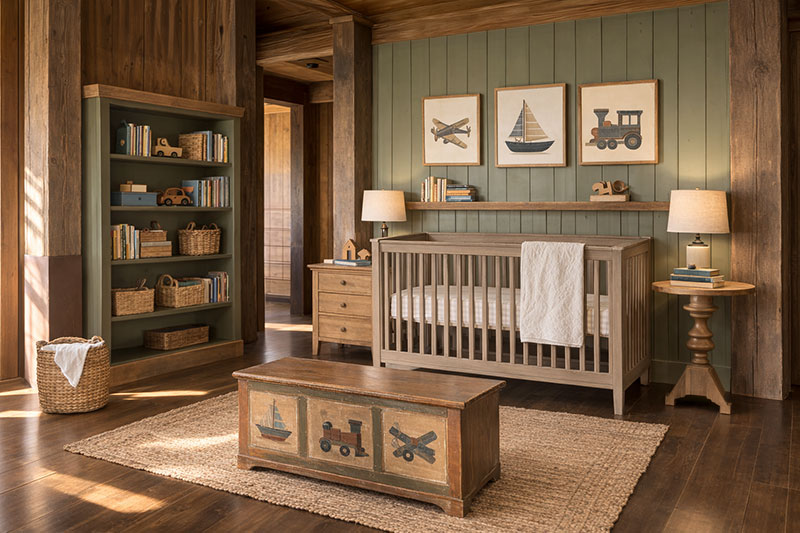
A balanced square nursery layout spreads furniture across the walls so each piece has its own space. The crib usually anchors one wall while the dresser or changing station sits along another wall. A comfortable chair often fills the remaining corner.
The finished result looks calm and symmetrical. The crib becomes the visual center while the other furniture supports feeding, changing, and bedtime routines.
Parents often notice this balance when they step back and look at the room after rearranging the furniture.
This layout works because square rooms allow walking space around the center of the nursery. Leaving that center area open makes nighttime care easier and helps the room feel larger.
Best Crib Placement in a Square Nursery Layout
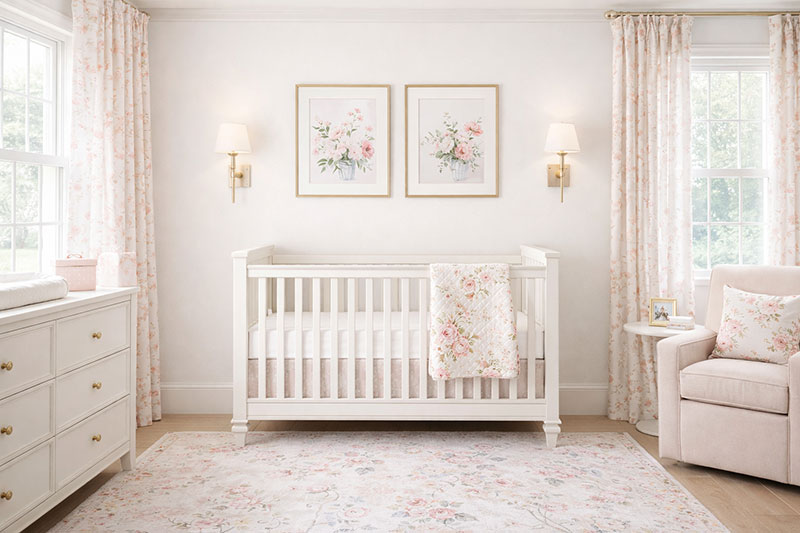
The crib is the most important piece of furniture in the nursery. In square rooms, the crib usually works best along a solid wall that is free from windows or doorways.
This placement allows the rest of the nursery furniture to be arranged around the sleep area without blocking walking paths.
Many parents first try placing the crib under a window because it looks centered. However, that position can create bright light during sleep and may introduce safety concerns.
In the United States, many parents use American Academy of Pediatrics safe sleep guidance when choosing crib placement in a nursery.
The American Academy of Pediatrics recommends keeping cribs away from windows, cords, and hanging objects.
safe infant sleep recommendations
Keeping the crib against a clear wall usually creates a calmer sleep space and makes it easier to reach the baby during nighttime care.
Parents comparing crib styles can see examples in baby cribs to understand how crib size affects nursery layouts.
Simple Furniture Arrangements That Work in Square Rooms
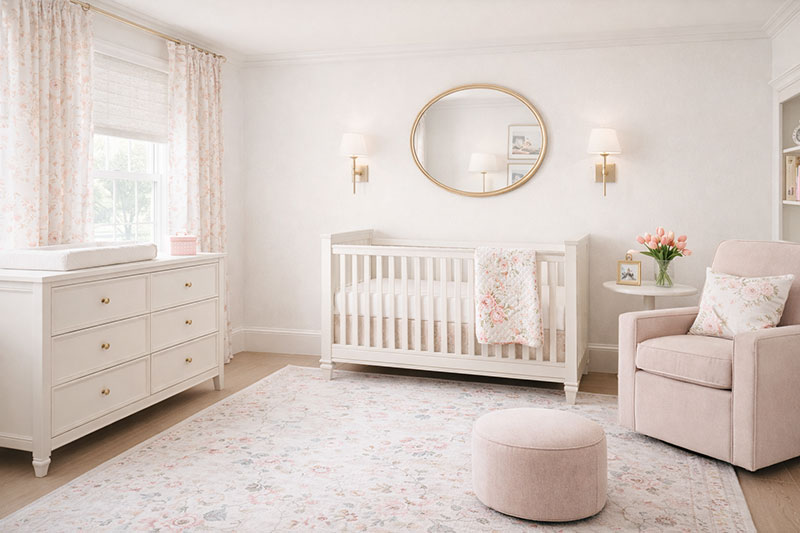
Several furniture arrangements work well in square nurseries. The goal is to maintain balance while keeping walking paths clear.
One effective layout places the crib on the main wall, the dresser on the opposite wall, and a chair in a nearby corner. The finished room feels open and comfortable, with enough space to move easily during daily care routines.
Another option positions the crib near one corner and the dresser along the adjacent wall. This arrangement works well when doors or closets limit furniture placement.
Many nurseries run into layout problems when every piece of furniture sits on the same wall. Spreading furniture across different walls usually makes the room feel larger.
If you want to test ideas before moving furniture, try using a nursery layout planner to sketch possible arrangements.
How to Keep a Square Nursery From Feeling Crowded
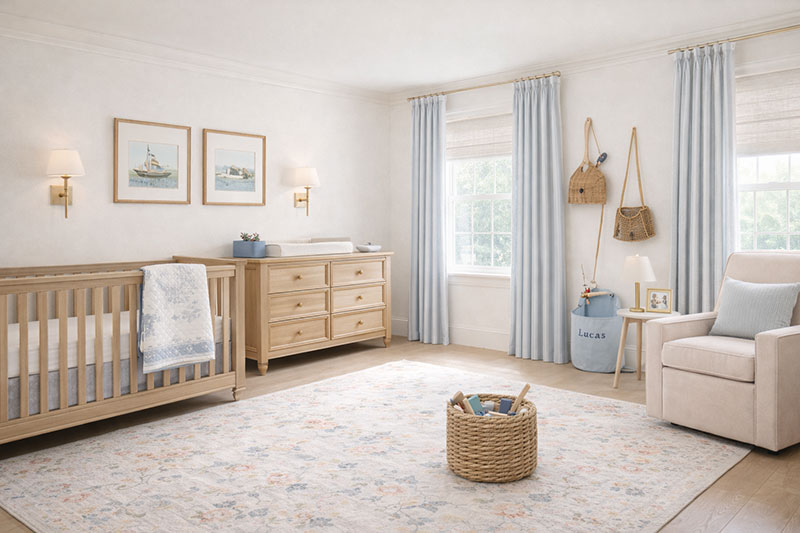
Square nurseries can quickly feel crowded when too many furniture pieces are added. The easiest solution is to focus on the three essentials: a crib, a dresser, and a chair.
Additional storage can be added vertically with shelves or ledges instead of more large floor furniture. Choosing a smaller crib can also help maintain that open feel, and this guide to best compact cribs for small spaces shows which options fit comfortably without crowding the room.
Parents often notice the room immediately feels larger once the center floor space remains open.
Keeping walking paths clear is especially helpful during nighttime care routines.
Safe shelving placement is explained in nursery bookshelf safety guide, which discusses secure wall storage.
Common Square Nursery Layout Mistakes Parents Make

The most common mistake in square nursery layouts is overcrowding the room with too much furniture. Parents often want every storage option available, but too many pieces can make the room feel tight.
Another frequent mistake is placing the crib directly under the window. This may look visually centered, but it can create lighting and safety problems.
This situation usually happens when someone tries to center furniture instead of prioritizing walking space.
Parents should also check that dresser drawers open fully and that clear walking paths remain around the crib.
Practical Nursery Planning Tips That Make Daily Care Easier
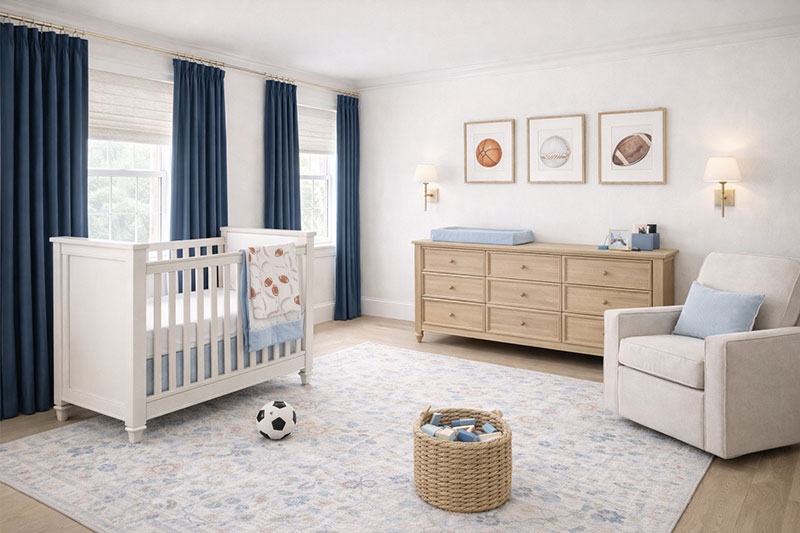
When planning nursery layout ideas for square rooms, it helps to think about everyday routines. Feeding, rocking, changing diapers, and putting a baby down to sleep happen many times each day.
Keeping these areas close together makes the nursery easier to use.
For example, placing the chair near the crib makes it easier to transition from feeding to bedtime. Positioning the dresser nearby keeps diapers and clothing within reach.
Parents often discover that the best nursery layouts are designed around daily routines instead of decoration alone.
For additional examples, see nursery layout with crib and dresser, which explains how these two key furniture pieces work together.
Square Nursery Layout Questions Parents Often Ask
Is a square nursery easier to arrange than other room shapes?
Yes. Square rooms allow furniture to be distributed evenly across the walls, which helps maintain balance and keeps the center of the room open.
Where should the crib go in a square nursery?
The crib usually works best along a solid wall away from windows and doors. This keeps the sleep area calm and allows other furniture to be arranged around it.
How much space should be left around nursery furniture?
There should be enough space to walk comfortably and open drawers fully. Clear pathways make nighttime care safer and easier.
Can a square nursery include a chair for feeding?
Yes. Most square nurseries have enough room for a crib, dresser, and small chair if furniture is spaced across different walls instead of clustered together.
Summary
Nursery layout ideas for square rooms work best when furniture is balanced across the walls, the crib sits along a solid wall away from windows, and the center of the room remains open. This arrangement creates a calm nursery that supports feeding, changing, and sleep routines while keeping the room comfortable for everyday use.
When you click on links to various merchants on this site and make a purchase, this may result in this site earning a commission. This does not affect the price you pay.

UBGI Gold Standard 2026
Reviewed under the site's
editorial checklist.
Photos, decorating ideas, party setups and reader submissions are shared for inspiration unless a page is specifically presented as a pattern, tutorial, reference guide or step-by-step project. Follow the instructions, measurements, safety guidance and manufacturer directions provided for the particular project or product.
About Jan | Contact | Baby Nursery Ideas (Blog) | Site Map | Privacy Policy | Disclosure Policy | Disclaimer | Affiliate Disclosure | Earnings Disclosure | Facebook | Pinterest
I am a participant in the Amazon Services LLC Associates Program, an affiliate advertising program designed to provide a means for us to earn fees by linking to Amazon. As an Amazon Associate I earn from qualifying purchases.
Copyright © 2006-2026. All Rights Reserved.