Long Narrow Nursery Layout Ideas That Actually Work
A long narrow nursery layout works best when you protect one clear walkway and stop the room from feeling like a hallway full of furniture. In a slim, rectangular nursery, the real problem isn’t usually square footage. It’s how the crib, dresser, and chair compete for the same narrow lane. This guide shows you how to arrange a long narrow nursery layout so the space feels balanced, functional, and calm instead of crowded and awkward.
A long narrow nursery layout is a rectangular room arrangement designed to protect a clear center walkway while grouping deeper furniture along one wall or anchoring major pieces at opposite ends.
On this page
Long Narrow Nursery Layout: Quick Answers
A long narrow nursery layout works when you protect one clear center walkway and prevent bulky furniture from crowding both long walls at the same time. In a slim rectangular nursery, flow matters more than symmetry. Group deeper pieces like the dresser and chair on one wall or anchor major items at opposite ends so the middle path stays open and comfortable.
This guide focuses specifically on rectangular rooms with extended length, not square or compact nursery layouts where turning radius is the primary constraint.
What this means: A long narrow nursery layout keeps the center walkway clear by limiting deep furniture across from each other. This prevents a squeeze point and allows daily movement to feel easy and predictable.
The walkway is the most important design decision in the room.
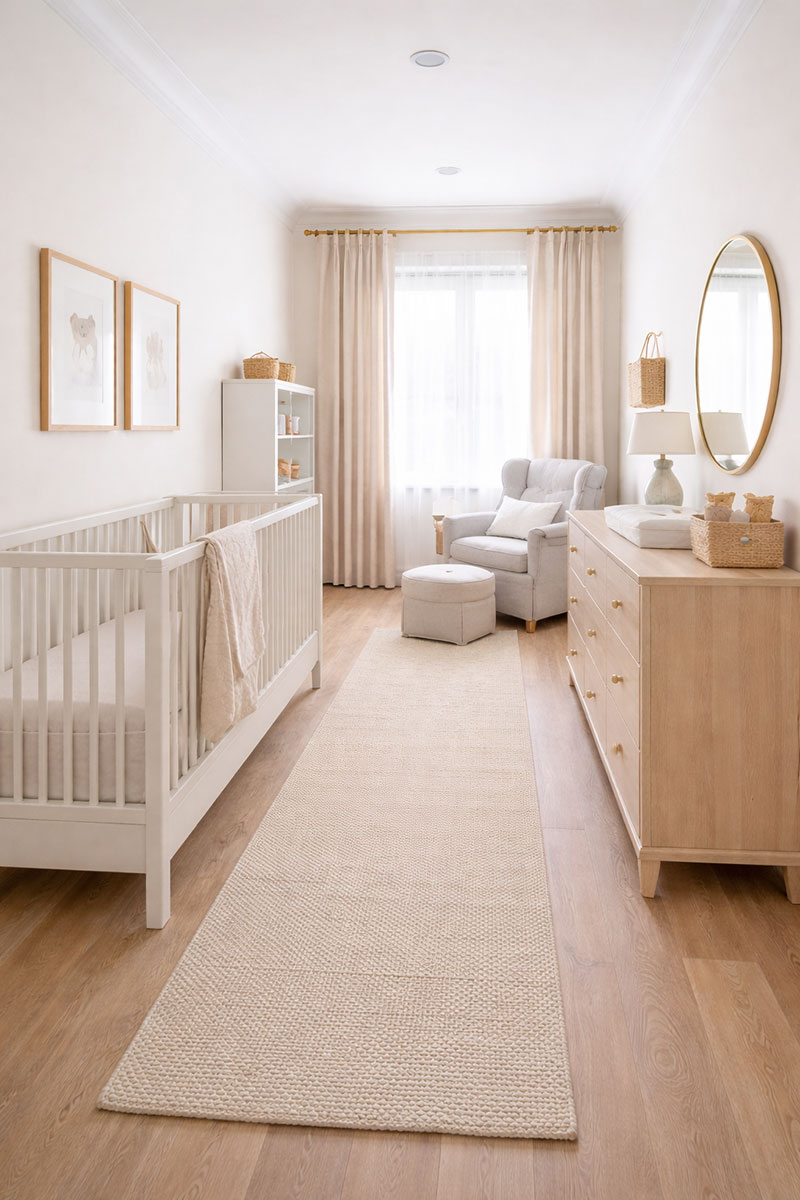
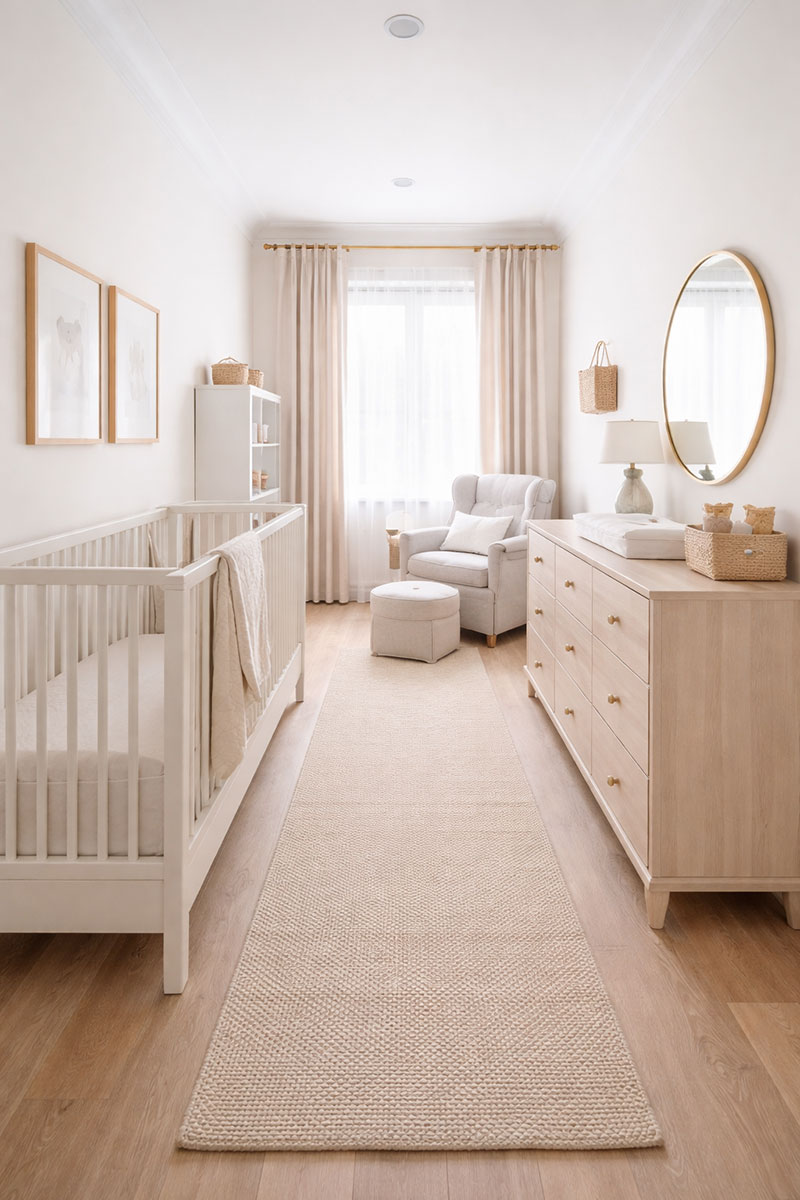
A protected center path instantly makes a narrow nursery feel wider.
Why long narrow rooms feel cramped
On paper, long rooms can look generous. In real life, they feel tight when depth is stacked on both sides. When a dresser, chair, and storage unit all compete across the same lane, the center shrinks into a corridor.
In a nursery, that compression becomes noticeable quickly. You move through the room at night. You open drawers. You pivot near the crib. If your body has to angle or sidestep furniture, the layout is working against you.
Layout is not about filling space. It is about protecting movement.
If your nursery must share space with another sleeping area, this nursery layout for bedroom sharing guide explains how to protect walkway flow when adult furniture is also present.
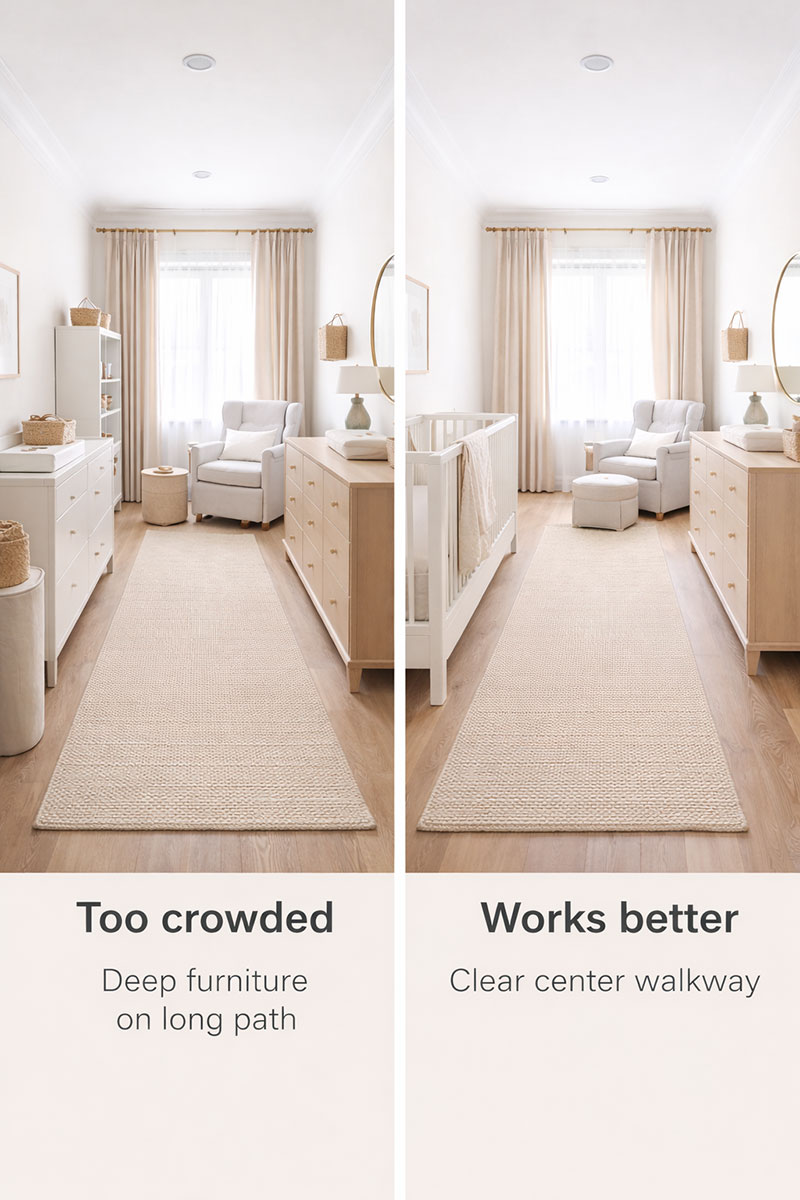
When both long walls carry deep furniture, the walkway collapses visually and physically.
The placement rule
Designate one wall as your depth wall. That wall carries the dresser and possibly the chair. The opposite wall remains lighter, typically holding the crib and minimal accents.
This avoids the most common mistake: placing bulky pieces directly across from each other.
A recliner can narrow that lane quickly, so this nursery recliner placement guide shows how to choose a spot that protects the walkway in a long narrow room.
Before committing, test drawer clearance and walking comfort. Stand in the room and simulate everyday movement. If it feels tight before the room is fully styled, it will feel tighter later.
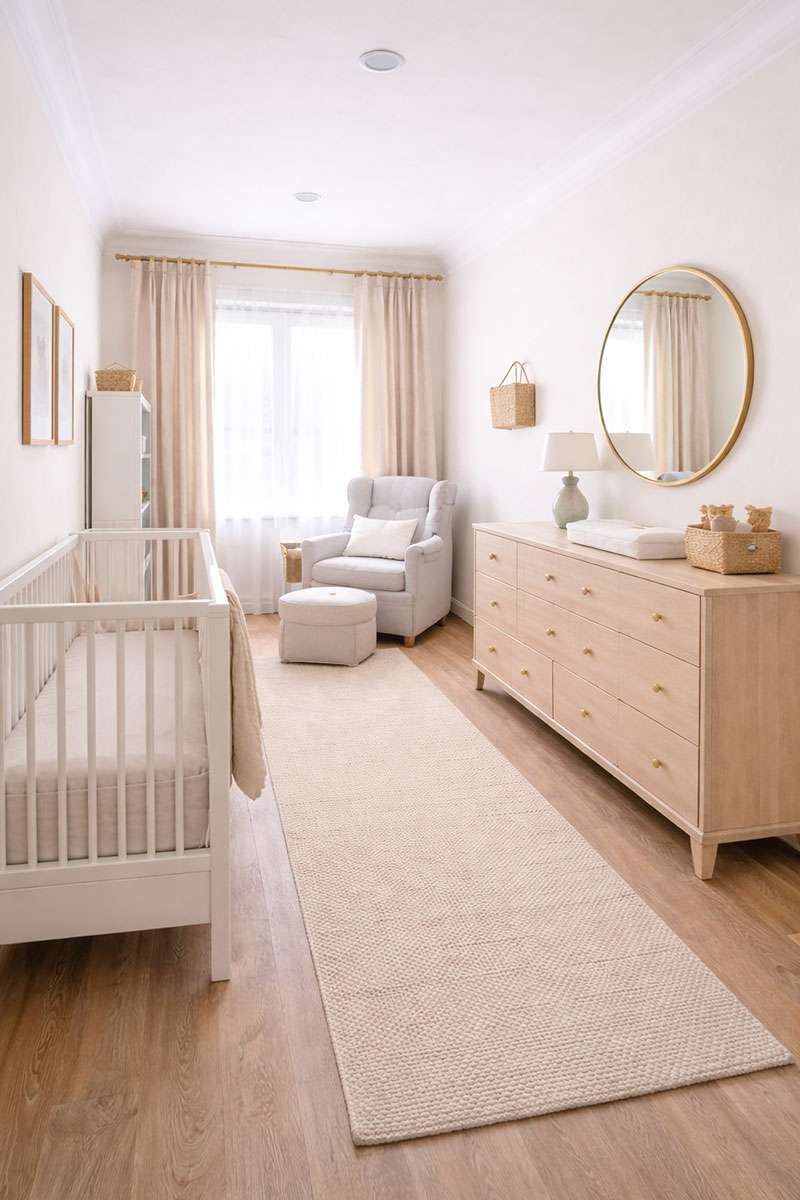
Grouping deeper pieces along one wall preserves width across the center.
Two layout options
Option 1: One working wall
Place the dresser and chair along the same wall. Keep the crib opposite. Movement becomes simple and predictable because you walk down the middle and turn toward one side for tasks.
Option 2: Anchor each end
When the window and door placement limit flexibility, position the crib at one end and the dresser at the other. This shortens the perceived length and keeps the central path open.
In both cases, simplicity supports comfort.
For a more specific example of how to place those two main pieces without blocking the lane, see this nursery layout with crib and dresser guide.
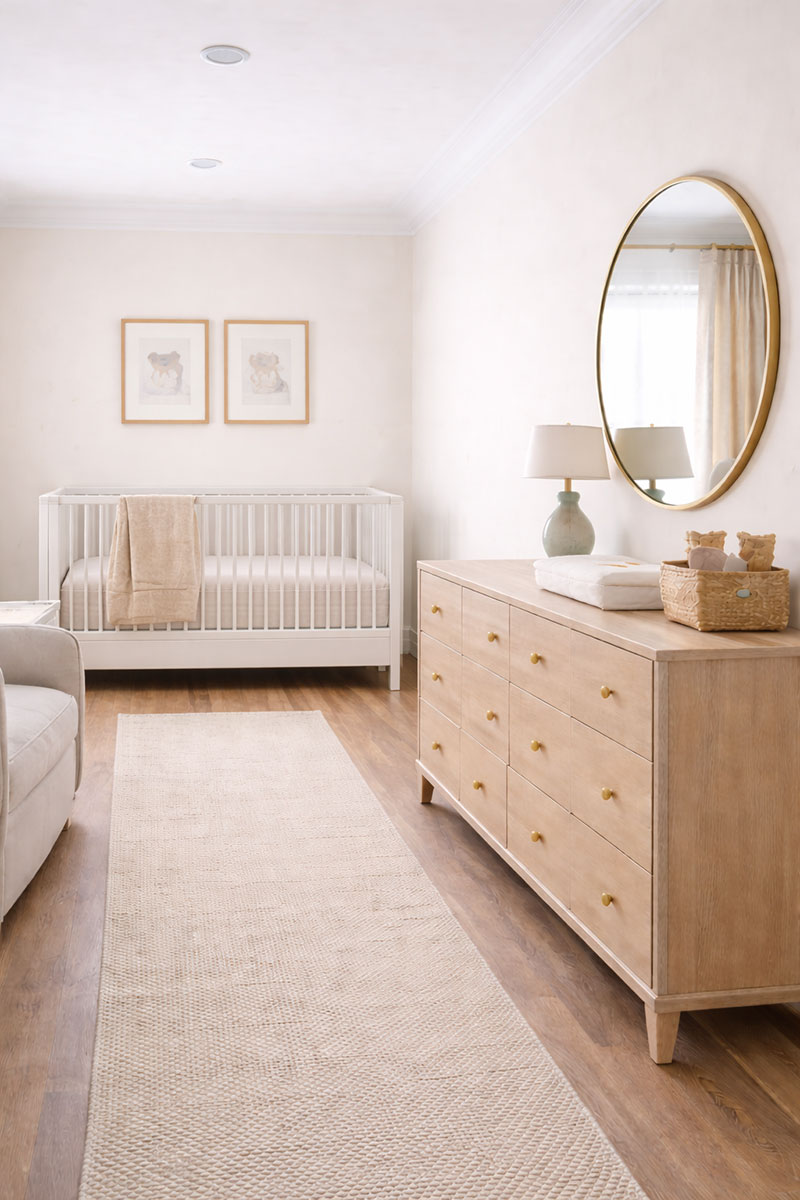
Anchoring each end can reduce the hallway effect in very long rooms.
Styling that visually widens the room
Once furniture placement is right, visual calm reinforces physical openness.
- Use consistent, light flooring tones.
- Choose slim-profile furniture pieces.
- Limit wall clutter and favor fewer, larger art pieces.
- Use vertical storage instead of wide storage.
When visual noise is reduced, the room feels wider without moving a single wall.
Storage choices also affect how wide a narrow room feels. See nursery storage ideas for small rooms for vertical and slim-profile solutions that protect walkway space instead of shrinking it.
For a broader overview of different room shapes, placement strategies, and practical examples, see the full nursery floor plan layout guide and these nursery layout ideas to compare what works in square, long, shared, and other nursery spaces.
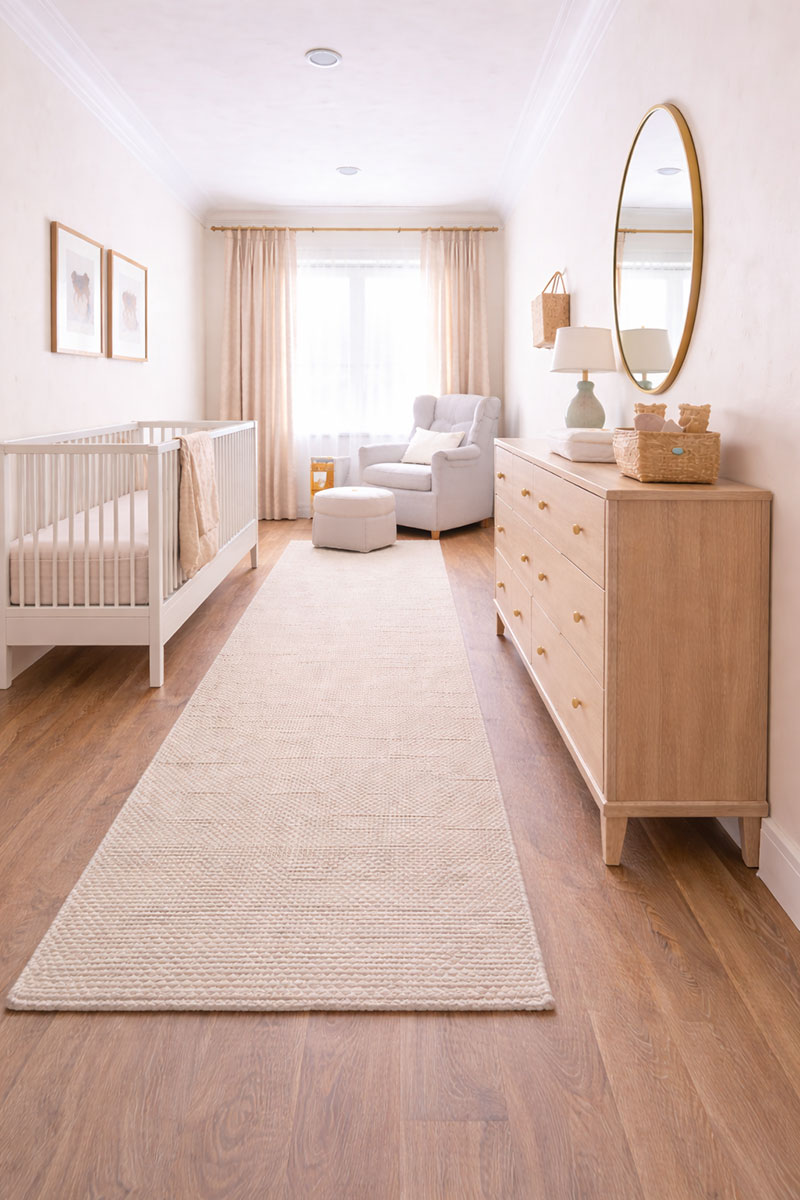
Slim furniture profiles help maintain both visual and physical space.
Common Mistakes in a Narrow Rectangular Nursery
Even thoughtfully decorated rooms can fail structurally if the proportions are wrong. A long narrow nursery layout becomes frustrating when furniture depth, drawer clearance, and traffic flow are not evaluated together.
The most common mistake is treating the room like a square space and centering everything on opposite walls. In a narrow footprint, symmetry can backfire. Matching depth on both sides compresses the walkway and makes the room feel tighter than it is.
Another frequent issue is allowing furniture to interrupt the natural walking lane. When a chair angles outward or a dresser projects too far, the clear path disappears. The room may still look attractive in photos, but it will feel crowded during daily use.
If you cannot move freely from the doorway to the crib without adjusting your body position, the layout is not functioning correctly.
How to Test the Layout Before Finalizing
Before committing to placement, perform a practical flow test.
Maintaining safe crib access is also important in any room arrangement. In the United States, the American Academy of Pediatrics safe sleep guidance outlines current recommendations for safe crib placement and surrounding conditions.
Stand in the doorway and walk directly toward the crib. Open the dresser drawers fully. Sit in the chair and stand up without shifting furniture. These movements should feel natural and uninterrupted.
Next, view the room from the far end looking back toward the entry. Does the space feel guided and balanced, or does it resemble a corridor?
If the end wall feels visually empty, add an anchor element such as framed art, a centered crib, or a streamlined dresser to shorten the visual length.
Layout clarity matters more than decorative detail. A narrow nursery does not need more furniture. It needs disciplined placement.
When a Narrow Nursery Works Better Than a Square Room
Elongated rooms offer one advantage that square rooms do not: directional design control. You can intentionally guide the eye from entry to focal point.
When the walkway remains clear and furniture depth is controlled, the room feels calm and organized. The long sight line can even make the space feel larger than its square footage suggests.
The key is restraint. Keep one dominant wall heavier and the opposite wall lighter. Protect the lane. Anchor the far end. Everything else is styling.
A long narrow nursery layout works when it is treated as a pathway with purpose rather than a room fighting its shape.
Related layout: small 8x10 rooms
An 8x10 nursery presents a different challenge. Instead of protecting a long walkway, you must preserve turning space and door clearance. That requires more compact placement choices.
If your room is closer to 8x10 in size, this guide will walk you through that approach:
If your room is a little wider and more flexible than a slim rectangular nursery, this 12x12 nursery layout guide shows how a medium square room handles crib placement, dresser spacing, and walking room without the hallway effect.
For a nursery with four fairly even walls instead of a stretched rectangular shape, these nursery layout ideas for square rooms can help you balance the crib, dresser, and open floor space without narrowing the room visually.
Summary
A long narrow nursery layout succeeds when the center walkway is treated as protected space rather than leftover space. By controlling furniture depth, preserving drawer clearance, and visually anchoring the far end of the room, even a slim rectangular nursery can feel balanced, calm, and easy to move through every day.
When you click on links to various merchants on this site and make a purchase, this may result in this site earning a commission. This does not affect the price you pay.

UBGI Gold Standard 2026
Reviewed under the site's
editorial checklist.
Photos, decorating ideas, party setups and reader submissions are shared for inspiration unless a page is specifically presented as a pattern, tutorial, reference guide or step-by-step project. Follow the instructions, measurements, safety guidance and manufacturer directions provided for the particular project or product.
About Jan | Contact | Baby Nursery Ideas (Blog) | Site Map | Privacy Policy | Disclosure Policy | Disclaimer | Affiliate Disclosure | Earnings Disclosure | Facebook | Pinterest
I am a participant in the Amazon Services LLC Associates Program, an affiliate advertising program designed to provide a means for us to earn fees by linking to Amazon. As an Amazon Associate I earn from qualifying purchases.
Copyright © 2006-2026. All Rights Reserved.