Small Nursery Layout Ideas for Baby's Room That Actually Work
Small nursery layout ideas should make your room feel calm, open, and safe, even when you are working with very little square footage. The key is placing the crib, dresser, and chair in a way that protects safe sleep standards while still allowing clear walking paths, smart storage, and natural light to work in your favor.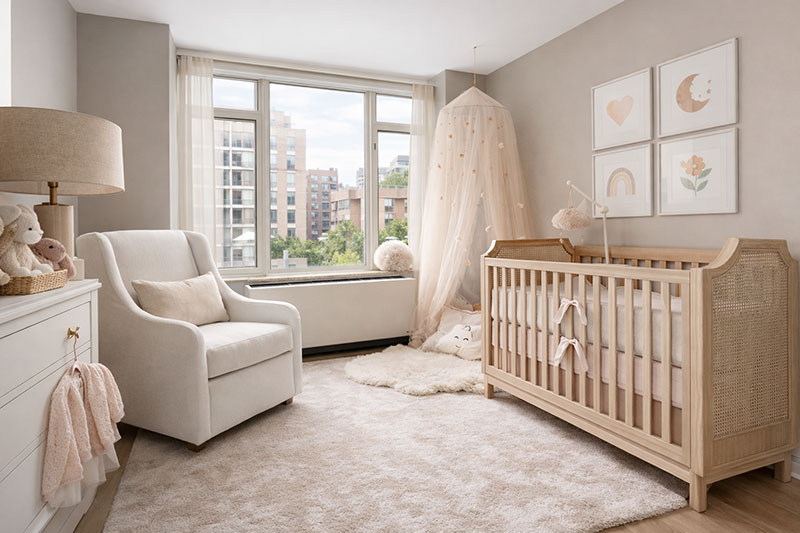
Jump to what matters most
What a small nursery layout really looks like
This page focuses on square footage and room size. For layout decisions driven by window placement, see Nursery Layout Ideas According to Window Location.
If you want to compare this setup with other room shapes and nursery arrangements, start with my nursery layout ideas guide for the broader overview.
Quick answer: The best small nursery layout usually places the crib on a solid wall, keeps the walkway open, and limits the room to the furniture you actually need, most often a crib, a dresser, and one compact chair.
What a Small Nursery Layout Really Looks Like
In most cases, the best small nursery layout places the crib on a solid wall, keeps the walkway clear, and limits extra furniture.
This page explains general layout principles for small nurseries and does not replace manufacturer instructions or assembly documentation.
This page focuses on small nursery layout ideas for space planning, not decorating trends or furniture reviews.
Quick fit check
The door opens fully. The crib fits flat against one uninterrupted wall. You can walk from the door to the crib without turning sideways.
Most people don’t realize how important that is.
Why Small Nursery Layout Ideas Matter
Room layout is not just about how things look. Lighting also affects how usable that layout feels, especially at night, and this nursery lighting guide shows how to place light so pathways stay visible without waking the entire room.
In tighter spaces, mini chandeliers for nurseries can add overhead light without crowding the ceiling or disrupting the layout.
It affects how safely the nursery functions. Safety standards regulate crib construction, but the nursery setup still matters because the crib lives inside a real room with windows, doors, cords, and furniture.
A small nursery room design should create space around the crib, not squeeze it between heavy objects. A compact nursery layout that leaves open floor space reduces clutter near the sleep area and keeps movement simple at night.
For nighttime movement that feels safe without turning on bright lights, see how to use nursery night lights without waking your baby and where to place them along your walking path.
For specific crib positioning rules, see my guide on where to put a crib in a nursery. That page focuses on placement safety. This page focuses on the overall small nursery layout and flow.
What Goes Wrong in a Small Nursery Layout
This is the moment when good intentions turn into a crowded room.
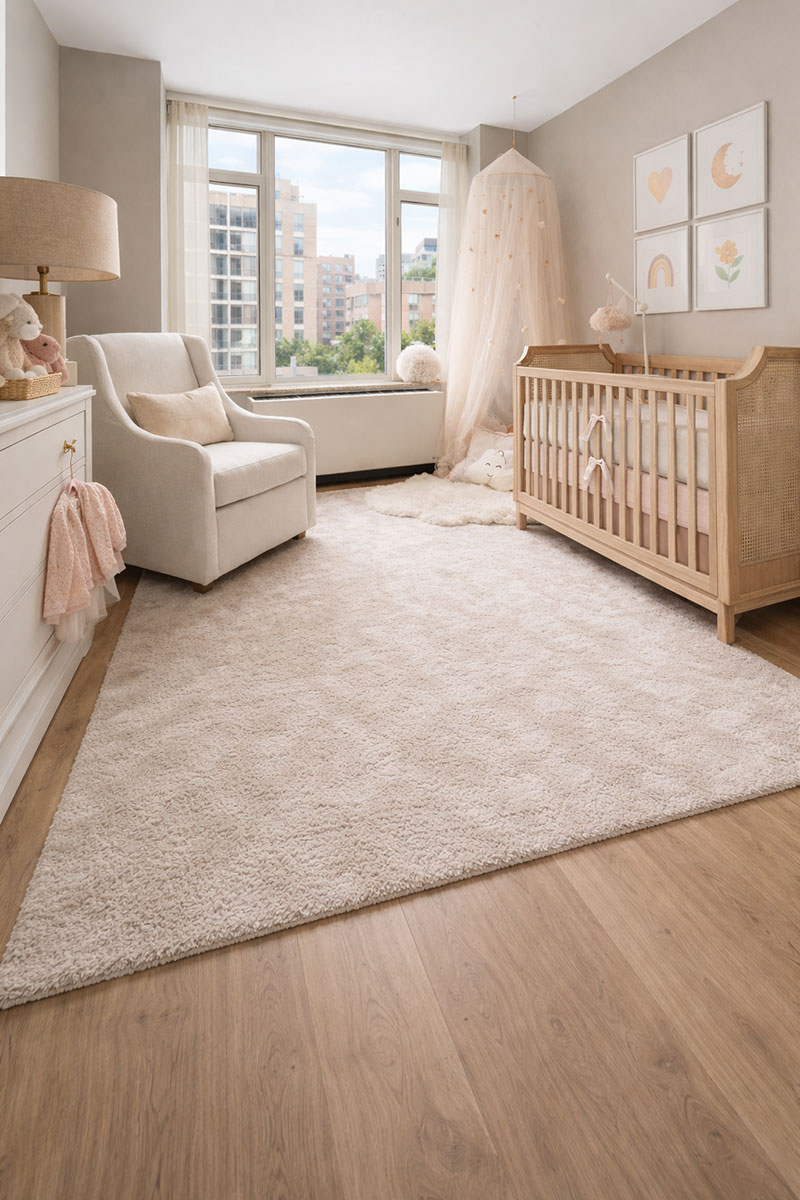
They try to fit too much into a tiny space. A large glider. A wide dresser. Extra shelving. Suddenly the crib is pushed closer to a window or wedged near stacked storage.
A tiny nursery layout usually needs fewer pieces, not more. A small nursery with crib and dresser often creates a better small nursery floor plan than one filled with extra storage or bulky furniture.
Do not force extra seating, shelving, or storage into the room if it pushes the crib into a tight corner or cuts into the main walking path.
Most parents choose
Most families in small baby rooms choose one crib, one dresser, and one compact chair. If the chair is the piece you are still unsure about, my nursery rocker and glider guide can help you compare comfort, size, cushions, and real-use details before you give up precious floor space. That keeps the nursery floor plan simple.
That chair still needs a smart placement plan, and this small nursery recliner placement guide shows how to choose a spot that protects walkway space and keeps the room usable.
A nursery recliner can quietly eat up the open floor space in a small room, so this guide to how much space you need for a nursery recliner can help you check chair clearance before the layout starts feeling crowded.
If you are comparing chair styles before buying, this nursery recliner vs glider guide can help you decide whether comfort, floor space, or easy movement should matter most in your small nursery layout.
For a side-by-side chair comparison, see my nursery glider vs rocking chair vs recliner guide before choosing the final seat for a tight nursery.
When you’re working with a standard 10-by-10 footprint, this detailed nursery layout for a 10x10 room shows exactly how to position the crib and dresser without sacrificing walking space.
For a room with a little more flexibility than a tight small-space layout, this 12x12 nursery layout guide shows how to keep the crib, dresser, and walkway balanced without losing that open feel. In a nursery with four fairly even walls and no strong long-wall advantage, these small square nursery layout ideas can help you place the crib and dresser without crowding the center of the room. For a simple way to test the layout before moving heavy furniture, this nursery floor plan guide shows how to map crib placement, dresser spacing, and clear walking paths in a small space.
Open floor space is valuable in a small nursery setup.
A correctly sized rug can make that open space feel intentional instead of empty, and my nursery rug size and placement guide shows how to choose a rug that works with the crib, dresser, chair, and walkway.
Before adding a thick rug to a tight walkway, review the best nursery flooring choices for easy cleaning, quieter footsteps and comfortable floor space.
Before you start shifting bulky pieces around, use this small nursery layout planner to test crib, dresser, and chair placement on paper and protect your walking space.
Small Nursery Layout Ideas for Crib and Dresser Placement
The primary term I use is nursery layout. Some people call it a small baby room layout or a small nursery floor plan. I stick to the term nursery layout so the meaning stays consistent.
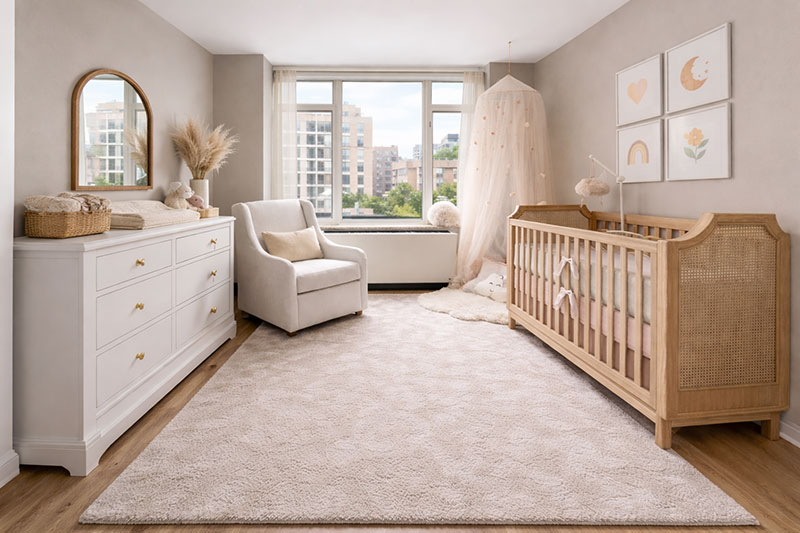
In a small room nursery layout, the crib usually belongs on the longest uninterrupted wall. The dresser can sit across from it or near the door, as long as it does not block entry or crowd the crib. A nursery dresser layout that doubles as a changing space often works better than adding a separate piece.
My changing table placement tips can help you decide whether that setup should go near the crib, near the door, or on the wall with the best drawer clearance.
For many small nurseries, the easiest layout to live with is a crib on one solid wall, a dresser on the opposite wall or near the door, and open floor space left in the middle.
For the dresser wall decision specifically, this guide to where to put a dresser in the nursery helps you choose the spot that protects drawer clearance, crib access, and the main walking path.
For a more focused example of how those two main pieces can work together in one room, see this small nursery layout with crib and dresser guide.
That simple pattern usually feels better than trying to fill every corner.
To see how those larger pieces work together as a whole, review my nursery furniture layout ideas for practical ways to arrange the crib, dresser, and chair without crowding the room.
Window placement still affects the overall nursery layout. When the crib sits near windows, blinds and cords become part of the room’s safety picture under general safe sleep guidance.
Did I Choose the Right Furniture for a Small Nursery?
A standard crib that meets current US safety standards is rarely too large for a bedroom. The problem is usually oversized companion furniture.
A deep dresser can overwhelm a compact nursery layout. Tall, narrower storage uses wall height instead of floor space. That shift alone can transform a small nursery design.
Wall-mounted or low-profile book storage can follow that same vertical logic. These space-smart nursery bookshelf ideas show how to keep books accessible without crowding tight floor plans.
For room-by-room examples of best dressers for a small nursery, I break down compact dimensions, drawer depth, and safety features that work without crowding the crib.
For a deeper breakdown of dresser sizes, proportions, and safety considerations, see my baby dressers guide to compare options that work in compact rooms.
If the room still feels tight after removing décor, scale may be the issue. Identifying proportions matters more than matching styles.
If you only remember one thing
The crib should feel anchored and clear, not squeezed between bulky objects.
That may sound strict, but in a small nursery, those details make the whole room work better.
A Few Real-Life Complications to Think About
Older homes may have tight corners or narrow door swings. Secondhand cribs may not include original documentation. Missing hardware changes the evaluation entirely.
In those situations, parents should identify the crib model and understand whether it meets current safety standards before finalizing any nursery layout decisions. No layout can compensate for non-compliant equipment.
What To Do Now
If the room feels crowded, removing one large piece often improves the layout more than shifting the crib. In most cases, simplifying the room creates better flow.
Crib placement, walking paths, and nearby furniture should all support an open, uncluttered sleep area consistent with general safe sleep guidance.
For federal safe sleep guidance, the U.S. Consumer Product Safety Commission safe sleep page outlines general recommendations.
This layout guide connects directly with my broader crib safety overview at Crib Safety Standards in the United States, which explains how federal regulations apply across brands and models.
A small nursery does not need to feel cramped. With a thoughtful nursery layout, even a tiny baby room can feel open, balanced, and calm.
Small Nursery Layout Ideas FAQ
Where should a crib go in a small nursery?
In most small nurseries, the crib works best on a solid uninterrupted wall with enough open space around it to keep the room feeling clear and easy to move through.
Can a crib and dresser fit in a small nursery?
Yes, in many cases a crib and dresser fit well in a small nursery if the dresser is scaled correctly and the room is not overloaded with extra furniture.
What makes a small nursery feel crowded?
A small nursery usually starts to feel crowded when bulky furniture blocks the walkway, crowds the crib, or takes up too much floor space in the center of the room.
What is the best furniture setup for a small nursery?
For many families, the simplest setup works best: one crib, one dresser, and only one compact seating piece if the room can handle it without losing clear floor space.
Final Check
If the walkway is open, the crib area is clear, and no bulky piece crowds the main path, the layout is probably working.
If one piece makes the room feel tight, remove that piece before you move the crib.
When you click on links to various merchants on this site and make a purchase, this may result in this site earning a commission. This does not affect the price you pay.

UBGI Gold Standard 2026
Reviewed under the site's
editorial checklist.
Photos, decorating ideas, party setups and reader submissions are shared for inspiration unless a page is specifically presented as a pattern, tutorial, reference guide or step-by-step project. Follow the instructions, measurements, safety guidance and manufacturer directions provided for the particular project or product.
About Jan | Contact | Baby Nursery Ideas (Blog) | Site Map | Privacy Policy | Disclosure Policy | Disclaimer | Affiliate Disclosure | Earnings Disclosure | Facebook | Pinterest
I am a participant in the Amazon Services LLC Associates Program, an affiliate advertising program designed to provide a means for us to earn fees by linking to Amazon. As an Amazon Associate I earn from qualifying purchases.
Copyright © 2006-2026. All Rights Reserved.