Crib Mattress Gap Problems: What to Check First for a Safe Fit
Crib mattress gap problems are one of the most overlooked safety issues in a nursery because the crib can look perfectly set up while still leaving small spaces around the mattress. Even a slight gap between the crib and mattress can create a risk if a baby shifts into that space, especially near the corners. The key is not how the crib looks, but how tightly the mattress fits inside it.
Do you see a gap around the crib mattress? Check these before you ignore it:
How do you know if the crib mattress fits the way it should?
Is the mattress really the right size?
How do you know if a crib mattress is unsafe?
Could the crib frame or missing parts be causing a dangerous gap?
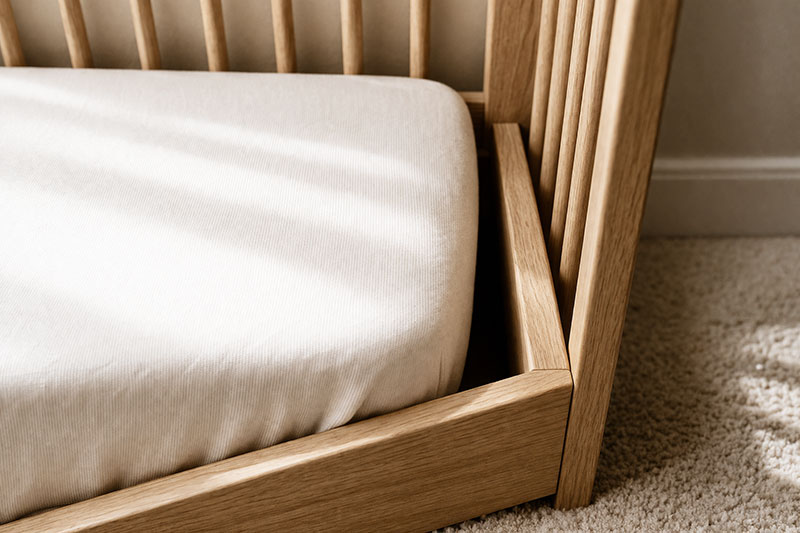
See the crib mattress with tighter standard sizing here.
Crib Mattress Gap Problems: What They Are and Why They Matter
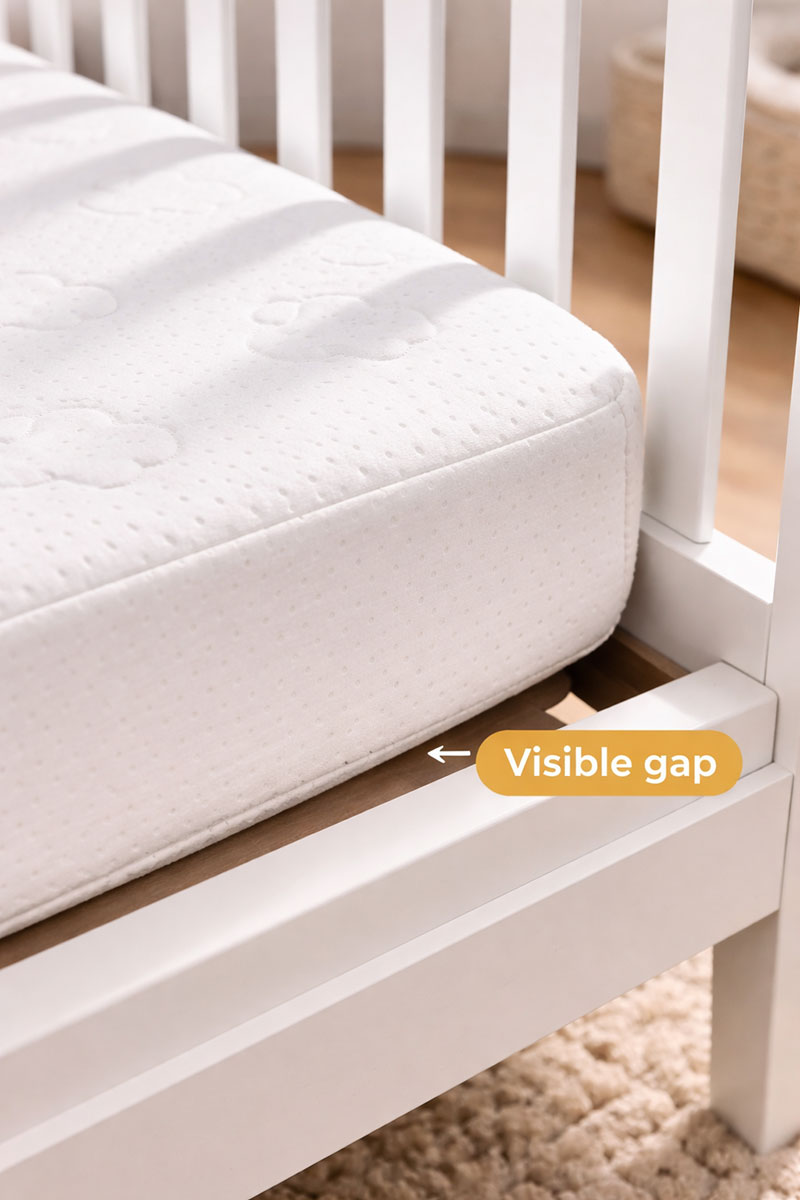
A crib mattress gap is any open space between the mattress and the inside edge of the crib. It can show up along the side, at the head or foot, or in a corner where the shapes do not meet cleanly. Crib mattress gap problems matter because the mattress should sit snugly inside the crib and stay in place during normal use, not shift around like a loose insert.
A crib mattress should fit tightly enough that you cannot easily slide more than two fingers between the mattress and the crib frame.
That is the direct answer. If the gap is wider than that anywhere around the mattress, the fit is not safe.
Most parents do not notice this right away. It usually shows up during a sheet change or after the mattress shifts slightly and a space appears along the edge. A crib can look completely set up and still have a real fit problem.
Here’s the part that catches people off guard. A crib mattress gap can happen even when both the crib and mattress are labeled standard. The crib may be slightly larger. The mattress may be slightly smaller. That small difference is enough to create a gap that matters in real use.
For the full safety foundation behind this, see crib mattress safety and how fit connects to the entire sleep setup.
Crib Mattress Gap Problems: How Much Gap Is Unsafe
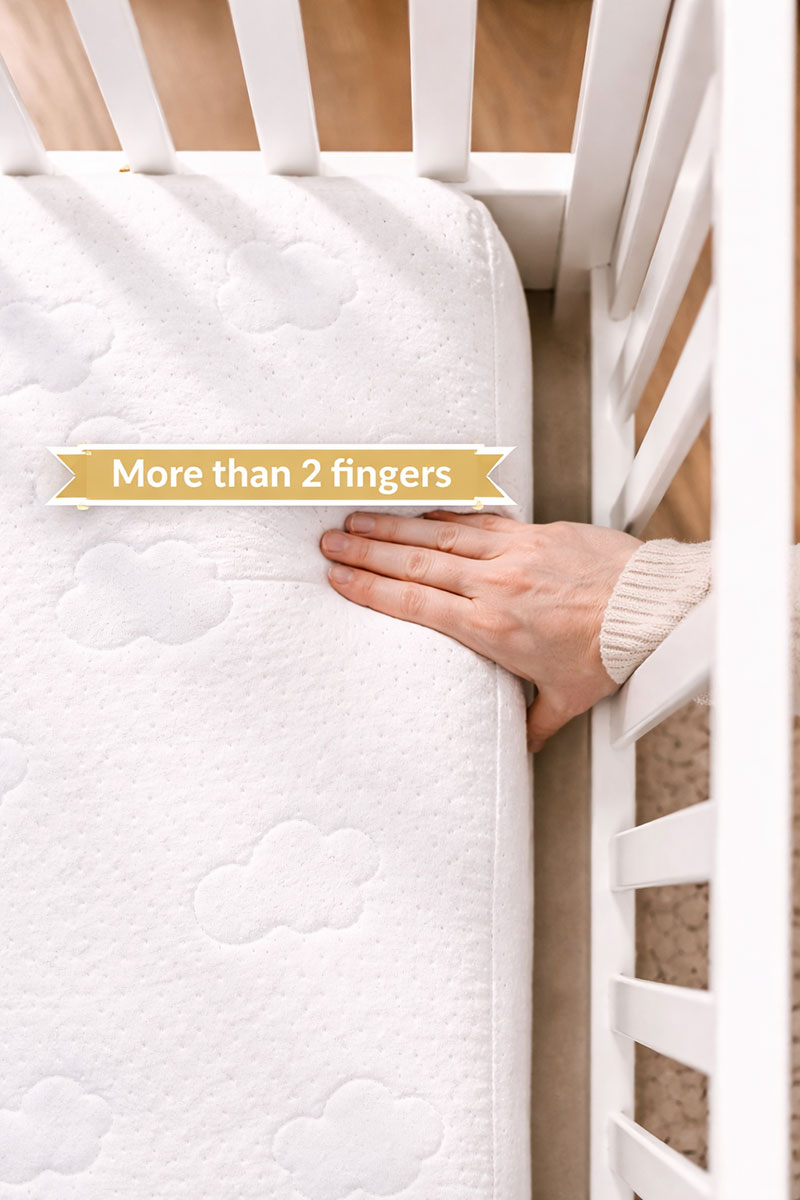
The rule is simple. If more than two fingers fit between the mattress and the crib frame, the crib mattress gap is too large.
If more than two fingers fit between the mattress and the crib frame, the fit is not safe.
This aligns with guidance from the U.S. Consumer Product Safety Commission. The mattress should sit snugly on all sides and remain in place when handled.
What makes crib mattress gap problems serious is not just the size of the space, but what happens when the mattress shifts into that space. A gap that looks small can become larger when the mattress moves during normal use. That change is what turns a minor-looking issue into a real safety concern.
Parents often assume a small corner gap does not count. It does. Any point where the gap opens too much matters.
If you are comparing overall mattress sizing standards, this page explains how those ranges actually work in practice: standard crib mattress size.
Why Crib Mattress Gap Problems Happen
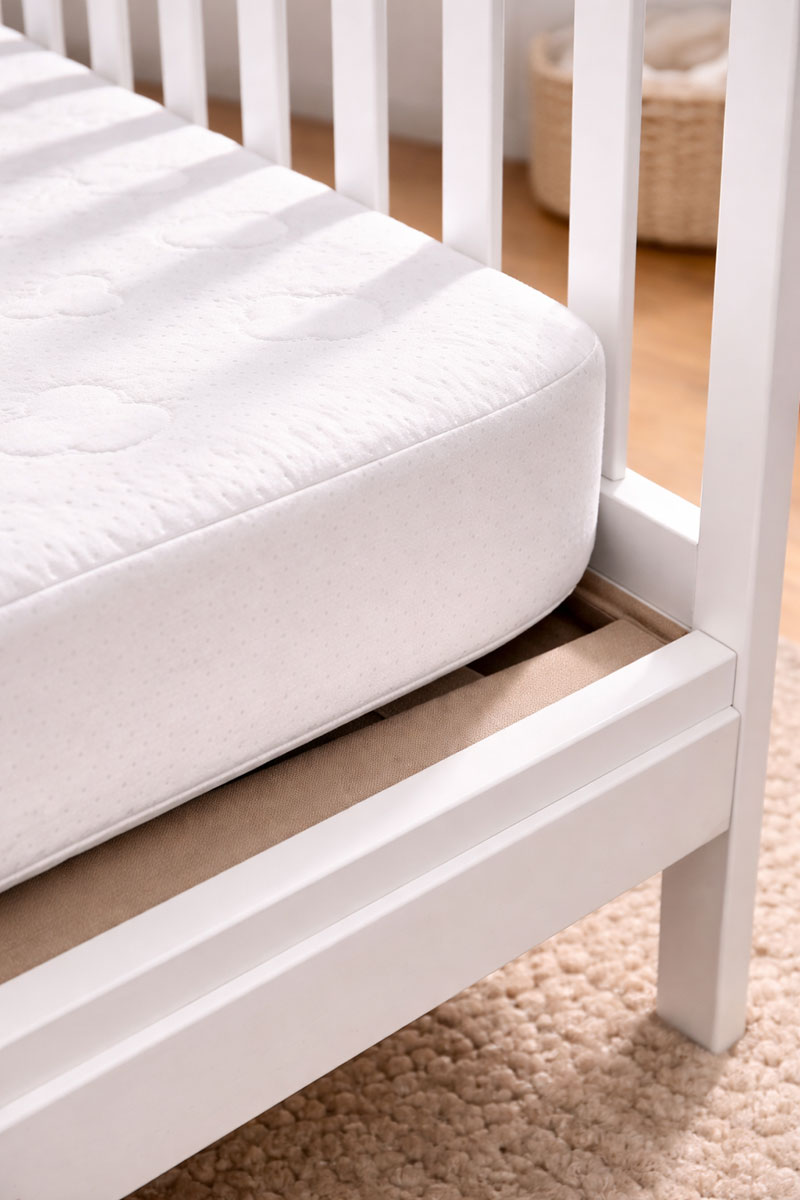
This usually happens for a few very common reasons.
- The mattress is slightly smaller than the crib interior.
- The mattress edges have softened or compressed.
- An older mattress is being reused.
- The mattress corners are rounded while the crib corners are more square.
- The mattress is not sitting flat on the support base.
- The crib interior runs slightly larger than expected.
Many nurseries run into this because standard sizing is not exact sizing. A label can say standard and still leave enough variation to create a gap, and that becomes even more noticeable with compact crib formats. My mini crib mattress guide explains how smaller crib mattresses follow different sizing and fit patterns than full-size models.
Some gaps also appear only after use. The mattress may look fine when centered, then shift after a sheet change and create space along one side, which is why a one-time check is not enough. My crib mattress firmness guide explains what to look for before shape loss becomes a safety issue, while my best breathable crib mattress guide compares which airflow-focused designs still stay firm, fit correctly, and maintain a stable sleeping surface.
A waterproof baby crib mattress still needs firm edges and a snug crib fit so leak protection does not distract from gap and sizing checks.
That gradual shifting and compression is also why many parents begin asking why crib mattresses are intentionally made so firm, since firmer construction helps the mattress hold its shape and resist developing unsafe gaps over time.
Parents comparing construction styles should also see dual-sided crib mattress vs single-sided crib mattress, which explains how different designs can affect long-term shape retention, edge support, and crib mattress fit.
For a closer look at the two-stage mattress type itself, my dual sided crib mattress guide explains how infant and toddler sides work and why edge support still matters when checking crib mattress gap problems.
To understand why some mattresses hold their shape better than others, compare breathable vs foam crib mattress with my firm crib mattress guide.
How to Check for Crib Mattress Gap Problems
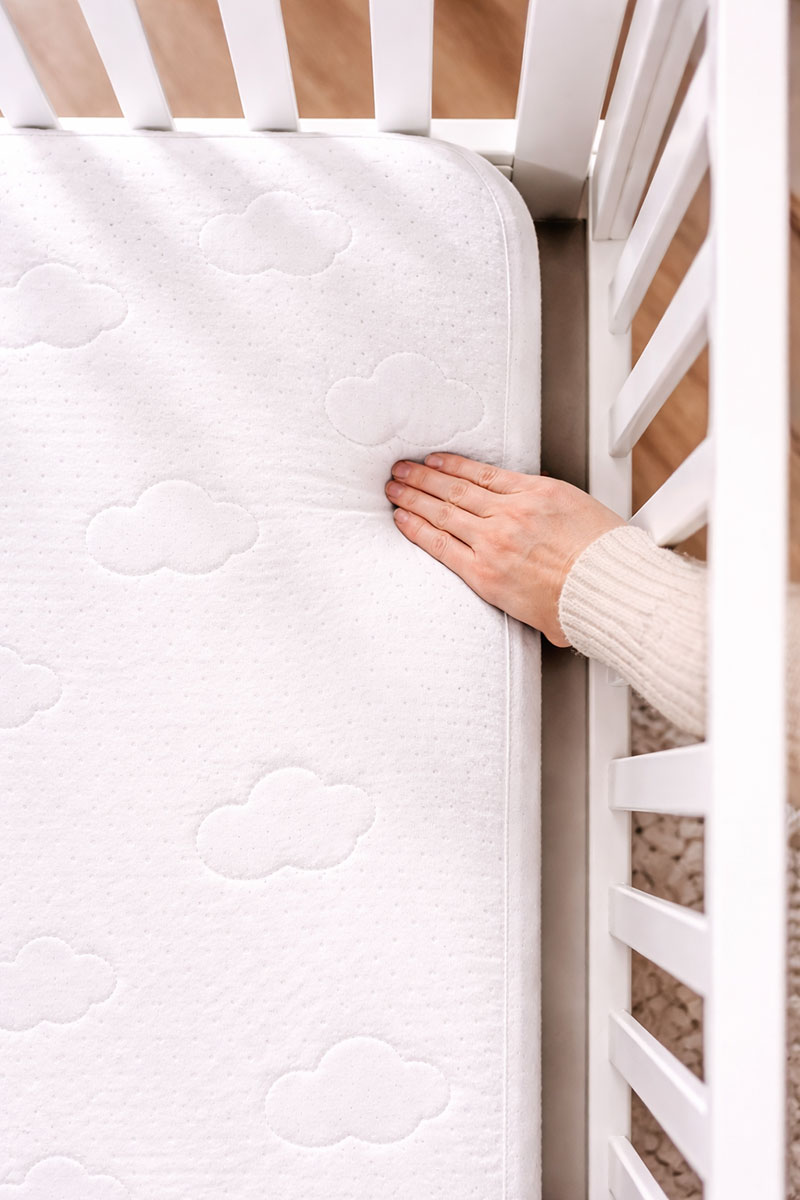
Most parents check mattress fit by looking down into the crib. That does not show the full picture.
Use this method instead:
- Remove anything extra from the crib.
- Make sure the mattress is flat on the support.
- Push it firmly into one corner.
- Check the opposite side and corner.
- Run your hand along every edge.
- Use the two-finger test in multiple spots.
- Push the mattress toward the head and then the foot.
- Repeat after changing the sheet.
If the mattress shifts easily or the gap changes depending on position, the fit is not dependable.
If the fit changes when the mattress moves, the fit was never safe to begin with.
If you are questioning whether your mattress size is correct for your crib, this page breaks that down clearly: do all crib mattresses fit all cribs.
Corner Gap Problems Most Parents Miss
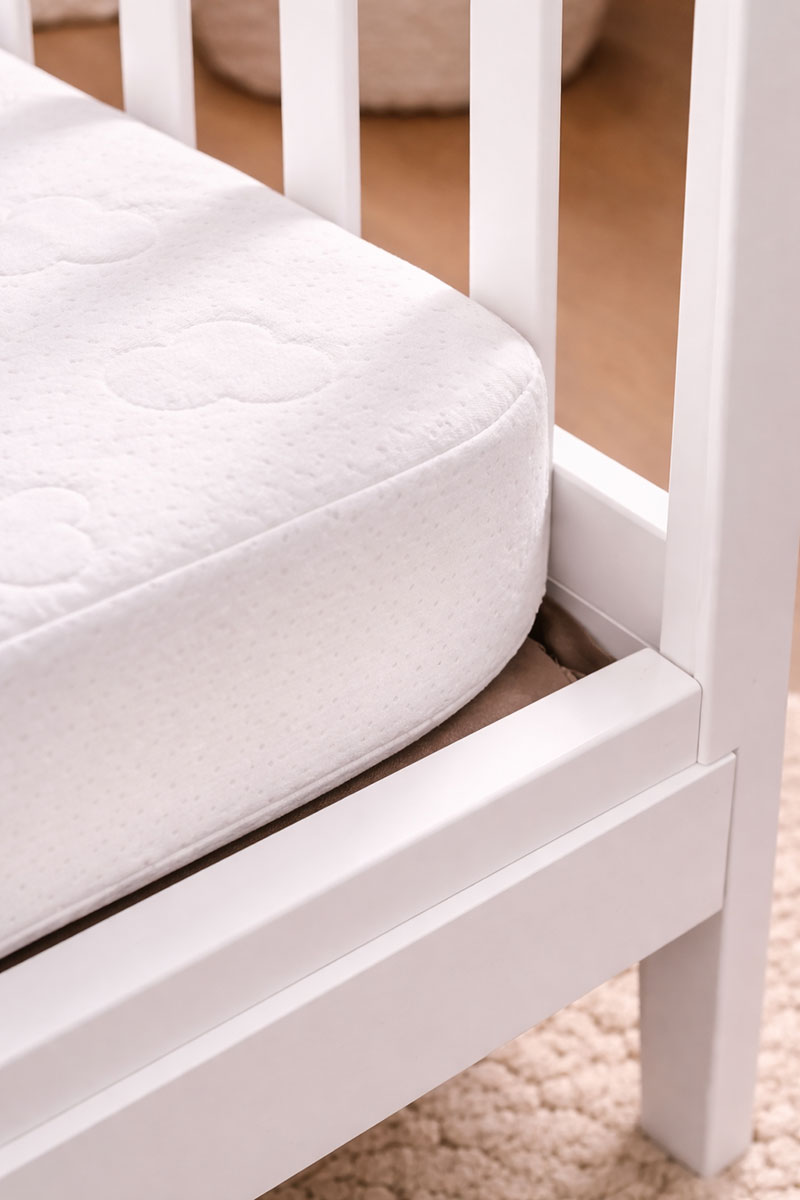
Corner gaps are often missed because the long sides can still look tight. Rounded mattress corners inside a more square crib can leave small open pockets.
Parents usually notice this after putting on a clean sheet. Everything looks neat, but one corner still has space.
Corner gaps count the same as side gaps.
If a corner opens enough to fit more than two fingers, it is a real fit problem.
How to Fix Crib Mattress Gap Problems Safely
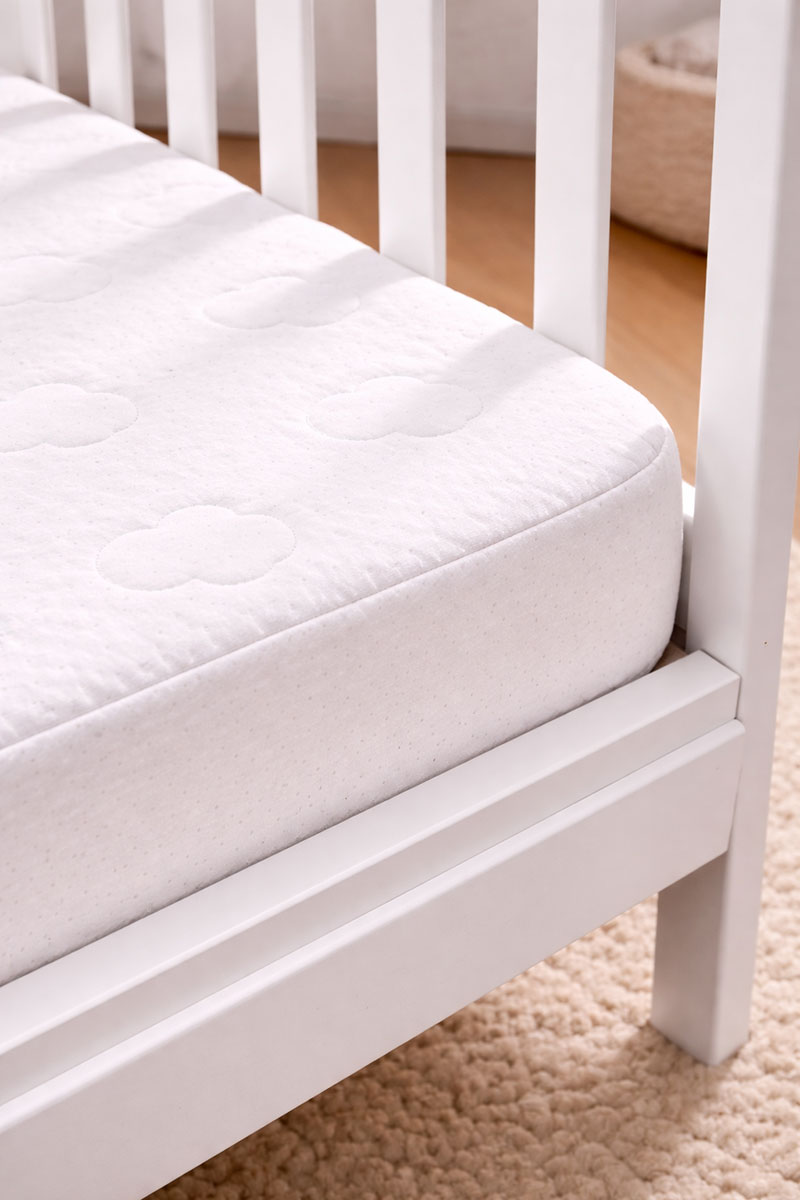
There is only one safe fix.
Replace the mattress with one that fits correctly.
Do not use towels, foam strips, gap fillers, or padding. These do not fix the problem. They create a new one.
That confusion also extends to waterproof layers and added cushioning products, which is why this crib mattress pad vs protector guide explains which products are meant only for moisture protection and which ones can begin changing mattress thickness and fit.
That same warning applies to extra comfort layers, which is why many parents also research why crib mattress toppers can create additional sleep surface risks before adding anything on top of the mattress.
The correct result is simple. The mattress sits flat, fills the space, and stays close to the crib frame on all sides.
If you are deciding what type of mattress to replace it with, you can compare options here: best crib mattress, non toxic crib mattress, and organic crib mattresses.
When to Replace a Crib Mattress That Does Not Fit
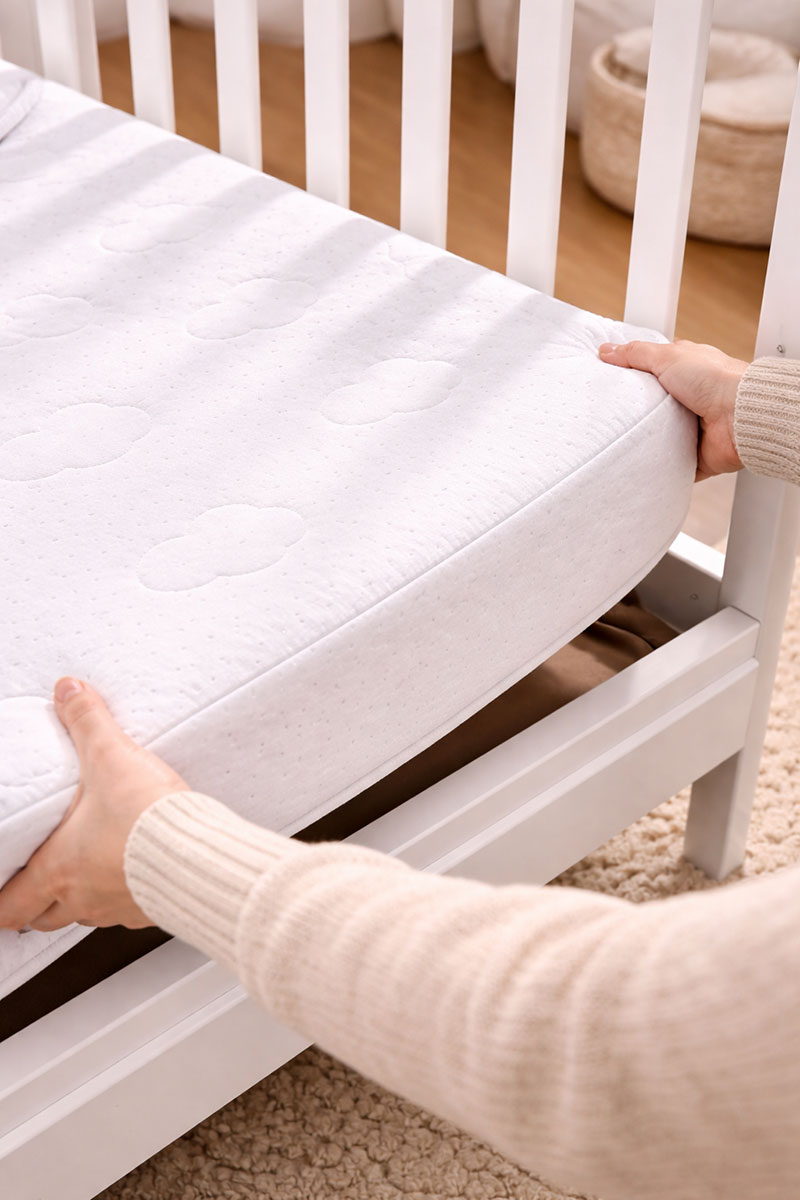
You should replace the mattress if:
- The gap is too wide when new.
- The fit becomes looser over time.
- The edges compress.
- The mattress shifts during use.
- One area always shows more space.
- The mattress came from a different crib.
This often happens when reusing a mattress from another setup. If you are unsure about replacement timing, see when to replace a crib mattress.
Cleaning and maintenance can also affect long-term shape and fit. See how to clean a crib mattress.
Quick Answer: How to Know If Your Crib Mattress Gap Is Safe
A crib mattress gap is unsafe if more than two fingers can fit between the mattress and the crib frame anywhere. The mattress should sit snugly, stay flat, and not shift. If it moves or leaves space, it should be replaced.
Common Questions About Crib Mattress Gaps
Is a small gap okay?
No. Even a small gap can become larger with movement.
Can I fill the gap?
No. Adding materials creates new risks.
Do all crib mattresses fit all cribs?
No. Size variation is common, which is why fit must be checked.
Why does my mattress move?
It is usually too small or has softened.
Can a fitted sheet hide a gap?
Yes. Always check the mattress itself, not just how it looks after the sheet is on.
When you click on links to various merchants on this site and make a purchase, this may result in this site earning a commission. This does not affect the price you pay.

UBGI Gold Standard 2026
Reviewed under the site's
editorial checklist.
Photos, decorating ideas, party setups and reader submissions are shared for inspiration unless a page is specifically presented as a pattern, tutorial, reference guide or step-by-step project. Follow the instructions, measurements, safety guidance and manufacturer directions provided for the particular project or product.
About Jan | Contact | Baby Nursery Ideas (Blog) | Site Map | Privacy Policy | Disclosure Policy | Disclaimer | Affiliate Disclosure | Earnings Disclosure | Facebook | Pinterest
I am a participant in the Amazon Services LLC Associates Program, an affiliate advertising program designed to provide a means for us to earn fees by linking to Amazon. As an Amazon Associate I earn from qualifying purchases.
Copyright © 2006-2026. All Rights Reserved.