Portable Baby Cribs for Travel and Small Spaces
Portable baby cribs are commonly used in situations where a full-size crib is not practical. They appear in travel settings, short stays outside the home, visits to other households, and temporary sleep arrangements located outside the main nursery space. These cribs are designed with lighter frames and compact structures that differ from standard crib formats.
If you're comparing models specifically for trips, flights and hotel stays, my best travel crib guide compares the travel-focused options that are easiest to carry, set up and use away from home.
Portable cribs can look almost identical online — until parents try carrying, folding, storing, and sleeping beside them:
Which portable cribs parents keep using after the first trip
The difference many parents misunderstand at first
Why one lightweight travel crib keeps showing up in parent reviews
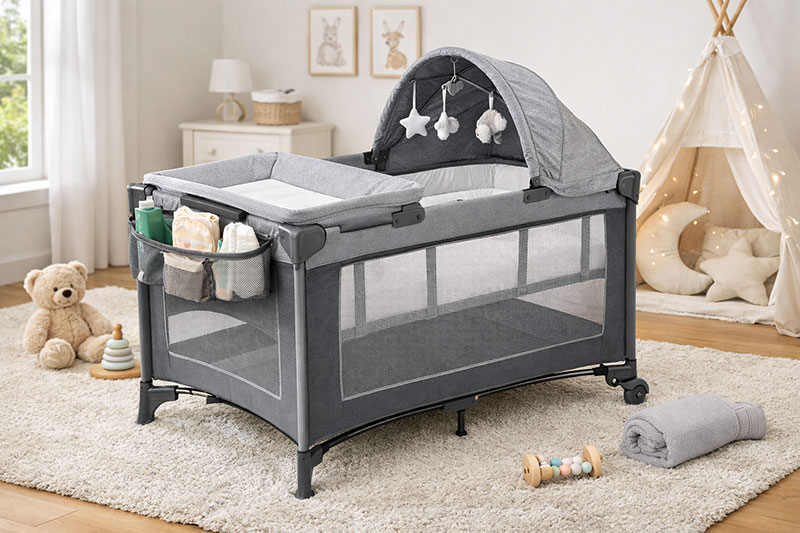
See current portable baby cribs parents prefer here
Jump to a Section
Design formats in everyday settings
Common lightweight folding format
Feature groupings used for comparison
Manufacturer design limitations
Outdoor and temporary location use
Portable baby crib design formats in everyday settings
Portable baby cribs appear in a range of situations where a fixed crib is not practical. The jump links above allow you to move directly to the design formats, feature comparisons, regulatory references, or placement considerations that are most relevant to how you plan to use a portable crib.
Many families begin looking at portable crib options for travel or temporary sleeping arrangements, while others compare them with nursery setups designed to reduce floor usage at home. These alternatives are described on the cribs for small spaces page.
Portable baby cribs appear in travel situations, overnight visits to other homes, outdoor trips, and temporary sleeping spaces located outside the primary nursery. In these environments, parents usually evaluate a crib based on how easily it moves, stores, and sets up rather than how it looks in product photos.
Portable crib models vary in overall weight, folded dimensions, frame structure, and mattress construction. These characteristics are often the main points used to compare portable crib designs because they affect storage, transport, and placement.
Size and space alignment
Portable crib dimensions differ between models both when folded and when fully assembled. Some designs are compact during storage but expand to occupy more floor area once opened. Placement areas may include car trunks, hotel rooms, guest bedrooms, or shared living spaces where available clearance varies.
Portable baby crib categories by use setting
Portable baby cribs are commonly grouped according to how and where they are used. Some models are designed primarily for lightweight travel and short-distance movement. Others resemble compact cribs that fold but retain a sturdier frame similar to traditional crib structures.
These structural differences affect how frequently the crib is transported, how easily it stores between uses, and how it fits within limited floor space.
Because portable crib mattresses frequently differ from standard crib mattress dimensions, sizing information such as mini crib mattress sizing and fit considerations is often referenced when reviewing portable crib models.
Structural differences between portable cribs and full-size cribs are also explained on the baby crib styles page, where frame construction and footprint size are described in more detail.
Common lightweight folding format
One widely recognized folding design is the BabyBjörn travel crib, which is often referenced for its compact folded profile and firm sleep surface. This type of design is usually associated with overnight travel and short-term sleep setups. Lightweight folding cribs generally use integrated frames with minimal hardware, mesh or fabric side panels, and simplified folding mechanisms instead of removable structural parts. Many models also include carry cases for easier transport. For a closer look at how these portable designs compare in everyday use, this guide to travel crib vs pack and play differences explains how folding structure, weight, and setup style can affect travel convenience.
Travel-focused models with different weights, folding structures, and mattress layouts are compared on this best travel cribs comparison page.
Feature groupings used for comparison
Portable baby crib features are often evaluated in grouped categories rather than as individual selling points. These categories reflect patterns seen across product listings and manufacturer descriptions.
One frequently referenced specification is crib mattress thickness and firmness, because portable crib mattresses are usually thinner than standard crib mattresses and are designed to fit tightly within the frame.
When portable crib mattresses are used regularly, questions about cleaning and maintenance also arise. Basic care information appears on the crib mattress cleaning information page.
Mattress firmness is commonly listed in manufacturer specifications for portable cribs. Firm sleep surfaces are typical within this product category due to frame design and mattress thickness limits.
Setup structure is another commonly referenced feature. Some portable cribs use single-piece frames, while others use collapsible sides or hinged support sections. These differences affect how the crib opens and folds but do not change its overall purpose.
Ventilation materials are also commonly noted. Mesh side panels are widely used in portable crib construction and are considered part of the structural layout.
Manufacturer design limitations
Portable crib designs are built around specific mattress dimensions and frame tolerances. Changes to mattress thickness, padding layers, or surface materials can affect how components align inside the frame. Manufacturer specifications typically define the intended configuration for each crib model.
Outdoor and temporary location use
Portable cribs frequently appear in temporary or outdoor sleeping setups. In these situations, weight, folded dimensions, and material construction become the main factors discussed when comparing designs.
Some portable crib models incorporate additional elements such as mesh covers or accessory attachments intended for temporary environments.
Related gear designed for outdoor use with infants is grouped on the baby camping gear page.
Condition-based availability
Portable baby cribs are available both as new products and as previously owned items in resale markets. Used cribs may show signs of repeated folding, tension in fabric panels, or wear at joint points.
Condition descriptions for pre-owned cribs generally focus on structural integrity and whether original components are included.
New portable cribs are sold with manufacturer packaging and original specifications, while resale listings often describe lightly used cribs with varying levels of prior use.
Regulatory information references
Portable cribs sold in the United States are covered by federal crib regulations. Information published by the U.S. Consumer Product Safety Commission outlines crib safety standards and classification criteria.
Bedding designed for portable cribs must also match specific mattress dimensions. Additional sizing details appear on the portable crib bedding page.
Placement and reuse considerations
Portable baby cribs are commonly reused across multiple locations or stored between trips. Product descriptions often emphasize storage size, transport cases, and folding mechanisms when these cribs are intended for repeated setup and breakdown.
Because portable cribs are frequently moved between homes, vehicles, and temporary sleeping areas, transport size and folding structure often become the primary considerations when selecting a design.


When you click on links to various merchants on this site and make a purchase, this may result in this site earning a commission. This does not affect the price you pay.

UBGI Gold Standard 2026
Reviewed under the site's
editorial checklist.
About Jan | Contact | Baby Nursery Ideas (Blog) | Site Map | Privacy Policy | Disclosure Policy | Disclaimer | Affiliate Disclosure | Earnings Disclosure | Facebook | Pinterest
I am a participant in the Amazon Services LLC Associates Program, an affiliate advertising program designed to provide a means for us to earn fees by linking to Amazon. As an Amazon Associate I earn from qualifying purchases.
Copyright © 2006-2026. All Rights Reserved.