Crib Rail vs Crib Bumper: What’s the Difference?
This page explains the crib rail vs crib bumper question by comparing their placement, purpose, and terminology as used in the United States.
In U.S. crib terminology, a crib rail cover refers to a padded item designed to wrap only around the top rail, while a crib bumper refers to a product intended to line the inside slats of the crib.
Trying to tell crib rails, bumpers, and covers apart before buying the wrong thing? Check these first:
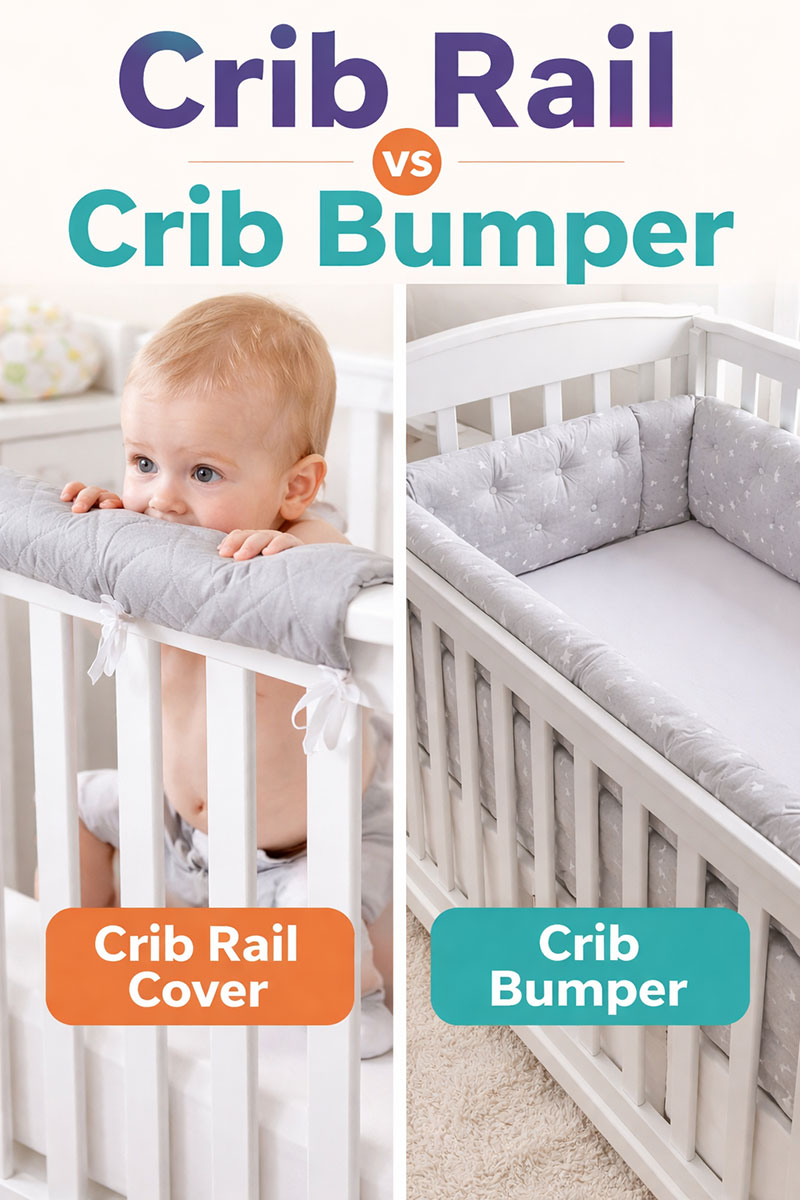
- Crib rail covers and crib bumpers are different products designed to attach to different parts of a crib.
- Rail covers are intended for the top rail, while bumpers line the inside slats of the crib.
- The two products are often confused due to overlapping language in online listings.
- Placement on the crib is the clearest way to distinguish between these categories.
This page provides general reference information about crib rail covers and crib bumpers and does not offer product selection, usage, or installation instructions.
Crib rail vs crib bumper — are crib rail covers the same as bumpers? That’s something a lot of parents wonder about, especially when they’re setting up a crib and all the names, gear, and just… everything starts to sound the same. Even though the names get mixed up all the time, a crib rail cover and a crib bumper are not the same thing at all. They go in different places on the crib and are made for totally different reasons, which is why it helps to look at each one separately.
Crib rail vs crib bumper: the exact difference parents mean
Most people land on this page because they’re seeing two products that look kind of similar in a shopping photo… and then the labels get messy. “Rail cover,” “rail guard,” “bumper,” “liner,” “teething cover.” It’s a lot. The quickest way to sort it out is to look at one simple thing: what part of the crib the item is meant to touch. This is exactly why the crib rail vs crib bumper question comes up so often when parents start shopping.
This confusion is exactly why the crib rail vs crib bumper distinction matters, since these two products serve different purposes and belong in very different areas of the crib.
A crib rail cover is meant to sit on the top rail (usually the front rail). A crib bumper is meant to attach along the inside walls of the crib. That one difference changes the whole conversation, and it’s the core of the crib rail vs crib bumper distinction parents are really trying to understand. What to do next: decide which item you actually have in your cart (rail-only vs inside-the-crib), then match it to the crib setup you’re trying to create.
What a crib rail cover is (and what it’s actually for)
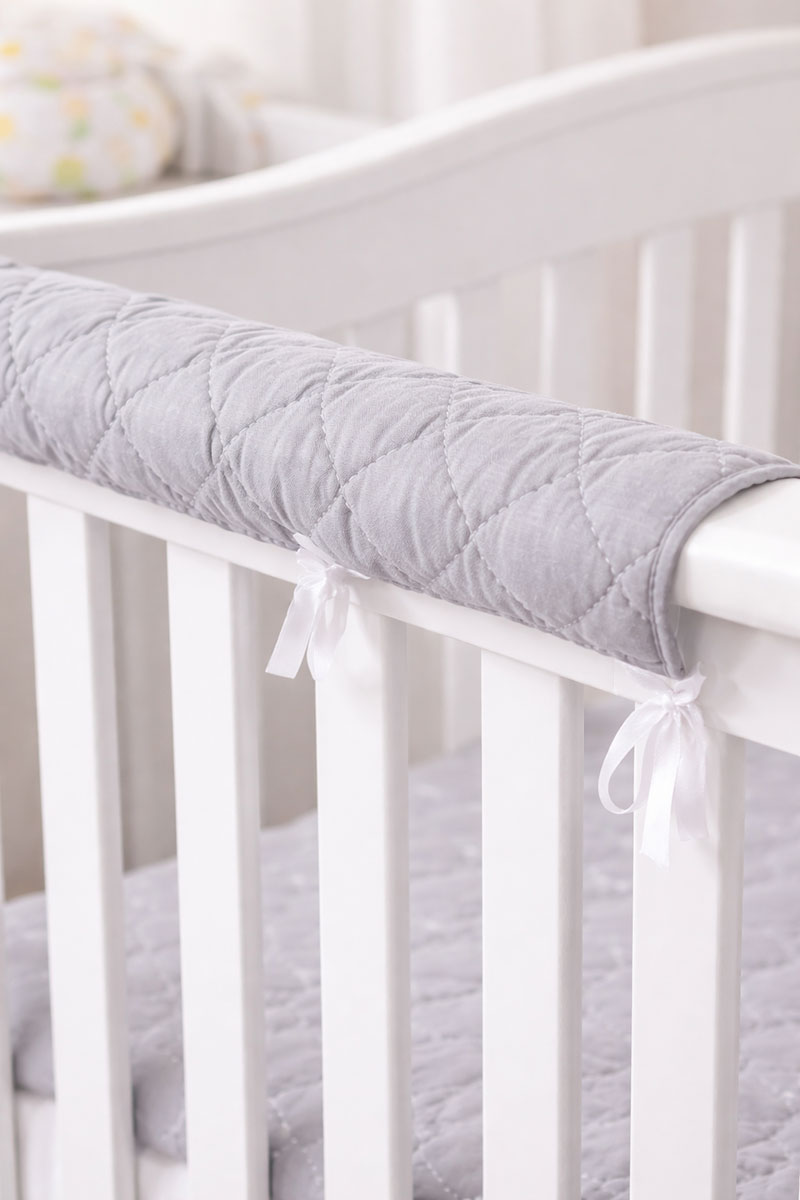
A crib rail cover is basically a “top-rail protector.” It’s usually a padded strip that wraps around the upper rail and ties or fastens underneath. Parents look at it for two main reasons: the crib’s finish (chewing can ruin it fast), and baby’s gums (teething on a hard rail can look rough). In the crib rail vs crib bumper comparison, this is the product that stays clearly on the outside edge of the crib.
When I’m reading product listings, I look for language that stays focused on the top rail only. If the photos show it dropping down inside the crib like a wall panel, it’s no longer just a rail cover in the practical, everyday sense most parents mean.
If you’re still comparing crib accessories in general, these two pages can help you keep the “what is this thing?” categories straight: crib terminology glossary and crib instructions and assembly manuals hub.
What a crib bumper is (and why it’s not the same product)
A crib bumper is made to attach along the inside perimeter of the crib. It lines the interior slats like a soft wall, and it’s usually secured with ties, straps, or panels that run around multiple sides. This is the item parents are talking about when they say, “the padded thing that goes around the inside,” and it’s the other half of the crib rail vs crib bumper confusion.
Even when a product is marketed as “thin,” “breathable,” or “mesh,” the big clue is still placement: if it’s inside the crib along the slats, it’s functioning as a bumper-style liner. That’s the category you want to be clear about before you buy anything.
For the current U.S. consumer guidance and definitions, this is the one outside reference I trust for straight language: CPSC crib bumper FAQs.
Quick fit check
Look at the product photos and answer one question: does it stay on the top rail only, or does it cover the inside slats?
If it covers the inside slats, treat it as a bumper-style item for decision-making, even if the listing uses softer words like “liner.”
If you’re sorting out which items are typically placed inside a crib versus which are usually left out, this reference page breaks it down clearly: what can go in a crib.
Parents who are also comparing add-on barriers sometimes ask whether products designed for older beds can be adapted to cribs, which is why this reference explains the category difference clearly: can you use bed rails on a crib.Why the names get mixed up (and how to read listings without getting tricked)
Online listings love cozy language. “Nursery essential.” “Protective padding.” “Gentle barrier.” And then you scroll down and realize the photos show it tied in five places around the whole crib. That’s when parents feel silly—like they missed something obvious. You didn’t. The labels are genuinely inconsistent across brands and marketplaces, which is why the crib rail vs crib bumper debate keeps popping up.
Here’s how I read a listing quickly: I ignore the headline and scan the photos for where the fabric sits. Then I check the measurements. A rail cover usually lists a length meant for one rail. A bumper-style item lists multiple panels or a full perimeter length.
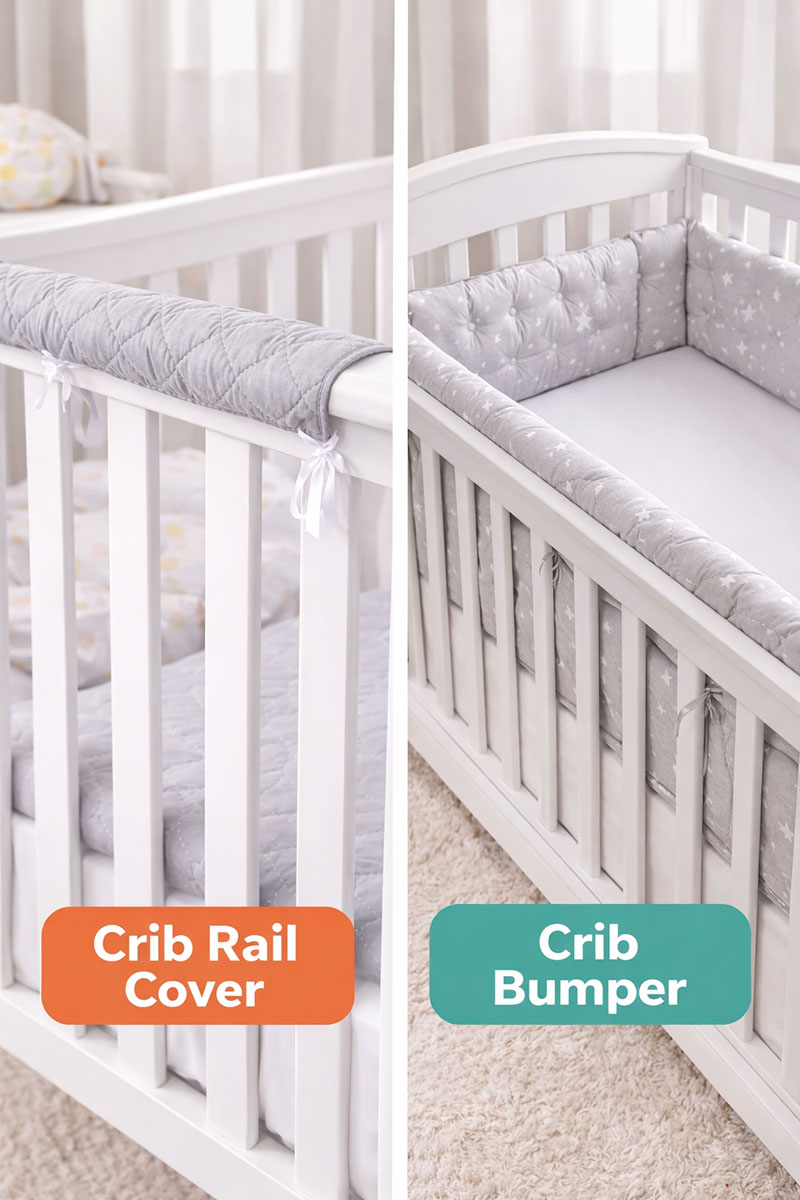
What to do next: if you already bought something and now you’re second-guessing it, take one clear photo of it on the crib (even just held in place) and compare that placement to the two descriptions above. That alone usually answers the crib rail vs crib bumper question for most families.
Did I buy the right thing for my crib setup?
This is the part nobody wants to admit out loud: sometimes we buy the cute thing first, and the logic comes later. I’ve done that with nursery items more times than I can count. The way back out is simple—match the product to the problem you were trying to solve.
If your “problem” was chewing on the top rail, a rail cover makes sense as a category. If your “problem” was baby’s arms or legs reaching through slats, that’s usually where parents start looking at bumper-style products, and that’s also where rules and guidance get more complicated.
It can also help to step back and check the basics of the sleep surface itself, because a lot of accessory shopping is really “mattress anxiety” in disguise. Two pages that pair well with this topic are crib mattress vs twin mattress differences and standard crib mattress size history.
Most parents choose
Most parents who want to protect the crib finish and calm the teething stage choose a rail cover that stays on the top rail and keeps the inside of the crib clear.
Most parents who are looking at anything that lines the inside slats pause and double-check the current guidance first, then decide from there based on their comfort level and what the product truly is.
Common “rail cover” look-alikes that aren’t actually rail covers
Some products are sold as “rail covers” but behave like a bumper once they’re installed. The giveaway is coverage. If the item drapes down and creates a padded surface inside the crib (even partially), you’re no longer in simple “top rail cover” territory.
Another look-alike is a set that includes both a rail cover and side pieces. The listing may highlight the rail cover photo first, because it’s the least controversial-looking image, but the set is designed to line more than just the top rail. This is one of those moments where reading the “what’s included” line matters more than the marketing headline.
What to do now (depending on what you already have)
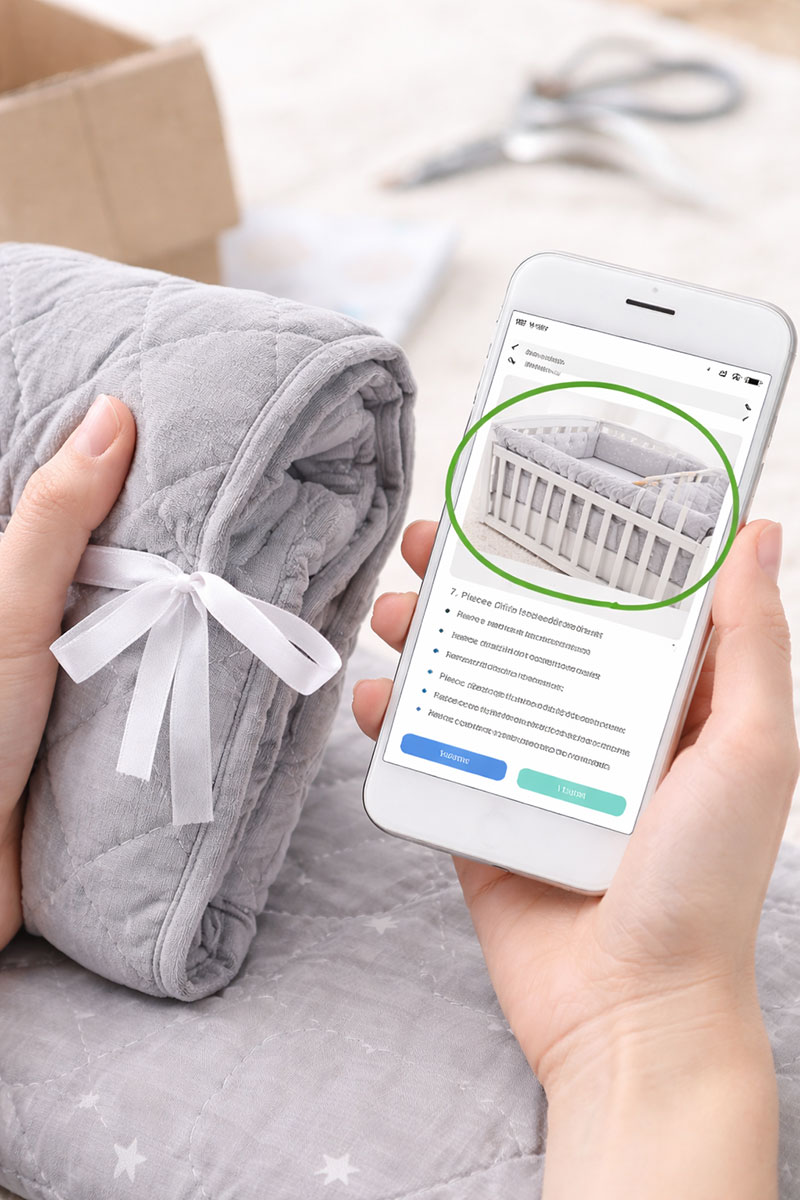
If you already have a rail cover in hand, the practical next step is to confirm it truly stays on the top rail and doesn’t hang down into the crib space. If you’re dealing with any ties or straps, keep them tidy and out of the way so they don’t become the main “thing” inside the crib.
If what you bought is meant to line the inside slats, pause and read the current consumer guidance before you decide what belongs in your setup. That’s not me being dramatic—this is one of those categories where definitions, rules, and marketplace leftovers don’t always match up cleanly.
If you’re building a crib setup from scratch and feel like you’re getting pulled into accessory overload, I’d go back to the foundational pages that keep the whole crib topic grounded: crib regulation timeline overview and standard crib mattress sizing basics. Those two pages tend to calm the “what am I missing?” feeling fast.
If you only remember one thing
A rail cover lives on the top rail. A bumper lives along the inside slats. Ignore the product title and trust the placement.
If you do that one step first, the rest of the crib rail vs crib bumper decision usually becomes obvious—without needing a dozen extra “nursery essentials” in the cart.
Small “sanity check” questions I use before I click Buy
I like simple questions that cut through the marketing fluff. Is this item meant for one rail or the whole crib? Do the photos show it inside the crib space? Are there multiple panels? Are the measurements written like a set?
If you’re comparing items late at night, it also helps to save the listing screenshots and circle the placement in the product photos. That tiny habit makes returns and second thoughts so much easier to handle the next day.
If you want one more “keep it simple” reference point while you’re deciding what belongs in a crib setup, my crib hardware identification reference is a surprisingly good companion page—because it trains your eye to notice where things fit, how they attach, and what a product is actually designed to do.
When you click on links to various merchants on this site and make a purchase, this may result in this site earning a commission. This does not affect the price you pay.

UBGI Gold Standard 2026
Reviewed under the site's
editorial checklist.
Photos, decorating ideas, party setups and reader submissions are shared for inspiration unless a page is specifically presented as a pattern, tutorial, reference guide or step-by-step project. Follow the instructions, measurements, safety guidance and manufacturer directions provided for the particular project or product.
About Jan | Contact | Baby Nursery Ideas (Blog) | Site Map | Privacy Policy | Disclosure Policy | Disclaimer | Affiliate Disclosure | Earnings Disclosure | Facebook | Pinterest
I am a participant in the Amazon Services LLC Associates Program, an affiliate advertising program designed to provide a means for us to earn fees by linking to Amazon. As an Amazon Associate I earn from qualifying purchases.
Copyright © 2006-2026. All Rights Reserved.