How to Clean a Mattress
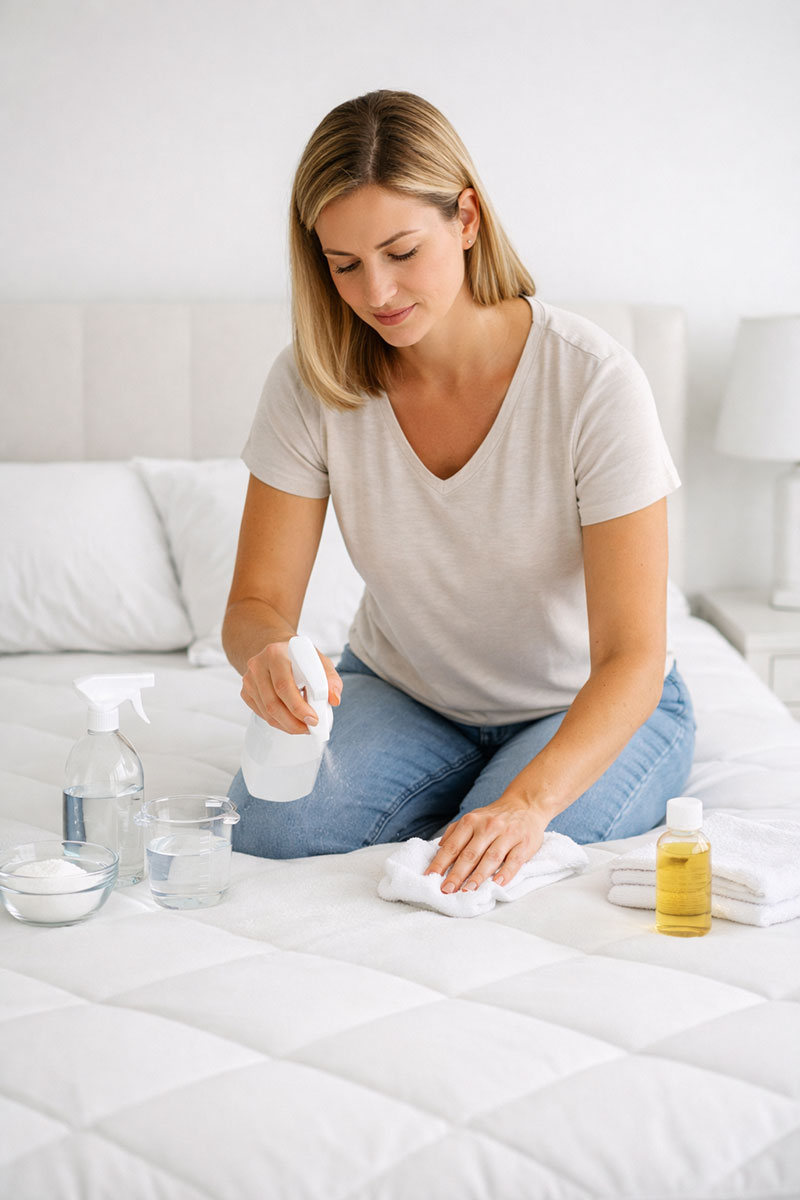
Here's how to clean a mattress. Strip the bed, vacuum the surface, spot clean stains with mild detergent, sprinkle baking soda for odors, let it sit, and vacuum again before replacing the bedding.
Helpful mattress guides:
Jump to what you need:
How Often Should You Clean a Mattress to Keep It Fresh
You should do a light clean every 1 to 2 months and a deeper clean every 3 to 6 months. If there are spills, accidents, or noticeable odors, clean it right away instead of waiting.
This is where mattress cleaning gets easier to keep up with. For deeper spot treatments that target visible marks without soaking the material, this step-by-step mattress stain removal guide breaks down what actually works. Once you follow a simple schedule, it stops feeling like a big job and becomes a quick routine that only takes a few minutes at a time.
What You Actually Need to Clean a Mattress at Home
Most people assume they need special products to get started, but the basic cleaners and supplies are usually already in the house.
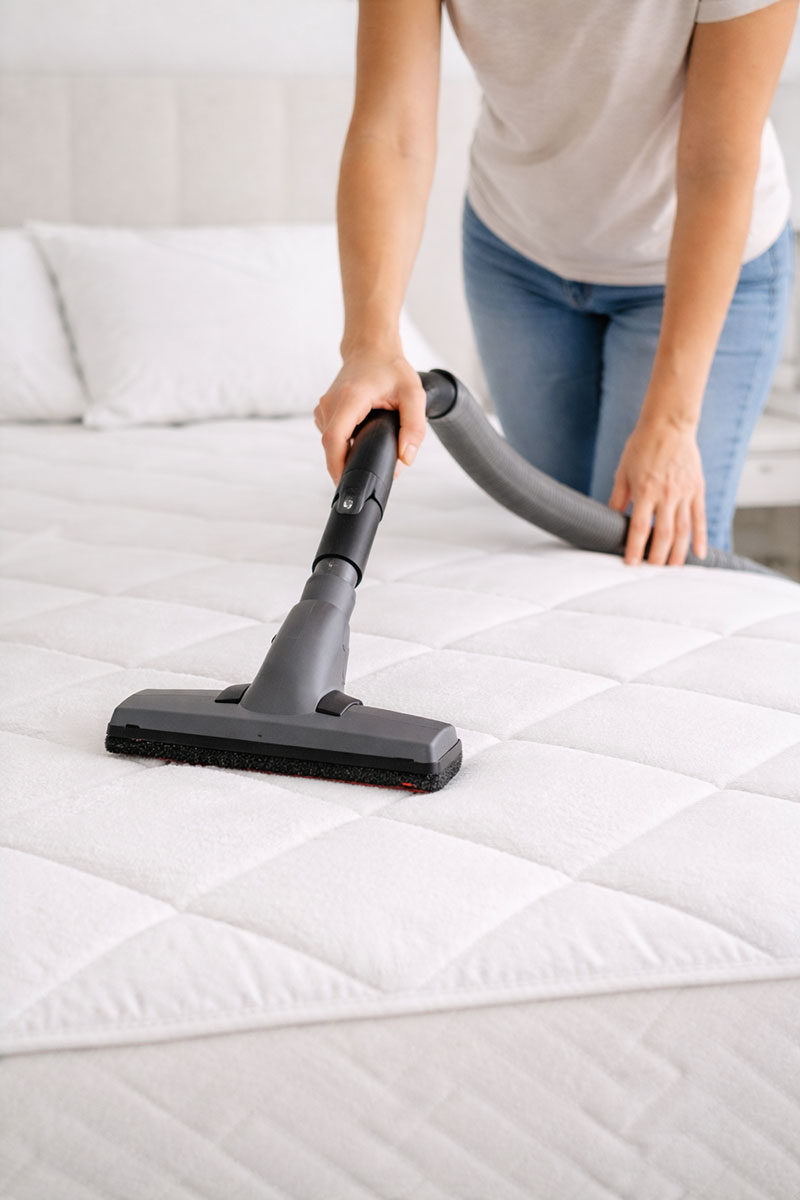
For most mattresses, you only need:
Baking soda
A vacuum with an upholstery attachment
Mild laundry detergent
Clean cloths or towels
Warm water
An enzyme cleaner for tougher stains
I keep a small mattress cleaning caddy stocked and ready because I’ve learned that having everything within reach before you start makes a big difference. Once a mattress is damp, you do not want to stop halfway through to hunt for supplies.
How to Clean a Mattress Step by Step Without Damaging It
Step 1: Strip the bed completely
Remove all bedding, including mattress protectors, and wash them on a hot cycle.
Step 2: Vacuum the entire surface
Go slowly and cover seams and edges where dust tends to settle. This is where a lot of buildup hides.
Step 3: Spot clean stains
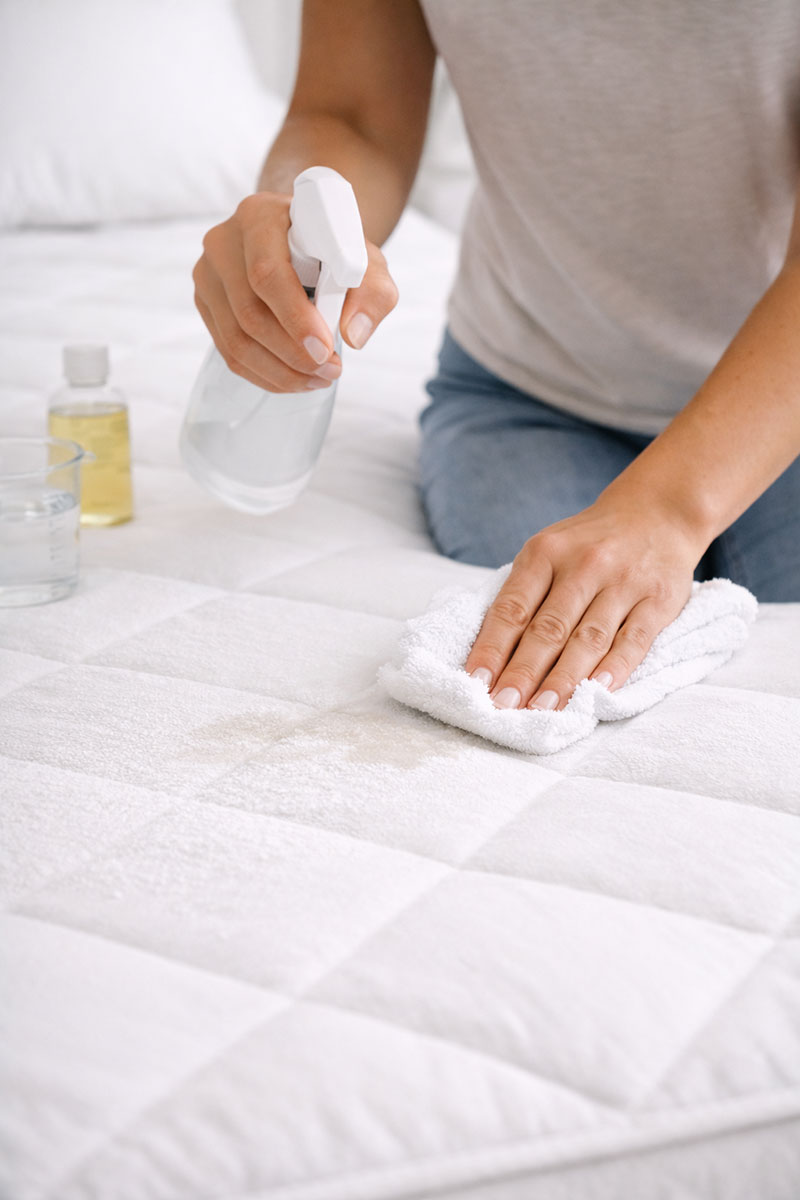
Use a small amount of detergent mixed with water and gently blot. Avoid soaking the mattress.
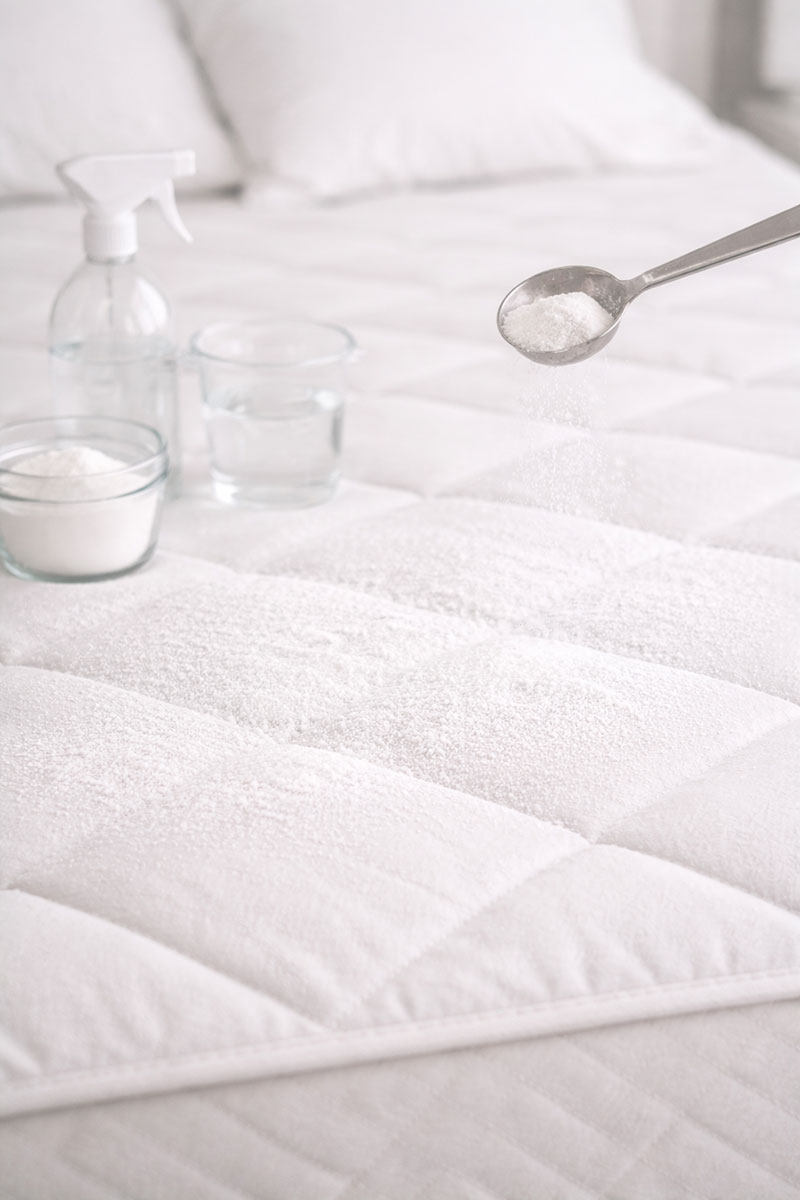
Step 4: Deodorize with baking soda
Sprinkle a light, even layer across the surface and let it sit for at least 30 minutes. The longer it sits, the better it works, especially if there is a noticeable odor. I usually sprinkle it on before I leave for the day and let it sit for several hours so it has time to do as much work as possible.
Step 5: Vacuum again
Remove all baking soda completely before putting bedding back on.
Be sure not to rush that step. If the baking soda is not completely removed, it can leave a gritty feel under the sheets.
How to Remove Mattress Stains and Odors That Keep Coming Back
Sometimes a mattress stain looks gone, then it comes back a few days later.
If the smell is still there even after cleaning, my guide on how to get pee smell out of mattress shows how to remove odor trapped deep inside the mattress layers.
This happens because the moisture and residue are still inside the mattress layers.
For common stains:
Different stains respond better to different treatments, and this best stain remover for mattresses guide helps match the right option to the type of buildup you are dealing with.
Urine or sweat: use an enzyme cleaner to break down odor at the source. For the best way to do this, see my guide on how to clean urine from a mattress.
General stains: use a light detergent solution and blot gently without soaking.
Odors: baking soda works best when left on longer, even a few hours if possible.
When smells keep coming back after basic cleaning, a deeper approach usually works better, and this how to deodorize a mattress step by step guide explains how to eliminate odor without leaving moisture behind.
Some odors come from specific underlying causes rather than surface buildup, and this crib mattress smell explanation guide helps identify what may be creating the smell before repeating the same cleaning process.
I notice that rooms with less airflow tend to hold onto mattress odors longer. Opening a window for ventilation while cleaning helps more than most people expect.
Can You Steam Clean a Mattress or Does It Cause Problems
Many people try steam cleaning a mattress because they think it will kill germs and dust mites while giving the deepest clean possible.
The problem is moisture. Steam can push water deep into the mattress where it takes a long time to dry.
That can lead to trapped moisture and lingering smells.
For most mattresses, surface cleaning is safer unless the manufacturer specifically recommends steam cleaning.
When to Replace a Mattress Instead of Cleaning It
Sometimes cleaning is not enough to fix the problem.
If the mattress still smells after multiple cleanings, has deep stains that keep returning, or shows visible wear, it may be time to replace it.
If a mattress still stinks after cleaning, it is usually not going to improve much.
If you are cleaning a crib mattress instead of an adult mattress, the process is different and more safety-focused. See how to clean a crib mattress for the correct method.
Common Questions About Cleaning a Mattress
How long does it take to clean a mattress?
Most cleanings take about 1 to 2 hours including drying time for light surface cleaning.
Can you use carpet cleaner on a mattress?
Some people do, but it can leave too much moisture behind. Read if it's wise to clean a mattress with carpet cleaner for a safer approach.
What is the best way to keep a mattress clean?
Using a mattress protector and cleaning regularly prevents buildup from getting deep into the material.
For general mattress sizing, fit, and buying guidance, visit the crib mattress guide which helps connect cleaning with overall mattress care.
For additional hygiene guidance, see the CDC recommendations on maintaining a clean sleep environment at CDC Healthy Homes.
When you click on links to various merchants on this site and make a purchase, this may result in this site earning a commission. This does not affect the price you pay.

UBGI Gold Standard 2026
Reviewed under the site's
editorial checklist.
Photos, decorating ideas, party setups and reader submissions are shared for inspiration unless a page is specifically presented as a pattern, tutorial, reference guide or step-by-step project. Follow the instructions, measurements, safety guidance and manufacturer directions provided for the particular project or product.
About Jan | Contact | Baby Nursery Ideas (Blog) | Site Map | Privacy Policy | Disclosure Policy | Disclaimer | Affiliate Disclosure | Earnings Disclosure | Facebook | Pinterest
I am a participant in the Amazon Services LLC Associates Program, an affiliate advertising program designed to provide a means for us to earn fees by linking to Amazon. As an Amazon Associate I earn from qualifying purchases.
Copyright © 2006-2026. All Rights Reserved.