Baby Crib Dimensions and Standard Sizes Explained
Baby crib dimensions and standard sizes in the United States are defined through a combination of federal safety standards, manufacturer specifications, and long-standing industry conventions, which together form the basis for modern baby crib dimensions and standard sizes across manufacturers. These measurements establish consistent expectations for crib size, mattress compatibility, interior spacing, and overall fit. Understanding how these dimensions are defined helps explain why some cribs and mattresses are interchangeable while others are not.
Trying to figure out crib dimensions before you buy the wrong mattress or crib? Start here:
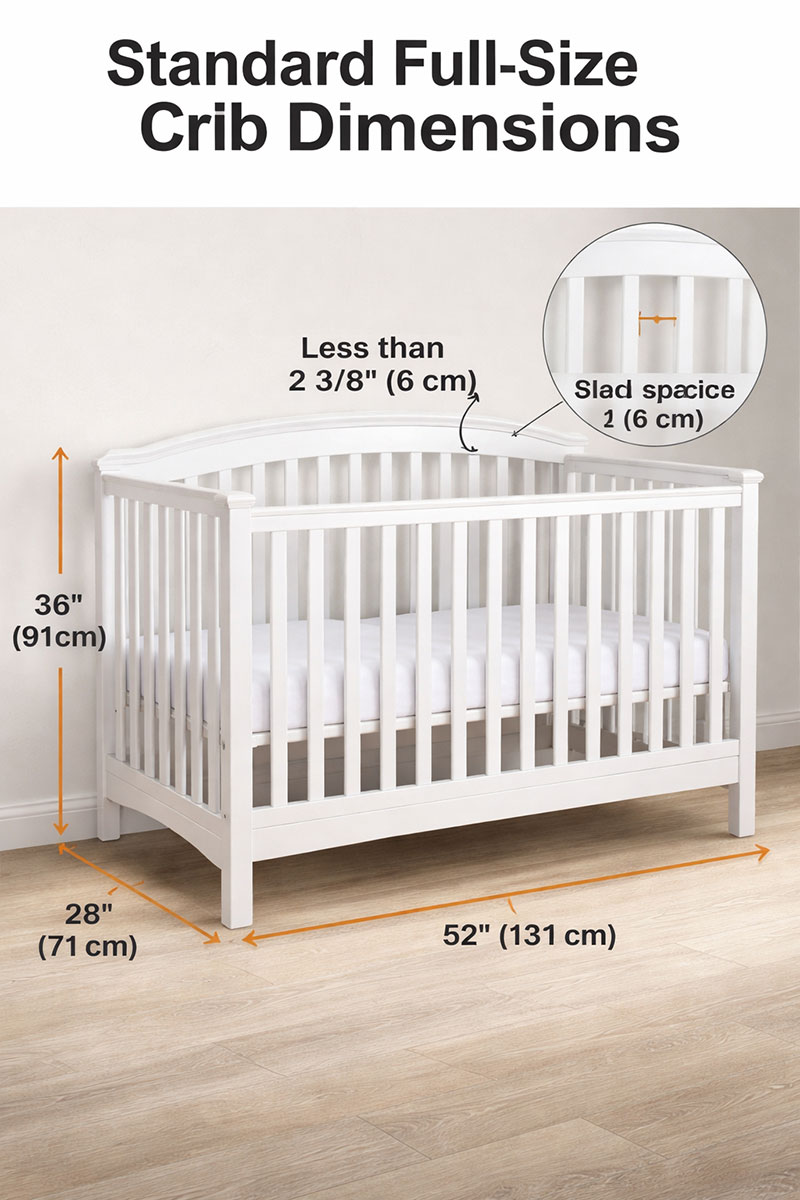
Modern baby crib dimensions and standard sizes in the United States are not arbitrary measurements. They exist within a federal regulatory framework that governs interior mattress space, slat spacing, structural performance, and hardware integrity. These dimensional standards were strengthened through major federal updates, including the 2011 crib safety rule that eliminated drop-side designs and reinforced structural requirements. As a result, current full-size crib dimensions reflect both long-standing industry conventions and legally enforceable safety standards.
In the United States, standard full-size crib interior dimensions are federally regulated; exterior crib size and footprint are not.
This page provides descriptive reference information only and does not offer recommendations, purchasing advice, safety determinations, or instructions.
What “standard” baby crib dimensions and standard sizes mean
The term “standard baby crib” most commonly refers to a full-size crib manufactured to fit a federally defined full-size crib mattress. In the United States, federal standards define the allowable interior mattress range for a full-size crib as approximately 51⅝ to 53 inches long and 27¼ to 28 inches wide. Cribs built within this range are constructed so the interior sleeping space closely corresponds to those measurements, helping ensure proper mattress alignment within the frame.
In the United States, a standard full-size crib is designed to accommodate a mattress measuring approximately 52 inches by 28 inches (about 132 cm by 71 cm).
In the United States, a standard full-size crib is designed to accommodate a mattress measuring approximately 52 inches long by 28 inches wide.
While interior mattress dimensions follow a narrow range, exterior crib dimensions vary considerably. Differences in rail thickness, leg structure, headboard design, and decorative elements affect the amount of floor space a crib occupies. Two cribs described as “standard size” may therefore use the same mattress while taking up noticeably different amounts of room.
Interior crib dimensions versus overall footprint
Crib dimensions are often discussed using three separate measurements: interior mattress space, exterior footprint, and overall height. Interior mattress space refers to the length and width of the opening where the mattress sits. Exterior footprint describes the total floor area occupied by the crib frame. Overall height measures the vertical distance from the floor to the highest rail.
Because crib footprint directly affects nursery layout planning, this overview of when to set up a nursery explains how room measurement, furniture timing, and crib sizing decisions typically connect before final placement is made.
Standardization applies primarily to the interior mattress space. Exterior footprint and height vary by design and manufacturer. This distinction explains why two cribs with identical mattress dimensions can appear very different once placed in a nursery.
Although interior dimensions are standardized, manufacturer-defined crib weight limits still determine how long a crib can safely function within those dimensional standards.
Those interior measurements did not become consistent by accident, which is why the crib safety regulation timeline provides important context on how federal rules and enforcement milestones shaped modern crib dimension standards.
Slat spacing as part of crib size standards
Slat spacing is another dimensional factor associated with standard crib construction. In the United States, crib slats are manufactured so the distance between them does not exceed approximately 2⅜ inches. This measurement exists independently of mattress size but contributes to the overall dimensional framework that defines modern crib design.
Slat spacing standards apply to full-size cribs and many non-standard crib categories. Older or discontinued crib models may reflect manufacturing practices that predate current regulations, which can result in dimensional differences when compared to newer designs.
For a detailed breakdown of the exact federal limits and measurement references, see the complete crib slat spacing rules guide, which explains how the maximum gap requirement is defined and tested.
If you’re checking an older crib (or any crib where measurements look “off”), use the crib safety checklist to walk through the key safety checks in one pass before you assume it’s just normal size variation.
For additional historical context on how these interior measurements became standardized over time, the standard crib mattress size history page traces how mattress dimensions evolved alongside crib manufacturing and regulation changes.
Full-size crib mattresses and compatibility
Full-size cribs are designed around a standardized mattress size, which allows most full-size crib mattresses to share nearly identical length and width measurements across brands. Minor variations may occur at the edges or corners, but these differences do not typically affect overall dimensional compatibility.
Other mattress characteristics, such as thickness and surface compression, influence how a mattress appears within a crib without changing its length or width. Additional reference information on this topic appears in the article on crib mattress thickness and firmness.
For related terminology explaining how mattress support height positions are defined and adjusted within crib frames, see this reference: crib mattress height adjustment guide.
Mini cribs, portable cribs, and non-standard dimensions
A full-size crib in the United States is built around a federally standardized mattress size of approximately 52 by 28 inches, while mini cribs and specialty cribs use manufacturer-defined interior dimensions that are not universally interchangeable.
Mini cribs, portable cribs, and specialty cribs do not follow full-size crib standards.
Parents comparing these reduced-footprint options with standard nursery setups can also review small-space crib ideas.
These categories include a wide range of designs with interior dimensions that vary by model and manufacturer. As a result, mattresses within these categories are not universally interchangeable.
A mattress described as “mini” may differ in size from another mini crib mattress produced by a different brand. This variability explains why non-standard crib categories are commonly associated with fit confusion.
More detailed dimensional reference information for this category appears in the guide to mini crib mattress dimensions and fit requirements.
Brand-specific and travel crib sizing
Some cribs are intentionally designed around proprietary dimensions. Travel cribs and compact folding cribs often use brand-specific mattresses engineered exclusively for a particular frame. These designs prioritize portability or storage efficiency rather than compatibility with standard bedding.
One commonly referenced example is the BabyBjörn travel crib, which uses a mattress and frame system sized specifically for that product line.
Interior measurements and mattress alignment
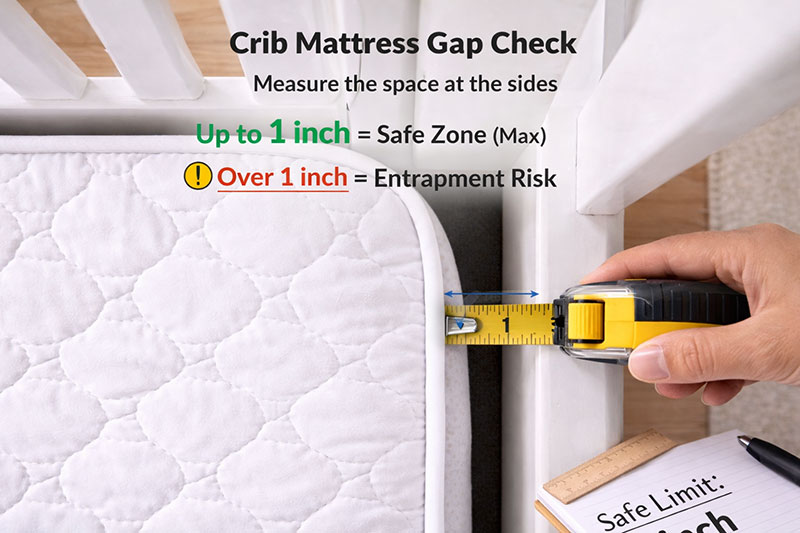
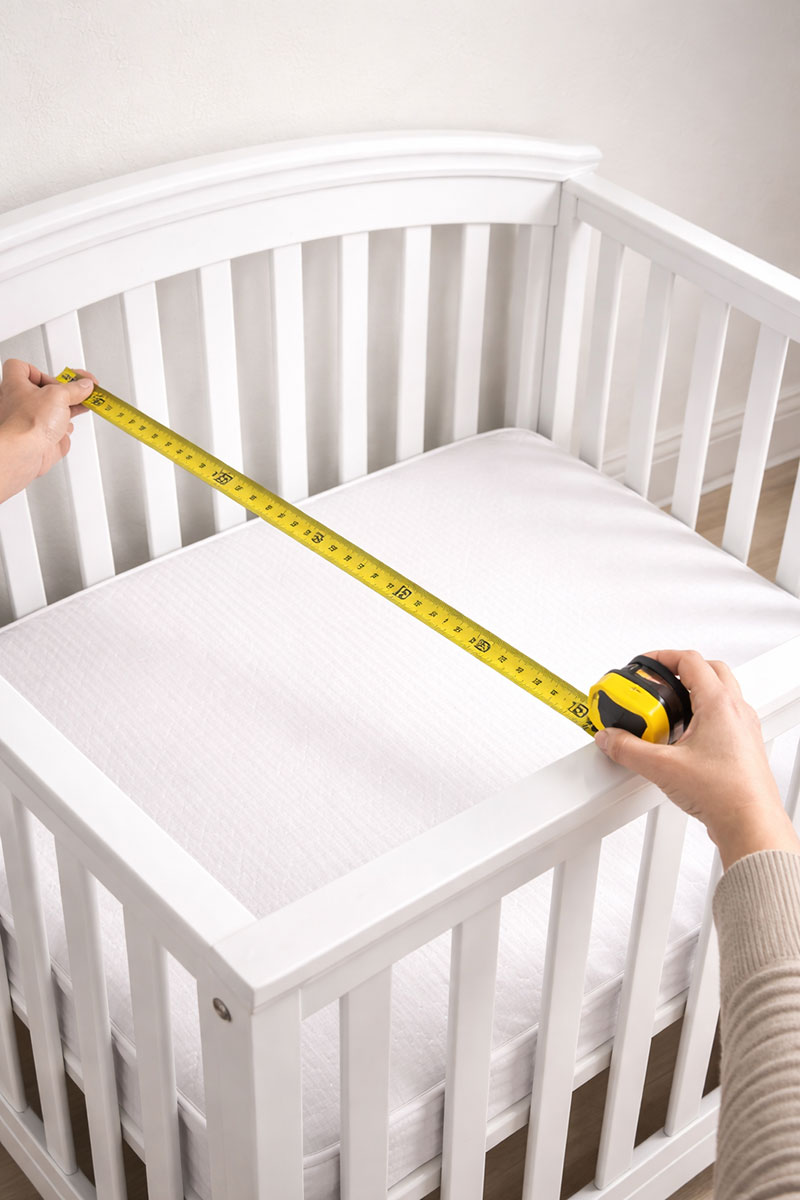
Interior crib measurements describe the rectangular space formed by the crib rails where the mattress rests. This space determines how the mattress aligns along the sides and corners of the crib opening. Even small dimensional differences can become visually noticeable depending on crib design.
Manufacturers typically reference interior measurements when listing mattress compatibility. Diagrams illustrating these measurement points are commonly included in official documentation.
Crib footprint and nursery layout considerations
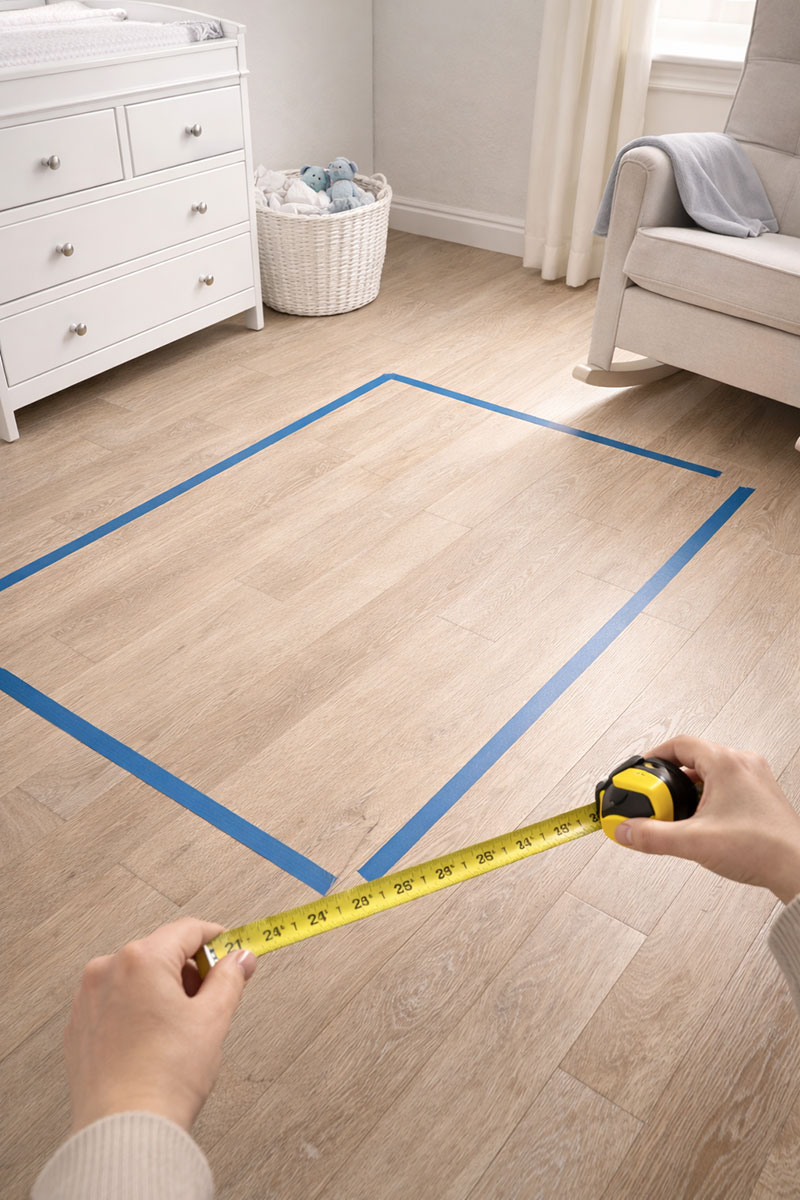
Crib footprint refers to the total floor area occupied by the crib frame. This measurement affects how a crib fits alongside other nursery furniture such as dressers, seating, and storage units. Footprint size influences traffic flow and spatial balance within a room.
In a standard square bedroom, this nursery layout for a 10x10 room demonstrates how crib footprint, dresser depth, and walkway clearance work together before final placement decisions are made.
For additional information on how crib location influences overall room layout, this reference explains wall positioning, clearance considerations, and circulation patterns.
Non-rectangular crib designs, including round or oval cribs, introduce additional footprint considerations. More information on this topic appears in the overview of round crib designs.
Public reference standards and safety documentation
Information related to baby crib dimensions and standard sizes, identifying crib models, and locating manufacturer documentation for modern baby cribs is consolidated on the crib instructions and manuals reference page. In the United States, the Consumer Product Safety Commission maintains publicly available material addressing crib construction and regulatory background. That information is available through CPSC crib safety guidance.
Additional reference context related to older cribs and discontinued models appears in the article on used baby crib considerations.
When dimensions do not align as expected
Situations where a mattress labeled as standard does not visually align with a crib are commonly associated with non-standard crib categories, older crib designs, or proprietary frame geometry. Hardware alignment and rail shaping can also influence how a mattress sits within the crib opening.
Information related to baby crib dimensions and standard sizes, identifying crib models, and locating manufacturer documentation is consolidated on the crib instructions and manuals reference page. Material related to model-specific components appears on the crib replacement parts resource page.
Baby Crib Dimensions and Standard Sizes – Quick Answers
What size is a standard baby crib?
In the United States, a standard full-size crib is designed to fit a mattress measuring approximately 52 inches long by 28 inches wide.
Are all baby cribs the same size?
No. Full-size cribs follow standardized interior mattress dimensions, but mini cribs, portable cribs, and specialty cribs use manufacturer-specific sizes that are not universally interchangeable.
Did crib dimensions change after 2011?
The 2011 federal crib safety update strengthened structural and performance requirements, but the standard full-size interior mattress dimensions remained approximately 52 by 28 inches.
When you click on links to various merchants on this site and make a purchase, this may result in this site earning a commission. This does not affect the price you pay.

UBGI Gold Standard 2026
Reviewed under the site's
editorial checklist.
Photos, decorating ideas, party setups and reader submissions are shared for inspiration unless a page is specifically presented as a pattern, tutorial, reference guide or step-by-step project. Follow the instructions, measurements, safety guidance and manufacturer directions provided for the particular project or product.
About Jan | Contact | Baby Nursery Ideas (Blog) | Site Map | Privacy Policy | Disclosure Policy | Disclaimer | Affiliate Disclosure | Earnings Disclosure | Facebook | Pinterest
I am a participant in the Amazon Services LLC Associates Program, an affiliate advertising program designed to provide a means for us to earn fees by linking to Amazon. As an Amazon Associate I earn from qualifying purchases.
Copyright © 2006-2026. All Rights Reserved.