4moms mamaRoo — From the 2010 Original to 2025’s Most Soothing Baby Swing
From the moment the first 4moms MamaRoo appeared in 2010, the product drew attention for its movement design. Over time, the MamaRoo line has changed in appearance, materials, and feature sets. The 2025 version reflects more than a decade of product updates, manufacturing revisions, and market feedback. This page presents a descriptive overview of how the MamaRoo has evolved across model years, with regulatory information included.
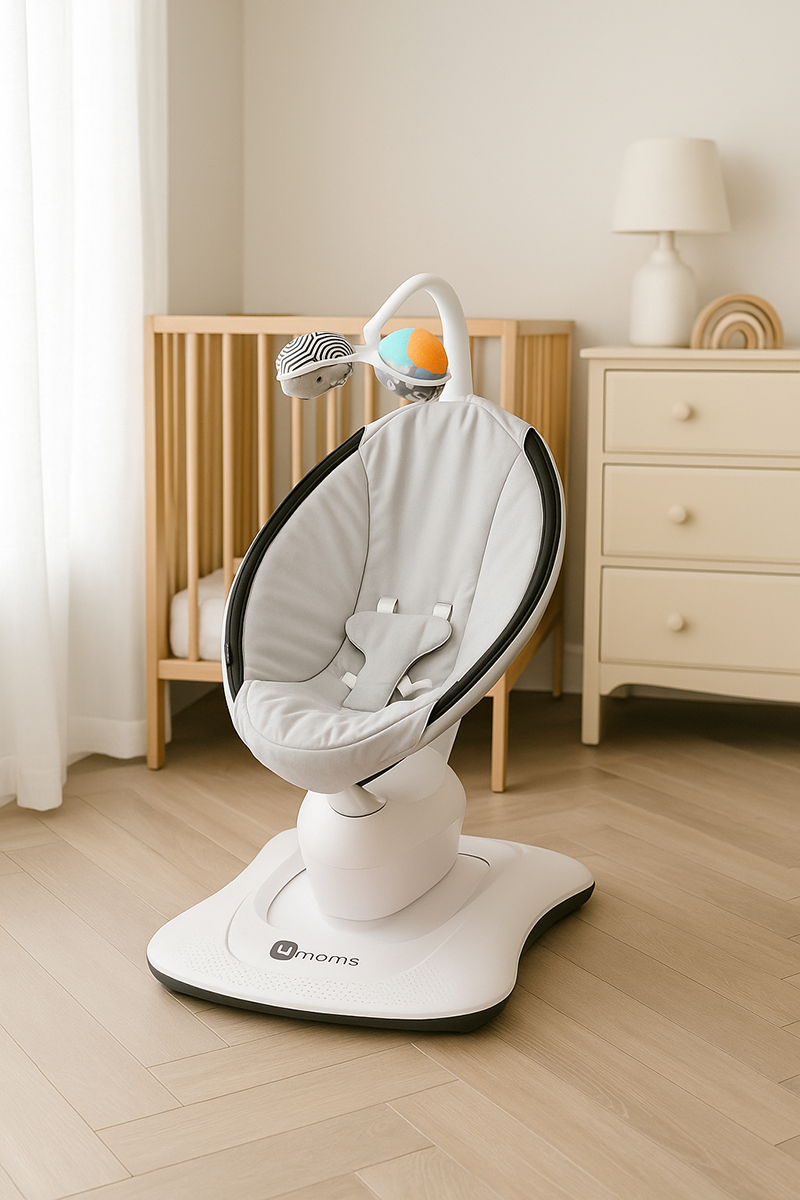
The 2025 4moms MamaRoo shown in a modern nursery setting.
4moms MamaRoo Overview
The original MamaRoo model released in 2010 differed from traditional baby swings available at that time. Rather than a single back-and-forth motion, it introduced multiple programmed movement patterns. These early models featured basic upholstery materials, visible mechanical components, and manual controls located on the base. Noise levels and seat padding reflected the manufacturing norms of that period.
By 2011 and 2012, updates to the MamaRoo line included fabric changes, revised harness construction, and quieter internal components. These adjustments aligned with broader changes in baby gear manufacturing during that decade. While the overall movement concept remained consistent, exterior finishes and internal tolerances were modified as part of routine product revision cycles.
2025 MamaRoo Model Overview
The 2025 MamaRoo Multi-Motion model reflects the cumulative design direction of the product line. The frame retains the familiar curved base profile, while the seat assembly uses updated textile blends. Control options include physical interface buttons and wireless app connectivity. Motion programming remains centered on five named movement patterns that have appeared in earlier versions.
According to Parents Magazine, the 2025 MamaRoo was listed among current baby swing products evaluated for that year. This designation reflects publication criteria and does not alter manufacturer specifications.
Sound output from the internal motor assembly has been reduced compared to early models. Surface finishes are smoother, and seam construction reflects updated textile processes. These changes are consistent with broader consumer product trends observed across multiple baby gear categories.
Model Progression From 2010 to 2025
Early MamaRoo models featured a more exposed mechanical appearance, with firmer seat padding and limited control options. Subsequent versions introduced additional cushioning layers, revised harness attachment points, and refinements to the base housing. Each iteration retained the same general footprint and upright orientation.
By the mid-2010s, manufacturing adjustments focused on noise reduction and fabric durability. Electronics were repositioned within the base to improve component stability. Control panels were simplified, and digital display elements were reduced or removed in favor of streamlined interfaces.
The 2025 version reflects these cumulative revisions. Materials used in the seat covering are softer to the touch, and transitions between movement settings appear smoother when observed in operation. App-based controls supplement physical buttons without replacing them.
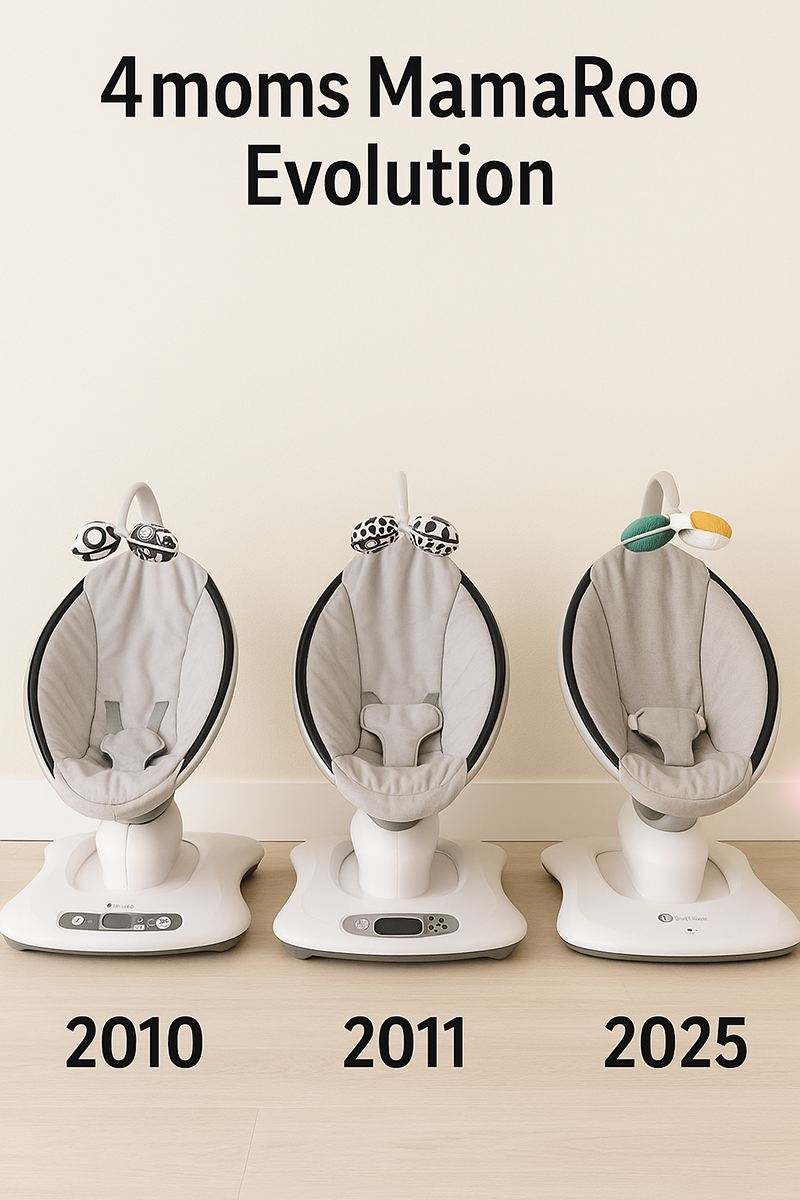 Current MamaRoo models available on Amazon
Visual comparison of MamaRoo models across production years.
Consistent Design Elements
Despite changes across model years, several elements have remained consistent. All MamaRoo versions maintain a compact base footprint intended for placement near other nursery furniture. The seat recline mechanism operates along the same axis used in earlier models. Movement programming follows the same naming structure introduced in the initial release.
Harness systems have retained a multi-point configuration across all versions, with updates focused on buckle shape and strap material rather than layout. The structural geometry of the base has also remained largely unchanged.
Observed Characteristics Across Versions
Differences between models are primarily visible in materials, electronics, and interface design. Earlier units display more mechanical sound during operation, while later models exhibit quieter performance. Fabric texture and stitching density vary by production year. These changes align with typical lifecycle updates seen in long-running consumer products.
Coverage materials on newer versions are removable and machine washable, consistent with current baby gear manufacturing practices. Earlier models often required spot cleaning due to fabric attachment methods.
A short visual demonstration of the MamaRoo in operation appears in this 4moms MamaRoo video, showing movement patterns and control interface layout.
Construction and Feature Overview
The 2025 MamaRoo incorporates wireless connectivity for motion and speed adjustment. Control signals are transmitted via Bluetooth. The base contains the motor assembly, electronics housing, and power connection. The seat attaches to the base through a molded support arm.
The harness system includes padded straps and a central buckle. Materials used in the seat covering are free from surface coatings that create stiffness. Stitching patterns reflect current textile manufacturing standards.
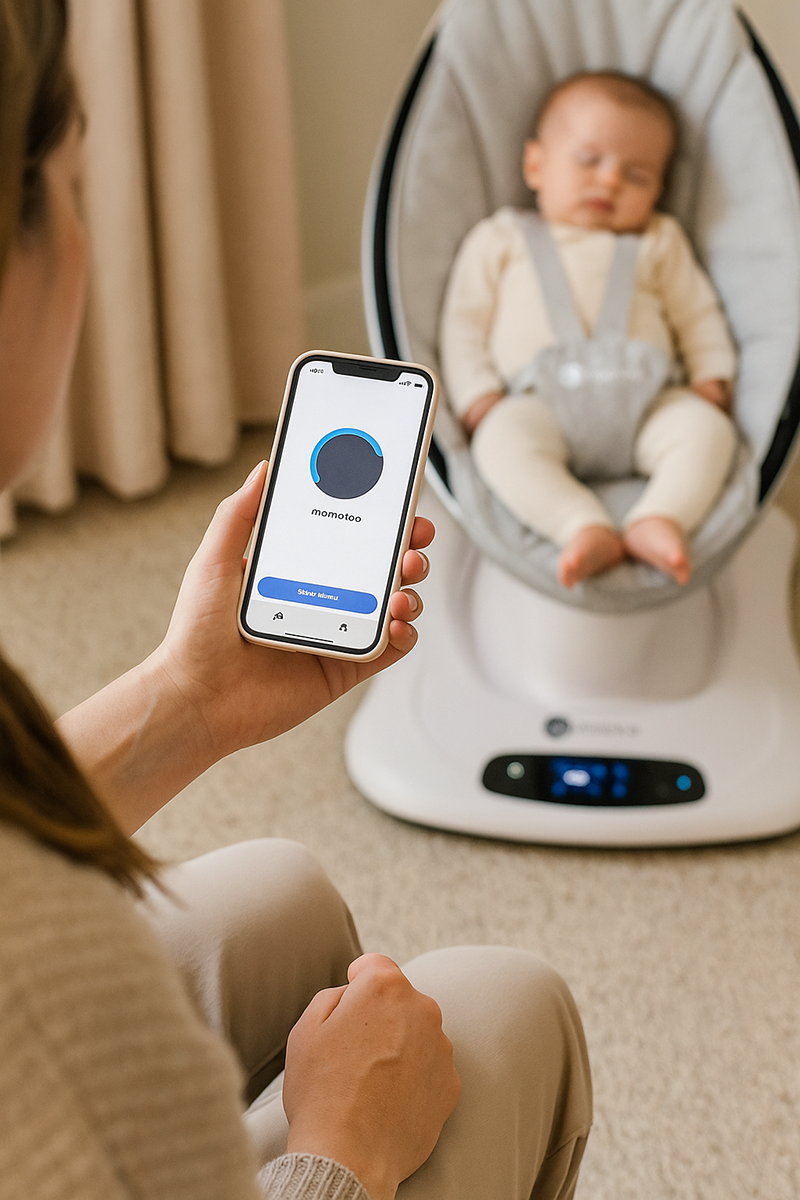 View MamaRoo configuration options on Amazon
Wireless control interface shown with the 2025 MamaRoo.
Availability and Retail Listings
The MamaRoo Multi-Motion Baby Swing is listed through multiple retail channels. Listings may vary by production batch, color option, and included accessories. Manufacturer listings appear on the official 4moms website, while third-party retailers include large national chains.
Retail listings may reference different production years. Some listings include earlier versions that share the MamaRoo name but differ in electronics or fabric sets. Packaging and warranty terms vary depending on retailer and model year.
Summary
The 4moms MamaRoo product line reflects long-term iteration rather than single-release design. From its 2010 introduction to the 2025 Multi-Motion version, changes have centered on materials, electronics, and interface design. Core movement concepts and structural layout remain consistent across versions.
This page presents descriptive information about the MamaRoo’s evolution and observed characteristics. Regulatory information is included.
Additional product comparisons appear on the Best Baby Swings for Small Spaces page.
More baby gear listings and product overviews are available through the Baby Gear hub.
When you click on links to various merchants on this site and make a purchase, this may result in this site earning a commission. This does not affect the price you pay.

UBGI Gold Standard 2026
Reviewed under the site's
editorial checklist.
Photos, decorating ideas, party setups and reader submissions are shared for inspiration unless a page is specifically presented as a pattern, tutorial, reference guide or step-by-step project. Follow the instructions, measurements, safety guidance and manufacturer directions provided for the particular project or product.
About Jan | Contact | Baby Nursery Ideas (Blog) | Site Map | Privacy Policy | Disclosure Policy | Disclaimer | Affiliate Disclosure | Earnings Disclosure | Facebook | Pinterest
I am a participant in the Amazon Services LLC Associates Program, an affiliate advertising program designed to provide a means for us to earn fees by linking to Amazon. As an Amazon Associate I earn from qualifying purchases.
Copyright © 2006-2026. All Rights Reserved.