Where to Put a Dresser in a Nursery
Where to put a dresser in a nursery depends on your room layout, crib location, closet access and whether the dresser will also serve as a changing station.
By Jan Bay
Plan the nursery layout:
Nursery Ideas Small Nursery Layout Ideas Nursery Furniture Baby Nursery Storage Baby Changing Table Ideas
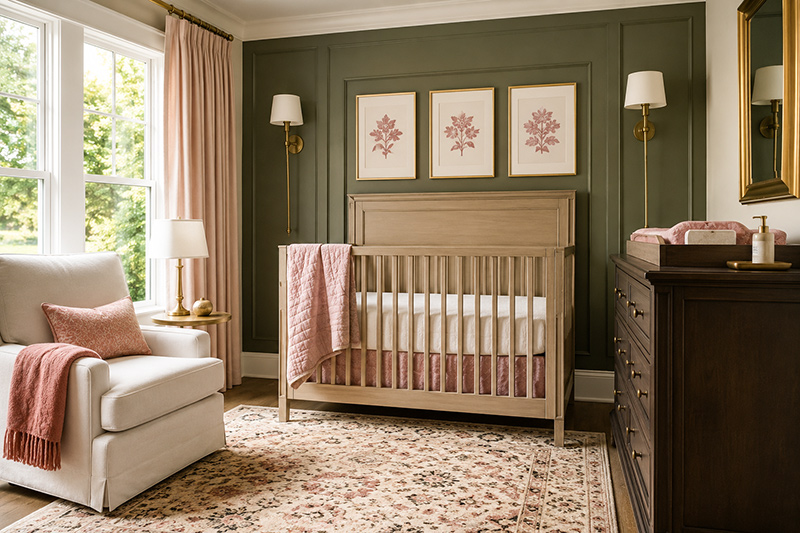
Shop nursery dresser setup ideas:
Jump to a section:
Best Place to Put a Dresser in a Nursery Using a Dresser as a Changing Table Small Nursery Layout Ideas That Save Space Places to Avoid Choosing the Right Nursery Dresser Size Common Nursery Dresser Placement Mistakes Quick Nursery Dresser Placement Checklist Frequently Asked Questions
The best place to put a dresser in a nursery is against a wall that is easy to reach from both the crib and the room entrance without blocking walking space. If the dresser doubles as a changing table, leave enough room beside it to stand comfortably while keeping diapers, wipes and extra clothing within arm's reach. Keep the dresser away from windows, cords and the crib, and always anchor it securely to the wall.
A nursery can look finished on paper and still be frustrating to use every single day.
Sometimes it only takes a week of midnight diaper changes before you realize the dresser is in the wrong place. A drawer bumps into the crib, you have to squeeze past the rocker, or you find yourself walking across the room every time you need a clean sleeper. Those little inconveniences add up quickly.
Getting the dresser location right from the beginning makes the entire room work better. It becomes easier to dress your baby, put laundry away and keep everyday supplies organized without constantly walking back and forth.
Where to Put a Dresser in a Nursery for Everyday Use
The ideal location depends on your floor plan, but I believe the dresser should become part of your daily routine instead of another obstacle to walk around.
In many nurseries, placing the dresser on the longest uninterrupted wall creates the easiest traffic flow. That leaves room for drawers to open completely while keeping pathways clear between the doorway, crib and chair.
If your nursery is still coming together, the layout ideas on Small Nursery Layout Ideas can help you avoid crowded furniture arrangements before anything becomes difficult to move.
Another detail people rarely think about is natural light. If the dresser will also be your changing station, placing it where daylight reaches the top surface during the morning makes diaper changes and dressing much easier without relying on bright overhead lighting every time.
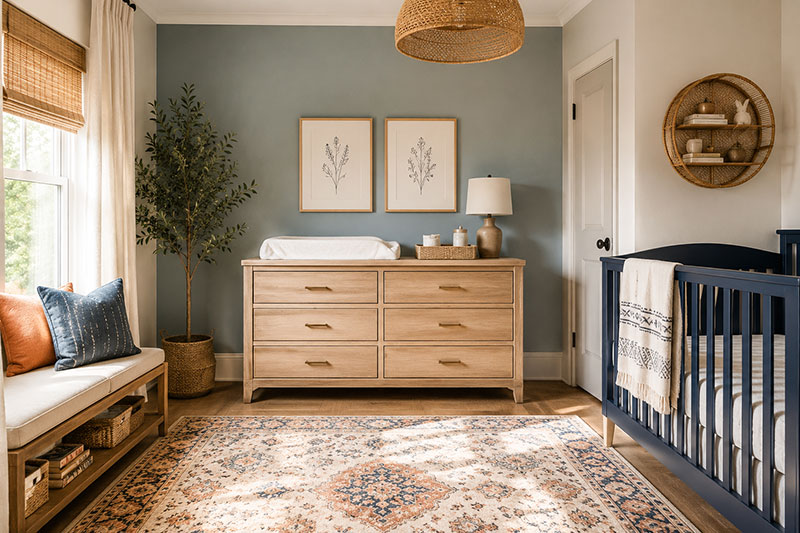
If you're wondering where to put a dresser in a nursery, a practical test is simple. Stand where the crib will be and imagine carrying a sleepy baby with one arm. Can you reach the dresser without turning sideways or squeezing between furniture? If the answer is yes, you're probably very close to the right layout.
Why a Dresser Often Makes Sense as a Changing Table
Many families deciding where to put a dresser in a nursery end up using the dresser as the changing station too. That can be a practical choice because diapers, sleepers, burp cloths and extra sheets are already stored underneath instead of across the room.
The surface should be wide enough to hold a secured changing pad with room beside it for wipes and diapers. You should never have to reach behind your back for something you'll use during nearly every diaper change.
For ideas on selecting a dresser designed for this purpose, visit Changing Table Dresser Ideas.
One advantage people don't always expect is that a dresser continues serving the room long after diaper changes end. Instead of removing an unused changing table, you simply take away the changing pad and continue using the furniture for clothing, blankets and toys.
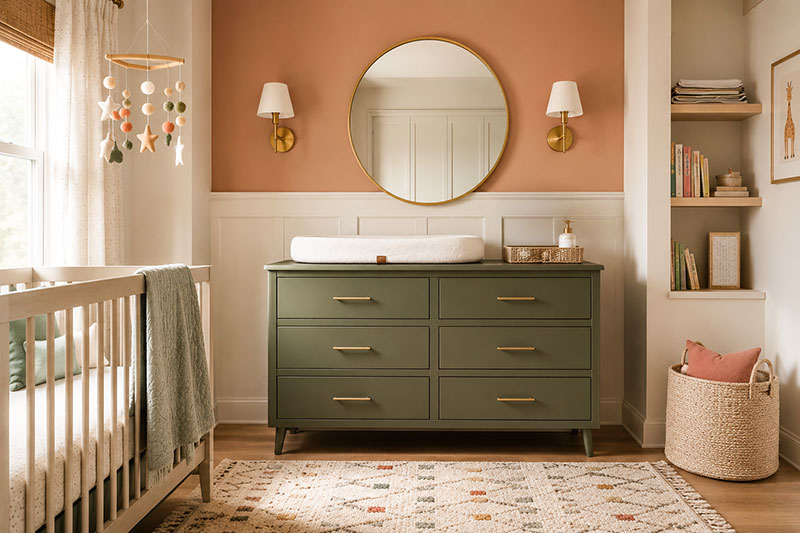
If you're planning storage at the same time, the ideas on Nursery Storage Ideas pair naturally with a dresser that has deep drawers and easy access from the changing area.
Small Nursery Layout Ideas That Make Every Inch Count
A compact nursery often teaches the best lessons because every inch matters. Move the dresser just twelve inches in one direction and suddenly the room becomes easier to use.
Instead of centering every piece on a wall, try thinking about how you actually move through the room. The shortest path between the crib, dresser and chair is usually the one you'll follow at two in the morning.
If a closet door swings outward, leave enough clearance so the dresser never blocks it. Likewise, check that every drawer can open completely without striking another piece of furniture. Those simple checks prevent frustrations that floor plans rarely reveal.
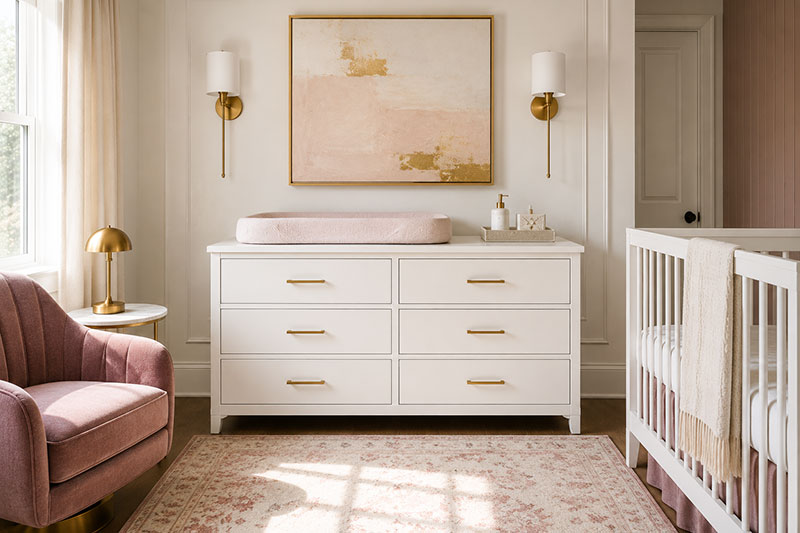
Here's a simple layout trick that rarely gets mentioned. Before deciding on the dresser location, pull every drawer completely open. If an open drawer blocks the crib, the doorway or your walking path, choose another wall now instead of discovering the problem after the room is finished.
A nursery should work just as well when every drawer is open as it does when everything is closed.
Places That Seem Convenient but Often Create Problems
Not every empty wall is the right choice when deciding where to put a dresser in a nursery.
One location I would avoid is directly beside a window with long curtain panels or blind cords. Even if everything looks tidy today, room arrangements often change as children grow. The U.S. Consumer Product Safety Commission recommends keeping furniture arranged to reduce access to window cord hazards.
Another location worth reconsidering is directly behind the nursery door. It may appear unused, but every time someone enters the room they'll have to walk around the dresser before reaching the crib.
Many nurseries run into another issue after decorating is complete. Wall art, shelving or lighting fixtures are installed exactly where the changing pad needs to sit. Thinking about the dresser first often prevents having to move everything later.
- Keep drawers from opening into the crib.
- Leave enough room to stand comfortably while changing diapers.
- Avoid blocking closet doors.
- Keep furniture away from windows with accessible cords.
- Anchor every dresser securely to wall studs using the manufacturer's hardware.
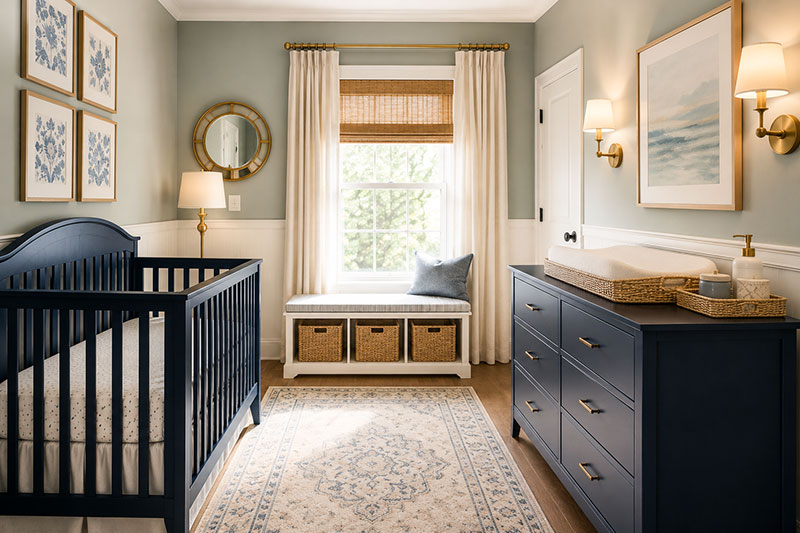
Choosing the Right Nursery Dresser Size Before You Buy
Bigger isn't always better.
A wide dresser can provide excellent storage, but only if it still leaves comfortable walking space around the crib. Sometimes a slightly narrower model with deeper drawers holds just as much clothing while making the room easier to move through. Before buying, check the dresser depth, drawer clearance and top width if you plan to use a changing pad.
If you're still selecting furniture, the ideas on Nursery Furniture can help you compare different layouts before making a purchase.
Think beyond newborn clothing as well. Babies outgrow tiny outfits surprisingly fast, and drawers that seem oversized during the first month often become completely full by the end of the first year.
I also like dressers with a finished top surface instead of decorative shelves or hutches. They give you flexibility. Today it may hold a changing pad. Later it might display framed photos, books or a favorite lamp without making the room feel like it still belongs to an infant. Check that the dresser includes anti-tip hardware or plan to buy a wall anchoring kit before it goes into the nursery.
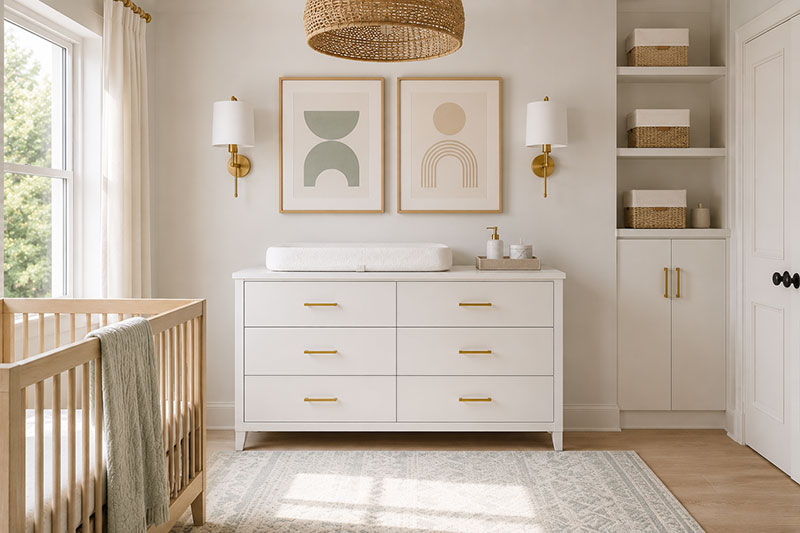
One Simple Layout Test Before You Finish the Room
Before deciding exactly where to put a dresser in a nursery, spend one evening pretending the nursery is already in use.
Walk into the room carrying a laundry basket. Open every drawer. Stand where diaper changes will happen. Sit in the chair. Walk to the crib and back again.
That five minute exercise often reveals little inconveniences that aren't obvious on paper. Adjusting the dresser a few inches now is much easier than rearranging an entire room after everything has found its place.
Sometimes the best nursery layouts are not the ones that look the most symmetrical. They're the ones that quietly make everyday routines easier without anyone really thinking about why.
Common Nursery Dresser Placement Mistakes That Are Easy to Avoid
Some nursery layouts look balanced until everyday life begins. After a few diaper changes, loads of laundry and middle of the night feedings, little inconveniences become obvious.
One of the easiest ways to prevent those problems is to mark the outline of the dresser on the floor with painter's tape before buying it. Then open nearby doors, measure where the drawers will extend and walk through your normal path around the room. It takes about ten minutes and can save you from moving heavy furniture later.
Another mistake is choosing the dresser first and trying to make the rest of the room fit around it. I believe the smarter plan is to picture how you'll move through the nursery every day. The furniture should support those routines instead of dictating them.
- Don't block heating or air conditioning vents.
- Leave room to sort laundry without standing in the doorway.
- Make sure every drawer opens completely.
- Keep enough space beside the dresser for a diaper pail if you plan to use one.
- Leave extra room for your child to grow instead of filling every wall on day one.
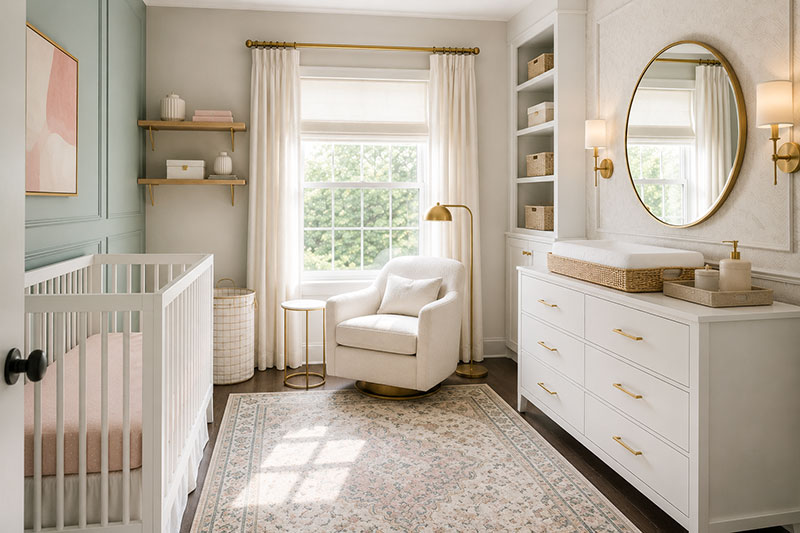
Quick Nursery Dresser Placement Checklist
✓ Easy walking path from the doorway to the crib.
✓ Drawers open fully without hitting furniture.
✓ Convenient access during diaper changes.
✓ Away from windows and accessible window cords.
✓ Anchored securely to wall studs.
✓ Enough room for future toddler movement.
✓ Storage within comfortable reach.
✓ Top surface wide enough for your intended changing pad, if you plan to use one.
That last point often becomes more important than people expect. Babies accumulate clothing, blankets and supplies quickly. A dresser that is easy to use every day helps keep the room organized with very little effort.
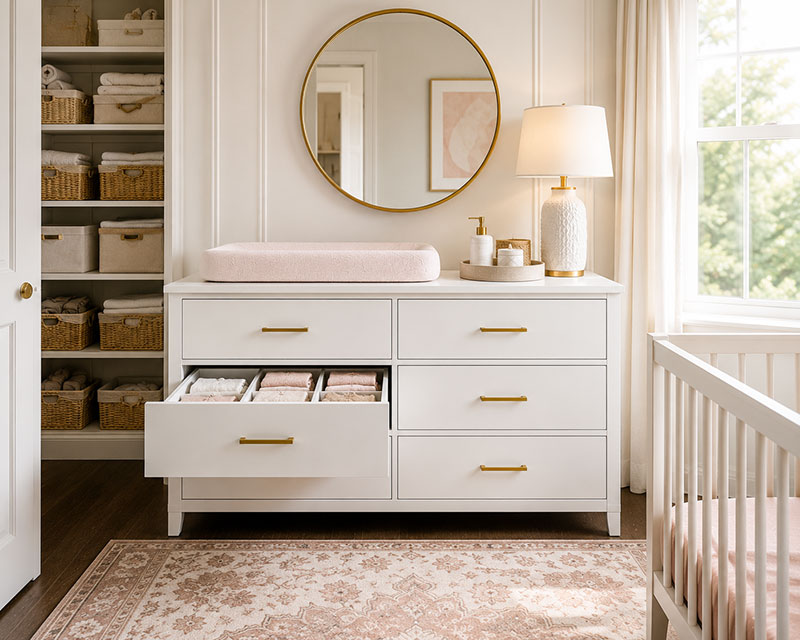
Frequently Asked Questions About Where to Put a Dresser in a Nursery
Should a nursery dresser be next to the crib?
Not necessarily. Keeping the dresser a short walk from the crib works well, but it should not interfere with access to the crib or create a temptation for a climbing toddler later. Leave enough room to move comfortably between both pieces of furniture.
Can a dresser go under a window?
It can, but it is rarely the first choice. A window often limits wall décor, curtain placement and furniture flexibility. If window coverings have cords, keep the dresser far enough away that a child cannot use it to reach them. If the dresser will sit near a window, choose cordless window coverings and anchor the dresser to the wall.
Is a dresser better than a changing table?
For many families, yes. A dresser continues serving the nursery for years after diaper changes are finished, making it a purchase that grows with the room instead of becoming unnecessary after the first stage.
How much space should be left in front of a nursery dresser?
Aim for enough floor space to open every drawer completely while still being able to stand comfortably. If another piece of furniture blocks an open drawer, the layout will become frustrating during everyday use.
Should the changing pad face the crib?
There is no required direction. Arrange the dresser so you have easy access to diapers and clothing while keeping the crib within sight. The layout should reduce unnecessary walking instead of following a fixed rule.
Final Thoughts
Once you've decided where to put a dresser in a nursery, a well placed dresser rarely attracts attention, and that's exactly the point.
When the furniture supports your daily routine instead of interrupting it, you'll spend less time rearranging the nursery and more time enjoying it.
If you're still planning the room, browse the complete collection of Nursery Ideas for additional layout inspiration, furniture planning and storage solutions that work together throughout the nursery.
Planning the rest of your nursery?
After the dresser location is settled, use these planning guides to choose the remaining furniture, storage and small-room pieces without crowding the nursery.
When you click on links to various merchants on this site and make a purchase, this may result in this site earning a commission. This does not affect the price you pay.

UBGI Gold Standard 2026
Reviewed under the site's
editorial checklist.
Photos, decorating ideas, party setups and reader submissions are shared for inspiration unless a page is specifically presented as a pattern, tutorial, reference guide or step-by-step project. Follow the instructions, measurements, safety guidance and manufacturer directions provided for the particular project or product.
About Jan | Contact | Baby Nursery Ideas (Blog) | Site Map | Privacy Policy | Disclosure Policy | Disclaimer | Affiliate Disclosure | Earnings Disclosure | Facebook | Pinterest
I am a participant in the Amazon Services LLC Associates Program, an affiliate advertising program designed to provide a means for us to earn fees by linking to Amazon. As an Amazon Associate I earn from qualifying purchases.
Copyright © 2006-2026. All Rights Reserved.