Best Non Toxic Crib Mattress: What’s Safe and What to Avoid
The best non toxic crib mattress may not seem important at all until you get the crib set up, step back to look at it, and everything feels ready until you open the mattress and catch that faint “new” smell that lingers longer than expected. That’s usually the moment parents realize the mattress matters more than they thought.
Trying to choose a non-toxic crib mattress without falling for marketing hype? Start here:
Which crib mattress certifications really make a difference?
Does organic always mean the same thing as non-toxic?
Is a breathable or foam crib mattress better for your baby?
How firm does a crib mattress have to be?
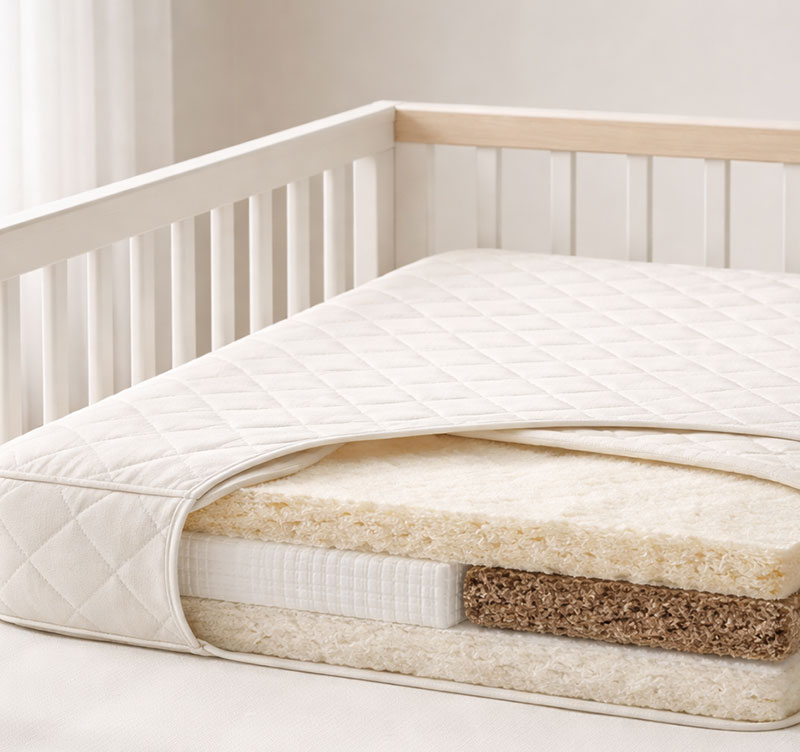
What Makes a Crib Mattress Non Toxic and Truly Safe
The first time I set up a crib, everything looked perfect until I opened the mattress and caught that faint “new” smell that didn’t go away. That’s usually when parents realize the mattress matters more than they might have thought.
The best non toxic crib mattress is one that uses clearly identified materials, avoids chemical treatments, and provides a firm sleep surface that meets U.S. safety standards. The safest options avoid polyurethane foam, vinyl covers, and chemical flame retardants, and instead use certified fabrics or food grade materials.
What parents do not realize is that mattresses look the same on the outside, but what’s on the inside is what determines whether it’s actually safer.
If you cannot identify every material inside the mattress, do not buy it.
After a few nights, the room may still hold a slight odor or the surface of the mattress starts to feel different than expected. That’s usually a sign the quality of the materials was never up to par to begin with.
Best Non Toxic Crib Mattress Materials That Actually Hold Up
It is quickly noticeable that two mattresses can feel completely different even when they are labeled the same. That difference usually shows up after a few weeks of use, not on day one.
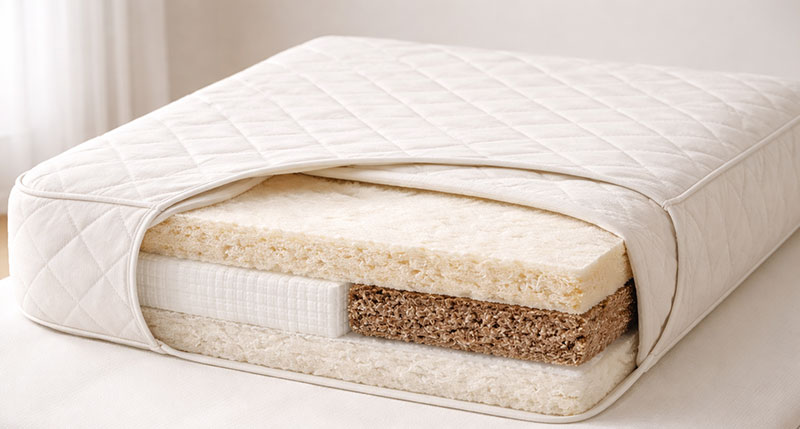
Safer materials include:
Organic cotton with GOTS certification
Natural latex with GOLS certification
Wool used as a natural flame barrier
Food grade polyethylene used in breathable designs
Materials to be cautious with include:
Polyurethane foam which can release VOCs
Vinyl or PVC covers that may contain phthalates
Chemical flame retardants
I also want to point out one detail almost no one talks about: edge firmness. Some mattresses feel fine in the center but start to soften along the edges after regular use, which can affect how the sheet fits and how the surface holds shape. That’s something you only notice after setting up the crib and using it daily. Some mattresses feel fine in the center but start to soften along the edges after regular use, which can affect how the sheet fits and how the surface holds shape. That’s something you only notice after setting up the crib and using it daily. And that is important.
This is where it starts to make sense. Seeing how organic materials compare directly to low-emissions options can make that distinction clearer, and this organic vs non-toxic crib mattress breakdown explains how those labels are used across different mattress types.
A mattress does not need to be labeled organic to be a better choice, but it does need to clearly show what is inside every layer.
If natural options are important to you, my organic crib mattress guide will show you how those compare.
For a more focused comparison before purchasing, my best organic crib mattress guide explains which organic materials, certifications, and firmness details matter most before paying extra for the label.
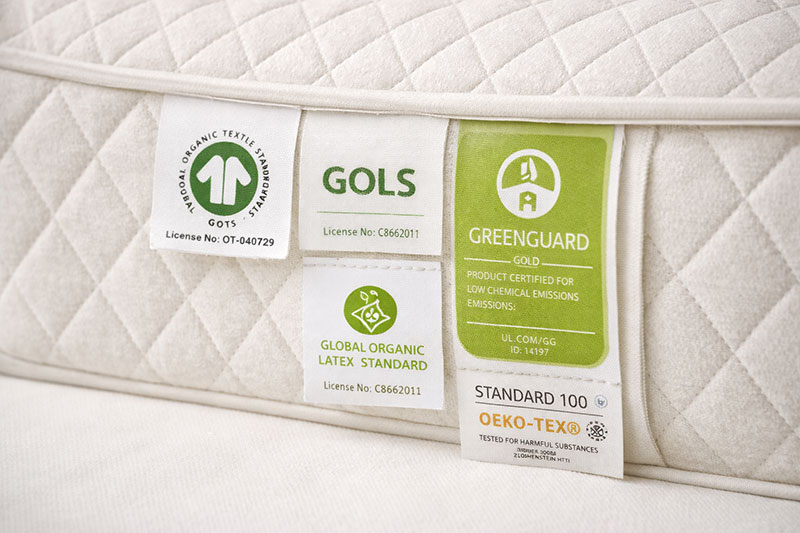
Crib Mattress Certifications That Actually Mean Something in Real Use
At some point, every parent ends up reading certification labels and trying to figure out which ones actually matter. Some sound important but do very little in practice.
The certifications that tend to mean something include:
GOTS for organic textiles
GOLS for natural latex
GREENGUARD Gold for low chemical emissions
OEKO TEX for harmful substance testing
Here's where confusion comes around because a mattress might carry a certification for just the outer fabric, not the entire product.
In the United States, crib mattresses must meet federal safety standards under 16 CFR 1219 and 1220. These rules focus on firmness, fit, and structural safety. They do not cover chemical exposure, which is why materials still matter.
To get a better understanding of indoor air and materials, this indoor air quality resource from the U.S. Environmental Protection Agency explains how materials affect the air inside your home.
Why Firmness Still Matters More Than Organic Labels
Firmness usually becomes obvious the first time you press down on different mattresses in a store or at home. Some feel soft even when labeled as safe.
A crib mattress must be firm. That does not change based on materials or certifications.
This issue may only surface after comparing two mattresses side by side and realizing one label applies to the cover while the other applies to the entire build.
A safe mattress should:
Fit tightly inside the crib with no gaps
Feel firm across the full surface
Hold its shape without dipping
A soft, cushion-y mattress may seem appealing at first, but once the sheet is on and the crib is set up, a firmer surface feels more stable and consistent.
That is also why many pediatric sleep experts caution against adding extra padding, and my are crib mattress toppers safe guide explains how topper layers can change firmness, fit, and the stability of the sleep surface.
If you need to double check sizing and setup, this crib mattress guide shows what to look for.
Best Non Toxic Crib Mattress Types and How They Look in a Real Nursery
Once the crib is fully set up, the differences between mattress types become easier to see.
Organic cotton and wool mattresses create a structured, layered look that sits evenly inside the crib and keeps its shape under a fitted sheet.
Natural latex mattresses tend to feel more consistent across the surface and hold firmness longer over time.
Breathable mattresses use an open core design. In a real nursery, this usually means easier cleaning and quicker drying when accidents happen.
Heat retention can also depend on the mattress core, cover, protector, and bedding layers. My crib mattress overheating guide explains what can make a baby’s sleep surface feel warmer than expected.
Hybrid designs combine breathable cores with certified fabrics. This is a choice when both airflow and clearly listed materials are a priority.
If you are comparing a mattress that can last beyond the infant stage, this dual-sided crib mattress vs single-sided mattress guide explains when a two-stage design is worth considering and when a simpler one-sided mattress may be enough.
Some parents still wonder whether adding extra cushioning on top of these mattresses makes them more comfortable, but my are crib mattress toppers safe guide explains why topper layers can interfere with firmness, airflow, and proper crib mattress fit.
The differences don't show up in the store, but they become very obvious when changing sheets, cleaning the surface, or checking how the mattress holds up week after week. What goes on top of the mattress can also affect how it performs over time. My breathable crib mattress protector guide explains which protector designs stay smooth, protect the surface, and do not interfere with firmness or fit.
If you are comparing airflow options, this breathable vs foam crib mattress page shows how they perform.
My best breathable crib mattress guide compares airflow-focused crib mattresses by firmness, crib fit, cleaning practicality, and how well the surface stays stable with everyday use.
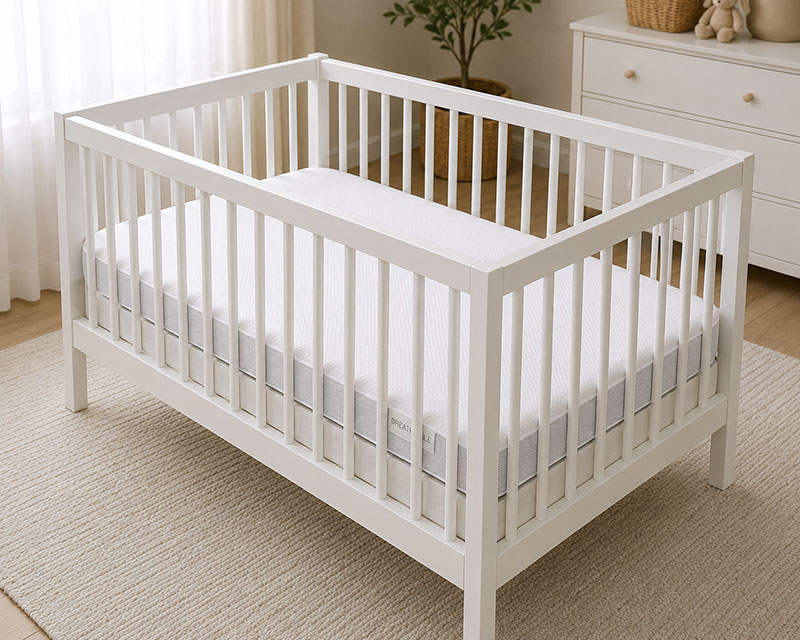
Quick Checklist for Choosing the Best Non Toxic Crib Mattress
When everything starts to blend together, this checklist will help to keep things simple.
Firm and supportive surface
Tight crib fit with no gaps
Clear material list for every layer
Recognized certifications where applicable
Non vinyl waterproof cover
Surface that is easy to clean
A waterproof crib mattress can still fit into a non-toxic crib mattress search when the waterproof layer is clearly identified, non-vinyl, and does not change the firm surface or crib fit.
Most parents notice that once these are in place, the number of realistic choices becomes much smaller. That makes the buying decision easier.
What Most Parents Get Wrong About Non Toxic Crib Mattresses
The biggest mistake is assuming organic automatically means safer.
Some mattresses use organic fabric on the outside but still rely on foam or adhesives inside. That detail is often missed.
I believe this is where many parents spend more than they need to without getting a better result.
This usually happens when labels are trusted without checking the full material list.
Simple Answer to the Main Question
A best choice in a non toxic crib mattress is defined by three things: clearly listed materials, no chemical treatments, and a firm surface that fits tightly inside the crib and meets U.S. safety standards.
Frequently Asked Questions
What is the safest crib mattress material?
Natural latex, organic cotton, and wool are commonly used because they avoid many synthetic chemicals and are often certified.
Do crib mattresses release chemicals?
Some do, especially those made with polyurethane foam. Certified low emission or natural material options tend to release less.
Is a breathable crib mattress safer?
Breathable mattresses focus on airflow and cleaning ease. Firmness and fit are still the most important safety factors.
Do I need an organic crib mattress?
No. A mattress with clearly listed materials and proper certifications can be a strong option even if it is not fully organic.
The best non toxic crib mattress is one that uses clearly identified materials, avoids chemical treatments, and provides a firm sleep surface that meets U.S. safety standards. The safest options avoid polyurethane foam, vinyl covers, and chemical flame retardants, and instead use certified fabrics or food grade materials.
How long does a crib mattress last?
Most hold up through the crib stage, but edge support and surface firmness can change over time depending on materials.
What should I avoid in a crib mattress?
Avoid mattresses that do not clearly list materials, rely heavily on foam, or use vinyl covers without certification.
To see how this fits into a full nursery setup, visit nursery ideas.
When you click on links to various merchants on this site and make a purchase, this may result in this site earning a commission. This does not affect the price you pay.

UBGI Gold Standard 2026
Reviewed under the site's
editorial checklist.
Photos, decorating ideas, party setups and reader submissions are shared for inspiration unless a page is specifically presented as a pattern, tutorial, reference guide or step-by-step project. Follow the instructions, measurements, safety guidance and manufacturer directions provided for the particular project or product.
About Jan | Contact | Baby Nursery Ideas (Blog) | Site Map | Privacy Policy | Disclosure Policy | Disclaimer | Affiliate Disclosure | Earnings Disclosure | Facebook | Pinterest
I am a participant in the Amazon Services LLC Associates Program, an affiliate advertising program designed to provide a means for us to earn fees by linking to Amazon. As an Amazon Associate I earn from qualifying purchases.
Copyright © 2006-2026. All Rights Reserved.