Nursery Storage Ideas for Small Rooms That Actually Save Space
Nursery storage ideas for small rooms should save floor space above anything else. In a compact nursery, the smartest storage usually goes up the wall, inside the closet, under the crib, or inside a dresser drawer instead of spreading across the room. This guide shows how to use vertical shelves, closet systems, drawer dividers, and hidden storage so a small nursery feels organized, easy to use, and less crowded.
Need help planning a small nursery? Start with the storage pieces and layouts that make the biggest difference first.

Nursery Wall Shelves That Make Small Rooms Feel Bigger
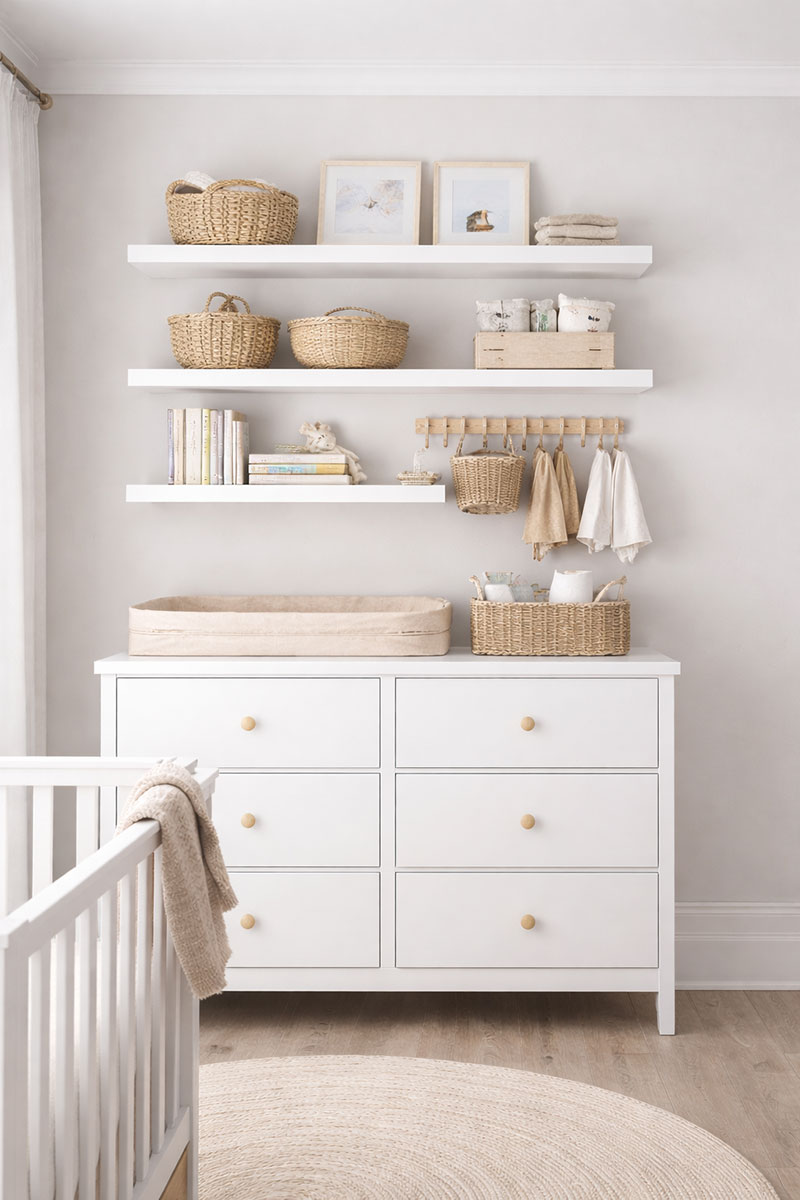
Nursery storage ideas work best in small rooms when they move upward instead of outward. Floating wall shelves, vertical book ledges, and slim profile storage rails lift essentials off the floor and visually stretch the walls. The result is immediate: more visible floor space, cleaner sight lines, and less crowding around the crib.
In a compact nursery, floor square footage is limited. Every bin placed on the ground makes the room feel tighter. Wall-mounted storage reverses that pressure. Instead of adding another piece of furniture, shelves above a dresser or changing surface hold diapers, books, folded blankets, and daily-use items without widening the footprint of the room.
What Is Vertical Nursery Storage?
Vertical nursery storage is the use of wall-mounted shelves, hanging organizers, or tall narrow units that store baby essentials upward rather than outward, preserving floor space and making small nursery rooms feel larger.
Closet Organization Ideas for Small Nursery Rooms
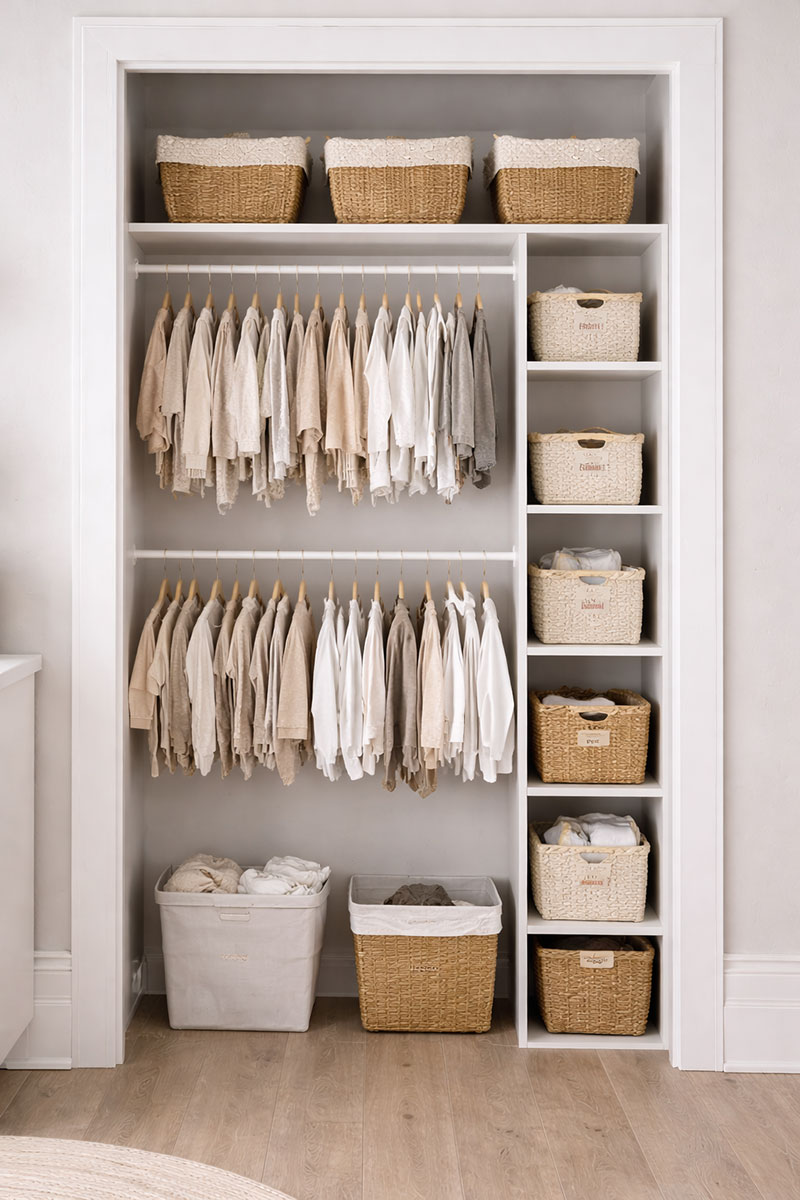
A nursery closet is often underused. In small nurseries, it becomes the primary storage engine. Double hanging rods instantly double capacity. Upper shelves hold labeled bins. Lower rods keep daily outfits within reach.
Closet systems outperform freestanding furniture because they stay contained.
To make that closet space work even harder in tight layouts, this small nursery closet organizer system shows how to double hanging space and keep everything clearly sorted.
When additional storage is necessary, selecting one of the best dressers for a small nursery can provide drawer capacity without widening the room’s footprint.
Storage decisions directly affect layout clarity in compact rooms. If you are planning furniture placement in a tight footprint, review 8x10 nursery layout planning to see how storage zones and crib clearance work together.
They do not interrupt walking paths. They do not visually crowd the crib zone. They support the layout instead of competing with it.
Clear labeling reduces daily friction. When baby items rotate quickly, defined zones prevent drawers and surfaces from becoming overflow spaces.
Drawer Organization Ideas for Small Nursery Rooms
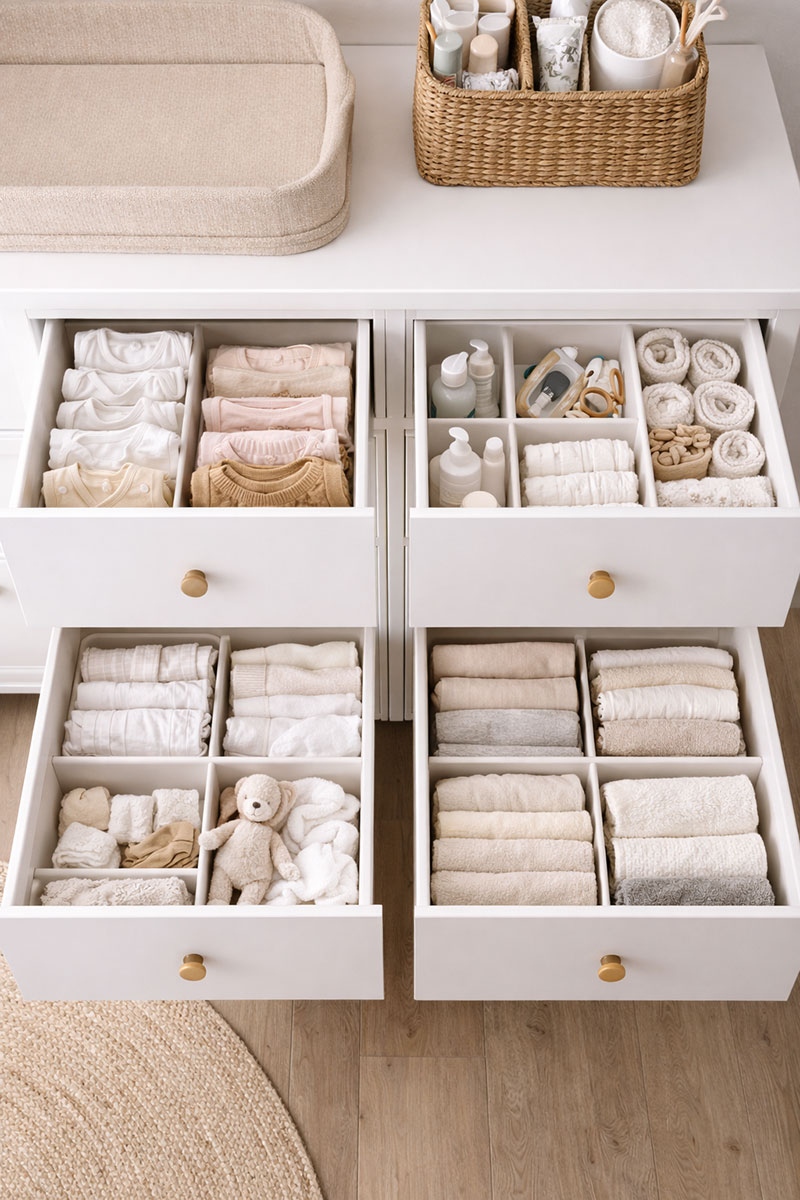
Nursery drawer organizers eliminate surface overflow. When drawers are structured properly, fewer items migrate onto tops of dressers, changing stations, and cribs.
Use shallow dividers for onesies, sleepwear, socks, and burp cloths. Assign one drawer to medical and care items. Reserve one zone for growth-stage rotation. The goal is containment.
A realistic newborn nursery essentials checklist can also help parents decide which daily nursery items need drawer space during those first months instead of overfilling the room too early.
Clutter spreads visually faster than it spreads physically. When surfaces are clear, a small room reads as larger.
Anchor all dressers to the wall. In the United States, the U.S. Consumer Product Safety Commission recommends anchoring furniture to reduce tip-over risk in homes with children. Safety should always support storage decisions.
This is not optional.
Under-Crib Storage for Small Nursery Rooms
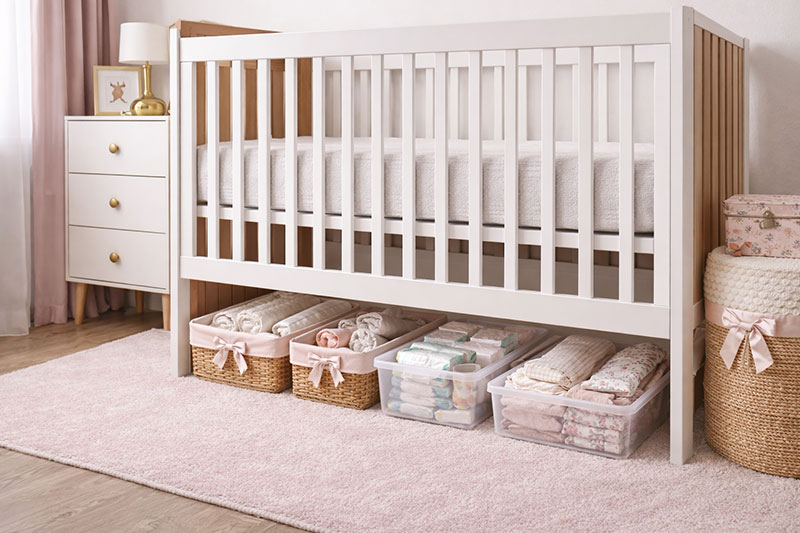
The area beneath a crib is often empty. In small nurseries, that space can hold flat bins for extra sheets, out-of-season clothing, or backup diapers. Choose low-profile containers that slide easily and remain fully concealed.
To see ideas on how to choose and use bins, drawers, safety clearance, and what not to store there, see these under-the-crib storage ideas for a compact nursery.
Avoid stacking. Avoid tall rolling carts that visually interrupt the crib silhouette. The objective is discreet expansion of storage without adding visual weight.
Under-crib drawers built into certain crib models can simplify this further, but storage should never interfere with mattress height safety settings or manufacturer instructions.
Toy Storage Ideas for Small Nursery Rooms
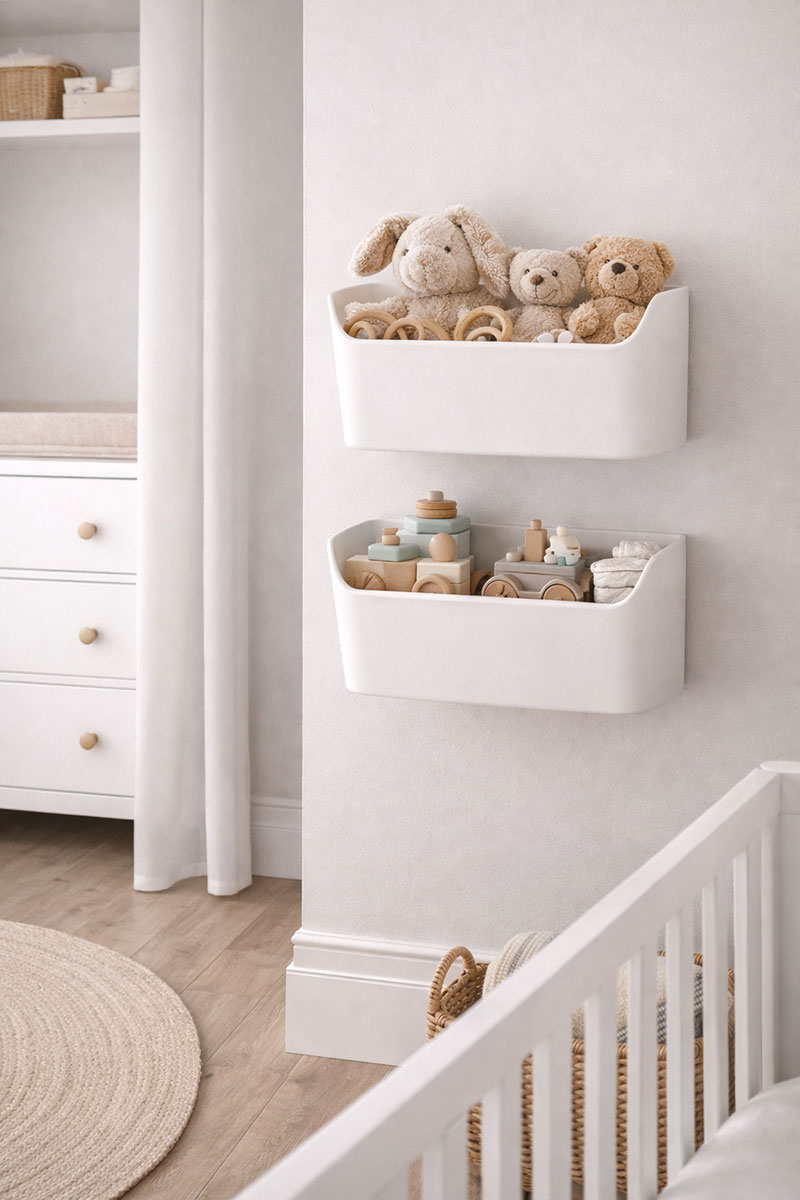
Traditional toy chests are bulky. In small nurseries, they quickly dominate floor space. Instead, use wall-mounted bins, slim rolling carts that tuck beside dressers, or tall narrow cabinets that keep toys vertical.
A handmade basket can provide flexible floor-level storage without adding another rigid piece of furniture. Start with the XXL crochet storage basket pattern, or browse the complete collection of free crochet basket patterns for nursery-friendly designs.
Limit toy visibility. Rotating toys in smaller quantities keeps surfaces clear and reduces sensory overload. When fewer objects are visible, the room feels calmer and larger.
Storage in a nursery should serve layout clarity first, aesthetics second.
Quick Checklist: Making Nursery Storage Work in Small Rooms
- Use wall shelves before adding floor furniture.
- Install double closet rods for vertical capacity.
- Anchor dressers to the wall.
- Keep surfaces intentionally sparse.
- Use under-crib space discreetly.
- Rotate toys instead of displaying all at once.
How Nursery Storage Ideas Change the Way a Small Room Feels
Nursery storage ideas in small rooms are primarily about containment. When storage is consolidated and elevated, the layout feels controlled rather than crowded, even within tight dimensions.Too many small bins scattered across the floor make the layout feel busy. When storage is consolidated, elevated, and simplified, the room reads as larger even though the dimensions have not changed.
Small nurseries benefit from three visual strategies:
- Clear floor continuity. When you can see more uninterrupted flooring, the room appears deeper.
- Vertical alignment. Stacking storage in straight vertical lines keeps the eye moving upward.
- Contained zones. Each category of baby items should live in one defined area instead of spreading across surfaces.
This is why floating shelves outperform low bookcases in tight rooms. It is why closet systems feel lighter than adding another dresser. And it is why drawer dividers prevent visual spillover that slowly shrinks the room.
Common Storage Mistakes in Small Nurseries
Many small nurseries feel cramped not because they lack space, but because storage decisions compete with layout.
Avoid these mistakes:
- Adding multiple small storage pieces instead of one integrated system.
- Placing toy bins directly beside the crib where traffic should remain clear.
- Using deep shelving that projects too far into the room.
- Leaving closet space underutilized while adding standalone cabinets.
Storage should support circulation. If walking paths feel tight, the storage plan needs adjustment before adding more containers.
When you are working with a square footprint, this 10x10 nursery layout guide shows how storage zones and crib placement fit together without shrinking your walking path.
Frequently Asked Questions
How do you add storage to a small nursery without making it feel crowded?
The most effective way to add storage to a small nursery without making it feel crowded is to use vertical space. Wall-mounted shelves, structured closet systems, and organized drawers increase capacity without taking up additional floor space. Keeping surfaces clear and limiting visible bins also prevents the room from feeling visually cluttered.
What type of storage makes a small nursery feel bigger?
Storage that is elevated, streamlined, and visually contained makes a small nursery feel bigger. Floating shelves, slim vertical cabinets, under-crib bins, and labeled drawer dividers reduce clutter while preserving open walking paths and visible flooring.
When designing storage in compact rooms, always preserve crib clearance and safe access zones. Storage should never interfere with crib placement guidelines or safe mattress height adjustments as baby grows.
Storage That Grows With Your Child
Well-planned nursery storage ideas continue working beyond the infant stage. Wall shelves transition from holding diapers to displaying books. Closet systems adapt as clothing sizes change. Drawer dividers adjust for larger garments. Under-crib storage converts easily to under-bed storage in toddler years.
For a broader approach to flexible design beyond storage, see my baby nursery ideas that grow with your child, which outline layout, furniture, and décor strategies that transition smoothly from nursery to toddler room without starting over.
This reduces long-term furniture turnover and keeps the room flexible as needs evolve.
Effective nursery storage is not decorative filler. It is structural support for the layout. When it is planned deliberately, a small nursery does not feel temporary or cramped. It feels efficient and calm.
Nursery storage ideas for small rooms work best when they prioritize vertical space, contained drawers, efficient closet systems, and clear floor visibility. When storage is consolidated upward and clutter is controlled at the source, even compact nursery rooms feel organized and spacious without adding more furniture. The most effective solutions are simple, integrated, and designed to support safe circulation around the crib and changing areas.
For complete room planning beyond storage strategy, visit the nursery ideas hub to compare layout types, room sizes, and organization approaches side by side.


About Jan | Contact | Baby Nursery Ideas (Blog) | Site Map | Privacy Policy | Disclosure Policy | Disclaimer | Affiliate Disclosure | Earnings Disclosure | Facebook | Pinterest
I am a participant in the Amazon Services LLC Associates Program, an affiliate advertising program designed to provide a means for us to earn fees by linking to Amazon. As an Amazon Associate I earn from qualifying purchases.
Copyright © 2006-2026. All Rights Reserved.