DIY Small Nursery Closet Organizer Ideas for Tiny Baby Rooms
Small nursery closet organizer ideas can completely change how a tiny baby room functions. This DIY nursery closet organizer setup uses double rods, organized bins, shelf zones, and simple storage tricks to turn cramped nursery closets, apartment closets, and small shared spaces into organized systems parents can copy and use every day.
Start Here:
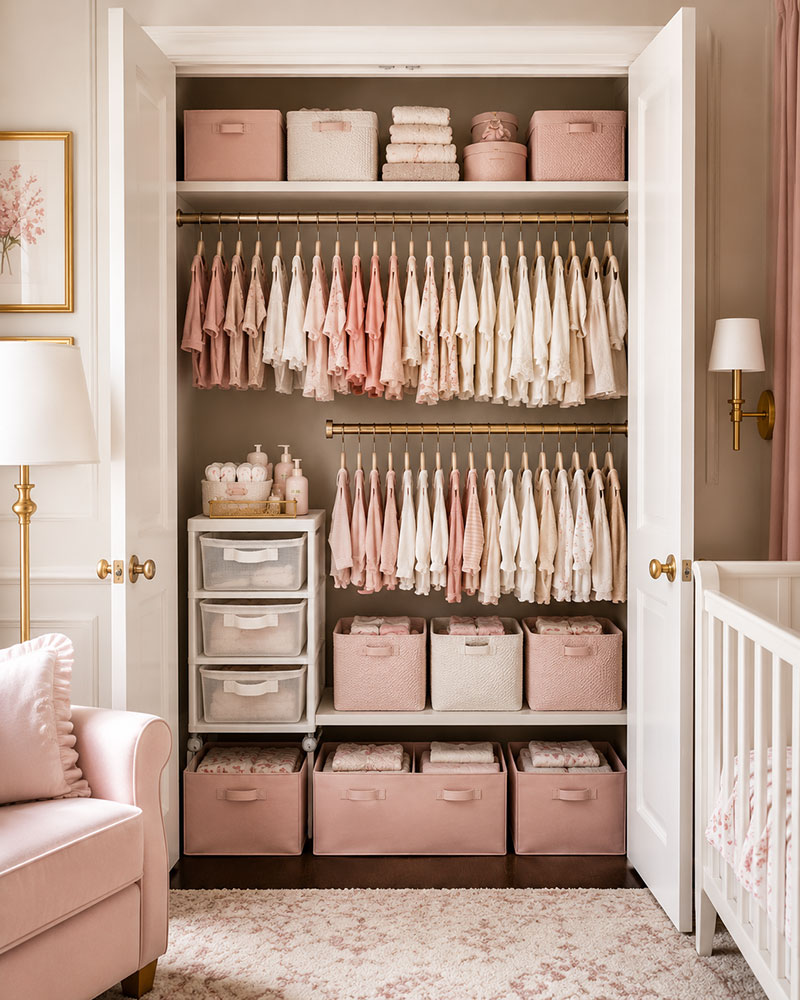
Exact DIY Small Nursery Closet Organizer Setup for Tiny Baby Rooms
A nursery closet can turn chaotic fast. Tiny outfits start piling together. Diapers slide into random corners. Then somebody hands you another bag of baby clothes and suddenly the entire closet becomes impossible to manage.
This DIY small nursery closet organizer setup turns a standard tiny nursery closet into a practical storage system with double hanging rods, drawer storage, clothing zones, diaper sections, and lower bins that stay organized long after newborn stage.
This exact setup was designed around the size of a standard small United States apartment or suburban nursery closet.
The layout creates:
- Two full rows of hanging baby clothes
- Dedicated diaper and wipes storage
- Drawer storage for smaller baby items
- Overflow space for future clothing sizes
- Lower storage for blankets and bulk items
- Easy grab organization without digging through piles
The reason this arrangement works so well is simple. Baby clothes are short. Most nursery closets waste half the available vertical space because they are still arranged like adult closets.
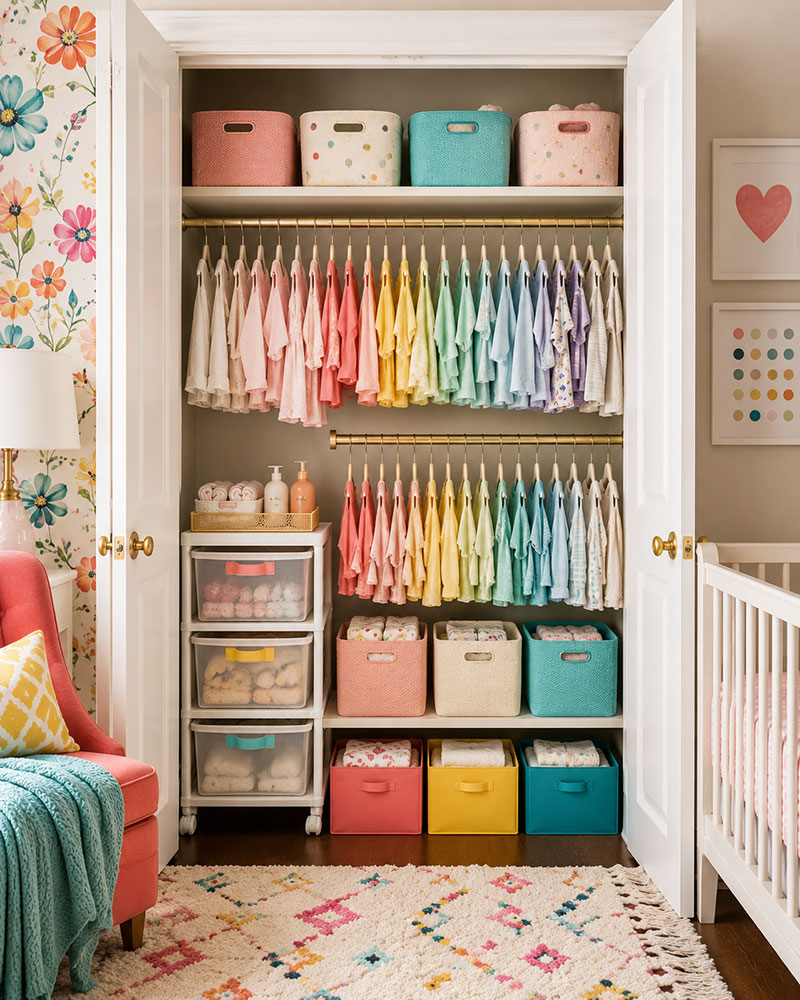
Quick Closet Ideas:
Materials Needed for the DIY Nursery Closet
This setup does not require expensive custom cabinetry or a complicated closet system.
A small nursery closet organizer can be built with basic pieces when the rods, drawers, and bins are placed in the right order.
Most of the structure comes from basic rods, bins, drawers, and spacing arranged intentionally instead of stacked randomly together.
For this exact closet setup you will need:
- 2 hanging rods between 48 and 72 inches long
- 4 rod brackets
- 1 upper shelf already installed or added
- 1 narrow drawer unit under 16 inches deep
- 3 to 5 shallow nursery storage bins
- Matching baby clothes hangers
- Drywall anchors rated for at least 50 pounds
- 1 cordless drill
- 1 level
- Tape measure
- Pencil for wall markings
One thing people realize after using nursery closets for a few weeks is that oversized bins create clutter faster than almost anything else. Deep baskets swallow socks, bibs, and tiny baby items immediately.
Shallow pull out bins keep the clothing categories visible and easy to find instead of buried.
See bins used for the compact nursery closet organizer system here
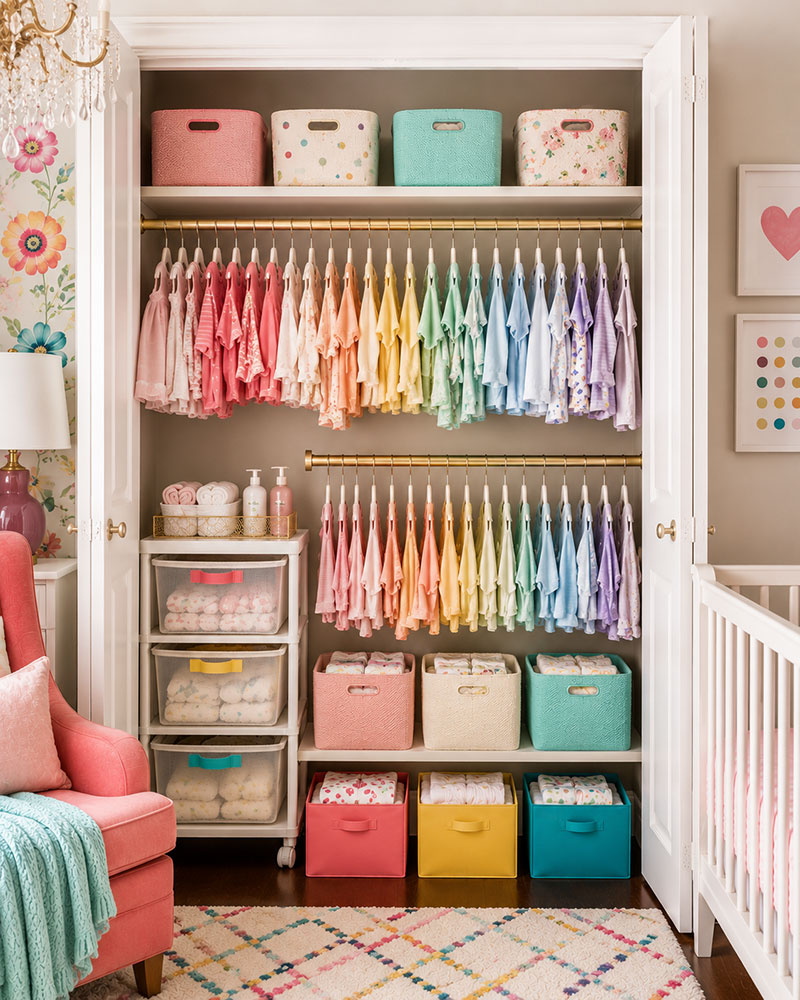
Exact Closet Measurements and Spacing for This Layout
This section matters because incorrect spacing is usually where beginner closet projects fall apart.
These measurements create the exact layout shown in the photos on this page.
- Upper rod height: 78 inches from the floor
- Lower rod height: 40 inches from the floor
- Gap between rods: 34 to 36 inches
- Drawer height: under 32 inches tall
- Bin depth: under 14 inches
- Shelf depth: 12 to 16 inches
- Lower floor clearance: 10 to 14 inches
Many closets start looking crowded because the rods are mounted too far apart. Baby clothes are much shorter than adult clothing, so reducing the spacing instantly doubles usable storage.
The finished result looks organized because every section has visible breathing room instead of being packed edge to edge.
That is what makes this small nursery closet organizer easier to maintain after laundry days, clothing swaps, and diaper restocks.
How to Install the Double Hanging Rods Correctly
This is the step where a lot of nursery closet projects get frustrating because the rods end up uneven or too low for the drawer section underneath.
Place the drawer unit inside the closet first before drilling anything into the walls.
Then measure upward from the top of the drawers instead of measuring from the floor alone.
For the exact setup shown here:
- The lower rod should sit about 8 inches above the drawer unit
- The upper rod should sit about 34 inches above the lower rod
- Leave at least 2 inches between hanging clothing and the shelf above
- Keep both rods level before tightening brackets fully
Even a slight tilt becomes obvious once clothing is hanging across the full width of the closet.
I’ve learned that nursery closets become much easier to maintain when the rods run wall to wall instead of leaving awkward empty side gaps.
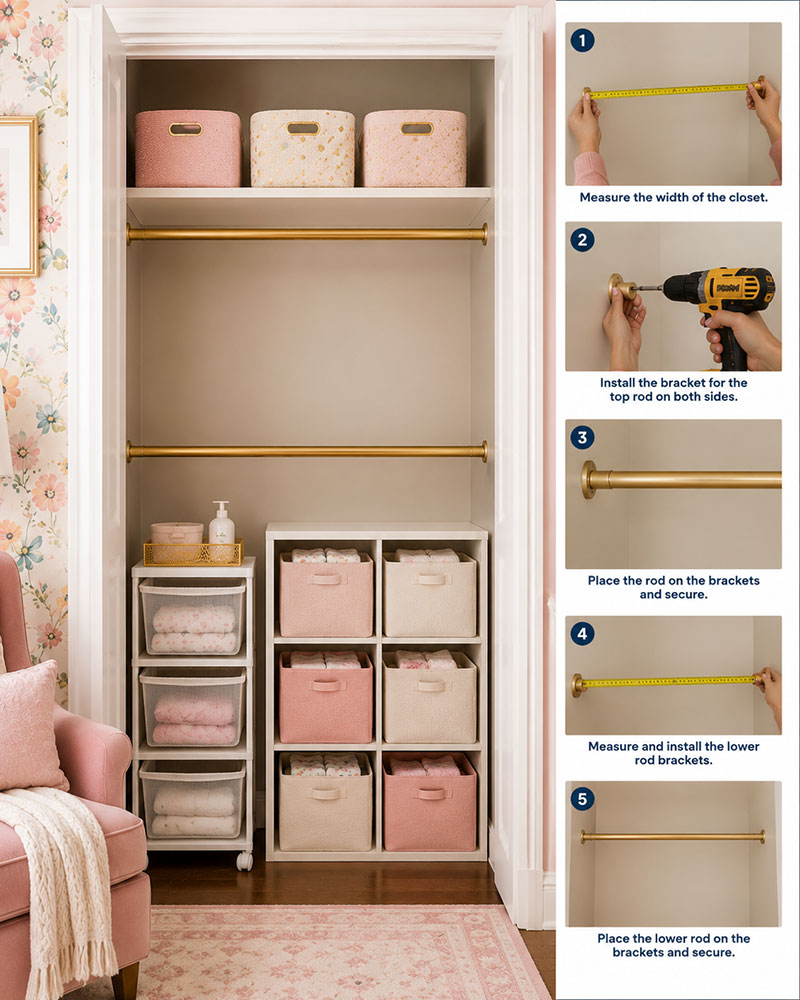
Step by Step DIY Nursery Closet Build Without Guesswork
Many nursery closets become difficult to use because everything gets added randomly instead of following a fixed structure.
This exact order prevents that problem.
Step 1. Empty the closet completely.
Remove everything including the original rod if necessary.
Step 2. Measure the full closet width.
Most nursery closets fall between 5 and 6 feet wide.
Step 3. Install the upper rod.
Measure 78 inches from the floor and mark both walls before mounting brackets.
Step 4. Install the lower rod.
Measure 40 inches from the floor and confirm both sides stay level.
Step 5. Place the drawer section.
Position the drawer unit on one side instead of centered so the hanging area remains open and balanced.
Step 6. Add upper shelf storage bins.
Store future clothing sizes and backup diaper supplies on the top shelf.
Step 7. Organize hanging clothes by size.
Keep newborn clothing separated from larger sizes so daily outfits stay easy to grab.
Step 8. Add lower storage bins.
The floor section becomes valuable storage space for blankets and overflow supplies.
Another area that can provide surprising storage in a small nursery is the space beneath the crib. These under the crib storage ideas show practical ways to store extra blankets, diapers, seasonal clothing, and backup supplies without taking up additional floor space.
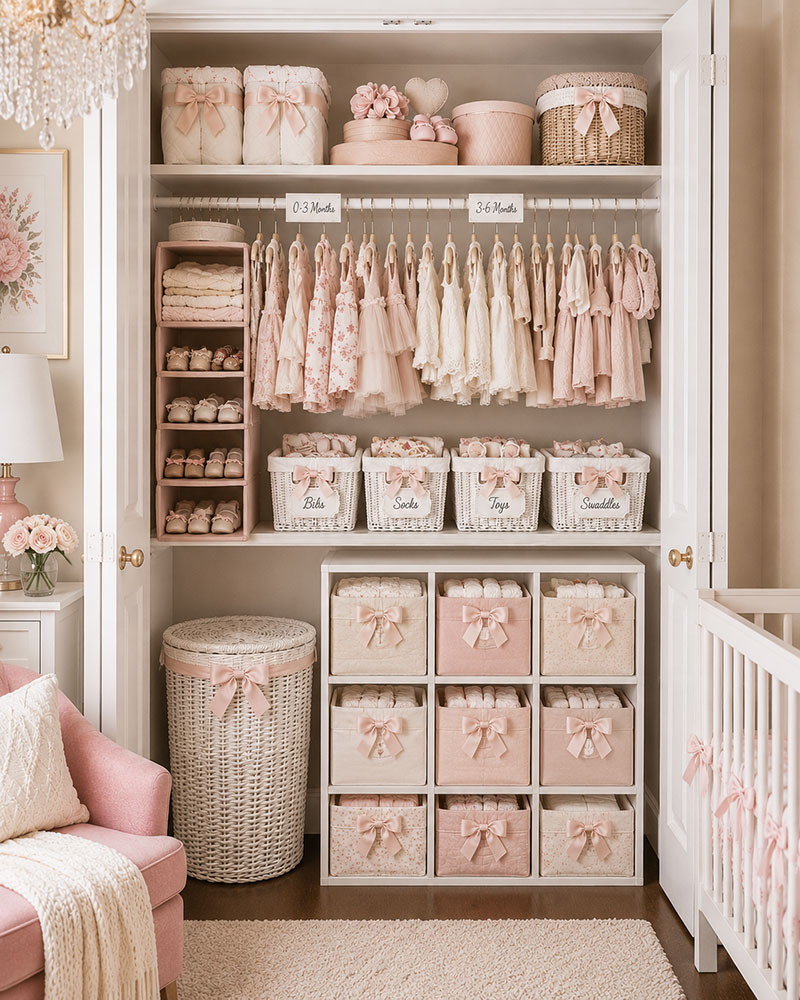
The finished setup stays manageable because the organization matches real daily nursery routines instead of looking staged only for photos.
Exact Bin Layout for the Closet System
The organization only keeps working if every section has a permanent purpose.
This exact layout uses:
- Top shelf for backup diapers and future clothing sizes
- Upper hanging rod for 6 to 12 month clothing
- Lower hanging rod for newborn and daily outfits
- Top drawer for bibs and socks
- Middle drawer for pajamas and onesies
- Bottom drawer for burp cloths and swaddles
- Lower floor bins for blankets and overflow items
One practical detail that almost never gets mentioned on organization pages is keeping one completely empty basket available for clothing that no longer fits. Without that overflow space, the closet slowly falls apart again within days.
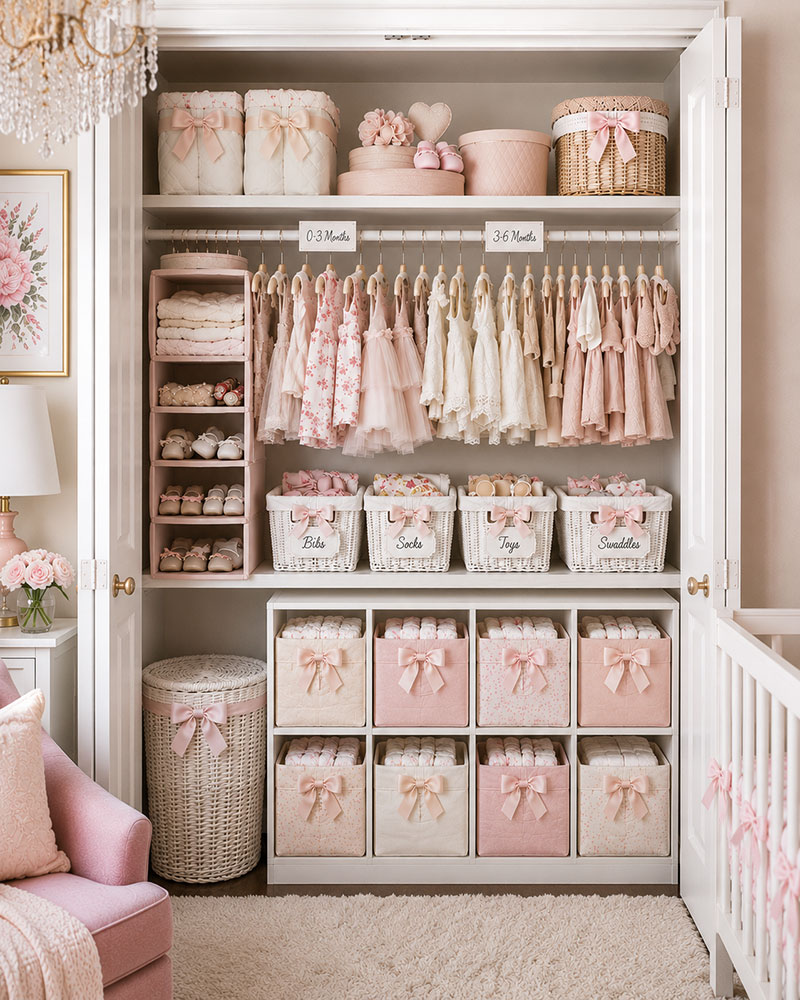
Tiny Apartment Nursery Closet Storage That Looks Organized Every Day
Apartment nursery closets become cluttered quickly because they usually handle overflow storage for the entire room.
This arrangement changes that by turning the closet into the actual organization center of the nursery instead of hidden storage behind a door.
One side handles clothing. One side handles supplies. Upper shelves handle future sizes. Lower sections stay focused on daily grab items.
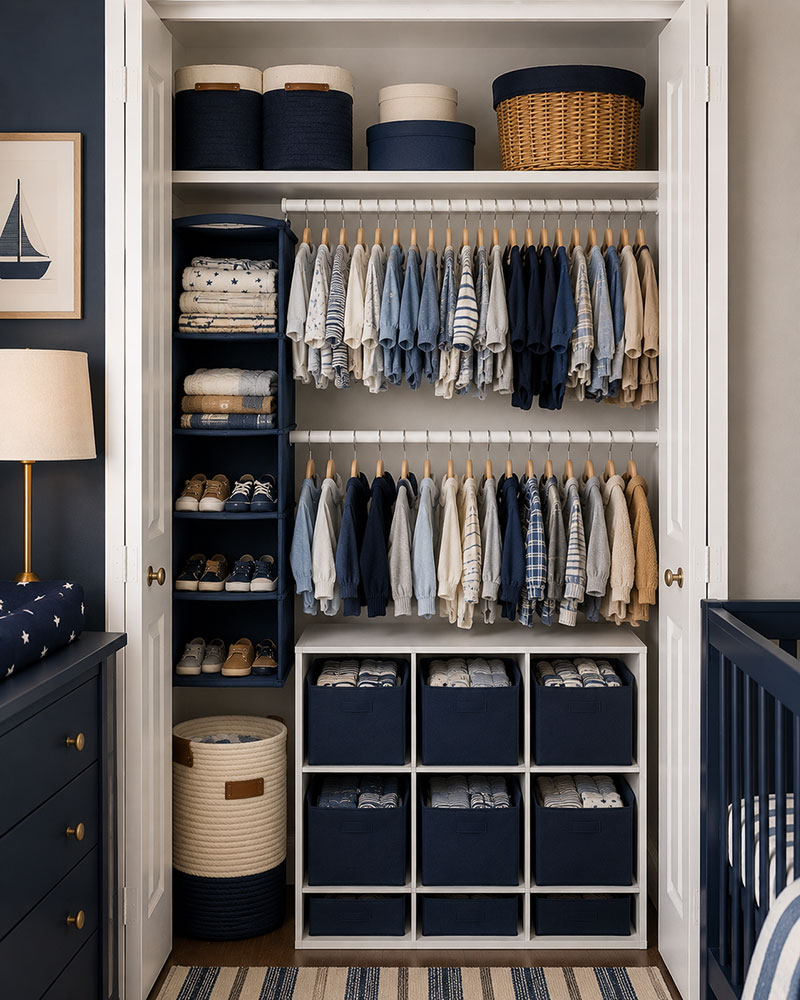
Parents often notice this after the baby arrives. The nursery itself may still look tidy while the closet quietly turns into the stressful part of the room.
If the nursery layout itself is tight, these small 8x10 nursery layout ideas and nursery layout ideas for square rooms can help organize the rest of the room around the closet system.
Small Nursery Closet Mistakes That Waste Valuable Space
One of the biggest mistakes is organizing baby clothes exactly like adult clothing.
That creates large dead zones underneath hanging outfits.
Another issue is mixing newborn clothing together with future sizes. The closet becomes frustrating almost immediately because usable items disappear into stacks of clothing that cannot even be worn yet.
A third problem comes from oversized decorative baskets that look impressive online but consume valuable nursery closet space.
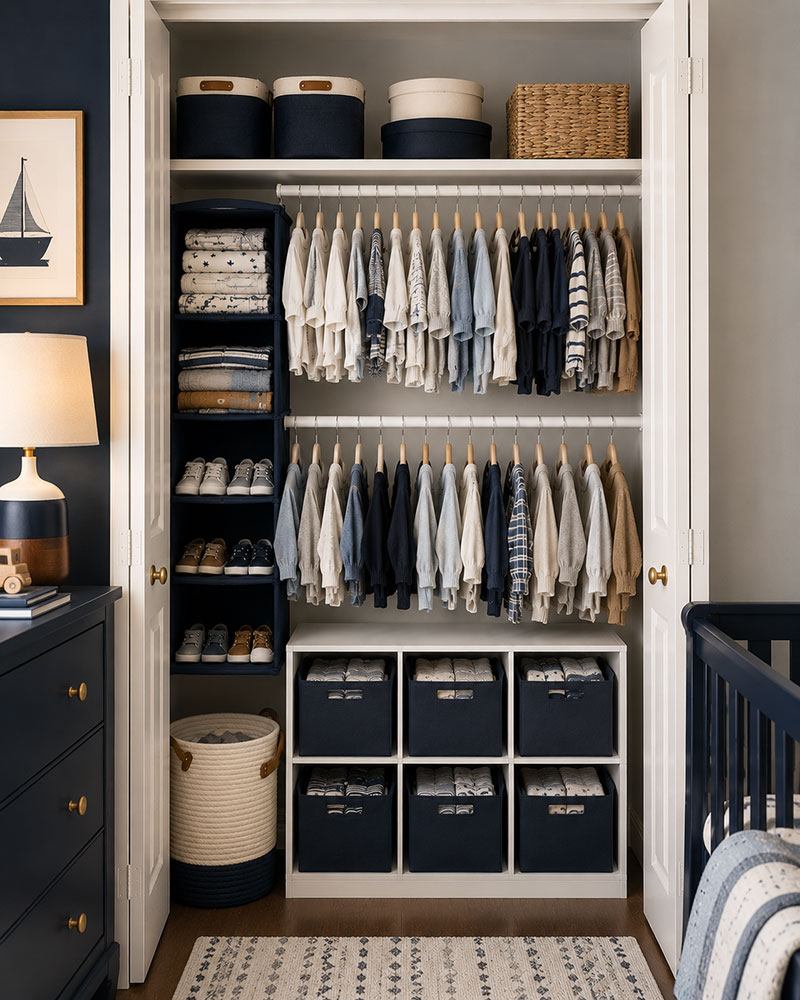
Smaller bins create a cleaner nursery closet than oversized baskets.
One hidden problem with giant bins is that they encourage random dumping instead of organized categories.
More Small Room Storage Ideas That Pair Naturally With This Closet Setup
Once the closet starts functioning properly, the rest of the nursery usually becomes easier to manage too.
The dresser should work with the closet instead of becoming another clutter zone, and these nursery dresser organization ideas show how to sort baby clothes, diapers, wipes, and daily supplies into easy drawer zones.
For additional organization guidance, the Consumer Reports closet organization guide explains why dividing storage by daily use improves long term organization.
FAQ About DIY Small Nursery Closet Organizer Ideas
How do you organize a tiny nursery closet?
Use double rods, shallow bins, separated clothing sizes, and lower storage sections so daily items stay easy to reach.
Can renters build a nursery closet organizer?
Yes. Many apartment nursery closets can use removable rods and lightweight storage systems without permanent construction.
What is the best spacing for nursery closet rods?
Most nursery closets function well with an upper rod around 78 inches high and a lower rod around 40 inches high.
Why do nursery closets become messy so quickly?
Closets usually become cluttered when clothing sizes are mixed together and oversized bins hide smaller baby items.
Can a small nursery closet really hold everything?
Yes. When the closet uses vertical spacing correctly, even a compact nursery closet can handle clothing, diapers, blankets, and daily baby supplies without overflow taking over the room.
When you click on links to various merchants on this site and make a purchase, this may result in this site earning a commission. This does not affect the price you pay.

UBGI Gold Standard 2026
Reviewed under the site's
editorial checklist.
Photos, decorating ideas, party setups and reader submissions are shared for inspiration unless a page is specifically presented as a pattern, tutorial, reference guide or step-by-step project. Follow the instructions, measurements, safety guidance and manufacturer directions provided for the particular project or product.
About Jan | Contact | Baby Nursery Ideas (Blog) | Site Map | Privacy Policy | Disclosure Policy | Disclaimer | Affiliate Disclosure | Earnings Disclosure | Facebook | Pinterest
I am a participant in the Amazon Services LLC Associates Program, an affiliate advertising program designed to provide a means for us to earn fees by linking to Amazon. As an Amazon Associate I earn from qualifying purchases.
Copyright © 2006-2026. All Rights Reserved.