Nursery Ideas for Baby Boys and Girls
Nursery ideas are easier to use when you start with one clear direction: theme, color, layout, or real room inspiration. This page helps you choose a baby nursery style, find the right nursery theme, plan the room flow, and move quickly to the next page that matches what you want.
Start here: choose a nursery theme, room layout, or color style to see ideas that match what you have in mind.
Choose Your Nursery Idea
Pick the room style, color, layout, or decorating path you want to see first.
Browse woodland, vintage, modern, ocean, farm, and more. Baby Girl Nursery Ideas
See floral, vintage, pink, butterfly, and girl room inspiration. Baby Boy Nursery Ideas
Find navy, woodland, adventure, western, and boy room ideas. Gender Neutral Nursery Ideas
Choose flexible room styles that work beautifully for any baby. Neutral Nursery Ideas
Use warm neutrals, natural textures, and timeless baby room details. Nursery Wall Decor
Find wall art, shelves, signs, murals, wallpaper, and focal walls. Nursery Furniture
Plan cribs, dressers, chairs, storage, and room flow. Real Nursery Pictures
Browse finished baby rooms shared for real-life decorating ideas.
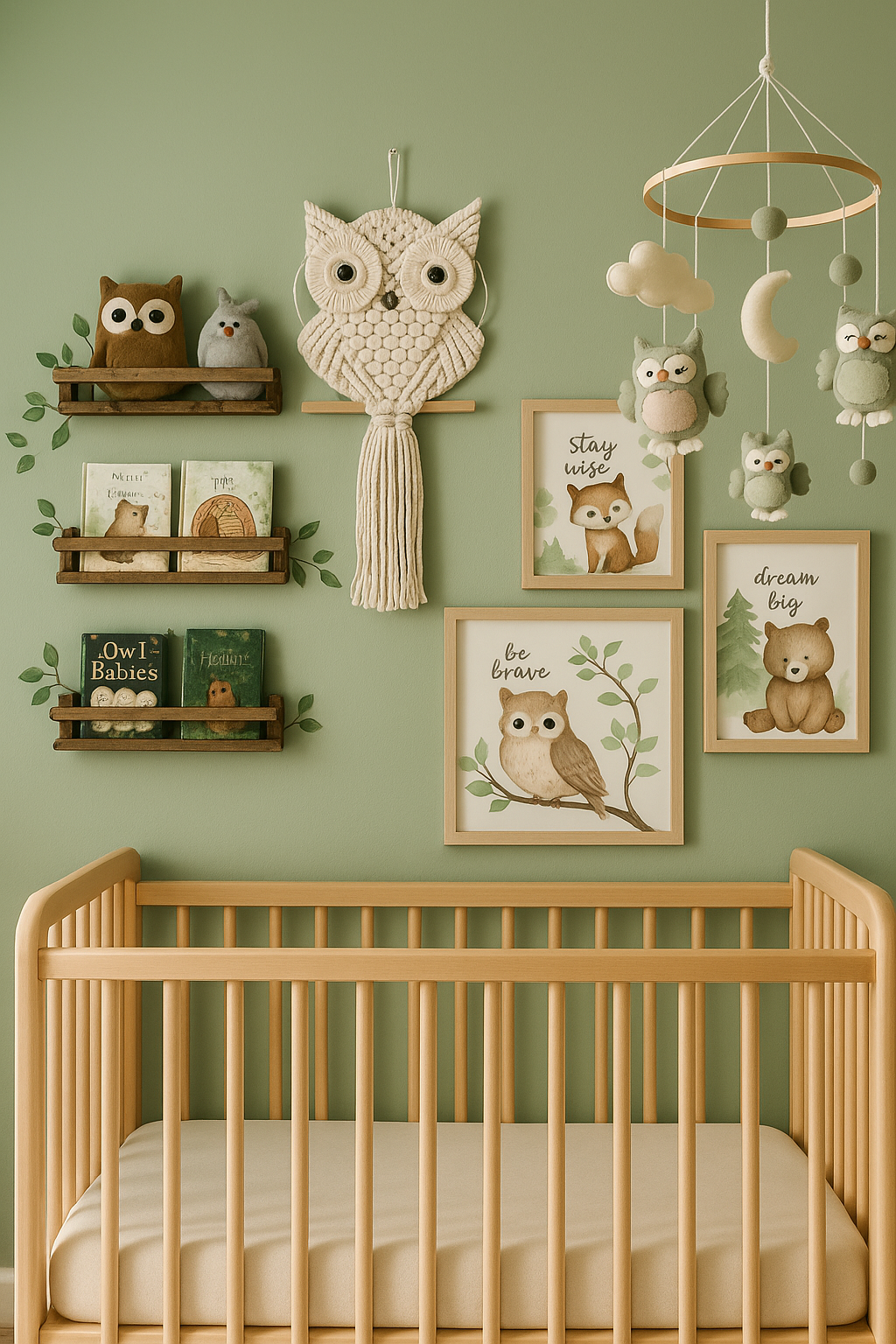
A soft, cozy baby nursery with natural textures, gentle color, and simple decorating ideas to help you choose a decorating direction for the room.
Choose the Nursery Path That Fits Your Room
A nursery comes together faster when you choose one main direction first: theme, color, layout, wall decor, furniture, or real-room inspiration. Use the sections below to jump into the nursery idea that matches what you are trying to decide right now.
Use this page as a nursery idea shortcut: choose the room style, color, layout, or decorating detail you want first, then click through to the page that gives you the full set of ideas.
Start With Your Biggest Nursery Decision
Turn early ideas into a finished room plan. Browse Nursery Themes
Woodland, vintage, modern, ocean, farm, and more. Pick Baby Room Colors
Choose nursery palettes before buying decor. Plan Nursery Furniture
Cribs, dressers, chairs, spacing, and flow. Decorate the Walls
Art, shelves, signs, murals, wallpaper, and focal walls. See Real Nursery Ideas
Finished rooms with practical layout and decor ideas.
Choose a Color Direction
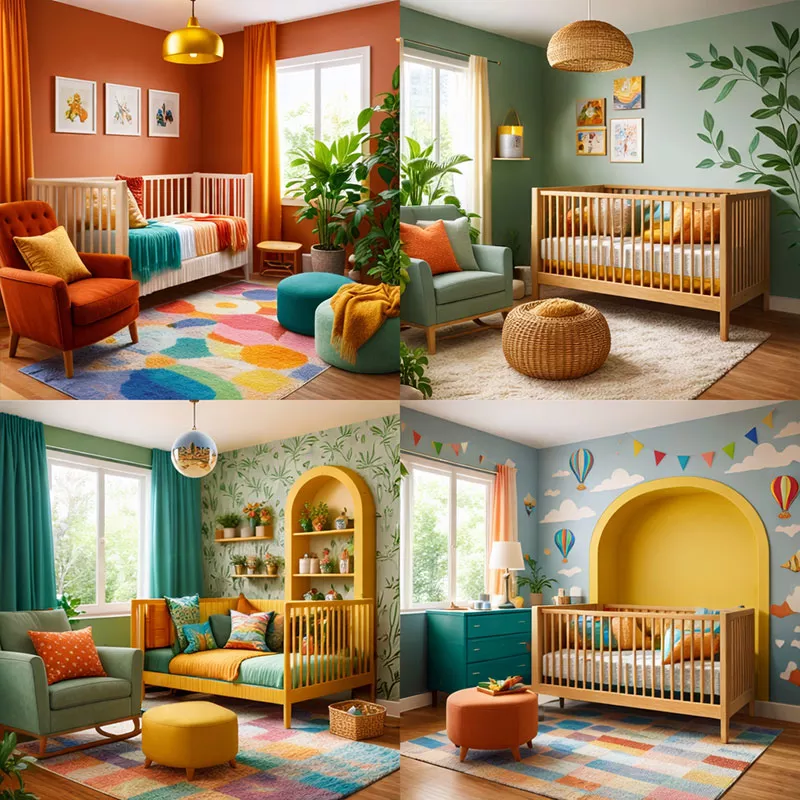
Layered nursery palettes featuring deep teal, dusty rose, muted terracotta, and sage green in modern room settings.
Color narrows the whole room quickly. Start with a palette first, then choose furniture, wall decor, rugs, lighting, and bedding that belong with that look.
A rug often decides whether the crib, chair, and dresser look connected, so my nursery rugs guide can help with size, placement, materials, and color before the rest of the room is finished.
Sage is one of the most useful color directions because it can move traditional, modern, boy, girl, or neutral depending on the accents, so I separated the ideas into sage green nursery ideas, sage green boy nursery ideas, and sage green girl nursery ideas for easier room planning.
For a cleaner two-color palette with warm contrast, see these sage green and cream nursery ideas before choosing paint, curtains, bedding, or wall decor.
A girl-room version pairs muted green with blush accents, and these sage green and pink nursery ideas show how to use that palette without making the room look overly sweet.
For a closer look at the exact accent colors that work with sage walls, furniture, rugs, curtains, and bedding, see my sage green nursery color combinations guide.
For green walls, murals, and nature-inspired color. Baby Color Schemes
See coordinated nursery palette ideas. Black and White Nursery Ideas
Use contrast without making the room feel cold.
Plan the Crib, Chair, and Room Flow
The crib and chair usually decide the shape of the nursery. Once those two pieces are placed well, storage, lighting, rugs, monitors, and wall decor are much easier to organize.
Place the chair where feeding and rocking work best. Baby Crib Styles and Safety
Compare crib styles before choosing the room anchor. Crib Assembly Instructions
Find crib setup and instruction help. Crib Parts and Hardware
Look up crib hardware and replacement part sources.
Plan the Layout for Daily Use
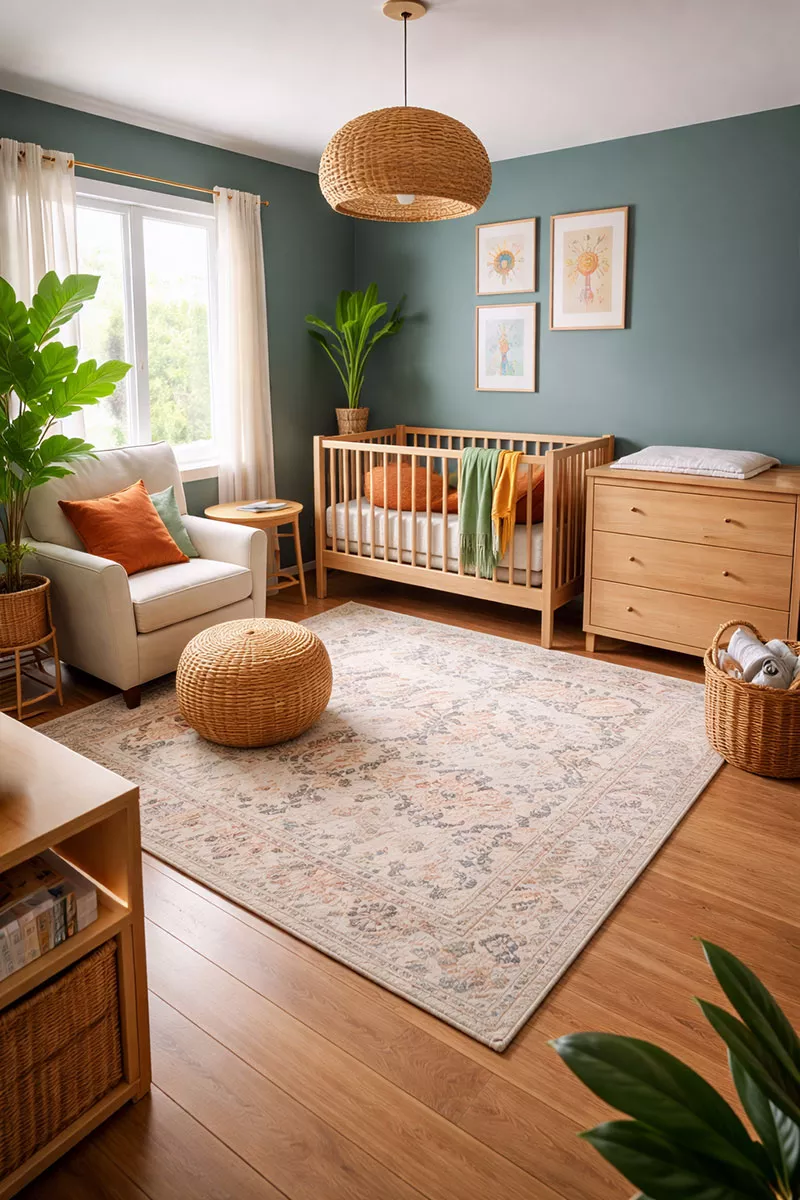
A nursery layout with clear movement between the crib, chair, and changing area.
A useful nursery has open walking space, a safe crib location, storage within reach, and a monitor setup that makes sense before the room is full.
The floor also affects cleaning, noise and comfort, and this comparison of carpet, hardwood, vinyl and laminate for a nursery can help you choose a practical foundation for the room.
Windows affect that same daily flow, so it helps to choose nursery window treatments that manage light, privacy, cords, and crib placement before the room is fully decorated.
The difference between blackout curtains and room darkening curtains also matters when the goal is softer daylight versus a darker sleep space.
For rooms where naps, glare, or early morning light are part of the problem, my room darkening curtains guide helps narrow the fabric and liner choices before the nursery is finished.
For another decorating view, my nursery curtain ideas show how fabric, length, pattern, and color can change the whole look of the baby room.
Plan crib placement, window spacing, and room traffic. Nursery Layout Planner
Sketch crib, chair, dresser, storage, and walkway zones. Nursery Storage Ideas
Reduce floor clutter with bins, shelves, and drawers. Video Baby Monitors
Plan camera placement before furniture blocks the view.
Add the Layers That Make the Room Work
Lighting, washable textiles, storage, and a few personal pieces make the nursery easier to use every day.
Compare flush mounts, pendants, chandeliers, and fixtures. Nursery Lighting Guide
Plan lamps, night lights, and task lighting. Baby Quilts
Use handmade quilts as keepsakes or wall decor.
Smart Storage That Scales
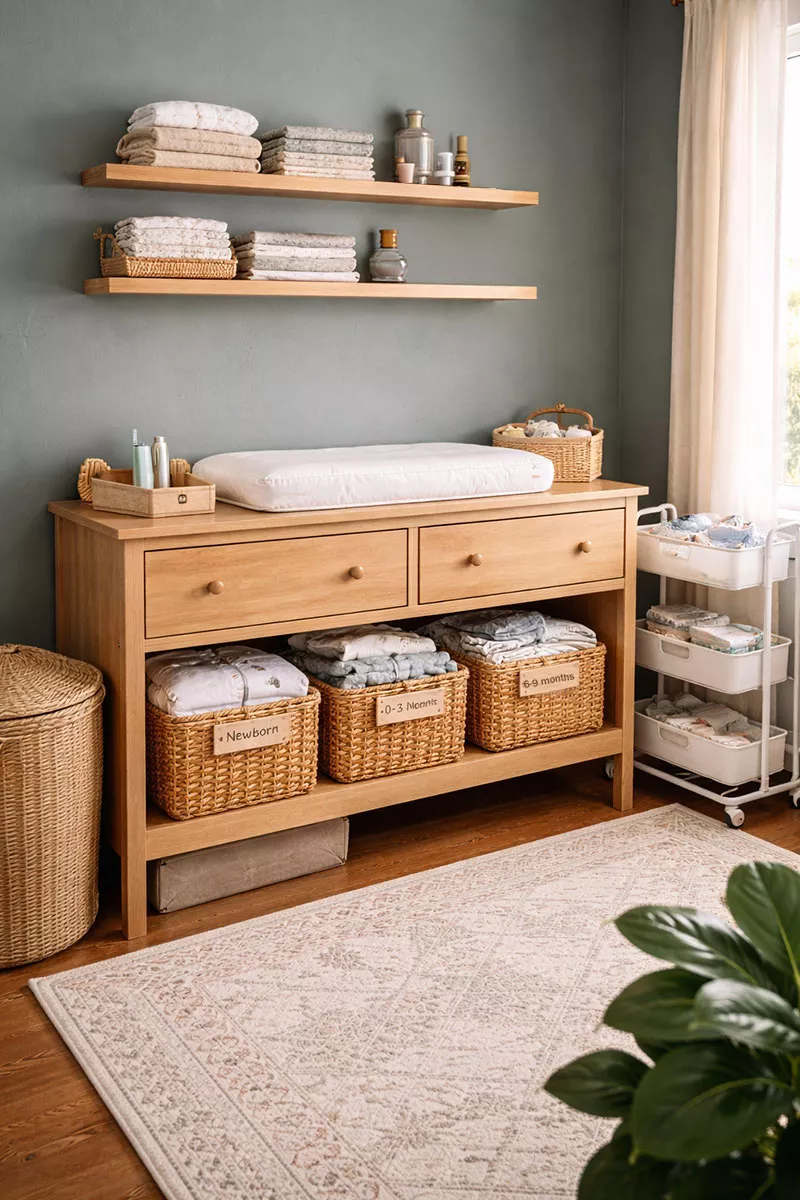
A dresser changing station with labeled baskets and everyday essentials within reach.
Use storage to make the nursery easier to live in, not just prettier. A dresser changing station, labeled bins, wall shelves, and a small rolling cart can keep daily care items easy to reach without crowding the room.
See how real rooms balance storage, layout, and style. Baby Room Ideas Blog
Browse newer nursery decorating updates. Nursery Furniture Ideas
See how cribs, dressers, and storage work together.
Browse Nursery Ideas by Style
Most nursery ideas fall into a few easy style families. Choose the one that feels closest, then use the linked pages below to move into the specific room look you want.
Animal-inspired spaces remain one of the most popular decorating directions, and these jungle baby nursery decorating ideas show how to combine tropical leaves, safari animals, playful bedding, and natural textures into a cohesive room design.
For a more animal-focused room with giraffes, elephants, coordinated artwork, bedding, and warm natural accents, browse these safari nursery decor ideas.
Rustic, Farmhouse, Western, and Country Nursery Ideas
Woodland animals, lodge details, and rustic baby room ideas. Farm Nursery Decor Ideas
Barnwood, animals, vintage signs, and farmhouse details. Cowboy Nursery Theme Ideas
Cowboy boots, horses, denim, and ranch-style decorating. Western Nursery Theme
Ranch details, horses, frontier accents, and western nursery style.
Wall Decor, Murals, and Handmade Focal Points
Nature scenes, storybook art, florals, and landscapes. DIY Deer Art Trio
A handmade woodland focal point for nursery walls. Old English Hot Air Balloon Mural
A vintage illustrated wall idea for baby rooms. Bunny Accessories
Use a small nursery accent as the room’s anchor detail.
Calm, Warm Nursery Inspiration
For a room that feels gentle, personal, and easy to adapt, focus on one anchor piece first: a wall color, statement artwork, mobile, quilt, name sign, or crib style.
Browse finished baby rooms for visual inspiration. Baby Boy Nursery Pictures
See boy nursery styles in finished rooms. Modern Nursery Guide
Clean layouts, bright rooms, and streamlined decorating.
Woodland and Nature Nursery Ideas
Woodland nurseries work well because the look can be gentle, rustic, handmade, or more polished depending on the colors and accents you choose.
For a handmade interpretation that feels polished rather than overly themed, tour Harper’s nature-inspired gender-neutral nursery with hand-painted winter trees, a wood chair rail and musical details hidden within the mural.
Sage green gives woodland rooms a more nature-led color base, and these sage green woodland nursery ideas show how to combine forest animals, green walls, and natural textures.
A deer theme room is one of the easiest woodland directions to personalize, and my deer nursery ideas show how to use fawn artwork, rustic accents, pink details, bedding, and handmade pieces without making the theme look crowded.
A handmade forest accent can also come from the sewing side, and this fox quilt pattern gives woodland nursery colors a softer crib quilt or keepsake direction.
Forest palettes, animal accents, wood textures, and nature style. DIY Woodland Crib Mobile
Simple forest shapes and handmade nursery detail. Forest Friends Nursery Ideas
Foxes, deer, rabbits, bears, and owls in one room style. Woodland Nursery Patterns
Forest appliqué, sewing templates, and handmade accents. Woodland Nursery Decor Ideas
Smaller forest details that pull the room together. Owl Nursery Themes
Owl-themed nursery ideas for woodland rooms. Gender Neutral Woodland Styles
Flexible nature-inspired nursery ideas. Owl Nursery Decor DIY Ideas
Handmade owl accents for woodland baby rooms.
Ocean and Coastal Nursery Ideas
Ocean colors, sea life accents, and coastal nursery style. Ocean Nursery Decor Ideas
Driftwood textures, sea-glass colors, and coastal accents. Sea Turtle Quilt Pattern
A handmade quilt idea for coastal nursery colors. Nursery Ideas That Grow
Choose flexible design details beyond the baby years.
Romantic, Whimsical, and Storybook Nursery Ideas
For a more storybook-style nursery, start with the mood first, then choose one or two details such as florals, butterflies, fairy art, vintage carnival accents, murals, or illustrated wall decor.
A cheerful garden-bug room can sit beside florals and butterflies, and these ladybug baby nursery theme ideas show how to use red accents, black dots, and sweet nature details without making the room too busy.
Vintage carnival details, stripes, and playful color. Butterfly Nursery Ideas
Butterflies, florals, and light illustrated accents. Baby Girl Nursery Themes
Floral, vintage, pink, butterfly, and girl room inspiration. Nursery Wall Murals
Florals, illustrated scenes, and storybook wall ideas.
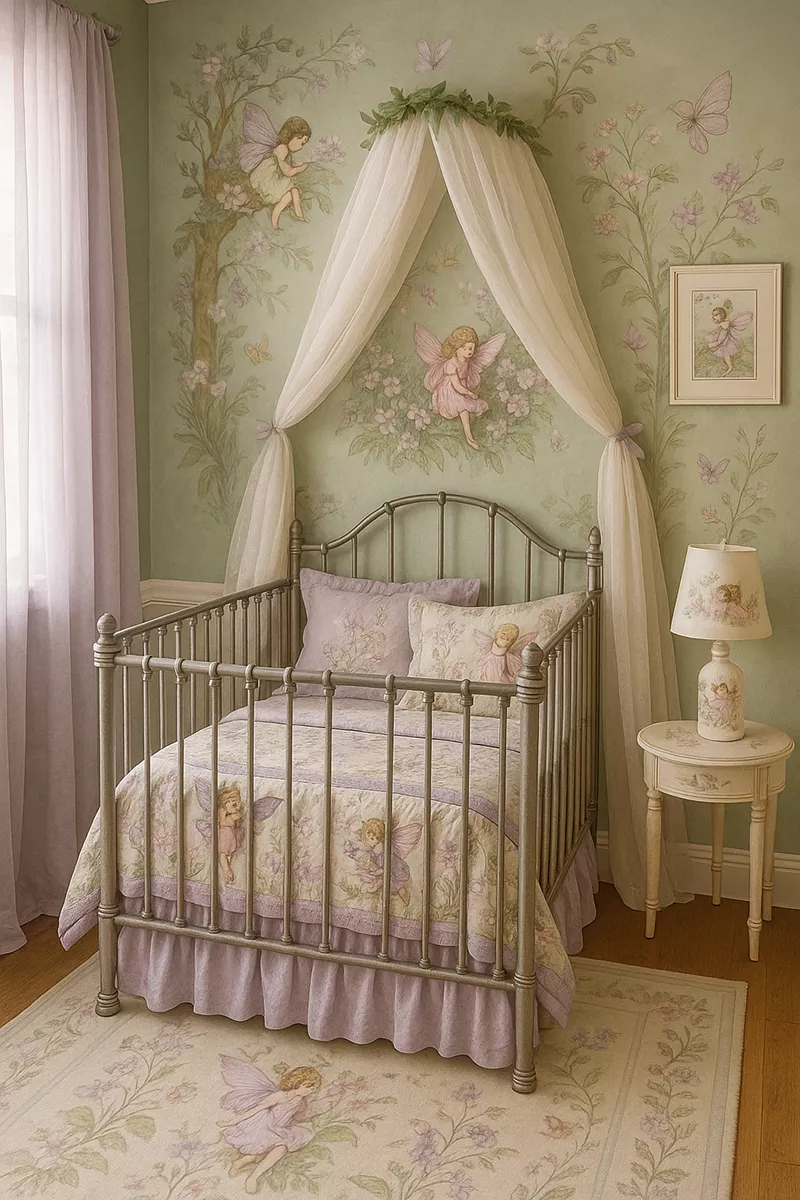
See my favorite Flower Fairy wall decorations here
An enchanted forest nursery with lavender, sage, and fairy-inspired details.
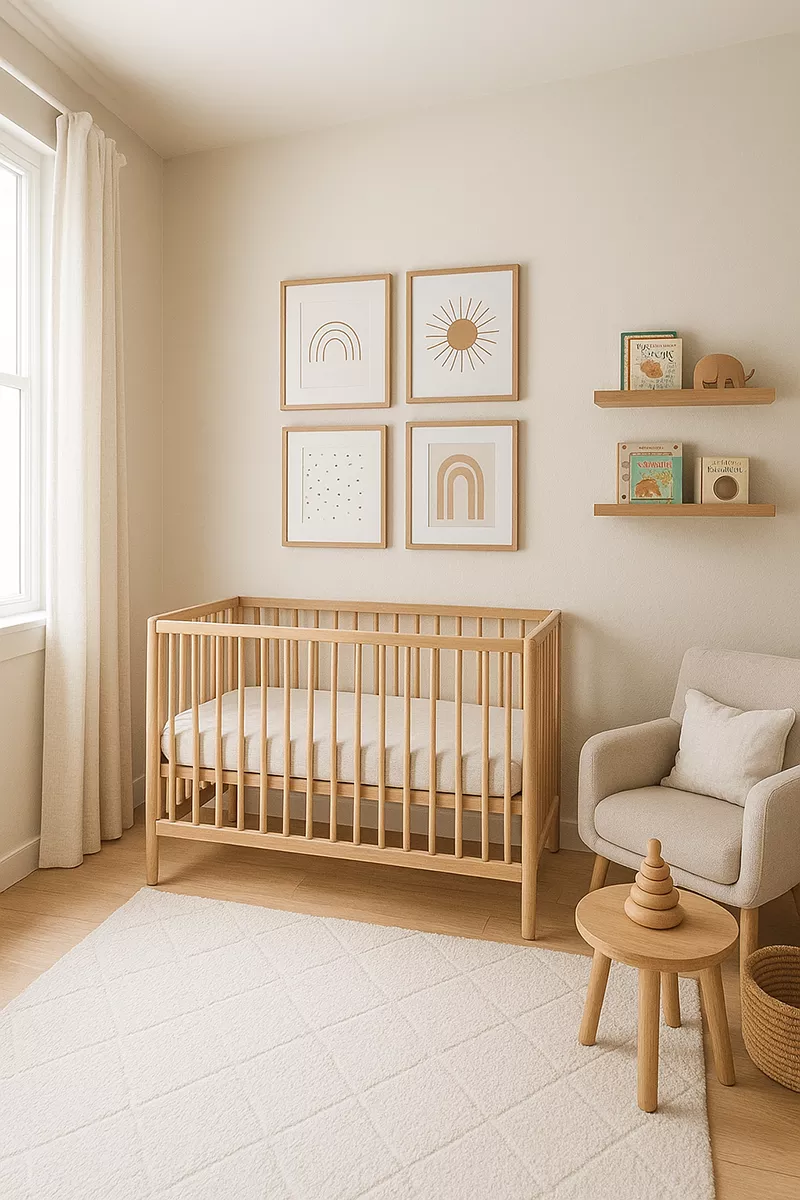
A minimalist nursery layout with neutral walls, a slim modern crib, floating shelves, and warm wood accents.
Modern, Neutral, Girl, and Boy Nursery Ideas
Use these paths when you already know the general room type and want more focused inspiration.
Clean lines, open spacing, and practical furniture. Modern Gender Neutral Themes
Flexible nursery styles for any baby. Space-Conscious Nursery Furniture
Furniture layouts for smaller rooms.
Gender Neutral Nursery Ideas
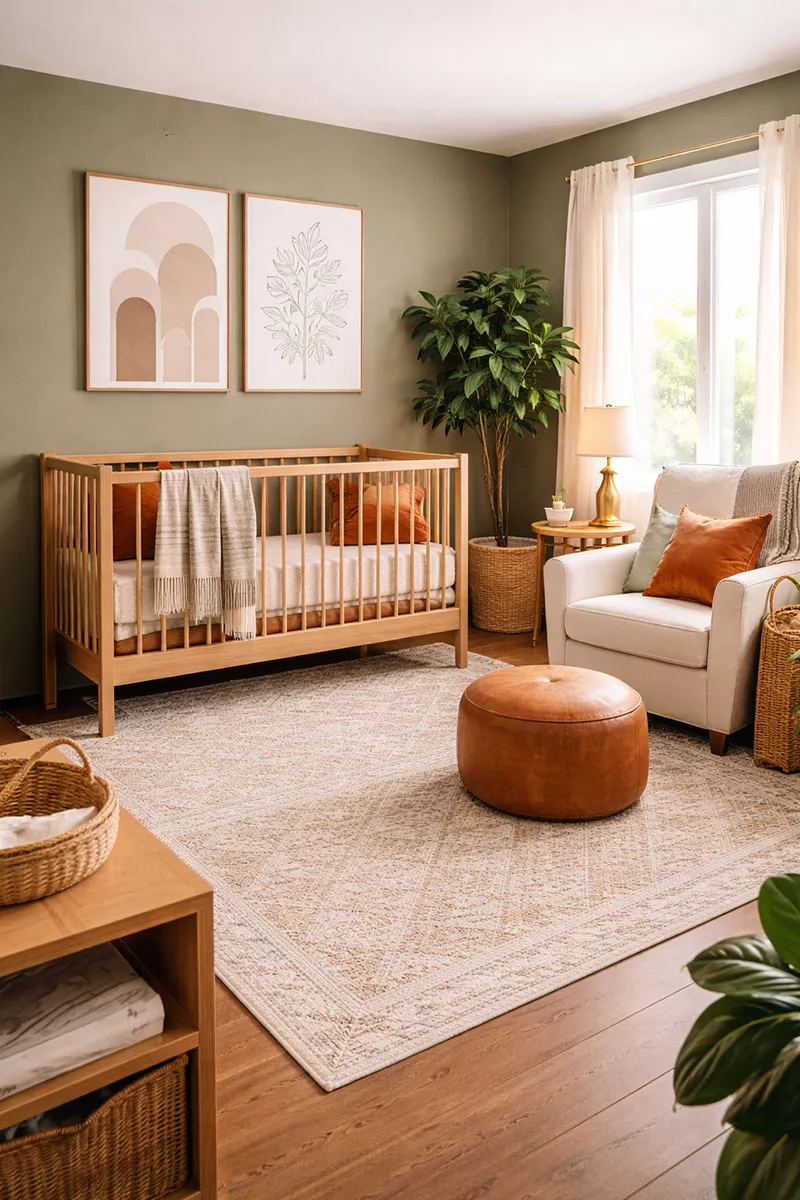
Muted olive, clay accents, layered textiles, and natural wood create a warm, modern neutral nursery.
Gender neutral rooms often work best when they are built around mood, texture, and lasting colors instead of a narrow theme.
Neutral baby room ideas with texture, color, and balance. Shabby Chic Nursery Collection
Vintage pastels, muted sage, blush, and heirloom details.
Baby Boy Nursery Ideas
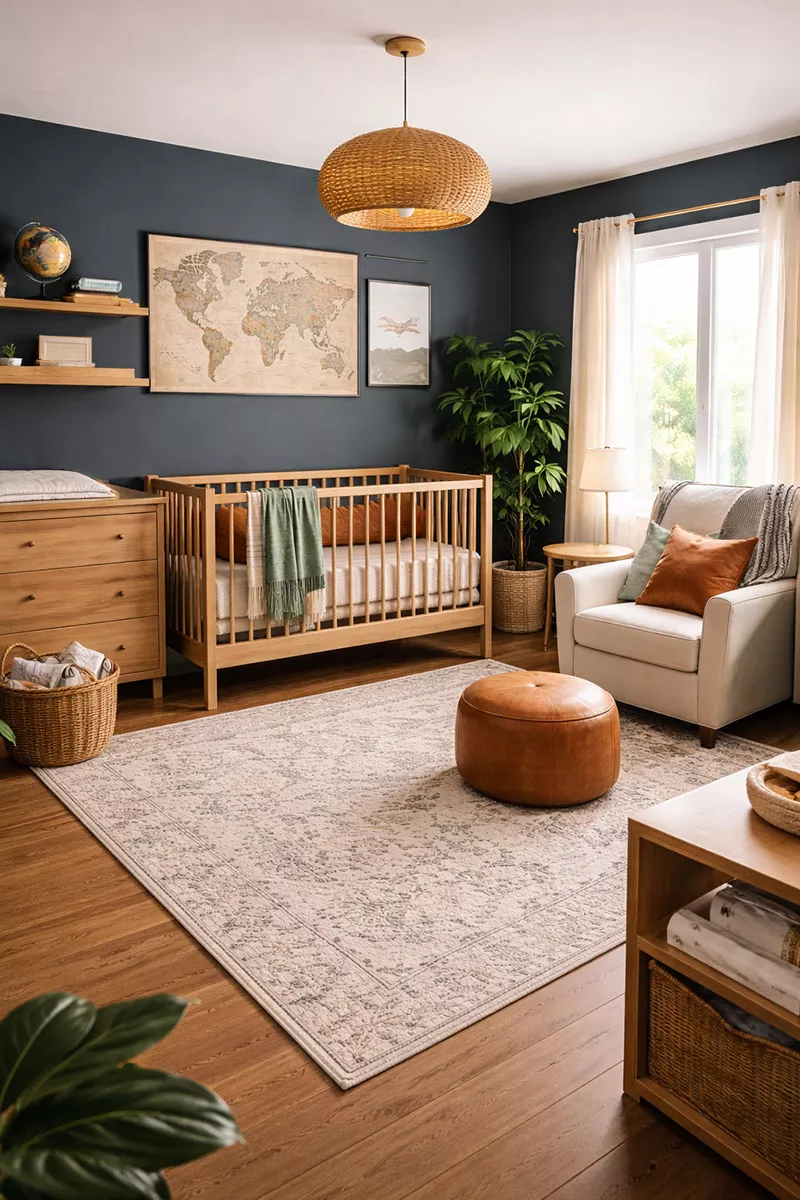
Deep navy walls, warm wood tones, and adventure accents create a modern baby boy nursery.
Baby boy nursery ideas often include navy, forest green, warm neutrals, maps, woodland accents, western style, and classic minimal rooms.
Browse the Baby Boy Nursery Themes Collection.
Baby Girl Nursery Ideas
Baby girl nursery ideas can go far beyond traditional pink. Florals, butterflies, woodland details, vintage touches, muted pastels, and warm neutrals all work beautifully.
If purple is the color direction you want, browse my purple baby nursery ideas for lavender, lilac, plum and deeper purple room inspiration.
For rooms leaning into girly girl blush, rose, or soft floral colors, my pink nursery curtains page presents a pretty window-treatment path to explore.
Browse the Baby Girl Nursery Themes Guide.
Nursery Wall Decor Ideas
Nursery walls usually create the room’s first impression. Choose art, wallpaper, shelves, murals, or one handmade focal point, then keep the rest of the room connected to that choice.
A finished window can work like wall decor too, and these window valance ideas show ways to add shape, pattern, or softness above the nursery window without reworking the whole room.
Use book ledges as storage and wall decor. Nursery Wallpaper Ideas
Murals, prints, and statement walls that shape the room. Woodland Nursery Wallpaper Ideas
Forest-style wall treatments for nature-inspired rooms. Nursery Wall Decor Ideas Gallery
Art, murals, shelving, name signs, and focal wall ideas.
Lighting That Shapes the Mood
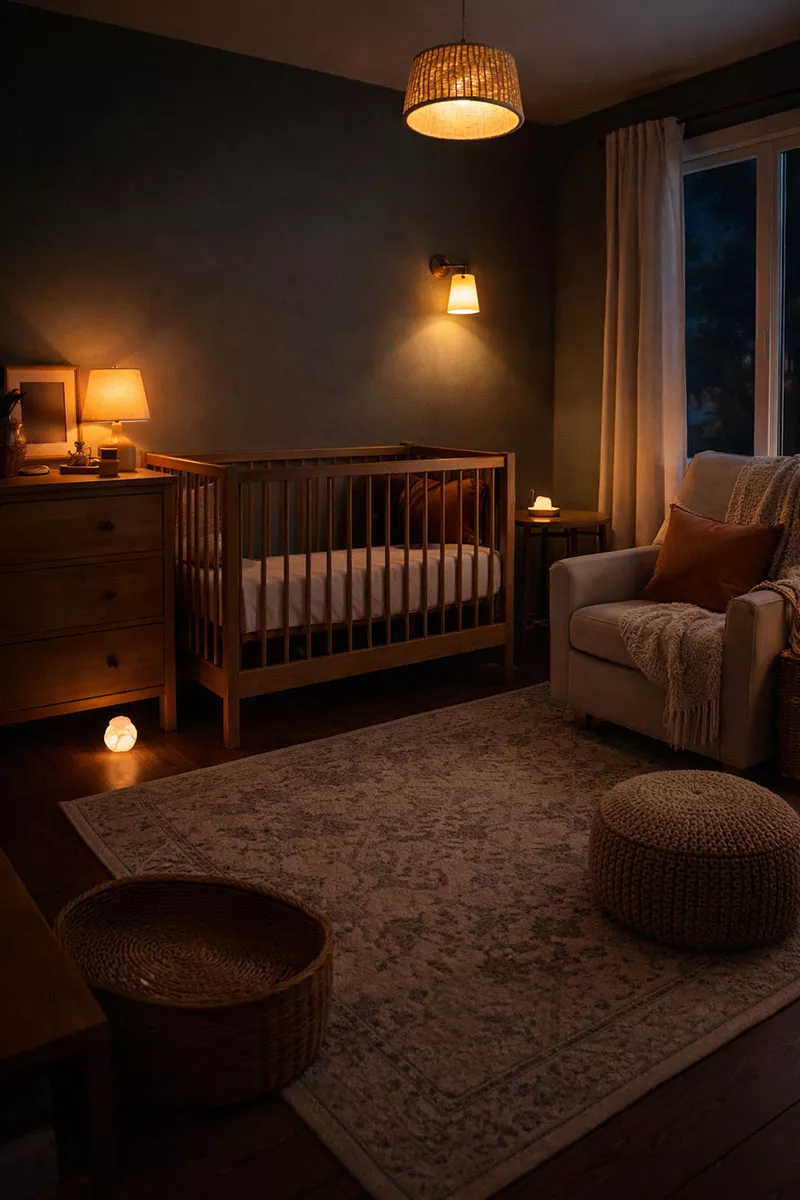
Layered lighting helps the nursery work for daytime care and evening routines.
Use one main overhead light, one task light near the chair or changing area, and one low-glow option for overnight care.
Statement ceiling fixtures and styling tips. Best Nursery Night Lights
Low-glow lighting for overnight routines. Nursery Lighting Inspiration Guide
Fixture ideas, layout examples, and lighting plans. CPSC Kids and Babies Safety Resources
Review broader safety guidance while planning the room.
DIY Nursery Projects and Crafts
Handmade details work best when they solve one clear decorating need: a blank wall, a personalized focal point, a mobile, a quilt, or a small furniture refresh.
A focal point that can add movement without adding floor clutter, can be handmade using my crochet hot air balloon mobile pattern that gives nursery decorators a sky-theme option with balloons, baskets, clouds, stars, and assembly steps.
Beginner-friendly nursery projects organized by skill level. Modern Rainbow Crib Quilt Pattern
A geometric handmade accent for a colorful nursery. Explore All Baby Nursery Themes
Browse woodland, modern, vintage, color-led, and neutral styles.
Real Nursery Inspiration From Parents
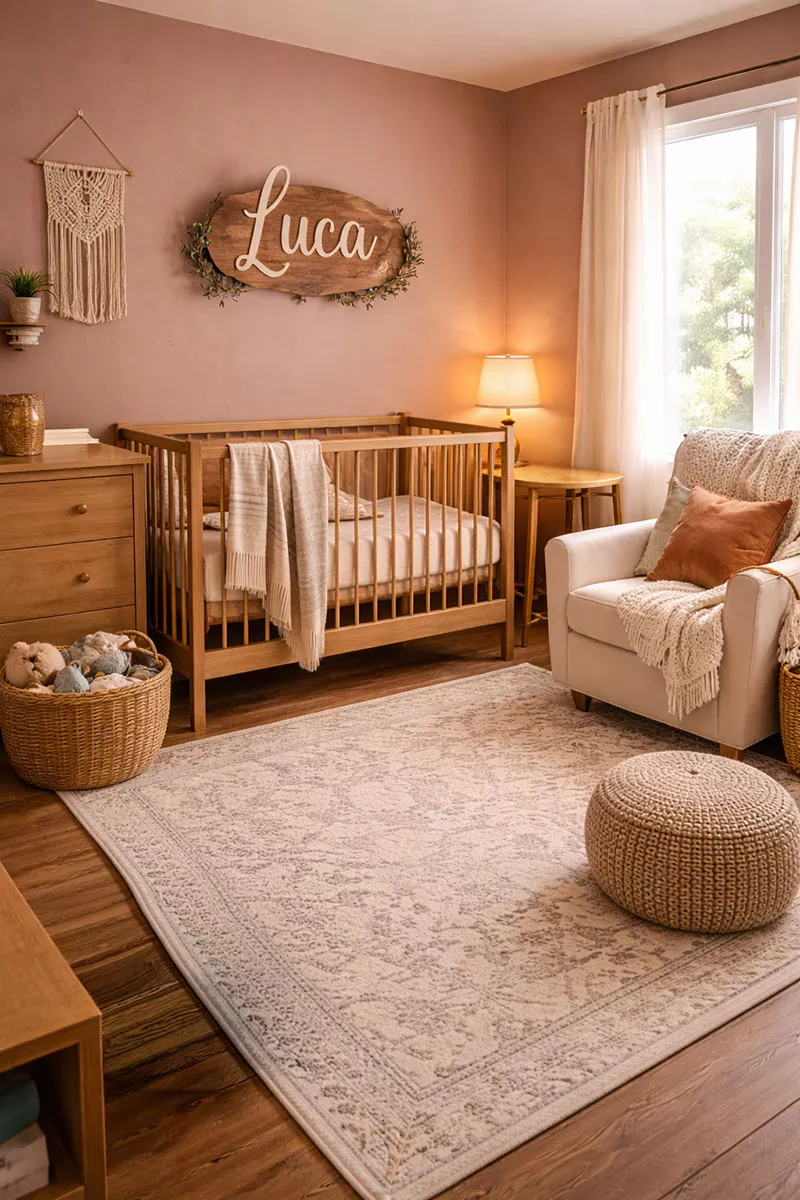
A real family nursery layered with personal details, warm lighting, and handmade touches.
Real nurseries show what staged photos often miss: storage that gets used, furniture that fits, paint colors in real light, and personal details that make the room feel lived in.
Browse real baby girl nursery pictures for feminine rooms with pink, aqua, gray, floral, butterfly, princess and vintage influences, or explore real neutral nursery pictures for sage, cream, warm wood and flexible gender-neutral designs.
Helpful answers for timing, gear, and preparation. Real Nursery Ideas Gallery
See complete rooms and ideas you can adapt.
Frequently Asked Questions About Nursery Ideas
How do I choose a nursery theme?
Start with the overall feeling you want the room to have. Some parents prefer neutral spaces, while others lean toward woodland, vintage, coastal, modern, or storybook-inspired nursery themes. Once the general direction feels right, furniture, colors, and wall decor become much easier to coordinate.
What colors work best in a nursery?
Neutrals, muted greens, warm taupe, dusty blue, clay tones, and layered natural colors remain popular because they adapt easily as a child grows. Contrast can also work well when it is balanced with texture and lighting.
What furniture should go in a nursery?
Most nurseries work best with a crib, dresser or changing station, comfortable chair, practical storage, and useful lighting. In smaller rooms, furniture spacing matters more than adding extra decor.
How should a nursery be laid out?
Place the crib away from direct sunlight, heaters, and window cords. Keep a clear walking path between the crib, chair, and changing area so nighttime routines are easier.
What nursery themes grow well with a child?
Woodland, neutral, coastal, modern, vintage, and nature-inspired nursery themes usually transition well because they rely more on color, texture, and atmosphere than age-specific characters.
Where to Go Next
Choose the next page based on what you are trying to decide now.
Browse the Nursery Themes Hub. Working on Layout?
Explore Nursery Furniture Layouts. Designing the Walls?
Visit Nursery Wall Decor Ideas. Want Real Rooms?
See Real Nursery Inspiration. Furniture Timing
Decide when to start buying nursery furniture. What to Buy First
Prioritize early baby purchases. Before Baby Arrives Checklist
Keep the early shopping list focused. Newborn Nursery Essentials
See what matters most in the nursery first. Nursery Cost Breakdown
Plan the room budget realistically. Do You Need a Nursery?
Think through whether a dedicated room makes sense.
When you click on links to various merchants on this site and make a purchase, this may result in this site earning a commission. This does not affect the price you pay.

UBGI Gold Standard 2026
Reviewed under the site's
editorial checklist.
Photos, decorating ideas, party setups and reader submissions are shared for inspiration unless a page is specifically presented as a pattern, tutorial, reference guide or step-by-step project. Follow the instructions, measurements, safety guidance and manufacturer directions provided for the particular project or product.
About Jan | Contact | Baby Nursery Ideas (Blog) | Site Map | Privacy Policy | Disclosure Policy | Disclaimer | Affiliate Disclosure | Earnings Disclosure | Facebook | Pinterest
I am a participant in the Amazon Services LLC Associates Program, an affiliate advertising program designed to provide a means for us to earn fees by linking to Amazon. As an Amazon Associate I earn from qualifying purchases.
Copyright © 2006-2026. All Rights Reserved.